Subscribe
Share
Share
Embed
Since 1986, Convene has been delivering award-winning content that helps event professionals plan and execute innovative and successful events. Join the Convene editors as we dive into the latest topics of interest to — and some flying under the radar of — the business events community.
Convene Podcast Transcript
Tahira Endean on Measuring Joy, Leading Change, and Designing Events That Connect
*Note: the transcript is AI generated, excuse typos and inaccuracies
Magdalina Atanassova: Welcome to Season Nine of the Convene Podcast, brought to you by Visit Spokane.
Throughout this season, our guests help us look ahead to 2026 — decoding what’s next for the business events industry and sharing insights to help you plan smarter, design with intention, and lead with confidence.
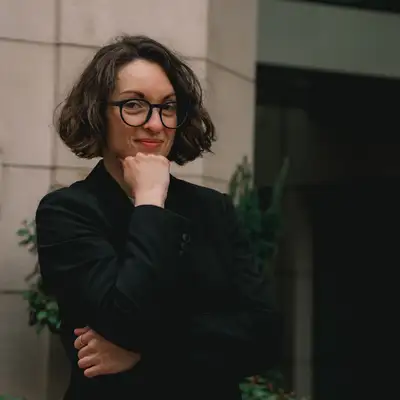
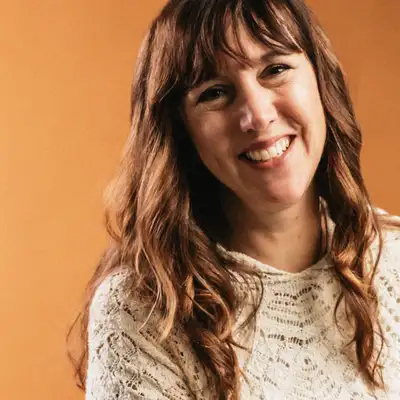
My guest today is Tahira Endean — a force of creativity, connection, and change in the events industry. As Head of Programme at IMEX, she curates learning that inspires and brings the global events community together. At BCIT, she teaches event strategy and design, shaping the next generation of event professionals. She’s also the co-founder of The Strategy Table, where she helps organizations turn dialogue into meaningful change.
With a career spanning three decades and a lifelong passion for education and design, Tahira has wrestled more than a few ‘alligators’ — those complex industry challenges we all face. In this conversation, we explore how measuring joy, leading change, and designing with intention can transform how we create experiences. We start now.
Tahira, it's such a pleasure to welcome you to the Convene podcast.
Tahira Endean: It is lovely to be here. It has been far too long since we have been able to talk do.
Magdalina Atanassova: This well, this episode wraps up season nine. So let's talk about Joy, also the topic of your latest book.
So how do event professionals practically measure joy?
And what other success metrics should we be tracking as we move toward 2026 and beyond?
Tahira Endean: I think the first thing is we should clearly be tracking metrics and we're.
So used to the idea of, you know, we measured, you know, our registration revenue and our sponsor revenue and possibly were our sponsors happy with their investment and things like that.
But ultimately people only return to our.
Event if they enjoyed the event,
so hence the joy.
And we actually just did a good session on this at the Thursday at IMEX America.
So we had David Adler, who of course has been writing on his new gathering point Substack all about Joy. And it started out his, you know, he's like, could we have a passion meter for events?
And we're like yes, let's do that.
You know.
So we had David with Yasmin Yodry, who has been super involved in creating and designing immersive experiences and how people respond to them is really important.
Ben Morrison, who wrote Engagement Decoded and Panos from Zenus, the CEO of Zenus. So the whole session was exactly about not only why should we measure joy, because we clearly should,
but how we do it.
And so we specifically talked about different types of engagement tools and surveys.
You know, sentiment analysis with facial analysis that's anonymous to concierge level surveying of what is happening in the moment, but really understanding that there's lots of different ways to measure that people are in fact having a good time at your event.
Magdalina Atanassova: Any anything specific that came out of that? Is there a tool that was created that people can use already.
Tahira Endean: So with Zenus, we use cameras,
as, you know, I mean, Zenus has done a ton of work with PCMA as well,
which has been really terrific,
you know, so you can measure not just a dwell time of, you know, how long did somebody engage with something, but, you know, did their facial expression change from less happy,
let's just say, to more happy. Now, the danger with that, we know, is that if you are in a session and it's very,
you know, something that you're really paying attention to a more serious subject,
you aren't going to see a joy metric. You're going to see a serious metric.
And that's okay too because, you know, it's part of life is about being serious and thinking about things and analyzing things and deciding how you can apply them to your own life.
That's one part of it.
And that's great. For education sessions or personal sessions where personal growth sessions that you have a metric that says, oh, people were quite serious during that time.
But when particularly sponsor activation. Sponsor activations tend to want to elicit some kind of a positive response that is going to be tied to the brand.
And so we use a lot of the work with Zenus actually at our sponsor activations to see, you know, what. And,
and the metrics are generally, yes, people came,
they dwelled, they left happier, they have a positive memory or moment associated with your brand doing something,
whether it is ice cream, music, you know, typical joy factors come along with creating event moments.
So we do that.
You know, it's. And it's also really,
you know, you can just watch and see what people are doing.
You know, the hugs, the handshakes, the smiles, the deeper conversations that you can see people having.
Because those are the things that are going to raise our levels of oxytocin. And those are going to be the things that we might not remember all of those things, you know, so.
But what we will remember is that we felt good at this event and that is going to be the thing that's going to help us elevate that event to the one that we're going to invest in next year.
Some things we go to because we need continuing education credits.
Some things we go to because we want to connect with people. Some things we go to because we want to learn something.
You know, so there's all of those layers that go into it, you know, from the anticipation. Am I excited about this event?
You know, we were talking earlier.
I've already had three conversations this morning. It's 8:25 here, about different events. People are excited about going to, you know, the room research that IMEX is getting ready to launch a PCMA.
The things that are going to come up around our talking point and how we're going to be integrating that and why people are excited about going. And it's part destination, it's part people,
it's all of those things.
Then when we get to the, through the anticipation,
then we get into the experiencing self. So the person who arrives at the event and what does that feel like from the moment you get on the plane,
land at the airport,
have maybe a moment at the airport,
get to your hotel, are you greeted? How are you greeted?
And then you get into your conference experience,
and then you get into the whole experience of the conference and all the elements with that.
And you know, this, you know, there's so there's the experiencing self and the remembering self. So the experiencing self is going through all of these things and they might last three to five days on average with a conference.
But I show up, and I don't just show up and I'm ready to be 110% immersed in the conference.
I have proposals that are due, I have conversations people want to have. I have a family to think about and is my puppy okay at home and all of those things.
So I have a split experiencing self and then a tiny slice that's the remembering self. So three to five days, you might actually physically only remember three to five minutes.
So our role as event designers is to make sure that as people go through that anticipation, arrival, experience,
that there are enough positive, memorable moments that they want to return.
There's enough things that are given to them that they can take away and somehow apply personally or professionally.
That they leave with a little bit transformation is often excessive for a conference,
but they leave with a little bit of a, oh, yes,
you know, I think that, you know, the work that we do, whether it's,
you know, a lot of the work that I do, is for people who work in the event industry.
Those people then work with people who are doctors, lawyers, accountants,
specialists across every other field who need personal and professional education to keep going in what they do. They need continuing education credits.
But if you are a doctor and you go and you sit in a dark room and you see some slides about how to do something,
you're probably.
Not going to go back and be.
More successful in the operating room. So it is about creating those experiences.
That become memories that are very tangible.
And how we do that in a bunch of different ways becomes really important.
That was a Super long answer.
Magdalina Atanassova: And I'll actually ask you to talk a little bit more about that.
Because when you say our KPI is joy, how does that actually change the way when professionals approach the strategy, the design and the actual execution?
And what does a joy driven event planning process look like?
Tahira Endean: Well, it needs to look like you actually are going to tell your bosses at the end of it that one of your metrics was people found this experience to be a positive experience and not on a 1 to 5,
this speaker was good kind of scale, which those are not very helpful to us. They haven't been helpful to us for all of the decades that I've been doing events.
You know, I think that most event designers know anybody who's been doing it for more than a minute.
You know, when you walk into your event,
the things that are going to be your pinch points,
the speakers that are going to be very successful and probably the speakers or sessions that are going to be good but not great.
And that generally plays out in the end and in the results and in the evaluations. And, you know, it might be that the one that wasn't great was because you had to give that sponsor a session and they didn't listen to your advice about how to make that session amazing,
memorable and rich for the participant. They just thought about, how am I going to sell this thing in the way that I always sell it instead of in the way that's most useful for this audience.
So,
you know, as we think about joy, we need to think about all of those things that are going to make you smile and feel a connection through the event.
You need to think about the ways that one of the ways that we get joy that's very applicable to events is that we can prototype something that helps us address a challenge or a problem in an event scenario.
And when we do that and we get to have meaningful conversations and create dialogue and, and solve a problem,
whether that problem is actually solved in real life or is solved in a prototyping scenario,
we feel productive, you know, so when I say our KPI is joy, it's how does it catalyze happiness, productivity and trust.
So happiness is probably easier. I've hugged my friends,
I've eaten some good food. My process was easy.
Productivity is,
you know, if you're investing millions of dollars in an event for your salespeople because you want them to go out and you want them to leave that event and sell more things,
well, they're not going to sell more things if they don't feel a sense of connection to your brand.
They don't feel that it makes sense what they're selling. They need to feel that what they're selling is going to be helpful or useful for the people that they would be selling it to.
So productivity and trust are those key things that come out of creating a space where people can feel connected.
You know, if we go into the science of it, you know, and again, I know this is something you know a lot about, as is much of the audience. You know, we've been talking about the neuroscience of events for a long time.
The very basic part of neuroscience of events is that if you walk into any space,
it doesn't matter if it's your family dinner or your school or your workplace or your conference.
If you walk in and put up walls,
all of those little chemicals in our brain close up.
You can't learn or connect when all of those are closed up.
So we need to have that sense of, I welcome here.
I'm safe here.
I belong here.
And with associations in particular,
that sense of I belong here might be because you're a member, but just because you're paid a membership due doesn't mean that you feel like you belong there.
So what are the things that you're gonna do as the association?
Are you gonna have your board members out greeting people and saying hello and introducing people to each other who might have a common interest?
What a game changer that would be. Instead of being locked away in a board meeting,
actually getting out and meeting the members of your association,
you know, you have your chapter rallies and your chapter events, you know, and again, what you can't have happen is just two people all of a sudden get into a little closed discussion.
You know, you need to remind people that they need to open up, that they need to bring in circles of people, that we are here to connect and learn from each other and have ideas.
And.
Because as soon as you start to. If you walk into a room and everything's little closed groups of people,
you know, one of the things, when I went to the College of Extraordinary Experience is one of the core principles of that event is anytime that you sit down,
that is always an open chair so people can join you. Now, that doesn't mean that you don't go off for a walk with one person you want to have a deeper conversation with because you have something in common.
Or that doesn't mean that. But what it means is, in principle,
that you are creating a space of openness and dialogue,
and that is going to be the frameworks that we need to start to build in.
You know, as soon as you have a round of eight, nobody can. People can't talk across a round of eight.
Round of ten. Even worse,
you know, you need to create spaces for a maximum of five to six people to have a meaningful dialogue,
which, of course, venues aren't set up for that.
Magdalina Atanassova: I'm thinking of everyone listening to us and being like,
yeah, we've all tried to speak across a table that's so big and nothing happens. And you just end up speaking to the two people on both of your sides and just hope they are good conversation.
Sometimes when you don't know them or you end up just having the same people around you for.
Tahira Endean: Or when's the last time that you sat down beside somebody you worked with.
Five years ago and didn't like? Yeah, hope so.
That's a. But that's a reality of what happens, right. So is that we don't often get to choose who we're sitting with at events.
And when you have that. That forced sort of placed seating,
you.
Know, and you can end up having.
Fantastic conversations with people that started out as virtual strangers.
But isn't it nice if you could.
Actually talk to the person also across the table and not just, you know, to one side of you? And then what happens when the person.
What happens when both of those people.
Start talking to the next people beside them?
Oh, yeah. You know, and those things all happen. So what we just want to try.
To do is to find ways to mitigate those moments so that that doesn't become the memory moment, that the memory moment becomes the time that you walked up to a pedestal table at the reception that wasn't for once in our lifetimes too loud so you could barely hear the people speaking because somebody thought a live band and at the welcome reception was going to be the best way to welcome people.
So for all of the people who don't have exactly perfect hearing,
it's almost impossible to have a conversation.
You know, there's really simple things that we can do to create those moments, and that is one of them. Like, just turn down the volume. You're going to get enough volume as soon as people start talking without trying to layer in a band at 78 decibels above that.
So it's.
Yeah, there's lots of things that we can do within our frameworks to create opportunities for people to have joyful moments and good conversations and the things that they're going to take away as memories.
Magdalina Atanassova: So to get there, we need, in a sense, a lot of Change management.
And at your new company strategy table, you focus on that. Exactly. Change management and leadership alignment.
So what's your advice for event professionals who see the need for change in their organizations but don't know how to lead that transformation?
Tahira Endean: Practically, that is a very big question.
Magdalina Atanassova: I'm not playing with small questions here.
Tahira Endean: No, no, no. So change management is a skill. So, you know, I went back to school and did a master's in creativity and change leadership. That was two years,
you know, and I probably started that. You know, when I started, I was over 50. I'd been in meetings and events and organizations, worked in many organizations for a long time.
And so you think I know a little bit about change? No, I didn't think I knew a lot. But you think you know a little bit about change.
The only thing that we know about change is that it's really hard for people.
Nobody likes change. Even if we're not comfortable where we are,
the idea of changing, it just feels like so much work.
So if we look at, you know, and you can apply that to any life situation, we've all either lived in or have friends who've lived in,
relationships, jobs,
events that are just too.
They're. Until it gets really painful, you don't make the change.
So let's just put aside life and work for the moment.
One of the greatest opportunities that we have with events is to bring people together for change management.
And so anytime that you have a group that is going through a change,
whether that's a change in leadership, you know, one of the big things we see,
you know, and this has certainly been referenced off many of our large association stages is,
you know, there's so many new CEOs.
Every time there's a new CEO, they want to have a meeting and share their message.
And that's a great opportunity for us.
In events because that means they require an event to happen.
But we have to do that very intentionally. You can't just plop a CEO on a stage, have them give a speech, and all of a sudden everything is better.
You need to really think about the process that the organization is going through and the people who are going through that and find ways to bring those people together into dialogue and bring in the facilitators and the people that have experience in that to help guide those conversations, to help open up conversations through a whole variety.
Like, I'll just give you an example of.
So this is the innovator's dictionary. So this is 555 different ways that you can help to Facilitate change and innovation.
Magdalina Atanassova: People can't see it, but it's like a huge book.
Tahira Endean: It's for people who can't see it. It is literally. Hang on, I'm going to tell you how many pages this book is. And it weighs a lot. Like, this is the heaviest book I've.
It's bigger than the atlas I had as a kid, which was the biggest book that I've ever had.
It is 1,152 pages.
It's a brick. So this is just to say that there is not just one way to approach change management,
but we cannot, as event designers, imagine that we can't use events as a change management tool. It is the biggest change management tool that we have.
You can't just keep things the same,
you know, so there's.
However you decide to implement that. So,
you know, sometimes we're going to go into.
And you've probably been involved in events like this. So there's events that we do that everybody just comes into a convention center and you go into a general session and then you go into a bunch of breakouts and you have some exhibits along the way.
And we all do. We all do that because there's a.
There's reasons for doing that. So it's about how do you keep people together under one roof to, you know, then there's the.
Almost the opposite of that, where it's like, no, we're going to use this event as an opportunity to explore the place.
And so now, no matter what the weather is, we are going to send people out and they're going to go to seven different places for their meetings and events that are going to happen all around.
And everybody's going to get some fresh air, exercise,
possibly nature, hard to say. Depends on the city that you're in.
And, you know, you might have some walking conversations and some walking meetings and you'll give people different opportunities to have some of that.
It doesn't matter the scenario of how we're setting up our event.
We need to be intentional about the spaces that we're setting. So,
you know, when they go into a general session room, how does that. What are the messages that are coming in that general session room and how are you positioning them?
And here's what we also do in general sessions.
We'd like to now invite up this sponsor and then they're going to show us a video about their place, and then we're going to have another conversation. We're going to invite somebody up from our board, and then we're going to Invite up somebody.
We're going to invite up another sponsor who's going to show us another video.
It doesn't matter how good the videos are.
What I always learn is that everywhere in the world has a sunset and a horse.
So we need to be really thinking about. If I'm going to bring up a sponsor and they want to be positioned as a thought leader,
then what's that thought leadership question that I'm asking them? What's the thing that's going to make me think about their city differently or their destination differently from the other 2,000 destinations that are out there?
I'm picking on destinations because those are our typical sponsors, which we are so grateful for because none of our events would happen without them. So I don't want to take away their opportunities.
I want to figure out ways for us to enhance their opportunities.
You know, how are they looking at the intellectual capital of their cities? Why are they forces for change? Why are they,
you know,
if they're a city that's focused on sports, if they're a city that's focused on,
you know, what are going to be the things that they can. How can they help us with what is in their city?
To create places for our participants to feel that sense of connection,
joy, productivity, happiness,
and to bring those kinds of things together.
Then we go into our breakouts. So now I've possibly meandered around a pretty big center to find, even as a speaker, to find the room that I have to go to.
I'm hopefully on time. I come in,
you know, and then what happens in that breakout that's going to have me leave with something so that it's.
I have something that I'm taking away from that.
And as curators of that content,
how are we,
you know, helping to facilitate that?
You know, so then when we get into those evening events,
how are we facilitating those evening events to make them places for dialogue and not just for eating and maybe dancing?
Right? So there's a lot of little intentional things that we can put in.
You know, send somebody out of a. When you send people out of a general session,
send them out with a question and an imperative to talk to somebody on the way out.
Don't just rush to your next breakout or rush to get your coffee.
What's going to be, how do you make a new friend or have a different conversation with an old friend?
How do we.
If we're going to bring people together, we just need to really be thinking about how are we making. Giving them the most for their investment that They've given us in time,
mostly in time,
also in money, but mostly in time.
So. And that there are lots of ways to help to facilitate that. So with strategy table what we're doing is bringing together people both virtually and, and in live environments and looking at how can we support them through facilitating conversations and discussions and bringing our expertise and experience design to help create the spaces that make people feel safe,
feel like they belong, can bring them together,
and then to ask the hard questions.
So sometimes it's hard for a manager to ask hard questions.
That's why you bring in facilitators,
ask the hard questions, get people to think about things differently.
Don't make it so easy for people.
You know,
if somebody just wants to say,
I want you to facilitate how everybody can work together can work better,
that's not.
You don't really need to facilitate that because then all you're doing is asking people to put a hundred good ideas in a wall and pick their top 10 ideas.
The reality is, is have you ever been in, have you ever worked in an organization where you picked your top 10 ideas and then were able to find somebody who wanted to lead that idea that had access to the right decision maker to provide the resources, the money, or the time to make that idea happen,
and the client that that idea could apply to all line up perfectly?
VISIT SPOKANE AD: Searching for your next event destination? Have you considered Spokane? The Convention Center sits right on the banks of the Spokane River — surrounded by everything your attendees could need, from shops and restaurants to wide-open green spaces. Whether you’re exploring new cities or gearing up for show time, the Visit Spokane team will make it all flow.
Start planning at VisitSpokane.com.
Magdalina Atanassova: That's not, I'm not answering that question.
Tahira Endean: But with facilitators, what you do then is you say, okay, this is a great idea. So now let's start to build out this idea and poke holes at this idea and say, why wouldn't this idea work?
Oh, if. And then if you have now discovered all the ideas that you think, why this idea wouldn't work?
Let's turn that around and flip it on its head and say, why would this work?
And now you get to something that you can use.
And so we go through a whole variety of processes using this plus other things that we've been doing along the way to take people through that process.
You know, with Anthony, he's done a lot of work in experience design with Ryan. His background is being in the US Military. His facilitation work is at Space Command.
So if you think what we do in events is hard, try doing it at Space Command.
You know, so. And then we have another pool of facilitators that we can draw from so that we can really help guide a process so that you can end up with a successful conclusion.
And I think that all of those things tie together.
Magdalina Atanassova: And that to me, sounds like we need to re educate the industry and luckily for us, you are educating the next generation of event professionals at BCIT and sdsu.
So what skills and mindsets are you teaching that differ from what was taught maybe some five years ago?
Tahira Endean: This is, I'm having so much fun at these classes.
So with the classes that I'm teaching, I'm teaching them.
What I'm teaching now. I've taught for, since 1999. So, you know, event planning.
36 hours on sustainable event operations and then now event strategy and design.
They asked me to come and to design and teach this course based on the book that I wrote, Intentional Event Design, Our professional opportunity.
And we actually use that as the textbook which I was honestly really nervous about. I was like, oh, are you sure? Like we're, we have such bad imposter syndrome.
But yes, it's a really, really good book and it's available to, you know, it's being taught. You know, Richard Aaron uses it at nyu. He has for quite a few years.
You know, there's other institutions that are using it as the textbook.
What I have them do at the beginning is to write a narrative or an event.
And it could be an event that they're actually working on, which happens in some cases, or an event that they'd like to design one day.
And then we work through all of the intentions.
So we work through design. How would you design something?
Why does it matter? We work through the kinds of technology you could embed into your event and the kinds of technology you could use to plan your event and make the participant experience better.
Then we look at intention three. Everybody shows up with a brain. So when those people show up with their brain and their body, how are we taking care of the neuroscience elements of it?
So activating the dopamine,
using our food and beverage to balance our serotonin through the event,
which means no continental breakfast ever again. Just sugar crash happens. People can't learn on a sugar crash.
How can we embed in everything from everything around learning and performance design?
So what are the myriad of educational tools that we have available to us to create engagement and interaction if their event is a more public facing event and not about education necessarily?
I've had people plan music festivals and different things, but what are the kinds of lounges, the VIP accesses, the seating and the other elements that you can include into events?
And then at the end of it all they have to enhance their narrative and I just watch them coming out.
First of all, they've already,
people have already been planning Events quite often,
or they have been learning a lot about events or a combination of those two things,
a light bulb goes off for them.
Oh my goodness. And it's the same light bulb I'm seeing with corporate planners who are reading and iterating on our KPI as joy.
Oh my gosh. Like, do you know what I've been focused on? Logistics, marketing, registration,
all of these like layers of things that I have to do to plan my event, where I need to be a lawyer and a accountant and a financial expert and a marketing expert, and all of these things that I might or might not be.
But at the end of the day, as an event marketer, as an event professional,
I'm actually a storyteller and I'm actually creating a place where people are going to come and go through an experience that is effectively going to help give them something that they're putting onto their highlight reel.
Something that is helping them change their life for the better.
Something that is giving them more professional or personal skills.
And I'm doing that by crafting a narrative and thinking of all the touch points along the way and their heads explode.
And it is so much fun to see them go from the beginning, oh, I'm at a class to the end,
you know. And so now we're starting to incorporate that thinking into some of the work that we're doing with future leaders. We're starting to see that work, you know, extending into the classroom.
We're starting to see that work in, extending now into,
into event agencies who are.
Anybody who's been around the industry for a while, we know that there is a gap between the people who've been in the industry for a long time and the people who are entering the industry.
And what you don't know, there's just a part you don't know. You know, I think it took me, I entered the industry with a diploma in event management and even that was, you know, a two year diploma in event management,
I would say. It took me two years to even understand what a whole event looked like.
Five years to understand the things I actually wanted to do and could get really good at and the things that I wanted to build a team around,
you know, now 30 years later,
you know, I still love events and I want this generation to come up and be upskilled because I want our events to continue to be the best that they can be for everybody around the world.
And they're willing to learn like they want to learn. They're willing to do the work.
But if you're doing the work and you're just like working a 12 hour a day,
managing one tiny component and not seeing the magic. Of course you get burnt out.
You know, all of us get past burnout the minute we walk into that room and hear people go,
your burnout's over. You're reinvigorated. You remember why we do what we do.
So, you know, it's like how, you know, it's about filling that gap and just it's, it's so much fun to see and I am so humbled and so proud that the work that I've put into words in the world, which people can listen to, read it on a Kindle, read it in about how whatever suits people that it's actually making.
Reminding them of what we do in events and how we can do it.
Better and taking that forward and it's, it's really exciting.
Magdalina Atanassova: I'll definitely put links to both of your books in the show notes so people can get them and if they have just reread them again.
We've spoken about that gap of young leaders coming into the industry. Are you hopeful from what you see?
Tahira Endean: Yes, I'm so hopeful.
I see amazing young people coming into our industry.
I see them also coming in with different boundaries and that's okay. I wish I would have had more boundaries as a young person or as a young parent,
you know, around what we did.
And it's, I look at my own kids, they're 25 and 26. I look at people like you and so many who came up behind me just in just actual chronology, you were just born later,
but who are doing all of the PCMA, the 20 in their 20s.
It's the rising stars, the young leaders,
whatever we want to call them.
I am always amazed and impressed with people who are coming up and so honored to call them friends and to see their growth and to see them win awards, it's amazing.
I'm beyond hopefully.
Magdalina Atanassova: And one thing immediately came to my mind was Future Leaders forum. For me, that was instrumental into growing into the industry.
And that brings me to your role at IMEX. Because you wear many hats,
we have to cover all of them.
So you're seeing the industry up close and you're seeing it in different regions. Can you say what are the biggest shifts you're observing across those different regions and where is the industry heading differently than people expect?
Tahira Endean: Ooh,
I think that we expected a lot of pessimism,
a lot of, oh, things are too expensive. Oh, travel's really hard right now.
You know, IMAX just had its biggest show,
two biggest shows this year.
And certainly,
you know, there are some geopolitical challenges in many regions of the world.
That's.
Or just a practical reality. But there's always been geopolitical challenges. They just weren't always on social media.
So this is, you know, the reality.
But so I think that we are thinking it's going to be very difficult and that AI is going to take over events and nobody is going to want to go to live events anymore.
And what we're seeing is the opposite more than ever. With AI currently being such a prevalent force,
we're just learning how to navigate and use it as a tool and understanding that,
yes, there might be people out there having synthetic relationships.
That is not most people's desired state of being.
You know, that is a real struggle. I mean, they're looking to legislate that under 18s can't have synthetic relationships.
So it's. The struggle is real.
What we're seeing is that more than ever, people want to meet.
They will invest in the time that it takes to meet people live,
and that we all know we're going to have different conversations across the table from a person. Even then we would have a conversation.
Like, for example, if this was a real conversation, I'd probably let you talk a lot more.
Magdalina Atanassova: That's the podcast where you're the guest and I'm just steering different directions. Yeah, but it would have been very different.
Tahira Endean: Yeah, yeah, you know, like I know from live conversations that we've had. I know what you and a group of our friends like for breakfast. We don't have those kind of conversations online, and they're not going to solve the world's problems, but they do create those connections.
Right. So I think that it's going to.
Just be important that we continue to just remember that we have a vibrant,
exciting world around us, that people want to meet in,
that they want to get together and they want to have conversations. And, you know, I'm going to bet that your upcoming community leaders as the PCMA’s 70th year is going to probably be.
The biggest and best yet, because people want to meet.
Magdalina Atanassova: And still there is one other obstacle of meeting, and that's when meetings are not truly accessible and inclusive.
What do you think about that? How can we make them a bit more open?
Tahira Endean: I think every time that we have a meeting, we need to think about what we are doing to create safe spaces for everybody who might want to attend and then to build in the tools that are going to make it possible for them to attend and that there is a lot of regulation around it.
In every country around the world, there is ways to make things more accessible and inclusive that we must follow.
That doesn't mean that we're always good at it. And so I think we have to ask the questions.
So if you look at the work that the new project has been doing, Rachel Lowenstein's their CEO now, and,
you know, she's like, just ask us what we need, don't assume what we need.
You know,
there's two schools of thought on this. Some people say, well, if somebody says that they're in a wheelchair,
then just know that they're in a wheelchair.
And other people would say, oh, no, you should reach out to them and see what they really need.
And then other people would say, oh, no, that's an invasion of privacy.
So this is the challenge that we have, is that all of this, like,
knowledge, this, you know,
it's kind of like when you're pregnant is what I will make it akin to as soon as you start to show that you have a pregnant stomach,
everybody wants to give you advice about being pregnant,
your relationship, how you should raise your child that's not even born yet, all of these things.
So we can't assume things about people.
You can't. So I recently. So I have a nut allergy.
And I have. That started when I was like maybe 15 years ago. So never had a problem with any foods before.
Now every form says, you know, do you have an allergy? Sometimes it asks about specific, sometimes it doesn't.
Once,
once at an event I went to last month,
did somebody reach out and say, I see you have a nut allergy? We just wanted to confirm if it was an airborne allergy or if you need to ingest the nuts to have a reaction.
In my case, I need to ingest the nuts. They still went out and got me a separate lunch because they couldn't guarantee that there wouldn't be any cross contamination.
Once in 15 years,
has anybody asked that question?
I think it's important to ask the questions, you know, with people have quite, quite often people will say that they are kosher or halal, as an example, on a registration form.
And what I've usually found is that that doesn't mean I need to go and get them a special meal. It just means we need to give them the information about what we're serving,
where it came from, and then they can determine what they're going to eat. And sometimes that will be. They'll eat at the event, and sometimes they will just find other ways to eat around the event.
Unfortunate if they have to eat around the event.
Not very inclusive.
So better to find ways that ask the question. Just ask the question, what do they need?
You know, if somebody has any kind of a mobility, vision, hearing issue,
what are going to be the things that we can provide that are going to be helpful? Is it closed captioning? Is that closed captioning that's on every screen? Is that closed captioning on a device?
Sometimes as event organizers,
often as event organizers,
we can't logistically or financially or creatively always figure out a perfect solution.
But we have to make the effort to find the best solution that we can provide for people.
You know, we can use the example of ramps.
No venue,
no venue that I've ever been in has rooms that are big enough for ramps for every stage.
They don't always even have room.
Actually have never been in a venue that even has enough staging to put a stage in every single room in a venue, let alone add a ramp to it. Or the amount of, you know, a 36 inch stage requires a 36 foot ramp.
Not very many rooms have 36 extra feet off the side of the stage.
So there's a lot of considerations that go into it.
But it is thinking about it from the beginning of the process, not just when somebody.
It's about making sure that your registration forms ask for enough information.
If you're worried that people don't want to be contacted, ask them if they'd like to be contacted as part of your registration form.
And then have somebody assigned on the registration team or the operations team to make that contact.
Find out what people need.
I have never once had somebody respond.
Negatively to me asking how I can help them. I think they recognize it comes from.
A genuine place, you know, from a.
All of the other sort of inclusion perspectives that we might have.
LGBTQ, Honestly, they're just humans.
Like, what are we even thinking?
Is my personal. That's my opinion.
You know, it's like every human is showing up as a human, whether they.
Are showing up on wheels or, you.
Know, dressed in a way that I wouldn't choose to dress. I don't think we should be thinking of people who attend our events as anything other than humans that we would like to include because they've chosen to.
Be at our events and then extend.
That thinking to greater world.
So.
Magdalina Atanassova: And let's just face it, I don't believe it's just enough or loudly enough.
You always exclude someone by design,
be it just because you have a registration fee that not everybody can pay.
That the fact that the location determines who is going to attend.
There are always certain small details that would exclude a certain group of people.
I mean, that's just how the world operates, in my opinion.
Yes, we definitely need to be more thoughtful and ask the questions as the beginning of opening more doors. But exclusion won't inevitably happen.
But let's bring it,
let's bring it back to something more joyful.
And I've seen you use that,
so I had to use it myself. What's the biggest alligator facing the events industry right now and how should meeting professionals approach it?
Tahira Endean: Oh, I think the biggest alligator currently seems to be budget,
you know,
and that is,
that's a, you know, it's a big one because the costs rose faster than the budgets basically across every sector of your event budget. And so when we talk about exclusion, you know, you might have had an event that had 2000 people at it and then costs went up by 25%,
but your budget went up by 4%, which means logistically you can probably have 1600 people at what was a 2000 person event.
There is no easy way around this.
Every event we go to, of course, has a session on creatively how you can manage that and negotiating how you can manage these costs. But I think that's the biggest allocator and you just have to be realistic,
you know, so as an event planner, you have a fixed budget.
What, you know, what are the things that you can keep in your budget or you might need to exclude doing from that budget or find creative solutions for in order to deliver the experience that you're most comfortable delivering.
And that's,
you know, we can say that's always been an issue.
Every event in the world has a budget.
It's just a little, it's a lot tougher now just because of we, after Covid we, the ratio just, it just didn't keep up.
So that's, I think a practical reality with no, there's no perfect solution. It's just knowing that you need to just rethink what you're doing.
Magdalina Atanassova: Okay, I have to correct myself. That was not going back to joy. That was a scary alligator.
Tahira Endean: It's a scary alligator. I think, you know, if we want a joyful alligator,
can an alligator become a butterfly?
I, I think that,
you know, what I am seeing the other alligator we've already talked about, which is the fact that we assumed it would be a lot worse that we thought that people wouldn't still want to go to events, whether that was post Covid or because of the geopolitical issues that are happening in the world.
And that's just not the case. If anything, people want to go to events more and we want to go to the events where we are going to leave with positive memories.
And it's our role as designers to find all the ways, means and tools that we can to connect people.
Really simple. It's so simple. You know, it's like,
introduce people.
Don't have the music blasting.
Give people common things to have a conversation about.
You know, do you like this shade of pink that's on this thing doesn't have to be complicated. Just to start a conversation for many of us is the hardest. People think I'm an extrovert because I do things like go on podcasts.
No, I'm not. I'm a complete introvert. Like, please, can I just cuddle up under my blanket and talk to the three people that I love and have lots of space for reflection.
So I have to go out and find.
When I'm out in the world, I have to find ways to connect with people.
So please give me those tools to do that and then leave with your moments of Joanne.
I think,
you know, I'll give you a personal example. So this weekend we had a girls trip. It was a girls trip, but it.
Was five of my bridesmaids and a.
Couple of other friends that don't see each other all the time.
I got married 32 years ago. Some of those people hadn't seen each other in 32 years,
but they trusted that I was going to create a space that was safe for them all to belong.
What I mostly learned is that if you put eight women into a house, it's never quiet.
But it wasn't the two friends that see each other all the time that I heard having the conversations. It was the people that hadn't seen each other in 30 years that were having interesting, deep, meaningful conversations because they were in a space of trust.
If we are creating events for associations, if we're creating events for organizations,
they already have commonalities. They share a job, they share a passion for work, they share a hobby or interest.
There's so many ways to get people to connect. So let's just keep doing that.
Magdalina Atanassova: Was there anything we didn't mention? And we definitely should, before we wrap.
Tahira Endean: Up,
I think that we should definitely mention that we have nothing but potential to continue to be amazing in front of us.
And it's hard. So one of the things I always talk about when I speak is the, you know, are we passionate about what we do?
And thousands of years ago,
when the Latins and the Greeks and the Romans were designing language,
the word passis is the Latin root for stuff, for passion.
It is also the Latin root for suffering.
So when we're truly passionate about something, when we truly care,
it's going to be hard and it's going to be worth it. And so just continue to think about how you can do something that's worth it for you.
I love it.
Magdalina Atanassova: And without even knowing it, you just made it full circle from the very first episode of the season where I had Seth Godin speak about magic that events bring to the world and the good things are hard in life.
So I love it. It just comes full circle.
Tahira Endean: It does.
Magdalina Atanassova: So thank you here so much for being on the podcast. It was a great, great pleasure.
Tahira Endean: Thank you for just listening and listening and listening and listening, because I talked a lot. I appreciate that.
Magdalina Atanassova: That's brilliant. Thank you. Remember to subscribe to the Convene Podcast on your favorite listening platform to stay updated with our latest episodes. We want to thank our sponsor, Visit Spokane. Go to VisitSpokane.com to learn more. For further industry insights from the Convene team, head over to PCMA.org/convene. My name is Maggie. Stay inspired. Keep inspiring. And until next time.