Subscribe
Share
Share
Embed
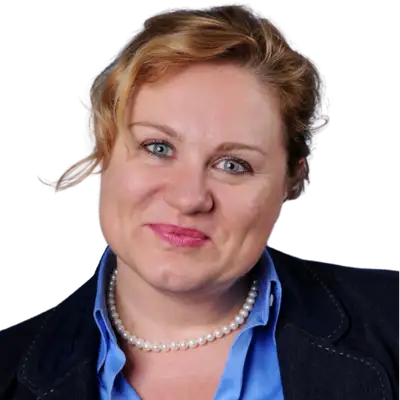
What you do today shapes what comes next—and navigating change doesn’t have to feel overwhelming.
Ready for Beyond is a podcast about growth, purpose, and finding your way in a world that’s shifting fast. Host Gina Hudel shares real conversations and practical tools to help you move forward with clarity, courage, and a little more ease—while still making space to enjoy the day you’re in.
From personal pivots to leadership transitions, career shifts to social impact, this show is for people ready to make meaningful progress while staying grounded in what matters now.
Whether you're leading a team, rethinking success, or simply opening the door to something new—you’re in the right place.
Let’s go beyond.
Gina Hudel: [00:00:08] I'm Gina Hudel, and welcome to Ready for Beyond. Ready for Beyond explores how we move forward in a world that's changing fast, from AI to global dynamics. It looks at how the lives we build lead us to shape our future. We'll examine growth and personal fulfillment with practical takeaways and candid conversations that open the door to possibility. Subscribe on Apple, Spotify, or your favorite podcast platform so you don't miss any episode of this journey. Let's go beyond. Richelle Flint trained as a chef and spent more than 15 years working in high pressure kitchens. Then Covid hit, life changed direction, and she found herself asking a difficult question: what comes next? This is a now and next story. Richelle, welcome.
Richelle Flint: [00:01:10] Hello. Hello.
Gina Hudel: [00:01:11] Hey, Richelle, let's start with your world before all of this. You trained as a chef and spent years working in the culinary world. What drew you to that path in the first place?
Richelle Flint: [00:01:23] I started very young. I found a passion of mine early on in life, and what drew me was, I guess, the way that food could bring people together. I really enjoyed making people happy through food and creating community around food as well.
Gina Hudel: [00:01:48] It's as beautiful as that right? I mean, that's utopia. And then when you got yourself in the environment, you studied for it, you worked your way up. What was it that you absolutely loved when you look back and say, I loved that?
Richelle Flint: [00:02:01] Maybe the adrenaline rush, like after a really busy service. There's always such a vibe in a restaurant, in a cooking environment.
Gina Hudel: [00:02:14] So satisfaction of a job well done.
Richelle Flint: [00:02:16] I guess so, yes. Thank you.
Gina Hudel: [00:02:18] I like that. Cool. Now, satisfaction of a job well done. And part of a job well done is that it's seamless. Nobody sees what happens behind the scenes. Any little insights? You know what the reality is behind the people don't always see?
Richelle Flint: [00:02:35] It's a lot of sacrifice. So a lot of late hours, long hours, physically demanding, stressful, the adrenaline rush. There's always a come down from that as well. So being on your feet all day, especially someone of my stature, which is a little bit of a shorty, being in an environment that is created for average individuals, your body does take a toll.
Gina Hudel: [00:03:06] You see the glamor, the person up front, or even when the chef comes out and they've got this great outfit, they look very professional. We're not seeing that toll behind the scenes. We're not seeing the long hours, the wear and tear on the back. I have some insight into the restaurant industry, and I was always astounded, like, what do you mean you don't open for like six hours? Like, yeah, you don't understand. We had to wait. You know.
Richelle Flint: [00:03:26] Prep is being prepared. I mean, I would say 80% of cooking is cleanliness and organization. And then the other 20% is creativity and like actually doing the job. So yeah, you have to be clean. You have to be organized. You have to make sure all mise en place is all ready to go for service, right? These are things that we do to prepare to be able to have a somewhat smooth service. But that can change on a dime.
Gina Hudel: [00:04:00] I don't know that there's anyone who is actually working that can't relate to this.
Richelle Flint: [00:04:06] True, true.
Gina Hudel: [00:04:09] And for anyone who's like, oh, this topic isn't for me, I think everyone's going, oh, yeah, actually my world's a lot like that too. So when you look back and you have that great satisfaction, and then the reality was you're feeling what's going on with the body and the exhaustion. What do you think the signs were then that were there long before the change happened? Because you had a career change, and that's what we're gonna be talking about more. Covid happened, but before that, I'm sensing that maybe there was a classic shelf life, like the food here.
Richelle Flint: [00:04:41] I had a stint at a restaurant, a three year stint and was really burnt out, I think mid-career. And that was the first time in my life where I was like, maybe this isn't the right career for me anymore. And I did take a year off cooking to explore that. And that's where I dove into health and wellness and worked at a health food store, just to give myself time and space and an opportunity to learn something else at the health food store. And I enjoyed it, and I learned so much. But then I got an opportunity to work for two incredible women who are making major changes in the industry because, yeah, a lot of the time, the pay is very, very low and the hours are very, very high and lots of sacrifice. So working for these two industry leaders at a livable wage, and just really nice to be a part of a community and a restaurant that was supporting thriving versus surviving. And it was nice to end on that.
Gina Hudel: [00:06:00] I'm almost seeing this as a reflection. It's almost like you took a sabbatical.
Richelle Flint: [00:06:05] Pretty much. I think it was a blessing to understand early on in my life which path I wanted to go down and invest time and money into that and energy, time, money, energy. And when you get to a certain point in your cooking career, you either continue being a supporting position or you become an entrepreneur and you open a restaurant and do your own thing. And when it came down to that, that was just something for that next step, that was something I wasn't interested in doing just because of the industry and the saturation and whatnot. But yeah, it's really nice to have the time and space. I mean, at that point, I realized like when I had the big burnout, after a three year stint, I just had an opportunity to sit and listen and figure out, okay, well, is this something I want to do? And then I thought motherhood would be the next step for me and was waiting for that to happen to make a major change in my life. And when I started having fertility challenges, I think I got to a point where I was like, I can't wait for this.
Gina Hudel: [00:07:29] You were insightful along the way. Sometimes, your body forces the hand. You took the time to reflect when you took a slight sabbatical. Because a lot of us can't take an unpaid sabbatical. You kind of went adjacent and interesting to me, when I look back, you're adjacent sort of led to the next path, right? So it was the food and the health, and now you're going down this health path. I think now we can let the listeners know you have gone down the road of Traditional Chinese medicine. You've now gone down the road of acupuncture and they're like, wait, what.
Richelle Flint: [00:07:59] Took the plunge, jumped in. In my second year of practice right now, which is really exciting and challenging. This was pre-COVID. During Covid, the restaurant, the last restaurant that I was working at, we ended up having eight months off. Essentially. We had eight months off, which was the first time I had ever had time to sit. This is a very privileged thing to say. We were fine just being on CERB. I knew that I had a job to go back to once we figured things out, and that was the first time I was able to take a beat, sit with stillness and really contemplate, is this what I want the rest of my life to be like? But this was also a huge year of challenges, like health complications for myself. So, it was really interesting and getting an opportunity to go back to work after Covid, things had changed. Instead of being open seven days a week, the restaurant was only open four days a week, which was fine for us. And it was like a slow build, kind of like reopening, pivoting to take out first. Covid was such a blur, right? Two years of pretty heavy lockdown and what that looked like for the restaurant industry.
Richelle Flint: [00:09:32] I think you had the opportunity when we ended up reopening to go in dining, but there were a lot of rules. So we just decided to do takeout and did that for a little bit. Anyways, it had changed and I think I had changed. The seed had been planted. I think back to my health food stint where I did a basic nutrition course, and there was a small brief chapter on Traditional Chinese Medicine. And when I was going through a really challenging time in my life, I found that it really helped me. Acupuncture specifically helped me get through this period where I felt very stuck and didn't know what the next steps were. So I found that it was very helpful for that. And then I started to think, well, hmm, I wonder if this is something that I could do, even based off of my experience, you know, I had a pretty traumatic hospitalization after that. It just was clear to me that there needs to be more health practitioners out there that, from my experience, are providing compassionate care. And specifically for me more about being more interested and like more studying and research needs to be put the emphasis on like women's health, essentially.
Gina Hudel: [00:11:08] What I'm seeing here, and correct me if you think that I'm not seeing correctly, but we have data points that inform our decisions. And so you have the training and you worked in the restaurant industry and you loved the service there, and you had that little mini sabbatical in the health food store. That was a data point for you. And it was sort of adjacent. So you're seeing that circle is expanding and your health crisis. Thank you for being so generous and sharing such a personal experience. But those observations then became data points. How do we make our decisions? We are informed by data. Some of it is concrete data. Some of it is observation. You're out there, you're living it, you're seeing it. You're talking to patients. You're talking to professionals while you're waiting for something to start or knowing you, you're engaging in a conversation while you're having a treatment. I mean, I have no doubt, right?
Richelle Flint: [00:12:01] Of course.
Gina Hudel: [00:12:03] You're gathering all this data. You've had a few more years of life behind you, some ups, some downs, some working. And so this opened your eyes to this world of acupuncture and, and not acupuncture only as it is, but also how you could actually bring to that field. But still, it is a major step. Where did you get the confidence to move forward to something new?
Richelle Flint: [00:12:28] I listened to the little voice inside me that said that I could, but it wasn't loud. It was pretty quiet. But when that voice kept getting louder, like to start, it was quiet. But like once it got louder, it was time to make a decision, because I felt stuck. I wanted to learn and move differently in life. And where did I get the confidence? I guess having conversations with family, friends, being inspired by the therapists around me. I always say that another point of going to school for Traditional Chinese Medicine was birth on the table of my RMT as well, where she was very supportive. She saw me throughout my culinary career. And then yeah, having the experience of going for acupuncture for my fertility treatments. Being in the care of those therapists as well. The little engine that could, I think I can, I think I can, I think I can, and then, the more you hear it, the more for me, I was just like, yeah, well, what, what am I waiting for actually? I guess there's a pretty key piece is I did have I feel like a near death experience. I feel like I got an opportunity to make some big changes in my life. And at this point, I'm like, what are we waiting for?
Gina Hudel: [00:14:05] Not that we wish a near death experience at all.
Richelle Flint: [00:14:08] No, definitely not. Definitely not, not putting that out there. But life is short. I think it became very, very apparent to me that life is short and anything can happen. And if something's not working, like you got to change it. You know?
Gina Hudel: [00:14:24] Part of the courage must have come from a near death experience. I was thinking about doing it again, like going back to school and was it harder than expected? And what surprised you about this transition? Because you've been so far, you started a career before. So like, maybe it's going to be just, and you went to the health food store before, maybe it's going to be the same-same or you're like, oh, actually, newsflash, this isn't exactly what I thought it was going to be.
Richelle Flint: [00:14:53] Newsflash it was a lot harder than I anticipated for sure, going back as a mature student. I really questioned, can I handle tests? Am I capable? So yeah, it was very challenging for me, but also extremely exciting and fascinating. And I think that's what carried me through. And the opportunity, and just diving into something new is always something that pushes me to take the plunge because it's good to switch it up. And it was a lot more intense than I anticipated, that's for sure. But hey, I did it. I'm on the other side. I had a really, really pleasant experience at my school. It felt very serendipitous, especially when I was researching which school to go to. OCTCM was just one that felt really aligned with how I wanted to bridge into that new career, health and wellness industry. So definitely amazing to work on a beginner's mind and seeing things like I'm just this little baby in a new world. It allows you to expand and gives you an opportunity to change. And that is a part of life.
Gina Hudel: [00:16:24] Some of it is new. It's still your core essence. It's still a service to others.
Richelle Flint: [00:16:28] That's been really interesting to see how many transferable skills there are. You wouldn't think it based on the polarity of the industries, but lots of transferable skills and just refining them and tapping into something new. I always joke like I traded one white coat for another because of medicine. We're in the medicine world. And I traded one metal utensil for another, right? Now instead of using a knife, I have an acupuncture needle. So it's interesting to me and reflectively it's similar, but so different.
Gina Hudel: [00:17:17] Is that maybe part of your tip to people who are thinking of making a change?
Richelle Flint: [00:17:23] Yeah, I guess give yourself time and space to dig a little bit deeper. If you feel restless, right? Maybe take some time to sit and understand why.
Gina Hudel: [00:17:35] Right. So if you think about the people, what is it that they might often ignore about themselves for too long before realizing something needs to change? And I ask you this in part because you've gone through this transition. And I ask you this because in the kitchen, I know there's a lot of coaching and mentoring. Now you're a therapist and no doubt people, when they're on the table getting acupuncture, they're looking to you for help in many regards.
Richelle Flint: [00:18:04] People usually show up when they are needing change. I do praise my patients regardless because it's hard to show up for yourself. The fact that they even made it to the appointment and were curious and wanted to change something that has been bothering them, whether it be pain or a condition that they're going through like a health condition, mental state, different external circumstances. We're human. We're in the human experience, right? There's so many different ways to function within the world. And usually the body does signal to us what's not aligning. But it's like, are you willing to listen to that, right? And I find that acupuncture is really great at being able to sort of rebalance the equilibrium within the body, by listening and observing those signals that are being sent. I think being curious and showing up for yourself is a good way to kind of start figuring out a way to change if you're feeling stuck.
Gina Hudel: [00:19:24] And it might be small changes and you're not necessarily going to go make a whole career transition, or it could inform a career transition, or it could inform a side gig or some volunteer work. And maybe that's fine.
Richelle Flint: [00:19:37] Yeah. Yeah, exactly.
Gina Hudel: [00:19:39] You've left one busy world or another busy world insomuch that it still works. You still have to get yourself to the clinic and you still have to schedule. You still have to be very professional. There's still admin that goes with it. You still have the everyday activities that normal everyday people have to deal with. Richelle, tell us, how is it that you unwind after a long week? And as you may have heard, this is a question that we ask everyone because frankly, really we are all the same at the end of the week. We're a little tired right now.
Richelle Flint: [00:20:08] What I've been doing and what really fills my cup is connecting with nature. So going into a ravine, I mean, as silly as it is, there's a really beautiful cemetery that I walk through in Toronto. So Prospect Cemetery, you can find me there in the winter time. It really goes with the mood. But yeah, I always try and find little pockets of nature within the big bad city, or make plans to take a hike outside of the city. A lot of my family's in the rural areas and smaller communities, so I'll go and visit my family and make a point to connect with nature, because I think it's very important to connect with something bigger than us.
Gina Hudel: [00:20:57] Love that. And what a nice way to close. Richelle, thank you so much for sharing your story.
Richelle Flint: [00:21:03] You're so welcome.
Gina Hudel: [00:21:05] Things can sometimes change before we're ready for it. But you know what? We are ready for it. I think this is basically the bottom line here. We have to just listen to what's going on and be observant and take the data points. You've been very inspiring.
Richelle Flint: [00:21:19] Thank you so much. It's been an honor to chat with you.
Gina Hudel: [00:21:23] Thank you to the listeners for listening to Ready for Beyond. If you enjoyed this episode, please subscribe on Apple Podcasts or Spotify and share it with someone who may be navigating their own now and next moment. Keep moving. Keep growing, and keep growing beyond.