Subscribe
Share
Share
Embed
Join Matt Ferrell from the YouTube Channel, Undecided, and his brother Sean Ferrell as they discuss electric vehicles, renewable energy, smart technologies, and how they impact our lives. Still TBD continues the conversation from the Undecided YouTube channel.
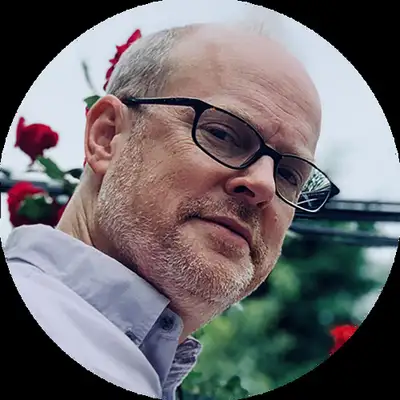
Sean Ferrell: Today on Still to Be Determined. We're talking about shocking news. Yes, two can play at that game Matthew, we're having fun with the puns. Hi, everybody. Welcome to Still Be To Be Determined. This is the follow up podcast Undecided with Matt Ferrell, which takes a look at emerging tech and its impact on our lives. And here on Still to Be Determined, we follow up on Matt's videos, dive a little deeper and take a look at the comments and what all of you have been having to say about his program and this program. I'm Sean Ferrell. I'm Matt's older brother. I'm a writer. I write some sci fi, I write some horror, write some stuff for kids. And I have a thing on my nose. Let's get that out of the way. This is something I haven't even talked to Matt about, even though he and I have been chatting on camera. And he, being the polite person that he is, didn't say, hey, Sean, looks a little bit like somebody put a cigarette on your face. What's up with that? Well, for anybody who's just listening to this podcast, first of all, we appreciate viewers and listeners regardless, but for people on YouTube, yeah, you're getting to see the. The whole Rudolph glory that it is. I, at the very tip of my nose, have what looks like a thumbprint sized at this point, sort of a scab. I recently went to the dermatologist and lately my dermatologist has been giving me this response to questions about my overall skin health. Well, yeah, welcome to aging.
Matt Ferrell: Yeah.
Sean Ferrell: And I'm like, that's not helpful. Stop saying that to me. So he said to me recently, yeah, those little red dots and this one particular spot on my nose which seems to just shed skin. And then when it sheds that skin, it's a little red, it's a little sore, and it doesn't look so great. And I'm like, what can we do about that? And he's like, there's not really anything to do, although I could freeze it off. And I was like, all right, so let's try that. Enter this.
Matt Ferrell: Yeah.
Sean Ferrell: Here is the result. A surprisingly painful jet of cold air coming out of the canister. And as it was going on, I thought, well, this isn't that bad. And then it continued. And I thought, well, now it's a little bit worse, but it's still not that bad. And then it continued further. And I thought, I'm holding my breath and I'm scared that this is never going to stop. And then it did. And then I was like, whoo. Okay, that stings a little. And I went to work and everything was fine. And then I came home and my wife looked at my face and she said, oh, my God, what did they do to you? It blistered, and now it's kind of scabbed and it's never. I mean, what am I gonna do? I walk around like this. This is how I look. This is me now.
Matt Ferrell: The reason I didn't say anything was because I kind of knew what it was. It's like, I saw it was like, oh, of course. It's like, it's genetics. I'm having the same kind of stuff done all the time, dad did. So it's kind of like, oh, it's just part of being a Ferrell. Yeah, you take.
Sean Ferrell: You can take the pale man out of Ireland, but you can't take the Ireland out of the pale man. This is the result. And so, viewers, I hope you enjoy the conversation and I hope you enjoy the program, and I hope you can look away from my hideousness.
Matt Ferrell: Just talk with your hand in front of your face.
Sean Ferrell: It's going to be the Phantom of the Opera for me for probably a week. Anyway, as I mentioned, we like to follow up on Matt's videos, and his most recent one had to do with zinc batteries and a recent discovery which may prolong the life of a zinc battery in ways that could drastically change the overall expenditure that it takes to do long term storage. Before we get into that, though, we always like to take a look at what you had to say about our previous conversation. So from episode 283, this is a conversation we had around solar panel setup and what people could anticipate. And one of the things we've always talked about on this podcast is the right tool for the right job and look at your context and discover what you need to do and how it can work in your neck of the woods. As frustrating as it is, Matt is always talking about, oh, I set up my solar panels like this, but I am in Massachusetts, I am in a specific place in Massachusetts, and therefore, local regulations, the way the power grid works, blah, blah, blah, may be different than your experience. Make sure you know what you're getting into. That conversation kind of blew up in an interesting way in the comments where Steve Story showed up and said, Matt's experience is backwards from his experience in Texas. He wrote, winter uses one third of the electricity of summer with 60% of the production. Winter is when I produce and give back in the summer, which, that's funny, the inverse of Matt's experience, which then led to Junkers jumping in and saying it's the exact opposite here in California. Interesting. Now, on a per capita basis, the average Texas household uses two to three times the electricity that the average California household uses. Mostly weather related. I would expect AC use in Texas in high summer to be three times what AC use in California is in high summer. At least coastally.
Yeah, maybe two times what it would be inland California. Which then led to another person jumping in and saying, only because in Texas we tend to use natural gas for heat. If we use electricity for both heating and cooling, the scale wouldn't be that way. So I think I wanted to bring this in just to highlight for all our viewers and listeners as much experience as Matt has and the knowledge base of the people that he talks to and the context of the program and what we talk about, it really does boil down to what is the lived experience where you are and make sure you're looking and comparing apples to apples and oranges to oranges. And don't run off in Texas anticipating that you can model your usage and setup the way that somebody in Massachusetts or even California. The differences here I found really interesting because I wouldn't think in my head Texas and California wouldn't strike me as being all that different.
Matt Ferrell: I know, but like I have friends in San Diego and it's funny to me when we've talked about like how the weather is in the locations like in the middle of summer here, Massachusetts, Massachusetts, you in New York, it gets surprisingly humid here. Yeah, you wouldn't think that for the Northeast, but oh boy, it can get very humid. Guess what doesn't happen in San Diego. It tends not to get super humid. So it's kind of like this idealic. Oh, it might be 85, but there's very little humidity. So you can just leave the windows open. You feel great because you're in the shade and it's all nice. It's like in here it's like 85 and like 90 humidity and you're dying in the shade and you just need to get air conditioning. So it's, it's interesting how like this Texas hot, humid, you need to have the AC going. California, you may not need to if you're on the coast. So there's, it's all where you live.
Sean Ferrell: Yeah, yeah. There was also around the topic from last week, the gel that allows solar panels. And for anybody who missed this conversation, this is going to sound like something out of a Cronenberg film. A gel that's been developed that allows your solar panels to sweat. Finally, finally, I've longed for my solar panels to be as uncomfortable in the heat as I am, and now I can live that dream. Babarudra jumped into the comments to say, you know, with all the sweating I do, my efficiency should be to the point of omnipotence. Yes, Babarudra.
Matt Ferrell: That's fantastic.
Sean Ferrell: I like that comment very much. There was also around the topic of the cooling effects, the efficiency effect of the sweat on the solar panels. I mentioned it would be interesting. We've talked about solar panel farms that are located above farmland so that you end up with the farmland. The growth of the plants beneath the panels aids in cooling, and the panels provide appropriate shade to the plants that are growing. So it's this nice symbiotic relationship with energy production and food production combined. And I mentioned, wouldn't it be interesting if the gel was able to sweat droplets of moisture, effectively pulling moisture from the air and dropping it back onto the plants, almost like a terrarium environment? But DW jumped in to point out to me the water has to evaporate to cool efficiently, not drop off. So my question to you, Matt, is, are you aware, does this gel simply absorb and release, or does it actually physically drop sweat the way that, like, you or I would if we were exerting ourselves? And you reach that point where, yes, the point is evaporation, but the lived experience is, this is disgusting. So does the gel.
Matt Ferrell: So how does a solar panel feel?
Sean Ferrell: How is the solar panel experiencing this? Is the solar panel like, ooh, I'm a little spongy? Or is the solar panel like, this is just. This is just fine.
Matt Ferrell: It's probably going to be. I'm a little spongy. It's kind of. It's what DW is bringing up. It's evaporating. So it's like it's releasing that moisture that the sponge is holding, and that evaporating water is helping to carry the heat away.
Sean Ferrell: Right.
Matt Ferrell: It's the same reason why the plants underneath of a panel are doing the same thing, because the plants are releasing kind of water vapor that is helping to cool the panels that are above them. So it's the same effect, just organic, versus this artificial sponge. I still think what you're talking about could work because, like, if it's. If they're able to release the water in not as a vapor, but like, basically wring it out and you're dripping on the plants, then the. Then the water on the plants, you still get the benefit of it evaporating and then ergo, cooling the panel above it still get that, that effect. So I think everybody wins here, Sean. That's kind of what I'm saying.
Sean Ferrell: The real winner will be when they can apply this gel to my underarms.
Matt Ferrell: Oh, Sean.
Sean Ferrell: That's when society will win. Also from last week's conversation, this one from Our Visions responded to a brief conversation we had around basically useful life of a product and when companies like Microsoft or Apple or whomever stop providing update service to older versions of their product. Like we're all familiar with Apple products coming out with, here's the new phone, this one has a RAZR in the handle and oh, we're not going to be supporting Apple 9S anymore, the iPhone 9 anymore. So that conversation at one point you and I mentioned things like, well, they're not going to release their proprietary software because it could potentially create all sorts of terror, terrible security glitches. Well, our Visions has a more cynical take, but I don't necessarily disagree. They write Apple won't open source iOS because the community would actually make it far better. They would then be locked into our ecosystem. I thought this struck me as a little bit of a Rorschach moment, like from Watchmen where I'm not locked in here with you, you're locked in here with me. It feels like. I don't necessarily think that the community would right out of the gate make the product better, but ultimately I feel like this is touching on a nerve that I think a lot of major corporations do inherently. Fear of the community being able to work at a level like open source software can do really remarkable things. And in fact open source software has a huge role to play in the ongoing viability of the Internet. There's a lot of the undergirding stuff that holds the Internet together and props it up that nobody owns. And it's maintained in some cases by just well meaning programmers who just go and tootle around on things and fix things and find bugs and do good stuff because they're good people. So the ownership issue is I think an interesting one that our Visions points out.
I don't bring this up to initiate a huge conversation, but do you see similar terrain where it's the open source community and the opportunities that they are looking for to actually engage with the mass scale of products versus the corporate mandate of, well, if we open the gates too far, we lose control?
Matt Ferrell: Yeah, yeah. Well, commercial businesses, they want to build a moat and insure their business. So there's a clear reason why they wouldn't. But at the same time there are reasons why having a closed sourced software could be beneficial for security reasons. For other, there's, there's, there's legitimate reasons why it can make sense. Um, and then on the flip side, I don't know if I agree with the idea that it would make that far better because I use a lot of open source software on my little Home Lab server and I have for years user experience and user interface design in open source software kind of sucks. It's kind of abysmal. So it would not necessarily make it better. But then you've got things like the Home Assistant, which is a smart home software, which is open source and is probably the best platform to use for home automation. Smart homes. It's incredible. And it's gotten incredibly good at its user interface design today where five, six, seven years ago I would have said stay the hell away from it. It's too confusing and difficult to use. And part of the reason for that is it's now kind of a nonprofit organization. They have full time employees that are dedicated and experienced user experience design. And so it's like, yeah, it's, it's an open source project, but it's being managed by money because they're earning money from subscription services to be able to get the people who know how to do this stuff well and make the product better. So it's like it's not an either or. I think there's like this kind of squishy place in the middle where we end up with great stuff like home assistant the way they're doing it. Where true open source it can be, it can be rough.
Sean Ferrell: Yeah, I think, and I agree with what you're saying. I also, I do agree with our vision's, yeah, big picture view of like, yeah, they don't want to release it because what if they, what if somebody did make it a better product? What if somebody took iOS and was just like, oh, I've just added this thing and now people are really going to love this.
Matt Ferrell: Exactly.
Sean Ferrell: And I also think that what you're describing is sort of the flip side of what I see in our vision's comment, which is comfort with going in under the hood. Like a person who says, oh, I like this car because it's easy for me to go in and repair. That's that person's experience because you put Sean in front of that car and say, okay, go in and repair this. And Sean's going to be like, do what with the doohickey now, like it's not going to end well for Sean or the car. Yeah. So. And that's about me as a individual. And you're describing, you are far more tech savvy and getting under the hood than I do. And for you to say, yeah, some of this user experience is really out there and it's too complicated and it's. And it's not a pleasant experience for you to say that to me is a little bit like a doctor saying to somebody who's a physical trainer. Surgery is difficult. I'm no crap. This is. We may both work with bodies, but I'm not cutting anybody open. So for me there's the question of okay, is our visions somebody who themselves is super comfortable going in under the hood and looking at things and cobbling together their own solutions to problems which I have so much respect for.
Matt Ferrell: Me too.
Sean Ferrell: And then that then hits a new bleeding edge in the form of I can't help but wonder. And this is the push pull of our current society around AI and the ethics of it, the use of it, where we land with it. The companies that are developing AI showed up out of the gate and were like, here's AI, finally you can use it to make art. And everybody was just like, either oh, this is fun or you're stealing from me. And was this what we were waiting for? And it's not. I actually wonder is the open source software field where is what we've been waiting for AI to come and do? Because does your user experience change fundamentally when it doesn't matter who's made the open source software? If you can talk to an AI and say, I want you to make this program do this and the AI can say, yep, I can do that, no problem. Does our, it, does our user interface become whatever AI home assistant we use? And it does not matter from the developer perspective whether they've developed the clunkiest, stupidest interface or not. If the AI can say, oh, you want to network all these computers through this open source program and you don't know how to do it and set it up securely, I got it, I'll take care of it.
Matt Ferrell: Is that we're at that point right now. Yeah. Yes, 100%. That's what we're looking at. Like the new operating system is looking like it's going to be some kind of AI. That's where this stuff is heading way down the road. Not now, but way down the road. So it's like I'm doing things with my home lab, Sean, that are beyond my skill level. And the only reason I'm able to do some of that stuff is because I'm using Claude. You know what I mean? I get stuck. I'm like, I'm having trouble. Here's what's happening. It's like, oh, just open up this file and type this thing in there and it'll work. And I put it in there. I'm like, holy crap, it solved my problem. And now it's running exactly like it wanted to do. So AI does unlock this for more novice or less experienced people, but there's still that hurdle you have to get over at the moment.
Sean Ferrell: And finally, the best worst comment from last week's episode. This one from Tron Jockey who says, oh, look, it's Adam Savage with Matt Ferrell.
Matt Ferrell: Yes, that is great. Yes, Sean. He kind of.
Sean Ferrell: Two responses. Two responses to that. First, yes, you can tell I'm not Adam Savage because I have this on my nose. He doesn't have this. Second. My wife and I were getting ready for bed the other night, and we like to watch programs as we. As we try to fall asleep. And I had opened up YouTube while she was getting ready for bed, and I was just kind of clicking through, seeing what new videos were available, and she turned and looked at the screen quickly and then turned away and did something, and then stopped and turned and looked again and was like, oh, I thought that was one of your videos with Matt. It was an Adam Savage video in which he was talking directly to the camera, and she was like, oh, I thought that was one of your videos with Matt. And I was like, all right, so either I could steal Adam Savage's life, which would make complete sense, or he could steal mine, which. Why would he want to do that?
Matt Ferrell: Because you're so handy, Sean.
Sean Ferrell: Because I'm so. I'm so good at fixing stuff. Anyway, thank you, Tron Jockey, for pointing that out. I enjoyed it even as my wife revealed that she might be in love with Adam Savage. Anyway, on now to our discussion of Matt's most recent the surprising battery discovery no one saw coming. This is. I mean, how many battery videos have you now made, Matt?
Matt Ferrell: I've lost count, Sean.
Sean Ferrell: A million.
Matt Ferrell: It feels like sometimes.
Sean Ferrell: This is episode 283 of this podcast, I believe. And 285.
Matt Ferrell: Oh, look at that.
Sean Ferrell: Time flies.
Matt Ferrell: Yeah.
Sean Ferrell: And I feel like of the 285 episodes we've recorded, I think approximately 500 of them have been about batteries.
Matt Ferrell: I know.
Sean Ferrell: What I do like about this one is it seems like. And we'll get into the comments in a moment. But it seems to me like, is this in fact a discovery that doesn't change anything about how they manufacture? Is this merely about usage?
Matt Ferrell: Well, I mean, there are differences in how the chemistry works and how they put it together and stuff like that, but it's not like some radically different thing. It's more of a oh, hey, didn't know that could be done kind of thing. So it is one of those kind of. That's why I made the video, because I found it fascinating of like, holy crap. It's like this is kind of opening up an understanding about how zinc works in a battery that we didn't know before.
Sean Ferrell: Yeah.
Matt Ferrell: It's just very cool. So cool.
Sean Ferrell: So it's effectively, you get your zinc battery, it's running away for a period of time, and you get the growth on the dendrites. The dendrites grow and potentially will break the barrier between the anodes. Yeah, the anode and cathode. So you end up with that barrier breaking. And when that barrier breaks, the battery is dead, essentially.
Matt Ferrell: It's going to short circuit.
Sean Ferrell: So you can't use this method to repair the barrier, but you can get rid of the dendrites. Or could it reawaken a battery that was effectively thought to be dead?
Matt Ferrell: Well, that's the cool part. But one of the research papers we talked about was it can repair a battery that's got like. If you've been doing slow charging and it's getting like the surface is getting all roughed up and little dendrites are starting to grow. And then you do this supercharging, the fast charging on basically flattens it back out again. It's like. It's kind of crazy. So it's like, it's. It's not saying that we should be fast charging all of our batteries. This is specific to the zinc batteries that they're researching. It's not nickel manganese cobalt. It's not lithium iron phosphate. It's specifically zinc.
Sean Ferrell: Yeah.
Matt Ferrell: But it's fascinating that one of the downsides to zinc, which was this dendrite growth problem and the shorter lifespan, it's like all they had to do was kind of like, put extra juice into it a little bit. It solves the problem, which is counterintuitive to other battery chemistries. So I just love how it kind of turned things on its head a little bit.
Sean Ferrell: Yeah. So on the ground is zinc. One of the batteries that is currently the also ran. It's got specific uses and certain areas where it's relied upon. But lithium is the big one where it's just like that's in our cars. That's what's running around in our phones, that's what's running around in our cars. What industries or areas of our current technological society are relying on zinc batteries in a way that, let's say five years from now they've got a process where somebody has tested and marketed a okay, now we have this way to do a quick zap to a zinc battery to effectively roll the clock back so we can start getting this out there. What industries or places in our lived experience are we going to say okay, that's now positively impacting us?
Matt Ferrell: It would be a lot of these better technologies. It comes back to this grid scale storage and your home. Like those are the two that I would think could benefit the most from this in the coming years because it's not as energy dense as something like you'd see in your EV. The nickel manganese cobalt, those kind of batteries. This has the chance to kind of go toe to toe with like lithium iron phosphate at some point. And that battery chemistry is wildly used in grid and home storage right now. And it's also becoming pretty popular in the lower end EVs that don't need huge amounts of range. So if you're looking for a car that's got 2 to 300 miles of range, more cars are being built with lithium iron phosphate. Now it's heavier, but it's super cheap, like crazy cheap. And it's incredibly safe and reliable and long lasting. So it's like these new discoveries with zinc that I'm talking about here make it far more competitive with that. So it's like there is a possibility maybe down the road that this might show up in EVs but it's like I would not be betting the farm on that yet. It's more of a grid scale and home use I think is where this would most likely really start to streak.
Sean Ferrell: Do you think there's a possibility that somebody would show up and say, like we're going to make an EV that we're going to completely market to city consumers with the it's got 100 miles of range per day, but you can charge it in 10 minutes maybe?
Matt Ferrell: I mean one of the things we brought up in the video was one of these. When you apply some of this research, they showed that it could make a battery last for 100,000 cycles, which is essentially a lifetime battery. It's forever. And so it's like if you're putting home energy storage like I put batteries in my garage. I want a battery that's not going to catch fire, it's super safe and that I don't want to replace it in 10 years. Well, here's a zinc battery, buddy. It's not going to burst into flames in your garage and it's basically going to outlast the house. You pay for it once it goes in and you're basically done. That is incredibly compelling for a battery technology.
Sean Ferrell: There were a couple of comments right off the top that I put both of them here, even though there's a lot of overlap between them. And I did that to demonstrate that there was a certain percentage of the audience that was looking at all of this and saying similar things. So to share the first of them, there is Levin Spall who says every battery tech video should include a summary section answering these questions. When will it be on the market in actual products? How much will it cost per product unit compared to current ones? How does it perform? Energy density, power density, charge speed and other features like flammability, lifespan, temperature requirements, etc. Soothsayer then showed up later to say very similar things. You are missing some basic information required of a battery and energy density, power density, cycle life, operating temperatures. So I bring these up not to say, okay Matt, give us all that data, but to give you an opportunity to say what I anticipate will be, well, you didn't get into that because this is not necessarily new battery. This is new thing to do to batteries that do currently exist. These zinc batteries are out on the market. So this is about product life, not new product.
Matt Ferrell: Correct? 100%. That's.
Sean Ferrell: Yeah.
Matt Ferrell: Yes. So it's like there was a video we did not too long ago about a different zinc ion battery kind of breakthrough that had to do with the separation layer and making zinc batteries last longer. And we got into a bunch of these details in that video, but for this video it was a tangent because that wasn't the point. It's like it's not about a specific zinc chemistry. It's not about a specific battery on the market. It's, it's one of those. What's one of the problems with batteries that we think we understand? This is a completely different understanding. So it was about the research, which is why you can't say, well, how much does it cost? I don't know. The researchers don't know. It's like, well, what's the energy dense going to be? Well, it's like apply this to that battery over there. And what's that energy density over there? It's like, it's, it's, it's hard to apply it that way, which is why I didn't include it. Um, so it, this was a, a weird video because we're touching on this, but it's like we weren't squarely in that camp. It was more about the research paper specifically.
Sean Ferrell: Yeah. I want to skip over the next comment and go to the one after which I think ties into what you just said. This one's from Artie Chokier. Arty Choker. I think it might be Artie Choker. Usernames. I always give it my best shot. I apologize to anybody to whom I mangle or don't get the pun or the full stream of words. So Arty Choper writes, wow, zinc ion batteries sound great. Can't wait to never hear about this again. I appreciated the joke.
Matt Ferrell: Me too.
Sean Ferrell: But.
Matt Ferrell: But yeah.
Sean Ferrell: They are out there. These are things that are on the market. So this is one of those cases where I get the knee jerk response of people are always talking about the newfangled thing and then the newfangled thing never comes up. And that happens all the time. And terms get thrown around as marketing speak in ways that are really not helpful. So you end up with what's the carbon filament, the carbon nanotubes and graphene and stuff like that. Everything is a nanotube now. Good news, nanotubes are finally in your shoes. And no, you're not doing anything with nanotubes. Like, this is garbage marketing speak. So there's a lot of noise and it's hard sometimes to realize that the future you thought you were waiting for has been here for 10, 15, 20 years. This is one of those cases. Matt has talked about battery technology that is not currently on the market. This is not one of those things. This is a change in use of a product that currently exists. So again, tying it back to the previous two comments. We understand the desire for more information, but it was outside this video because the information's already out there.
Matt Ferrell: But I want to get on a little soapbox, a little mini rant about. There's two kinds of comments. They don't get under my skin, but I get frustrated because there's this sentiment which is hype machine that will never happen, like wake me up when it's here kind of attitude. And then there's another one which is like, oh, this new technology that's actually on the market you're talking about sounds great, but it's gonna, it's still too expensive or it's, it's never gonna be as energy dense as it needs to be. It's never gonna be able to do this right. So it's kind of like a looking at things in its current state with blinders on, acting like this is the way it's always gonna be. And then there's the people that are like, wake me up when it's finally here. I do both kinds of videos because I'm constantly trying to address these kind of comments. So when I, when I'm like. And the people are like, it's always going to be like this. And it's like, no, if you look at the research of where things are heading, look what they're going to be able to do down the road. And then you get people going like, wake me up when it's here. So then I make a video about here's a product that's actually on the market today. And then you get people going, eh, it's never going to be able to do X. So then I do another video about like, hey, look what it's going to the future. So it's like I'm trying to do both and, and it's really funny to me on the comments you get the same. It's like, I can't win. I can't win. No, I just can't win.
Sean Ferrell: No you can't. And that's why you, I think you've fallen into a pattern that bounces between those two extremes and it's to the service of the whole audience, including the people at the ends, the people at the extremes who are making these comments. Yeah, you're ping ponging back and forth between this is a product that currently exists. Well, it's not as good as it could be. Well, here's where that product might go. Wake me up when it gets here. And there's your content. And I think that's kind of great. I think it's kind of like.
Matt Ferrell: But the problem is here's the thing I always wonder about because people also leave comments of like this channel only talks about things that never actually are here. Which says to me that they're only getting served up on their homepage my videos when it's about future tech. So from their perspective all I do is future tech. And I'm like, yeah. My response is always, how about you go to my homepage, hit the videos tab and then just scroll down the list of the videos I make and you can see that's not the case there's stuff that's very much right now that's available.
Sean Ferrell: Well, that's the curse of the algorithm we live in right now, right? You're going to be served what you responded to. And I hate to break it to people who are like, I hate videos like this. If you write a comment that says that you've just taught the algorithm to show you more videos just like that, because the moment you engage, the algorithm doesn't read positive or negative. The algorithm just like, oh, Joe over here, he always responds when it's about tech that's at the burning, at the bleeding edge. Joe loves those videos. Meanwhile, Joe's comments are nothing but. This is garbage. This is stupid. And I have myself gone through. I'm on the verge of having to do this again. I'm going to have to retrain the algorithm about what I want to watch.
Matt Ferrell: Oh, here's a pro tip. Here's a pro tip. Go into your watch history.
Sean Ferrell: Yeah.
Matt Ferrell: On YouTube, go to your history and find the videos that you watched that are triggering the algorithm to show you more cooking videos. And you're like, I don't want to see cooking videos. And just go in and just hit the little X on all the cooking videos and make them go away from your history. Problem solved.
Sean Ferrell: So you're basically programming the outcome. I've lost the thread of all the videos that actually help me calm down.
Matt Ferrell: Like, having something on the background and.
Sean Ferrell: Have it be like, and here, now we're going to talk about watercolor painting. And watercolor painting, you just want to mix some water with the paint, and then you got to put it on the paper. And I'm just like, all right, this is nice and calming. And what I'm getting now are things like, so you want to talk about politics?
Matt Ferrell: No.
Sean Ferrell: Like, no, please. And finally, as always, there's two more comments here. I don't know, Matt, if you want to address this one. This one was from Six, who jumped in to say, maybe I'm being weird, but Matt feels like AI today. Which spawned on an interesting conversation. Commenters jumped in on this. There was a little bit of back and forth, a little bit of clarification, because there was a camp that was like, yeah, he doesn't seem like a real person. To which Six came back and said, no, no, no. I think he's a real person in front of a camera. I just think the script was written by AI.
Matt Ferrell: Oh, God, no, no.
Sean Ferrell: So, yeah, okay. I just wanted to know if you wanted to address that.
Matt Ferrell: Yeah, I was going to say, sometimes I feel like AI, but the scripts are 100% human written. That is something that will never change. I will never stray from that. The only reason, the only places we use AI is like using Google Search. So, like, when we're starting a topic, I'll ask, like, perplexity, can you do a little research on this thing? What companies might be doing this? And it spins away for two minutes and spits out a report saying, here's five companies you might want to look into. And it gives me the links and I can then go and as a human, read those articles and read those papers and. And then we hand it off to. I have research and writers that help me pull these scripts together. Some of them have science backgrounds. And this script was written by somebody with a science background and writes research papers and does a great job. And so it's like, no, this was a hundred percent not written by AI.
Sean Ferrell: Yeah.
Matt Ferrell: So, yeah.
Sean Ferrell: Finally, the best worst comment from Ven Master. Let that zinc in for a moment. Slow clap.
Matt Ferrell: Yes, slow clap for that.
Sean Ferrell: Well done. So, viewers, listeners, people who have been staring at the dot of my nose for the entire time we've been talking, what did you think about all of this? Jump into the comments here and let us know. As you can tell, your comments are the engine that drives this program. We really do appreciate each and every comment, positive or negative, that gets conversations started. So keep it up. While you're jumping into the comments, don't forget to, like, subscribe. Share with your friends. Those are the easiest ways for you to support the podcast. And as I mentioned, if you're sick of seeing us and hearing our voices, well, blame the algorithm, not us. We're just two schmos with video cameras sitting and talking to each other the way we would even if nobody was watching or listening. Yes, I know that sounds terrible, but that's who we are. As always, if you want to support us more directly, you can click the join button on YouTube or go to stilltbd fm. You can click the Become a supporter button there. Both those ways allow you to throw coins at our heads. We appreciate the welts. And then we get down to the heavy, heavy business of wondering when this scab is going to fall off my nose. Thank you so much, everybody, for taking the time to watch or listen. We'll talk to you next time.