Subscribe
Share
Share
Embed
The World Cement podcast: a podcast series for professionals in the cement industry.
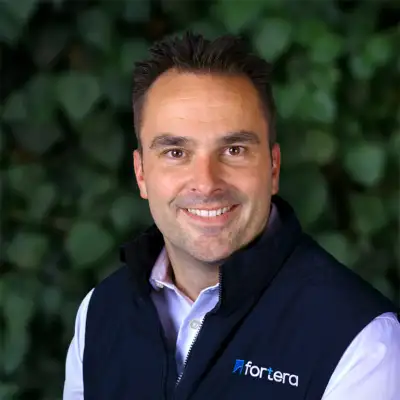
Hello, everyone, and welcome back to the World Cement Podcast with me, your host, David Bizley, senior editor of World Cement. In this episode, I'm joined by Ryan Gilliam, CEO and cofounder of Fortera, the California based low carbon cement company. So grab a drink, sit back, relax, and settle in as we spend the next twenty minutes or so exploring a new low carbon cement technology, getting to grips with the challenges around meeting standards and securing buy from end users, asking what it takes to build a low carbon cement company, and wondering what the future looks like for low carbon cements in general. Enjoy! I just wanted to take a moment to remind you to register for World Cement.
David Bizley:It's free of charge and gives you access to the latest issues of World Cement, both in print and online. Every issue comes packed full of regional analysis, technical articles, project case studies, and the latest industry news. Simply head over to worldcement.com, click the magazine tab, and register today. It's as simple as that. Happy reading.
David Bizley:So, Ryan, welcome to the World Cement Podcast. Great to have you with us.
Ryan Gilliam:I've been looking forward to this. Thanks for inviting me.
David Bizley:Okay. So let's kick things off with some introductions then. For those who don't already know, tell us a bit about Forterra. How did you guys start out, and what's the company's mission today?
Ryan Gilliam:Yeah. So the the mission of Fortera really is focused on paving the way to zero c o two cement. And the way we do that is by working with the cement industry, partnering with them, bolting our technology onto their existing plants, and allowing them to actually capture those CO2 emissions and put it back into the product. And so that that is the focus of Ortero, but it really has been a long journey to get to this point. And so just to give a bit of background, back in Climate Tech 1.0, there was a company called Clera, which was one of the first companies really focused on trying to reduce CO2 emissions in cement production.
Ryan Gilliam:And so I was actually an early scientist into that company. Actually, lot of Fortera employees were also at that company. And that company was very successful in creating a new type of cement that was actually 44% by weight captured CO2. And in that early company, we went through hundreds of thousands of hours of R and D, five years of piloting, created a 100 plus patents, put a 100 tons of it into real world applications. So it was a really successful company technically where we, again, we created this new cement that was almost half by weight capture CO2.
Ryan Gilliam:The challenge with it was fundamentally it didn't work from an economic standpoint. In those days everyone thought people would pay for green and pay for CO2, which I think we've all learned that there's a drive to solve for CO2 emissions, but it has to be in a way that's actually economically competitive and works within existing industries. Sure. And so for Forteara itself, really the fundamental difference is we took that technology that we had already scaled and proven out in the calera days as the foundation, but approached it from the perspective of how instead of trying to compete with the cement industry, how do we actually work with the cement industry and give them an opportunity to reduce CO2 emissions, but in a way that you're doing it economically competitively and with a product that fits under the existing regulations and will be adopted and used within the industry.
David Bizley:Okay. So the product line you've developed then is called REACT and comes as both a 100% Portland cement binder replacement and as a performance enhancing supplement blend. In a world where we're seeing an increasingly diverse range of low carbon cements and related products, tell me what's special about React? So it's a
Ryan Gilliam:good question, and I think it's one that I'd like to address really in kind of two in two parts. There's the technology piece of the product specifically that's different, but it's also the approach. To me, to bring any new cement to the market, it needs to solve both for performance and the tech product side piece of it, but also needs to be done the way that actually fits within the industry and is economically competitive. And so from a product tech perspective first, the material we make is effectively limestone. So limestone is the main feedstock into cement kilns, 80% of the feedstock.
Ryan Gilliam:We still take that limestone and put it through the kiln to make lime and CO2. And then we add what we call our re carb process where we then recombine that lime and CO2 to make react. So I've always said this a little bit comically, we're basically taking limestone and turning it into limestone, but we're going from an inert rock to a form of limestone or what they call a polymorph of limestone called data right, which is actually reactive. And so the benefits of that is react itself is limestone's 44% by weight CO2, so the material we were making is almost half by weight capture CO2 into the material. But because of the characteristics of the material of React, it can be used both as a partial cement replacement or an SEM alongside Portland cement, or it can be a 100% standalone cement that is competitive in terms of performance properties with Portland cement.
Ryan Gilliam:The other piece of it that makes React, I think why React works, what makes it different, is that by putting that CO2 back in the product, effectively make 1.8 times the amount of product out of the kiln versus Portland cement because we're putting that typical CO2 that would be lost to emissions back into the product. Sure. And we can obviously get more detail on it, but that's really why the economics work. So from a cement plant perspective, it gives them the opportunity to use their same feedstock, use their kiln infrastructure, but then make more product on the back end, which is what drives the economics to work.
David Bizley:Okay. So you touched on it a bit already, but let's talk about how React is actually put together, the recarb plant process. What exactly is a recarb plant and how does it tie in with existing cement plant infrastructure? And following on from that, what's the installation process like?
Ryan Gilliam:So for the recarb process, it truly is what we call a bolt on process. We are co locating right beside the cement plant and we are taking lime from the kiln and CO2 and directing it into our recarb process. Our recarb process is an aqueous chemistry process. We're under the right chemistry conditions, and this is where a lot of our patents and our know how lie, we can recombine that CO2 with that lime to again create these reactive carbonates. And so it's really all about getting those chemical conditions right to make a reactive carbonate on the back end of this polymorph called baterite that I talked already.
Ryan Gilliam:And so when we bolt that onto an existing plant, it really is truly a bolt on in the sense that it doesn't require the cement plant to change their operations to shut down, to be able to add our process. And that again is by design because the reality again, these are very large plants that are producing material every day with big customer bases. And the idea of really having them shut down or change anything is very difficult for people to adopt a new technology.
David Bizley:Okay, again we touched on this a bit, but talk us through what's actually happening inside the recub plant to make this low carbon cement. What processes are going on?
Ryan Gilliam:The first step really is the same thing that's happening already at a lime kiln or a cement plant. You're going to take that limestone, pour it, crush it, put it through the kiln to make lime and CO2. So that all is what's already in place. What we do is in our recarb process is the first step is we then take that lime and we solubilize it in water. And we do that with salt solutions so that we can get that calcium and that alkalinity from that lime into solution.
Ryan Gilliam:We then contact that with the CO2 in a second process step and in contact with the CO2, again doing it under the right conditions, you will precipitate out calcium carbonate again. And so that calcium carbonate that's precipitated out by doing it under the right conditions we make now a reactive calcium carbonate at a size of surface area that actually is beneficial into both as a blend again into Portland cement or as a standalone cement. And then from there is dewatering and drying. Fairly typical processes from the wastewater industry to separate our material, dry it, and then it goes into a cement silo or a cement bag to be used.
David Bizley:Okay. Late last year you announced that REACT had become the first low carbon cement to meet all six ASTM C eleven fifty seven categories. For those outside The US, what exactly are those categories? What do they mean? And what was the process of achieving certification like?
Ryan Gilliam:In The US, and this is something that is being focused on broader than The US as well, that there are two really types of categories of regulations. So there's the compositional based or prescriptive based, which is very specific to Portland cement. And then there are performance based standards where it is qualifying materials that are going to perform as needed similar to Portland cement. So eleven fifty seven is performance based standards and the six categories that exist for that are general use, but then there's also categories specific to high early strength and sulfate resistance and heat of hydration. And the way our material works as a 100% OPC replacement is that calcium carbonate, when it goes through its cementing reaction, it's very low on heat generation and low on other categories like shrinkage and other things, and as well, so it gets to high, gets to strength very fast.
Ryan Gilliam:So with our 100% replacement, we can get to full strength within two days versus traditional blown cement which just be twenty eight plus days. And so that's why it's able to meet all of those different categories under the performance based regulations in a single cement.
David Bizley:Okay. Generally speaking, do you think standards and policies are moving quickly enough to support the kinds of innovations needed to decarbonize cement and construction materials?
Ryan Gilliam:It's a hard one really to to kind of frame up. The challenge of the space is there are a lot of ideas for green cement. And I think if you talk to any cement company, they have tried so many different options out there in terms of what people are trying to do. There's a fundamental challenge of a lot of those may work at the lab scale, but to go from lab scale to actually a commercialized product that's economically competitive and actually can get to the market, there's a big leap in there. I would say that there's a view that regulations aren't moving fast enough relative to the number of different ideas out there from a product perspective, but relative to products that have actually scaled and are getting to market, I think that's a much longer timeframe, much higher hurdle to get around.
Ryan Gilliam:And so what we've seen is we have worked a lot with the regulatory side of how to get people comfortable with our material. And so it is a long process because it does require us sharing data, sharing material for people to test, getting people comfortable with how it performs. It's a long process to get regulation change, but I think by design, and frankly, it needs to be a long process because you don't want to bring a material to market that's going to have failures or have other issues associated with it. It is a long process. I think it's an ongoing debate within the sustainable green cement world of how to move things along faster.
Ryan Gilliam:But I also think that what we've seen is that things will change provided you have scaled and have enough material and have the data to really back it up.
David Bizley:Okay. But looking at another challenge then that often faces these kind of low carbon cements is in terms of buying from the end consumer, there's often an assumption that sustainability might come with some kind of drawback, either in terms of lower performance or higher price. Have you had to deal with that kind of perception? And if so, how do you go about winning over customers who might be on the fence?
Ryan Gilliam:Absolutely. I think this is the fundamental challenge of sustainability at this point. When you're talking about sustainable cements or green cements, and it's broader than just cement, it's everything in the sustainability space, I think it comes with a viewpoint that if you're going to adopt a green cement, you're going to be taking some performance disadvantage or some cost disadvantage. It's going to mean you have to compromise to use that product. And I think that perception has been created fairly because a lot of the things that have come to the market have shown that they're not going to be economically competitive or they are going to have some challenges on performance.
Ryan Gilliam:And so for Forterra, what we've been laser focused on is developing the product so that it competes with and actually frankly has performance advantages relative to Portland cement, but doing it in a way that is economically competitive with Portland cement. And that's been a journey that's taken a long time. And one of the other fundamental challenges of that journey is the reason why cement is so cost effective is due to the economies of scale of cement. You build these huge million plus ton a year plants and that helps really from both a capital cost perspective and operating cost perspective, allowing cement to be as cheap as it is in the market. And so when you're trying to bring a new technology to market like what we're doing, that leap to go from smaller commercial plant to a million ton a year plant is a big leap.
Ryan Gilliam:But you typically need that leap to get, again, those economies of scale to make the economics work. And so what we've had to show is that in our first commercial plants, we can make a product that competes with Portland cement, whether it's being used as a blend or as a 100% replacement, but competes with Portland cement from a performance perspective, but can also be done in a way that we're not selling it at a premium relative to the Portland cement. And so that has taken time to get down that journey and I'd say that the biggest thing that we've had to do with everybody that's using our material or every partner is getting them to understand why we were able to achieve both those both performance and economics relative to the typical perception.
David Bizley:Okay. But following on with the topic of challenges then, overall, what have you found to be the hardest part about building a low carbon cement company? Was it getting engineering right, securing the financing, convincing prospective customers and partners as we've just covered or something else entirely? Or dare I say, it all
Ryan Gilliam:of it? All of the above. Again, you know, if you think about what we're really trying to do, we're taking an industry that's 4,000,000,000 tons a year of cement, 30,000,000,000 tons of concrete. So second most consumed thing on earth behind water. So huge industry, and it's really it's a material that builds our civilizations.
Ryan Gilliam:It's going into roads and infrastructure and buildings and into applications where you can't accept failure with it. And these are life bearing applications when you think of bridges and buildings and everything else. And so to bring a product to market that's gonna get past the risk stage of people worried about, is it gonna perform well? As well as to bring a product that not only works in the lab, but can be scaled up industrially. Very big leap to go from controlled conditions with scientists in a lab to produce something, to go into the field and operating where you have variability in feedstocks and everything else to make a consistent product.
Ryan Gilliam:Then to go from that to also then being able to scale it up to commercial plants in a way that's, again, economically feasible and doesn't bring in lots of technology risk and that scaling. And then the last piece of it is financing these types of plants. The one challenge of cement is it's a merchant market. It's not typically built off of offtake agreements, but most of the project finance project debt world is built off of offtake agreements. So these long term structured offtake agreements.
Ryan Gilliam:So there really isn't also the mechanism or this clear mechanism in place for how to fund these type of facilities. So I hate giving the answer of all the above, but bringing something new in a commodity space where it's high CapEx, low margins like cement, it really is all the above. You have to solve for not just the tech, not just have a cool tech, but it has to be scalable, economic, and financeable.
David Bizley:Okay. So we touched on buying from end users a little earlier. And actually, in one of our previous episodes of the podcast, we've heard about how sometimes customers are now placing pretty stringent environmental demands on the product on the things they're having built. But where have you seen most of the pressure coming from to develop and use low carbon cements? Is that at the moment primarily from governments and legislators, or is it that customer demand or again perhaps a combination?
Ryan Gilliam:And do you see that balance changing over the next few years? I think it's already been changing quite a bit since we've even started with Portera. There was definitely a draw to get into the space where there was view on CO2 regulations or CO2 incentives that really, I think, push the industry to start looking at what their options were and how do we actually reduce CO2 emissions in cement. But as time has gone on, think really what we're seeing is that there are customers, large customers, who have made commitments around CO2 and want to solve for this. But again, doing it in a way that's economic.
Ryan Gilliam:And for us, we have gone down that road of really trying to build up that customer base. And I know you did this on a previous podcast as well, but it's everything from the hyperscalers and the data centers and that infrastructure that's getting built out. Those are companies that have made commitments around CO2 that are now building, you know, putting a lot of cement and concrete in the ground to build out these, again, these data centers. So there's customers like that create a great pull, And one of our investors now is Microsoft. And again, that's a reflection of their interest in solving stuff in this space.
Ryan Gilliam:But what we're also just finding is that there are a lot of people that are specifying buildings that do want a greener solution. And that's helped create this poll that at the ready mix level we're getting that interest in the product, at the precastor level, at the end user level we're getting that interest as well. And so it's building up really a whole ecosystem that I think is being driven by there are people out there that want to solve for CO2 emissions.
David Bizley:Good. Excellent. Now then in ten years' time, do
Ryan Gilliam:you think we'll still be talking about low carbon cement as their own thing, or will low carbon have become the default expectation by then? It's an interesting question, and probably fifteen, twenty years ago when I started in this space, would have been bullish in saying it'll be just become the norm. I think what we're gonna see over these next ten years is that there are gonna be options, and we very much see ourselves as on that pathway of building our commercial commercial plans and providing that option, but there are going be options for the end users to decide what type of product they want. Do they want something that's more sustainable? Or frankly, we think a lot of people will adopt us just because of the performance advantages.
Ryan Gilliam:And yes, it's greener and they'll get the benefit of it being greener, but it's really gonna be driven by some of those performance advantages we can give. We make a wider cement, which has some architectural benefits to it. The fact that it gets to higher early strength bass has benefits to it. In the end, I think it's more about creating optionality for the end customer to decide what it is they're solvent for and what what they want. That to me will hopefully will be the norm is that in any market, people can then decide what product they want.
Ryan Gilliam:But the reality is when you're talking a 4,000,000,000 ton a year cement market, that's not going away anytime soon. And it and it really is cement's a great product that lasts incredibly long time. It's incredibly affordable and but really is what builds our civilization. So I don't see it going anywhere in the near future.
David Bizley:Okay. Ryan, well, that's excellent. Thanks for joining us on the World Cement Podcast and guiding us through the world of low carbon cements. I think that about wraps things up for this episode.
Ryan Gilliam:Alright. Thanks so much.
David Bizley:And a big thank you to everyone in our audience for joining us once again. And if you like this episode, please do make sure to leave a like or a comment where possible. And if you haven't already done so, do make sure to check out our ever growing back catalog of episodes. Don't miss out. There's loads of great stuff there.
David Bizley:Thanks again, everyone. See you all at the next episode of the World Cement Podcast. Goodbye for now. I just wanted to take a moment to remind you to register for World Cement. It's free of charge and gives you access to the latest issues of World Cement, both in print and online.
David Bizley:Every issue comes packed full of regional analysis, technical articles, project case studies, and industry news. Simply head over to worldcement.com, click the Magazine tab, and register today. It's as simple as that. Happy reading!