Subscribe
Share
Share
Embed
Since 1986, Convene has been delivering award-winning content that helps event professionals plan and execute innovative and successful events. Join the Convene editors as we dive into the latest topics of interest to — and some flying under the radar of — the business events community.
Convene Podcast Transcript
Series: Forward Thinking at 40: Dave Lutz on the Ideas That Still Matter
*Note: the transcript is AI generated, excuse typos and inaccuracies
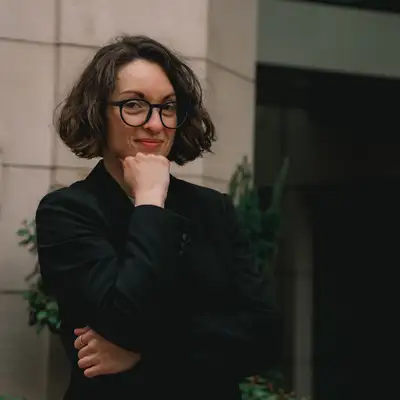
Magdalina Atanassova: This is Season 12 of the Convene Podcast, brought to you by Louisville Tourism. This season celebrates 40 years of Convene—reflecting on where we've been and looking ahead to what's next.
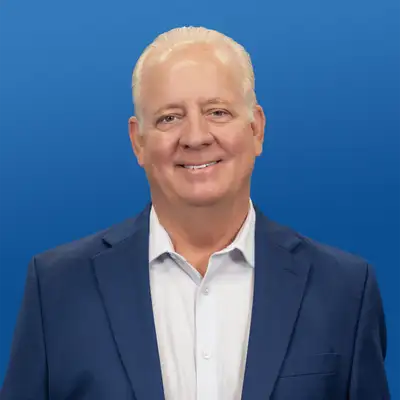
Today my guest is Dave Lutz, managing director of Velvet Chainsaw Consulting and the longtime voice behind Convene’s Forward Thinking column. For nearly two decades, he’s helped event professionals rethink conferences as strategic business models shaped by attendee behavior, economics, and change.
In this conversation, Dave reflects on the industry’s biggest shifts—from the 2008 reset to the pandemic, AI, and evolving attendee expectations. He shares why networking still drives attendance, why participation matters more than ever, and how trust and better experience design will define the future.
We start now.
Hi Dave and welcome to the Convene podcast.
Dave Lutz: Thank you, Maggie. We're excited to be here.
Magdalina Atanassova: I'm also really excited to have you as part of this very special season for us.
Looking back at the past four decades, many of which have spent helping organizations anticipate change,
what are the biggest shifts you've seen in how events create value?
Dave Lutz: I think one of the biggest changes that I've seen over the past 40 years is really goes back to 2007 and 8.
Back then 2007 and 8, there was a significant economic downturn.
And I think if you stuck a stick in the ground before that time and after that time for a lot of organizations, I think events shifted from being able to be broad or all things solid people to very specialized over those two years.
So literally the audience shift towards specialization really hit in 2007-2008. You especially see that in the healthcare side of the equation where and Big Pharma had new rules put in place.
They used to fund a lot of international travel.
Just literally everything changed in 2007, 2008, during that economic thing. People, people really took a step back and we had to prove the value of events all over like never before.
So. So the importance of something. You know, I'm a big fan of Peter Feder. He's at Harvard, he has this term. He wrote the book called Customer Centricity.
And you know, really that, that was very thought provoking. You know, 10, 15 years ago I remember reading this and writing about it about and then applying it to conferences and we called it attendance centricity thanks to him.
But it's really just realizing that you've got to think very narrow about who you program for and the relevance and the importance of relevance and being able to see that relevance has never been higher than it is today.
But I think that all shifted. That pivot point was back in 2007 and 8.
Magdalina Atanassova: And I like that you bring that moment in time because it was for me, that was actually the time when I started learning about events. It was my My, I did my bachelor's degree in events back then and it was a.
An interesting time to learn about events.
I had teachers that actually were event professionals. There was no other way to learn about it.
So it's interesting. And I think you were referring to the Sunshine act, right? That was when it became.
Dave Lutz: Yeah, I remember doing some consulting gigs in the, you know, between 2010 and 2015, looking at data that was prior to 2007 and 8 and after. And the results were alarming financially in particular attendance and financially.
So just, you know, the way, especially on the healthcare side of the equation,
things really changed. But it goes way beyond healthcare. Wasn't just Sunshine think it was, you know, really the, the need to actually show value of event and demonstrate value. I think, you know, increased during that timeframe.
There was more accountability put in place across many industries.
Magdalina Atanassova: Yeah. And it was also a very difficult time to start your career in events because things were so shaky.
Dave Lutz: They were, they were, that's for sure.
Magdalina Atanassova: And I wonder. You recently received PCMA's Lifetime Achievement Award and a huge congratulations on that.
Dave Lutz: Thank you so much. Appreciate it.
Magdalina Atanassova: What lessons took you the longest to learn and why?
Dave Lutz: You know, I think, you know, I grew up in as a meeting planner and site selection company and when I was with Confront, Experian now Merits and then you know, in the registration, so we were much more into the details and the tactics and the planning,
you know. So I think for me, you know, taking the leap on the strategy side. I was always involved on the strategy side with the company because it was growing super fast and we were directing that growth.
So, you know, as learned a lot about business at my time with Confront and acquisitions and stuff like that. So it really gave me the groundwork for what makes a business successful and applying that to,
you know, the business model of meetings, I think was, you know, something that just hadn't been done to the degree and broadly shared.
And so I think that's something that it took me a while to learn and apply that to conference business models. It's the most complex and I think,
you know, a lot of people don't realize the importance of associations and the importance of generating profit from these big meetings and how that funds other things,
you know, to advance an industry is, is what I think a lot of people on the supplier side don't understand and appreciate to the degree that they need to. So, you know, if I'm American Psychological association and I'm making money on my events, which I'm pretty sure they don't,
but that's not here or there for that one. But just being able to generate funds to allow you, you to an association to provide programs and services at a higher level.
A strategic thing that if you take it away like we did during the pandemic,
it can really tank a whole organization.
So really the profitability and how those funds advance professions and entire industries I think is the big, the big lesson I think that,
that I learned.
Magdalina Atanassova: Thank you for sharing your learning through your columns at Convene.
Many of those recent columns actually focus on attendee psychology and experience.
Why does the human side of events remain so important even as technology becomes more sophisticated?
Dave Lutz: I think the core thing that has held truth through all the events that I've helped analyze is, is the reality that the main reason people come is because who else is there?
So really that attendance driver has always been the biggest one. It still is.
You know, there's no question I do the same thing. I decide whether or not to go to an event based on who else is there.
So the content is somewhat secondary,
especially as you advance in your career. But being able to grow your network beyond 250 miles and being able to grow that at a significant level,
I think it's really what's critical about events. And to me it's, and I see it in pretty much every client that we work with, you know, as far as, you know, getting the people that might even put a tattoo PCMA on their arm because, you know, they've been involved for so long.
Anytime you see that factor, you know, or you observe that you've got a good intangible that probably is going to be sustainable.
So hugs are good.
Magdalina Atanassova: It's funny that you mentioned tattoos and I know you're inspired by all my tattoos.
By the way, I do have a tattoo that I made at IMEX.
Ah,
it's not IMEX. It's a Maori artist that was a New Zealand stand prior to the pandemic. He was just doing tattoos to people that were stopping by and I was like, oh,
how cool. I can get one more.
But I met people that did it for the very first time, which, that surprised me. You know, I, at least I have many, I have experience.
But some people are like, yeah, why not? It's my first tattoo ever.
Dave Lutz: So I just, I actually attended a conference on Tuesday this week and the lawyer said was talking about liabilities and, you know,
doing puppy parks and stuff like that.
And she actually talked about tattoos being offered in the exhibit hall and said not a great idea from a risk management Standpoint. So that's not, that's.
You heard it from a lawyer,
a well known industry lawyer.
Don't do that. Imax.
Magdalina Atanassova: Well, I guess the liability here also lies with the exhibitor who brought the tattoos. Right. At their own risk, but.
Dave Lutz: And they had you sign a waiver.
Magdalina Atanassova: They didn't. They didn't have to say they didn't. But it's fine. I loved it. I was ready to do another one.
But the pandemic happened. So there you go.
Changed everything.
Dave Lutz: There you go.
Magdalina Atanassova: Tell me, you've argued that attendees compare events to the best experiences they have anywhere, not just at other conferences. So how should organizers navigate that reality?
Dave Lutz: You know, I think it is very true. And you know, I think the more I research and read and think,
you know,
I really love trying to do new things on the experience side of things. And a lot of times for our customers when we're looking at them, you know, changing the experiences we're looking at.
First of all, what are some of the worst parts, right? Where's their friction and how can that friction be, you know,
eliminated or, or lessened?
So that's extremely important about the fan experience.
And I think the other is, is really doing something unexpected,
so trying, you know, testing things, doing, you know, having moments that surprise or delight. And I, you know, our team was talking a lot about it and we actually started talking about this Savannah Bananas and that was an article we just wrote a few weeks, a few months ago.
But it's such a great inspiration, I think, for or the experience, because what's really happened,
one of the big shifts or the conflicting priorities, I guess that organizers have,
especially post pandemic, is that costs have grown,
but so has the desire to have improved experiences.
So the attendee has a better palette, I think a more sophisticated palette for experiences. So it's hard,
it's harder than ever to top,
you know, to top last year or what have you. But, you know, I think that was a great.
I really like the Savannah Bananas. I think we got a lot of good feedback from our team and some of the people that we're close to. You know, it just gives you kind of a new lens, almost a fun lens to think about, you know, how to,
you know, create, you know, experiences and that can, you know, be throughout the meeting. So I highly recommend looking at that. Not that article necessarily, but the Savannah Banana framework that they have in place so that that might be something that makes sense to leak out to that infographic is it's all them,
not us.
But we did that infographic using AI.
Magdalina Atanassova: Yeah, I'll definitely put a link in the show notes. I think it was one of the most read articles for a couple of weeks that we had it on our homepage.
And the other one that you mentioned, the surprise and delight that you wrote about that recent conference with the surprise of,
of the keynote. Who did not expect this?
Dave Lutz: Yeah, the, the, all the fields. Yeah,
yeah. Our client, American Occupational Therapy association really, really came up with a creative idea that brought many tears. You've pulled on the heartstrings of the attendees in a way that was very good.
So great story, great case study of how to try to, you know, create some moments of surprise.
Magdalina Atanassova: For sure. I remember when I saw the video that you linked in the article, I was also crying was unavoidable.
Dave Lutz: Yeah, it's, it's a, it was quite the moment.
Magdalina Atanassova: Definitely it was. And you already mentioned the,
the shift that the global pandemic brought to events.
And you've also guided the organizations through the recession, industry disruptions. Now there's AI.
So what change did the industry adapt to faster than you expected?
And what challenge are we still underestimating today?
Dave Lutz: I think the industry actually pivoted well during the pandemic from in person to virtual.
And it was really a stopgap. Right. So, you know, if you think about it,
very large events that had all already collected 100% prepayment for events that were occurring and they had to in some cases there's a lot of arguments about what's refundable and what's not.
But I think the industry,
it put itself on resuscitation through virtual.
And while it never replaced, and we saw very different audiences attend virtually than in person,
it did allow organizations to power through and, you know, get a lifeline for a couple years.
I think the industry did a good job there. They adapted quickly and it was a good enough product.
But I think, you know, I think of what a lot of people and what I've tried to write about a lot is that, you know, recovery from the supplier side is much better than recovery from the organizer side.
And I don't think that the industry understands that and appreciates that and realizes that the food chain of,
you know, if our clients aren't healthy, we're not healthy.
And so there are some big concerns. I think on average there's a lot of outliers, but on average, most of the events that we're analyzing are still performing about 10% below pre pandemic numbers.
That's attendance, that's revenue. And,
you know, those are the two primary factors. But then we also know expenses are up. So if Your revenue's down 10% and your expenses are up, so your margins are down oftentimes around 20%.
And again,
lots of, lots of outliers that are better and much worse that we see. But recovery is not there yet for the organizers. And until that comes, I think the recovery for suppliers and hotels and destinations is,
you know, that's going to lag.
I think at the end of the day.
The other thing that I've been thinking about, you know, since DOGE came, did their thing In February of 2025, you know, NMIH funding has been,
you know, a big question mark ever since then.
We're seeing it pop up again with the recent, you know,
situation with American diabetes. I just read something this morning from Association west and ASAE about potential of NIH grant funding being down, you know, 5 billion and also having restrictions on travel and things like that.
And I don't think a lot of people realize how much that funding translates to meeting attendance and also the sharing of research and knowledge.
So we're not out of weeds by any means. I think that NIH funding issue is something everybody needs to be pretty aware of.
It primarily impacts medical and scientific conferences, but if you have any academia presence, any significant academia presence,
it will also impact that.
And then that, that basically then, you know,
can really disrupt the entire business model of a convention.
So I'm, I'm concerned about where things are going to go there right now. There's a lot of discussion around it and ability to comment on what the office of the OBM or whatever the budget office for the federal US is definitely,
you know, writing new rules. And a lot of those rules, the way I understand it, means they can make whatever change they want down the road.
So,
you know, that uncertainty is a huge issue and just getting grants,
it's a big business.
5 billion is a lot of money.
Magdalina Atanassova: Yeah. Well, I hope the industry will also be able to have a better story to those policymakers and people that we kind of depend on. Right. Especially when it comes to all those funds.
Tell me, over the years you've written about trends, technologies,
economics, new behavior, education and strategy.
Which idea has to the test of time better than anything else you've written about?
Dave Lutz: It took me a little while to think about this one, but I think the biggest trend that's the test of time is really participation.
So used to be people would go to a meeting room and sit in a session and they didn't want to walk out because they thought that it would draw attention to everyone and to themselves and it would be an insult to the speaker or what have you.
Now it's, you know, we vote with our feet more than ever. So I think the fact that,
you know, we do a lot of analysis on participation, whether it be session attendance or what have you, you know, but I think participation matters a lot.
We see maybe, you know, sometimes even a keynote, you might get, you know, 50% of the potential audience on morning one, you know, down to 40% on day two and down to 20% on day three.
That is not uncommon to see.
You know, there's, there's a lot of issues where obviously people are busy, they're meeting one on one, they're doing, you know, they're blending work and travel and they get stuck in the car, whatever.
There's plenty of excuses and things that you can think about, you know, around it. But there's no better early indicator than participation and observing that participation.
One of the things that concerns me is that participation is going down pretty much at every event we analyze.
You know, people can go up to 20 hours of CE and they're going for 5.5.
That is not, that's a real metric from a recent gig,
but it's not uncommon, unfortunately. One of the trends we'll definitely see almost every, every meeting we've ever analyzed has a last day problem,
right? They,
you know, people are leaving early, attendance is poor. No, you know, speakers don't want to speak on the last day.
You know, exhibitors don't want to exhibit on the last day. And you know, so you, what do you do? You cut off a half day,
you definitely have a temporary fix and then, you know, two years later you're looking at cutting another half day. That's a very common cadence that we're seeing with a lot of events.
It's really analyzing that. And events are just definitely, events are getting shorter. There's not that many five day conferences anymore.
AD: In Louisville, the most memorable moments don’t happen at a podium — they happen through shared experiences. As a city that blends rich history with fresh perspectives, Louisville helps planners create meetings that connect attendees to the destination and to one another. From iconic attractions and walkable bourbon experiences to vibrant neighborhoods and authentic Southern hospitality, Louisville brings meetings to life in ways guests remember long after the event ends. Learn more at GoToLouisville.com/meet.
Magdalina Atanassova: It's been a while since I've seen a five day conference.
Dave Lutz: They're still out there.
Magdalina Atanassova: What do you think is the problem here?
You said people have all these obligations that they need to go to, but.
And we've seen event planners pick a very big keynote for the last date just to be able to kind of keep people in.
But it's clearly not a tactic that's working long term. So what do you think is that?
Do you have a hunch about it?
Dave Lutz: I think the big thing, you know, is really making the main thing, the main thing, like we all see sessions and you know, even PCMA is guilty of this, right, where we, you know, we have a,
you know, a 75 or 90 minute general session and the speaker speaks for 30 minutes and that's the main reason I'm going.
And we see that in so many associations there's lots of awards, lots of presidential addresses, you know, lots of inside stories that don't matter to the attendees. So I think, you know, we have to waste our time less.
Especially if you look at the main realm, you have to really keep the main thing. The main thing. Just one of them metrics we've been using for many years is, you know, make sure at least 75% of the time allotted for a general session is featuring the main attraction.
You know, and I think that is a good guideline and there's so many that are well below that and, and that matters a lot.
Sometimes you, you know, you need to say, you know, we're going to do 30 minutes of awards and actually instead of saying we're doing a general session, say we're doing,
you know, the awards and then we're doing this keynote and are able to do that. One of the things, we actually just did a client roundtable last week and we're talking a lot about trust and you know, what are the things that we can do that we do that hurt that trust?
And I think that's a big, a big topic. Actually, that's another one I've thought about writing about. Again,
I remember going to PCMA in Seattle. I want to say this is probably like in 2006 or seven or eight,
you know, back then that we had a keynote, it was Pining Gilmour.
So Pining Gilmour wrote the Experience Economy,
which most I think event professionals know and love.
And then their second book was called Authenticity and they did a keynote on authenticity at pcma.
Opening keynote.
It fell very flat at the time,
but if you look at it today, they were probably 15, 20 years ahead of their time because now that the authenticity is what leads to trust and trust is what's critical for you have to trust the other people that are participating and you have to trust the organization as well.
So you want to look at things that can hurt that trust.
The example, the keynote and general session is a great example of where you can hurt your trust and actually hurt future participation.
So we're training attendees to show up 45 minutes late to see the keynote.
Magdalina Atanassova: Oh yeah,
I love how you've analyzed this because the moment you said don't waste people's time. That was, I was like, yes, that's it.
Because it's very easy at events to waste people's time,
especially with these timeframes. You're absolutely right. And I hope we as well will take note of that for future conferences.
Looking across four decades of events, what idea about conferences did the industry get completely wrong? And what idea did it get right?
Dave Lutz: You know, I, I remember when the Internet came out, you know, and people were like, you know, the Internet's going to replace trade shows. And you know, there was a lot of, you know, discussion about that,
a lot of concerns about that,
and of course it never happened. And I think, you know, if you flip that, you know, into the pandemic, you know,
virtual wouldn't replace trade shows either. You know, the,
the exhibit component or exhibiting component of a virtual meeting felt flat everywhere.
I've never seen an example or heard an example where it went well.
So, you know, I think that's one of the things I think the industry got wrong early on.
You know, the other thing I think that the industry got wrong is all meetings will be hybrid coming out of the pandemic. Right.
There's very few that are hybrid anymore. And most of the ones that are hybrid aren't hybrid at all. They're,
you know, they're capturing and making content available on demand or, you know, scheduled replays.
Very few that are actually streaming and those that are streaming maybe two rooms and you know, then offering the rest on demand.
I think that's one of the other things that we got wrong and we're still, you know, there's a lot of organizations still trying to figure out what's their long term player, their,
you know, they're consistent, what's the new normal for them as it pertains to on demand or digital content.
Magdalina Atanassova: Where would you place AI here? Because, you know, we hear a lot of chatter about how AI will change the events industry and will it replace people, are we going to use it more?
But we now see all the AI slop. So would you place it somewhere along those same lines?
Dave Lutz: Yeah, I think so.
The concern I think I have on AI and how it may disrupt our industry is more around if you look at associations, which many of the PCMA members are associations, and I primarily write first to associations, I think AI is definitely going to disrupt the membership model for sure because a lot of times it's getting the latest and greatest content in a timely manner and having some exclusivity for that.
And I think that barrier is going down very quickly. So, you know, I think I'm very concerned about the other revenue streams as it pertains to member and member value.
You know, if your biggest member value is a conference discount,
which it is for many,
you know, that,
how sustainable is that? I guess so. I think I worry more about AI from a content standpoint and will it replace things. And I know you asked me a question, what do you think?
One of my pet peeves right now is use AI as a primary reason of why you need to really up your game in the content side of things. So one of the articles I think you should probably share, and this goes back to, I think I wrote this article back in 2019.
So what I love is, you know, some of the articles that I wrote 15 years ago are still applicable. So. Or at least mostly applicable. And this is certainly one.
And, you know, so. So there's this model about,
you know, designing education.
And it's kind of a hierarchy where you've got, you know, data at the bottom, then information,
then you shift to knowledge, and then you shift to wisdom.
And basically it's always been that,
you know, if you can do it on zoom, don't do it in the room. That's been a big thing that's been happening over the past four years. So, you know, the primary things that are usually delivered via Zoom is data and information.
And so it's very hard to differentiate if that's all you're providing on site,
you know, at a live premium conference.
So the critical need to deliver knowledge and even wisdom has never been greater.
So really trying to understand what, what does wisdom mean and how do you design a wisdom session?
I think it's really important.
Usually a good wisdom session tackles issues where there are no right or wrong answers.
There's a lot of possibilities and really being able to step back and consider different possibilities for solving or moving something forward,
that's where wisdom comes in. So I think more than ever,
you know, being able to,
with the advent of AI,
being able to up the human element,
I think is never been more critical. I think in that article it references that, you know, CEOs are looking for critical thinkers. So that was back in 2019. Guess what?
They're still looking for critical thinkers. That hasn't changed.
But, you know, I think there's a new bar that needs to be set for content, and you need to share that with your conference organizing committees and really try to deliver on that content and really scale back the basic, the 101 and even the intermediate content,
regardless of number of years in the career. What we find is even early career, they want to go to sessions that their mentors or their superiors are going to. They want the fast track learning and they don't want the 101.
Magdalina Atanassova: I absolutely agree.
And it also, there's so much power in having those different levels meet together and think the hard questions together and not avoid the friction that all those hard questions bring.
Because we're kind of starting to develop that itch. Oh, this is hard. Let me ask AI and outsource the first way of.
Oh, this is, this is making my brain hurt because it's such a hard issue.
But bringing those different levels in the conference room without AI there to help.
I mean,
so many possibilities.
Dave Lutz: And we, you know, it's interesting to see. I know a lot of, you know, what I've been looking at for our own company and our own client recommendations is really,
you know, we're certainly embracing AI as much as anyone,
you know, but we're really trying to isolate what the inputs are. So we're creating our own LLM, you know, that we can query that and you can always go out and query the world and the universe.
Right. But being able to query your own trusted approved content and using that as a primary,
your research vehicle, I think is really important.
That's what we're trying to do is exactly that for our business.
Magdalina Atanassova: I love it. Like a second brain.
Dave Lutz: Yeah, we're trying to make it think like me
Magdalina Atanassova: or almost.
We spent nearly two decades writing forward thinking for Convene.
Has there ever been a column you felt compelled to write because you believe the industry was headed in the wrong direction?
Dave Lutz: Yeah, this is a great question. I think the one that really, that I took a hard look at on this one was really the. I think it was May of 2024.
And this,
this post was actually inspired by a PCMA convene speaker back in Austin, which I think that might go back to 2017 or 18 or something.
That PCMA hired Rachel Botsman,
a fanboy of Rachel Botsman. She's the expert on the sharing economy.
She created something called the trust stack. And when you look at the trust stack,
what really came to my mind is how we asked exhibitors to fund everything and if they knew all the things that were inflated and where revenue sharing and discounts were being provided, how would they feel?
And so, you know, we see a lot of agreements and you know,
as far as like with exhibit service contractors as an example is the big one. Right. So, you know, they have to, you know, you're running tables and carpeting and all that kind of stuff from them.
And the show management is getting, you know, a discount for developing the registration area, the association booth than, you know, certain decorating. And it's all being basically funded indirectly through rebates from the exhibitors.
And convention centers are doing this, hotels and AV companies are doing this.
So there's all this,
you know, revenue sharing or discounting to organizers. So I think that the transparency of our industry,
especially as it pertains to exhibitors is something that I don't like. And like I used to run the largest registration company in the world and we made, you know, I think it was 68% of our revenue from lead retrieval.
And guess what, we charged our clients very low fees for the registration process, even though many of them were coming in, in paper and fax back then. So.
But again, this is an example of lead retrieval basically helps fund registration.
And again this, the transparency of that. And would associations pay, you know, if lead retrieval went away,
would associations pay what, you know, a half million dollars for registration that they're only paying 150,000 for now?
Would they?
And so we're doing a lot on the exhibitors backs and I think that's something that's concerned me for a number of years and definitely, and I think it was in the May 2024 issue I wrote about that more and credit to Richard Botsman because she's the one that I think helped me understand the importance of trust and what's required of a,
you know, to build a successful marketplace.
Magdalina Atanassova: Have you heard any feedback from the industry on that article?
Dave Lutz: You know, I think there's a lot of people that agree. I know there's a, you know, there's a company out there that does, you know, exhibit the. I think there's one that's called the exhibit advocate that, you know, looks at what would,
you know, a booth costs like a standard booth furnishings cost in Orlando versus Vegas versus Chicago,
for example. So there is a lot of intel, you know, a lot of,
A lot of resources out there for exhibitors that can do this. But at the same time it's really, the model itself has gone too far towards, you know, what exhibitors will pay for.
Because the cost of booth, you know, of renting, of selling a booth is I think less than 30% of the cost of their true cost.
So that I think that's the thing, the lack of transparency in that model I think is, you know, the thing that probably keeps me up at Night.
Magdalina Atanassova: If you think about it, what a beautiful question to solve at one of those sessions that you mentioned. Those educational sessions bring different levels of people.
Be transparent, be open about it, and okay, we need those funds. Let's figure out a new model together.
What role do publications like convene play in helping an industry evolve and what would be lost if those voices disappeared?
Dave Lutz: You know,
I'm obviously a big fan of Convene. I've been around,
you know, convene pretty much the whole year. I knew the original editor, Peter Schur. I actually worked with him for a while. So I know him very well. And I've known Michelle Russell for many, many years.
And, you know, I know they're the best in business and we've seen other publications come and go through the time, you know, but I think the big thing is really, you know, I think convenience done a really good job of, you know, doing good research, you know, so I think one of the things I love is the meetings market survey.
We've been using that as a for benchmarking P&Ls for our clients for years.
We want to see you go back to doing that like you used to.
That's one thing that's a critical importance. It's allowed us, it's provided us a reputable benchmark that, you know, clients, we can tell them this is a benchmark we created and it's like, yeah, whatever.
But if we say no, this is based on a survey from 700 professionals and let's try to apply what the learnings to your model and you get an instant credibility there.
So I think that's key. And, you know, Convene’s always done a really good job of,
you know, I think really having all the fingers on the pulse of the industry, you know, so there's a lot of storytelling, a lot of examples of,
you know, what are organizers doing and you know, what are some of the insights we can learn that might be applicable to your meetings? You know, just having the pulse on the industry and getting those stories and, you know, curated in real time or, you know, just in time is.
Is something that, you know, I appreciate and I think most others do as well.
Magdalina Atanassova: We're 40,
convenience 40.
And we need fresh blood, right? In general, not only for convenient to come into the industry. And that has been a topic that's been out there quite a while now.
So when you look at today's younger event professionals, what gives you the most confidence about the future of the industry?
Dave Lutz: You know, I think they're hungry generally, you know, I've been participating in the 20 in their 20s at comedian leaders for the past five or six years, I think,
you know, so I've had the opportunity of meeting a lot of young professionals in there. But it's great to see their excitement for the industry.
You know, we've got a fun industry. I think that comes across pretty quickly to most.
What I love is the ability for the next generation to help make you think a little bit different,
to give you some ideas that some new ways to solve old problems, I think is the big thing. And being able to take experiences from whatever as simple as going to a concert or a festival and being able to apply those ideas.
I think you see that more,
I think, from the younger generation than we do old timers. But at the same time,
what's interesting about our industry is you have to know enough about a lot of things to be dangerous.
And so there's no question that one of the big things we've been seeing with some of our clients is really the need for specialization.
So it's really difficult for a new meaning professional to be really good at food and beverage,
really good at budgeting,
really good at audio, visual and management of that, really good at contract negotiations and contract analysis.
Those are just four quickies that you have to know enough about. All of those things to be dangerous is kind of the factor and hopefully with today's the tools that are coming,
I think the understanding of how to use those tools better of the next gen is going to be helpful for making them a little bit enough to know enough to be dangerous about a lot of things faster and on demand.
Right.
So I think that's one of the big,
the big things.
We definitely have a cool profession and hopefully it's going to continue to grow.
Magdalina Atanassova: I hope so too. And I had the opportunity to interview and do a host season with 20 in their 20s.
You know, a closet has already been a few years in the industry and the closet was,
how do you call it, awarded that year.
So it was fun to see how they balanced each other out and kind of.
But the passion was just a constant.
As we celebrate convince 40th anniversary.
What is one truth about gathering people that has remained constant throughout your career and that you hope remains true 40 years from now?
Dave Lutz: I think the first thing that came to mind,
my mind is really the ability to grow one's network of more than 250 miles.
So it was really interesting. We just did a recent consulting gig for an association and there's a lot of organizations that are looking at should we do regional events in place of or in addition to our large event?
And I think there's no question that those models need to be explored.
I think most of the time, the regional models,
just from a pure dollars and cents standpoint, don't add up.
But I think really the value of being able to grow one's network outside of that regional piece or the chapter piece, I think, is. Is something that's held true,
you know, throughout my career.
So, you know, I ended up moving to Orlando 12 years ago, and one of the reasons I moved to Orlando is because I had,
I think, 60 LinkedIn connections that lived in Orlando,
and I was actually decent friends with quite a few.
So without that element, I would have never moved to Orlando.
Now I get to see all the cool conventions that come through. If I'm available and I have time,
I usually know somebody that works at that convention. And I love to see new conventions. It's kind of like a field trip for me. And so that's been a neat thing to do over the past decade for me.
And I usually will go to at least a half dozen significant events that are either being done by our clients or people that we'd love to have as clients.
Magdalina Atanassova: That's awesome.
Well, Dave,
officially, I want to thank you for being on the podcast and sharing this milestone with us because you've been a big part of it as well, and the success of the magazine and everything we've done.
You're part of our team. That's how we see you. So thank you so much for being on the podcast.
Dave Lutz: Thank you. It's great to see you.
Magdalina Atanassova: Remember to subscribe to the Convene Podcast on your favorite listening platform to stay updated with our latest episodes. We want to thank our sponsor, Louisville Tourism. Learn more at GoToLouisville.com/meet. For further industry insights from the Convene team, head over to PCMA.org/convene. My name is Maggie. Stay inspired. Keep inspiring. And until next time.