Subscribe
Share
Share
Embed
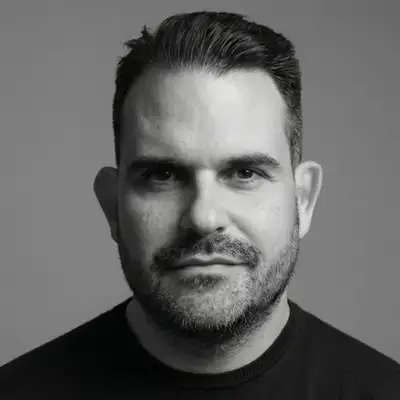
In this episode, Chris Maffeo talks with Filiberto Amati.
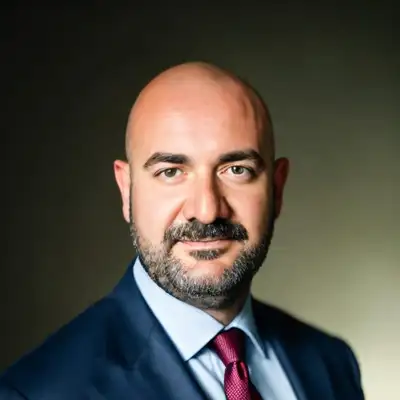
He is a Growth Advisor. He has extensive Spirits experience having spent many years in Campari in the Netherlands, Mexico, the Caribbean and in Di Saronno in Central and Eastern Europe. He has been in both marketing and commercial roles.
They spoke about Brand Ambassadors from how to define the role, set up KPIs and enable them to build demand from the bottom-up.
They continue by talking about how big brands have shaped their success by focusing on a core occasion. How did they master with perfect market execution that did not happen overnight.
If you enjoyed the episode, please rate it and share it with your
friends and colleagues.
About the Host: Chris Maffeo
About the Guest: Filiberto Amati
In this episode, Chris Maffeo talks with Filiberto Amati. He is a Growth Advisor. He has extensive Spirits experience having spent many years in Campari in the Netherlands, Mexico, the Caribbean and in Di Saronno in Central and Eastern Europe. He has been in both marketing and commercial roles.
They spoke about Brand Ambassadors from how to define the role, set up KPIs and enable them to build demand from the bottom-up.
They continue by talking about how big brands have shaped their success by focusing on a core occasion. How did they master with perfect market execution that did not happen overnight. If you enjoyed the episode, please rate it and share it with your friends and colleagues. About the Host: Chris Maffeo About the Guest: Filiberto Amati
The MAFFEO DRINKS Podcast is a leading drinks business podcast delivering actionable insights for drinks leadership.
For founders, directors, distributor MDs, and hospitality leaders navigating the tension between bottom-up reality and top-down expectations.
20+ years building brands across 30+ markets. Each episode features drinks builders: founders, distributors, commercial directors, sharing how the drinks industry actually works. Not the conference version. Honest conversations.
Insights come from sitting at the bar.
Beyond episodes: advisory for leadership teams, subscription with episode deep dives and principles to navigate your own reality.
Beer, wine, spirits, Low and non-alcoholic.
Bottom-up Insights & Episode Deep Dives at https://maffeodrinks.com
Hi, and welcome to the Maffeiro Drinks Podcast. I'm Chris Maffeiro, founder of Maffeiro Drinks, where we provide a non nonsense approach to building drinks brands from the bottom up. I will be your host, and in each episode I will interview a drinks builder from the drinks and hospitality ecosystem. In episode fifteen and sixteen, I had the pleasure to interview Filippo Matti. He is a growth advisor.
Chris Maffeo:He has extensive experience having spent many years in Campari in The Netherlands, Mexico and The Caribbean and in Disaronno in Central And Eastern Europe. He has been in both marketing and commercial roles. I hope you will enjoy our chat. Remember that this is a two part episode. So if you liked it, feel free to listen to both part one and two of our chat.
Chris Maffeo:Listening to you talking about brand ambassador earlier, like advocacy and bartenders, like, what is your take on you? You mentioned that you are a big fan of brand ambassadors or however people call them. So people that are doing actually the advocacy program that are in charge of advocacy and let's say not so number driven, let's put it this way. So they're not measured on sales, but they measure more on other things. So what is your take on this?
Chris Maffeo:Because on this one, I keep evolving my thinking on should they sell or should they just focus on what they do, which is driving advocacy and not be measured on, let's say, hard KPIs? What's your take on this one?
Filiberto Amati:I think you nailed it. And in the sense they should sell without having objectives based on KPIs, quantitative moving cases KPIs. Their objective should be, if you do an advocacy training or program done well, it sells. Okay. If you try to measure how much he's selling and you're trying to give a bonus on the basis on the number of bottles he's selling, he's gonna forget about the advocacy program.
Filiberto Amati:And he's gonna start pushing cases by giving all sorts of incentives around. And that's an issue. So advocacy, it's fundamental. Training is for now. All smaller and medium sized brands, unless you have a gadzino in euros to do whatever campaign.
Filiberto Amati:And I'm not saying influencer campaign anyway, because whatever that means these days, that's a whole new Panzola box. I'm not
Chris Maffeo:Let's gonna open not open But that one,
Filiberto Amati:any medium sized brand, Campari is a very well known man. Let's forget I've been meaning. Campari needs a lot of advocacy. Aperol needs a lot of advocacy. How do you do the perfect serve?
Filiberto Amati:How maximize do the opportunity of having the spritz on your list? That requires training. You can't ask them to be measured. If you have people on the on premise that do advocacy on how many bottles of Campari have sold. Because the first thing they're gonna be doing, they're gonna take whatever budget they have or find money to do happy hours.
Filiberto Amati:So they basically sell the top of the bottles at a quarter of the price. Fantastic. No way.
Chris Maffeo:Know- So be careful what you wish for.
Filiberto Amati:Whiskey gin with the explosion of gin. Vermouth. Until five, six years ago, we basically had a world with two leading Vermouths, which by the way, none of the two was real Vermouth Superiello Litterino because they were 45 wines. And then again, we had the renaissance of the category. But if I am a good bartender, how am I gonna choose between three fifty genes?
Filiberto Amati:And yeah, he test them. Yeah, but what's the Bartender to sell needs stories to tell. And sometimes the stories come from the advocacy training. You need to feed the beast in that sense.
Chris Maffeo:Absolutely. I've got two questions of mine. I hope I don't forget them. I spend a lot of time with bartenders now here in Prague and I'm going to events. I'm sitting at the bar talking to them and I can see how they interact with each other.
Chris Maffeo:And also I can see how they interact with brands because what big companies think is that they can own the share of mind of a bartender. But ultimately, bartenders are so because they are free individuals now and they can space between brands and categories and they can be creative and they can test and improve and do different things. But the feeling that I have is that if I haven't been building the demand before I get into the bar, It's a bit of a useless effort with the Sicilian tonic water or juice or anything like that. So if I go into a bar and I propose my brand that is supposed to be the new hit. And this person is one of the most connected bartender.
Chris Maffeo:He's on Instagram. He's he's at Barconvent. He's at Athens Bar Show at Roma Bar Show at Barconvent Berlin, Brooklyn, and he has never seen my brand, then he's gonna say, what are you doing here? Because it's just like, if I haven't heard it, it means it's not at all on the radar of anybody of my circle. So probably you have an issue here.
Chris Maffeo:So how do you create that demand before you actually approach the bars?
Filiberto Amati:You do that together. You don't do that before. You the real demand you create at the moment. And here an example. We were with Galvanina, which is a client of mine, soft drinks, mixology producer, organic drinks.
Filiberto Amati:We attended the Roma Bar Show launching our mixology line. And we got a very well known bartender in the local scene who was doing a beer project with us, a beer project with Vellier, a beer project for his own distillery partner. And the way we got him was, okay, we do mixology. Do you have a project? And we knew he was the right person because we knew he had a project where he's on developing his own distillery products.
Filiberto Amati:Let's work together on that. Okay. He's developed with another bunch of guys, own victors selections, and he's trying to discover the Victor and say, okay, these are our products that work with your Victor. Can we develop some capitals together? And their mechanic, okay, which was a refer in which we converted in a social media campaign and in training and tasting and in a little masterclass as well.
Filiberto Amati:That's what generates demand. So of course, when you go in and enter a bar, before you hit them with, Would you like? You need to know who you're talking to. Yes.
Chris Maffeo:You have to do your homework before.
Filiberto Amati:You need to do your homework. And as usual, you're gonna do your homework. If you go and look for Calabrese and suddenly show up in his bar and he's there, and you start vomiting your commercial spill, he's gonna because he's a gentleman, he's gonna smile. Thank you. Thank you.
Filiberto Amati:Yes. Yes. Yes. And then couldn't wait longer to get you the hell out of his door. But at the very beginning, you need to find matches.
Filiberto Amati:There are a lot of bartenders who are bartenders who work on certain projects. They have their own things on the side. And how can you create value for them on their own projects? Because maybe that's the key. Okay, I help you to do this.
Filiberto Amati:Let's work together. And you get the first guy and you get the second guy and you get the third guy. You build demand and then you can start developing and focusing on your real advocacy. But as usual, it's marketing of one. Yes.
Filiberto Amati:So one at the beginning.
Chris Maffeo:And that is the demand.
Filiberto Amati:Before it becomes marketing to many.
Chris Maffeo:Yes. So there is that that there is that step. What you're saying is that there is that step that you do that, let's say, that looks like it's done on the moment. But in reality, it's actually, let's say, for that person is done on the moment. But then for the other, the rest of the CD is created before because you have approached this person before approaching the others.
Chris Maffeo:And then through the network of this person or by associating with this person and so on, you can then expand into the network and you get the kind of like seal of approval. And I feel that a lot of brands don't do that and they already start they go into the meeting stage right away and then they get a lot of like doors on their face. Then I always tell people, I say, watch out because you may have done your homework and have a fantastic list of target occasion. You have the the 100 outlets in which you want to get in. But the more you go out, the more you are burning them.
Chris Maffeo:So if you haven't done the job before, at some point you will reach number 99, number 100, and you've got 97.
Filiberto Amati:So then move to the next city. Move to the next city and run
Chris Maffeo:because they are looking for you in the previous one.
Filiberto Amati:Again, with Galvanina, we did this activity with Berggiornale, which is
Chris Maffeo:Trade magazine.
Filiberto Amati:Exactly, in Italy. Which is this cocktail event, which is changing city. And we decided, let's co create cocktails with some people who are attending this event. And it gave us a lot of flexibility in what we could do as Galvanina. But we got customers immediately because once they have co created the event with you, they're gonna use your own talent to promote their cocktail in their own outlets.
Chris Maffeo:Yeah, absolutely.
Filiberto Amati:And then some of their friends reached out to us later, Ah, can we do the same in this contest? Or can we do an event? All of this, by the way, was made possible not by the marketing or commercial department, but by the various brand ambassadors like Galvanina in major cities, who chart the guy who know the narrative, feel the narrative, believe in the story and tell the story. And of course, they wanna make Galvanina grow bigger, but they're looking for opportunities, not quantitatively. How many cases of galvanin have you moved this month?
Chris Maffeo:This one
Filiberto Amati:And the agents and the wholesalers are doing.
Chris Maffeo:And one thing that I feel people forget is that all this that we are now seeing in a moment, it takes time because you need to go out and have a drink and sit at the bar and talk to the guy and invite him for a drink. And you need to have that kind of conversation, and you need to connect on social media and then tag them and message them and go back. And this is like a normal social interaction flow that you do from kindergarten to, you know, to university.
Filiberto Amati:You need to consume in their outlets because otherwise they'll remember that.
Chris Maffeo:And that's the thing. And then, you know, you're talking to experts that are looking at you how you behave in the bar. You cannot fake it. You cannot fake to be an entree type of person. They smell you right away.
Chris Maffeo:If you go out there with the corporate hat on and you're trying to talk like you're talking to a bank, then they stop you right away. So this is the thing. I'm linking back to what you were saying before about co creating cocktails, for example. And this is something that I notice brands do wrong very often, again, because they don't go there with the on trade behind the bar perspective, but they go there with the advertising agency glasses on and they push their drink, their drink strategy or their drinks, the recommended drinks, approved drinks, signature drinks or whatever they call it. And they basically stuff it down the throat of these bartenders saying like with this brand, you have to do this brand and this brand because it was meant to be used in these drinks.
Chris Maffeo:And very often they say, oh, you see, working with bartenders or working with ambassadors doesn't work because they had the wrong tool. They basically sent the Navy SEAL with a knife and fork instead of some better equipment. And then they have something to complain about this, team that they've sent in.
Filiberto Amati:Look, for Gavanina, we have developed a new drinking strategy with a pairing wheel based on Italian liquors, developed with bartenders, with a group of bartenders local to the Cesena Rimini area, which is where Galvanina is from. And it was gonna be our big team for development this summer. We halted that. We said, No, we're gonna do this next year. Because this year we started with this on premise team.
Filiberto Amati:For that reason, we would have put basically give these guys a tank when these guys are really in the first phase of establishing a relationship. We don't need to show the bartender's mouth with a drinking, over complicated drinking strategy, if he hasn't understood the narrative of the brand yet. So we said, okay, we have the tool, let's park it, let's use it next year. This year, we focus on building relationship. We need the on premise to be our ears and our eyes and tell us what they need from us.
Filiberto Amati:What can we do for them? What can we do with them?
Chris Maffeo:Yes. And that leads to when you were talking about the Spritz occasion or brands like Aperol or Campari, like there are some of these brands that have been built on a certain occasion and those occasions were born out of experience. So the let's say they didn't create Campari and say, Oh, Campari is meant for Negroni. You know, like the Negroni came after, and then when they were mixing and experimenting with the product, then it came out as the Milano Torino and and then the meat, and then it it all developed. But then it started to be, okay.
Chris Maffeo:Let's focus on this drink because this is our, you know, flagship drink. But I feel that a lot of these companies, they think that they can bypass the experience of the on trade by creating their own drink in the office to what you were saying. And they don't spend enough time. But then because this drink doesn't work, then they want to expand and they say, let's not focus on one cocktail or one occasion because we need to appeal to much broader audience and much broader, more broader category and occasions because focusing on one single occasion doesn't work. So what is your experience and what do you think is the reason of the success of some of the most famous brands that were actually focusing on one single occasion and they are still are.
Filiberto Amati:Okay, so I would say that first of all, no brand, maybe one Jagermeister. It's a one occasion strategy. Because Jagermaster has successfully been able to build that demand everywhere in the world with the Jagermaster type of drink. But that's it. And they built a myth around it, by the way.
Filiberto Amati:So it's not just the occasion, but it's the brand, the mythology and so on and so forth. Everybody else has a multi layer strategy. Having been in Campari and tell you that the Negroni, it's basically the sophisticated Campari drinker drink, the Mito, like the Americano and The the whole question is for them, how do you feed that recruitment? How do you get someone to drink the first Campari, which is a difficult drink to get acquainted with? Need to develop a drinking strategy that allows you to Because a lot of drinking strategies are not the drinking strategy.
Filiberto Amati:So how do we go to the Dante in New York or the white rabbit in Moscow or drink hunger in Rome? Okay, that's the niche of the niche. That's the super league. It's like, how do we feed the third level category? But again, the spritz, one of the most successful drinks, it's a drink that came from the market.
Filiberto Amati:When Aperol was still with before it was sold to CNC and then later to Campari, in the North, had the Spritz. In the South, we used to drink Abortaz, Aperol with Dassoni, with Cherrata Dassoni. And they were drinks from the markets.
Chris Maffeo:The markets, yeah.
Filiberto Amati:When Campari saw the potential of the Spritz, then they made it international and they sold the narrative of Venice and the whole nine yards, the aperitif, etcetera, etcetera. That was easy because it's not something that created top down. It was something that created bottom up. But the Jager Bomba was created top down. And it took them a while, but it worked brilliantly.
Chris Maffeo:So how would you say that? Because for me, the target occasion is very and say the target drink or whatever, like your ideal drink when you see that is built bottom up. So when you start to see, Okay, I'm giving my brand and then the first five customers that are starting to sell a case per month or per week, They have reached already a certain threshold. When they start to tell me like how they are selling it and where do they see that this brand works, then it starts to be a replicable kind of experiment. And then you widen it bigger and bigger and bigger, and then it becomes like your solo focus.
Chris Maffeo:Now you talk about that Negroni or that Negroni Mezcal or you talk about Margarita for Cointreau. There are some brands that are taking that lead, but it comes from the markets. Do you think that's the way to build that aspiration and then bring in the second, third, fourth tier on with that while you are letting them use the brand as they wish? Or how would you build the scale, so to say?
Filiberto Amati:Okay, first of all, the plan, it's the only version of reality that never happens. Okay. You will have a plan because you need a plan. Then reality is gonna be slightly different, which basically means that's why it's so important to be in the marketplace. Because sometimes what works, it's utterly unexpected.
Filiberto Amati:And you need to focus on what works and try to replicate what works, not propose in the plan. A learning process. The question is, first of all, if you need to target the top 1% bars in the world, you don't need a drinking strategy. You need a mixology advocacy done by someone that knows about drinks as much as they do. If you're trying to sell a new brand to Dante, okay?
Filiberto Amati:You better know what you're talking about. So the consumption occasion, it's not gonna be, oh, we're gonna do this for the Abertis. They're gonna tell you when they do it, now they do it now and why. Okay, that's more or less the idea. The second part, I think is if you are trying to create something more scalable, you need focus.
Filiberto Amati:And the focus allows you to have the little resources that you have at the beginning to work for you. Assume that you have your plan, you failed, but you have something to something that works and it's scalable. Then repeat that and make sure that you can build your own strategy around that and your own awareness around it. Then it's gonna take you years before you need another drinking strategy. Years.
Filiberto Amati:You don't need to have a very complex drinking strategy. But let's be honest, Campanian Aperol have been around for a hundred years or eighty years or something. Vermouth has been around for two hundred years as a category. And there are ups and downs in the category.
Chris Maffeo:The very interesting thing for me is that Negroni now has regained popularity and now it's a cool drink that everybody seems to be drinking and everybody's showing off that they've been always drinking Negroni. But I know the times in which I was the only person drinking Negroni among my entourage of friends. And I have to thank you, Salvatorio, my friend in Stockholm, fellow Napolitan like you, to reintroduce me to the drink and then the Americano. But we I remember we used to tell how to make an Americano because otherwise we would get an Americano coffee in bars in Stockholm. And now it seems that Stockholm is the renaissance of the Negroni as a drink.
Chris Maffeo:So what I'm getting to is that what I liked about Campari is that they stick to it even when the shares of the Negroni were down. I don't know how long it took, like ten or twenty years of silence before it sticked up again. They were still doing adverse with there's no Negroni without Campari and there's no Americano without Campari when nobody knew they wanted to order a Negroni. So there is an element of consistency that is crucial here. As you said, once you define your drinking strategy, stick to it for as long as possible.
Chris Maffeo:If you have done your homework right and you have learned it from the market and you know that's what the market wants and need. Because otherwise, you're basically just like reinventing the wheel all the time and then you become the drink for everything and anything.
Filiberto Amati:Yeah. And, you know, at the end of the day, I think it's a tipping point strategy to the extent that you need to have lots of consumers who are willing to drink the Negroni to begin with. But that takes decades to build. Once you have them, you keep them. And of course, I don't drink Negroni all the time.
Filiberto Amati:I mean, I have one Negroni, I'll have the second Negroni and then I'll drink something else. And so build the drinking strategy to have me not switching out of Campari entirely in that context. So that's what happened with the splits. They realized that people were tired of drinking the first, the second, the third Aperol splits. At the third, they want something stronger, a Campari splits or a Cinnar splits.
Filiberto Amati:Yeah. That's what happened in terms of evolution. But Campari, it's huge company. It's a huge brand. It's a brand who has been in Russia and in Poland, Czechoslovakia back then.
Chris Maffeo:Back in the days.
Filiberto Amati:Before people could travel freely from one block to the other. So same as this alone, the way. So you still find, by the way, bottles of Cordele Campari, the white one in Cuba still.
Chris Maffeo:I can imagine. And how would you say, to wrap this up as because we went a little bit out of time and sorry about that. How would you advise, let's say, brands? We're discussing like big companies now, but how would you advise smaller brands to maybe tap into that kind of like existing occasions. For example, when I was in New York in the Nomad bar, I ordered a Negroni and the guy said, have you ever tried the Mezcal Negroni?
Chris Maffeo:And I was like, no. And this was like many years ago, and I had never tried mezcal, actually. And then I tried it, and that has become my go to drink almost all the time. How would you advise smaller brands to tap into existing occasion without reinventing the wheel?
Filiberto Amati:I think it's always a question of you shouldn't reinvent the wheel if you have a differentiating position and relevance, which makes you suitable for that drinking strategy or that occasion. Okay. Maybe you should remain the will as mezcal ending up in an agony, Because clearly any mezcal producer, the one thing they don't wanna be is tequila.
Chris Maffeo:Don't wanna end up in margaritas, for sure.
Filiberto Amati:They don't wanna end up in margaritas. By the way, tequila doesn't wanna end up in margaritas these days. So definitely mezcal's don't want to. So the question is, does your offering justifies the kind of discontinuity, this being original? Or can you work around something which is preexisting and make it work for you?
Filiberto Amati:If you have a vodka brand or a whiskey brand, don't try to be a gin. I think it's a question of trade off between being unique and relevant. There was a point in time when Bacardi was doing the mojito commercials with the music. There was this big mojito that you would find in airports the guy doing the baharti mojitos for $5 everywhere. So most emerging brands had the mojito cocktail without drum.
Chris Maffeo:Yeah. Or they do the spritz or I've seen spritz with all sort of categories or antonic or ant ginger ale or
Filiberto Amati:You know, can you do something relevant? For me, one of the freshest cocktails that happened in last year, it's the Hugo.
Chris Maffeo:Absolutely.
Filiberto Amati:Don't be a spritz, be a Hugo, if you can. Without of course being completely, who cares about a vodka mojito, to be honest with you?
Chris Maffeo:Doesn't make any sense.
Filiberto Amati:But that's what when you blindly follow trends, let's do a vodka mojito. Okay.
Chris Maffeo:Yeah. No, and that's very true. And I think with this one, we can wrap it up. Filippo, thanks a lot for your time. It's been a really interesting chat as usual.
Chris Maffeo:And let us know how people can find you and I give you a bit of a stage for giving you your contacts and where can people find you and how they can get in touch with you, Filberto.
Filiberto Amati:Well, as you did, they can find me on LinkedIn very easily, filberto amati, or my consulting firm, Amati and Associates in Warsaw. If you Google it, you'll find more info and more thinking about me. And thank you, Chris, very much. I appreciate you taking the time. It's always been a pleasure.
Filiberto Amati:I hope I didn't open too many Pandora boxes for you.
Chris Maffeo:No, no. I think we managed to put the lead back on a few, but that was very interesting. So I hope to see you soon, somewhere live again. And so let's keep in touch. Thanks a lot, Wilbert.
Filiberto Amati:Thank you, Chris.
Chris Maffeo:Remember that this is a two part episode. So if you liked it, feel free to listen to both part one and two of our chat. That's all for today. So thank you for joining me on the Maffeiro Drinks podcast. I hope you have gained valuable insights in these episodes.
Chris Maffeo:If you have enjoyed the content, please review it and share it with friends and colleagues. I would really appreciate it. Don't forget to subscribe and follow the Mafir Drinks podcast on Spotify, Apple Podcasts or your favorite podcast platform. By doing so, you'll never miss an episode and you'll stay up to date with the latest interviews, stories and strategies shared by industry experts. I truly appreciate your feedback and suggestions.
Chris Maffeo:So feel free to reach out to me on social media at mafjordrinks or through our website mafjordrinks.com to share your thoughts, guest recommendations or topics you'd like to explore in future episodes. Until next time. Cheers from the Maffeiro Drinks podcast. And remember that brands are built bottom up.