Subscribe
Share
Share
Embed


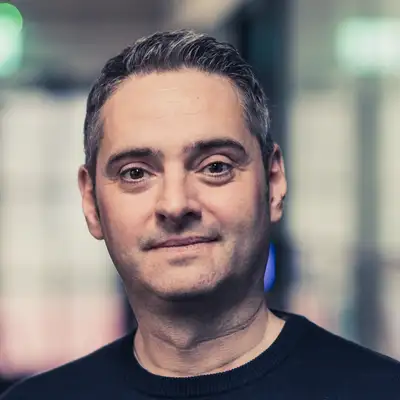
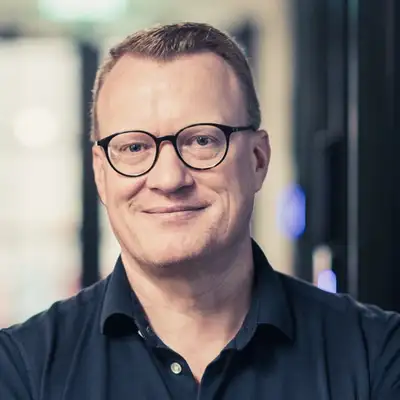
From the award‑winning team behind Cloud Realities, Realities Remixed explores what happens when people, culture, industry, and technology collide, because real breakthroughs rarely come from technology alone.
In each episode, hosts Dave Chapman, Esmee van de Giessen, and Rob Kernahan dig beneath the surface of innovation to understand what’s truly shifting. They speak with leaders, practitioners, vendors and thinkers across industries to explore how technology reshapes human behaviour, organisational culture, and society, for better and sometimes for worse.
Web - https://www.capgemini.com/insights/research-library/cloud-realities-podcast/
Email - realitiesremixed@capgemini.com
I think the British invent Brugge as well, Robert, is that what you're suggesting? I'm not saying that, I'm just saying it's absolutely... and Zot beer. Who doesn't love Zot beer? (
00:23.97) Dave Chapman. I'm Esmee van de Giessen. I'm Rob Kernahan, and this is Realities Remixed, an original podcast from Capgemini. And this week, do the mechanisms that we've used to run our organizations for decades need to change in a world of increasing uncertainty? Now joining us later in the show to talk about this and his back catalogue of work exploring how technology and organizations have evolved over at least the last 20 years, if not longer. I am delighted to say Peter Hinssen, keynote speaker, author, lecturer, thought leader, and co-founder of nexxworks. And if you want to jump right to our conversation with Peter, in the show notes you will find a time code to do that, so feel free to go and jump over there. But before that, we'll just explore a little bit of background on Peter and the work that he does.
But before that though... What's special about this show, Dr Mike van der Buabbles? It's episode 200. Woohoo! Now, I do need to call into a point of order, which is sometimes Marcel adds up the episodes wrong and we've had a debate before about we're not actually at the episode we thought we were at. So have we had this audited? We need an audit on this 200. I'm glad you have raised this point, It's the analytics in Transistor. What Marcel, I don't think has noticed is that even though this is actually number 200 of releases, there are two trailers in there. Dr. Mike. So it's actually episode one nine eight, but we've done two trailers. So it's released 200. Is that good enough? we think? Don't make it too complex. It's 200. I mean, for a party. So 200 is good enough. So 200 episodes? 200 episodes? It's quite, I mean, that's a lot of episodes really if we think about it. It's been a wild old ride, those 200, it's been good fun. Met lots of interesting people. It's flown by, it's flown by 200, that's quite interesting. Anything to stand out for you? I just like the way the show's evolved. I think that's been done in a way that has worked quite well from us and the feedback we've got. I quite like that, so we've evolved time. But I've loved just the, when we started, (02:50.494) AI was like, yeah, okay, that's a thing. And now it's like, everything's AI. we've, we've, we've tracked the course of that. So I've really enjoyed that because it's been able to put a commentary on what's going on in society, technology, organizations. I've enjoyed that. Keeping it real. joined the party halfway through ish. How's it been for you? Anything stand out? I think what I love most is also the personal stories behind our guests. You know, how did you end up in industry or any, you know, surprising hobbies or know-abouts that give it that little special extra in the conversations that we have, because I love meeting people. So I think that and also talking about people and culture in each and every episode. think it's, you know, one way or another. We always talk about the people building the tech, using the tech. investing the tech or whatever they do with the tech, but it's always leading towards people. The more you work on this stuff, the more you realise that's at the heart and the brain of it. Everything else is like an echo effect around those things and therefore if you get that right, the echo effect is positive and strong. If you get it wrong, not great. Anything standing out for you, Dave? 200 episodes? So I entirely concur with... your two views of the overall journey of it. Some of the ones that I enjoy very much are the ones where we let ourselves get off the hook a bit at say, Christmas, when we do the sort of big, just chunky, may or may not be necessarily related to today's world, but kind of zoom out a little bit. Yeah, I love those ones because one of the things I love working in technology about is the fact it's such a vast subject. It's almost an infinite subject in its own right, isn't it? No, obviously. You go back about expanding horizons. I'll go back to Anders Insel on that first Christmas episode and he got me thinking about it. And then I've like proper stitched me up for six months thinking about the simulation theory. It never really occurred to me about, I'd heard news reports about it, I'd stuck to it a little bit. That's really permeated right into it now lives rent free as a constant thought in my head about what are we actually in? It's like an existential thought for you, Robert. (05:05.934) It is, it is that. What about Dr Mike? mean, driving us into oncoming traffic, general logistics chaos, processing is all keeping us in order. What's going on? What's your favourite moment, Mike? I think overall it's an underestimated role. What, complexity of executing it properly? And for the listeners, so normally we record one or two episodes a week. And it's always on a Friday, so a good start of the weekend. And in the last three years, it was a sort of training session. Every Friday, I see it as a training, getting new information, great speakers. On the highest level, companies talking about their change. Yeah, that's really exciting. well, look, whether this is your first episode with us or your 200th brackets, including the trailers. You are very welcome and thank you for your time. We hope you get something out of this and as you've heard, we certainly do. And I think just the privilege of having at least one amazing conversation a week, think, makes such a big difference to how you view the world and just so deepens so much understanding. So I hope we bring at least a little bit of that. Anyway, today's Convo, Convo 200. is with Pete Hinson, as I said, at the top of the show. And to me, it feels like such an appropriate one because it brings so many threads together. And we encountered Peter, or at least Esme did, when he was doing some live talking about his latest book, The Uncertainty Principle. So Es, why don't you just give us a bit of bit of a precy on that. Yeah. So on Peter's core thesis in The Day After Tomorrow and all his related work, these days, sent us on what he calls the uncertainty principle for business, talking about the pace of change in the outside world now consistently exceeds most organizations' ability to adapt, and that gap between external disruption and internal responses keep widening. And his key argument is actually that companies spend roughly 93 % of their energy on today. (07:19.022) And on tomorrow maybe running the business and incremental improvement, but only about 7 % spent the time on the day after tomorrow. So the radical shifts that will actually determine survival is needing in more places. And that's what he's talking about, different types of organizations, structurally incapable of looking far enough ahead, but mostly being adaptable enough in culture, processes, incentives. I think everything that needs to be changed in an organisation to be continuously ready for the new normal. have to put that on the backdrop of the craziness of the world, generally. There's a meme on the internet I absolutely love and it's this person there looking quite beleaguered and it's something on the lines of, I'm currently experiencing my fourth once in a lifetime event. It's that sort of thing. If you think about the world's changed over the last... two decades, let's say, there's a lot more disruption, there's a lot more uncertainty. You're trying to operate large global organisations with this backdrop and maybe a little bit more future gazing and understanding what you need to do to be able to cope with that is a thing that think organisations are really struggling with at times. So, nerving though, isn't it, for organisations? Because a lot of the structures and ways of working and norms are just sort of not fit for purpose anymore. know, they've maybe been creaking. Let's say they've been creaking for the last 10 years, but we're still broadly operable. I think it feels like we're getting to a break point now where the really successful organizations have moved on from those mechanisms. And one example might be traditional hierarchical structures and where the traditional hierarchical structures can move fast enough, can adapt to change fast enough. You know, there's that notion of The hierarchy is drawn as a triangle and a triangle is the shape that resists change or pressure the most. And it feels like that was a strong structure for operational businesses that were just trundling along and, you know, were trying to rebound any level of disruption, but it's not avoidable anymore, is it, No, no, it's not. And it also reminds me of the work of Simon Sinek building on James Carr's concept. (09:42.638) Two types of games. Oh, for Is it the finite game or the infinite game? finite game and the infinite game. Oh, sorry, the finite, yeah, thanks. I think that's in the core what we're talking about. Are you playing because you want to leave a company better than how you started seeing it once you entered the company or founded the company? And that core essence and being able to change because you just want to do better, not so much keep on winning. looking at competition, but just in essence become better every day. I think if you're able to do that, to constantly shift and shape yourself and also look into the mirror and say, maybe it's not me anymore in this place, in this time, in this position, I think that's the core of what is needed. Yeah. What do we think it is, Rob, that organizations who have yet to accept and start a change motion around this stuff find so... for one of a better term, scary about it or difficult? Well, there's the whole classic sort of leadership void. That's the first problem, is the sort of like, it's the classic, we've said it before, the door swings open, the leader comes out and they say, thou shalt be digital, closes the door and they expect the organisation to be able to deal with that. So that uncertainty then creeps in about, you've done something that's very well known to you for the past X period and now you have to completely change your role. You you've got to become the octopus One where it's like, you've done this, now you have to become a taxi driver in Japan. Type conversation we had, Phil. And it's the human's fear of change and do we put the support network around them to be able to facilitate that change, give them the emotional support they need, give them the guidance and the direction, give them access to learning and all that sort of stuff. It's all, that's often the forgotten bit. I think humans, they struggle through and they muddle through, but it's imperfect and... you'll end up in a situation you probably didn't want and it'll then, like an elastic band, probably ping back because that's what everybody knows. So it's the sort of, you put the structure and the conditions for success in? Sometimes you see it happen and you just go, well you just haven't helped these people get on the change journey. You haven't given them any of the tools or any of the support or any of the emotional guidance that they need to be able to get to the destination. So the very courageous ones make it, but often the rest of the organisation doesn't actually change, I think. It's just sort of masking it. (12:05.566) Agile washing whatever you want to call it, you know, it's why agile as we called it as well. It's it's that I feel And and then I think there's another layer maybe which is when you mix in industry and You each sector might have Different regulatory constraints or it might have different cultures going on You know, like an engineering culture is very different to say the creative and arts cultures as me you spend a lot of time working with humans Do you think? the industry vertical hampers this or is it still just a group of humans? How does all of that come into this for you? think we talked about ecosystems a lot, which is also on the human system level and especially also in the ecosystem of an industry. It's about urgency. think there are industries right now that have a sense of urgency, that push boundaries, that no matter in what type of state of resistance you are, you are going, you feel like you need to step in and step up, also because you want to, talking about defense, for example, I think especially right now. Financial services, think we've been talking about that as well, if you look at regulations, but also the ecosystem sees that they need to change as well. So they need to be more adaptable and more agile as regulators to be able to help the industry evolve. So I think it's also pushing a lot of ecosystems entirely to work more together and be more in partnerships. Even though that sounds romantic, but I do see, and I think we've heard that a lot in the past episodes as well, in the two seasons that we've been talking about ecosystems more and more that we're willing to partner because the survival is maybe also the one that is able to join forces in an ecosystem. Yeah. That's people. We're talking, that's behavior. That's people doing business with people. look on that note, let's go to our conversation with Peter. where we're going to explore the notion of organizations in this very uncertain world. (14:17.162)
And we're here with Peter Hinssen, as I said, the keynote speaker, author, lecturer and co-founder of nexxworks. Peter, how are doing today? Lovely to see you. Really good. mean, happy to be on the podcast. We are so delighted that you're joining us for The Big 200. It's a real pleasure to have you on board. Congratulations. mean, that's a milestone. I mean, that is massive. So happy to be number 200. thank you very much. We're delighted to have you here. Tell us a little bit about nexxworks. So nexxworks is an organization that we started about 10 years ago to help inspire people about technology. We feel that there is a little bit too much doom and gloom around the technological world. We want to tell the positive stories about change. We want to inspire people. And that's basically what we do. It's not a big organization, but what we try to do is take people to the places that matter. So for example, know, spending time, whether it's in Shenzhen or it's in Silicon Valley, but the places where things are being made, where the future is being created and we feel that you can read about it. can, but if you're there and you feel it, it is something quite different. So there's a strange thing. My grandfather bought a bus in the Netherlands. And after World War II started driving Catholics to Lourdes in the south of France, where the famous cave was that is a religious shrine. And sometimes when I'm in Silicon Valley and I'm driving a bus with executives, I sometimes feel I'm in the new Lourdes sometimes. spreading the positive word about change is basically what we try to do. Okay, so much in that already. So let me start with the perception of doom and gloom that you opened that with. What's your take on when that started to happen? So when did the dark clouds come over this industry of tech in your mind? So I'm an engineer myself. I studied computer science and I think one of the things about being an engineer is that you're kind of completely immersed in enthusiasm about new things. I mean, (16:40.908) I don't think you can make it as an engineer if you're not constantly We've Rob on this show who's like the most enthusiastic person in the world, think. And it's all from that, isn't it, Rob? I do. No, no, I might be enthusiastic, but I do believe in a dystopian future and mankind's ability to rip itself apart. But it's in all the books. Isaac Hazem, Frank Herbert, they all predict an event basically driven through AI that destroys us. To Peter's point, you are the... an enthusiast, like in the moment around the, you know. But I think that is very typical. I mean, the Big Bang was a parody, of course. I mean, so often, I mean, when I go back to my computer science student days, everybody was super excited about technology and being there. They all wanted to be part of that. But everybody was reading. the same dystopian novels. I mean, everybody would chuckle at The Hitchhiker's Guide to the Galaxy and we would love all the horrible movies about everything that went wrong. So I think it is part of an upbringing. I think it's part of a culture. I think that culture is deep. And I think the nice thing about people who have that background is although they know all the dystopian scenarios, they're still excited about using this to build a better future. I think it's a natural filter as a computer science engineering student. I'm convinced we're going to wreck our world. I mean, that's coming. We won't say that, but I can't help but get excited about the technology that pops over the horizon. What could I do with that? What could I do with that? What could I do with that? So there's this instant today excitement, and then there's this long view that says, this isn't going to end well. Yeah, exactly. But still, everybody wants to be part of this. I I always go back to Richard Feynman, who's one of my heroes. You know what? He described space-time the best way anybody's ever described space-time. He's the only one who ever described it. And I went, I get it now. I understand that to a degree, but I think I understand it, I obviously don't because that's the classic. (18:48.374) But he was my hero when he was on that committee looking at the explosion of the space shuttle and he was the one who understood what happened. Yeah, with the O-ring. I mean, from that moment on, I was hooked. I've read all his books and I'm a huge fan of his work. But he describes that he was working on the Manhattan Project. And he said, you know what, we were building stuff that we knew could destroy the world. But it was like, you had to be there. I mean, not being part... of the Manhattan Project was probably the worst thing that happened in World War II. So there's always been that little dilemma there. But I think what is interesting is that the people in the field of technology, think there's a general idea that you could use this in ways that you could really help. You could help companies, organizations, you could help society, you could help build a better world. And I think that optimism is why people are so enthusiastic about this. At the same time, the technology itself is intoxicating. It's just really fun to play with stuff. I mean, I'm surrounded by vintage technology and I still get excited when one of these machines actually turns on. But I think there's always been a sort of a counter reaction where, in mainstream media or in mainstream culture, everybody's always thinking about, oh, all the things that could go wrong. And I think that is something which, you know, I'm trying to counter as much as possible. sort of have a small theory. and see whether this resonates with you, which is up until the Millennium and the Millennium and probably the dot-com bubble happening at the same time, there was a pretty optimistic view of technology within organizations and with organizations it was fairly heavily invested in. And then the dot-com bubble, which everybody got excited about, burst at the same time as the Millennium bug. which became a non-event. Now you can argue whether it was a non-event because of prep or whether it was never going to be an event, but it was a hugely advertised thing about why we should spend a load of money on technology. And then it sort of, nothing really happened. I just felt that after that, there was a bit of a loss of confidence in the sort of investment in corporate technology. Well, I do think the dot com was one thing, but I think the millennium, that was the worst PR (21:07.778) thing that we ever did in the world of technology. I first saying that the world is going to end, planes will fall from the sky, nuclear power plants will explode, and people say, why? we say, we forgot a zero? That was just one of the stupidest stunts we ever pulled. And then nothing happened. Not even a light bulb went out. think that was, this is something that will go down in the history of technology as a really bad PR idea. Well, technologists have never been engineers, I should say. Or technologies. They've never been the best marketeers, have they? They just tell the truth. And sometimes people don't want to hear it when you just go, well, the power plant could explode, but we're going to have look at the code and see if we can't fix it before then. And there was huge effort that went into it, right? I remember working in and around it for the banks. And it was like, on the day, it was a bit of a damp squib. We were all sat there waiting for the failure and it just went, oh, it's worked. Yeah. I think a big change what happened, though, over the last couple of years is that the entire mainstreaming of technology has helped a lot. Because when you go back to the Millennium Bug, mean, in those days, technology was very far removed from the average individual. a few people had personal computers, and a few people were fidgeting around with modems and trying dialing into the World Wide Web. But the majority, the large majority, was completely technology agnostic. They had very little interface with that. And that of course fundamentally changed. We're now in a situation where the mainstreaming is spectacular. This is something where we couldn't live without. I I wrote a book on that, The New Normal, 15 years ago, where I said, what will happen when digital becomes normal? Well, that happened a lot faster than I even anticipated. And I think that is a different situation now. I think we all now feel more comfortable with technology. I think we understand the power of it. And I think in that sense, the mainstreaming has really changed the narrative quite a lot. Do you think that there's, and we'll come to the new normal for sure in good time, but I wonder if when you look at your first major piece of work, which I think was business IT fusion, which was looking at the conflict between or the gap between sort of business in inverted commas and technology, we entirely recognise that still today, I think, as a problem in some organisations. Can you correlate the growing of that gap and that (23:31.694) conflict, say back to events like the Millennium Bug where sort of the tech industry miscalled and mismarketed that situation and maybe some distrust grew? I think so. I wrote that first book, Business IT Fusion, really long time ago and I wanted to rethink that relationship between the technologist and the rest. In many companies at the time, you had the IT manager who would report to the CFO for some reason. I mean, that's no longer the case. But in those days, I mean, 20 years ago, most CIOs or IT managers would report to the CFO. And I've always wondered why did that happen? And I think, you know, in a lot of cases, the first really big volumes of data that were processed were actually financial data. And in the very old days, IT wasn't called IT, it was called EDP, electronic data processing. And I think there must have been a board meeting where they said, listen, we don't understand these nerds. We have no idea what they're doing. But to the CFO, it's your numbers, so you take care of them. And I think that's the reason why a lot of the IT managers report to the CFO. But when I wrote that book, was starting to teach at London Business School. One of my favorite programs at London Business School is called the Senior Executive Program. We have between 50 and 70 senior executives, but these are people that are groomed to become CEO of big companies. They run major, major divisions or geographies. They're people with lot of experience, but they come to LBS for four weeks to give them a jolt to get to that next level of leadership. And I had them for a day on Technology and I could clearly see I mean this is the people go to London for four weeks and they have like amazing speakers of marketing and corporate finance and politics and strategy and then there's one guy who has to talk to them about IT and Honestly when I started doing that they all hated that because they thought my god, you know It's always boring when people talk about technology then I I tried to make that as fun as possible and as exciting and then (25:48.5) everything changed once these executives started to understand the real power and and that was the moment when they became more exposed themselves. think honestly the moment that I saw the people in my class starting to use BlackBerrys and then iPhones and then iPads and they started to understand the whole consumerization in my opinion changed everything and in those days there was an absolute gap between business and technology because the business people had no idea what the technologists were doing. And in a lot of cases, the technologists had no idea how businesses actually worked. And I tried to say, we have to bridge that gap. We have to fuse the two. And that was a book that was way too early. It was my first book. I made all the horrible mistakes about writing a first book. The book was too big, too heavy, too complex, too academic. My wife is a veterinarian. When I came home with the first print of the first book, I was so proud that I'd finally written a book and I give it to my wife and she takes it and she says, my God, it weighs like a dead dog. And then I realised I made a horrible mistake. Is that the way you measure success? Which dead animal is this book like, Urgo? Is it to be successful or not? I love that rating scale. Which dead animal is appropriate to this thing? I mean, it's brilliant. It's very novel. like it. It's a new scale. Absolutely. But I tried to describe a world where we wouldn't have that gap. And I think, honestly, the gap has gotten smaller over the years because you now have, I think, a generation of leaders who understand the power of technology, the power of data, they understand digital. I think, honestly, we might be now entering a world where we have a next generation of leaders that we need for the world of AI because that might be different. mean, recently I've seen a couple of CEOs actually stepped down because they say, you know what, I did the digital thing, but I can't do the AI thing, which I think is super interesting. I mean, just recently, Doug McMillan, the CEO of Walmart, who I admire, I wrote a book on Walmart called The Phoenix and the Unicorn. And their transformation from a traditional old school retailer to a digital savvy retailer is epic, absolutely. And it was this guy, Doug, who did it. But a couple of weeks ago, he stepped down and said, you know what, I did digital. (28:11.192) But I can't do AI. That's highly self-aware. I think we have more technology savvy leadership, but I think we still need to close that gap because the fusion still hasn't happened yet. That's somebody like you say, Dave, very self-aware, just looked at it and gone, I expended so much energy transforming one of the world's largest organisations to digital. I just don't have it. I don't have it left in me. And it's quite a powerful thing to be able to do. yeah, absolutely. And it brings us on, I think, to a subject that I think you cover in a number of your books. think it's a thread that I would observe at least looking at your back catalog, which is the notion of transformation and what transformation sort of really is. we've had Dave Snowden on the show. I don't know whether you know Dave's work, but... yeah, I know Dave. Yeah, he's very influential on the way that I think and we've used his work on the show lot. And he moves very... specifically away from transformation as something that has this start point and end point, and it's an artificial start and end point versus a sort of constant evolutionary flow. Is that sort of where you've got to in your thinking and maybe just flesh that out a little bit in terms of how you got to that place? absolutely. And I love Dave's work and I think In a very similar fashion, think one of the challenges that companies now have is they have become almost addicted to transformations. And I think this is a very, very bad addiction because, for the last 20, 25 years, it was almost always the same thing. You realize something new needs to happen. There is something different. You say, we need to do a transformation project. You establish an as is, you define it to be, and then you do your little trick to go from as is to to be. that interim states. I think we're now in a situation where I talk a lot about what I call the never normal, is I wrote a book, The New Normal, a long time ago about the transformation in the world of digital. And then ever since I wrote that book, people said, what's the new, normal? What's the next new normal? And then I tried that for a while and then I got tired of that. And then I said, I don't think that works anymore. I think we're in a never normal. And this is a (30:35.342) This is a really difficult thing to grasp because we always hope that it's going to, you know, once we get there, everything's going to be fine. I mean, once we, once we make that last jump, then everything is going to be, it doesn't, it doesn't. It's illusionary. The land of milk and honey is illusionary. It is illusionary. Absolutely. And I think since COVID, I mean, during COVID, I heard the word liminal over and over again. And I, first I didn't know what the word meant, but it's basically a transition and you're in between. And then after COVID, we didn't go back to a period of stability. mean, it just got crazier and crazier. I technology changed and it's not just technology, it's environmental, it's socialist, political, geopolitical. You get into this mess. And then I started using that term, never normal. And I think this is, I think a very good description of the world that we're in. And one of the characteristics or one of the questions that I like to ask people is, you think this is crazy, right? I mean, you think the rate of change is just absurd, but what if this is not a storm, but the new climate? And I think that for me is one of those fundamental ways of reframing that. And for that never normal, I think what you need to do is you need to think about how do we build like a continuous, you know, mechanism for change where you're not going from as is to be, but you're continuously in an agile environment changing the fabric of how you operate. And this is something where even in technology, we don't have a complete answer to that because when I mean, we know what an enterprise architecture looks like, but do we know what an enterprise architecture for a never normal looks like? And there is an insane fear of technologists that it's going to go out of control, that we're not going to be able to manage this anymore. But at a certain moment, you have to realize that many of the things that we use every single day are not controlled. The internet just grew and wasn't something that we had full top-down control over. And I think this idea of never normal thinking is something that I'm absolutely fascinated with. (32:46.892) Jitske Kramer is also a friend of our show and she talks about the Linamo phase a lot as well. And she obviously mentions leadership style and you touched upon the new generations. I'm curious about your thoughts about that because you also see in the new generations, are they resilient enough to constantly keep up with the speed and compared to maybe the seniors that now step away and say AI is it's too difficult for me or I'm not up for it? How do you see that? in terms of generations and their resilience. I find it truly a fascinating thing to study. And I never thought when I was a young engineer that I would ever get into things like culture and mindset and leadership. The older I get, the more I realize that is actually it. mean, that is all there is. If you get that right. That's all there is. Yeah. And, and I think I I've been I was introduced to London Business School 15 years ago by a man called Rob Goffey. He's about as opposite to me as you can get because he's an organizational psychologist. He's been studying leadership and culture his entire career. I was doing some work for a big bank and he was doing some of the leadership development and he saw what I was doing and said, why don't you come and see if there's anything you can do at the school? But he was a huge influence on me. mean, he was basically my mentor into that whole field. And he wrote a book a long time ago called Why Should Anyone Be Led By You? And that is still an amazing book. It was one of the top HBR articles of all times. And I saw him do that, literally. I I still remember Rob walking into the board of one of the largest banks in the world. All these people sitting around the table had amazing track records, amazing accolades, amazing resumes. And he would wait for the room to quiet down and he would look them in the eye and he'd say, why should anyone in this organization be led by you? And they became tiny little individuals. And I love that, absolutely love that. And I think that is even more true today in this never normal. And I think we are probably going to need a different type of leadership, a different type of approach, different type of culture to do that. (35:03.406) And I think that for me is one of the most interesting things because we live in times of uncertainty, of great uncertainty. And I think being comfortable with that, being transparent about the fact that you're uncomfortable and trying to find ways to do this together, I think is one of the greatest changes that we're going to see in how we lead organizations. It's an interesting strategy though to say justify yourself to a leadership team. And I think because often when you get to a position of power, you maybe don't get questions as much about that. Are you still relevant? Should you be here? Just let's go through your case again. It's quite nice that that was done to say, are you the right leader for this? Because sometimes bad leadership can lead to terrible motivation, bad organisation decisions, slow failure to execute things like this. I quite like that style. I mean, it's brutal. Why should you be our leader type conversation? But it's maybe one we should have more often. I fully agree. For the avoidance of doubt, I'm not going to start trying it, but I'd like on a stab a go, Dave, maybe we'll nominate you and then we'll stand back and watch the results. I like it. You hold my Because it's quite a courageous thing to do as well, isn't it? Well, leadership is courage, isn't it? It's done properly and harnessed correctly. I wonder, another bit of Snowden's work that I wonder fits in this somewhere is the Kneffen framework and the use of... complex leadership versus complicated leadership. And it seems to me that a lot of the last generation of leaders and organizations had great comfort in the world of the complication and being able to predict and being able to plan for three years out and being able to within 0.25 of a percent a growth number that was decided on 18 months ago. And then for all kinds of different reasons. whether it's the advancement of technology and the rise of digital companies and COVID in the mix there somewhere, the world just became far less predictable, didn't it? And organizations therefore, to your point that you make very well, the organizations within that type of world have to then start to behave differently and whether that's the technology or the organization or the leadership. (37:23.662) But it has to start with a leadership, I think. I was quite motivated by the notion of this supportive leadership concept, which is lead from the back, push up, lead through enabling versus lead through control. I wonder if there's anything in that that you've thought about in your work. Yeah, and I think you're right. Leadership is probably the very core there, and it's a different type. It's adaptive leadership. It's about... understanding how to sense and then be able to engage people. I've been a huge fan of what I call these Phoenix organizations. These are companies that are capable of reinventing themselves. And I wrote a book on that, The Phoenix and the Unicorn, because I was getting mightily fed up with the unicorn applause because unicorns are amazing things. mean, they are unique in our economic history. But it's really simple to do a unicorn. You just need to be extremely focused and you have to leverage technology faster and scale faster. But it's, it's a very simple trick to do a unicorn. But I became fascinated by Phoenix's and Phoenix's are companies that are capable of reinventing themselves. These are companies that have battle scars, you know, have, you know, shit of yesterday, legacy systems. mean, and what you see is- human systems. entrenched human systems and often, you an enormous complexity of getting the masses to change. And the fascinating thing about these phoenixes is that I've been researching them and yeah, there is a huge correlation to the leadership element of that, but there is a nuance and the nuance is very interesting. So when you look at a phoenix and I mentioned Walmart, Walmart for me is a phoenix, right? 70 plus years old. a big disruptor of the past. And then a couple of years ago, they were running out of steam and they were seen as an old school traditional retailer. They reinvented themselves. But since I started researching them, I found an enormous amount of Phoenixes. mean, Microsoft's a really good example of a Phoenix. I mean, 50 years old, 51 years old, and a company that was like, wow, wow, wow, wow, ooh, not so good. I mean, the end of the Balmer era was terrible. (39:41.838) when the iPhone You gotta love him dancing on stage though. His dancing was spectacular, but when you look at it, mean, 2007 the iPhone comes out and they ask Balmer, is the iPhone gonna make it? And he says, there is no chance. No chance the iPhone is ever going to have any market share. did get the developers point though. It would be software engineers that redefine the world. we got something right when he said that he did present it in the capture saying the word developers, developers, developers, didn't he? yeah, got that bit right. you're right. And it's legendary. mean, it's absolutely legendary. But I mean, at that moment, Microsoft was, I think, suffering from the fact that they had become basically a machine to collect money. And then you build bureaucracies. I think, Satya Nadella, when he came on board as the new CEO, he said, I think there are probably six or seven Googles inside our company, but they're not getting out anymore. We have built layers of bureaucracy that the only thing we could do is build mediocre products. And when Satya Nadella came on board, mean, he changed the strategy of the cloud. mean, that is probably one of the most spectacular pivots in economic history. But the most important thing he did is he read Carol Dweck's book and, you know, growth mindset. And he put the growth mindset into the organization. And that leadership of somebody that we didn't know, nobody knew Satya Nadella. I mean, nobody knew that he had those capabilities, but that is the reason why Microsoft is such a phoenix. So I became fascinated by these phoenixes. Disney is a phoenix. mean, the fascinating thing is now some of the younger companies that we used to say, oh, look at Google, Google, wow, wow, wow. Google is 25 years old and now Google has to reinvent itself in a massive way. And by the way, they're doing a good job. But it's really cool to see even those companies that need to reinvent themselves. Because at a certain moment, the traditional mechanisms just cannot push you to the greatness that you need in this never normal world. that failure of reinvention, that Phoenix event, when it doesn't happen, it's literally the death of the company though. And you can see some companies making decisions. You just go... (41:52.328) you done in it. It might be five years, it might be 10 years because you've got some IP that people need or a license that you can hang on to. think that's probably the end of your thanks. And even worse, mean at that moment they even tend to cling together in desperation. I did startups when I was younger. I started working after graduating as an engineer at a company called Alcatel. I don't know if you remember Oh, I remember Alcatel well. yeah. French Stingray-Bodem, ADSL, in the communication days. And this is a company that had amazing engineering talent, and they were one of the kings in the old telco infrastructure world. And then I sold my first company to them in 1999. And at that moment, you could clearly see that they were the kings of the telco, but they didn't get the world of IP. They didn't get the world of the worldwide web. And what happened then is they merged with Lucent, which was another one of those dying dinosaurs. And then, it's not just that it's the end of a company. They tend to cling together to say, maybe we're too desperate. we're going to a Thelma and Louise. That's Thelma and Louise, isn't it? Off the cliff together holding hands. That's the image in your head you should have. feels like companies, when they get to that point, they're of almost tense up and they try and control what's around them. Where actually almost the opposite strategy needs to be enacted of stripping things out and being braver and things like that. And I wonder if, when you were looking at the leadership of the Phoenix companies, did you see a thread? in terms of the leaders that were driving those? Well, I think one of the fascinating things that I found in researching that is that in a unicorn you often have that one individual, right? It's that one person in his or her bedroom that dreams a completely new world. It's the Elon Musk's of this world, it's the Zuckerberg's of this world. And what I found in Phoenix's is that that isn't the case. It's their capability (43:54.538) as CEOs often to build what I call a collective leadership, a collective entrepreneurship. And that is something which I found really, really interesting. Because in a unicorn, you still have sometimes that very, very singular, sometimes toxic type of behavior where you are founder mode. It's founder mode. I mean, it is really founder mode. And if you want to change a Phoenix, it's not just... one person, but it's one person that has to start almost like a movement and a shift and and I call it collective entrepreneurialism and I think it's something that I have seen over and over again and I think this is something which you know I find fascinating because it's not just Satya Nadella. Satya Nadella has built an entire culture of people who have regained that entrepreneurial spirit instead of a bureaucratic spirit. And I think that is for me the real trick of how to unlock these massive, massive changes. Peter, we have to ask about it because we see you with the listeners cannot. How many Microsoft related products are behind you? Because you're actually in a chapel. You're drinking out of a cup that makes me think about Apple a lot, I would say. Well, mean, so the story behind this is that I learned how to program on an Apple 2 when I was 11 years old. And we lived in the US at the time. I was in a middle school, and I think we were one of the first 10 schools that Apple had donated computers to the school, just to see what effect it would have on young people. And I was fortunate to be in that school. I learned how to program on Apple, too. Love for technology never went away. Love for the brand never went away. And then it is, I think, an interesting experiment, because 40 years later... one of these kids buys a church in Belgium to house his Apple collection. So they did something right with that experiment. But I had the good fortune that my father was an engineer. We had this passion, and he convinced my mother that it would be stupid to throw anything away. So this became a collection which started when I was 11. I started massively collecting about 25 years ago. (46:09.39) Everything you see behind me used to be in our house. my passion project became the number one source of tension in my marriage over the last 28 years. that's a lot of kit. That's a lot of kit behind you. That's a lot of kit. Just for the listeners that I can probably see 40 individual units for computing PCs, etc. There's probably more if you rotate the camera. Do you know what you have? So I started collecting massively, but I probably have virtually every product that Apple has ever produced in its history here in the Apple chapel, a lot more in storage. don't have every model and every variant of every, but that would just, you know, that's that I'm still young, right? Got to draw a line somewhere Peter, you know, leave some for later. Got to draw a line. When you got to hunt down that really obscure MacBook Pro from like, 90, 2011 or something. See through plastic era. And there's now actually, it's a very interesting period because you have a number of those early engineers who still have the prototypes that they worked on who are either now passing away or retiring and they can't take their kit to the retirement home. And I have a couple of things here in my Apple chapel, which I bought from tearful engineers who have to... with their prototypes, but it's a very interesting period to collect. But I started to shift away from the pure hardware to the broader picture, things that tell the story. So for example, I have all the annual reports of Apple here, and I even have the original prospectus from 1980, which JP Morgan used to sell the first 4.6 million shares of Apple. And that is just amazing to see that. So I'm assuming you've got an Android phone then. Well, ironically, I do. have a Google Pixel. And the reason is I do a lot of work for Google. And Google said, you with your Apple obsession, use one of these. And I love them. And of course, in my line of work, I have to understand both ecosystems. I wonder if we can return back to the adaptive organization and just continue exploring actually the lens of your work. (48:29.606) We've talked a little bit about leadership and the way the leaders of Phoenix organizations develop a culture of entrepreneurialism and growth mindset around them rather than be the single person. I wonder if we extend that out now into the wider organization. You've written, I think, on networked organizations. In my head, and you please correct me if I'm wrong, my sort of view of network organization versus hierarchy is that it's more loosely coupled. it can reform itself and be more adaptive to change. Is that how you hold networked organizations and how does that fit into the model of Phoenix or adaptiveness for you? Yeah, and I think I became fascinated by non-hierarchical models and wanted to understand how they would work. what you saw, and this is in the last decade, we've seen a couple of examples of companies who tried to massively shift from classic hierarchy to networks and they failed miserably. I mean, the Zappos experiment is really famous. In the beginning, I loved the ideas, but it was just too complex to get it organized. But I had the pleasure to meet a couple of non-hierarchical organizations and they're really, really strange because when you meet them and you have a meeting, you're meeting with seven people around the table and in a traditional organization, you know, okay, That's the boss. So I talked to that person. But in a non-hierarchical, you're looking around the table thinking, who is in charge? Nobody's in charge. Everyone's in charge. It's really, really strange. But one of the fascinating things is I had the chance to do some work for a company called Gojo Industries. And it's a company that isn't well known, but its product is Pirell. I mean, Pirell is in the US, it's the gel that everybody uses to sanitize their hands. They're everywhere. It's a company that's been around for 80 years. It's completely non-hierarchical. It was absolutely fascinating to understand how they would work. How do you operate? And it's one of the most innovative companies I've ever seen. They are absolutely brilliant in product innovations, but there is no classic hierarchy. They have one official title, which is the CEO, which is (50:53.358) for legal purposes, but for the rest, no hierarchy. And I became fascinated by that. Now I think what happened is a decade ago, there was a lot of enthusiasm about that. I wrote a book on that called The Network Always Wins. But I think at that moment, we probably didn't have, I think, the technology, the capabilities, probably also the mindset of HR leaders to understand and how to leverage that. I think a lot of the early experiments were probably way too early. But I think in this age now, we're probably going to see a couple of very interesting evolutions. I mean, we're all seeing the impact that AI has on work that is massive. mean, something that just seems to escalate. This idea of managing just human resources in a strictly hierarchical way probably is at the end of a life cycle. The idea that we have to manage work, which could be human or non-human, where we have to understand how to make that tick. cooperate, I think we could reuse some of those concepts of network-based thinking. So I think we might be entering this idea of networks of work, but it might not be the old, let's burn the org chart idea. I think it might be a completely new and hybrid way of thinking about agents and humans. you've allowed the networks just to check my understanding of what you just said. that there's quite powerful, is that you allow the network to form dynamically based on the need and then it falls apart as the job is done or the need is no longer there. Is that what you're basically suggesting? Yeah, yeah. And in a lot of the non-hierarchical thinking, was, you see entities being created where you said, hey, this is cool, I want to join that. I think I might have something to add there or I could learn something from that. But you're not doing a job or you don't have a role. You're part of a number of structures. where you could add, learn, or contribute. And I think this is something which is going to be super interesting in a hybrid human plus non-human type of work concept. How closely related is that to the Holacracy model? Because you do see some, or at least some companies, try to embrace that. The Holacracy ideas, as I said 10 years ago, people got really excited about that. And I think it was probably way too early. (53:13.23) Most of those concepts were brilliant ideas, but at that time, I think we weren't ready for it yet. And I think we might be entering now one of those shock moments for how organizations actually evolve. mean, one of the things going back to the Phoenixes is a company almost never becomes a Phoenix unless they've had a scary moment. mean, whatever you do and talk about how they should evolve and change, They all say, uh-huh, uh-huh, uh-huh, but they don't move until they've had a near-death experience. That's basically it. send Marcel van der Bergh in and he'll generate some scary moments and near-death experiences. He has with us many times. And then maybe that's the catalyst for change. Just right there, bang, we've got to do something different now. Marcel, I think you've got a new company, the purveyor of chaos. Well, maybe a new function, yeah, really interesting to explore. But it's true, mean, when you look at it, mean, why did Disney become a Phoenix is when they ran out of steam. I mean, why did Microsoft, all of a sudden when they thought, shit, Windows XP, it's probably not the best product we've ever made. And I think it's almost always the case. Walmart really jolted into change when they realized seven years ago that all of a sudden Amazon was touching more American households every week than they were. And that was like, Wow, so the jolting is a big thing. This, what is happening right now to organizations, the AI shock that is coming through, I think might be the real opportunity for companies to really take this a little bit more seriously. (55:10.636) So we've started to sketch out this notion of adaptive org. We've looked at styles of leadership and the evolution of leadership and we've taken that down into sort of new and emergent organizational structures that adaptive organizations really need to be mindful of. Let's now talk about tech. So the underlying bedrock of the thing. And I guess when I think it through, tech has always been somewhat of a long pole. in the ability to be adaptive historically because of really torturous things like lead times on hardware and cycle times on development and things like that. And it feels like sort of cloud native and digital era technologies have removed, if not all of that long pole, a good chunk of it in the sense that tech is now no longer the restrictive area. How do you think that through Peter and where is that in your mind? Well, I think we're in a fascinating moment. I I've been in technology for 33 years now, and I've always been excited about change, and I still am. But the rate of change is spectacular. And what I try to use as a framing is that we're in an era now that's never normal. When you look at technology, two things are happening. One is that the cost of doing goes to zero. And I think that is spectacular, because as you said, IT projects used to take a really long time or super expensive. We're now seeing a reduction. mean, things that used to be done in years can be done in weeks or days and in a fraction of the cost. So the cost of doing goes to zero, both financially and timing-wise. But we're in an era where things are changing so rapidly that the cost of waiting becomes catastrophic. And that is a super interesting point in time where, you know, what is this going to mean in terms of capabilities, in terms of technology in itself? And there is now maybe a knee-jerk reaction, but there is a certain sentiment that we need to embrace the new and get rid of the old. I have a term that I use a lot, which I call yesterwork. And yesterwork for me is the things that we are still doing in companies that we should have gotten rid of a long time ago, but we haven't, because it's a lot more fun to do a new project than to remove the old. (57:27.214) And I love what Peter Drucker said, if you want something new, you have to stop doing something old. So I think there's a lot of yes to work opportunities. AI is putting oil onto the fire. And since the last couple of weeks, there is really only one thing that executives want to talk to me about. It's Block. And that is the announcement that Jack Dorsey, the CEO of Block made a couple of weeks ago. where he said, okay, block is a US fintech. I always call it the American Revolut, but it's basically more than that. I mean, Jack Dorsey said, I'm getting rid of 40 % of my staff. He let go of 4,000 people. And he said, we believe our company is more valuable as a smaller, faster intelligence native company. And he said, I don't think that we are early. I think most companies are late. Since that moment, it's the only thing executives want to talk to me about because they all want to be faster, smaller, and intelligence native. I know what faster means. I know what smaller means. I'm not sure what intelligence native actually means. But I think this idea that we're in a world where the cost of doing goes down and the cost of waiting goes up, think is really starting to accelerate how we think about organizational development. And I love this notion of yester work and when you were looking at Phoenix organizations, did you feel that they were dealing with that problem? the mental image I've just got in my mind is you know that time when you finally groaningly go behind all of your audio visual equipment in the lounge and you start pulling out like old cables that you should have moved. like years ago, but you've never bothered getting them all out. And then finally you get them all out and you've just got like, it's all nice and elegant. You're like, there's a sense of satisfaction about that. I wonder if they did that organizationally. And where I'm most interested perhaps of some of the old cabling coming out is in governance and the way that governance can kind of suffocate an organization. (59:48.366) I think it's absolutely true. mind you, I was on the board of a bank for four years. So when you talk about the complexity of governance, it's also the fact that there is a regulatory framework around that which necessitates some of that governance. But we had a big debate on the role of, for example, the annual budget. And I think that for me is one of those elements that I think is truly fascinating. I think we all see that that concept, which came out of hundreds of years of understanding how finance works or should work. I mean, we've now settled onto the fact that an annual budget is a pretty good idea. I call annual budgets a corporate sarcastic yearly ritual where people put fake news in Excel that is consolidated into something which never works. And in this current never normal, it is super interesting to see that. Companies still spend an insane amount of energy in November to build the annual budget for next year. And by March, they can flush it down the toilet. Because that is no longer a workable governance instrument anymore. So I think we need to probably reinvent our instruments for this never normal. And at the same time, it doesn't mean that we have to abandon all hope. But I think companies still need to understand where they're going. mean, that North Star is more important than ever before. But being flexible and agile and adaptable is also more important. But those medium, old school governance instruments like the annual report or like the annual budget, I think are just absolutely ludicrous. I think it's to have in that courage to say we're three months, four months into this. We're not just going to address what our performance was to get here. We are also going to read just the conversation says, is this actually the right core strategy and do we need to change that North Star or Varia? And a lot of organizations, once they've set that upstream bit, they don't want to change it because it feels too hard. actually, those that work tend to be able to go back in the second loop and say, actually, our core strategy was wrong. We need to change that, you know, and fundamentally change direction. But I don't see many organizations doing that after they've kind of set that. (01:02:02.678) core part, maybe they're too scared to fiddle with the core. don't know what your view is on that, but that's quite important. you're right. I think the fascinating thing is Unilever did that for a while. So Unilever was one those companies that actually abandoned the concept of the annual report. And during the period that they did that, their stock price went through the roof. And it's because the CEO at the time said, you know what, this is just a dog and pony show that I have to put in. Every quarter, I have to do this song and dance for the analyst. I'm spending so much time just doing that ludicrous theater instead of focusing on real change and innovation. And unfortunately, when that CEO left, they went back to the old annual budget really, really quickly. So it's a very, very hard thing to actually kick. But I think it's going to be vital that we rethink our instruments for this world which is changing so quickly. I like that story because of that aspect of the CEO sort of challenging back and going, I'm not sure what value this is actually adding. In the baddest sense, it had become in a negative sense a ritual and everyone was doing it because they thought the market wanted it or you thought you had to do it. Actually, the reality of being successful is breaking some rules, isn't it? Or it's basically standing up to them and going, actually, is this right? And it's also part of the lore in the sense that we have also instructed scores of managers on those instruments. I I'm not allowed to teach anymore at the MBA program at London Business School because the last time I did that, I said, well, I'm happy to be here. I'm glad you've chosen for the best education for the last century. And they didn't like that very much. But I think it is true. I mean, a lot of the courses that we teach in an MBA are basically things that worked fine for an older normal, but not necessarily for a never normal. And the problem is that we're so reluctant to give up those rituals that I think we're probably going to lose out on opportunities. How do you keep up with the speed with everything, Peter? Because I know you're very well known in keynotes doing a lot of slides in a short amount of minutes. (01:04:20.546) How do you keep up with that, with the stories, with the narratives, and with everything that's going on? Well, I I started doing keynotes quite intensely about 15 years ago. And the rate of change was a lot different then. I have a very, indeed, visual storytelling style. So I do a rate of 100 visuals per 10 minutes. A 45 minute keynote is 450 slides, 60 minute keynote is 600 slides. like one of Rob's architectural decks to me, Peter. But mine's got four point text on it. And it's just words. It's just words. Just words. I try to avoid words as much as possible. But I still remember probably my very first PowerPoint training when I was a young engineer. I had this course on how to make slides and I still remember The instructor saying, it's very simple. There's one rule, one slide, three minutes. Well, that doesn't work anymore. I mean, this is the age of TikTok. This is the age of endless scrolling. We're used to such an overload of information, but it's not just images for the images. I want the right image with the word at the right time. I spend about two hours a day updating the deck on everything that happens during the day. And I've learned that every time when I thought, know, this is cool. I'll make a bookmark. I never got back to the bookmark. So now I just have a routine. I see something, I immediately turn it into a slide. So I have a master deck, which starts fresh first of January. We're now in April, I'm up to 2000 slides, which shows how much stuff has been happening this year. And I think it's fascinating because we all get the input. But having that overview and big picture is something that I think I can play a role in helping people understand and make sense of it. you considered becoming a non-functional tester for Microsoft and PowerPoint? Like, 2,000 slides. That's got to be pushing that app to the limit. You've had to have some flaky experiences with that at 2,000 I have to make a confession. I stopped using PowerPoint 17 years ago. I only use Apple Keynote. (01:06:34.38) because native Apple keynote is the only thing that can keep up with my rate of visuals and audio and video because PowerPoint wouldn't be able to cut it. there you go. mean, here you go. How important is that trait, Peter, for leaders to be able to tell a story and maybe also use visuals? Where do you see... I think it's crucial. mean, we live in a time where storytelling is absolutely vital. I I go back to the leadership qualities and the never normal, these phoenixes, and And for me, I think this is something where you're going to have to lead organizations in times of great uncertainty and being able to tell a story, build a narrative that gives the sense of urgency but doesn't scare your people, I think is more important than ever before. So I think this is not about just being really good at strategy or really good at execution, but it's being really good at telling the story and getting people engaged in the narrative. I think that is crucial nowadays. Well, let's maybe stay with uncertainty and maybe pull a few threads together to maybe bring at least today's conversation to a bit of a conclusion. I think in your most recent book, you talk about the never normal and riding the waves and this notion of uncertainty. So unpack that a little for us in terms of What does that mean for an adaptive organization then? How do you actually take that? We've examined this sort of mechanisms of adaption. How do you bring all of that together to be able to deal with uncertainty at the level that you're describing it? Yeah, so I wrote that book, The Uncertainty Principle, on the idea what would a framework for leadership be in this never-normal. And one of the things is, and you can probably judge by the fact who has a complete church with full of vintage electronics, I kind of like the past. So I did quite a lot of research on how companies were looking at the future in the past. And one of the things that I found truly inspirational was the whole idea of scenario thinking and scenario planning. And I went back to Shell, which was a company that had a (01:08:49.112) pioneering scenario planning organization inside Shell. And one of the reasons why Shell didn't suffer as much as the other oil companies during the big oil crisis of the 1970s is because they had the scenarios all written down. They had a team of scenario thinkers, which were absolutely brilliant, brilliant people who had mapped out all the possible things that could happen in one of these crises. And the moment the oil crisis hit, they knew exactly what to do. And there's a huge difference between planning and scenario thinking because plans, I I always forget which general it was who said, you when I go to war, plans are useless, but planning is essential. And I think that is the crucial thing. What we now have is people who are addicted to transformations and plans are gonna come up, you know, I think empty in this never normal. But I think we need almost like a revival of scenario thinking and scenario planning. I mean, Peter Schwartz was the famous scenario planner who worked at Shell in those days. He's now actually the chief scenario thinker for Salesforce because he's almost the chief advisor of Mark Benioff. They live in Hawaii next to their neighbors in Hawaii, which is really funny. wouldn't mind doing a bit of scenario planning in Hawaii. I'm not going to lie. I'd be free. I can free up a diary for that. Life's tough, isn't it? I mean, let's go to Waikiki Beach or whatever it is and think about the future. a podcast in Hawaii on site coming up. get on it. Come on. Come on, Marcel. I do it on my own time. But I think what I believe is that in this age of uncertainty, makes no sense to hope that it's going to become easier. It's not. I think you have to understand how to leverage uncertainty, make it your friend. And three things are important. One is anticipate. You have to look ahead. You have to pick up the signals. You have to understand what I call the day after tomorrow better than ever before. Two, you need to be super adaptable in a world that is increasingly super fluid. And three, you're not going to get everything right. You need to be resilient. And that is the Holy Trinity in the book. It's how can you actually build that foresight? How can you pick up the signals? How can you become adaptable and agile? And how can you build that resilience? And for me, those are the three main characteristics of understanding how to (01:11:05.41) not just survive in this never normal, but really thrive and use that as a leverage mechanism. (01:11:21.326) And now we end every episode of this podcast by asking our guests what they're excited about doing next. And that could be something in their personal life, like some travel or a restaurant they got booked at the weekend, or it could be something in their professional life. So Peter, what are you excited about doing next? mean, travel for me is almost never personal. mean, I do a lot of keynotes around the world, but I'm really excited. I'm going to spend a week in Taiwan with TSMC. And it's a company that I really, really admire. It's a company that is a big part of Taiwan. It's also a big part of the geopolitical situation of Taiwan, but a company that uses the machines of ASML to make the Nvidia chips. And they're the only ones who can understand how to do that with that type of precision and accuracy is fascinating. And I'm really looking forward to spending a week with the TSMC in Taiwan. One of the things you mentioned right at the top of the conversation was the, you know, taking CIOs out on trips, like group trips. And there was a couple of things in that that you touched on that, you know, I'd love to hear your thoughts on. The first is you touched on Shenzhen and Silicon Valley. And what's fascinating about that is a couple of years ago, we were lucky enough to go and do the show at Mobile World Congress. And I confess, I think it was one of the first times that I'd looked at what was coming out of China with some fresh eyes and was just absolutely blown away by how far ahead they seem to be in so many different ways. I wonder what your perspective is having seen that from the inside and where you think they are against each other at the moment. So, I I try and do both. I I try to spend as much time in the Bay Area and Silicon Valley as I do in China. I think every time that I go to China, I realize that the rate of change is still accelerating. It just goes faster and faster. And you can see a complete alignment between society, the government, and the tech sector in a way that is just truly incredible. (01:13:31.66) For me, Shanghai and Beijing are great. Shenzhen is, of course, heaven as an engineer. But Hangzhou, for example, where Alibaba is, but where also DeepSeek is, you can see that AI is just ripping through this country like crazy, mass adoption. And especially when it comes to then the physical side of AI, the humanoid robots and the enormous advances there. I mean, I remember going to Boston Dynamics and thinking, wow, that is so cool. But that is just kids play compared to what you see coming out of China. So for me, think this is something where I want to spend even more time, but you can clearly see that China has very little to learn from the West anymore. This is happening right now at a speed that is unprecedented. is absolutely remarkable. That's for sure. And the other aspect of these trips, that I thought was fascinating is the notion of blowing CIOs away with what they're seeing. So what is it that is innately disrupting to them on these trips, do you think? Is it just, you know, I've done that thing where I've gone down the West Coast and I've talked to a bunch of tech organizations and now I'm like, actually, maybe I've been asleep at the wheel. Or is there something deeper going on there, do you think? Well, so in beginning of the year, I took a... a private equity group who invests primarily in B2B SaaS companies to Silicon Valley for a week. They had a portfolio of, think, 17 software companies. All the CEOs were there and all the CTOs were there. CEOs wanted to understand how AI was disrupting the world of software. Of course, the whole SaaS-pocalypse thing and everything that is massively changing as a result is something that they wanted to understand. CTOs were interesting because I remember we had a... a first briefing on Sunday evening and all the CTOs were there. But these are CTOs of established B2B SaaS companies. And they were all over there like, I've been writing C Sharp for 17 years. What am I going to learn here? That type of an attitude. And then what I found fascinating is that the exposure to the rate of change, everybody's looking at the same meter graph, which is how basically the tasks of a human programmer can be automated with AI. (01:15:49.934) And you see something that since November of 2025, there has been a fundamental shift, fundamental. mean, Opus 4.5 and then beyond that, we've gone from 10, 20 minutes of automation to a full day to two days of automation. And the idea of how you write software, mean, one of my friends works at OpenAI, he's been there for a year and a half, he said, I've never shipped as much software in my life, but I haven't written on a single line of code. And that is not just, a statement, it's a reality. And I think this idea of the very nature of developing code, software and logic is changing at such an enormous rate. The best thing that this private equity firm did is they hired a guy who is in his 50s, who understands really well the older systems, but also is super into this new stuff. He basically opens up his laptop, he goes to all these software companies, And on Monday has a briefing call with the CEO and the CTO and says, what are you guys working on for the next six months? I say, we're doing this and this this. Then he quietly sits there for two days, turns around his laptop and says, I've already built it. And then that gets their attention. And I think that is a fundamentally different way of looking at things. But I think you can read about it, but if you're there and you smell it, you see it, you feel it, there is something amazing about being there. And the good thing is, Silicon Valley in San Francisco is really back a couple of years ago. It wasn't nice to go to San Francisco. was really, you could feel that they, COVID really hurt the entire region. AI has revitalized that and to the point where it's kind of crazy. mean, every billboard in San Francisco talks about some AI company you've never heard of, but it is a buzz which I think is intoxicating. Well, on that note, I'd say So thank you for joining us again today. It's been a real privilege to talk to you about it, to just step through the ways that you've framed these things over the years. So thanks again for spending some time with us today, Peter. Well, thank you very much for inviting me. It was wonderful to be here and to be on the 200th episode of this amazing podcast. And I wish you a lot of success for the next 200.
If you'd like to discuss any of the issues on this week's show and how they might impact you and your business, please get in touch with us at realitiesremix@capgemini.com. (01:18:10.03) We're all on LinkedIn, we'd love to hear from you, so feel free to connect on DM if you have any questions for the show to tackle. And of course, please rate and subscribe to our podcast. It really helps us improve the show. A huge thanks to Peter, our sound and editing visits Ben and Louis, our producer Marcel, and of course to all our listeners. See you in another reality next week.