Subscribe
Share
Share
Embed

Welcome to The Wholehearted Way Podcast, a place for honest conversations about what it means to live and lead from a whole heart.
Here, we explore the stories, struggles, courage, and calling that shape who each of us are becoming.
This is a space to slow down, reflect, and grow. In each conversation, we explore what it means to live wholeheartedly — in our work, our relationships, and our calling. We’re glad you’re here.
Deepen the Journey: Discover the heart behind our conversations in the new book, Becoming Wholehearted by Anisa Sumlar and Larry Bolden. Get your copy at becomingwholehearted.org.
Presented by Wellspring Group (https://www.wellspringgroup.org), empowering you to live in the fullness of who God made you to be.
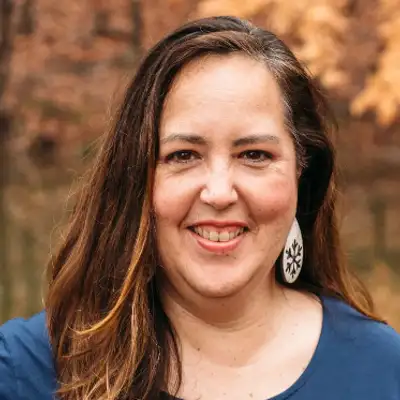
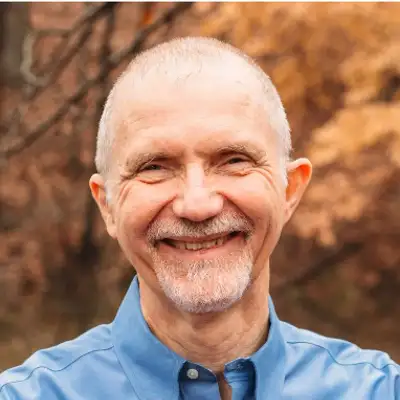
Nathan King: Welcome to the Wholehearted Way podcast. I'm Nathan King, a long-time facilitator, volunteer, and participant in Wellspring programs. We have two guests today. Our guests are Larry Bolden and Anisa Sumlar. Larry's the founder of Wellspring Group, which is going now for over 23 years, and Anisa is the creative director and she was the first employee of the ministry and has been with it for over 20 years as well. And co-hosting today is Mandy Wellington, the operations manager and a long-time staff member of Wellspring. Welcome, everyone, to the podcast.
Anisa Sumlar: Thanks, Nathan. It's great to be here.
Larry Bolden: Yes, it's a delight to be here and with all of you.
Mandy Wellington: Thanks, Nathan. Looking forward to it.
Nathan King: Good to have you guys here. And we are recording this on March 12th, which is less than a week before the launch of your book, Becoming Wholehearted. And I'm curious as you are getting near to that and think back to when you first started the idea of writing this book, what problems were you seeking to address in putting this book together and putting it out into the world?
Larry Bolden: Since the book started with me, I’ll answer that. I mean, the book really started being considered in 2012—over 12 years ago now. At that point, Wellspring was nine years old, we had a very successful intensive discipleship process, and people were asking for that in the form of a book. So in reality, I think I was responding to people’s request, and I was trying to solve a problem that the ministry needs a book—which I don’t think is a great reason. And so we really struggled, and part of that was some of my own insecurities like a confidence... we struggled, it went through two different ghostwriter/editors, went through multiple iterations. And then in 2021, Anisa, our creative director, and Laura Arnold, our research and development director—we all really began to have a burden, and God spoke to us in different ways, in different spaces, but very close together, that it was time to pick this book back up. And so, in that time, I really had a burden that now is the time God wants to write this book to really inspire and equip people to become who God created them to be in the way that we’ve been doing that at that point for 18 years. Of guiding people into a wholehearted experience of God, themselves, and other people that results in them becoming the human beings God created them to be. So the problem is that we all long to understand who we are, why we’re here, and are we loved—three fundamental questions. And so that was part of how we got to this point, and Anisa—that’s another story—but she became ultimately... she and Laura and I started working together in '21, and then ultimately she became the co-author in '24.
Nathan King: Thank you for sharing that, Larry. And Anisa, what’s your perspective on that? Would you elaborate on that at all on what problems we’re trying to solve?
Anisa Sumlar: Well, when I became involved, we had some discussions on what’s the direction, because one of the problems that contributed to the book taking so long is we just have a wealth of information. And there were so many different directions we could have gone... so we started considering just what is the need out there? What is the felt need? And we landed on this sense of just like this general dissatisfaction, like there’s something we’re longing for that maybe we’re not experiencing. Larry references that idea of, you know, wondering who am I, why am I here. But even beyond that, kind of a sense of internal disconnect—like sometimes I act or react in ways I don’t understand. And we don’t understand that because we don’t understand our heart... so what is this longing, and how can we help people understand that it’s really caused by this internal disconnect? And when we’re internally disconnected, we can’t effectively connect to God’s heart and to others. And so in our relationships, we may be meeting regularly with people and connecting, but it’s staying at surface level. And we may be reading scripture, we may be praying, and yet there still feels like God is up here, I’m here, and we’re not really meeting in the middle. And so it’s this idea of how do people help people understand that to figure out where we go to find those answers, how we connect to God to find the answers to who we’re created to be, why we’re here... we really have to start with our heart in identifying the disconnects within our heart so that we can more effectively connect to God and experience His love, which answers those deepest questions.
Nathan King: Yeah, this idea of you said, you know, God’s up here and you raised your arm above your head, and then it’s disconnected from what’s in here, and you motioned to your chest. I think about that in my own personal context... I might show up at a church service and worship and just think, yeah, this is so true and God’s love is so real, and then I’ll go through my week and I’ll not have another thought about that, and I feel like I’m running myself ragged trying to survive. And that, I think, is what you mean by a disconnect between this truth of God’s love and what’s actually going on in my heart. Is that a common way that that shows up, or would you care to offer another example of that?
Anisa Sumlar: It is, and I would say in my own experience, I remember before my first Battle for the Heart retreat, where I was introduced to this framework for understanding my heart, I remember very clearly sitting in a worship service and just letting the music flow around me, and I felt so removed and I felt so burned out and distant. I was doing all the right things—you know, I was a homeschool mom, a wife, worked part-time for Wellspring but had not yet gone through the retreats, led small groups—I was doing all the things I knew to do. And yet, there was this burnout that came because I wasn’t in touch with my heart and I wasn’t experiencing God’s comfort, His love, in a way that filled me back up, that refreshed me and gave me the energy to do those things in a life-giving way. And so that’s, you know, part of my story of just realizing the impact of living with that disconnect and the change as I began to understand my heart and the deep desires and how God longed to meet those.
Mandy Wellington: Yeah, I can really relate to that, Anisa. I can really relate to thinking you’re doing all the right things—reading the word, doing what I grew up being taught to do, I’m pursuing this thing that’s called a relationship with God, and yet I don’t feel like I’m relating at all. And in fact, my life is kind of falling apart... basically all the things I’m trying are not working, but yet I read scripture and it’s supposed to work. Why is this not working? And so I mean, I can relate to what you’re saying.
Nathan King: You know, there’s something from the book that jumped out to me... in one of the earlier chapters where Larry was sharing, he wrote about a disconnect which I think Anisa you’re talking about and Mandy you’re relating to: "the difference between the biblical truth I rationally agreed with and tried hard to act out of, and the false visceral beliefs that I often reacted out of in the moment of pressure. These beliefs sabotaged what I most longed for: closeness." Larry, could you unpack the difference between a false visceral belief and biblical truth, and how would someone even identify a visceral belief that they don't see?
Larry Bolden: Yes, I'll try to do that. Let me go back just a minute though, because when Anisa started her first comments, I laughed because she said when she came on board in 2021, one of the issues we had was to focus because we have all this wonderful material in Wellspring. She was being a very kind co-author because one of the reasons we needed to focus is because I have a multitude of ideas and thoughts...
Nathan King: It’s hard to land the plane sometimes, Larry. You need a good pilot to help land the plane, bring the plane out of the sky.
Larry Bolden: That’s right. So, one of Anisa’s great strengths is that she really was able to look at the previous 18 years of Wellspring Group... what is God uniquely saying through us, doing through us, and then what is, like she said, really connecting to where people are. And so she had this gift of focusing us and keeping us focused, because I...
Anisa Sumlar: He still kept iterating to the very last minute, and I had to tell him we couldn’t make any changes after we sent it to the layout person because he still wanted to make changes.
Larry Bolden: Okay, so, just to explain that whole back and forth... no, you threw me under the bus, I... no problem, praise God, God brought Anisa. Okay, so back to that quote... Nathan, I think your illustration of the church is accurate, but it’s not as painful as most disconnects are. I started the ministry working with men; now we work with both men and women. And I'll never forget when I was in my late 20s, a group of us men went away to do a men’s retreat over the weekend, and a brother brought a tape recorder... he put this cassette tape in and he played the song Cats in the Cradle. And so everybody’s crying because nobody wants to be where the father was in Cats in the Cradle—that the son’s grown up, the father didn’t have time for the son when he was growing up, now the son doesn’t have time for the father. So everybody’s crying and we all want to be great dads. You fast-forward 20 years and most of us are back at Cats in the Cradle. Why? Because we had a rational belief, a deep desire not to be that, we had a biblically good understanding of fatherhood, commitment to your family... we were trying hard, but there were internal beliefs, internal pain, that kept in the moment of pressure that we did not act or react. So when you’re coming home from a long day at work and you just want to go into your man cave, but all of a sudden you begin to hear your kids hollering, your wife calling for you, and at some point that can become so intense that you actually explode. And you sabotage your deepest desires. That’s the painful reality that so many good and godly Christian men live with... but there’s an internal blockage that keeps them from that. So what is that internal blockage? It's what we call a false visceral belief. Visceral just simply means gut-level. It can be conscious or subconscious, and that belief forms at the intersection of your whole heart: your desires, your feelings, your thoughts, your choices. We go into all that in the book. And so that belief is formed oftentimes throughout childhood, and it’s an unconscious belief, but in the moment of pressure, it’s often unconscious... in the moment of pressure, we act out of that belief that’s deep inside, we may not even be consciously aware of, and we sabotage what we most long for. And that’s really what Paul is talking about in chapter 7 of Romans: "I do what I don’t want to do. O God, help me."
Nathan King: This seems like it connects to another important concept in the book, which is the idea of knowing about God and actually experientially knowing God. Am I on... are those ideas connected, and could you explain what that definition or those differences mean?
Larry Bolden: Yeah, well let me just pause before I answer that. Anisa, would you have any comment on the false visceral belief that I just shared?
Anisa Sumlar: Nay, I think you got it as much as we can cover here.
Larry Bolden: Okay, yeah, okay. So, I’m pausing, Nathan, because when I was sharing about that illustration, I was actually touching pain... but a major reason we wrote this book, the major reason we do what we do, is the pain that we’ve experienced in our own lives of living out of false visceral beliefs and seeing the pain that’s caused—particularly for me, which I write about in the book—and then beginning to discover over a sustained period of time how to change and actually fulfill our deepest desires. And so we write out of our own stories; there are no composites in this book, it’s all our own stories, and we’re motivated, and I’m motivated by the hundreds and thousands of people that I’ve sat with, walked with over 20-plus years and seeing the pain of that being sabotaged. False visceral belief sabotaging us.
Mandy Wellington: I do, I do... Larry, I was as you were talking, I was having, you know, images come to mind of my early days and the degree of pain that I felt as I was longing to come through, and I really resonated with what you were saying about all my intentions were good. Like, I so wanted to come through to the point like I can feel the depth of emotion now, I can feel the tears like wanting to come up because it meant that much to me and it was that personal and raw. And yet, I could not figure out why I couldn’t follow through on the thing I most wanted. I think I would love for the people out there that have really considered this... I don’t know if there’s an example we can give... I don’t know if there’s another example we can offer to kind of help people understand how this shows up.
Larry Bolden: Okay, well let me back up one second. What I just think I heard you say was you could really touch the pain I was feeling of that longing to come through, but then these false visceral beliefs sabotage—something sabotages our longing to come through. And all of your intentions were good but you were getting sabotaged. Is that correct? And I’m perceiving that you’ve made a shift so that you’re actually now growing in knowing how to come through and to fulfill what you most long to do. Would that be accurate?
Mandy Wellington: Yes, that’s true. Yes, that’s accurate.
Larry Bolden: Well, could you share succinctly what was the shift you made to change?
Mandy Wellington: I think the biggest shift was moving from needing—and I’m using that word, I held a felt need, it was false, it wasn’t healthy—but I needed everyone to do what I wanted them to do to feel like I was safe. Okay, so I did not want to be controlling, but I constantly felt unsafe. And so the shift has been around allowing the Lord, learning how to let the Lord become my refuge, become my safe place of safety so that I did not have to look to all these other people to get that sense of safety. And then, the control started to dissipate. But before Wellspring, I would have just kept trying to control the control, actually—like I knew I was controlling and I wanted to stop the controlling because that was the behavior I wanted to stop. And I did not know why I was doing it, and once the Lord met me there, it began to resolve as I came under His care.
Larry Bolden: Okay, so what I’m perceiving is that you were aware you were controlling, you didn’t want to control, you didn’t want to negatively impact your children through the control or your family, but you were doing it and you couldn’t stop. And so then as you got into the process of discovering your whole heart, you actually began to realize your motivation was that the only way you could feel safe was to control everything around you. So you had a false visceral belief; at your gut, you had a belief that in order for me to be safe, I’ve got to control everything. Would that be accurate? So that visceral gut-level belief is inconsistent with biblical truths, which you rationally knew because you were a believer and you were studying hard to be a good believer, you knew you’re safe in God, God’s your refuge, you knew all of that rationally and at an intellectual level. That be accurate?
Mandy Wellington: Absolutely.
Larry Bolden: But there was this disconnect between that intellectual belief about God and yourself and the visceral. And so then as you began to become aware of the gut-level false belief... and it’s inconsistent with biblical truth and it’s false also because it just doesn’t work. And so then as you began to become aware, you’re able to eventually begin to repent of that, actually say, "Oh God, I’m sorry," then you’re able to open your heart and what happens is what Nathan’s question was a few moments ago: you began to let the knowledge about God become a knowing of God’s love, grace, and truth. And you began to discover what I call the safest place on the planet is in the heart of God... so what I had to come to was that my safety—what I hear you saying is you came to a place of knowing that in the Trinity, you’re safe. And when you got there, that became knowing. You opened your heart, and that’s the whole process we talk about in the book, the Way of Humility, you opened your heart and through the Spirit, the Scripture, and the body of Christ, you began to experience safety in the Trinity. Then you’re able to let go of trying to control everything, which then brought peace to you and peace to your family.
Mandy Wellington: Yes. And I would say that the most surprising thing about all that... before I realized some of the things that you’re speaking about is that I would have told you all day long that I believed God was safe, like that He was a good God and that I could trust Him, like because that rational belief that I had been taught and that I did believe on a rational level was true, but it wasn’t until I realized that that gut belief was that I am actually unsafe... and so I that I needed to control, the gut belief was that I needed to control. And so it was when that sense of safety in the Lord, so yes, come into that knowing of Him, that that began to resolve.
Nathan King: Yeah, so that knowledge moving from the knowledge about God to the knowing of God, that He is safe, loving, and, you know, yeah.
Larry Bolden: And the biblical truth becomes a lived reality.
Mandy Wellington: I was thinking the word "fruit," like it... the fruit that it bore is that at my gut level I feel settled and when my circumstances can be chaotic now—not that I love them to be chaotic—but I can have that anchoring in that deep knowing and that gut-level knowledge of Him.
Larry Bolden: And I would presume it’s not linear; this process was not linear, this process is up and down and there’s still some times when you fall back to go to control, but it’s less and less and you become more and more... and you know how to return to that anchor point.
Mandy Wellington: Yes, it’s less and less and I know how to return to that anchor point.
Nathan King: A concept that you all were hitting on was desire and not really being in touch with what we truly or deeply desire. Anisa, you have a story in the book that I think is a really helpful illustration because desire can show up in ways that don't really seem significant to us... about walking through a department store and you said something like, "I don't like to go to stores like this because I might see something that I might want." And then later on a facilitator asked you about socks... you mentioned that you love every kind of sock but you only own white socks and it kind of revealed something for you. What did that reveal and why is it so significant, even though we're talking about socks?
Anisa Sumlar: Yeah, well, it’s funny because God uses the most ordinary things to reveal these disconnects and I was actually taking an online survey about socks and it was asking me what kind of socks do you like... and all these answers I was responding to, "Yes! Yes!" and I had all this energy building, this excitement around all these wonderful socks, and then it gets to the end and it says, "What color socks are in your drawer?" And it hit me with so much force: plain white socks. I literally had no colored socks. And that’s something that’s like an inexpensive thing, I could have gone and gotten things, but I was so out of touch with my desires because of years of practicing repressing those... putting the needs of other people ahead of my needs, putting, you know, just focusing on work and doing the things I needed to do, and in that place, I kind of lost something of who I was. I was so shut down to my desires. And so it doesn’t seem like it would be a significant thing as it relates to socks, and yet it wasn’t just socks. When we shut down parts of our heart, our hearts begin to die. And so those closed-off parts are what contribute to this internal disconnect, this feeling like there’s something more, and there is—there’s these deep desires that God has placed in us that are supposed to draw us to Him. In those places where... going back to what Mandy’s story, I had a similar one where, you know, moved to control because I had this deep desire for rest, for peace and rest. And so I tried to control people so that everything went smoothly so I could experience rest. Well, when I’m out of touch with those desires, I don’t understand what is motivating me to control, so I didn’t understand it in a small thing, but it had repercussions in larger things. And so once I began to realize, "Okay, my deep desire is for rest," then I could take that to the Lord in the midst of unrest and say, "Okay, I can’t control circumstances, I can’t control people, but I can connect with You in this pain of this unmet desire, and I need You to be rest for me." I need You to lead me beside those still waters of Psalm 23, and so it’s really taking Scripture and saying, "I want to experience this with You, God, help me to connect with You at this level where it’s not just I’m thinking God is my source of rest, but I’m actually in this moment feeling You giving me a sense of rest even in the unrest." And in that feeling of rest, You’re touching my deep desire and You’re satisfying it even in Your time and way, and I’m not feeling that energy, that need to control anymore because our deep desires are what create energy for our behavior. We always act and react out of our deep desires even when we don’t know that. We’re either trying to get those met in God or trying to meet them ourselves. And so when I’m trying to meet them myself, I move to control; when I’m trying to meet them in the Lord, then I take that pain of the unmet desire and I say, "Can You meet me in this place? Can You give me comfort?" And as I experience that, then the energy for control dissipates.
Nathan King: And when you’re in a situation... this is really profound what you’re describing there and I’m wondering, just thinking of the story that you shared about the socks, what is the desire behind multi-colored socks, by the way? You would equate that to a deep category of desire. What is that deep desire?
Anisa Sumlar: Well, it’s interesting when I first started, you know, understanding and exploring what my desires were... I thought I did not have... one of the deep desires is desire for beauty. I think God has given us beauty because it’s an expression of His glory. And so, I looked at the desires charts and I thought, "I just don’t have a desire for that, like I really don’t care anything about beauty." And I realized the more I went into understanding my heart and connecting with God at that level, that I actually have a very deep desire for beauty. And so part of that was expressed through color and, you know, even now when I’m journaling I have about 20 different colored pens and I just write because I love color, and so it’s an expression of beauty to me. And it was a way that I wasn’t experiencing God fully, and so now I go out and I look in nature and I just experience God all around me, like in the beauty of a leaf—just something so simple. And so it was what I was being robbed of in not even acknowledging my desire for beauty was this other experience of God through nature and through beautiful paintings, beautiful music. And so those are just all expressions of God’s glory that I was missing out on by being out of touch with that desire.
Nathan King: So that is a deep desire that leads you to God. And so that’s a way that you experience that. And I’m wondering... it doesn’t feel like you’re trying to meet a desire there. What is going on there?
Anisa Sumlar: So that was actually a self-protective strategy and it was illustrated too through the department store experience where I was cutting myself off from wanting anything because we didn’t have the money to spend on, you know, all those things at that time; we were raising kids... and so it was a self-protective strategy to not allow myself to want so I didn’t feel the pain of those desires being unmet.
Nathan King: So that’s a very common, for maybe a universal, tool, so to speak, of how we manage to control our desires.
Anisa Sumlar: Yes, it’s very common.
Nathan King: How can someone learn to navigate through those little incidents, tiny little incidents that are speaking to us about something we have to learn?
Anisa Sumlar: I’m not even sure I had the self-awareness at that time to know what to do with it. It was kind of like a data point... God was beginning to highlight things in my life where there’s something missing. It goes back to that longing for more. I’m beginning to see, "Okay, there are things in my life that feel like they’re off." And so it wasn’t until I actually went to the retreat and began discovering that my heart was made to not just think and choose, but also to feel and desire... that my heart primarily related to God at a thinking level, rational level. And it wasn’t until I began to realize what my heart really consisted of that I could tie those pieces together. So I would say, for my experience, God is always pursuing us. And so what I’ve learned to do now, now that I’m more aware of my heart, is to stop in those moments and say, "Okay, what is going on? What is this touching? God, what are You trying to say to me?" And sometimes I still don’t have the answer right away, but I just kind of make a note of it and as He begins to reveal other things I go back to it. But it’s that piece of pausing rather than pushing through when you have those "aha" moments—pause and say, "Okay, God, what are You up to in this? What is going on in me?" We all have the capacity to stop and just kind of think about what am I feeling, what are the deeper issues that this is touching on. And so in that pause, you give space for God to speak.
Nathan King: I’d like to shift just a bit and talk more about the process of the book and the logistics of what you are seeking to accomplish here. What are your hopes for the book? What do you hope this book does?
Larry Bolden: Well, I would say my deepest hope is that people experience this book, ideally in community. We have a free downloadable study guide that people can read the book in a group because becoming wholehearted, we believe, happens ideally in community, biblical community. So my hope would be that people would see it and just like Anisa said, they would slow down and they would actually begin to be aware of their deepest longings... to answer the questions of why am I here, who am I, and am I loved. They’d get in touch with their whole hearts, they’d begin to grapple with those questions, and they would begin to just see a way—that we call the Way of Humility—to actually answer those questions by connecting to their hearts, God’s heart, and the hearts of other people. And so, as Anisa just said in her story about self-awareness, it all starts with self-awareness. You can’t change until you become aware. So I hope for people to grow in awareness of their deepest longings and that those can only be fulfilled in connection with God, themselves, and others.
Mandy Wellington: Larry, I’m hearing you list a number of things that you’re hoping people are... I’m going to use the word "equipped" with as they’re walking through and reading through the book. What do you hope that that gives them?
Larry Bolden: That was a good perception, Mandy. Well, if they can begin to have those levels of awareness, they’re going to identify their desire. And what I hope that gives them is an awakening of desire that will motivate them to go beyond reading a book and taking another step in what we call becoming wholehearted in community. As they do, maybe read the book in a small group, we have other short courses like six-week courses that people could do in community. And so they begin their journey through various resources we offer through their local church, in a community of believers, and they start or deepen a lifelong journey of becoming who God created them to be, overflowing with His love, grace, and truth.
Mandy Wellington: That feels like a very profound and almost audacious thing to say... that I mean I’ve experienced it so I believe you, but I’m thinking that seems pretty audacious that you’re going to give them these things and then you’re going to learn to become the person that God made you to be.
Larry Bolden: Well, I like "audacious." When you ask about what I long for that to give them, the book is just introductory. We’re longing through stories, the largest story of God’s divine love for us... we’re longing for people to become aware of their deepest desires, particularly related to those three critical questions. And to be motivated enough to begin the journey. We’re only giving them a signpost along the way. I’m 73, I’ve been on this journey for 56 years now, and it’s ever-deepening. And so but the book is to give them, hopefully, to awaken them to desire. Desire to become all God created them to be.
Mandy Wellington: I love that, Larry. And I don’t think it’s audacious; I think it’s biblical... what’s the postcard of my destination? You’re saying that you’re going to give me the roadmap and the signposts and all that, and I’m like, "Okay, give me the postcard so I can see what this beautiful thing is that I’m going to drive to and journey toward." And I’m thinking what I’m picking up on is it sounds a little bit like discovering who it is that God made you to be and walking that out hand-in-hand with Him.
Anisa Sumlar: Well, I’m actually struck by going back to the audacious... in my experience with coming to understand the four levels of the heart was that it was a complete paradigm shift. So it changed the way that I understood myself, but also God and others and how I related to them. And I think that’s what makes it so audacious is because it’s not a step-by-step 1, 2, 3, 4 that necessarily gets you to that becoming who God created you to be, it’s this paradigm shift so that you’re seeing things differently in a way that sets you on that path in a way that’s different than what you’ve ever done. And so I feel like it set me on this path to ongoing growth because now I’m seeing that I don’t need to relate to God only at the thought level... it’s like you’re looking at the postcard and it’s black and white, and then all of a sudden like the paradigm shift is now you see color. And so you see it so differently that it is inspiring to keep going on that path to greater connection, to greater integration of your heart so that you’re more fully... you’re becoming more fully alive. You’re becoming through this process of like life being breathed into you because you’re engaging in a new way. And so I feel like it’s a place of becoming more fully who you’re created to be, that’s already in you because the image of God is in you, but it’s like clearing out some of the junk that blocks that glory of the image of God in you from being clearly seen.
Nathan King: A clear description and illustration. When you immerse yourself in this process, in retrospect, you realize you saw the world in black and white and now you see it in color. That’s really well put. Anisa and Larry, thank you so much for joining us today to talk about Becoming Wholehearted and we’re excited for the launch.
Larry Bolden: Thank you for the opportunity.
Anisa Sumlar: We've loved being here.
Mandy Wellington: Great conversation, good to have you guys.
Nathan King: Take care, everyone.