Subscribe
Share
Share
Embed
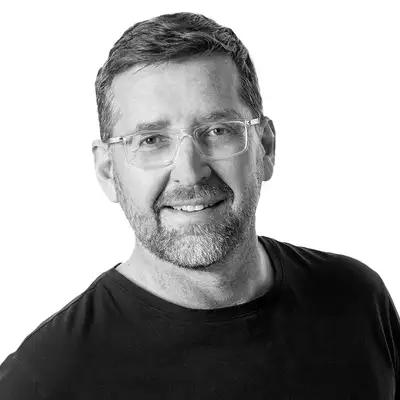

Hosted by Heath Fletcher, The Healthy Enterprise explores how innovation, technology, and leadership are reshaping the life sciences industry—from discovery and development to commercialization and care delivery. Each episode features candid, heart-centered conversations with founders, scientists, executives, and investors, sharing real-world experiences and insights for building resilient, future-ready organizations.
Created and Produced by Bullzeye Global Growth Partners — Let’s build it together!
Heath Fletcher (00:13)
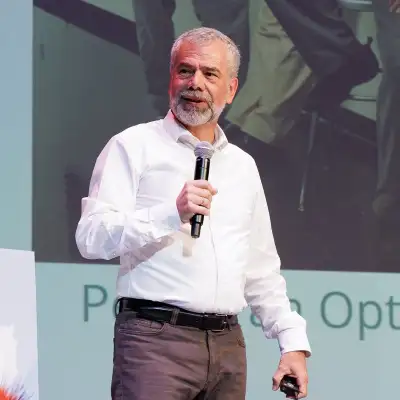
Hello there. Welcome to the Healthy Enterprise Podcast. Thank you for joining me again. If you're back for more, I appreciate your return visit. And if it's your first time, I hope you enjoy this episode. I'm going to be speaking with Georg Draude. He is the general manager of Chroma Technology, where he leads the company's European operations and strategy with a background in biomedical sciences and over a decade at Chroma.
He's played a key role in advancing the company's work in optical filters and imaging solutions. Georg is very passionate about bridging science and industry and fostering collaborations with researchers worldwide. That's going to be an interesting chat. So I'd like you to meet Georg Draude. Let's get started. Georg, hello. Welcome to this episode. Thank you so much for joining me today. I'm looking forward to our conversation.
Georg Draude (01:03)
Thank you for having me.
Heath Fletcher (01:05)
So why don't you start with doing an introduction of yourself and the company.
Georg Draude (01:12)
Well, I start with myself. So my name is Georg Draude ⁓ The German pronunciation is more like Georg Draude no, me too. It took me 50 years of my life to understand that my family name, if I pronounce it French, everybody understands it. I pronounce it German, nobody understands it. So ⁓
Heath Fletcher (01:23)
Are you gonna make me try that?
Is that right?
Georg Draude (01:39)
Many years ago, I made my PhD in the biomedical institute and left academia in the early 2000 years and worked a couple of years as a SADES field engineer for microscopy imaging and ⁓ different laser applications, which was more industrial.
and joined in 2010 Chroma Technology and working since then for the company in the European branch office, overseeing sales for Europe, Middle East, India and some other selected areas. Chroma Technology itself was founded in 1991.
And the six found two visions. The vision number one was ⁓ producing optical filters for the ⁓ microscopy application of fluorescence proteins, which was a very novel technology to ⁓ image intracellular structures. And the vision number two was to create an ⁓
and good workplace. So they started the company as an employee, employee owned company, which is still our structure needs takes.
Heath Fletcher (03:19)
interesting. Interesting.
Georg Draude (03:21)
Yeah,
about 180 employees. We have our own engineering subsidiary that is more looking for light sources for the biomedical market. Coma itself is very focused on optical filters for biomedicals. These days, it's 50 % or more biomedical research and diagnostics.
We do some machine vision. We do some other industry like automotive defense. then the first 10 to 20 years was very focused on fluorescence microscopy.
Heath Fletcher (04:06)
very interesting and I mean for for people that aren't as familiar with chroma technology I mean we're really talking about the managing and manipulation of light is that that's a kind of a simplified way of ⁓
Georg Draude (04:19)
Absolutely, if somebody
asks me what are you doing, normally say first thing we are producing optical filters or we are producing filters and people think about filtering air or filtering water and I always explain no we are filtering light and the main thing is to manage light in an instrument to get the light to the right point and get the light back to a detection system. That's what we are doing.
Heath Fletcher (04:46)
Right, and it's using the color of light as well as kind of part of that to...
Georg Draude (04:51)
Yeah, I we always think in wavelengths, not so much in colors. I know that you come from the photography, which is more color. We're always talking about wavelengths. But at the end of the day, clearly, it's the color. And one of our ⁓ side markets, I would say, ⁓ astronomy. So we are producing filters for the astronomy community, which is not really an industrial ⁓
market needs, just more obvious that ⁓ looking under the sky and they need the right filters to filter out all this nebulas. I don't know exactly how it works, but we get the nicest images back from this community. And this is always ⁓ colored with an artificial color hue, but it looks pretty nice if you see this ⁓ nebulas that are millions of ⁓ light years away. ⁓
So yeah, we do a lot of things with color and ⁓ trying to manage light.
Heath Fletcher (05:59)
So in the biotech world or about diagnostics, what problems are you resolving? What is it that was identified as like, we need to resolve this or fix this or make this improve on this? How are you making those improvements?
Georg Draude (06:15)
If you think about the first years, which I mentioned that this was the one vision, in ⁓ early 1990s, you couldn't get specific bandpass filters. They just cut off a small portion of the light that is needed to very precisely excite this fluorescence proteins. And then on the other side of the... ⁓
they experiment to image the emission of the fluorescence. ⁓ So at that time there was no technology that allows the researchers to ⁓ get this done in a proper way because microscopy companies use mainly colored glass or absorption glass that could deliver a long pass or a short pass cut but not a small band of ⁓ light to cut out and block
the other light that ⁓ should be detected by the camera. so this led us to understanding of our business that we work very closely with the researchers that ask us to develop the filters they need to get their experiment done.
In this tradition, we are still in very close contact to our customers. ⁓ These days, it's not only the researchers in universities and ⁓ medical areas. It's more and more also people starting a spin-off company and research incubator that have the ideas and contacting us and say, we are working on a new instrument.
that's ⁓ throwing a keyword POCT, point of care technology. So small handheld instruments that ⁓ make a testing for whatever, urine or blood ⁓ to identify the disease or an infection. And these people come to us and say, we need a specific filter set that ⁓
helps us to get this small application in our instrument working. And yeah, so.
That's the way we still understand our business. So we don't understand the way like ⁓ being a catalog company where you can select from a catalog and say, okay, I need this wet filter, I need this green filter. And that's it. we listen to the customer and trying to develop new cool stuff together with.
Heath Fletcher (09:08)
So, and these are very niche, like they're very specific and focused on what they're looking to resolve. They've got their own problem they're trying to fix. And they're coming to you and saying, this is exactly what we're looking for. And what we need to be able to do is see it in a very specific way. And then you're coming up with a lens or a filter that will allow them to see what they're actually looking for ⁓ clearer and more specific, right?
Georg Draude (09:37)
Exactly.
mean, we have a pretty ⁓ big database being in this market for more than 30 years. But we also changed technologies or the technology we started coding with in the 1990s, retired in early 2010 years. So this database has to be renewed over and over again. if we don't find in our database what these
developers are looking for then ⁓ we always open to say, okay, let's have a new filter design. So we have a group of, we call it filter designers. So it's really a design work what they do and ⁓ the magic, I don't understand because I'm not an engineer and I'm not totally into the technology, but they do the design and you see a filter curve like ⁓
Here's the transmission, there's the wavelength, and this is the filter curve. And then the magic is that they trans- trans- this curve into the coding machine. And the end of the day, you get the filter exactly with this curve.
Heath Fletcher (10:50)
So interesting. I mean, I keep bringing it back to my being a trained photographer and understanding that, you know, we use lenses as photographers and we apply filters and I'm talking about old school, not filters on your app on your phone, but filters, we would actually screw onto the ends of our lenses and they would be for a variety of things. would warm things up or cool things down or block light or let more light in or, or polarized light or
and there's also ⁓ infrared. so there's so many different filters you can get for your camera. So I keep thinking of it from my perspective that that was how I can relate to it. But it's not that different, is it?
Georg Draude (11:29)
pretty much ⁓ what I described with when we started at that time, the filter you described was what was available on the market. So a filter that cuts the red or a filter that cuts the blue or a filter ⁓ that infrared through. And now we're putting the wavelengths, the visible wavelengths from let's say UV up to near infrared into portions customer needed, wanted.
Heath Fletcher (12:00)
So interesting and you've probably seen such a transition in the industry in the time that you've been there. So many changes have happened in technology and so talk about that a little bit. What have you seen and where you've started with where you have come from and what a growth you've experienced.
Georg Draude (12:20)
If you think
about microscopy, when I started in this ⁓ industry, ⁓ it was mainly from the detection side. Cameras you would use in ⁓ normal life, like cameras with a film that was attached to the microscope. And I was working for a company that ⁓ was selling ⁓ digital cameras to its customers.
There was nobody else so ⁓ and this was not a fast camera like you have now with a digital camera always has a live image Notice come on. It's a shutter like you had the old film camera and it one image after the other and The tricky part was to align the camera to the focal plane of the the microscope if you get this Problem solved then you get nice images and ⁓ boom the camera so
If you look at the microscopy ⁓ these days, ⁓ CMOS was a big push in the microscopy for high sensitive cameras, which was never seen before. So ⁓ that means ⁓ the researchers can go with very low exposure times. ⁓
what they call life cell imaging. So you can really see life, a cell moving or nucleus in a cell moving and proteins are attacking to the cell. Things you have never, was never be able to see in the early 90s and early 2000s. And the resolution is,
expanding. now you have a bigger field of view. This means microscope companies needs bigger filters. We have to think about a different angular tolerance because the field of view is bigger. All these challenges and ⁓ the very interesting development I saw last, let's say two or three years is that it also goes not only into this smaller scale. So
I think ⁓ everybody heard about the Nobel Prize that was given to people inventing the technology of super resolution. So super resolution means that ⁓ you get below the 200 nanometer that R.B. was calculating in that 19th century as the limit of ⁓
visible light in a light microscope. And it was a big hype. Everybody who could afford it a super resolution microscope, which is $500,000 to $1 million. And these days, you see that it goes right in the other direction. Researchers want to see the whole image. They want to see the whole picture. So they have a living tissue, and they want to see where the
genome where the DNA, where the protein is in the tissue. And this is a big challenge because we have a big piece of ⁓ specimen and then you look into it and ⁓ get in a 3D information ⁓ where the disease is ⁓ induced or where the protein is blocked or where the protein is docking on and all this. ⁓
very important research about how diseases develop and how diseases can be ⁓ treated.
Heath Fletcher (16:17)
Wow, it's very, my mind's kind of getting blown a little bit right now. I'm thinking about, well, I'm thinking about your on your on one end of the spectrum, you got your your living, you're working in the microscopic world where you're getting finer and finer, more detail, more, more depth into the more microscopic world where you're seeing things, and I'm sure light is behaving differently in that space. ⁓ And and you're manipulating the wavelengths.
Georg Draude (16:22)
I'm just working with bits of...
Heath Fletcher (16:46)
the smaller things get, right? And it's infinite. I don't think we know how small life actually gets, we? And then on the other spectrum, you're actually using telescopes to look into space. And again, on the other spectrum, you're going further and further away into a larger and larger ⁓ area of space and where light is also very different in the wavelength. And you're helping to basically allow people to see in those two worlds.
in a time where they couldn't be able to do that.
Georg Draude (17:16)
That's a point. fact, also have having some customers in the market we call space communication. this is a ⁓ big thing. So, you know, we have all the satellites going around the globe and it's kind of past it. If you ask me, I think it's too many. Right.
And the communication so far ⁓ is radio based and now they are working more and more on laser based communication on the laser wave length because you can go with a very thin ⁓ part of the spectrum. you think about the spectrum of waves starting with X-ray and going to radio and radio is very wide and if you go on an infrared laser
Heath Fletcher (18:13)
Okay, very narrow, okay.
Georg Draude (18:13)
Now,
so this has many ⁓ advantages. It's less noisy. It could be less disturbed. ⁓ so this is what they are working on. And this needs very high quality ⁓ material because it has to go into space.
Heath Fletcher (18:34)
Very cool. Like it's just so, and it's infinite because we don't really know how far into the micro world we can go or how far away from into the universe we can go. So that's very interesting. You're in space exploration at the same time as microscopic worlds.
Georg Draude (18:51)
It's
incredible.
Heath Fletcher (18:54)
that's very cool. So what you know when ⁓ when you were you know younger what what what drew you to Chroma? What was the what was it about this company that attracted you at the time when you were when you before you came to them?
Georg Draude (19:09)
You know,
is a very private story, I ⁓ would title it with, it's all about your network. So I started studying biology in a very classical way. So I was counting flowers and I was ⁓ taking snails and put them in part and
⁓ or what microscopists or what biologists are doing. ⁓ And then had a chance for a PhD position here in Munich and ⁓ worked on receptor expression on blood cells and ⁓ just had enough from science. I want to make some money and ⁓ was looking for a positional industry. ⁓
And this led me to this microscopy imaging and I start working on my network. And one day one former colleague from my PhD lab, she contacted me and said, Hey, ⁓ I have a job offer. And that's how I get to, to Kroma.
Heath Fletcher (20:24)
So cool. And how did you, how was that transition from you from going from science to management?
Georg Draude (20:31)
That's a very interesting question. I've been on a panel discussion recently at the laser world of photonics, Shoria and Umic, and people were asking how can we get the right people from academia to industry? And I think it's a big shock ⁓ for those who leave science because they have this very ⁓ high ⁓
Heath Fletcher (20:52)
That's a good way to point-
Georg Draude (21:01)
academic approach and now they work for a company and has to sell stuff. So that's kind of, they are useless for the science community and former colleagues let them also fear. And I think that you need to find the people who are really burning for doing something and finding out that
selling a microscope or selling a...
whatever blood analyzer is also very complex ⁓ technology and something that needs to be explained to the users and there's nothing wrong with it. You see sometimes people they come from academia into ⁓ industry and never understand that they are no longer ⁓ in academia and they used to ⁓
do their work the same way. So I always want to ⁓ finish a PhD thesis instead of, hey, at the end of the month, I have to sell this bloody instrument. And if there are something is not perfect with this instrument, so what? It has to be sold. This is how business is going. And you have to teach the young people that, ⁓ you are in a different world now, but ⁓
Heath Fletcher (22:21)
Is that for you?
Georg Draude (22:30)
I always say that when I was working with my PhD, was only looking and we are again on big and small scale. was just looking on one single thing, expression of one receptor on one monocytic blood cell. The years after when I was selling microscopy systems, I saw all the different ⁓ disciplines of medicine and biology with my customers and this was very exciting. So I remember one thing that was
the most exciting thing, an institute in Berlin, did tick research. know, the small things that go into your skin. I came with a confocal microscope setup that I want to sell them. And we made crazy cool images of this tick. So you see all this ⁓ mandibles and the arms and...
They look like monsters and...
Heath Fletcher (23:32)
Yeah, aliens.
Well, and they've spread crazy disease too. And so it's an important area of study because there's some devastating diseases that come from that, from tics.
Georg Draude (23:46)
Yeah, I mean, I was just in the New England area in June. ⁓ They have a really hard time with ticks in this week, ⁓ ticks everywhere.
Heath Fletcher (24:04)
Yeah. Yeah. we were talking about ⁓ your so I mean when you go from I like how you put that you went from from you know being a scientist to really selling science and you know, I mean when you think about it, what better way who better to sell something that's very scientific than someone who understands science at the same time is there is there a
when you're trying to communicate, when you're selling a product or selling a concept, can it be over-scientific as opposed to being more layman or more understandable by the average person? I scientist to scientist, you guys like talking science, but how do you transmit that or translate your messaging to a broader audience?
Georg Draude (24:53)
I think that that's for me is an easy task. know that and this is exactly the person I'm talking about. I know that there are people in the industry that are always trying to impress the people they're talking with what they know and how smart they are. That's not the way you are going to ⁓ sell your instrument in this. You have to listen ⁓ to the people you're talking with.
and use their language.
Heath Fletcher (25:25)
And so what did you discover about yourself when you went into this new world of management and selling ⁓ of science? What did you discover about yourself as far as your characteristics or your skills that really ⁓ lent well to this new role?
Georg Draude (25:48)
I think it's pretty much communication. have to...
be good in, so you have to listen, but you also have to ⁓ give the right answers. And you also, it's always okay not to have the full answer. I mean, you are the front person in the relation between an industrial company and the customer. And ⁓ you have your engineers in your facility.
you don't need to know everything, but you can write down the question and say, okay, I'm coming back to this. That's an interesting question. I don't have the answer right now, but ⁓ I don't need to have the right answer. I have my engineers, so.
Heath Fletcher (26:37)
Right. You have a whole team behind you to help answer that question, right? ⁓
Georg Draude (26:42)
Yeah,
and it happens more and more since we are so used to have conference calls that ⁓ if you're going deeper into the detail and you arrange a conference call where you ⁓ call in ⁓ your engineer from overseas from the US and the most tricky part here is to match times also. If you have a customer in India or you have a customer in Malaysia and then you want to ⁓
having conf call with some, with these people and the engineers from the East coast. It's manageable. If you have somebody on the West coast, it doesn't matter anymore. It doesn't work anymore.
Heath Fletcher (27:22)
No, ⁓ And did you find going from being well, scientists are typically, you know, work very solo, whereas now, you know, then you went into a world where you had to work with a lot of people work with teams, how was that transition for you?
Georg Draude (27:42)
⁓ I wouldn't say that as a good scientist you always work with a team. have your institute, you have your peers. There's a kind of competition between, especially if you think about being a PhD candidate and you are 5 to 10, then you have to give a report about where you are with your research in a weekly meeting. ⁓
Researchers are not ⁓ lonely people in the tower ⁓ working on their own product. They are more and more working in a team.
Heath Fletcher (28:23)
They're working on a And as far as leadership, moving into management, now you're a leader, you're leading a team. And how do you develop your leadership skills and maintain those? you work with ⁓ a coach or anything like that? what do you do to kind of keep yourself up to speed with leadership?
Georg Draude (28:44)
I don't want to say anything bad on coaches and we recently had a SAITs training with a professional coach. I just try to be, ⁓ let's say the... ⁓
The one that makes life easy and happy for my team, finding out what they need, what they need for equipment is the first thing, what they need for work-life balance. And then just take them ⁓ on the hand and go together with them in meetings and encourage them to lead the meeting. That's important.
Heath Fletcher (29:27)
⁓ Looking ahead, what kind of challenges are you seeing for the company, challenges or opportunities? What do you see for the future ⁓ in the coming years?
Georg Draude (29:41)
The opportunities are there and it's clearly going in two different directions. So the one is going into a smaller scale, miniaturization. I mentioned point of care technologies or what used to be a lab of ⁓ instruments with lasers, microscopes, cameras can be in 10 years a bench top device where ⁓
a medical doctor somewhere in Africa or India can do the ⁓ quick test on site. The other thing with what I mentioned is that we go on a bigger scale that cameras are getting more sensitive, having a better resolution, which allows ⁓ the manufacturer to grow the field of view. That's the other direction. So we go into a small size, we go into bigger sizes. ⁓
What we face this year is very obvious. We see ⁓ that the ⁓ domestic US research market is very, very ⁓ confused. There's a huge uncertainty where budgets are still there. ⁓
And then thinking about the global market, I don't believe that tariffs are helping a global market. ⁓
If you want to grow globally, ⁓ you should. A trade war doesn't help, let's say it this way. But I mean, this also pushes us to think a bit more about collaborations. So don't understand ⁓ the competition from Asia as competition only. Also think about.
Heath Fletcher (31:23)
Yeah, well said.
Georg Draude (31:43)
Can't they be a collaborator? Can we do something for them and do they do something for us? So it also induces some creativity. So you just have to be smarter than some others.
Heath Fletcher (31:58)
Yeah, it pushes you to look at opportunities you may not have considered before and it could be, you know,
Georg Draude (32:04)
What really helps
is if you are in ⁓ more academic ⁓ market, it's way easier that people don't ⁓ make a distinction about ⁓ religion, about passport, about skin color. They collaborate.
Heath Fletcher (32:26)
Yeah, I've heard that. I've heard that a lot, actually.
Georg Draude (32:30)
So
I don't know if you have time, I have a very emotional story. We give ⁓ out the research prize to a young researcher at a conference on human diseases that happens every year in Europe and then moving back to the US. And since a couple of years, I have the honor to hand out the
the research prize. And this year, a young researcher from the Weizmann Institute in Israel was selected, but she couldn't come because it was right in the week when there was this big bombing from Israel to Iran. And her leg was burned down by an Iran missile and she gave a very emotional speech.
The content was really what I mentioned that she's not involved with anybody and she doesn't have any enemies and she believes on working together globally, no matter what citizenship or religion or skin color.
And the speech was broadcasted into the lecture hall because she couldn't come.
Heath Fletcher (33:54)
couldn't attend. She was limited and then she's also starting from scratch again now because she doesn't have...
Georg Draude (34:01)
Absolutely,
but she's saying this is not the big thing. So she get ⁓ help offered from everywhere. You can come and work in our lab. She said the most sad part of the story was that she had samples from a former coworker who suffered a very rare cancer and this coworker died and she had samples from him to work on and these samples are gone.
Heath Fletcher (34:31)
Wow, very sad. Very emotional story. Yeah, that must have been something to hear in live for sure. What are you, how are you adopting AI into the company? Are you working with it, implying it in other ways or how are you using AI?
Georg Draude (34:52)
I'm pretty skeptical, I have to say. Maybe that's because I'm an old guy. ⁓ I think AI can be very helpful. If you think about we have a huge database on filter designs. I would like to say, AI, ⁓ find me a filter with this center wavelengths and this blocking range and boom, here it is. Great. ⁓ I don't like ⁓ people ⁓ asking.
AI tell me about ⁓ the business in India in microscopy for the last three months. You get an result clearly, but is it, can you ⁓ rely on it? Is there any evidence that what is spitting out is true? I don't know.
Heath Fletcher (35:41)
I think that's a really good point. It's something that AI is a great tool. Like you said, it can help streamline and, you know, speed up mundane tasks. But it still needs a human operator. needs a validator. Somebody who's going to say, yeah, that's actually quite accurate. It's great to be able to collect a whole bunch of information, but it still has to be proven. ⁓
Georg Draude (36:04)
Another example, which is really, I think this is a good field for AI. you go back to microscopy, because of this, what I said, the cameras are getting faster. They have a higher resolution. One experiment can be easily two terabytes. And now the researcher has to look at three hours of recording to find out the very important image that proves
whatever concept and if AI can help and say, this, build a software AI base to go through this two terabyte of ⁓ camera records and find out what I'm really looking for. I think this is a perfect ⁓ solution where we can help.
Heath Fletcher (36:55)
Yeah, I think you're right. think that's a, there's a place there for AI. There's probably a place for AI everywhere. It's just finding out exactly what is it, what's it going to do best.
Georg Draude (37:04)
think the humans
should control it and set the limits.
Heath Fletcher (37:09)
Yeah. Yeah, I would agree with that for sure.
Georg Draude (37:12)
It's
like growing a puppy. You also have to control it and set limits.
Heath Fletcher (37:16)
Yeah, yeah, you have to guide it. it's a guide. Well, they always say when you're taking ⁓ dog training lessons, you're actually taking dog owner lessons.
Georg Draude (37:28)
Right. And if you talk to an old veterinary doctor, they say it's all about the owner's treatment.
Heath Fletcher (37:39)
That's right. I think that's right. Exactly. So taking ownership, I think, is the key. Is the message there, taking ownership of your AI and not letting it run free and uncontrolled, for sure. Yeah, that's a good point. Hey, is there anything about Chroma we didn't discuss that you'd like to make sure we mentioned today?
Georg Draude (38:00)
I think we made a way from when we started it, how we started it and how it is now. mean, what may be ⁓ important to say is that being in the market for more than 30 years, we have a really good brand awareness and a good reputation in the global market. And we are very proud of it. And especially we are proud being independent.
All of our competitors have been merged or acquired one or two times. And we are still ⁓ from the global scale, one of the big ⁓ coding houses that are still independent.
Heath Fletcher (38:45)
And I know we were focused a lot on biotech and biodiagnostics and microalps security. But there's a lot of areas, we kind of just scratched the surface. You're involved in a lot of different industries. if people want to, where's place people can go? What's your website where people can look at and see more about what Chroma is doing in the
Georg Draude (39:09)
I mean, that's what we are working on. The website shows the different industries. It's not so easy to show everything and from the history, it's still focused on microscopy. But we always encourage people to ⁓ just grab the phone or fire out an email and ask the question about things they could not find on the website.
Heath Fletcher (39:31)
Great. And then people can find you on LinkedIn as well if they want to connect and get more information. Georg has been really interesting. ⁓ really ⁓ like talking to you and learning about Chroma and finding more about this very interesting technology that you're working with and the worlds in which you spend time are really fascinating. thanks very much for the time you've spent with me.
Georg Draude (39:59)
Hey again, thank you for having me. Yeah, it was a pleasure.
Heath Fletcher (40:05)
Well, what a great episode. Thanks for joining me on this insightful journey into the world of Chroma technology. We explored some fascinating science about light manipulation and learned about the innovative solutions that Chroma provides across biomedical research and imaging technology.
Special thanks to Georg Draude for sharing his expertise and stories with me today and reflecting on our conversation, I'm really struck about how Chroma's work really connects the smallest cellular detail to the big picture of discovery and amazing to see the principles of light can open such doors to an understanding of life at its most intricate level and drive innovation across so many industries. It's really, really cool to learn about.
If you want to learn more about Chroma, visit their website, chroma.com, connect with Georg on LinkedIn. I'm sure he'd be happy to have a chat. ⁓ please subscribe, ⁓ share this episode with someone you think it might be interesting to. ⁓ until next time, thanks for joining us.