Subscribe
Share
Share
Embed
Passionate about modern feminist issues? Want to learn more about how today's political, academic, and cultural leaders strive for a future of universal equality and justice?
Join NOW in a podcast dedicated to intersectional feminist discussions in American society with leaders in entertainment, sports, politics, and science. From conversations on constitutional equality, to economic justice and reproductive rights, listeners will find new ways to learn, engage, and get empowered.
Listen for new episodes released every other Wednesday.
LaTosha Brown: ...: Well, the first thing I did right was the day I started to fight. Keep your eyes on the prize and hold on, hold on.
Christian F. Nunes..: Hello. I'm Christian F. Nunes, and welcome to Feminism Now, featuring leaders and activists who are on the front lines of the fight for constitutional quality, economic justice, and reproductive rights.
LaTosha Brown: ...: Keep your eyes on the prize and hold on, hold on.
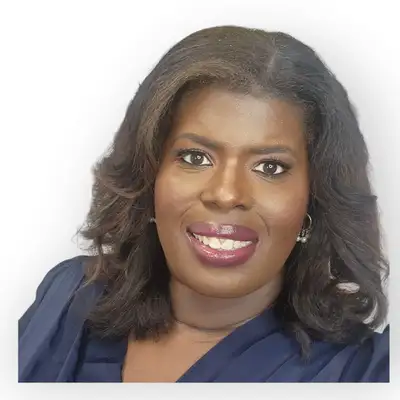
Christian F. Nunes..: [00:00:30] We have a great guest for you today. I'm here with LaTosha Brown, co-founder of Black Voters Matter. She is known globally as a thought leader to many people about her ideas on money, voting and opening the doors to elevate people's voices in the US. I'm so excited to talk to LaTosha. LaTosha, welcome to Feminism Now. Thank [00:01:00] you for just opening up the show with that beautiful voice and that song. But I think you just opened it up and really started this conversation outright, because when we really think about what's at stake and what we're seeing happen in this world right now, I think we really have to think about keeping our eyes focused on that prize. So I want us to talk a little bit about how you decided and your co-founder and you all decided to start Black Voters Matter Fund. Can you tell us a little bit about that, [00:01:30] how that came to manifest?
LaTosha Brown: ...: I can. I have been a organizer, community organizer, political organizer for almost 30 years, and I am a native of Selma, Alabama. I didn't understand why some communities, you cross the railroad tracks in the South, that on one side of the communities, the railroad tracks, that homes look a certain kind of way, the streets were paved a certain kind of way, sidewalks were on that side, but then when you were on the other side of [00:02:00] town, there were no sidewalks. There was the pavement... There was just these physical differences that you could see. And so that kind of led me on this path of politics, of literally trying to figure out what was needed to shift what I was seeing in my world.
And so what we determined as organizers and what we have experienced in doing this work in the last few decades is that there were three big things that we thought were needed. We thought that, one, that in terms of really being able to push policy and have black communities engage [00:02:30] in this conversation, engage even in the action of shifting and building power, that, one, we needed money. We needed money on the ground. We needed to create some kind of vehicle that could actually put resources in communities. So money was a big part. That's why it's called Black Voters Matter Fund. We're very intentional that we would create a mechanism to actually put resources that would be invested and grassroots organized.
I call it the three Ms. And so we wanted to create an [00:03:00] organization that, one, would move money, second, that would actually help build movement. And then the third thing is we recognize that many of the messages that were coming out of the South, the messages around black voters, that black voters were in these red states or these conservative states and that our voice didn't matter or we were talked about as if we were just victimized and as we didn't have any power. And so our third focus and goal was, how can we shift the message? How can we shift a message that wasn't about black voters not having any power, but literally [00:03:30] would center that black voters had power, we could impact and make a difference in the election? So it was about money, message, and movement-building.
And so in 2016, we decided that we wanted to start an organization that would really focus on how we build local power. Our first investment was in a small community, where we had done an analysis around Georgia that this small seat in Georgia that actually could make the difference in elections around the State [00:04:00] House seat, but nobody was looking at it. We didn't see any investment. We talked to people down there. Cliff Albright, who was the other co-founder and my business partner, he literally went to his son's school and raised our first capital, our first seed investment, at his son's school. And we made an investment of less than $2,000 in a mobilization for a state representative seat in Georgia. The significance of that is that seat kept one party from having a supermajority [00:04:30] to a majority. And if you know anything about what kind of untapped, relentless power happens with a supermajority, you would understand how significant that was. This was a seat that we invested less than $2,000, that we actually worked with our partners. We were with them in terms of strategy. We helped lift up and amplify the message.
And then at that point we were like, "Wait a minute, our model actually works." And so since that time, we've actually invested over $33 million that we've raised [00:05:00] and re-granted to over 1000 grassroot, black-led groups throughout the nation. We worked very deeply in 12 states. Most of them are in the South, but we have some up-south states that are very important to us. Michigan, Pennsylvania. We're doing some work in Wisconsin. We work in over 20 states on some form or fashion. Sometimes it's a little bit lighter touch. And our work really consists of those things. One, we're moving money. We're literally helping [00:05:30] organizations amplify the message and shift a message of empowerment, not a message that we're victimized. And we're building movement. And so we have a series of programs and activities that we do with our partners. I think of ourselves as like the special ops.
Christian F. Nunes.: Right. And I think you hit the needle on the head. One of the things you said, what I was going to say, is that you really shifted from people trying to victimize and trying to put these negative connotations on what [00:06:00] the community's not able to do, to really focusing on the strengths of the community and empowering the community to show really what the community is capable to do. So your model really focuses on empowerment. You showed really how focusing on local politics, it really can transform the lives of people right there. Sometimes I think we overly focus on federal elections, and we forget how local elections really have more impact on people's daily lives than only [00:06:30] focusing on the federal elections and the president. It's like, well, what's happening in your school board? What's happening in that city council seat?
LaTosha Brown: ...: It's so interesting, because if anybody's taken a political science class, in Polisci 101, the first thing they tell you is all politics are local. But we operate as if only the presidential elections. That was part of the impetus of us starting Black Voters Matter, because we knew that on the local level, on the local and state level, many of these laws that have [00:07:00] been very reactionary and very hurtful to our communities, literally they come into play on the local or the state level.
And for us, our politics can't just be contingent upon whether there's this charismatic candidate or not, that ultimately communities... This kind of back-and-forth around, "Well, we've got to wait 'til the next savior rides up on a white horse to save us out of that," that is unacceptable. What we wanted to do is to shift the paradigm and say that this is really about power. Let's say what [00:07:30] this is about. This is about power, and this is about having communities engaged, astute enough, educated enough, informed enough, and inspired enough that regardless of whether we've got an excellent candidate, and the goal is to always have an excellent candidate, or a candidate that may not just quite be there, that we are operating and functioning our agency and our power, that literally whoever is in that seat, whatever political party, whatever candidate is in that seat, is going to feel some [00:08:00] sense of accountability to the people who are literally in that area and actively engaged in the political process.
Christian F. Nunes.: The work that you all are doing is so crucial, because you're making sure that accountability is occurring. And I know recently we saw some things shifting and changing in Alabama. Can you talk to us about what we're seeing in Alabama, what's been going on with gerrymandering? First, can you explain to listeners what gerrymandering is? I like to always educate. And then talk about the shift that's [00:08:30] happening in Alabama concerning what the past history has been in Alabama with gerrymandering.
LaTosha Brown: ...: Just to give just a short version of gerrymandering, it's been a tool that has actually been a form of voter suppression. There's a way that maps have been drawn in such a way that they call it... They compact the district. So they'll take and grab all of the black voters and put them in one district, as to dilute their impact on being able to [00:09:00] have representation in multiple districts. There's another way that they do it, they have done it historically, called cracking, where the district will be drawn in such a way that actually splits the black vote, which in fact dilutes their power, their ability to be able to impact elections and have someone represent that community.
What happened is Central Alabama... Alabama is a state that the quarter of the population are African-Americans, and there's only been one competitive district for African- [00:09:30] Americans to actually play in terms of getting a congressional seat. And so that had been challenged, where a group of citizens were saying, "No, no, no, looking at the numbers..." It's called the Milligan case. "Looking at the numbers, we in fact should have two districts. We should be competitive in two districts in the state."
And so this particular case went all the way up to the Supreme Court. And must I remind people how conservative the Supreme Court, and the Supreme Court, again, has not been a friend to voting rights or protecting voting rights [00:10:00] in this country, our current Supreme Court. But it was so egregious what the state of Alabama did, it was so egregious that the Supreme Court told the state of Alabama, "You have got to draw another district. This is just not acceptable." And so they sent it back to the state. The state refused to literally draw a district that would make it competitive. And so as a result, they sent a map up. It was rejected by the court. The court actually had to assign a special master to draw districts, to actually [00:10:30] help look at the map and draw the map in such a way that it would be more equitable and competitive to have two African-American districts that literally should have been done years and years ago.
Christian F. Nunes..: That has to be seriously egregious, because this Supreme Court has violated I don't know how many other people's constitutional rights the past year we've seen, the overturning of how many cases. So imagine just how egregious this really was. And then for the state still to be like, "We don't care. We don't care." But it also have to let you [00:11:00] know what the people in this state have been dealing with, right?
LaTosha Brown: ...: Absolutely. And I think it's indicative of this fight around voting rights. Alabama is the place where the voting rights movement took place. The Civil Rights movement took place in this particular area. A lot of the work around voting rights, we're really talking about the same area. So here we are 60 years down the road, and that fighting is still going on, 'cause it hasn't really been resolved. And if people know what happened in 2012 with [00:11:30] the gutting of the voting rights, that case actually came from Alabama as well, Shelby County. And so there's an ongoing fight in the state of Alabama, but I think throughout this nation, around an active effort to literally exclude people and make it more difficult for some communities to be able to have representation.
And that's part of the work that we do with Black Voters Matter as well. That's why we think it's so important that we're empowering grassroot groups to help build out the ecosystem to be able to put [00:12:00] money on the ground so people can actually resist and organize and also be able to create a different framework for people to really see their agency and that this isn't just about election. This is about our power.
Christian F. Nunes.: Your work is still so, so very, very, very important, and I thank you for sharing that information so people understand why organizations like yours are so needed, and also the fight that is still continuing and the work that still has to go to organize and mobilize and, like you said, movement- [00:12:30] build. There are so many election deniers. There's so many people who are still sending out this information about what's really occurring, and that's a strategy that they're using. And so we have to continue to make sure that organizations and movements and groups like yours are there to really... sending that empowered messaging to really mobilize and make people know that, especially black and brown voters know that they have this power. We are going to communicate the messages that are really our true [00:13:00] narratives out there so that people will get out there and vote and run and also hold people accountable.
LaTosha Brown: ...: That's right. That's right. Now, you'll also see a backlash, which is also what we're experiencing right now, but we're experiencing this backlash not because we're losing. It's because we're winning. The electorate is shifting. It's becoming younger. It's becoming more diverse. Young people are more educated around certain issues. And all of those things are going to change the political [00:13:30] landscape forever, and there are those that are in power that know this and are willing to go through extraordinary efforts to really be able to stop it in any way they can.
Christian F. Nunes.: Absolutely, absolutely. Now I want to shift it a little bit, and I want to talk about women, because as a leader, you are a leader, but you're also a woman leader, and we also know that black women have really, truly been leading. Can you tell us what is the role you feel that black women play in [00:14:00] voter turnout and saving our democracy?
LaTosha Brown: ...: Yeah. I think it's interesting. I think black women have a unique position. We sit squarely at the intersection of sexism and racism, which I think is the two-headed dragon that has been undermining democracy from the beginning. And so I think because we fit uniquely at that intersection, I think both things uniquely impact us. [00:14:30] And I think because of that, you're seeing our response, that ultimately, that there are those who have consistently tried to crush us, and sitting uniquely at that intersection... And I think that we challenge... I think even our very presence challenge white patriarchy, because let's call it what it is. What we're all fighting against, all women should be fighting against, and men as well, is white male patriarchy. And because I think black women sit uniquely in this position around this intersection of sexism [00:15:00] and racism, I think we have a particular kind of way that we see white male patriarchy, because it doesn't benefit us. It's never benefited us.
And I think ultimately because of how hurtful and harmful that white patriarchy has been to everybody, but in a particular way to black women, I think that we have literally developed this muscle, this muscle, this skill, this spirit, this voice to actually challenge it in a unique way, that literally we've been able to move past our fear [00:15:30] and really have our North Star saying that, no, we're no longer going to be subject to just white patriarchal systems, that ultimately we're going to stand in a space and amplify our voices, amplify our vision, and literally move forward to a victory that will serve all of us.
Christian F. Nunes.: Absolutely. Amen to that. And I love what you say when you said that we fight for a collective. So as we think about how we're fighting for a collective and we're approaching the election that's coming [00:16:00] up, what should we be fighting for on the ballot that's coming up? What's going to matter most to us that's going to help us fight for this collective?
LaTosha Brown: ...: Yeah, I think that this issue of abortion, we've got to deal with this, 'cause we've got to start seeing this as regardless of what your position is on it... And I think people have valid positions on all sides. Believe whatever. Your belief is your belief. But ultimately the state should never, ever, ever... How dangerous it is to actually have authority or agency over a woman's body. [00:16:30] If we really fundamentally think about how flawed that is, that the government is going to tell women what we can and can't do with our bodies, I think it's really important that, one, we're focused on seeing that as a human rights issue that is beyond... It's an issue of choice, but it's not even just an issue of choice. It's an issue of agency. I have agency, right? This is agency.
The second thing is I think it's really important for us we cannot allow voting rights to fall to the wayside. We've got to push and centralize [00:17:00] and prioritize voting rights and voting rights legislation regardless of what Congress is [inaudible 00:17:06]. We have to be relentless. There are more women in this country than men. When women decide that we want change to happen, it will happen.
Part of the other piece... I think the third piece is we've got to get on the same page that women have to actually vote for our interests. And what we've seen in some communities is that women will actually vote for the interest of men over their own interests and follow their husbands instead of literally recognizing [00:17:30] that when you empower women, you empower entire families. And when women are marginalized, our children are marginalized, which means our communities are marginalized. And that's across the board.
Christian F. Nunes.: And I think that goes back to we have to get to a place when women start recognizing they are enough by themselves. And I think always being treated as second-class for so long, it becomes like that self-fulfilling prophecy for some, where they can't separate. Like we've been talking about [00:18:00] for the last bit, that white male patriarchy does not do justice for anyone. And so we do need to have women get to a place where they truly understand that they need to get on the same page, that that is not doing service for any of them. And they need to understand that they are enough, so that they start voting for the best interest of themselves.
LaTosha Brown: ...: Right. It's not working for us. It will definitely not work for our daughters. We're in a space that we're literally [00:18:30] back at a conversation whether women have agency over their bodies, that the state is telling us what we can or can't do with our own bodies. We have to really understand how intense that is and how dangerous that is, not just for that issue, but literally it opens up Pandora's box, for now you don't have agency over your body. I mean, what else is there?
Christian F. Nunes..: Yeah, like you said, Pandora's box. And then who else are you going to come for next? And at what extreme? Yeah. So thank you so much for [00:19:00] sharing that. I have one last question for you, because I don't want to forget the other part of you, 'cause you are so dynamic and have so many wonderful parts. How do you use your arts and your singing as a form of activism? And that's the last question I want to ask for you to take us out on.
LaTosha Brown: ...: Oh, thank you. So there's three ways. One, I believe, when I study movements, it hasn't just been the strategy of a movement that has made the shift. And I said this earlier. It has been the spirit of the movement, the part of allows us to survive. [00:19:30] What makes us survive when everything around us is hopeless? It's spirit [inaudible 00:19:35]. What makes us someone who's actually gone through multiple assaults, someone who has had a horrendous childhood, someone who has actually gone through extreme abuse, what makes them survive? There's something, there's this human spirit that is inside us that allows us to survive. And so that's our greatest resource, and I think sometimes it's our most underutilized and untapped resource.
[00:20:00] And what music gives the opportunity to do for me, and I think for many others, that music gives us a moment just to tap into our humanity, just to remember. A little baby, my grandson, before he could talk, he was singing. My mother said I was singing before. There's something about that it's natural for us to be tapped into the rhythm of life, be tapped into something that goes, transcends beyond our politics, transcends around all of these labels they put us in, and that just allows us to feel, to be in [00:20:30] touch with the feeling of our humanity. If you're singing a song, there's nothing like our favorite song coming on, and everybody's singing together in unison. There's something empowering in that process of us really to be able to just speak and speak and really be in art and be in community together.
And I always tell people, culture will eat strategy for breakfast. You can have the greatest strategy, but culture is such a powerful tool for all of us, 'cause that's essentially, how do we interact and relate to each other and understand each other? So those are all [00:21:00] the reasons why music has been such a profound tool for my personal life, but also, I think, a profound tool and an underutilized tool for the work.
Christian F. Nunes.: Thank you so much for sharing this with us, LaTosha. We support you in the work that you're doing. And listeners, thank you so much for spending time with LaTosha Brown and I today at Feminism Now. So let remember what she said. We fight for the collective culture, each strategy, and keep your eye on the prize. [00:21:30] Thank you, LaTosha Brown, for joining us today. If you like what you hear, please go to now.org, read up on our core issues and our approach to advancing women's equality. Thank you for listening, and we'll be back in two weeks. Have a great day.