Subscribe
Share
Share
Embed
The Global Dialogue is one of the fastest-growing English-language foreign-affairs podcasts with over 3.5 million views and 40K+ subscribers in just two months across 15 episodes. Produced by PGAN, a global network of internationally educated scholars and professionals spanning 70+ countries. New episodes regularly — subscribe and join the conversation.
So the preoccupation of law is not just a formalistic and mechanical thing. It's the pursuit of justice, how it empowers people, and how it is used as a coercive weapon to persecute them. I had lost my father in 2013, and that sort of caused me to sort of sit back and think about life even more deeply and then whether I want to further explore my emotion as also to talk about society and issues. How are we going to be able to find any solutions if the quality of our analysis is not updated?
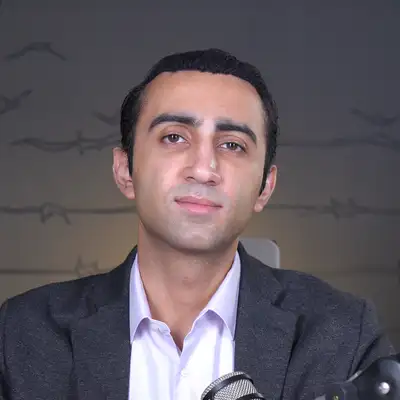
Host:Doctor. Osama, thank you so much for being on the show today.
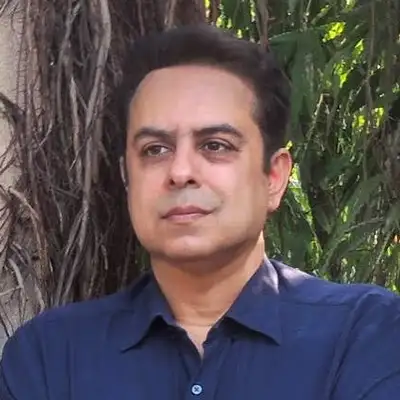
Dr. Osama Siddique:My pleasure.
Host:Thank you. So you've had a very distinguished career as an academic, as lawyer as well. So what drew you towards fiction writing? So even when we're dealing
Dr. Osama Siddique:with the law, we're actually dealing with language and the multiple uses of language. How precisely can we capture the various economic and political contestations in society and then reduce it to legal writing, which balances between different rights and all that. And also the preoccupation of law is not just a formalistic and mechanical thing, it's the pursuit of justice. So as my own career evolved from a lawyer working in New York to then one working in Lahore, as an academic and then as a policy advisor, I got more and more interested in how law impacts society, both in terms of how it empowers people and how it is used as a coercive weapon to persecute people. And those human stories were always important to me, as was my redeeming and deep interest in fiction ever since I was a child, because I grew up in a household where global literature was consumed voraciously and also Urdu and Punjabi and regional languages.
Dr. Osama Siddique:So I think ultimately, I realized that whilst I continue to work, in the legal field in various capacities, my other interests in society, my interests in things beyond society, cosmology and archaeology, are the kinds of things I can only dabble in and engage with and interpret on my own sort of terms if I use fiction. Because fiction is a very multifarious terrain. It allows you to do things in multiple ways and play with language. So I guess the affection for fiction has always been there, but it's only comparatively recently that I found the time to actually start writing as a serious writer.
Host:Right. So was there a specific moment now there's too much serious stuff going on, so I need to focus on fiction as well. And did you think always this will become a medium through which you would be able to, talk about a lot of serious issues as well?
Dr. Osama Siddique:Always. Because I think the endeavor to try and write and to find a voice and an idiom and has always been there. I mean, I was just way too busy to be able to carve out the concentrated time to do so. And and the second thing is that perhaps the moment has to arrive subconsciously when when you actually get into the groove. I mean, writing process is still a bit of an enigma to me, how creativity happens.
Dr. Osama Siddique:A lot of it is perseverance and doing it, regularly, but I think, inspiration plays a huge role. And what is inspiration? Is it just, the interplay of certain chemicals in your mind? Is it something beyond? Is it something ethereal?
Dr. Osama Siddique:Are the muses a thing? Also, I think, perhaps one crossing in life is when you face something deeply grievous, a tragedy, when you lose someone. And I'd lost my father in 2013, and that sort of was very close to him, and that caused me to sort of sit back and think about life even more deeply. And then what am I doing and whether I want to further explore my emotions and my the remote excesses of my mind, as also to talk about society and issues and things like that. So I think both a set of personal reasons to explore my own emotional and psychological dimensions, but also to grapple with the contradictions, the tragedies, and and and the incongruence of life around me that I started writing.
Dr. Osama Siddique:And then, you know, when I wrote my first novel, Snuffing Out the Moon, which came out in 2017 with Penguin Random House India, Before that, the year and a half, was probably in that phase of mind. And sometimes things flow. And at that point in time, once I started scribbling away, it started flowing. But I also sort of developed a method. Every writer has a method to make sure.
Dr. Osama Siddique:And so when I talk to younger people wanting to write, I talk about my own method and my own routine and my own discipline. So there are tricks of the trade. There is inspiration. And then there has to be the capacity to do this laborious job. It's lonely, it's very, very emotionally and physically draining, and you're also writing in a context where unfortunately books are not as prominent a part of our discourse as they should be, which is something I also try and do whatever I can.
Dr. Osama Siddique:So a whole bunch of things I think drove me to writing.
Host:So when you begin and your process starts when you're about to start writing or when you do begin writing a story, does it usually begin with a purpose or a message that you're trying to deliver? Or does that sort of come into the picture once a story has already been formed?
Dr. Osama Siddique:So I recently heard, Orhan Pamuk, the great Turkish writer, say something which quite resonated with me. He says that writers first visualize things. They imagine them. They build a picture, and then they draw it. So I think a bunch of things happen.
Dr. Osama Siddique:There are deep seated ideas, ideologies, resentments, motivations, which are embedded in your subconscious. Then there are the external stimuli. I mean, I've developed characters after meeting someone or after witnessing something. So I think both kinds of things happen. The external stimulus is an ongoing thing, which is why writers need to learn how to listen, how to watch.
Dr. Osama Siddique:They have to be keen observers. The other thing which is accumulating within you is all the literature that you've read. You know, that has an imprint in terms of your sentence structure, in terms of the vocabulary you use, which is why anyone who wants to be a writer has to read deeply and widely and consistently. And and thirdly, as I said that there are ideas which formed you as a person. And as you're growing, you know, that internal sort of mental mathematics, that introspection is carrying on.
Dr. Osama Siddique:I never think of a story beforehand. I have certain images, certain scenes, certain things I want to say, and then I organically weave a story around it. And I want it to be as spontaneous and as impulsive as possible. That is not to say that there is no method to the madness because even while you're carving it out, the writing process itself stimulates the mind to come up with a story instead of just plotting it first and typing it out. You know, as I'm writing, the character develops and the sentence develops in a certain way.
Dr. Osama Siddique:So it's an alchemy of all these things, at least in my case. I know of writers who plot out everything. I know writers who are plot driven. I'm not a plot or necessarily a character driven writer. I'm an idea driven writer.
Dr. Osama Siddique:Right. I also engage with the works of several other writers and epics and stories, and build on them or engage with them in my stories. So I guess to each his own.
Host:So in today's day and age, where social media is one of our dominant, mediums of communication, and short form has really become popular. If you look at TikTok and the way that blew up and then how Instagram, Facebook, YouTube, everyone sort of followed suit, went towards short form content as well. So in today's day and age where the younger generation's attention span is even more limited than it was before, To what extent do you think books are still a good medium of communication?
Dr. Osama Siddique:Sure. So as media of communication, all that you have mentioned have their own value. I'm not going to undervalue them. But the fact of the matter is that life is complex. Life is many shades of grey, and life is not black and white.
Dr. Osama Siddique:And what fiction and good books allow us to do is to transport ourselves to different times and to different perspectives and to different places. And that is not something you can do in a very short span of time. Also, as I said that, you know, human mind, the concept of morality, the concept of political governance, despotism, hegemony, all these are complex things. And some of the best books in the world have explored these at at very deep and multifarious levels. Now, obviously, there are huge advantages to then reading those texts, which have come to be regarded as classics over the last few thousand years, whether in the Eastern Canon or the Western Canon.
Dr. Osama Siddique:And they are great because they have managed to give us some brilliant insights into who we are, what is our place in the universe, how do we coexist, how do we persecute each other. And that raises discourses and debates. If you look at it, the human civilization has been formed and is driven by grand narratives. These are the narratives of religion. These are the narratives of nationalism, capitalism, political systems.
Dr. Osama Siddique:The more recent movements like feminism, race theory. So ideas to profundity. You can also a can grand sweep of history. And in Tolstoy, Napoleon's was jung. And when you Japanese, at can vantage points.
Dr. Osama Siddique:Characters are very different from emotional life. So, life is complicated, the universe is very complicated as we are realizing. Complexity is not a bad thing. Profundity is a good thing. The ability to make complex and profound things palatable and simpler to comprehend is a great skill.
Dr. Osama Siddique:Anyone who does that, who use these media, even the books I write, I mean, lot of the propagation promotion and the conversation around it is actually created by younger readers who are on Instagram. So I'm very comfortable with all these technologies, but obviously, the text itself is what matters and cannot be substituted. It can be presented and consumed and engaged within exciting new ways. I've taught courses in law and literature where I use film, and the visual is very important for me even otherwise because of the aesthetics. So that's my notion.
Dr. Osama Siddique:So anyone who says that no, all this is nonsense is also not, accurate. Anyone And who says,
Host:So do you think Pakistan is a good example in other parts of the world, books, bookstores are making more profits as well. Did you see that trend in Pakistan as well? One
Dr. Osama Siddique:picture is very dismal. And that picture is that for a country our size, the number of books and good books we publish every year is far lower in, as compared to a lot of comparable countries. Right? So I would say in East Asia, in India, in Turkey, in Iran, far more books are published and the publishing industry is has a better health. And that's a function both of the publishers being progressive and investing in developing a market.
Dr. Osama Siddique:It's a function also that society actually values books and and many people buy books. Unless you buy books, you can you will not be able to fund the publishing industry. Unless the publishing industry is making money, writers don't get paid. So that's a dismal picture because we publish and, write and buy very few books, comparatively speaking. I mean, we point 01% reading public or buying public, that's a huge number.
Dr. Osama Siddique:We're not even close. The heartening thing is that I and and one big failure there is policy failure. For example, we don't subsidize paper. We don't subsidize the government facilities where international book fairs take place.
Host:So is that the norm elsewhere? No. Do other countries subsidize
Dr. Osama Siddique:Other paper or give all kinds of incentives to their publishing industry, which is why it is, it is, economically viable for them to print books in large numbers, and then there is demand. So it works works both ways. Right? You create demand through marketing, through publicity, through publishing affordable and accessible and also visually attractive books. We're not doing that.
Dr. Osama Siddique:It's a chicken and egg. Right? If the government were to inject money or the private sector were to do that, I personally think there is demand out there. So that's the positive picture which I want to bring to you that I engage a lot with readers from small towns, from more remote areas because technology makes that possible. They reach out to you.
Dr. Osama Siddique:So that's a wonderful thing about technology. A writer can write and publish in Lahore and somebody from Jamshurro may get in touch. And I have those connections and that's very heartening. So this new book, which I've just published, my new novel, Who Knows the Bounds of Desire, I've received orders from 33 cities, including small towns. That tells me they're readers everywhere.
Dr. Osama Siddique:A lot of them don't seem to be able to afford a lot of books either because books are expensive, but they bought this book because they were attracted to it or they thought that the author was available and the messaging was good. I personally think there are a lot of readers out there which we whom we are not tapping because the publishing industry is very weak, barring a couple of exceptions, and the government is not at all interested in, supporting, the publishing industry or reading. It's not even just about funds. If you compare it to a lot of projects, it's not a lot of money involved to upgrade your public libraries, to have Sunday book bazaars in every big city, dedicate an entire street to it. Right?
Dr. Osama Siddique:You know, we've sponsored Basant recently, and I like Basant. But I think it's far more important to be sponsoring all the international book fairs, local book fairs, local city and Mohalla libraries. And then I think we need to create a culture of reading. I'm not talking about reading just as a hobby or as an escape or as a solace. It's all of those things.
Dr. Osama Siddique:I'm really talking about upgrading the discourses in a society, making them more informed based on authentic thought through literature and books, fiction and non fiction. Because we face a lot of issues, from climate change to overpopulation to governance to justice sector reform. How are we going to be able to find any solutions if the quality of our analysis is not upgraded? How is the quality of our analysis, indigenous analysis going to be upgraded so that we don't borrow and copy paste solutions, we don't transplant reforms from other areas, unless and until we are actually reading what the world is writing in the ancient past and recent history and now. And knowledge is increasing at a phenomenal rate, you know, we know that because with, you know, the latest interventions in various areas of science, the data which can be accumulated and processed now, the entire thing depends on which society is more favorably inclined towards knowledge production and knowledge consumption.
Dr. Osama Siddique:So, if you are a level, it's a vehicle for all knowledge. So, if you are using mathematics treatises it you will in sociology and political science. Are not in entertainment. But once again, YouTube videos are social media active, film is important media. The ability to study college students inducted, you can see one cover to cover a full fledged novel.
Dr. Osama Siddique:This is what me. If you are interested in movies, movies. You can In Hindustans, You name it. Because Kathak is also an expression of your civilizational richness. We are a very rich civilization.
Dr. Osama Siddique:But do we make an effort to actually document it, talk about it and show it? We will the of seek, and preserve it.
Host:We will about utopias and dystopias. So this brings me to a theme that's not often discussed in Pakistan, and that is science fiction. Science fiction is often looked at as a mirror to society. And if you don't academics are not to that, that societies that don't produce science fiction are bound to fail. So why is it that in Pakistan, is produced?
Host:Which is, through different mediums that we have discussed, like let's say film or even TV shows, we don't really see science fiction. Even though that is a medium or a form of fiction that has gone on to change society in a lot of ways. If you look at a a very popular, dystopian novel, Nineteen Eighty Four by George Orwell, that is a dystopian sci fi novel. And that led to a lot of rather, it it it led to a lot of warning signals or warning signs of what can go wrong in a terribly autocratic system or under authoritarian rule. So, how has a society produced science fiction?
Dr. Osama Siddique:Science fiction Although, don't science fiction is science. One of the books I grew up with, and a lot of people in my generation grew up with, is Carl Sagan's Cosmos. And that ended up inspiring an entire generation of scientists. And Carl Sagan himself was a scientist, and he was a very celebrated scientist who worked on the Voyager one and Voyager two programs. And, you know, he's one of the pioneers of propagating science information and knowledge in a very sort of palatable manner, because the TV show Cosmos was also very popular.
Dr. Osama Siddique:So I remember that when I was growing up in the eighties, we had a gentleman called Leik Ahmad, who used to come on television and talk about science, and we used to listen to him. Once again, it's a function of whether you create a demand for it, whether you make it exciting. And since we've been neglecting by and large education in general, science is also there, we've also not quite sorted out our language problem. So we use English for our official communication, for the constitution, for legal judgments, but Urdu is of course part and parcel of what we do and also regional languages. And we need to reconcile to the fact that we are a multilingual people.
Dr. Osama Siddique:That's a wonderful thing. And I think we should cultivate the possibility of people knowing more than one language in a fairly proficient manner. But I think because we have always downgraded research in pure sciences, and we have actually, attached a lot more value to, you know, industrial use kind of scientific solutions, even there we need to do a lot. A culture of loving science has not quite germinated. Although in recent years, I see various initiatives by physicists, by various people who are scientists by training, who are either based in universities or privately, creating astronomy societies or creating societies which discuss quantum mechanics.
Dr. Osama Siddique:Pakistanis are a very intelligent nation, you know, and the the kids who actually get the opportunity go abroad, excel fantastically. I sit on various scholarship committees and I get a firsthand chance to talk to them. So I think, it's part of the general malaise and the general decline and the general sort of lack of aptitude, shown by, the people who govern us in terms of how to promote science. If I tell you, if you were to have all kinds of scientific activities which have worked elsewhere, you know, to inculcate an interest in science at a very early age, you have plenty of young minds here who are multifarious and vibrant and will take to it. So after 1857, if you look at Urdu literature and if you look at the regional situation, because we've been fighting colonialism and then the various vagaries of the postcolonial system, we've been pushed into a non scientific kind of a situation.
Dr. Osama Siddique:We also had governments which were unrepresentative, which pushed dogma and superstition and all those kinds of things and brought religion into conflict with science, which is not at all in conflict with science, if you think about it. So, I can think of very few instances in our local literature. There are tropes of, creating things like that, maybe in Ibn Saffi's works. There are some contemporary writers who have also talked about dystopia. I create a kind of a dystopia, futuristic dystopia in my first novel.
Dr. Osama Siddique:But I completely agree with you because a lot of scientists who have been interviewed over the years have said that the first seed in them to pursue science as a career was because of the sense of wonder created in them by reading high quality science fiction. Whether it was Osama or Arthur C. Clarke or now there are a whole bunch of writers. I mean, science fiction has really evolved. If we talk about speculative fiction, which is a broader term and which subsumes both science fiction and fantasy.
Dr. Osama Siddique:For fantasy, we have a very vibrant tradition because we, in this part of the world, have written these grand epics. Dasthaniya, Meer Hamzah, Talisman Hoshuba. I could go on and on. And as works of fantasy, they are wonderful. And fantasy is also very important.
Dr. Osama Siddique:Right? It allows you to imagine alternative realities, alternative words. So with fantasy, we have a great tradition. With science fiction, we don't, but that's also because with science, we don't. But I think people need to look back and and be large hearted about it, about our own history because, you know, I at least take pride in that.
Dr. Osama Siddique:So I draw my roots from the great Islamic scientific tradition of what the Europeans called Middle Ages, but all are great scientists who were also multifarious people. I mean, Ur Hayyam was an astronomer and a mathematician quite apart from being a poet. And and there are people who invented the algebra. There are people who came up with the first fundamental understanding of light. There are so many people.
Dr. Osama Siddique:But even if you look closer to home, not westwards but eastwards, if zero was invented in this region, if mathematics in the previous millennia in Hindu times saw great sophistication, that is also part of the soil, right? So it's not as if people from South Asia are unscientific, or people from the Muslim world are unscientific. They have been at the forefront, at the apex of scientific discovery when the rest of the world was literally in darkness. So I think but somebody needs to excite people. Right?
Dr. Osama Siddique:And somebody needs to create those platforms. There are things happening. I mean, I I am sort of familiar with various scientific societies and things. But once again, given the size of the country and given how far back we have fallen, a lot more needs to happen.
Host:Very cool. So just coming back to storytelling. We've recently seen some of our stories being told by, let's say, Bollywood, or our stories being hijacked, where they tell our stories from their lens and it sort of becomes propaganda and for becomes a way for them to project a certain narrative about Pakistan. And Pakistan generally already suffers from an image problem. So why is it so important for us to be telling our own stories, you feel?
Dr. Osama Siddique:Because the the the dominant force always suppresses all other stories which goes against its dominant account. And so writing your own story or writing your own history is a fundamentally empowering step, quite apart from understanding what happened and who you are. And this is not something which is restricted to the abysmally poor recent Indian movies. I mean, we, first of all, were up against this entire corpus of colonial history because our entire history and documentation here, happened under colonial times. And there's this wonderful American anthropologist, Bernard Cohen, who wrote this book, Colonialism and its Forms of Knowledge, where he shows how forms of knowledge, if you are the one defining them, are going to be determined by what you hold important.
Dr. Osama Siddique:And a lot will be suppressed, lost out, misinterpreted, misconstrued, or deliberately effaced because that's what the dominant force wants to do. If you read Foucault, the nexus between knowledge and power is very, very clear. So after that, when we won independence, we have a lot of histories which are dominated by a very nationalist instinct. So there was a Hindu nationalist stance to them. Later on, some more empowering histories came out, like the subaltern histories, which talk about those who were oppressed.
Dr. Osama Siddique:Now, once again, we have another wave of very fascist kind of nationalism and this entire sort of distortion of history, which you see in this popular cinema. When you feed people lies, chances are that the lies are also things which are divisive, which actually create a sense of othering, which demonize the people who are not you. That's what a lot of false histories do. I don't know of any false history, which is a nourishing, empowering thing for humanity. They're mostly tools of oppression, tools of diminishing other people.
Dr. Osama Siddique:So that's one fundamental reason why you need to tell your story and you need to tell a fair story as much as it can be possible. There will always be subject subjectivity because different people look at things differently. But when you have multiple perspectives, you can at least weigh them and arrive at a position which is much more likely to be what happened. And the other thing which I said at the very start, you know, narratives are very important. Narratives define you, narratives drive you.
Dr. Osama Siddique:Narratives can bring nations together. Narrative narratives can make them fall asunder. So the Africans realized that when Chinua Achebe wrote his seminal novel, Things Fall Apart, that was perhaps the first fundamentally bold postcolonial novel, which is questioning the colonial narrative of Africa. And how many people has he inspired over the years? And that's why African literature has that.
Dr. Osama Siddique:Similarly, Latin America, you have all these writers who question the history as told by the conquistadors who came to loot gold from Spain. And then you have writers like Marques or Llosa and so many others who've looked at their reality and interpreted it according to contemporary voices who've also incorporated indigenous voices. Multilingual, multi ethnic society, and we have history and invasions. You want a multi colored society, diversity is very important. Multiple narratives are also very grand narrative is very important.
Dr. Osama Siddique:Quite apart from 15 other things, which is why they're deeply embedded in the local context and they're represented and they are looked up to, but they're also cosmopolitan figures. This is true for any great writer from anywhere. Deeply embedded Can
Host:literature or fiction, have an impact on public policy as well, you feel?
Dr. Osama Siddique:Public policy chances are narrow minded, pedantic, mechanical mind It's not a binary yes or no situation. You have to balance different interests, you have to look at the historical context, you have to look at cultural imperatives. For a law and a policy to survive and to be successful, it has to be sensitive to a lot of things. Obviously, even a judge who is very well read and knows about history and has read literature and knows about social justice and has empathy and command over the language is going to come up with the goods. A lot of the times, because of failures in our education system, the kind of people who are in, you know, decision making positions are just deeply unappreciative of what the realm of possibilities exists out there.
Dr. Osama Siddique:Because It's a receiver mechanism. Pedantic, tried and failed pedestrian. Rather than deep seated reforms, structural change. Which means it's sustainable, which means it's multifarious, which means that there negative externalities, which means there positive multiplier effects. So, you can see many people not Let's in, say tech companies, CEOs, big business tycoons, who are fiction, who are presidents, who are non fiction, So, I will you that reader is a contemporary who is mindscape, multifarious minds.
Dr. Osama Siddique:In this case, it is very simplistic, parable type. Which is resonance, moral fables and animal fables. And you can read in a movie. You can can in Blade Runner. And Philip Dick's story, Do Androids Dream of Electric Sheep?
Dr. Osama Siddique:So, it's a sequel. If you a future, can cyborg type. You can think a sentient robot, and it's sophisticated robot. Minority reported film, Philip Dick's story. He was an amazing science fiction writer.
Dr. Osama Siddique:He told me he a despotic state minutely monitor. Fahrenheit four five one, I think repression by burning books. Because 451, I think, Fahrenheit is the temperature at which a book burns. That's why the name. Regulation in particular is no exception.
Dr. Osama Siddique:Recently, I was working on water regulations. And I had to look at the engineering side of things, I had to look at the climate side, the sociological side, the administrative and rules based regime side. So I have done a lot of work over the years with political economists, with sociologists, anthropologists. The work I do myself now in the field of law by way of research is actually a multidisciplinary kind of a thing. So multidisciplinary, the odds are really good.
Host:If we were to pivot now towards the Pakistan Global Alumni Network platform Why do you think global networks like this are important for a country like Pakistan when we have so many people who are living overseas and who are also studying abroad?
Dr. Osama Siddique:So I think the Pakistan Global Alumni Network is a wonderful initiative. And credit to all of you Asifullah for taking the initiative and bringing it forward. I think it's it's a very obvious thing. I mean, the most precious resource of any country is the human capital, and we have not historically done justice to our human capital. So a lot of people stay away, there is brain drain, the ones who come back at times get frustrated, but still a lot of very smart people come back.
Dr. Osama Siddique:And you can see that one smart person in the right position can make a huge difference. You know, an institution can turn around, synchronize, inspire, there are millions of examples all over the world. So while we critique the government and the state, and we should continue to do that and also help them and offer solutions, I think it is our responsibility as people who are perhaps amongst the point 001% of those Pakistanis who are fortunate enough to get the opportunity to get, an international exposure or rigorous education in certain fields to give back. You can do that by being here. You can do that even whilst you're away.
Dr. Osama Siddique:A lot of my, class fellows moved to different parts of the world and did very well, but I know they're doing wonderful things for Pakistan, and not just through financial contributions, but by envisioning all kinds of programs and things. But one very large gap was that a lot of people were not even familiar with each other. So I'll give you an example. A year and a half ago, for a literary festival, I was asked to put together a panel on climate change, and I didn't want to go to the usual suspects. So I did a bit of sort of excavation, and I found so many people with recent good PhDs in climate change.
Dr. Osama Siddique:I didn't even know. It's not my field. Now I do a little more work and then I invited them. So why not bring under one platform all those amazing people who over the years from Pakistan have had these opportunities, and it is automatically going to create possibilities and synergies. So that's the first advantage.
Dr. Osama Siddique:If we know if I know that you are out there and I'm working on a project, I can now reach out and we can add value, not just for a from a profit standpoint, but also a public contribution back. I mean, profit is not a bad thing. If you start a venture, it's profitable. It's going to add to the economy. So that's one thing.
Dr. Osama Siddique:And I think, the network has taken large strides in its very young life to accumulate a sizable number of people. I think there'll be many more. The second, I think, advantage is that this can be a platform, not just for networking and getting to know each other, but a platform which can do activities, which directly feed into policy. So if the government, for instance, instead of relying on the usual suspects, wants a deeper dive in certain areas, and we need to do that because we are very sort of impulsive and knee jerk in terms of coming up. In March, we will beach.
Dr. Osama Siddique:We will Think Tanks. We will Think Tanks. Talking Injection. These three things will will envision this platform because it ongoing intellectual and literary activities. It will a platform.
Dr. Osama Siddique:It will will be to be lot read about fiction, fun. Non fiction research, because it is a long platform. So, idea. This is a But I'm sure it's still a of Orbi's possibilities. So, I think it's important to know are possibilities.
Dr. Osama Siddique:That are the public good, collective good, and we will discuss the contribution of Pakistanis.
Host:Very good. So, we have seen the brain drain has become a very serious issue according to the latest statistics. I think around 750,000 people left Pakistan in 2025. I think it's a of Pakistan. We've seen other countries in the world, within our region as well, China, India, they've dealt with this situation in a particular way incentivizing to come back.
Host:So, if brain drained brain circulation, can convert that we as a society and a country take advantage of the people that we do send abroad. If do not have a conducive environment, premium
Dr. Osama Siddique:recently hiring committee manager hiring criteria hardly there was any room for me to give premium to someone who came from a very good university or who had done very well. See any criteria. So, if you high value, high quality Pakistanis, mind you, they are not necessarily only driven by money. When I came back to Pakistan, was not the money. The opportunity cost is huge.
Dr. Osama Siddique:I was a Wall Street lawyer. People come back for family, people come back for cultural reasons, people come back for identity. White supremacist politics. So, slow and willing to do it. It will no matter how unconducive.
Dr. Osama Siddique:If have in the private sector, you be absorbed. If you issues with Sarkar or Sate run organizations, we have to be very low. The brick and mortar value of family dynasties are not not controlled, relinquished power share and share of endowments. This vision is that we are seeing business leaders and university leaders. If you to good job.
Dr. Osama Siddique:Do not while I am prescribing all these things, some will happen, some won't. Just know that you are connected, like you are I know so many people that have multiple reasons why you a invest leadership provider, impact.
Host:Welcome. So something recently started by Pakistan Global Alumni Network is the mentorship program. So we've had more than 100 people sign up from our community to offer pro bono mentorship for people from Pakistan.
Dr. Osama Siddique:So
Host:yeah. So how how much of an impact do you think this can be especially for people who, let's say, journey start early career professionals? No.
Dr. Osama Siddique:I think this is essential. I know of a few other such enterprises as well, which are trying to do this. They can a lot we forget at times that maybe some of us are in a more privileged position in terms of deciphering the mechanics of admissions abroad or jobs abroad. It's a it's a bit of a labyrinth. Right?
Dr. Osama Siddique:And things are much easier now than they used to be maybe twenty years ago when you did not have the Internet and all that, and things are more available now, but you still have to navigate through that. I think if you all these people are very commendable, and I'm sure more will volunteer. Taking out time and steering some young people in the right direction is one of the best things you can do. Because if you can put one person on the right road, and that person excels and then gives back, you can't even quantify the amount of positive impact that's going to have. It's also a very personally fulfilling and heartening thing.
Dr. Osama Siddique:So I go to universities and colleges a lot, and I try and go to public sector universities. I volunteer time. I not only talk about my books and my research, but generally reading, creativity, and also mentorship. And I tell you there's a lot of demand. There are not many people in a position who take out the time to inspire them.
Dr. Osama Siddique:It's not just about giving them factual information or helping them navigate it. It's also whether you uplift them, whether you create ambition in them, whether you tell them that look, shoot for the stars, aim high, and also develop these habits. You know, atomic habits but it's necessarily obvious. Then they are bombarded by a lot of nonsense. This is the age of, you know, multimedia, all twenty four seven.
Dr. Osama Siddique:You have to tell them TikToker Yeah. By the way, physics interested, some of the best physicists have programs recorded available on YouTube. So, can actually steer them to available materials. If you are familiar with remote areas, you engage with what the best the world has to offer. That's available now.
Dr. Osama Siddique:The role you and I can play is to point them in the right direction. So what is happening here?
Host:So something that I've noticed myself as well while speaking to a lot of young people is that Pakistanis suffer from low intellectual confidence. In the western world, compete in universities. Universities. Have admission to apply So a lot of because of those reasons, a lot of people don't even attempt to apply for certain universities. And then they say, try don't try certain career paths because there is that sort of a confidence problem.
Host:How do you think we can do you think this actually exists? Or is it just me? And how do you think we can change it?
Dr. Osama Siddique:I think imagination horizon possibilities are so good. Conventional fields, which are the doctorate or engineering. So, can in the younger generation, can be aware of So, you can that social media or internet, you can are distracting possibilities and knowledge and information. If you to know then you what it. So, if you to know depth, you can see Those are inspiration.
Dr. Osama Siddique:I think role models are good. If you are aware and inspiring, So, this a civilizational existence. Are not
Host:Welcome. As someone who writes fiction, how can you help Pakistan Global Alumni Network tell its story better? Because generally, the community, overseas Pakistanis, we are already at a point where everything has become very divisive. And as a com, we are scattered. So how do you think we can bring people together that collectively, Pakistan interests?
Host:Like, are not an
Dr. Osama Siddique:incrementalist. I try and build a foundation and then build on that and take it from there. And organically. Critical mass network maybe that's the way to go. Because there are a thousand roads to Mecca.
Dr. Osama Siddique:There are many ways to change things. Right? So if have a convergence, you can't do it. If have a demand, supply side constraints, can't do it. Polarizing, petty, personality driven ideologies and politics larger than these cases.
Dr. Osama Siddique:But I think it's fundamental assumptions. Even its network may be, which canvas canvas. Local and global relationship is tightly bound in their own disciplinary field, is widely sourced, which is tolerant, which is diversity. So, value systems in network and movement. We have value system tolerance, debate, analysis, diversity, acceptance.
Dr. Osama Siddique:In value system, can a critical mass of If you are not mentoring, you will a platform that has time intellectual activity. If you the directly, governments engage with the demand of policy areas to intervene, will lot of And you can't define it, then you can't realistically. If you cast the net too wide, then chances are that you can't do it. If you do it too narrow, you can't impact. Like, it's early days.
Dr. Osama Siddique:It's very heartening. So many people have joined, and it's very heartening that they are interested. I think in the next six months, we will hopefully have defined our plans and our sort of priorities for the next couple of years.
Host:So if we are to end on a more forward looking note, if Pakistan Global Alumni Network is successful in the next twenty years, so what sort of impact do you think it can have on Pakistan from an intellectual, cultural, and even a public policy lens?
Dr. Osama Siddique:Like, it's hard to predict the future and there are so many variables which are uncontrollable and they are unknown. But just a vicious circle or virtuous circle, as you know. Business policy, public policy, It's a virtuous circle. It's a direct impact. But it's a circle.
Dr. Osama Siddique:It's to think bigger, to be more positive, to be less cynical. So, we that the social and political movement is not a problem. If the conventional system fails, it will disrupted electoral process. But if you are benevolent dictator, are going to rescue silver bullet. Primacy, I think it's a huge virtuous circle effect.
Dr. Osama Siddique:So, it's not just that it's policy intervention, It's better to so. It's better so. But it's better to just and sociological change. There is a larger, freer and sort of welcome space for people who think, who are serious, who are tolerant and who are rigorous. That's a huge contribution.
Dr. Osama Siddique:Imagine that We are aspiring interpretation to do something positive. And nobody knows what the breadth or what the impact of that endeavor is going to be. So our job is to do a structured, committed, sustained intervention in various ways, and then the results will come for themselves.
Host:Doctor. Osama Siddique, thank you so much for your time.
Dr. Osama Siddique:My pleasure.
Host:And I'd love to encourage everyone to go and buy your book and read your book and continue to read more.
Dr. Osama Siddique:Thank you so much. Thank you for having me.
Host:Thank you.