Subscribe
Share
Share
Embed
The World of Higher Education is dedicated to exploring developments in higher education from a global perspective. Join host, Alex Usher of Higher Education Strategy Associates, as he speaks with new guests each week from different countries discussing developments in their regions.
Produced by Tiffany MacLennan and Samantha Pufek.
Alex Usher: Hi everyone. I'm Alex Usher and this is the World of Higher Education Podcast.
The last decade or so has seen enormous changes in world politics. It's also seen some major changes in the way governments relate to higher education, particularly in the Anglosphere. For many, it's been a poly crisis on top of a poly crisis, a multi-directional series of attacks on and challenges to the public standing of higher education at the exact moment when the sociopolitical underpinnings of the entire post-war settlement seemed to be crumbling.
Sounds like a pretty good subject for a book, doesn't it?
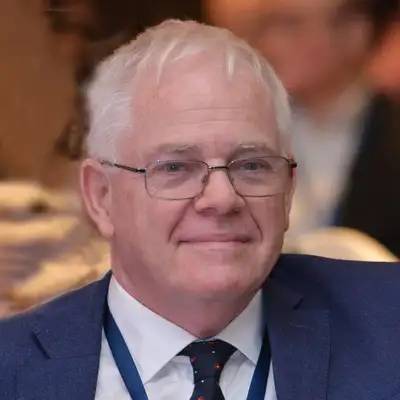
Returning today is my guest is Simon Marginson. He's Emeritus Professor of Higher Education at Oxford University and the author of a new book entitled Global Higher Education in Times of Upheaval: On Common Goods, Geopolitics and Decolonization.
The book covers pretty much everything, the rise of right wing nationalism, the scientific rise of China, neoliberalism, neocolonialism, and how all of it has created both uncertainty and in a few cases promise for the sector.
It was a good interview with one of the giants in the global study of higher education. Simon laid out with skill, the case for higher educations which are both global and outlook and oriented towards the common good, not the public good, and I got to ask him some pointed questions about who exactly is supposed to fund the common good.
Hope you enjoy it. And with that, let's turn things over to Simon.
Hi Simon. I wanted to start with the title of your book. You talk about times of upheaval, and I must admit, when I first saw it, I thought maybe you were talking about Trump 1, Trump 2, COVID in between. But that's not really what you're talking about, right? You're talking about a much longer space of time. A much more enduring upheaval. When does your time of trouble start?
Simon Marginson: Now I think it does start with the mid 2010s. And I think there is a sea change at that point. You can now do what many people are doing and trace that sea change back to earlier tendencies. I'm sure that's all true, but um, we start to see our world shifting decisively, with Brexit in the UK, with Trump selection, you know, with his celebration of the uneducated, and it takes five or six years for that to really manifest in a series of crises and problems, you know, like the China initiative stuff in the US and, and then of course the assault on the universities in 2025. But also the issues around higher education like in Europe, you know, the central European University being forced out of Hungary, and so on. So it's, it takes a while for it all to sort of settle into the new pattern, if you like.
But my feeling is that, you know, before the 2010s, we had the neoliberal period, and that's the whole of our working lifetimes basically. I don't think the university as an institution has been fundamentally destabilized by neoliberalism. I think issues have, and questions have arisen that are difficult for it to resolve in the neoliberal period. Like, how much of it is really about public good anymore? And um, you know, should the user pay for everything. And as in some jurisdictions, the user does, or most of it anyway. And is employability, the, the sole objective of higher education and so on. So those issues arose in the neoliberal period. But the university retained its autonomy, I mean, conditioned, regulated, but, and maybe more corporate than before. But you know, the American university in the US had been corporate in lots of ways for a lot longer.
I think academic freedom basically survived. And I suppose the core of it is that the teaching, learning research process that have been inherited from the medieval European University and Humboldt in the 19th century, that that core of higher education was intact under neoliberalism, and that core is now in question. So the purpose of the university is now in question, I think in a new way.
Alex Usher: So you've actually got, so the, the book is split into two halves and one is called Sovereign Individualism and the Common Good in Higher Education, and part two is called Sovereign Nationalism, Geopolitics and, Decolonization. It feels a bit like two books in one. What's the thread that draws those two pieces together?
Simon Marginson: I thought a lot about this as you can imagine, and I think it, well, you can say that biographically, it reflects my own sort of movement from a national policy framework into global and international issues over the course of my career. But I also think it reflects the work we did as a group of 10 countries on, the public good role of higher education, which is the, the work that runs through part one. And we, we've really reached the point that at the end of that, where we found that the public good role of, higher education was intact in some jurisdictions quite intact, was troubled in some others, which were more influenced by neo-liberal ideas and was had been shot to pieces in the US and the UK, and was in serious trouble in Australia. I'll come to Canada later 'cause I think we'll probably have that discussion during this course of this interview. But it looked like to me by the end of our public good project, that there was nothing much we could do to retrieve the public good role of higher education in the UK and the US. That it was, that the, state framework of regulation had decisively shifted into pure economism, if you like, that higher education system had to deliver for capital. That was its sole rationale and anything outside that was essentially inefficiency. And I couldn't see at the end of our project any way out of that.
So I thought, how do we then rethink the problem? And so I had to go outside the box and going outside the box meant going to the global level, and going to non anglophone jurisdictions. I'm in the Nordic world is one part of that. The East Asian world's another where the problem of collectivity and individuality is handled better, in my opinion, in lots of ways. And um, where the public contribution and the common good contribution of universities is very much intact.
And then you start to say, well, how do we bring that kind of sensibility back to bear on the anglophone jurisdictions? And they're not gonna change their mind about themselves because Finland does something or Japan does something, are they? Or Singapore?
But they might be relativized and rethought in their framework of the global, what's the global common good? What's the way in which the world will cooperate in future? How can higher education aid world building in a constructive way, which respects unity and diversity and so on?
So that's where I went. I said, well, look, we, we can't deal with this problem within our nation states. We are not gonna solve it. Private capital is too deeply entrenched as the core of these societies, but in other societies it's better. So we need to bring our society into a relationship with other societies in a common project to building the world as a, if you like, a, a better place, one that can solve problems of the environment, one that can address, you know, all of the challenges facing humanity and bring higher education to bear on those challenges.
So that's where I went. So I jumped from a pragmatic acknowledgement that we'd reached the wall, hit the wall in trying to, I suppose, retain a social democratic approach to higher education in the anglophone world, to saying, okay, let's look at what a common good approach means at world level, and that might be the way forward.
Alex Usher: Yeah, this contrast you make between anglosphere higher education and its neoliberal and individualist approach, and you contrast that as you said to, to other parts of the world. But you know, I look at places like Japan or Korea or Taiwan, where 80% of the system is private. That's true in big chunks of Latin America too. You know, even India is pretty cutthroat about some of this stuff. Do you think anglophonism really that different from other places? Like are like how strong a, a, a distinction between anglophone and the rest can we really make.
Simon Marginson: Right. And a, a very good question and, and a complex answer is needed, really, probably more than we've got time for. But, and I wouldn't say in general that, you know, all societies are better than my own society at all. I think, there are, you know, strengths in the anglophone world, obviously not just military and economic strengths, but cultural strengths as well, and intellectual strengths too. And, you know, major contributions to the world as a result of that. But I, you know, I, I think that if everywhere else you look, the family's a bit stronger than it is in, in the English speaking world, that's one symptom of the if you like, the me, me, me high individualism, which we've made a virtue of.
The second thing is, I think the capacity of private capital to accumulate, although it's, I must, I must admit, sometimes you look at India and you say, well, it's a little bit like the anglophone, you know, world in that regard, isn't it? But then there's a lot of balances in India too. There's a lot of balances from religion to kinship to regional identities and language and so on. And in Japan, for example while, um. there's some very rich people and there's not the same sense of evacuation of the social you know, the sort of, I mean, I hesitate to go here, but, you know, the Epstein phenomenon, the thing that that concerns people, I think is this rich people doing whatever they want, knowing that they don't have to obey the rules.
That kind of thing's harder to do outside the English speaking world, generally speaking. It's probably you know, perhaps it's easy to do in Russia too. But it's certainly harder to do in China or, or Japan or Korea where there's more, I suppose collective values are stronger. There's more morality out there. And people are policed by that informally and formally. And uh, I, I think that the, there's less social responsibility in our neck of the woods than there is almost anywhere else.
Alex Usher: I mean, you take an aim at neoliberalism in this book for a number of, I think, quite justified reasons. You know, you talk about it blocking the formation of collective goods, of distorting the cultural framework of education. But let me make the contrary case, okay? Like neoliberalism is really good at incentivizing universities to accept students, right? And it does put them in a place where they push for efficiencies and they push for more money. I mean, if we didn't have a neoliberal system in the last 30 or 40 years, I would argue in much of the West, the system, we would have a, we still have a university system, and in many ways it might be better, but it would also be smaller and it would be poorer. Is it so bad that it's larger and richer?
Simon Marginson: Well, I mean, you recall the book we did on the high participation systems, you know, the 2018 book, which you very kindly reviewed well, and uh, and, and you, I think you liked the book.
Alex Usher: I love that book.
Simon Marginson: And what we found was that there are a lot of trajectories or roots to high participation systems. And I mean, one of them was, is certainly the, you know, the Brazilian, Indian, philippines model of of building a, a huge private sector and partly a for-profit sector, using that to drive infrastructure expansion. And you know, and that it's hard to imagine especially say Brazil would've grown as fast as it has had without that. Because there hasn't been an, as, you know, a consistent and coherent state policy, building infrastructure on the public side.
On the other hand, then there's, you know, then there's the Nordic model or the east European models, which is a very weaker version of something in the same phenomenon where the, I mean, the Nordics certainly have proven you can have a high participation system at a high level of quality and publicly funded. It was possible. Of course, the price is you, you charge more in total taxation. You generally have a wage structure which is less elongated than the Anglophone one. People aren't getting rich in the same way that they are in other parts of the west. You're having, you've got a, a welfare state still basically. So the welfare state model underpinned by taxation and a good growth economy can do it.
I take the point that in the anglophone context, you know, getting the student to pay or pay a large part of the cost in Australia, UK, US has underpinned much of the growth. But then the US is an interesting case, isn't it? 'Cause you look at the public sector and for the in-state student, the public institutions are still relatively cheap compared to most of the anglophone world. So it, it, the US achieved very high level of participation, wealthy country, of course, very high level of participation despite a, a shrinking tax base at the state level.
Alex Usher: We're gonna take a short break. We'll be right back.
And we're back. You know, one thing I think in the, in the book that might surprise some people is the amount of time you spend making distinctions between public goods or the public good, I guess, and the common good. What's the distinction that you're making here and why is it important when thinking about higher education?
Simon Marginson: I think the public good has been the the touchstone, the focus, the lens, if you like, for talking about the larger social and collective contributions that higher education makes. It's been under that heading of 'the public good'. And of course, the reason why we have this nomenclature in part is because the great example of the building a massive higher education in the United States, you know, which was so far ahead of the world in this, in the fifties, sixties, seventies, it the great expansion of of higher education participation to 50% well and advance of the rest of the world was carried by the growth of public institutions, which were largely publicly funded and nested in civil society. And they're the kinda civic mission. And with a strong, I suppose, economic and social function associated uh, you know, the Lands-Grant model was the, was the great driver of this in many ways associated with the institutions. And that was very much characterized as public, the public good mission of higher education that it provided for the private benefits for many, many people.
So, the wheels fell off in the US, so, but, but still that notion of public education is associated with the great promise of mass higher education and the assumption at the peak of that model was that it can be of high quality and nominally high quality for everyone, although that was not, perhaps not achievable and wasn't achieved. So that's the ideology that the word public calls up is that. And there's no other narrative, no other model of the collective social contribution of universities other than that idea, I think. There's the very simple narrative that they produce economically useful things — human capital of graduates and research, which is potentially turned, can be turned into um, innovations in industry. And that all adds up to GDP. But that's a fairly, I mean, well that's, that's certainly an enabling argument in government itself. It's not the great narrative of the public good, is it?
Alex Usher: So you have common good instead. So
Simon Marginson: So that's the alternative. Yeah. But that of course has got baggage that's got a particular, you know, history as well. And the history of the common good term, in the West anyway, is that it's come out of northern Italy and it's come out of communal local cooperation in production of public services, community services as, as they're called, with some state central state support.
And that notion is the one which fed into the UNESCO notion about education as a global common good. You know, it was that sort of tradition of local democracy, of consultation, and of central state support enabling local activity. And it's not quite clear yet how the common good idea translates at the national level and at the global level. But it's the start we, we are working on that. I suppose those of us are working with the common good idea are trying to put flesh on it now. That's what we're doing.
Alex Usher: I, I guess what struck me was that a public good, you've got governments who can pay for it. It's not clear to me who pays for a common good, right? Like, is that, is that, is that the, the heart of the problem you're trying to solve?
Simon Marginson: Yeah, that is exactly right. And I mean, public good is, there's a sort of positive side of public good if, if you like, is that it's linked to the role of, of government, and government is the, is the one part of society which represents the whole of society and is capable of mobilizing resources. And it's the fact that I suppose neoliberal governments have refused to do that at the, in the way we need for 50 years, convinces us that we need to go somewhere else rather than the, the principle being wrong.
I mean, part of the problem is that there's, we don't have the evident public support for the idea of public good role of higher education anymore. And it's partly 'cause of the way in which it's been emptied out. Perhaps the common good approach allows us to rebuild public support because of the resonances, the normative resonances of common and collectivity, if you like, in a positive sense in a democratic sense.
And, and maybe that will enable us to rebuild the social project of the community committing to higher education as in its benefit and its its instrument for its own betterment and its own development. Common good might provide a way out of the the way in which the public good nomenclature has been trapped.
But we then have the problem of trying to mobilize that political support to get states to come in behind it.
Alex Usher: You spend a lot of time making another distinction, which is between internationalization and globalization of higher education. Why does this matter?
Simon Marginson: Uh, I think globalization you know, in the positive sense, and this is another word, which is, could have been rather spoiled in the way it's been used, isn't it? But globalization in the positive sense is about world building. You know, it's about building international cooperation, but more than that, it's about, about going beyond the nation state and looking at the things which all nation states have in common or should be concerned about such as environmental regulation, and looking to the possibility of some sort of political authority beyond the level of the nation state, which can help to coordinate our efforts in solving global challenges.
And there are things that are already global. I mean, in the sense of being beyond, if you like, transcending the nation state. You know, the, the science system to some extent there's already that, you know, the scientists working together across borders constitute knowledge in, in the national sciences and the social sciences together, independently of the direct regulation by the national governments. Although of course we are now seeing that that instrument is fairly fragile and it can be brought back in within the national envelope, if you like, and, and turned into a oh a, a more purely national instrument.
Alex Usher: I'm wondering about the practical takeaways from this book, right? I mean, you make a, I think, a compelling argument that systems of higher education, they're not just a long way from producing optimal outcomes, but they might be systemically incapable of producing those outcomes short of any kind of major political or economic revolution.
So, what's your advice to people who wanna change the system? Like, if, if you, you know, if an ambitious new president of a university were to come in and say, look, this is all terrible. What can I do about it? What's your advice?
Simon Marginson: Well, I'd say the first thing is that we need to work on ways to remain globally connected, internationally active. And in a period when international activity is being, is being looked on with less trust and more suspicion by national governments. Some of them anyway, perhaps many of them. And we need to find ways to be, if you like, to use our autonomy to, to maintain those links and, just keeping international things going at the moment has got a lot of consequences for the world as a whole, not just for higher education and retaining, its epistemic liveliness and, and effectiveness, but also um, uh, you know, in ensuring that countries are talking to each other and cooperating, and this is one of the areas where they do, higher education and science. And if they cease to do so in, or do it less in higher education in science, then the world is, starts to become a set of walls, doesn't it? You know, business and, and higher education are probably the most internationalized activities we have.
So there's, it's important to do that. And, and I think that the good presidents do that, you know, they focus on this, that problem. They all like being international and they know it's important and useful for them in all kinds of ways as institutions, whether it's prestige building or it's knowledge building, or it's, or it's a revenue building or whatever, you know, they see the benefits.
So how to retain that international linkages alongside nation states that are getting more tough about wanting to control that is an open challenge I think at the moment. And we're gonna clearly gonna handle it better in some countries than others.
The, basically the, the second thing I'd say is that I think we've got a real problem fundamentally about defending and advancing the core of our activity, which is, you know, as I said earlier in the interview, is teaching and research immersed in knowledge. That pedagogical and curriculum-based approach and with all the baggage that goes with it, you know, with the, the medieval gowns and the, and caps at, at graduation day, the organization into academic disciplines, the teaching and research nexus, I think that's now in question in a way that it wasn't before. And I'm, I, I was always very impressed by Kla K's argument, you know, that this institution is a multiversity, that's how to understand it. It doesn't really have a center, he said. It doesn't really have a, a core rationale, but I think that that core of teaching research knowledge is, its, if not a rationale, it's its core practical activity.
If that practical activity doesn't work, 'cause it doesn't produce employable graduates, then we've got a problem. So I think it's nutting out that one will determine whether the university as an institution continues and with all its social contributions that it makes. So that seems to me as the core problem to think about. And I think it'll won't be solved by everyone going to a conference and coming up with an idea. It'll be solved by good practice in individual institutions, which are well nested and strong in their own societies coming up with good new solutions.
Alex Usher: Simon, thanks so much for joining us.
Simon Marginson: My pleasure, Alex, and nice to speak to you.
Alex Usher: And it just remains for me to thank our excellent producers, Samantha Pufek and Tiffany MacLennan, and you of course are listeners and readers for joining us. If you have any questions about this episode, or concerns or suggestions for future episodes. Please don't hesitate to get in contact with us at podcast@higheredstrategy.com.
Join us next week when our guest will be Donatella della Porta. She's a professor of sociology and political science at the Scuola Normale Superiore, she'll be talking us about the wave of youth and student protests around the world in the last 12 months. Bye for now.