Subscribe
Share
Share
Embed
One of the most essential ingredients to success in business and life is effective communication.
Join Matt Abrahams, best-selling author and Strategic Communication lecturer at Stanford Graduate School of Business, as he interviews experts to provide actionable insights that help you communicate with clarity, confidence, and impact. From handling impromptu questions to crafting compelling messages, Matt explores practical strategies for real-world communication challenges.
Whether you’re navigating a high-stakes presentation, perfecting your email tone, or speaking off the cuff, Think Fast, Talk Smart equips you with the tools, techniques, and best practices to express yourself effectively in any situation. Enhance your communication skills to elevate your career and build stronger professional relationships.
Tune in every Tuesday for new episodes. Subscribe now to unlock your potential as a thoughtful, impactful communicator. Learn more and sign up for our eNewsletter at fastersmarter.io.
Matt Abrahams: Often the things
we really want are on the other
side of a difficult conversation.
My name's Matt Abrahams and I
teach strategic communication at
Stanford Graduate School of Business.
Welcome to Think Fast
Talk Smart, the podcast.
Today I'm really looking forward
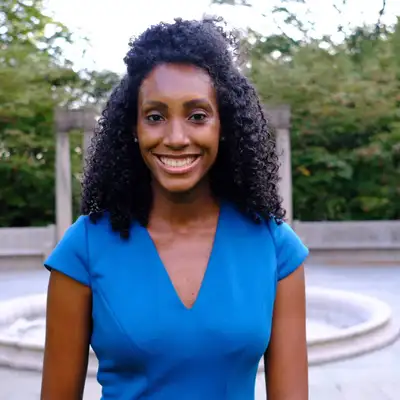
to speaking with Jennifer Wynn.
Jenn is a professor at NYU Stern
School of Business, where she's
taught a class on difficult
conversations for nearly ten years.
Previously she was the Director of
Education at the Obama Foundation.
Additionally, Jenn hosts The H.I. Note
Podcast and runs a consultancy focused
on organizational transformation,
change leadership and repair.
Welcome, Jenn.
I'm really excited for our conversation.
Thanks for being here.
Jenn Wynn: Thanks for having me, Matt.
I'm excited to be here with you
and the listeners, which include
my executive MBA students.
Matt Abrahams: Yes, absolutely.
Well, shall we get started?
Jenn Wynn: Yes.
Matt Abrahams: So you teach a course on
difficult conversations, and I'm curious
what makes conversations so difficult?
Is it the topic, the
emotions, the circumstances?
Where's the difficulty come from?
Jenn Wynn: I wanna say all of the above,
but at the core it's the emotions.
It's the emotional reactivity.
So, a quick way to think about this, in my
first class of the Difficult Conversations
course that I teach, I ask folks to call
out topics that are difficult for them to
discuss, and while they're calling it out,
I'm typing the list into the slide deck.
And we very quickly, not only fill the
page with topics, but then you come to
see that what's really difficult for one
person is not that difficult for someone
else, and in fact, some people enjoy it.
So a topic like negotiations
will terrify someone.
I don't wanna negotiate my salary or
getting a promotion or a negotiating
fees with a client, and someone else
will say, oh, I love a good negotiation.
Let me take your negotiation on for you.
Or saying No when a team member
or a direct report wants extra
resources, or a loved one asks you
for help, and you've gotta say no.
And it's so interesting because not
only are people really unique, even
idiosyncratic, it shows you that what
makes a conversation difficult is much
less the topic and much more the inner
experience that each person is having.
And so effective communicators, effective
leaders know that they've gotta be
self-aware of that inner experience
that they're having in the moment.
When I say inner experience, I
mean what you're thinking and
feeling, but not saying out loud.
And what that makes you realize is,
if I can be aware in the moment that
I'm triggered, then I can pause.
I can recenter, I can regulate my
nervous system, and that way I'll
be able to choose a better response.
And I say to my students, your
nervous system goes with you into
every single difficult conversation.
So if you can pause and regulate
your nervous system, then you're
gonna be a better version of yourself
at the time when you most need to
be the best version of yourself.
So the implication of all of that is
self-awareness and emotional intelligence
are essential for leading difficult
conversations to productive outcomes.
Matt Abrahams: So we really have
to reflect on our own experience
before we can actually be present
and engage in the conversation.
And I think the point you made
about difficult conversations
aren't the same for everyone, and
in fact, we need to appreciate that.
So it's really appreciating your own
experience and the emotions you're
feeling and finding a way to get
yourself grounded and be centered
and prepared before you go in.
Jenn Wynn: Yes, and open to hearing
and understanding the other person's
inner experience because if I happen
to be the one who loves negotiations,
but I'm sitting across from the person
who's terrified by negotiations,
I need to have the emotional
intelligence to be aware of their
inner state and help them manage that.
And at the end of the day, the goal is for
all members of the dialogue to move away
from emotional reactivity towards choice.
I wanna choose the better, more
strategic path, not the reaction that
came out of an emotional trigger.
It's more choicefulness.
Matt Abrahams: So it sounds to me
like one of the key elements, or
a couple of the key elements, of
managing difficult conversations
first starts with self-awareness.
Being other aware and accepting
doesn't mean agreeing, but accepting.
And it sounds almost like there's
an invitation involved where you're
inviting the other person to share
their inner experience so that you
can meet them and then ultimately
make choices in a choiceful way.
Are there particular strategies or
tactics people can use to help bring
out that information in someone?
Jenn Wynn: Yes.
So we'll start with that self-awareness
piece, since it is the foundation.
I tell my students, if you only
remember one framework from this
entire course, please remember
self-awareness, pause, reframe, okay?
Self-awareness, pause, reframe.
So what does that mean?
In the moment am I aware of my physical
cues, my cognitive and emotional
cues that let me know i'm triggered,
I'm heated up in this moment, right?
So for me, I get a lump in my throat
or like a tightness in my chest.
Some people get, uh,
butterflies in their stomach.
I'm curious, what is it for you, Matt?
Matt Abrahams: So I, I resonate
totally with a tight chest.
When I'm ready for battle or
feel like battles coming I,
my whole chest gets tight.
Jenn Wynn: Yes.
So each one of us think in advance,
what's my tell sign, right?
And once I know that, the moment
I see it, I know I've gotta pause.
And then here's the best thing.
If I know my pause techniques, if I know
what helps me metabolize my hormones,
get that adrenaline out of my system,
really regulate my nervous system,
then I can be back to my centered self.
So a go-to pause technique for me is to
imagine myself with my best friend, Carla.
Then I'm at ease, I'm
centered, and that is our goal.
That we lead these conversations
to a productive outcome, both
for the content, the matter at
hand, and for the relationship.
So that last step, reframe, is where
I actually shift away from viewing
this conversation as a threat to
something I care about, and instead
perceiving it as a learning opportunity.
What good information
can I get out of this?
So self-awareness, pause,
reframe is a framework I always
ask my students to remember.
Matt Abrahams: I really like the taking
the time to check in with yourself.
Both how am I feeling emotionally
but physically and use the
physical as a trigger to help you.
Pausing is wonderful.
I love that you rely on a friend.
I have a place I go to in my mind.
There is a particular tree in Sydney,
Australia that faces the Opera House and
the Harbor Bridge, and when I get worked
up, if I just envision that in what I
felt like when I saw it, it's my place
of zen that really helps calm me down.
And then this notion of reframing from
one of threat to one of learning, one
of collaboration, one of invitation.
One of my colleagues, Michele Gelfand,
likes to say, mind your metaphors, and
the metaphor you bring to the interaction
helps determine how it's going to be.
So if I see it as a learning
opportunity, this difficult conversation
is going to go very differently
than if I see it as a battle.
So I really appreciate that.
Share with us some of the other
tips you have, especially if
there are particular barriers
that get in the way to doing this.
Jenn Wynn: Some of the most
common barriers I see are not
having the conversation at all.
I'd say a second one, not having a goal.
And a third, I'd say not listening enough.
Often when we don't have the conversation,
it's because we assume it will go poorly,
so we give up before we've even started.
But here's the thing.
Most things that we want in
life are on the other side
of a difficult conversation.
Sometimes it's a difficult
conversation with myself.
Sometimes it's a difficult conversation
with a loved one, a colleague, a boss.
But a lot of those things that we
really want and we've been longing
for and haven't gotten yet, are
gonna require us to get to the other
side of a difficult conversation.
So are you just going to give up on your
biggest dreams in life because you weren't
willing to take the time to step outta
your comfort zone and practice a skill?
Because that's the thing.
You know this Matt.
Communication is a set of skills,
learnable, growable skills, and
difficult communication is a set
of hard, but worth it skills.
Matt Abrahams: It is important to remember
that these difficult conversations
are one of many conversations that
we will likely have with these
people or in this environment.
So we're not only trying to come to
a mutually agreed to resolution, in
the short term, for this situation,
but we're setting ourselves up
for the future, and the next one.
You mentioned listening, and
that's a skill that my wife is
still encouraging me to work on.
I'm curious, how do you help your
students to be better listeners
in these difficult conversations?
Jenn Wynn: Yes.
So sometimes the issue is not
listening enough and sometimes it's
not showing that we are listening.
So those are two distinct skill sets.
At the end of the day, I think about
dialogue as the free flow of meaning.
And so if I've done it well,
effective dialogue grows the shared
pool of understanding between us.
I understand how you made meaning
of a situation and you understand
how I made meaning of a situation.
So that means that I've gotta inquire,
I've gotta ask enough questions to
understand how you experienced that,
that client meeting, that argument
my husband and I may have had.
And then once I've listened,
internalized, the meaning you
made, I've gotta paraphrase it back
as a check for my understanding.
A real humble attempt to say, this is my
summary of what I think you experienced.
But is that right?
Fix what I'm missing?
Is it half right and
I miss the other half?
And once we can paraphrase, this is
a skill that, honestly, I think it's
like punching above its weight, right?
After I've taken all this time to really
ask these open, thoughtful questions,
get curious, understand your perspective,
make sure you show the person that
you are internalizing what they said.
And like you said, it's not
agreeing, it's just acknowledging.
And when they finally say yes, that's it.
Then you've grown the shared
pool of understanding, at
least from their perspective.
And then you can go share yours, and
that's where you move into advocacy.
But at the end of the day, the
balance you're looking for is
inquiry, paraphrasing and advocacy.
And inquiry and paraphrasing are
listening skills, both to understand
what the other person experienced and
confirm with them that my understanding
was correct of their experience.
And the advocacy skills,
the talking one, right?
That's essentially a two thirds, one
third ratio, and I don't mean it as
an exact science, but I did have a
student say to me one time, oh, so
that's why my parents said you have
two ears and one mouth for a reason.
A lot more listening and
confirming that I understood you
correctly from your perspective
before I dive into sharing mine,
Matt Abrahams: I like your definition of
listening as seeking shared understanding.
And when you take that approach, it
definitely puts you in a place of being
present, of being humble, because you're
checking, maybe I didn't get it right.
And leveraging, what I think is one
of the most powerful communication
skills, which is paraphrasing
because it does so much for us.
I really appreciate that approach.
I'd like to turn our conversation
to a different topic.
I know you are likely getting similar
questions to me with artificial
intelligence, AI, coming into things.
How do you envision that AI could
actually help us with some of these
tricky communication situations?
Jenn Wynn: Yes, I have seen several of
my students find some really great uses
for AI, so I'll give some examples.
Sometimes I have a student who
wants to work on their tone.
They've received feedback that their
tone is getting in the way of their
message being received, and so they'll
type in what they wanna say and
say, make that tone more friendly,
or make that tone more respectful.
And get a sense for what some other
language, some other word choice might be
to help them still deliver an authentic
message, but in a way that can be heard.
So that's one interesting way.
I think another is coming
up with perspectives that I
haven't considered, right?
Here's the problem I'm dealing with.
What other perspectives could there be?
Or here's my take.
And then recently I had a student
really enjoy the role plays that we
did in class, but not have someone back
in her apartment to role play with.
And she actually asked ChatGPT
to role play with her, uh, which
I thought was such a cool idea.
And I just think at the end of the
day, we have to keep in mind that this
is one perspective based on whatever
data this particular LLM has been
trained on, and not take it as the
final word, but just more options.
Matt Abrahams: Practice for these
situations can be so important,
as with any communication,
and using a tool to do that.
And I really like this idea of
having a tool help you see what
other wording can affect tone
in a way that you might not see.
I like that a lot.
Like me, you host a podcast,
one that I've enjoyed very much.
I'm curious to learn how you balance
your inquiry to challenge your guests
without turning your interviews
into challenging conversations.
In other words, how do you put your
audience at ease enough to have the deep,
meaningful conversations that you have?
Jenn Wynn: So on The H.I. Note
podcast we're talking about how people
healed from some really tough stuff.
You know, childhood trauma, loss
of loved ones, disease, goodness,
toxic relationships, you name it.
And so before I asked them to share about
some of the toughest moments in their
lives, I start by surprising them with
three things that I love about them.
And so this is not in the agenda
that I send them ahead of time.
But when we sit down to chat, I
let them know three elements of who
they are that I absolutely love.
And it's amazing to see how, not only
pleasantly surprised they are, which
is just a nice moment of pure joy and
connection, but also to see how once
they feel seen as a whole person, and
in a strengths based and affirming way,
they become more generous in what they
share and the conversations go deeper.
And I learn such amazing insights because
they've really let down any walls or any
pretense and just shared from the heart.
And it's been a beautiful gift to see
how powerful asset-based framing is, and
I've brought that over into my classes.
So for Difficult Conversations, and for
the other courses I teach, in the very
beginning, in the first session, I'll
ask folks to gather up in trios and do
an exercise that I call at your best.
And so they'll share in trios
times they were at their best
during a difficult conversation.
And then the feedback that they
give one another is strengths based.
So, this action that you took
had a tremendously positive
impact, do that again.
Or, wow, I'm really impressed how
you shifted your mindset right there
in the middle of being triggered and
now I'm gonna go do that as well.
And students say that they not only
feel seen after that exercise, but
that the classroom environment is more
psychologically safe and enables them to
be more brave in the rest of the course.
Matt Abrahams: I love that
as an opening activity.
I'm going to borrow it, if you don't mind,
to have people think about in my course,
a time where they were able to communicate
strategically in a way that was successful
and then to get that positive affirmation.
I really like this idea of
leading with connection.
You sharing the three things that you
really appreciate about the person is
a way of connecting and saying, I see
you, I know you and I respect you.
And that opens up the door to perhaps more
challenging or, or deeper conversations.
Thank you for that.
Well, as you know, as someone
who listens to the podcast, I end
every episode with three questions.
One I make up just for you, and two, I
ask everybody, are you ready for that?
Jenn Wynn: I think so.
Matt Abrahams: Yes, you're gonna do great.
I'm going to ask you the unfair
question that I always get asked, 'cause
I'll be curious about your answer.
So people will often ask me,
what's the one thing I can do
to improve my communication,
as if there is one magic key.
But I'm asking you this question because
I hope it gives you an opportunity to
talk about something that we haven't
talked about, because we've talked
about a lot of really deep, meaningful
communication bits of advice, know your
audience, know yourself, paraphrase.
Is there something that we haven't
covered that you think is important?
Jenn Wynn: Practice.
At the end of the day, the
goal is not perfection.
It doesn't exist.
The goal is continual improvement.
I wanna keep getting better and better.
And so the way to do that, of course, like
any muscle building activity is practice.
And so I really do, not only create
a lot of practice opportunities for
my students in class, but I give
them ideas of how they might continue
practicing after the class is over.
And my suggestion is to make it a
little more challenging each time.
So start with the low
stakes day to day stuff.
When you're chatting with your
roommate, ask a few more questions
than you might have otherwise asked
so that you build that inquiry muscle.
But then when you have a disagreement
with a colleague, if you think, this
might actually make a difference if I
shared this one perspective, try out
stating your intention, sharing your
perspective, and then asking for a greater
understanding on their perspective.
And as we continue to have more and more
repetition, right, as we build in the
reps, we're not only gonna build the
muscle, which feels good, but then it's
gonna be ready for us to flex when the
moment counts, when we're in the most
consequential conversation, we will have
already built up those great question
asking muscles, those great paraphrasing
muscles, those great intention stating
muscles, and so on and so forth.
So practice, practice, practice,
and make it a little more
challenging each time along the way.
Matt Abrahams: And I think
that's absolutely dead on.
We have to practice.
I'll be curious to hear your answer,
who's a communicator you admire and why?
Jenn Wynn: Michelle Obama.
Her authenticity is palpable.
When she's sharing, it's not only real
and true for her and others in the
room, it's the heart of the matter.
She's not being authentic
about things on the fringe.
She's getting to that piece that lands
in the pit of my stomach that I may
not have had the courage to share.
And she has so many great quotes, one
of which is, courage is contagious.
And I feel that in her presence or
when I'm watching a speech of hers.
And then of course her ability to
connect, but she's fantastic at connection
through relatable storytelling and humor.
And I've seen that in her most
casual and impromptu moments
and in her prepared speeches.
It's just a part of who she is.
Matt Abrahams: Courage is contagious.
Really profound actually.
And connection, and
the ability to connect.
Storytelling is a key tool for that.
Alright, what are the first
three ingredients that go into a
successful communication recipe?
Jenn Wynn: Audience, intent
or goal, and listening.
Uh, we've already spoken about the
importance of knowing where the
other person is at and how to meet
them where they are at, right?
Emotionally, during that time of day or in
their schedule, what matters most to them.
Understanding how to create a shared goal,
right, which goes into the second piece.
And then the last piece, you might've
thought it'd be something around
know what your message is, or be
clear on what your message is.
But the reason I think it's listening
is because if I'm really growing
the shared pool of understanding, if
I'm really hearing your perspective
and understanding it to a level that
I didn't understand before, I may
actually have a new idea, right?
I've heard the quote, dialogue
is the birthplace of synergy.
Your information and the way you made
meaning of that information might
create, not just a new perspective within
me, but a new meaning making, a new
understanding of what matters most and
therefore, what I'm most wanna drive home.
So, audience, intent
or goal, and listening.
Matt Abrahams: So audience
and intent and listening.
Jenn, this has been a
fantastic conversation.
You have equipped me, and hopefully
our listeners, with many tools they can
use, and you have certainly increased
our shared understanding and meaning.
Thank you for joining us
and thank you for your time.
Jenn Wynn: Thank you for having me.
This was fun.
Matt Abrahams: Thank you for
joining us for another episode of
Think Fast Talk Smart, the podcast.
To learn more about difficult
conversations listen to episode
22 with David Demarest.
This episode was produced by Ryan Campos,
Katherine Reed, and me, Matt Abrahams,
at the Spotify Studios in New York City.
Our music is from Floyd Wonder.
With special thanks to
Podium Podcast Company.
Find us on YouTube and
wherever you get your podcasts.
Be sure to subscribe and rate us.
Also, follow us on LinkedIn and Instagram.
And check out fastersmarter.io for
deep dive videos, English language
learning content, and our newsletter.