Subscribe
Share
Share
Embed
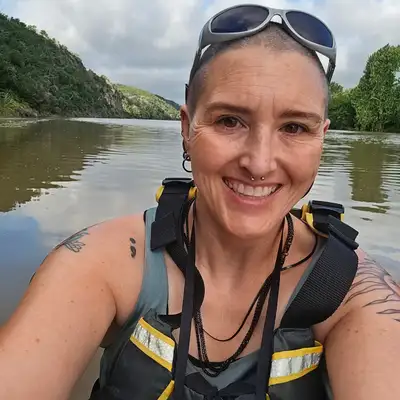

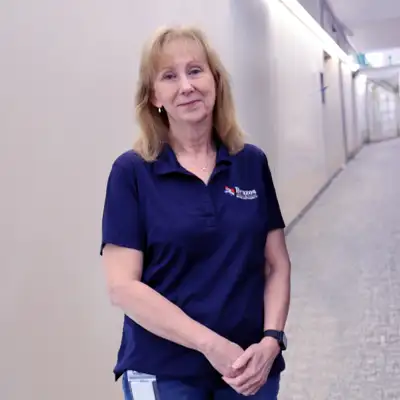
Ready to unpack the powerful stories of a Texas titan - the Brazos River? Listen as experts explain the Brazos River Basin's immense role in our daily lives. They'll cover everything from the river's fascinating history to all the work that goes into ensuring you have water when you turn on your faucet.
Hear invaluable insights on topics like why lake levels change, the important projects safeguarding our water, the many species that call the Brazos home, and even some tips for enjoying the water from Brazos River Authority experts.
This is your chance to understand the immense work that goes into developing, managing, and protecting the Brazos River Basin, which stretches from the Texas-New Mexico border to the Gulf. (The basin is the size of Tennessee, y’all, it’s big.)
It’s a huge part of our state’s story and we can’t wait to share it with you.
Clay Sellers: Got questions about the Brazos. No more unknowns. Ever wonder where that water comes from or where it goes? We're Unpacking the Brazos River.
Charlie L Shugart: I know it sounds weird to drop a podcast episode on what we don't do, but hear me out. For starters, River Authority is kind of a loaded name. Unless you spend your free time reading water policy, it sounds like we own the entire river and make all of the rules. Combine that with the amount of different agencies managing the Brazos and the lakes around here, it can feel confusing to figure out who does what and where to start. So, this episode is your cheat sheet.
We pulled these topics straight from our DMs. If you've ever found yourself wondering who to reach out to for a permit or regarding a new project down the street, we have you covered. I'm Charlie Shugart, and this is Unpacking the Brazos River. Returning to the podcast is Judi Pierce, the Brazos River Authority's Public Information Officer, and Candace Sheridan, BRA's Public Information Coordinator. Thanks for returning to the pod, you guys.
Judi Pierce: We're happy to be here.
Candice Sheridan: Yeah, thanks for having us.
Charlie L Shugart: Absolutely. So, before we dive into what we don't do and where you should look instead, break it down for us, give us a highlight of what the BRA does.
Judi Pierce: Okay. The mission of the Brazos River Authority is to develop, manage, and protect the water resources of the Brazos River Basin. We were created by Texas Legislature in 1929, and over the years, our responsibilities have evolved. For instance, we are no longer charged with flood control purposes. That falls to someone else, and that was an original mandate from the legislature. But the BRA is essentially a wholesale water provider for the state. All surface water in the state belongs to the state of Texas. So basically, we obtain permits from the state to access the state's water and then provide it to cities, industry, ag, and mining interests to benefit the people of the Brazos River Basin and we build reservoirs to store that water in. We also work to ensure the quality of the water within the basin by providing services such as potable water treatment, wastewater treatment, and monitoring for specific contaminants as part of the Texas Clean Rivers program. But let me add something to that. Although the BRA is a political subdivision of the state of Texas, we don't levy taxes, we don't collect taxes, and we don't receive any subsidies from the State to aid in the work that we do. So, except for the occasional government grant to aid in the cost of really specific projects, the BRA is funded entirely through the management of our water and wastewater services and the sale of water supply contracts.
Candice Sheridan: That's a mouthful.
Charlie L Shugart: Just a little.
Candice Sheridan: A lot. I'm coming in hot, but I don't know where to come in.
Charlie L Shugart: Oh, okay. Right there.
Candice Sheridan: Okay. Okay, we also work with the Texas Regional Water Planning Groups that cover the entire state of Texas. We have three water planning groups in our basin. We're going to start at the Upper Basin with Region O. Region G is in our Central Basin. It takes up a big portion of our basin. And then we have a small portion of Region H in the very tip or the lower area of our basin. And Judi mentioned earlier about developing, managing, and protecting. So, we built a dam to contain those waters. Now we're strictly water supply, so we don't hold back floodwaters. So, we have created, obviously, Possum Kingdom Lake. Our next dam was at Lake Granbury, and then our youngest dam is on the Navasota River at Lake Limestone.
Charlie L Shugart: Okay. Well, I heard you mention Possum Kingdom Lake and Lake Granbury on the Brazos River, but aren't there two other dams on the Brazos? I mean, what about Whitney Lake and Lake Waco? Our Central Office is located here in Waco.
Judi Pierce: True. That's going to take a little explanation now. Lake Whitney is on the Brazos River south of or downstream of Lake Granbury. Lake Waco is actually on the Bosque River but it does release water into the Bosque just as the Bosque comes together at the confluence with the Brazos. So, it appears to be on the Brazos. So yes, there are two major dams that are right there near Waco. So, the BRA has a water supply system that is made up of 11 reservoirs. Three of those are owned and operated by the BRA. Of course, that’s Possum Kingdom, Granbury, and Lake Limestone on Navasota. But the other eight lakes within our system are US Army Corps of Engineer reservoirs. They were built after the federal government passed the Flood Control Act in the late 1930’s, that said that the federal government would be in charge of flood control, that's why we would no longer worry about flood control as part of what our mission is. The Corps of Engineers is nationwide. They actually have over 600 dams that take care of flood control or multi-purpose, some of them are hydroelectric, but we have eight of those within our water supply system.
Candice Sheridan: And so, I kind of alluded to it before, you know, our three reservoirs are water supply reservoirs. We do not have any flood storage capacity in our reservoirs. I know it's hard for lakeside livers …
Charlie L Shugart: Livers?
Candice Sheridan: Yeah, livers. And then as soon as I said liver, I thought of muscle.
Judi Pierce: Major organ.
Candice Sheridan: Our lovely people who live lakeside, Limestone, Granbury, Possum Kingdom, they all know that they are not constant level lakes. But they're very passionate about their recreation on the lakes and having their docks float when they want them to float and so forth. And we completely understand that. However, we are water supply reservoirs. Our goal is to hold as much of that water as we can when we have it. Bottom line, we're here to store the water so that everyone has water to drink, toilets to flush, they can all take a shower.
Charlie L. Shugart: Yep.
Judi Pierce: And the really cool thing about our relationship with the Corps of Engineers is that they built these multi-purpose reservoirs to be able to store floodwaters. But at the same time, we, as a Texas state agency, were able to contract with the federal government to store the state of Texas' water in those federal reservoirs. So, as part of our system, they store the water for us, and then they also serve as flood control. So, they're part of our BRA system.
Candice Sheridan: Yeah.
Charlie L Shugart: So, is Whitney Lake and Lake Waco a part of these Corps reservoirs that you mentioned are holding back the floodwaters and are part of our system?
Candice Sheridan: Well, they hold back our floodwaters, but Lake Waco is dedicated just to the city of Waco and the surrounding area.
Judi Pierce: Right. Lake Waco and Lake Brazos actually belong to the City of Waco, and Lake Waco is a very large lake that stores a great amount of water. It serves a good amount of the Heart of Texas area with the contracts that the City of Waco has with local suburbs to provide that water far into the future. There's also, which we haven't talked about yet, a very small lake that runs through the downtown area of Waco. And most people just recognize it as the Brazos River, but it's actually called Lake Brazos. And it's formed by a small low-water kind of roof weir dam that’s just downstream of the city of Waco and holds back that water to make it a little deeper as the Brazos runs through the city of Waco. And that's also a water source for the city of Waco.
Charlie L Shugart: Yeah. Nice. Okay. So outside of the city of Waco's lake, does the BRA manage all the water in the lakes and rivers throughout the whole Brazos River Basin?
Judi Pierce: There are over 1,900 permits for water through the state just for the Brazos River Basin. And of those 1,900 permits, we only have 17 of them. So really, a lot of people assume that the BRA operates, or is in charge of, or has use of all of that water within the Brazos Basin, and that's not the case. We're just 17 permits of the more than 1,900 that are out there. So now that responsibility really falls to the Texas Commission on Environmental Quality who manages the water rights and issues the permits for water within the state.
You know, many people remember the drought that occurred from 2010 to 2015, and it was the worst drought recorded in most of the parts of the Brazos River Basin and a good amount of the state as well. At that point, the water level was so low within the basin that, you know, reservoirs dropped eight to 10 feet. There was very, very little water in the tributaries of the Brazos as well. The Brazos actually went entirely dry at the city of Seymour, which is north of Possum Kingdom Lake. And then down in the southern part, South of Hempstead, the area closer to Houston, they were not getting enough flow in the river to be able to meet the city's needs, the cities that contract for water in that area.
So, through legislation, the state made a department, a specific department that's part of the Texas Commission on Environmental Quality called the Brazos River Watermaster. It's one of four watermasters within the state and actually concentrates on all, not just the Brazos, but all of the tributaries within the Brazos River Basin, which encompasses about 41 counties, all south of Possum Kingdom Lake. And what that office does is to ensure that every permit, all 1,900 permits, receive the water that they're entitled to under their TCEQ permit at the end of each month. In fact, I think it's even weekly for some of the areas, but each permit holder is required to report to the TCEQ's Watermaster office how much water that they have used during that period so that they're making sure that no one takes water that's actually meant for someone else's permit. So just like all those other 1,900 permit holders, the BRA has to report on how much water we use.
And since we contract that water to cities and to industry, we have to have our customers let us know how much water they use that week so then we can turn around and hit those state requirements of telling the Watermaster's office exactly how much our permits used of the water that was allotted to us.
Charlie L Shugart: Okay. So, if you want to get a water right, you go through the Texas Commission of Environmental Quality, and then the TCEQ's Brazos Watermaster Program is what oversees ensuring everyone in the basin is only using what they have the water right for.
Judi Pierce: Exactly. Exactly.
Charlie L Shugart: And that includes us.
Judi Pierce: Exactly.
Charlie L. Shugart: Okay. Okay.
Candice Sheridan: Yeah. So, another really cool thing that the Watermaster is in charge of, or the head of, is diversion. I was telling Judi earlier is I've taken several calls over the years, but big ones that as soon as they call us, they think it's us. And then, you know, we listen, and then we send them to the Watermaster. So, calls like, I have a creek running through my property and the creek always has water in it. All of a sudden, the creek no longer had water in it. So, I walked up the creek. This is my caller, not me. I'm not going to physically walk up a creek. I'd be without a paddle. Walked up the creek and found that someone had damned it. So upper creek person had just…. so that that creek was no longer flowing through his property. So, they can't do that. You cannot do that. Even if it's on your property, you cannot stop it from flowing in the natural way it flows.
Charlie L Shugart: Because it's possible somebody downstream has a permit with TCEQ for that water.
Candice Sheridan: Bingo. Exactly. Yes. So, you know, send them to the Brazos Watermaster, and they take it from there. But, yeah, diversion is a big issue. And people think, well, it's my property. I can do what I want. But all, you know, creeks, waterways, tributaries, rivers, they all flow together.
Charlie L Shugart: And just not to confuse everyone, we're talking about navigable streams. In Texas, the beds of navigable streams are generally owned by the state, in trust for the public. The beds of non-navigable streams are usually privately owned. Just to make sure that we're being super clear about that. So, if I see someone taking water from the river who I don't think I should be, it's this Brazos Watermaster that you mentioned.
Judi Pierce: It is exactly. So, if you ever see someone, and it could be, you know, a scenario that Candice just mentioned, that somebody is diverting a creek or diverting areas, or even just getting a big old truck and putting a hose into the Brazos and pumping water out. It's possible that they may have a contract or they may have their own permit to be able to take water at a certain point. But the Brazos Watermaster also requires kind of a GPS location on where anybody with a permit is going to take their water from. So, they would know that, no, we don't have a permit for somebody to put a big truck with a big hose in it and take water out of the Brazos. So, they are the group to contact in case you think maybe somebody might be taking water illegally, especially if we're in a drought.
Charlie L. Shugart: Yeah.
Judi Pierce: Because that happens, you know. People still need water to operate, and a lot of times, quite honestly, they just don't know that they have to have a permit. It's not like they know they're doing something illegal. It could be that they don't understand. They just need water, and they think, okay, I’m riverside, I'm going to go ahead and put a pump in. So, the Watermaster is the one that would educate them on that and would ensure that the people downstream are getting the water they need.
Charlie L Shugart: Yeah, yeah, absolutely. Okay. Well, whether it's the Brazos, the Navasota, the North Bosque, if someone sees some sort of pollution, like, I don't know, a company dumping material in the river that maybe shouldn't be or a large number of dead fish or chemicals or wastewater, anything, is BRA who they reach out to for that?
Candice Sheridan: They do reach out, but we send them to TCEQ. And I really, like, we appreciate people letting us know. But if it's a fish kill, TCEQ has a wonderful site where you can report the fish kill and what you're seeing in the location. You can even upload pictures to it. TCEQ has a really informative website if you want to report that you see algae. If you want to report that you see …
Judi Pierce: Dumping.
Candice Sheridan: Yeah, terrible things in the water.
Judi Pierce: Sometimes people dump refrigerators in the water. They just think that's the way to get rid of it. Doesn't make a lot of sense.
Candice Sheridan: Yeah, so TCEQ's going to be that place where you land. We monitor water quality in certain areas of the basin. We work with the Texas Clean Rivers program. We report to TCEQ. But our job is not enforcement of water quality. We are just there to check, monitor, and report. So TCEQ is always going to be the enforcement on water quality.
Charlie L Shugart: Yeah. So, while an arm of what we do is monitoring water quality throughout the basin, if something's happening, it's got really needs to go before the TCEQ.
Candice Sheridan: Absolutely.
Judi Pierce: Yeah.
Charlie L Shugart: Yeah. I figure a lot of people, what they're actually doing is recreation. Fishing, hunting. So, when it comes to those regulations and rules, how many fish can I catch, etcetera, are we who they would reach out to for fishing on the Brazos?
Judi Pierce: Questions about fishing, we can certainly help with. If there are problems though that occur on the river, no, we are also not an enforcement agency for state laws. So, for instance, a number of years ago, the state passed a law saying that you can't drive motorized vehicles within the riverbed because a lot of times, they'll leak fluids and gas and oil, and that does pollute our water supply, which is our drinking water. So, they passed a law that says you can't do that. It's not uncommon though. So, if something like that happens, enforcement has to come either through the Texas Parks and Wildlife game wardens that you can call and, you know, let somebody know, hey, I see something illegal going on the river. Or even, for instance, somebody is overfishing, and they're taking more than they're supposed to take. That's also would be a Texas Parks and Wildlife game warden situation. Or it could be, you could also call the County Sheriff's Office and let them know that you think something suspicious is happening. But Brazos River Authority, because we do have lake rangers, we can enforce the state laws that occur on our reservoirs, but we have no enforcement power on the river itself.
Charlie L Shugart: And if you're wondering how to find out who the game warden is for your area, just Google Texas Parks and Wildlife game wardens by county. I'm not being snarky. It'll pull up their great page on their website, and it breaks it down by county on who the game wardens are for that area and some of their contact information. And it often includes a number for the sheriff's office. Beyond just using the water and fishing out there, a lot of folks live along the Brazos, and sometimes they want to build a deck over the river so they can enjoy it just a little better. So, if I wanted to build a dock behind my place on the river, what's that paperwork situation look like for the BRA?
Candice Sheridan: None for the BRA. It's still going to fall in Texas Parks and Wildlife Department. And like Judi said, we have miles and miles, over 900 miles of river.
Charlie L Shugart: 937 to be exact.
Candice Sheridan: We can't be everywhere all the time. And we're not. We are not the enforcement on the rivers, only on our water supply reservoirs. So, yeah, you would need to call Texas Parks and Wildlife for that.
Judi Pierce: For, you know, any type of work that's being done on the rivers, say somebody would like to do something about the erosion. If they live on the river and they notice that their land is eroding and they'd like to put something that will stop the erosion, such as riprap. They might want to bring in a heavy excavator to move some of that land around so that it does not erode so quickly, they would need a permit from Texas Parks and Wildlife, it's called a sand and gravel permit. So, they would need to talk with Parks about that as well. So again, another thing that we're not in charge of, but we do receive a lot of calls asking those questions, and we're happy to send people to the right department.
Charlie L Shugart: Speaking of owning property right along the river, I mean, it looks awesome until heavy rains hit. It's usually when the panic sets in about water levels. So, could somebody call the BRA to see if their property is actually in a floodplain?
Candice Sheridan: Yeah, FEMA is going to be the entity that they would contact. Definitely call them, but they're constantly updating their website. You know, you can put your address in and see what your flood, I guess, options are, but yeah, FEMA is going to be the group to call.
Charlie L Shugart: Yeah. Okay. That fear of flooding or losing your land usually ties into a bigger conversation we hear a lot. New construction is popping up upstream or next door. We get a lot of questions and calls from people who would like us to stop or prevent new development in their neighborhood due to the fear of it impacting water supply, pollution, or runoff. So, is that something that we can help people with?
Judi Pierce: Well, Texas is growing, and there are new developments and new subdivisions going on across the state. That really is not something that we are involved with. All of those developmental-type decisions have to be made locally. And we have absolutely no input. Now we've had people call and say, hey, there's a brand-new subdivision going on and, you know, our water is so limited where we're at. Why are y'all allowing a new subdivision to be built because there's going to be 400 new houses that all need water and we don't have enough. And the fact is we don't have any say in that. It is all decided either in the city level, the county level, or, you know, if they're outside of those jurisdictions, you know, just by the people that are selling the property to the development. So, we have no say in what happens on deeded property. We have no ability to plat subdivisions. We do like to, through the regional water planning process, work with cities and counties to let them know this area is lacking in water and the amount of water that we have available, or we have permitted to make available, is now entirely contracted. But we don't have any jurisdiction in saying where developments can be made or what type of development can go on in that area. All we can do is let these areas that are developing know how much water is available and hope that they make those decisions and plan accordingly.
Charlie L Shugart: Well, we've hit a whole bunch of different areas. What have I left out that you think would be helpful for people to know? What are the calls, what other calls do we get that…?
Candice Sheridan: Yeah. That's what we were thinking. I mean, bottom line, we don't want to discourage anyone from calling us. That's what our department is. We're public information. We love to share information, and we don't mind giving numbers, contacts. I've Googled while I've been on the phone with somebody and found, you know, maybe try here. But I guess probably when talking about what else, a lot of people call us and ask us if we'll come out and test their water, like in their pond or tank or anything.
Judi Pierce: Or even groundwater.
Candice Sheridan: Yeah, and that's not something we have the capacity to do. So, we just try to point them in other directions wherever, depending on where they're located. Sometimes people will call from the Lower Basin. They live on the river, and they want to put a septic tank on their property, and that's not us. Down South of San Felipe Bay, on the river, it's not us.
Judi Pierce: It usually will fall to the county in those areas. So, they can contact the county, and the county has a health district; they'll direct them to the right place. But we have a say, or we work as an agent for the state, only for Possum Kingdom and Lake Limestone. Lake Granbury actually has the Hood County office that does septic for around Lake Granbury. So, you know, there are agents of the state, which is what we do for Possum Kingdom and Lake Limestone. We just don't do that for any other part of the basin.
Candice Sheridan: Right. And when you call the BRA, you're going to first get our receptionist, and then she's likely going to send it to one of us. And that's just what we do. That's our job is to inform and help. And so, we're not saying in any way imaginable. We are not the person for that.
Judi Pierce: We'll help you find the right one.
Candice Sheridan: Yeah. We'll help you find the right person. But I also think that you're maybe going to add some of this information to the transcript so they can look at it.
Charlie L Shugart: I can absolutely do that. I'll add it to the episode description so it's easy to find for everybody.
Candice Sheridan: Please call us. We like to talk to people.
Judi Pierce: Especially this one.
Candice Sheridan: I like to talk to everybody.
Charlie L Shugart: Well, what is a good number to call if somebody wanted to?
Judi Pierce: We have a toll-free number. It is (888) 922-6272.
Charlie L Shugart: Alright. Well, Judi, Candice, thanks for returning to the podcast and just helping share this information with everybody.
Judi Pierce: We're happy to be here.
Candice Sheridan: Thanks for having us.
Charlie L Shugart: And everyone call Candice after this.
Candice Sheridan: Please. Please ask for me.
Charlie L Shugart: Hopefully this saved everyone a few frantic Google searches the next time they've got a river question. If we missed something and you're still, “Wait, wait … but,” just email us. You can reach us at information@Brazos.org if you are the phone-averse and would not like to call us. Totally understand. Don't forget to hit the subscribe button and join us next time on Unpacking the Brazos River.