Subscribe
Share
Share
Embed

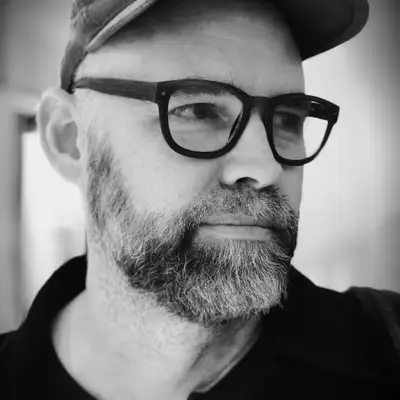
Your host, Sebastian Hassinger, interviews brilliant research scientists, software developers, engineers and others actively exploring the possibilities of our new quantum era. We will cover topics in quantum computing, networking and sensing, focusing on hardware, algorithms and general theory. The show aims for accessibility - Sebastian is not a physicist - and we'll try to provide context for the terminology and glimpses at the fascinating history of this new field as it evolves in real time.
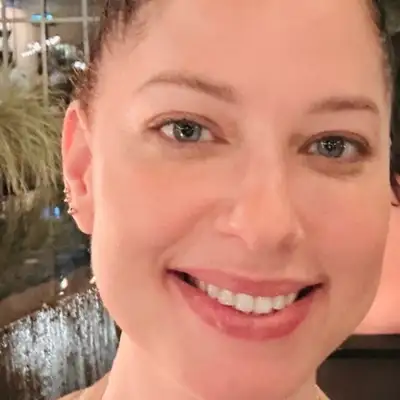
This is the New Quantum Era, and I'm your host, Sebastian Hassinger. In this episode, we're going to shift our usual focus from the science and technology research to the broader societal context that surrounds this moment in the development of the field of quantum information science and technology. Our guest today is Alejandra Castillo, Chancellor Senior Fellow at Purdue University Northwest and former Assistant Secretary for Economic Development at the U. S. Department of Commerce, where she became the first woman of color to lead the Economic Development Administration.
Sebastian Hassinger:Over a career spanning federal government, nonprofit leadership, and regional economic strategy, Alejandra has focused on building inclusive, innovation driven ecosystems that translate emerging technologies into opportunity for all communities, including those who have too often been left behind. Alejandro and I talk about how quantum is actually much closer than many people think in terms of economic development and impact, not just in computing, but across a broader set of industries for which quantum engineering will be relevant, and how traditional industries like biopharma are already placing serious bets on quantum capabilities. We dig into the Chips and Science Act, the role of EDA tech hubs and NSF engines, and why she sees Quantum as a national security issue that demands consistent investment rather than sporadic excitement. We also zoom in on the Midwest, where Alejandra has deliberately embedded herself to explore how Illinois, Indiana and Wisconsin are collaborating through efforts like the Chicago Quantum Exchange, the Illinois Quantum and Microelectronics Parks, Quantum Corridor and the new Roberts Impact Lab at Purdue Northwest. Along the way, we unpack what a truly inclusive quantum workforce looks like beyond Ph.
Sebastian Hassinger:Ds, why cross state coalitions matter more than state borders, and how planning now on workforce, supply chains, housing, and infrastructure can help us avoid repeating the scramble we're experiencing with AI. One quick note, I stumble over the name of the publication where Alejandra just published an op ed. It's Crane Chicago Business, and there's a link to that article in the show notes. If you're interested in how quantum can become a broad based economic engine for growth and what it'll take to align federal policy, regional strategy, and community level inclusion, this conversation is for you. Well, Alejandra, thank you very much for joining me today.
Sebastian Hassinger:I'm really excited about this conversation. I I read the editorial in the Chicago Business Review, I think, right, in Cranes that was under your you know, that you wrote just recently, and I I thought the perspective was exactly dead on. But we'll get into that. If you could start by just introducing yourself and talking a little bit about your background, that would be terrific.
Alejandra Castillo:Sure. So I usually like to introduce myself as the perpetual three year old who's curious about everything.
Sebastian Hassinger:I identify with that.
Alejandra Castillo:Exactly. I think you and I share it. And and right now, after having served as assistant secretary for economic development, what I realized, one, is that we need to think about regional, ecosystem building. We also need to really tackle what these emerging technologies mean all all about. So I've had a a career, both in and out of federal government.
Alejandra Castillo:I've led nonprofit organizations. I've been a bit of jack of all trade, master of none, type of thing. But at the end of the day, at this point in my life, I feel I have a a toolbox filled with amazing, opportunities and tools to bring communities together so that we can actually advance inclusive and equitable ecosystem buildings and bring these emerging technologies to market. So, I'll leave it at that.
Sebastian Hassinger:There's so many things that I wanna, follow-up on just in that brief introduction. But but, I mean, you're saying master of none, but you you're actually the first woman of color to lead the EDA in the federal government. So was that was that primarily, the activity, was that primarily focused on CHIPS Act or was it was it a broader perspective than than those investments?
Alejandra Castillo:Yeah. So I'll I'll very quickly, you know, I served in the, at the US Department of Commerce under Obama and then under Biden. And I I know the Department of Commerce very well, and I have great admiration for what the work that is done. So Yeah. The Economic Development Administration was something that had always tugged at my heart.
Alejandra Castillo:EDA, for many, many years, was the only, federal agency that focused exclusively on economic development, but it had a very small budget. Under the previous administration, that budget grew to almost $8,600,000,000 in large part because of this understanding that we needed to, rev up the economic engine of places that had been in some ways left behind Mhmm. Where there had been a massive economic transition away from, let's example, from coal or or Right. Steel or manufacturing. And we needed to reimagine what those different places could do and the assets that they had.
Alejandra Castillo:So it was in large part fueled by the Chips and Science Act. A lot of folks talk about the chips piece, but the science component of that is really where I think is fascinating. And that's where both EDA and National Science Foundation through its engines program, joined, forces in many ways to allocate funding to coalitions or consortiums that could come together and and really take these emerging technologies in a in a very comprehensive way.
Sebastian Hassinger:Right. Right. Right. So that that explains sort of where your path intersected quantum. I I I'm guessing this is certainly what draws me to quantum as a as a topic in terms of economic ecosystem development and and equitable access to that that development is that it feels like, in a sense, a blank sheet of paper, right, to a certain degree.
Sebastian Hassinger:It's it's a nascent. It's not just an emerging technology. It's a nascent set of technologies where we have some idea of how it's going to develop because we've got the example of classical computing, But we don't know exactly, you know, the the the sequencing and the frequency of the steps we're gonna take, but it feels like an opportunity to make you know, again in a sense. Right? Do it over and hopefully learn from the lessons of the previous wave of classical IT.
Sebastian Hassinger:And and is that where you see the opportunity for for a more equitable kind of of industry that emerges out of this sort of coming from?
Alejandra Castillo:So, Sebastian, I'm gonna push back a bit because I think I think quantum is closer than many than most people think.
Sebastian Hassinger:Mhmm.
Alejandra Castillo:I think and it has so many different branches. Right? Have quantum computing and quantum sensing and quantum communication. There's so many different aspects of it. And now that I am, a kind of embedded in the Midwest, and I did that deliberately, I'm seeing the incredible work that's being done, not just from the universities such as, you know, University of Illinois and University of Chicago and Purdue with the extraordinary work that professor Mike Manfrey is doing.
Alejandra Castillo:Right. But I'm also seeing the various private sector companies that are coming into this space, we can go down the litany. One of them is Quantum Corridor, which is Mhmm. One of the, companies that that we work with. And I think when we when you and I first met, we were out in Santa Clara at the q two q two b conference, and you heard about, Quantum Corridor in terms of what they're doing and, the entanglement, that they're working on as well.
Alejandra Castillo:But I really think that we are seeing now traditional industries investing in quantum opportunities. Biopharma, both Lilly Lilly and AbbVie are doing are looking at that. We're looking at, how the ecosystem is is forming in terms of the National Quantum Algorithm Center in Chicago and, obviously, the the big investments that are happening at the Illinois, Quantum And Microelectronic Park. So these are calculated big bets.
Sebastian Hassinger:Right.
Alejandra Castillo:That are happening because the technology is maturing and there are so many interesting and fascinating discoveries. So now the question is, how do we make how do we take those applications to market? And, and that's and that's going to require thinking about workforce and thinking about supply chain and thinking about so many other things.
Sebastian Hassinger:Right. Right. And that, I guess, is where the, the the importance of the local state and local government and organizations, commercial organizations, industry organizations as well really comes into play. Right? I mean, it's one thing for the federal government to say, we need to develop a workforce.
Sebastian Hassinger:We need to develop a supply chain. But the work is really gonna happen at the local level. Right? I mean, that's that seems to be the case, and at least from my perspective.
Alejandra Castillo:Without a doubt. Look. I as I mentioned, I've spent much of my career in the federal space. My my philosophy, if you will, of what the federal government can do is the federal government can help derisk. Right?
Alejandra Castillo:It can provide funding to to, bring down the risk that the private sector or nonprofits can't can't sustain. But once it does that and and you have the wheels of innovation and technology in motion, then you need other partners. And that is where, still in the in the public sector, state and local, but in the nonprofit sector, in the philanthropic center sector as well as the private sector. So Right. All of these are ingredients, and the absence of any one of these will prevent you from moving faster and in a more equit inclusive way.
Sebastian Hassinger:Right. Right. And going back to inclusivity and equitable access, I mean, okay. I'll I'll take the pushback on on some elements of of quantum technologies are are more mature, and, certainly, they're having impact in other industries. I I guess, potentially, am a little tunnel visioned around quantum computing, quantum networking.
Sebastian Hassinger:Those are further away in terms of achieving the scale of classical computing. Right? I mean, that's the the heart of our modern society is classical computing.
Alejandra Castillo:Correct.
Sebastian Hassinger:It's a long time before quantum gets to that sort of scale. Do you think that the early stage of this new computing set of computing technologies affords an opportunity to address the intrinsic inequality, that that's sort of been baked into classical computing?
Alejandra Castillo:So I I think so. And and here's why I continue to push back is because what when I speak to folks, they dismiss having to address these matters as you and I spoke about before we we hit record before the fact.
Sebastian Hassinger:Right.
Alejandra Castillo:I I'm a witness, when I was at Commerce, how AI in so many ways took us by surprise.
Sebastian Hassinger:Like Right.
Alejandra Castillo:And now now you see how we're trying to, in some ways, and these are my words, scramble to organize
Sebastian Hassinger:I think that's fair.
Alejandra Castillo:How AI is impacting us. Are we going to make that same mistake again, or should we start to think about and plan how quantum is going to also impact us. Right. And I'll give you an example. Here at Purdue Northwest, we have the Roberts Impact Lab.
Alejandra Castillo:And and we we, we are investing in it, in collaboration with Quantum Corridor to, one, make it a test bed for both quantum AI and post quantum cryptography
Sebastian Hassinger:Mhmm.
Alejandra Castillo:But also make it a workforce development center in collaboration with some industry partners. So is that, you know, that is leaning into the future. There are a lot of questions and uncertainties, but the fact is that it will happen. So let's get ready now and even have conversation. And this is why I love your podcast because as non physicists
Sebastian Hassinger:Right.
Alejandra Castillo:We're able to tackle this question from various lens. And that's what's going to make it more inclusive so that, again, we're we're dealing with it before the fact and not after
Sebastian Hassinger:the Right. Right. Okay. So you mentioned Illinois and Indiana and and the Mid how you're embedded in the Midwest. And certainly, I first encountered Chicago Quantum Exchange when David Oshlin was getting it up off the ground, and I was at IBM at the time, and I was sitting across the table from essentially from the the the five universities that came together to to join join forces and create the CQE, it seems remarkably prescient, that set of moves.
Sebastian Hassinger:It's now being, you know, mimicked in a lot of other states. But Illinois, in some ways, and the and the region that they pull together with the CQE in the Midwest, you know, has a head start. So what what are you sort of focusing on at this stage of the development of the region? What's sort of the priorities for the next, you know, couple of years of of development? Because I think in some sense, you're in that pioneering role, you're actually providing an example for all these other regional efforts as well.
Alejandra Castillo:Yeah. So, again, from a from the on the federal side, one could argue that this was all happening in tandem. Right?
Sebastian Hassinger:Mhmm.
Alejandra Castillo:Congress was considering what at the time was called endless frontier, which that which today we know as the Chips and Science Act. There was a lot of conversations. Many of the political stakeholders, senator, like senator Young, senator Durbin, Duckworth, and others were really trying to shape that piece of legislation. Again, in addition to the chips and semiconductors
Sebastian Hassinger:Right.
Alejandra Castillo:On the science piece.
Sebastian Hassinger:Right.
Alejandra Castillo:So the fact that there were dollars, pretty large scale dollars, authorized in that legislation, and I've used that word deliberately because $10,000,000,000 was authorized. Only half 1,000,000,000 has been appropriated. And I'll go back to that in a second. It was a, it was an a way for EDA in particular to design that program, as consortiums.
Sebastian Hassinger:Mhmm.
Alejandra Castillo:And the reason I say that is because no one state is going to do this.
Sebastian Hassinger:Right? Right.
Alejandra Castillo:And building on the assets, both Illinois, Wisconsin, Indiana, was critical because we needed to bring all of these people together. So, that was the design of tech hubs. Engines Engines, which is another program under NSF, is also making helping in in mobilize that and move that forward. But my what keeps me up at night is, how do how do we actually take populations across three states, one, inform them, two, excite them about what's coming, as well as thinking about what are those jobs of the future. Mhmm.
Alejandra Castillo:And in order for people to get those jobs of the future, what type of, reskilling, upskilling, credentials, micro credentials training will we need to put in place so that this real economic engine can rev up and people see technology not as a displacement but as an opportunity for better jobs? That's a that's a quintessential question. Right?
Sebastian Hassinger:Right.
Alejandra Castillo:I think with with intention and and we can actually make that happen.
Sebastian Hassinger:Yeah. Yeah. Yeah. And the the when I first started hearing the term quantum workforce, the focus was really on the PhD pipeline. And it's still obviously incredibly critical.
Sebastian Hassinger:You know, if you're gonna design qubits, you probably need a PhD. However, when you talk about the the broader jobs outlook, I mean, just the the development effort in Illinois with the campus that's being built, that's a lot of really quality jobs. And do you think that that's I mean, how how do you broaden the conversation so that it's not just narrowly we need more scientists, but we need all of these cross disciplinary skills and and sets of capabilities. And and how do you also make sure that it's not a one off and it's a it's a continuing kind of grow you know, growing force in the economy?
Alejandra Castillo:Yeah. So there are some amazing individuals in all of these institutions that we have, named already who are, focusing on it. Right? A good a good portion of the Tech Hub's application requires, projects in workforce. And, you know, I I see it as we need to do a workforce mapping, which is what are the jobs, what are the skills that are going to be that will be required, And we also need to do a supply chain mapping.
Alejandra Castillo:Right? What are the type of companies who will be suppliers into this broader industry? When you start to see both the the the supply chain and the workforce mapping, then you start to say, okay. So these are the type of jobs that will definitely be created. These are the type of individuals who will be coming to the region, and who's going to off you know, who's gonna provide them the housing?
Alejandra Castillo:How are we gonna think about the transportation? How are we gonna think about so many other concentric circles
Sebastian Hassinger:Right.
Alejandra Castillo:Around this? It's not for the faint of heart, but boy, is it interesting and it's exciting.
Sebastian Hassinger:Yeah. Yeah. And I guess that speaks to one of the major points you made in in the editorial as well that this is this is something that requires sort of top to bottom collaboration. Right? The federal government can help with incentives and setting agenda setting type of activity.
Sebastian Hassinger:But really, as you said, as that that impact, in order to really realize the full potential of that impact, you need things like housing and urban planning and, you know, infrastructure and all of the rest of those nuts and bolts of local government to be working in tandem. Is that is that something that's sort of I don't know. Are there unique aspects of that challenge in this quantum wave of of development, or is that just something that happens with every new sort of, economic driver of this sort?
Alejandra Castillo:So, you know, I I think that the way that we've been addressing this in the last few years has been a bit more intentional. Clearly, emerging technologies can happen organically, but I think that the better course is if we can have some level of of both planning and consistency. And I'm gonna drill down a little bit on the consistency level. You know, as the federal government, we need more consistency in how these programs are funded and also predictability that
Sebastian Hassinger:Right.
Alejandra Castillo:The federal government will stand for the long haul. And and this is where I'm going to, you know, my next article is really about
Sebastian Hassinger:Oh, good.
Alejandra Castillo:We need to make sure that we are giving this unique technology both the funding and the attention because this is a national security threat.
Alejandra Castillo:And you and I can go into another podcast series about the threat. But more importantly, the moment I I I'm I'm using this kind of phrasing. We either focus on the urgency or we are going to have to focus on the emergency. Right. Right.
Alejandra Castillo:Because it could happen. Right?
Alejandra Castillo:When you have, foreign adversaries that are putting $15,000,000,000 into this and The US can barely put in half $1,000,000,000 Yeah. And even then we're still wondering if possibly or maybe it's going to continue
Alejandra Castillo:That's that that hampers the the level of of of research, of lab to market.
Sebastian Hassinger:Absolutely.
Alejandra Castillo:So that's the other layer.
Sebastian Hassinger:And and is there beyond advocacy from people like yourself with the sort of experience and the perspective to to make those types of of observations, is there a role for these regional efforts to to try to get that kind of consistency and dependability out of the federal government? Is there is there some pressure we can put on them?
Alejandra Castillo:Yeah. So I think we need to do both. Obviously, we need to continue to put the pressure on federal funding. But you know what's also fascinating is that there are stakeholders that are already convinced as to why this is such an urgent that they are also being very innovative and bringing in other sources of capital and resources. So I don't wanna put it all on the federal government because No.
Alejandra Castillo:That's a but I am also saying that we need both. In the absence of the federal government, we're seeing people being a bit more creative as well as, you know, other other sources of capital. My only cautionary tale is that other sources of capital may not necessarily have inclusion as a a driver. Right? Why the that's why the public space is so important because we have other metrics of success that are not just return.
Alejandra Castillo:We wanna make sure that entire regions can actually, re reposition themselves from an economic perspective.
Sebastian Hassinger:Yeah. And I mean, that that that it's a really good point. And I always feel like that's so shortsighted to think that prioritizing, you know, access and and equitable access and and inclusion is is, you know, somehow undermining return. It may be, you know, expanding the time horizon, but but quantitatively, again and again, the data shows that the more inclusive, the the better the the larger the overall benefits are from from the investment. I mean, do you think this provides an opportunity maybe to try to finally convince people of that fact of the value to the greater value to to everybody across the board for for, you know, being more inclusive, being more equitable, and and building for a society for you know, building the value for society at large.
Alejandra Castillo:Yeah. So on a personal note, as I mentioned at the onset, you know, I'm a New Yorker. I spent much more of my career in in in Washington. This is my first time living in the Midwest. And I've I've fallen in love with with the Midwest and other places around the country.
Alejandra Castillo:But we have to call out that when it comes to tech and innovation and capital, it's been the coasts. Yeah. And it has left so many places that are incredibly, are well positioned. So I talk about Chicago, Illinois, Wisconsin. I'm sorry.
Alejandra Castillo:Illinois, Wisconsin, and Indiana. Indiana. But I could also talk about Colorado and New Mexico, which are doing some Sure. Incredible things. I could also talk
Sebastian Hassinger:Wisconsin is a great effort.
Alejandra Castillo:Yeah. I can talk to you about Tulsa, Oklahoma, which has become the drone capital of The US. And when we talk about inclusion, I I also wanna make sure that people understand that we're we're think we're we're looking at inclusion also and most importantly sometimes from a geographical perspective.
Alejandra Castillo:Right. Because if The US only develops its coast and forgets about what, you know, what the heartland is all about
Alejandra Castillo:We we fail to understand that we need to make sure that we're revving up regions across the country in terms where those opportunities are so that people can stay in their Yeah. The places that they call home. Right? Right. That was my big narrative when I was at Commerce.
Alejandra Castillo:We want to talk about the places people call home. Yeah. And Northwest Indiana, when I hear the stories about people who worked in the steel mills and how their grandparents were able to buy their first home
Alejandra Castillo:How do we how can we do the same? But now we're talking about quantum.
Sebastian Hassinger:Right. Right. Yeah. I mean, you reminded me actually when I interviewed Dana Anderson from inflection, there was a great phrase he used, which was he said, in the coming years, a company that's not operating at the quantum limits won't be competitive. And he meant it in a very expansive way.
Sebastian Hassinger:He didn't mean specifically quantum computing or quantum networking. As you said, sort of the broader perspective of we're now engineering we're capable of engineering at these incredibly small tolerances. In some senses, you know, the the the NVIDIA story is about engineering at a quantum scale. These are two nanometer leads in the in the actual chip. So so yeah.
Sebastian Hassinger:I mean, it it does connect, I think, to what you're saying about this this wave of almost a new industrialization Correct. That has a quantum technology flavor to it that it allows us to sort of renew the investment in, as you say, the productiveness of of where people live instead of forcing them to to displace. That's fantastic. So do you think, you know, given your involvement in the Midwest now, are there sort of, you know, top lessons learned at this point from the the the Illinois CQE Midwestern experience? As I said, the you're you're sort of in the lead.
Sebastian Hassinger:Are there things that you think other regions should learn from that example?
Alejandra Castillo:Absolutely. And and I I do wanna call out, like, you know, Kate Timmerman, at at Yeah.
Sebastian Hassinger:She's great.
Alejandra Castillo:Quantum Block who's fantastic and and really has been the driver of all of this. You know, a big kudos to her and the team there, as well as their their approach to making sure that when they speak about quantum, well, much of the visual and announcements may may may sound more Chicago like, it's bringing Yeah. What Wisconsin is doing, what Indiana is doing together. So having that intentionality is is critical. As well as the the many stakeholders, you know, I just had a a great breakfast with Juan Salgado who leads the Chicago Community College.
Alejandra Castillo:But here in Indiana, we have Ivy Tech. We have obviously Purdue and Purdue Northwest on the as well as on the Wisconsin side. So I think that the lesson learned is that no one state can do this
Sebastian Hassinger:alone. Right.
Alejandra Castillo:I think the other piece is we all have to bring all of our assets. Right? We talk about quantum, but we also have done a lot of research on energy, water, land, rail, all of the traditional, like, infrastructure that will undergird this because we can't fail to understand that as well. Mhmm. That's important.
Alejandra Castillo:But I think lessons learned is, you know, making sure that at some point, and it's hard, we erase those political lines that divide our states.
Alejandra Castillo:This is a a regional play that will be we will be called to answer for the sake of a national security play as well. So if we could surpass some of the those dividing lines, boy, we could we could do incredible things as they have already done.
Sebastian Hassinger:Yeah. Yeah. That's fantastic. Yeah. I mean, I I I really share your optimism.
Sebastian Hassinger:As you said, the the AI moment we're in does feel like a bit of a scramble, and I hope that we can draw the lessons from that that that put, you know, put the right level of attention and investment in this coming wave because it would be much better, as you said beautifully, to act with urgency instead of react to an emergency. Think that's very well put.
Alejandra Castillo:If I may, I also wanna Please. Know, I also wanna underscore, you know, yes, we can talk about quantum computing and and and but quantum has so many different iterations. The other piece that you and I, heard, was that, in addition to the advancements that have been made on the, you know, computing side and on the hardware side, the part that's really interesting also is on the algorithm side.
Sebastian Hassinger:Mhmm.
Alejandra Castillo:And I bring that up because Gabriel Seidman is leading the National Quantum Algorithm Center and they are looking at both algorithms that can bring quantum technology and, solving for, natural disasters. Mhmm. Or quantum as it relates to both biopharma and, opportunities to unleash incredible pharmacological discoveries. They're looking at how can quantum really intersect with some of the most pressing challenges that we have in society. And and that is yet, again, exciting.
Alejandra Castillo:And we need the physicists just like we need the other players, so that we can actually bring this in a more positive way as to how is this going to improve the lives Right. Of of people. Right.
Sebastian Hassinger:Right. Well, I think that's a a tremendous motivator across the board, and I share your optimism, as I said, for for this sort of new, wave of motivation behind this investment. So I really appreciate your time, Alejandra. This has been really, really fun. And as I said, it's filled me with a bunch of hope, which is a good thing.
Alejandra Castillo:We need a dose of hope
Sebastian Hassinger:Definitely.
Alejandra Castillo:In these days. So yes.
Sebastian Hassinger:Definitely. Excellent. Thank you so much.
Alejandra Castillo:Pleasure.
Sebastian Hassinger:Thank you for listening to another episode of the podcast, a production of the New Quantum Era hosted by me, Sebastian Hassinger, with theme music by OCH. You can find past episodes on www.newquantumera.com or on blue sky at newquantumera.com. If you enjoy the podcast, please subscribe and tell your quantum curious friends to give it a listen. Listen.