Subscribe
Share
Share
Embed
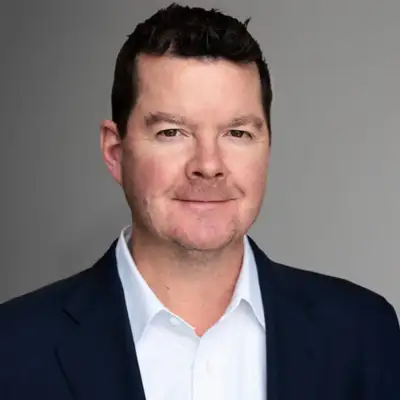
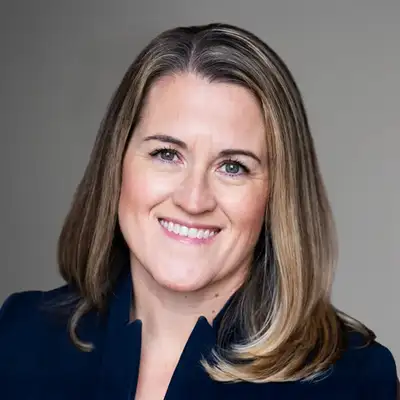
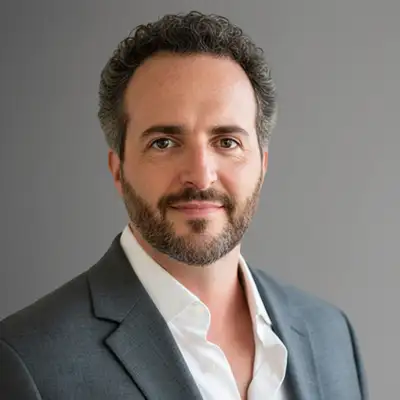
Meet the Insiders rewriting the rules of influence. Pulitzer Prize-winning journalist Brody Mullins and veteran DC strategist Lisa Camooso Miller interview the leaders who shape perception, move policy, and win when it matters. Not pundits or commentators – these are the operators driving some of the most critical strategies and outcomes in today's Washington.
Colin Allen: This is the American Dream. This is America Build Baby Build.
ANNCR: Behind every major policy decision, every corporate strategy, every Washington power play are the insiders shaping the game and the new rules to win it. The deciders with Pulitzer Prize winning journalist, Brody Mullins and veteran DC strategist, Lisa Camooso Miller.
Brody: Welcome to The Desiders, where we talk to the insiders rewriting the rules for effective advocacy in Washington. Today we're joined by Colin Allen, executive director of the American Property Owners Alliance. Colin, thanks for joining us.
Colin Allen: Thanks for having me, Brody.
Lisa: Colin, the Alliance represents homeowners, landlords, and small investors, one of the broadest constituencies really in America. But for a long time, you didn't have an organized voice. Talk about why you've built the alliance and what the goals are today.
Colin Allen: So Lisa, do you own your home?
Lisa: I do.
Colin Allen: Brody, you own your home? I do. You guys know how busy you are on this and if you didn't live here in kind of the DC bubble, would you follow specific policies like the state and local tax deduction or capital gains? Do you have the time to do that?
Brody: Too busy.
Colin Allen: Well, there are 86 million of your fellow Americans who own their own homes who are kind of in a similar spot, right? They really need a voice in Washington. There are a lot of trades and things like that that advocate for industries here in DC, but there has not been prior to the last few years, a voice specifically for homeowners and that's the niche we're looking to fill.
Lisa: Why is now the time for advocacy?
Colin Allen: We're looking at an affordability crisis here in America, right? Folks are really worried about their future. They're worried about their ability to buy a home. So advocating for policies that help people keep their homes, help them maintain them, but also kind of opening opportunities for the folks who would like to get in and achieve their American dream of home ownership is our main goal.
Brody: You worked for Senator Lindsey Graham in the Senate working on tax, housing, other policies like that. What do you learn from Senator Graham about what works in advocacy and what doesn't?
Colin Allen: I think you kind of hit on it there, right? The interplay between the politics and the legislating, right? I can't be successful on the legislative side if I don't come back. So what is it that's important to really talk to my constituents about and that you can't just focus on one or the other. There's got to be a good balance between making sure that you're there to do the work and doing the actual work itself.
Brody: Colin, property taxes have doubled, even tripled in some places across the country, particularly that the Sunbelt. Why is Washington not paying attention to that?
Colin Allen: Washington can approach this issue of local taxes from a couple of different ways. One would be, are we looking to use federal policy to disincentivize states and locals from increasing those taxes? Or do we want to approach it as we did with this salt cap relief by saying that we don't want to double tax homeowners, that this quadrupling of assault relief actually got to a point where what we've got is the vast majority of Americans are able to fully deduct the taxes they pay on their homes at state and local level.
Brody: Just in terms of salt or is there another tax policy that focuses on state and local deductions?
Colin Allen: That would be the main one. If you're looking at other things for homeowners, you've got the mortgage interest deduction and then capital gains relief as well.
Brody: Colin, you spoke about the salt increase. You talked about capital gains. What specifically are you asking for now?
Colin Allen: So on SALT, got a big win in the One Big Beautiful Bill Act. We're able to quadruple the amount of salt relief that folks who own homes are able to take. This will make sure that take it from $10,000 to $40,000 and that will cover the vast majority of American homeowners who are able to deduct the state and local taxes that they pay on their homes. On the capital gains issue, we're working on a bill right now, it's called the More Homes on the Market Act. So when you sell your home, you're able to deduct a certain amount or not pay capital gains taxes on a certain amount of it. This bill would double that amount and index it to inflation moving forward. We would love to get that policy updated in the new year.
Lisa: So insurance and insurers specifically are pulling out of states like California and Louisiana. The premiums are also rising. What do you make of that? What's your analysis there?
Colin Allen: It's the increased cost of severe weather. We're seeing larger events, but you've also got more people and more expensive real estate located in those areas. So it's leading to higher costs for recovery and higher costs for replacement of some of those things. So how do you balance taking care of the folks who live there right now and making sure that they're able to get that insurance and then on the other side is making sure that we don't continue to build where we know there are going to be natural disasters.
Brody: We'll be right back on the designers.
Lisa: Welcome back to The Deciders with Colin Allen.
Brody: Colin, most people probably know about NIMBY, not in my backyard. There's this new movement called YIMBY. Tell us about that.
Colin Allen: So yes, in my backyard and they have got one thing down and I phrased it as build, baby, build. We need to build more housing in places that people want to live at a price they can afford, which I think is really, really important. The United States is four to six million housing units short. And the one way that we're going to solve this housing shortage is going to be to build more and build more different types in the places that folks want to live. The politics of housing and the yes in my backyard or no in my backyard, the politics really becomes important. It's not a partisan issue. It's not right. It's not left. People are just concerned about development in their backyards. And this is one where, again, I think where the alliance comes down is we just need to incentive from the federal level, have the federal government incentivize states and locals to allow more quicker streamlined building of more homes.
Lisa: Colin, what do you attribute to that shortage? Four to six million homes is quite a ... I mean, that's a lot of homes. Why the shortage?
Colin Allen: It is a historic underbuilding from great financial crisis. You had a lot of the small builders kind of leave the industry and not come back. And with Titan lending standards and things like that, folks are just, they're nervous about getting in. So it is easily explained as a historic underbuilding over this last decade and a half.
Brody: Last year there was this book that was all the rage abundance, the Ezra Klein book and it basically talks about the housing crisis and why we're having a lack of affordable housing. And their conclusion is that we just don't have enough homes. It's a pretty easy thing. We're America. Let's just build more homes.
Colin Allen: We can build, right? No, from the abundance side of things, that's the one piece that it makes a ton of sense. We've got land, we've got the ability to do this. Or builders. Right? Yeah. This is the American dream. This is America. Let's provide that opportunity to the folks who want it.
Brody: Let's talk about the ban on short-term rentals. There's sort of been a slate of legislation and policy proposals across the country to ban short-term rentals. Where do you guys come down on that?
Colin Allen: And short-term rentals are one where you see this being a very local issue. There are arguments being made on the ground there saying we can blame some of the housing shortage, especially workforce housing in resort type areas on short-term rentals. We would leave that at a local level. I think you're starting to see the market actually kind of working itself out there.
Lisa: Property rights don't seem like they would be a part as an issue. Are you building the coalition in a way? Are you finding it that we're aligned on both sides on this issue? Talk a little bit about what it's like to build a coalition.
Colin Allen: I mean, the American dream is not a partisan issue. You've got a lot of interest in home ownership and property ownership across the spectrum and we've got allies on both the left and the right. There are a lot of groups here in town doing work on homeownership and property rights issues for different parts of the industry. Home builders, realtors, mortgage bankers. But a lot of the times what you get from your homeowner is they may interact with some of those folks once or twice in their life and they don't understand that they're here working on things like salt, working in the courts to protect private property rights. But they do see when you go out and say, "Hey, we've got an organization that's here that's working on your behalf. We want to do something for you. There's no cost to it. Let us be your voice in DC." I think we get a lot of interest in that kind of work.
Lisa: As you build the coalition, you yourself do quite a bit of travel. You're out in the world and you're talking to people about this. What would you say is the reception that you get when you're out on the ground talking to folks?
Colin Allen: Yeah, so I think we get a great response when we are out in the communities and we've got this, one of our kind of educational pieces right now is called the Unlocking Opportunity Tour. We're going out and kind of debunking myths, right? Some of it is, did you know that you didn't have to have 20% down to buy your own home? 80% of folks think that you got to have a hard and fast 20%. Average price of a home in the country right now is over $400,000. If you think you got to take 80 or $90,000 to close, you're not even going to start looking, right? So kind of getting out there and it's really rewarding at the end of the day to be able to go out and see folks across the country and help them really even just start the process. We're convening, we're making connections at the local level, but also kind of debunking some of those persistent myths about ownership.
Brody: Colin, how does the rise of populism on the right and progressivism on the left affect property owners? I
Colin Allen: Think we see it manifest itself in a couple of different ways. One of them is going to be rent control, right? What can you do for me right now, regardless of the cost to upkeep, to maintain, to pay taxes on a home? It's a feel good policy. It happens right now, but it has really negative downstream effects on the housing supply and the housing stock and the owners of those properties. The other piece that we see on this populistic side is the kind of the corporate ownership of single family homes. When you talk to voters, when you talk to folks across the country, they see it very much as like, this is something that's impacting me. Everybody has that story of, I know that friend or I personally lost out on a bid to a cash buyer and they just don't feel like that that's right.
I've got to go out and I've got a bid against these folks who are coming in and paying cash for homes when I got to get a mortgage and I'm at a competitive disadvantage. And there is a strong sentiment of that on the populous side.
Lisa: That's a good point that you make. There's a real difference between companies like Blackstone buying up neighborhoods versus the retired couple who own one rental property. How does the alliance make that distinction and make it land with the audience that you're trying to influence?
Colin Allen: Great thing is that's an easy one. At the Alliance, we represent individuals. You can very much put a literal face on your neighbor, on your grandparents. There's a lot of distrust on Wall Street and folks are just, they get nervous about those kinds of things, but they know their neighbors, they know their friends and can say, "I know those folks and can make that distinction."
Brody: Do property issues actually motivate voters?
Colin Allen: Absolutely. What you're seeing now, this whole discussion around affordability and availability, I think it's going to be a huge issue this year. You're seeing Congress kind of take up issues around housing and home ownership. We've got a few things that we'd like to see taken up on the tax side to ease some of that affordability, but really I think this election this year will be decided on issues of affordability.
Lisa: Colin, property rights and property rights issues still are very technical. How have you at the Alliance taken those complex issues and distilled them for the audience that you're trying to reach?
Colin Allen: So this is another one where you're able to put a personal face on it. We dealt with an issue on home equity theft a few years ago. 93-year-old grandmother owed property tax to her municipality in the, I think it was like $15,000. They foreclosed on her, kept the house, kept the entire value of the home. She didn't dispute having a tax debt, but said, "I don't think that the county that I live in should be able to keep the entire value of my home. This is my nest egg. This is what I've saved and this is going to help me fund my retirement." We were able to work with a coalition of groups, take that to the Supreme Court, one nine to nothing. So now we're working to resolve this issue of home equity theft. It's resolved at the federal level, but are working to resolve that at state and local level as well.
Lisa: You also talk about how home ownership is what drives generational wealth. Talk a little bit about that.
Colin Allen: I mean, this is the way that the vast majority of Americans build personal wealth is by investing in themselves, investing in their community and buying a home. My grandparents were able to get through the depression because they lived on a farm and could feed themselves during that time. They then gave that land to my parents when it was time for us to build a home. My parents were able to help me with college, things like that because they were able to tap the equity in their home. So I've seen firsthand kind of what it can do and I want that opportunity for everybody who kind of desires it.
Brody: Something that's sort of scary along those lines because of the housing crisis back in the day so many younger people are afraid of taking on debt because they saw their parents lose their homes. I mean, we all know you buy a home young, you buy a condo young and that equity grows. This generation is afraid of that. Well, what does that mean? How do we fix that?
Colin Allen: And people are kind of waiting on it. They're sitting back and I think a lot of what we are doing on the education side is trying to help people recover from that traumatic experience and really help them make a decision that'll help them in the long run.
Brody: We'll be right back after the break.
Lisa: Welcome back to The Deciders with Colin Allen.
Brody: Colin, we ask every guest on the deciders the same three questions.
Lisa: What's the decision in the last year that you're most proud of?
Colin Allen: So this year I have really taken time to recalibrate and readjust the approach that the Alliance has taken to the public affairs and the advocacy side of things and have been able to bring in a couple of wonderful new staffers. So I'm really excited about the growth that we're having and our ability to really kind of leverage those folks, their insights and their expertise to move the organization into the rest of the year and into the next 20 years.
Brody: What's a decision you'd like to do over?
Colin Allen: The one thing, and this is more of a personal decision that I'd have kids earlier, right? We were kind of talking a little bit about advice from parents and that was one that I think as I'm looking at the current generation and them taking time to buy houses, start families, things like that. As an older dad, I'd love to maybe turn back the clock five or so years and have my little ones a little earlier.
Brody: Nothing wrong with an old dad though.
Lisa: Colin, last question is always, what's something Washington is not thinking about right now that they should be?
Colin Allen: So I think the thing that Washington is not paying enough attention to right now is this kind of populist tilt in politics. I'm really concerned that the way this is going, we're going to see a lot of whipsaw back and forth, right? This is just people who are dissatisfied. You're seeing some of the things manifest themselves in terms of prices and things like that. And my concern is that we see a lot of back and forth because it's not, I'm mad with the Republicans or I'm mad with the Democrats. It's like, I am unhappy and I am not secure in my future. So I'm going to vote to kick the bums out every time I vote.
Lisa: It's so interesting you say that too, because we saw so many crossovers from voting for Republican and the presidency and voting for the current mayor in New York City. And that is not about politics. That is about the way people feel about their own personal story. It
Colin Allen: Is very much a personal and financial security and I think that's really what we're looking at here probably for the next decade, right? Let's get these things fixed. Yeah.
Lisa: Thank you for being with us.
Colin Allen: Thanks for having me.
Lisa: That was Colin Allen of the American Property Owners Alliance. Brody, what did you think?
Brody: I really agree with his final answer, which is the rise of populism and progressivism on both sides. And really more to that, this whipsaw that he mentioned. We really are going to be spending the next decade, maybe longer catapulting from one extreme policy on the left to an extreme policy on the right. I think you hit the nail on the head right there.
Lisa: I am exhausted by the thought of all of that, but I think you're probably right and I think that it's smart for him to have that takeaway. I also really like that Colin is thinking ahead about how important it is for property owners to really have a voice here in town and that's something that I think is a real value.
Brody: Thanks for joining us on The Desiders.
ANNCR: The Deciders is hosted by Brody Mullins and Lisa Camooso Miller and produced by Dave Tobey. Subscribe wherever you get your podcasts. Find more online at deciders.show and follow the deciders on YouTube, LinkedIn and X.