Subscribe
Share
Share
Embed
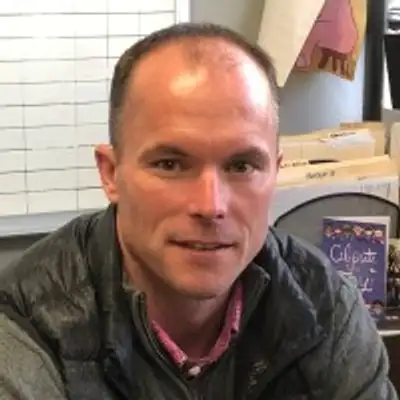
Between the Shifts is a monthly show for players, parents, coaches, and youth hockey leaders navigating the fast, confusing and often expensive world of youth hockey. Hosted by a former professional player, coach, and parent, and owner of STOPnSTARTS Hockey, Marc Genest. We carve into player development, real-life family stories, coaching culture, costs, training pathways, and everything young athletes and their communities are facing today. Whether you’re in a traditional hockey market or growing the game in the South, this podcast helps you make smarter decisions, understand your options, and avoid common pitfalls. Join us for honest conversations that empower families and fuel hockey dreams.
[00:00:00] Default_2026-03-03_1: between the shifts is a moment that you're sitting on the bench. A lot of times the player is thinking about the past shift rather than thinking about what he's gonna do next.
Hi everybody. Welcome to Stop and Starts podcast called Between the Shifts. Excited to be here and to talk about hockey. Obviously it's been a lifelong journey for me. Today at 53 years old, I find myself coached my two kids through the process. And certainly I've helped over a 150 kids coaching in the last 15 years for a youth hockey group here for the Carolina Junior Hurricanes.
My name is Mark Jana. Been a professional hockey player with over 450 games as a professional hockey player.
have spent the last 15 years coaching youth hockey at the AAA level here for the Carolina Junior Hurricanes. And, um, I've noticed over the years, most of the help that I've given, obviously with on ice teachings has been very important, but the off ice process. About how to navigate and what pathways to take.
Where should little Johnny go after the age of 14 has been something of a chore for non hockey families. For example I played professional hockey. Know a lot of people out there. Makes it maybe a little bit easier for me to make some contacts, have some conversations, maybe have a better idea of knowing, but man, with the amount of players that we have playing hockey, both female and male now.
With obviously the game from the Olympics, which was probably the best hockey game I've seen in 25 years, is certainly gonna generate more and more interest in the sport of hockey, which is fantastic. The game today has certainly changed from the game that I grew up in. Um, I think for the most part is just due to the fact that you have such a larger amount of hockey players that are playing, obviously being born and raised in Canada.
We didn't have to travel very far to play hockey. We played league games on Wednesday nights and Thursday nights with practices intermixed, so it was a little bit easier to to navigate that, that world of, of youth hockey. And certainly now with some smaller markets, the Carolina Hurricanes, the Nashville Predators, Florida Alliance and Panthers and, and, and Lightning, um, make it very difficult to, to travel and make it very expensive.
So the creation of Stop and Starts has been really something that I've always thought about. Um, I've always helped the kids that I've coached, but this gives me a platform to help kids that I haven't coached, maybe kids and families that I don't know personally and gives them an opportunity to reach out to somebody and have a conversation.
when you get to a certain level at 14, 15 years old, there's a lot of different ways and pass that you can navigate in order for you to reach your potential. Whether your, your goal is to play division one hockey, NHL, um, there's nobody out here that should be in a position to tell you that you can't make your dream.
But what the most important thing is to put you in the best position to attain and to, and to achieve that dream. Kids and families need assistance in today's game. They need assistance on where to go. Um, if little Johnny's having a hard time not getting any power play time maybe there's an opportunity for me to evaluate the game, give them some pointers.
We have a lot of coaches out here today, obviously to accommodate for the large number of hockey players. And unfortunately, not all of 'em have a tremendous amount of. Hockey background or hockey knowledge. Um, and I don't believe you need to be a professional hockey player to be a good coach, but you certainly need to be exposed to a lot of various forms of hockey, whether it be youth hockey, junior hockey, college hockey, maybe some after senior hockey.
You, you do need to be exposed so that you can relate that information to young players and, and I think. You know, I, I, I think it's absolutely awesome that we have a lot of volunteers, um, that coach. But I also think it'd be cool for them to have a resource for them to reach out for some practice plans and some ideas.
Maybe how to establish a good culture, maybe how to get everybody buying into the system that he believes he can play. So obviously stop and starts is, consulting firm that helps parents, players, coaches, and associations. You know, we have a pretty large association here for the Carolina Junior Hurricanes in Raleigh, North Carolina, and I feel like right now we're getting to the point where it's getting so cost prohibitive for a lot of families to play hockey that I'd love to be able to come in and and give some guidance on how we can reduce the cost by not reducing the amount of touches.
I think that's so important. Um, my parents blue collar people, my dad was a plumber in Canada had to work real hard and by no means would he have had the funds to, um, certainly register me for hockey, paying the amount of fees that we're paying here in the south. So, um, all that to be said again, stop and starts a consulting firm.
We assist parents, players, coaches, and associations. , One thing I want to bring out to make sure that there's a difference out here, like there is a huge amount of player advisors out there. I'm sure you as a parent or a coach or, or a player, you're getting requests from this firm, that firm, um, requiring you to sign up for, you know, I'd say the average cost right now is between 20 $506,000 annually.
Basically at the end of the day, an agent is a placement company. We at Stop and Starts are not a placement company. Obviously I have three partners for the right age group. Um, that can certainly help and continue your development. In Coeur d'Alene Hockey Academy out in, um, Coeur d'Alene, Idaho. I have Universal Academy in Sherbrooke and Stanstead also just outside of Sherbrooke that I believe are really good programs in order to set yourself up.
To continue your development, continue your education, and hopefully put you on an even better path. However we at Stop and Start are not a placement company. I'll be glad to advise, um, and give you some insight as to what programs are great parents that are 15 of a 15, 16-year-old player. I'm sure right now you're getting emails about main camps and this, that, and the other.
Um, and you know, glad to advise on, on all those main camps and, and all those opportunities out there. Um, and obviously with the junior leagues with the huge overhaul in the last couple years, this has been somewhat of a gosh, career path altering movement by the junior hockey world that I think is going to.
Really change the landscape on what's next for a 15, a 16, a 17-year-old hockey player. Um, obviously depending on the market that you play in, whether you're Canadian or even playing hockey in the South, I think you need to have a, a pretty good understanding of your vision and, and the idea of your next steps.
Um, but I wanted to reiterate that we at Stop and Starts are not a placement company. Every player has a path. Albeit that every one of us as parents, again, I'm parent to a, a daughter that played division three of Manhattanville and my son is chasing his dream playing junior hockey in in Canada as we speak.
Um, I have to say that I'd love for one of my kids to be a Sidney Crosby or, or a Hillary Knight, but at the end of the day, those are generational players and we have to be realistic in the sense that, um, not every kid is a generational player. 33% of the NHL players are formed.
A first round draft picks, 33% are formed a second draft second round draft picks. And, and the last 33% are undrafted hockey players. So those, those are free agents, kids that come outta college that bloom a little later. And again, my point is, you know, every, every player is going to have a different path.
Not every path is going to be the right path for every player, so it's okay that it takes you a little longer. Dave Pullin, captain of the Flyers 29 years old, had a great career. Obviously came into the NHLA lot later and there's a ton of other examples out there, so I just wanted to make sure that everybody understood that every player has a path, it just might be a different path than the next kid.
So that said, um, we're gonna do a, a podcast once a month and for the first 12 sponsors our partners are gonna be part of our podcast describing there. Programs, their ideas of development, where hockey is at today, what are they looking for as far as players where they're at and really describing their educational programs as well.
Um, I think in the end, for me, I think especially playing hockey in the south, I, I remember personally with both my kids we had gotten to November and we'd already missed 11 days of school getting the notices from the school that we've missed school. In, in environments where kids are 15, 16, and 17, they can be in an environment where all of their fitness, all of their education and all of their hockey is under one roof.
Which I, you know, it makes a lot of sense to me. We, as parents don't realize how much time we have to get away from our jobs or take some time off to drive little Johnny to, you know, fitness practice or, or hockey practice or, or whatever. I, it just, it becomes so much and you don't realize. How much time it takes in order for you to make sure that your player has everything he needs.
So certainly I'm a big advocate, um, of making sure that you can have all those three, um, concepts into under one roof and making that a, a lesser chaotic environment for the player and less, less chaotic environment for us parents. At the end of the day, there's a lot of driving. We buy cars as hockey parents, and by the time, you know, we got a hundred thousand miles on that car and we need to trade it in.
So it becomes really, really difficult with the amount of travel and time that we put into this. And again, it's about the amount of touches, right? Obviously, they're going to a program where they're gonna be on the ice every day. They're gonna be in school every day, and they're gonna be working out three, four days a week.
So, um, I think this certainly has its advantages, um, versus o other programs. Um, again, we can give you good advice between youth and junior hockey. Um, if you think youth hockey is chaotic and crazy and you've got anxiety during tryouts, wait till you get to junior hockey. It's an absolutely shit show, and it doesn't change.
It doesn't get any better. There's so many players vying for spots. It it becomes very, very difficult. So again. Not being so overwhelmed or so excited about the place that you're going to play for, but just making sure that that is the right place for you to continue your development. Junior hockey is just another phase of development.
I want to talk about our partners here. Obviously true hockey, huge partner for us. They're a manufacturer of skate sticks and gloves. Um, I'm a big fan. Both my kids play with their products ice skate with their skates. And, and I'm sure you can see on the NHLA lot of hockey players are making that transition.
They got into goalie gear. With the LaFave Group not too long ago, and that's been a huge hit in the NHL with a lot of goaltenders wearing their gear. So we'll have Mario Tien with true Hockey on the next podcast. Um, I also wanna bring up Stanstead College which is a, a prep school, a Canadian prep school just outside of Sherbrooke and Stanstead.
Um, Logan Nessi will be on our podcast discussing the advantages of their program. What they have done in the past, their future, their vision. Really excited. We have two kids from Raleigh playing for them this year. Um, super excited about their development and, and their paths moving forward. Another one universal Academy, which I, I've had my son play for Marco Piero there at that program.
They have a unique concept. They have a a a 18 U division. They also have, um, USP program. Which is a, a junior league, and then they have an NCDC program as well with multiple teams at each level. Makes it a really good program for you to finish high school, start your junior career while you're in high school, and continue your junior career while you're there at their program.
Great development, great setup. There're a new program, still growing through some growing pains, but just love the development and love the, the concept that they have. Jeremy Millamuck over at Coeur d'Alene. We also have two players from Raleigh that are there thriving under Jeremy. Jeremy was at Notre Dame Hounds for seven seasons, took that program to national recognition multiple times.
During his tenure there made the jump to Coeur d'Alene and is now taking that program, um, to some pretty. Pretty significant heights. They won the U 18 C-S-S-H-L championship last year, which that U 18 C-S-S-H-L league in Western Canada is very, very strong and very, very competitive. Um, again, both of our players are striving at that program and doing really well.
Um, EB Athletics Aaron Bratcher. She is here locally in Raleigh. Aaron has been training my kids gosh, for the last 10, 11 years. She's a former Divi Division one basketball player. Extremely knowledge and qualified in off ice fitness. Caters the off ice programs to the player, what they need. If, if little Johnny's a little slow footed Aaron can tailor their program to where we can accelerate better feet more agility, more speed training.
She also does train some of the or helps with the Carolina Hurricanes here in town. She's got a phenomenal gym here in Raleigh, but most importantly, she can set up a program remotely. Which is on her app and she can monitor the progress and obviously fitness training. You can have the best program in the world, but if you don't execute it and perform it, there's really no benefit.
But at least she can monitor your program while you're training in, in another town. Again, stop and starts is something that I think can reach players outside of the Raleigh and triangle area. Um, and, and we're glad to help. The same with EB Athletics Hunter Bishop Hockey's located in Charleston.
My son's been skating with him for the last two, three years. Um, I know of a couple other kids in the Raleigh area that go down to Charleston for a week and participate in hunter Bishop Hockey's program. Um, Hunter's ex-professional hockey player is a skill development coach for the South Carolina Stingrays in the East Coast Hockey League.
Fantastic skill coach. Very knowledgeable. My son absolutely loves going to his camp. It's fulfilling incorporates some fitness, a couple ice sessions a day. Awesome program. Can't wait to have hunter here. He's got some developments with his business that he's gonna share with us, so that'll be really cool.
Lastly we've got Schafer Hockey Group, which is an agency, an advisor group. Um, I, I have personal relationships with with Patrick Schafer. He's been a, a pretty good advisor. Um, and I tell people all the time, like I, I think the gap that stop and starts gonna be able to provide between the agencies, the advisors, the coaches, the parents, is, you know, for, for a, for an advisor to be able to find you a spot, may, may.
May include 50 phone calls. And, you know, they just don't have the, the time set aside to be able to have a conversation with little Johnny about how things are going. Maybe little Johnny's a little frustrated with his ice time. Maybe there are issues, maybe the parents are struggling with the coach.
And this will be something that obviously stops and starts bridges the gap. Um, so, um, but Patrick Schaefer, you need placement. You need somebody to represent your player, whether you're leaving college. Heading to the pros Patrick has a, a, a pretty hefty list of clients. Does a good job representing them and opening doors again.
Patrick was a former hockey player who was with the Arizona coyotes for a, a good little while. Um, and certainly a good representation and people returned his phone call. I wanna reiterate again, what Stop and Starts is all about. I've been rambling on. This is my first podcast, so I, I might be talking about, um, things a little too fast when I get excited about something, you know, I just kind of ramble on.
But I always, you know, tell everybody, if I was a car salesman, man, I'd sell so many cars. It'd be ridiculous, but I, I just believe in. In their concept and I believe in Stop and Starts can help you really bridge the gap between an advisor, between a coach, between an association and and for coaches and associations.
I'd be glad to help and offer some consultation services for sure. Um, doesn't make me the most knowledgeable person, but certainly between my experience as a player playing for various coaches, having agents as a player to being a hockey coach and advising players on where to go, I feel like I've covered a pretty strong gamut between a youth hockey player and a pro player.
So, I, I help kids of all levels, um, and excited to do that. And nothing makes me feel better than, than to see a player succeed. Um, and to turn around, I, I had a player call me. He was really struggling and, and going into his next weekend of, of games at Notre Dame, um, he was really struggling and, and, um, not getting much ice time.
And we had a good about a 45 minute conversation. And, and boom, the next weekend he got back on the score sheet, got back onto the power play, and, and things turned around for him. Sent me a nice message on Monday saying, Hey, listen, I really appreciate the phone call. It really made a big difference. So that was really cool for me as a former player.
Um, I just love to be able to pass it forward and to allow other players to be able to experience the great life that I've experienced as a hockey player. I wanna talk about our structure at Stop and Starts. I've, I, again, I, I. I struggle with the agencies and, and the realm of dollars between the 25 and 6,000.
So I came up with kind of a membership deal to where, um, you know, our membership is $40 a month and you have to commit to one year of membership. And that entitles you to a 33% discount on your meetings. Everything online can be booked and paid for. And then you schedule your meeting with me to have a conversation.
Again, if you're a non-member, the meeting is 180 5. If you are a member is 1 25. So I feel like your membership dollars that you put forward, you're kind of putting it into a savings account and giving you a good, a good discount. I do player evaluations, which usually last between two and three hours, depending on the player and, and how many videos I can access.
So those have a specific price, but pretty much at, at the end of the day. Our hourly rate is 1 25 an hour from members. Non-members are 180 5 an hour. So I'm really looking forward, um, to being able to, to spend some time with a various amount of hockey players and, and to guide them as a caveat from true.
I will be raffling off a pair of brand new custom skates to the first 100 members. So the minute I get to 100 members on our website. I will be raffling off Paris skates to one of those hundred people. We'll also be duplicating that from in between a hundred to 200 and so on so forth.
We will also have on our social media, um, an opportunity for the same concept as far as how many likes and followers on both Facebook Instagram, and X. So. Tune into our podcasts, um, and make sure that, um, you follow us and please sign up set up meetings and evaluations, and be glad to help.
Our mission is to really help players. Develop and find their path in order to reach their level of success. I think that's the most important thing for me, helping players achieve the most outta their career.
And you know, when you get to a certain level of hockey, it's not just about on ice skill or fitness skill or agility or ability. It's about mental. You know, we talk about, gosh I, I, I can't seem to get over this. I can't seem to. Not, not read and react. I'm still thinking out there. These are all mental stuff that certainly I can help with in giving them, um, exercises to focus on, you know, what it is that they need to be doing and, and try not to be so caught up in, in, in the moment and thinking about the process too much.
Um, again, I believe there is a gap between. All of all of the people involved in youth hockey and junior hockey between the coaches, the coach is busy. They're coaching two teams, got 30, 40 players on their roster, and might not have a lot of time for little Johnny to have a conversation with. I do believe it's very, very important for a player and a coach to have a relationship.
But sometimes it becomes, you know, to where the player doesn't wanna feel too needy. So that would be a, a great avenue for which I can help parents having a hard time understanding why little Johnny's not playing. Maybe, maybe you've got concerns of, you know, is, is this worth all the money I'm spending?
I mean, I hear that conversation constantly, you know, gosh, is little Johnny really? Good enough. Does he really have a future in, in, in doing what he's doing? And, and at the end of the day, I've, I've got some really good lifelong stories. Um, again, nobody in this room, nobody on my website, none of my partners, no agent on this planet are in a position to say, Hey, little Johnny's gonna make it, or little Johnny's not gonna make it.
You know? I, I, I think that's the reality. I think. As long as the kid continues to put work into it. He's passionate about the game of hockey. He continues to develop and every year he's getting better. It might take him a little longer to get where he needs to go, but, but man, there, there's nobody that has a crystal ball.
I believe that gap between agents, coaches, players, and parents, is a gap that's gonna be well suited with stop and starts, and I will be sure, um, to, to help out. Again, there, there's no guarantee in this game, right? I don't care if you're playing soccer, golf, hockey professional tennis.
There is no guarantee in anything that you're gonna make it, that you're gonna succeed, that you're gonna be the best. But, but, but the only guarantee is that you need to put your best foot forward and you need to make sure that you're on the right path, the, the right path for you in order for you to exercise and maximize your options.
At the end of the day, it's going to boil down to maybe a little bit of luck, maybe a little bit of opportunity. You know, we all know this, this, this world is crazy and, and we need to make sure that we put ourselves in the best position to succeed. And that's why I started stop and Start Podcast. Between the shifts, right, between the shifts is a moment that you're sitting on the bench. A lot of times the player is thinking about the past shift rather than thinking about what he's gonna do next.
And I, I really think that the, the biggest issue out there right now is the gap between the players, the coaches, the agents, and the associations. Is where Stop and Starts is gonna be crucial in helping you bridge those gaps and, and making sure that you understand the process. Understand why this is happening, understanding what I need to do in order for me to get better and to get more playing time in order for me to succeed in, in advance.
Um, I really believe Stop and Starts is the go-to place in order to help you bridge those gaps. youth hockey is very expensive. Skates are well over a thousand bucks. Sticks are in the three 50 to 400 bucks. This can't be a situation where you may be so close to making a good or bad decision that you don't want to get somebody else's outside opinion on what you should do with your, with your player.
I, I think a, a measly $40 a month and a meeting for $125 could be the difference between you choosing the right path or choosing the wrong path for little Johnny. The most important things. Even all my kids that I help propel to the next level. I always get them to sit down with me meet. We go through the pros and cons and make sure we understand what we're doing, why we're doing this.
There there is a method to the madness. It's not just about, oh man, these guys like me. I'm gonna sign here. And that's the way we go, right? You need to look at depth charts. You need to look at how many players they got returning, how many players they've got, recruited coming in. So I, I think at the end of the day, m making a bad decision at 1516.
Is crucial in, in, in the career path that your child may take or your player may take. And I, and I think that's where stop and starts can really come in handy. And an advisor may not be able to do that. An advisor's gonna give you opportunities to get your foot through the door, but that's about it.
They're just gonna give you an opportunity to stick your foot through the door. I wanna make sure that the opportunity that you're taking and the path that you're taking is the best opportunity for you.
Thanks for listening to Between the Shifts. If you found Value Today, hit subscribe and leave a review. It helps more hockey families find this show. Want deeper support? Join the Starts and Stops hockey membership at starts and stops hockey.com for coaching private lessons and ongoing evaluations.
Follow us on social media on X at stop and starts Instagram at stop and starts hockey and Facebook stop and starts hockey. See you next time. Keep developing, keep growing, and keep skating strong.