Subscribe
Share
Share
Embed
Where bold conversations meet Black excellence. Black Business Live (BBL) Podcast is a live, immersive storytelling podcast spotlighting the journeys of successful Black entrepreneurs, creatives, and business leaders who have scaled their companies and are committed to helping others rise.
Born out of a deep need for community, strategic partnership, and authentic representation, our podcast goes beyond traditional interviews. Each episode features accomplished leaders who exemplify Black business excellence.
BBL Podcast is part of the Black Business Network, a peer-driven platform where entrepreneurs connect, collaborate, and grow, all housed within All Things Black and Beautiful (ATBB), a social enterprise focused on business education, market access, and sustainable growth.
Our podcast bridges the gap between knowledge and transformation, showing that real growth happens through visibility, connection, and proximity to those who’ve done it before.
Tune in to be inspired, informed, and empowered.
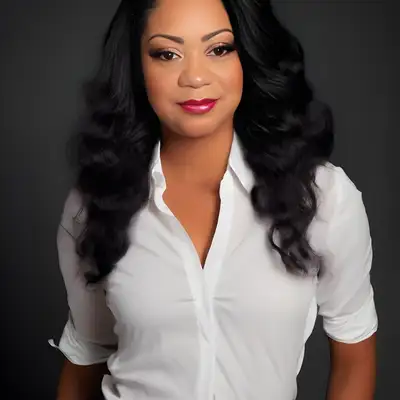
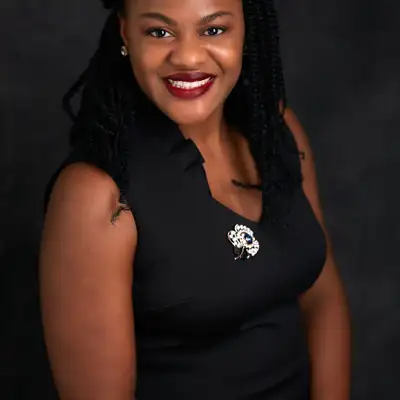
Well, hello there. This is Tolu and Belva
Tolu:at the Black Business Live studios, and we are so excited today because we have a very special guest we're going to be talking to. She is a third generation entrepreneur and she's a second generation CEO and she is based out of Montgomeryville in Pennsylvania. So join me to welcome Karla Trotman, the CEO of Electrosoft Incorporated, and she's gonna be telling us about her journey into leadership, but also her journey in manufacturing space and running a family owned business. Hi, Carla.
Karla:Hello. Thank you for having me.
Tolu:It's so wonderful having you here. Thank you for joining us on this sunny day in Dallas. Not so sunny after all.
Belva:Well, we really appreciate you, Carla, for coming in today virtually and joining our podcast. It's such an honor to have you here and I'm so excited to jump in to the questions and to be able to get to know you a little bit better and welcome you to the show.
Karla:Yeah. Thank you.
Belva:So the first question we have for you today is you are did not just acquire or inherit Electrosoft Inc. You actually purchased it. Can you just give us some background about that and what went into your thought process about purchasing rather than acquiring a different type of business?
Karla:So electronics manufacturing is definitely a very unique area for, I guess, anybody to be in, specifically a woman, and then you add a woman of color. And it was an industry that I grew up in and, where I didn't see very many of us. And so right out of, you know, school, I never thought of taking over the family business. I don't think there's many young people that ever wanna take over the family business because you don't see it as something special. You don't see it as something where you can make good money off of.
Karla:And so we're trained to go to college and get that really good corporate job so you can make a really good living. And I think that's really what I was trained to do. My parents never pushed taking over the family business. I didn't know what that meant, really. I just felt like I was it wasn't enough for me in life.
Karla:And it took, you know, we could talk about this later, obviously, but it took really, really living life and seeing what corporate offers versus what I could gain from taking taking over the business and continuing with the legacy. Mhmm. And so you decided that, you know, it was originally supposed to be me and my brother's takeover. And, but the succession plan, we didn't want it to happen because my parents passed away. We wanted to have a successful onboard, off board of leadership.
Karla:And the decision, to buy the business was more so of being able to maintain generational wealth. And we did not you know, there was a plan in their in their minds, but it was not a real plan, that showed an act an exit date. And so the goal was to really be mindful of how we're going to take over this business and how my parents were gonna exit and still feel that they had, were able to contribute, their knowledge and help us get to the next level or whatever we decided to do with the business. So that thought was more so, for me, continuing the legacy and, maintaining continuity.
Tolu:Yeah. And we're gonna go into legacy very shortly, but let's take it back a step because, you know, as you said, you were exposed to your business much earlier, right? And you also, in your book, talked about you going into your grandmother's restaurant and you leaving that experience, in fact, you mentioned she taught you on one side of the MBA versus the MBA you got from Drexel University. So tell us about what shaped your mind, what you had in mind when you were thinking originally about business ownership as a black woman, you know, in potentially a male dominated industry? Of course, at the time, you didn't think about it that way, but what was what what were the thoughts you had?
Tolu:How was that, visualized at the at the onset?
Karla:So I was really blessed to be in a community where I only saw Black women succeeding, Black people succeeding. And I think that was just the community that my family was around. It's not that everyone owned a business per se, but the ones that did were were they were successful in their own right. And so for me, my grandmother having the store and being a pillar within the community, we're talking about cooperative economics
Tolu:Mhmm.
Karla:In a black community in the suburbs of Philadelphia. And this is in the seventies, eighties time frame. And so I didn't know any different. And it's kind of like we are a product of the things you see, hear, learn, and experience. So if if that is what you those are your formative years, how can you not fail?
Karla:Right? As you're programmed not to.
Tolu:Yeah. And one of the things I also liked about your story is that you talked about, obviously, waiting for eleven years working with your dad for that transition plan. But at some point, you said to him, said, well, I could actually walk out of here and go run another business, run another business for somebody else retiring. So you knew you had the choices. Right?
Tolu:But what was the pivotal moment that helped you clean your voice as the CEO? Because I would have said, reading through your story, that you actually became the CEO a long time before. You took the reins of that company, before you actually took the reins. So what what was that pivot that happened to you to to help you do that?
Karla:I was mad in a night, because, you know, like I said, there was no real transition planned. And when I left corporate and I said I wanna take over the family business, let's work side by side and see how this is gonna go. He's like, great, babe. We're gonna do this, and I'm gonna retire in three years. And that's why it was eleven years because the three years kept renewing itself.
Karla:It wasn't like, you know, I hadn't planned on it. And so what happened at that point was I said to my dad, look. I'm at a certain age. I don't want to miss my window of opportunity to take on things that I wanna do in life. And that being of leadership, I've been offered opportunities to run other people's companies.
Karla:It's not exactly what I want to do. I wanna run our family business. But when you're ready, you let me know. And I might leave that position if it's not working out or it makes sense or I might not. And, I knew I
Tolu:was
Karla:bankable because I worked in corporate America. I had my MBA, and it wasn't really a flex. It was choosing me. And I think sometimes with family businesses, I think in the beginning when I was young, I really didn't have anything to offer. I had learned everything through my father and my mother and every aspect of the business because I'm not an engineer by trade, but I grew up building all of the things here, and learning the processes.
Karla:For me to go and learn how a business works, to have my own business, my online company that I ran for eight years, and to, even help Electrosoft execute an acquisition, I knew that I had the business savvy to do it. And if he wasn't ready to do it because that was an emotional decision for him. This wasn't a business move. And I don't give people ultimatums unless I'm willing to live with the alternative, and I was willing to walk away. And, and so we that's really what started the process.
Karla:It wasn't like I came into some sense of of something outside of just being annoyed. Mhmm. And I think that when we become we're women of a certain age, you know what you want in life, so you're not you're willing to ask for it. Yeah. And almost demand it because you know what your worth is.
Karla:And, I think my father realized what would be walking away at the time. But my dad's also my dad, so he was kinda like, okay. Well, then go if that's what you wanna do. And, so it was really just a line of communication of where are we, what's the plan. Let's work through it.
Karla:I don't want it to be acrimonious. But I do you know, now that I think back on that you mentioned it, becoming CEO, there was a book I read. I think it was called Becoming CEO. And it was more so in a corporate setting. But I think sometimes as women, we're don't express how we really feel.
Karla:We don't ask for what we really want, and we don't know our value. And I've always been somebody to really speak up, and that's because of the entrepreneurial family. That's because I those were the things that were instilled in me. So it's like they couldn't be mad at me being what I was raised to be.
Tolu:Yeah. Yeah. I do have
Belva:a question there because it's very important and, interesting. So you have two brothers, and do you and this is such a male dominated industry manufacturing, right? So do you think that the hesitancy from your father on the father's side was more about the succession should be should go to the brothers? And and, were there any competitiveness between the three of you to be able to say, I'm going to step up as the CEO, and my father needs to see me as a woman being able to run electric soft electric soft?
Karla:Yeah. That's a good point. I think, you know, I thought it was a little bit of male chauvinism in a sense. And I talked to other women that I know that took over their father's businesses, and there's actually a whole surge of women taking over their family businesses over their brothers from their fathers. And when I talk to those women, we all admit that there's a little male chauvinism involved in it.
Karla:Oh, sure. And I think it's more of a protection mechanism knowing what industry is like and not really understanding or seeing how women are uniquely positioned to have all the things necessary to be successful because we have that emotional intelligence. We have this, like, calm demeanor. We can make decisions in a different way that a man does. Right.
Karla:And it kind of just becomes it makes sense. We just are in our natural element. Now I do have two brothers. They're both younger than I am. So birth order, I am the eldest, but I'm also yeah.
Karla:We're just very, very different. My brother's my middle the middle child, my eldest of the two brothers said to me the we said the other day. He's like, I'm smarter, but you're wiser. And I was like, I'll accept that.
Tolu:Thank you.
Karla:Because, you know, I part of it is that the education and the time that I spent in corporate, the time I spent accumulating assets, making sure my credit was straight, making sure that I was, educated properly in the areas that could help the business, that I went to the schools that had the relationships across engineering. And and that was the thing that I made a mindful decision in every step that I took in life, because I knew that my backup plan, if things didn't work out, I could always run this company, I didn't realize that I would have a desire to do it at one point.
Tolu:Yes. And you made such a great point there because we have many business owners out there who have worked in the corporate space, and sometimes you're like, oh, you know, you don't wanna be a corporate slave, you wanna run your own business, but it's almost like a period of seasoning and marinating because you're grabbing all that experience, you're you're you're broadening your mindset and opening up yourselves to the the breadth of opportunities out there. And at the right time, at the right point of leadership, those business opportunities do present themselves, but it's how we embrace it. And and as you talked a lot about preparation, being bankable, your credit score, your education, you know, the qualifications that are required. And sometimes people think, yeah, you've got to start off like the tech entrepreneurs, you know, go go to your garage, you know, sell books for for a living for a while, you know, the typical stories that we've heard all the time, but we have mature leaders out there who also want to go into entrepreneurship, and sometimes they don't have the time to start from scratch.
Tolu:They don't have twenty years behind their belt their belt. So let's talk about how business how what business owners what business ownership means in in that context of transitioning from being in corporate to, you know, actually, you know, taking over a business. And it may well be that you become a CEO of an existing business before you have yours or or never. But what does that what what can you tell us a little bit more about that experience for for you as you transition into leadership?
Karla:Sure. I think that oftentimes, it's, sensationalized that you become this tech entrepreneur venture capital with this great idea, and then all these people give you money and you launch. And I have so many big friends right now that are brilliant that are going through this fundraising aspect, and I find it extremely frustrating because we know the statistics.
Tolu:Mhmm.
Karla:Black business owners that are trying to launch an idea do not get the same amount of venture capital as their counterparts.
Belva:Mhmm.
Karla:They have to pitch far more than most. They don't have access to the networks where the money is flowing or where there's good deal flow, and they find it to be incredibly frustrating. And, I see that all the time. And one of the things for me is that, like, I don't have experience in doing that at all. Mhmm.
Karla:The only thing I pitch for is money from the bank. Mhmm. And outside of that but I have been in those environments, and I actually sit on an advisory council for a private equity company, lending my manufacturing expertise and family business expertise. So when I think of so there's a couple of things that you asked that I wanted to address. The first is, when you think about owning a business, you don't have to start that way.
Karla:You can fire a business. There are websites that have business brokers of people selling businesses within a reasonable price range that you can acquire, and you don't need to have the millions of dollars that it's asking for. You can go through SBA loan. You can go through, seller financing where the seller just really likes you and once loves your vision and believes in you and is willing to, allow you to pay them over course of couple of years from the proceeds of the business and allow them to successfully transition out. There's other ways that you can, work with businesses and structure a deal that it doesn't have a major impact on you.
Karla:An example is the business that I bought or acquired through Electrosoft before I took over. The gentleman was brilliant engineer, but he was losing money as a business owner. And then so we looked at the finances and said, okay. We strip out all this stuff and bring it in house. We can make some really good money owning this this company.
Karla:Mhmm. And it was a small company. It was less than a million dollars, and we brought it in. And I think what we the way I did the deal was a debt deal. I said, look.
Karla:You got all this debt. I'm gonna take over all your debt. You can walk away and retire. And that was amenable to him because he couldn't afford to pay off what it what he had left, and it would have financially strapped his retirement.
Tolu:Mhmm.
Karla:And for us, it was a tax move. We were able to bring it in and then write off a lot of this bad debt, which it was, and negotiate some of it. And then for the, we renegotiated with all of the customers the new pricing structure, which allowed the company to be profitable and on the employees. So sometimes it's you look at a company, and it may be if you're trying to grow up a business, taking on the aspects of a business that's ultimately failing, and they just need some relief. So there's different ways to look at the deal.
Karla:It might be a location. You want that specific location to relocate your business, or you have an idea of, like, I really wanna open a taco stand at this corner, but somebody's already there. Maybe you buy that business.
Belva:Mhmm.
Karla:Close the business and then put the taco stand in this business and and grow it that way because location is also a really great factor. So what I did was really be become a student of these things, of of the unique ways to build wealth and through small business ownership.
Tolu:Mhmm.
Belva:I love that. That is practical ways that people can actually own a business. A lot of times, new business owners especially think they have to start from the bottom, start from scratch, start from their idea, you know, gain capital, gain momentum, gain customers, and then become successful over, you know, over a period of time. And being able to actually purchase a business and starting from there is you've already jumped several hurdles and you're already there in in business. So thank you for sharing that information.
Belva:Mhmm. So kind of shifting gears, in your book you talk about stewardship and how important that is to you in running Electrosoft. So can you give us some practical ways how you applied stewardship in this current role?
Karla:So one of the things that I think it's just the culture within our family, we've always want to make sure that we pay people a living wage and give them the same benefits that they could get at a larger business. Because when you're under 50 employees, there's a different set of rules. You don't have to offer paid days off. Some, you know, some you do, some you don't. You don't have to offer insurance.
Karla:You don't have to do a lot of things. But we decided that that's not the company that we wanna be. We wanna be the one that gives people a good living, and they wanna come to work. And, ultimately, these people stayed around. Our amazing staff, they stay around.
Karla:I I forget what the average age is, but I was talking to somebody the other day, and he's like, yeah. You know, I've been here twenty seven years. And I was like, that's amazing. And then I talked to somebody I knew basically grew up in this company, and she's like, oh, yeah. I've been here twenty four years.
Karla:And just we all grew up together in a sense because even though I was in school and even though I was young at the time, I remember seeing all of these people. And so we just treat people very well in that. Another thing that we do is, a lot of people have never seen, the Black family business at all. They've never seen a Black woman in manufacturing or a woman in manufacturing. And so I'm very much a proponent of speaking about being in industries that have high barrier to entry because it's expensive to have a manufacturing company.
Karla:The equipment alone is expensive. The education alone, it's hard to get into, but it has really great rewards. And especially when we look at the country right now and it's focused on made in America and manufacturing, it's a really great intersection to be in right now. But we're all still trying to figure out what that means because when you bring everything back to The US, we're not really tooled or educated workforce wise to bring everything back in house. But right then and there, you gotta realize, okay.
Karla:There's a couple of businesses in that. I don't exactly have to be in manufacturing, but I can help transitioning the workforce in manufacturing. I can help in training people in manufacturing. I can help people identify pockets of industry that don't have manufacturing facilities and maybe start that business here. And for me, I've always thought that, you know, we talk about stewardship.
Karla:One of the things that has always bothered me is the black wealth gap. And considering that there's a the Brookings Institute had a study, and I think they said the difference between black and white wealth gap is, like, $240,000. That's like, for every $100 in wealth, we have, like, $15.
Tolu:Mhmm.
Karla:And it it's like, how do you catch up when, you know, I think it was, like, 44% of black I have written here 44% of black individuals own a home, and then 73% of white individuals own homes. And when you think of the history of redlining and how, black individuals were not able to live in certain neighborhoods or to buy certain homes and how it impacted their ability to take loans out or to pass or to help their children go to school because they couldn't take loans or couldn't take the gain from that property to help their families and how that has compounded over years. It's too hard to catch up. Mhmm. But I believe that small business ownership is one of the ways that you can because entrepreneurs have a higher net worth than people who are not entrepreneurs.
Karla:Absolutely. The tax laws are written to favor small businesses as opposed to high wage earners. You're able your ability to transition wealth from one generation to the next. I mean, it is a straight strategy to help people close that wealth gap, to help us close that wealth gap. We just need to talk about it more and to create platforms such as this.
Karla:Yeah. People can understand and gain that knowledge.
Tolu:Yeah. You're you're so right, Carla. And you I, one of the things that really that I I spend a lot of time talking about is the fact that to own a business, you don't need to have a corporate experience, you don't need to have an MBA, you could be a skilled worker and have a business, right? And we have many people like that, but sometimes people don't see themselves as being able to. They feel, yeah, I need to go and get that degree, you know, to become a business owner and you've just also reinforced that.
Tolu:You could have a skill in a trade and you could offer that service to the manufacturing industry and that could become a very lucrative business. The important part of it is creating the structures around you to create wealth and generate wealth from your from your fam for your family. And and so I wanna just talk touch on that before we delve more into manufacturing. So talk talk to us about your experience around how you've utilized the entrepreneurship platform as a wealth creating mechanism or infrastructure, and this is really speaking to our community because sometimes people think, oh, yeah, I'm a business owner, I'm the CEO of so and so, and that's it. That is my success.
Tolu:But the success is not just in being the CEO, it's using those mechanisms in the right way. So can you tell us a little bit more about how you've done that?
Karla:Well, going into the business, so one thing I didn't mention, like, I am the sole owner of Electrosoft. I know you tried to tease that out earlier. When it comes down to being able to acquire business or go into entrepreneurship, you do need to have some simple things like good credit, an asset or two. And because the bank has to believe that you can pay back that loan Mhmm. And that you have the ability.
Karla:So a little bit of education behind it or some type of structure foundation, an advisory board, a council that you belong to, coaching. Because I don't want anyone to falsely believe that you jump into a business. Yeah. I'm the CEO, and now you're in business. To your point, it is you have to learn how to be a successful, steward of the finances because one thing my father always said is being in business will do one thing for sure.
Karla:It'll take a big pile of money and make it into a small pile of money. Mhmm.
Tolu:Mhmm.
Karla:Because you think you need to like, the best office. You need to look the part. You need to have all the top computer equipment or whatever it is. Mhmm. And you don't slowly fade in.
Karla:You, like, jump in, and it can be a slow slog for a lot of people who don't have, a good handle on their market, or their niche. Mhmm. And so there it's business is very nuanced. And so I would say that, you know, if you have a widget and you're really good at selling that widget, you know, and that's what you love to do or build that widget, I will tell you that you will spend more time doing stuff for the business than building that widget because managing a company is not about really being president. You're like, everyone thinks they wanna be president.
Karla:Doing president sucks. It is not fun all the time. Mhmm. It is like you know, right now, I'm reviewing contract that we may not even get. It's looking over benefits to see if they're competitive.
Karla:It's trying to lower cost. It's trying to do all of these things. But I would say that if I was working in corporate, I would be doing a lot of things I probably don't wanna do anyway. Yeah. So I'd rather do things I don't wanna do for myself than for somebody else and make them money.
Tolu:Mhmm.
Karla:And I think that leveraging entrepreneurship, it it really helps in so many ways in changing that mindset of what do I want for myself? What do I want for my family? How do I wanna leverage that? How do I want to I mean, I I coach business people going into business and try to get them to come to their own conclusions as opposed to telling them exactly what to do, giving them the resources because there's no shortcut. In fact, my mentor is here right now in my office.
Karla:He's in the other room, And he always calls me. He says, like, you're a little baby entrepreneur in this process. And he's like, in seven years, you'll be able to glean everything that you've sown throughout that time period. And you need that person to be able to give you that advice like that. My dad treats me like his daughter.
Karla:He runs the company a certain way. For me, taking him to the list from gen one to gen two requires a little bit more information in a different way, which is why I have my tribe of advisers that are able to give me what I need where I have blind spots. And so my platform is really just showing people that there's no perfect way. I don't know everything. It's I think I've read books from tremendous business owners who are worth, you know, hundreds of millions or billions of dollars.
Karla:I just couldn't relate. And that's why I wrote my book, because I felt that if I could tell people from just my perspective, the layman's in layman's terms of what I go through, and even that a lot of people won't be able to connect with that, some people really would. Those who aren't trying to build those multibillion dollar companies, but just wanna have a lifestyle and a life where they are running the show and they're just putting out good product and creating a legacy for their families.
Tolu:Mhmm. Absolutely. Absolutely. Well, you've said so much, Carla. In fact, your your book has impacted me personally in so many ways, which I'll I'll share with you separately.
Tolu:But I want us to take a step back now and look at manufacturing, because one of the important themes that we've brought to the forefront of this season is black excellence in manufacturing. And obviously, now there is just so much going on, the tariffs, the, you know, the the in general, the the the workforce, the shifting workforce, labor shortage, skills shortage, so much going on. But what would your message be to a black person today, considering business ownership, considering manufacturing, considering opportunities in the world we find ourselves in today? What would your message be to them?
Karla:I always say, like, you know, there's a lot of people lamenting, based on what's going on geopolitically, with tariffs, with just everything.
Tolu:Mhmm.
Karla:And, you know, once you get over the initial shock, it's time to really figure out where the opportunity is.
Belva:Mhmm.
Karla:So for me, thankfully, we've always done work for the Department of Defense, for crime contractors, and tariffs are a different story in under, a federal workspace. Mhmm. So for me, it was really about identifying, okay, where where are look. What could we do differently that we're not doing? Where could we lean in where it's not as much friction as with other with our commercial clients?
Karla:Where is it that, we're sourcing product and just really sitting down and thinking? And I think sometimes when we're in business, we're just so used to the flow. You know, the flywheel that they talk about where you're like, I go out, they give me contracts, I do it, and they pay me. I go out, I get contracts, you know, and you just get used to that. When it gets disrupted, that's when the fear sets in.
Karla:But I believe that in that fear, that's the time where you have to reinvent yourself because everyone is living in fear right now.
Tolu:Yes.
Karla:In odd fear, there's also opportunity. There's companies that aren't going to make it. So those opportunities could be an acquisition because it's a fire sale. Mhmm. Those opportunities could be in a new vertical that you've not thought of, and those opportunities could be in taking market share for your from your competitors.
Karla:You just have to, like, you know, first calm down and then think about how can I win in this? How can I turn this into a win? Because I just I had to even stop hanging out in some entrepreneurial circles because I was just so tired of hearing the complaining. Mhmm. And I was like, how are we gonna win?
Karla:Okay? How are we gonna fix whatever it is it is? Yeah. Now how are gonna win? And so you gotta change your mind and change your perspective.
Karla:And even, like, people that I would normally hang out with socially, I just didn't wanna hear it anymore. I needed solutions and people that, so I put myself in those positions. And it's really changed a lot for Electrosoft. It's chain helped us change direction in a lot of ways. And, yes, there's scary times.
Karla:There's issues with cash flow at times, but that's also if you are a good steward of your finances, you know that you have to build your core cash so that you don't go out of businesses business in a downturn, which this is for many of us. You have to be able to know your business well enough that there are economic indicators that serve as canaries in the mind that let you know that things are gonna shift, so you have to shift direction. You have to make decisions faster than you normally will if you're bleeding cash. And it's really I feel that I'm uniquely positioned and trained for this as a black woman because I feel like my whole life is a firetruck.
Tolu:Yeah. Absolutely. So you've said so many exciting things. You talked about knowing earlier on that this is what you were trained for, were trained for entrepreneurship from the onset and so you were just living that personality, You talked about being bankable, being prepared, all the groundwork that needs to happen to get you to become a seasoned entrepreneur. You've talked about stewardship and being accountable for the workforce as well as for your own legacy and owning that legacy as well, and legacy being important to you.
Tolu:And you've also talked about entrepreneurship being the vehicle for wealth creation in the community, and then finally, you've talked about as a Black business owner or an emerging black business owner in the manufacturing space, learning to pivot very quickly but also figuring out where the solution is versus focusing on the problems. So these are just amazing because we could delve into each of those topics and expand on them. But before we round up, Belva, was there any other question you wanted to ask?
Belva:My last question is, and kind of a comment as well, is you also, Carla, back is very important to you and we here at the Black Business Live Podcast so appreciate you so much for coming in and sharing your wisdom, your expertise, your personality, your all the gifts that you shared with us today as Tolu just spoke about. But how else do you give back? And also, how can we and our viewers support you in the endeavors that you have?
Karla:Well, thank you. I think that I learned that no matter what it is that you do, right, the best thing as a business owner feels good to give. Like, it's it's a feeling of, I feel like it's selfish of me when I give because I get so much back from it. I know it sounds really cliche. Because, like, you know, I love shoes and I love purses.
Karla:But Me too. Not one pair of shoes or one purse has made me feel happier than when I'm sitting on some of these boards that I sit on and the work that I do.
Tolu:Yeah.
Karla:So I sit on the board for the Free Library Foundation of Philadelphia, the Museum of the American Revolution because Mhmm. That's a long story. It just starts with a child of mine who loved Hamilton, and I ended up on the board. That's the clip. But the other part is that I, I am on the African Women's Entrepreneurship, Cooperative, Board of Stewards.
Karla:And that is my heart because it's helping African women across the entire continent of Africa learn the fundamentals of business and apply it to their businesses. And they're changing their communities. Yeah. I mean, they are making, like, goat milk ice cream, and they growing shea butter shea nut and using the shea butter to really make just some of I would use some of their shea butter this morning. It's just fantastic Uh-huh.
Karla:Products that they have. They are addressing market needs that you didn't even think of. And being a part of it, it helped me see that us as black Americans really need to look at the continent Of Africa as a place where we do business. Yeah. And so it's be it's just such a wonderful organization.
Karla:I would love for everyone to, just check it out. It's AWEC, African Women's Entrepreneurship Cooperative, it is just a fantastic organization. If you have, like, a skill set or you wanna volunteer in some way, I know that they would love for the involvement, but it's just a beautiful way to connect across the diaspora with women who look like us, just have beautiful souls and are doing amazing things. And and I I get more from being a part of them than any than I can give. Like, I I just don't feel like I can give enough.
Belva:Lovely. Well, we'll be sure to add those notes in the show notes so folks can find those networks and get tapped in as well. So thank you so much for sharing that.
Tolu:Yeah. Thank you. No, thank you, Carla. It's been such an engaging conversation. We'll also be sure to put up your book in the show notes as well, so the audience can go and purchase it on Amazon.
Tolu:It's a great read, very frank, very honest, I love it. It's like listen listening to your friend, basically. And but thank you again. Appreciate it. And so, everyone, this is Carla Trupman.
Tolu:She's sharing her story, her life, and all the fantastic initiatives she's been working on. We look forward to showing the next speaker, and thank you for joining the Black Business Live.
Karla:Thank you, Carla. Have a great day.
Tolu:A great day.
Karla:Thank you, ladies. Thank you.