Subscribe
Share
Share
Embed
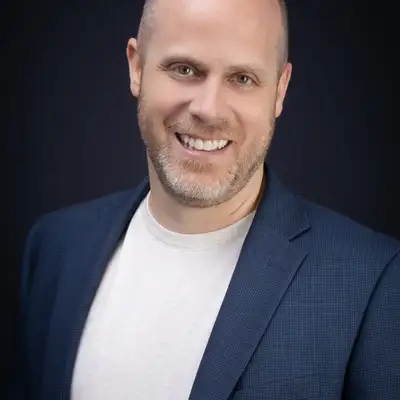
Welcome to Inside Marketing with MarketSurge — your front-row seat to the boldest business insights, marketing breakthroughs, and entrepreneurial real talk.
Hosted by Reed Hansen, Chief Growth Officer at MarketSurge and a digital marketing veteran who's helped scale everything from scrappy startups to Fortune 500 giants, this podcast dives deep into what’s really moving the needle in today’s marketing world. Find us at Marketsurge.io
Each week, we’ll break down the latest marketing and business news (minus the fluff), explore tech trends you actually need to know, and feature unfiltered conversations with the most interesting minds in entrepreneurship and marketing.
Whether you're a founder, a marketer, or just a curious hustler looking to level up, this is where growth happens—loudly, smartly, and with just the right amount of sass.
Subscribe, tune in, and let’s scale something legendary. 🚀
Speaker: Welcome to Inside
Marketing With Market Surge.
Your front row seat to the
boldest ideas and smartest
strategies in the marketing game.
Your host is Reed Hansen, chief
Growth Officer at Market Surge.
Reed Hansen, MarketSurge: Hello,
and welcome back to Inside
Marketing With Market Surge.
I'm your host, Reed Hansen.
If you've ever built something
great and then heard crickets when
you launched, it's not just you.
Today's guest has helped over 250
apps avoid that exact nightmare.
Jonathan Maxim is the founder of Viral
App Launch and he specializes in turning
early stage apps into real traction
machines, helping founders hit that
critical 10,000 user mark and unlock.
Investor conversations.
He's worked with companies like
TikTok and PayPal scaling users
into the hundreds of thousands
and even millions in record time.
So today we're diving into what
actually works in app growth, what's
complete nonsense, and how to go
from, we've built something cool
to we're scaling something serious.
Welcome to the show, Jonathan.
Jonathan Maxim: Thank you for having me.
Pleasure to be here.
Reed Hansen, MarketSurge: Yeah,
well this is a special treat.
You know, we I think could really
benefit from your knowledge.
Now you've helped launch
hundreds of apps, 250 at least.
What is the first mistake you
would say you see founders making
before they even launch their app?
Jonathan Maxim: I think a lot of
people don't step back and take a
look at the broader picture, because
let's just say you're cow.ai,
you're using that case study where
this app went mega viral, making close
to a million a month gets acquired.
That's your benchmark for success.
So then you go and post on Reddit and
you think, I want to go viral, and hey,
maybe you get a thousand, 10,000 users.
My first app, we posted it on
Twitter and went viral one time.
We got 14,000 downloads overnight.
Sounds awesome.
But my app didn't have monetization
built in, so I didn't make mon any
money on those users, and I hadn't
thought about the onboarding experience
to teach people how to use the app.
So the activation rate was only
about 10 to 20% of those users.
Reed Hansen, MarketSurge: Hmm.
Jonathan Maxim: essentially.
It was wasteful.
I ended up with a
handful of quality users.
But if I had been more, if I'd taken
a look at the broader picture and
thought about, okay, what happens
after they download the app and then,
how do I teach 'em how to use it?
How do I activate 'em?
How do I monetize 'em, right?
So that this business can
sustain itself and go on.
And I try to take this broader
perspective, and I think a lot
of founders are thinking, I just
gotta get users on this platform.
And I'm like, getting users
isn't the whole story.
That's part of the story and it's a
must, but also, how does your app usher
a white glove experience for those users?
And so that's something I'm
really passionate about and,
happy to dig into it more.
But app that goes viral, it makes zero
money, is effectively useless, right?
It's like somebody who's a mega influencer
who can't pay their bills, right?
What good is it?
Reed Hansen, MarketSurge: Yeah,
no, that makes a lot of sense.
You know, I think we've seen
a lot of tech companies start
offering free access to their tool.
You know, like a lot of the social
media platforms before they monetize.
And so I think a lot of.
I would assume a lot of founders
assume that's the path, but you know,
help me correct that assumption, you
know, like what generally is a good
way to go from launch to monetization
Jonathan Maxim: let me
lay out what I think
Reed Hansen, MarketSurge: please.
Jonathan Maxim: you know,
from observing the data, try
to keep my opinion out of it.
Just looking at the trends that I've
seen over the years of launching
hundreds of apps, you gotta think about
five core categories of the product
of the company, the product itself.
know, does it do what's supposed to do?
Does it solve a clear problem?
The marketing?
Do we identify the right
ideal customer profile?
Is that user profitable?
To acquire.
And then three is monetization.
How do we maximize the LTV of that user?
Four is virality, which is getting
people to share, giving 'em incentives
to share, five is capital raising and
monetization of the actual company itself.
those things have to be factored
into consideration for this to work
because as I mentioned earlier, if
you have an app that goes viral.
But 80% of your users are
dropping off during onboarding.
What good is that?
You have to take all these things into
consideration to make it a real business
and not just some app that was built in
the weekend, and maybe it's an awesome
app and serves a vital need for people,
but it has to have a business model
associated with it, especially for
those bootstrappers, but even investors
that, they're not investing in apps
that have zero revenue these days.
That thing is like a decade ago,
Reed Hansen, MarketSurge: Hmm.
Interesting, interesting.
So you know, you mentioned in, in.
Some writing that 10,000 users is
a key milestone for, for an app.
Tell me why that is such a critical
number and, and what sort of things
change for the, the trajectory
of the app when you hit that.
Jonathan Maxim: Let
Reed Hansen, MarketSurge: I.
Jonathan Maxim: me back up
to the user mark, because.
That's the important part is knowing what
you're getting yourself into as a founder.
What is it gonna take?
What is it gonna cost?
How much effort and time is it
gonna take for me to get to a
point where this is investible?
That's the
Reed Hansen, MarketSurge: Hmm.
Jonathan Maxim: question we should answer.
And, depending on how they execute, it
could cost anywhere from 10 to 50 k,
depending, some spend a hundred k getting
there, a lot of investor backed apps.
You'd want to do everything in, the
most five star fashion, let's say.
So know what you're getting into because
it's gonna require investment upfront,
just like any other business, right?
Services businesses
require investment upfront.
You gotta build a website, a
marketing system, a sales pipeline.
It's no different, right?
And then why do we do 10,000 users?
This is, first of all, tons of
investors told me that when I was
pitching, and I've founded two apps
myself that I went out and did the
whole fundraising journey with.
So most investors are asking for
10,000 users, but the question
is why do they want 10,000 users?
And what I've come to Deduce is that
is statistically significant, right?
We have 10,000 people on the
platform, maybe 5,000 of them
are registered active users.
3000 of 'em are, have completed
the first action in the app.
You 300 of them have started a
free trial and 150 are paid, right?
So at all those different stages of
the funnel, you got over a hundred
units, a k, a, some semblance of
statistical significance, implying
that if this works at a small scale,
it'll work at a large scale, and
that's what makes it investible.
If the model's attractive when
they have 10,000 users, then
you add two zeros to that.
Everything Should grow relatively,
and so that's really the math
that investors are looking for to
justify this is worth investing in.
That's also my own personal
benchmark for investing.
When startups come to me and say, Hey,
can you help me get to 10,000 users?
I say, no, that's on you because
you're the founder who needs to
validate your product and market
and make sure it's a real business.
I'm not gonna write a check unless
I'm confident that your model acquires
customers profitably retains them.
Has a good product experience,
not scamming people outta
their money, things like that.
And so that's my personal benchmark.
A lot of other investors benchmarks, and
again, in the era of easy, when you can
make an app in a weekend, when you can
make a month of content, in 30 seconds.
The, there there's very little sacrifice
required on the part of the founder,
Reed Hansen, MarketSurge: Hmm.
Jonathan Maxim: if you look at the
founders who are the most successful,
it's the ones who burn the boats, right?
They threw shit to the wind.
They went all in.
And, one of my friends
in San Francisco, right?
Take this case study, for example.
Failed.
Three startups.
He made his first one in college
when we were in school together.
Made another one.
Did okay.
Still shut down.
Made another one.
Later in his career he worked
in investment banking in tech.
So he was deep in the tech
space in San Francisco.
Super qualified, super smart guy.
Three failed startups.
He started a new one about three
years ago after he had his first baby.
Had another baby in the process while
he was starting this other startup,
and he was in the tunnel in the
darkness, literally for two years.
Now this company, and I was worried about
his wellbeing and his safety and his
marriage and things like that because
all those come into question when we're,
Reed Hansen, MarketSurge: Yeah.
Jonathan Maxim: know, at such
a high level of exposure.
They raised, I wanna say 68
million a couple months ago.
Reed Hansen, MarketSurge: Wow.
Jonathan Maxim: mega successful.
But they also he spent effectively
all of his dry powder his cash on
hand, and he went into the darkness.
He went into the deficit.
To get that company successful.
So that's the kind of dedication that
it requires to become what most people
are glamorizing as a successful founder.
And when you remove all of those distract
or all of those obstructions and you make
it so easy that you can make an app in
a weekend, there's so little commitment.
It's like when offer something to
somebody for free and they don't
use it 'cause they got it for free.
But if they paid 2000 bucks for it,
you know damn they're gonna use it.
So the sacrifice is important, and this
is the psychological part that's hard for
a lot of people to overcome these days,
is it's so easy to start a business.
It's also so easy to change directions
to to cancel the business, to throw
in the towel because again, you didn't
put a hundred thousand bucks into
this, so you don't have a hundred
thousand dollars worth of conviction.
And so that's the tough part these days,
is having that level of discipline,
conviction, execution, and also vision
to see beyond, what's the next step.
And just that this isn't a
three month thing, right?
This is like marriage,
not a one night stand.
Reed Hansen, MarketSurge: Mm-hmm.
Jonathan Maxim: I just wish that more
founders took a long-term outlook on
it because I'll see a lot of founders
launch get to a thousand, 2000 users.
Another case study we have going on,
raised a million bucks, the app, got
about 2000 users, and they're not
making a lot of money with the app.
Guess what?
In the industry that they're in, I
don't wanna reveal it because you
Reed Hansen, MarketSurge: Sure.
Jonathan Maxim: act of payment
and stuff, but the conversion
rate average is like 3%.
So when you got 2000 users you're getting
like, I don't know, 60 purchases and
average order value, like 10, 20 bucks.
Obviously this thing's not gonna be
profitable, but if you get big market
dominance and you get millions of users,
which is why companies raise capital so
they can do a big land grab like that.
Reed Hansen, MarketSurge: Yeah.
Jonathan Maxim: The business model
becomes super attractive because then
the snowball starts to accumulate.
Customers repurchase, average order
value increases, so he just has to get
through this ugly, scary phase of the
numbers are just really small right
now, but he's tempted to pull the plug
on it because it doesn't look that
attractive at a super small scale.
But again, all that matters in my
opinion, is the economics, right?
Reed Hansen, MarketSurge: Hmm.
Jonathan Maxim: conversion rate above
average is your A OV above average?
So is the business, by
its fundamentals, healthy?
and again, I don't think this guy knew
what he was getting himself into, raising
a million dollars from friends and family.
You
Reed Hansen, MarketSurge: Yeah.
Jonathan Maxim: put yourself in
a lot of exposure by doing that.
And if he goes and pulls
the plug, he's worse off.
He's better off to just say, fuck
it, I'm gonna go all in on this
and I'm gonna go raise more capital
till this thing's mega successful.
Because it's not about the product
that makes the company succeed,
it's about the founder, the founders
who makes the company succeed.
You saw Instagram when it was news called
Bourbon and it was like a photo filter app
Reed Hansen, MarketSurge: Right.
Jonathan Maxim: I think it was even like
a check-in app at first or something.
The app completely changed shapes and the
example, the case study I just gave you.
There's other ways to monetize.
When you hit a hundred thousand
or a million users, you don't have
to do the core business model.
You can monetize that
audience in another way.
You could add referral programs
and get affiliate revenue.
You can, which is by the way,
a very profitable way to grow.
can add, premium level services,
some kind of white glove services
'cause you have a captive audience.
But ultimately, at the end of the day,
it's about the founder's willingness
to be agile and just keep building
because eventually you'll remove
all of the fat on the operation.
You'll have a super efficient, muscle
dense business that you know is a
monster and it can't be stopped.
But you have to be willing to
fight through that darkness.
And that darkness can be
3, 6, 12 months, two years.
The case of the guy who just
raised close to a hundred
million bucks for his startup.
He was in it for two years and
he's one of the smartest, most
disciplined founders who came in
with capital lives in San Francisco.
And it still took him two years
to get out of the darkness.
And by the way, he's still
working like 60, 80 hour weeks.
Reed Hansen, MarketSurge: Wow.
Well, you know, you've highlighted
a lot of ways that each.
App story is a little bit different.
You know, it, it requires like the
learning of actually working on it
and, and attempting to, to market.
Just from like a war story standpoint,
like your experience, are there things
that just across the board you say,
I see people do this all the time,
and I, I think nobody should do this.
Like in terms of like promoting
your app or trying to acquire users.
Jonathan Maxim: I think the biggest
issue that I see with a lot of
new apps is that they will design
an app to solve a problem, which
Reed Hansen, MarketSurge: Mm-hmm.
Yeah.
Jonathan Maxim: be input, output.
You don't want something
obscure Hey, we're building a
community or whatever, because.
That makes it very hard to get profitable.
So you build a product that
solves a particular problem, but
what they, just say they enter
into the fitness space, right?
The average app in the fitness
space commands like five, 10,
maybe 20 bucks a month in revenue.
B2C, right?
Business to consumer.
Those B2C customers have
a high churn rate, right?
They're hard to please.
This isn't a business need
that they're fulfilling.
So then you have a churn problem in that
particular model, and revenue is low.
Right now, take that same app that was
just a general fitness app for anybody
and say, I'm just gonna target CEOs who do
over $10 million in revenue who are trying
to find time to spend with their family.
They're trying to get into better shape,
they're trying to become more mindful.
And then you niche down
into that audience and.
Now you can charge a thousand bucks a
month for that same app that's commanding
10 bucks a month at broad markets.
So e, even though your app might
seem like it's in a niche of
fitness, you have to find a sub
niche that's actually profitable.
Same thing with habits apps, like I've
launched habits apps before, and literally
they'll command like five, 10 bucks a
month for helping you stay on habit.
But if you have a high ticket
closer who, if he could improve
his daily energy schedule and
execution by just 10%, he might make.
10,000 more dollars that month.
Reed Hansen, MarketSurge: Hmm.
Jonathan Maxim: you can charge
him a hundred bucks a month
versus 10 bucks a month.
People, you gotta find the
sub niche with your app.
And that requires split testing.
You have to, you know about
this, you're a marketer yourself.
You gotta put 10 hooks out into the
market, see which ones resonate.
And then, let's just say hook
one in three are the winners.
Hook messages.
So headlines that are
gonna capture attention.
Then we look at age, gender,
location of those people.
And also what was in the hook?
Is it lose weight or is it build muscle,
or is it, your temperament or whatever,
then you start to understand the pain
point that it's solving for that audience.
And in, in the case of that fitness
app that I'm, thinking of, hi his
real best audience is males over 50,
Reed Hansen, MarketSurge: Hmm.
Jonathan Maxim: So then you start
building a fitness app for males over
50 and you make that experience better
and better for that particular audience.
Let's just say those dues
travel for work a lot.
Okay, boom.
Let's give 'em a quick workout
they can do at the airport.
Let's give them a meditation
they can do on the plane.
You see what I'm saying?
So
Reed Hansen, MarketSurge: Yeah.
Jonathan Maxim: start creating a
more white glove experience for that
customer who actually has buying power.
And then you, it's not
just about creating an
Reed Hansen, MarketSurge: Hm.
Jonathan Maxim: around that user.
It's also about like that user feeling
like it's personalized and it's
adding value to their life, right?
Like you could.
Again, when you're talking about high
leverage things like a business owner,
if he improves his daily performance,
that's a massive impact on thousands
of employees that he has, et cetera.
So
Reed Hansen, MarketSurge: Mm-hmm.
Jonathan Maxim: it's a point
of leverage, if you will.
Reed Hansen, MarketSurge: Yeah.
Okay.
So, you know, one of the
things that caught my eye is
you've worked with TikTok.
And TikTok in particular was a even
by the standards of social media was
extremely fast growing and, and almost
like a unicorn in its own way, you know,
four or five years ago where, like,
we don't necessarily see apps seize
that amount of territory so quickly.
What, what do you think they did well
that, that most startups don't grasp?
Jonathan Maxim: Let's just be
completely honest here, right?
They had a lot of money, okay?
Reed Hansen, MarketSurge: Hmm.
Jonathan Maxim: of money, you can have
market dominance, you can pay for a
Reed Hansen, MarketSurge: Hmm.
Jonathan Maxim: marketing.
You can, when we were marketing
TikTok, we were marketing on Instagram,
we were marketing on Snapchat.
and we're taking users straight
from their platform to build
TikTok, a competitor to them.
So that's how much money they had.
They were funded by
the Chinese government.
They have a sovereign wealth fund there.
So you know, you're talking, I think they
had 80 billion total capital raised, or
Reed Hansen, MarketSurge: Wow.
Jonathan Maxim: billion valuation.
It's the time we're working with them.
So it's like
being realistic with yourself.
If I'm trying to be the next TikTok,
I have to match all their factors.
I have to have that kind of
Reed Hansen, MarketSurge: Yeah.
Jonathan Maxim: on hand.
I have to have.
An engineering team that's making an
algorithm as powerful as that they were
doing, by the way, that was all they
were focused on when we were working
together, making the algorithm so
sticky that like people couldn't leave.
Reed Hansen, MarketSurge: Hmm.
Jonathan Maxim: like 99% focused
on product and marketing was
just an afterthought to basically
test the product and validate it.
But when we were working on that
campaign, we took the same approach.
We at the time we called it tribes.
This is before, the industry had
really matured into what it is.
But we tested a hundred
different tribes and those were
basically influencer profiles.
Health, wealth, fitness luxury
fashion, cars, horses, barbers,
you name it, a hundred different
audiences that we tested.
And this is how I came up with
the methodology that we use
today, which is to do that split
testing with different audiences.
That was it.
So we tested a hundred different
influencer audiences and we just
saw, hey, what had the lowest
cost per user acquisition?
and in that case is a
little bit unique because.
The influencers posting
did not get the results.
Only about 5% of the influencer stories
were reaching their followers, right?
So you're not really getting the
numbers you need at the time.
We're looking at a 0.3%
click through rate, cost per
user acquisition around a hundred
dollars, and our target was 10 bucks.
So we actually ended up putting
a direct messaging software on
there that were logged in all these
profiles, and we just systematically
shot dms out to all the followers.
Of those profiles.
So just imagine Alex Hormoz is
shooting you a DM being like, Hey
Reed, I just posted a new video.
It's going mega viral on
this platform called TikTok.
Click to check it out.
And then we deep link to that
video and boom, an active user.
And so that took the
conversion rate from 0.3%
up to 30%.
And that's how we had that massive,
day where we had 12,000 users.
And then the next few days
we got like 25,000 from it.
Tho those cases are a bit unique,
but what I would say is unique
should be the standard, right?
You should be expecting that as a
founder, you're gonna have to try
crazy stuff, and you're gonna have
to, fight through the doubt and the
fear until you have a breakthrough.
'cause we all, you've experienced
this in business, right?
Like the biggest breakthroughs, it's
always darkest before the light, right?
Like when you think it's all over,
then God sends you a message and
then the rest is history, right?
Reed Hansen, MarketSurge: No, I.
Jonathan Maxim: they were just as
experimental as the guy with one company,
or, the startup with one founder and
a couple contractors helping him.
That same level of resourcefulness
and grit existed at a company
with, thousands of employees.
Reed Hansen, MarketSurge: You know, and
that, that's, that's a great level of
detail and a lot of great takeaways there.
Still fascinating that anything
funded by the government.
Come off as like the coolest,
hottest new app, you know, like that.
That in itself was pretty remarkable.
That speaks to the, the, I don't know,
effectiveness of those product managers.
Good job.
Jonathan Maxim: and marketing, right?
Like
Reed Hansen, MarketSurge: Yeah.
Jonathan Maxim: they had us really pushing
hard on doing challenges at the time.
If you remember there was like
the elevator challenge and the
Reed Hansen, MarketSurge: Oh yeah.
Mm-hmm.
Jonathan Maxim: challenges where
people like, floating up a doorway
or turning around in real time.
And so we were pushing like the the.
We were pushing the narrative in terms
of what was cool on TikTok, we're seeding
that and then it would create a trend
and then get a bunch of engagement.
See what I'm saying?
Reed Hansen, MarketSurge: Mm-hmm.
Yeah,
Jonathan Maxim: yeah, if I had known
what I know now about how governments
work, I don't know if I would've
worked on that particular campaign.
'cause it, does some stuff is a little
bit in the gray area in my opinion.
Reed Hansen, MarketSurge: sure.
Yeah.
Jonathan Maxim: again, at the end
of the day they were putting a
stake in the ground saying this is
who we are and we're gonna like.
Create something crazy and see who
gets on board and willing to rattle
cages and rock the boat and all that.
Reed Hansen, MarketSurge: So if
you know your, I ideal prospect
comes to you, you know, with the
app they've got 10,000 users.
They are all in, you know, they're,
you know, they've put their full,
full-time efforts and more and,
and all their finances behind it,
and they're doing all the things.
You take them on to Viral app launch.
what does the first part of the
engagement start to look like?
what do you.
Do you or turn up the dial on
on user acquisition and more.
Jonathan Maxim: First activity
we do when we launch an app is
do split testing, so we'll put
Reed Hansen, MarketSurge: Okay.
Split test.
Jonathan Maxim: Yeah, we'll
see, which is usually 10 80, 22.
Two of 'em will be winners,
eight will be losers.
And then we, after that first
round of split testing, we can
see age, gender, location, and
which message they responded to.
In the next round of split testing,
we'll say, okay, we know that
it's males 50 plus into fitness.
What kind of pain points
do those guys experience?
And so then we'll do 10 hooks with
different pain points on 'em, do the
next round of split testing to get to
more detail of, really what is it that,
that these guys are struggling with?
Is it finding time?
Is it that they're traveling a lot or is
it that they're, have to work out when
their wife is there or whatever it is.
And so we'll do hooks first,
and then we do pain points next.
And then.
We do product solutions and benefits
in the third round of split testing,
and at that point you got a really
clear picture of your avatar.
For example, I know my avatar
super well who work with us?
The bootstrap founders, a
millennial like me or you made
an app funding it himself, right?
The other avatar that we know is
basically the old white guy, right?
It's like a, a dude who's over 50
who worked in some other industry,
sold the company, or is cash
flowing, raised a million bucks.
Came to us because he doesn't have
the technical chops to execute it.
He needs somebody who's
ground level like us.
And so I know those avatars so damn well.
Like I'll get on with a, know, I'll watch
like a sales call recording or something,
Reed Hansen, MarketSurge: Mm-hmm.
Jonathan Maxim: tells me it's Qualifi five
prospect, I know it's an old white guy.
Right?
And then we put 'em into ads, right?
We put dork yield boomers
into our ads, right?
And it's not a mockery
of them, it's just about.
Giving them exactly what
they relate and connect to.
And
Reed Hansen, MarketSurge: Hmm.
Jonathan Maxim: it when we're
marketing apps, we do the same thing.
We're trying to help them create
that connection and and relevance
with what they're seeing.
And that's why that free round
of split testing is so critical.
And then after that, hey, it's
50 bucks to acquire a customer.
It gives us 150 bucks over
the next three months.
Older male who lives in tier one cities,
then you can start to build really
personalized marketing around that.
And then from there we'll go to redesign
the onboarding around that particular
user, the most profitable user.
We'll design the retention
marketing experience around them.
30 days of email, SMS
and push notification.
We'll de design the referral
program around 'em, right?
Get a workout buddy.
Get a month free for
everybody who joins your pod.
You see what I'm saying?
So
Reed Hansen, MarketSurge: Yeah.
Jonathan Maxim: those
things all come after.
First.
It's all about identifying
that ideal customer profile.
Reed Hansen, MarketSurge: Okay, fantastic.
Well, this is super informative and I mean
I'd love to spend hours on this, but I
would love to refer people your direction.
Where can people find you if they
would like to work with you or
with VIA app, viral app launch?
We're the best places to find you.
Jonathan Maxim: By the way, I
have a bunch of free resources and
Reed Hansen, MarketSurge: Oh, awesome.
Jonathan Maxim: out here
trying to hard pitch anybody.
I want founders to succeed, and really
what that starts with in the beginning
is equipping 'em with knowledge.
The outlook of the journey, right?
The roadmap of launching an app.
So I have an investor playbook.
If somebody, wants that they can just DM
me playbook on, on Instagram or actually,
Reed Hansen, MarketSurge: Oh,
Jonathan Maxim: DM me read and I will,
that way I'll know, it came from you.
But,
Reed Hansen, MarketSurge: great.
Jonathan Maxim: Yeah,
it's j Maxim on Instagram.
And then on our company profile
is at viral app launch on ig.
Or they can just, they can head
to the viral app launch.com
website.
We have free courses
on prepping for launch.
We have a bunch of, free materials there.
Feel free to check that out.
But, again, I don't my main goal is to
equip founders with the knowledge to know
what it's gonna take to succeed so that
they can approach this in the right way.
Whether that's doing it themselves,
whether it's using some of
our resources, or whether it's
having our team do it for 'em.
Reed Hansen, MarketSurge: Fantastic.
Well, thanks so much
for coming on, Jonathan.
It's great to meet you and, and learn
about you know, somebody that has
learned from somebody that's really
been working with some of the, the
fastest growing apps out there.
And so thank you for your time.
Jonathan Maxim: My pleasure, man.
I appreciate you having me on.
And, I'd like to make myself a resource
to you or to anybody listening, like at
the end of the day we have a business
that is, is powered by ads and organic
and, the business is growing on its own.
So for me it's I want to we're hosting
events, now we're hosting a summit.
So we're really trying to like, immerse
the community and just equipping
more, especially the vibe coders.
' cause those are the ones who, who
don't have that kind of they haven't
gone through the gauntlet, so they
don't really know what to expect.
Happy to just help them out
with those resources, whatever.
And if you're ever launching
that you know who to call.
Okay.
Reed Hansen, MarketSurge: All right.
Thanks again.
Speaker 2: Want to stay ahead of what's
actually working in marketing right now.
Head over to Market surge.io
and see how we're helping businesses
grow smarter, faster, and louder.
That's market surge.io
because your next breakthrough
shouldn't be a guess.