Subscribe
Share
Share
Embed
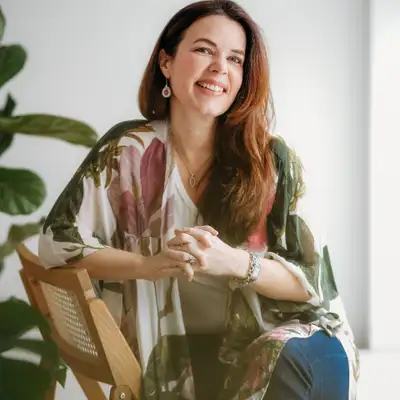
The Words in the Wilderness podcast is for those who have the conviction to make changes in their life as they drag their feet through the messy middle, crying into the void "it ends with me."
Led by Jacky Power - The Therapeutic Poet - these are conversations that look underneath the label, the diagnosis, the tidy explanation, at what's actually going on.
If you've made a decision to change your life and now you're in that wobbly, lonely bit where nobody quite gets what you're going through, I made this for you. Because I've been there. Many times.
Each episode starts with one of my own poems, using therapeutic poetry to set the scene. Sometimes it's just me, unpacking human tricky things. Sometimes it's a guest - a therapist, a coach, someone whose lived experience has taught them something worth passing on.
We talk about leaving what doesn't fit anymore, about breaking the patterns you inherited and don't want to leave as your legacy, about all your human tricky things that you've maybe been taught to hide.
I'm Jacky Power and I'm on a mission to rehumanise, one poem at a time. Reminding you that you have permission to feel and use those feelings as data to decode, not symptoms to squash.
Follow Jacky on Instagram: @the_therapeutic_poet
Find out more: www.jackypower.com
Listen to Jacky on Insight Timer: www.insighttimer.com/TheTherapeuticPoet
Join her on Substack`:www.jackypower.substack.com
Jacky Power (02:17)
Hello and welcome to Words in the Wilderness. Now this episode is inspired by a conversation I heard on a podcast. The podcast is called A Thought I Kept and the host of that podcast, Claire, was interviewing Deb Alma. Deb is the founder of the Poetry Pharmacy. Now the idea behind the Poetry Pharmacy is that basically you can use poems to help you feel better.
It was a lovely podcast episode to listen to and I wholeheartedly agree with her thought which is that a poem can change the way that we feel. And I was sort of scribbling away as I was listening to it of all the different, yes, you know, I've written this poem that made me feel this way. And I thought I would share some of the different ways in which I think that we can use poetry to help change the way that we feel. Now, this can be in the way that we write it, but it can also be through different poems that we read.
like when you're at a wedding or a funeral there's often a poem that helps to really bring that felt sense, that collective felt sense, it gets to be articulated through a poem. And as I was listening to that episode last night I was thinking of Small Kindnesses
Now she wrote this poem that went viral I think around lockdown and it ended up that she invited I think it was about 1300 teenagers to also write in about their small kindnesses and I took that poem to our local poetry hub that I run every other week and everyone had kind of come in and they were feeling you know a bit grumpy, the weather was pretty bad it was in winter, it wasn't a pleasant day.
and
as we read this poem of small kindnesses of things like people tucking in their feet when you walk past to make it easier or opening the door for you or pressing the elevator button when you're in the lift and then pressing the floor that you're going on all of these tiny things that help to bring a bit of lightness and connection in our day and as we went round and we read this poem you could see everyone starts to lighten up and it was like this golden thread of
gratitude actually, going around the group. And then we all wrote our different kindness poems and I wrote one all about the way in which my husband, shows me those tiny little kindnesses like always putting on my bedside lamp before I get into bed and he's always the one that does the shutters, to sort of tuck us in for the night and these tiny little things. And so that's one way that we can have that change in mood is by listening to or reading a poem that somebody
else has written but I'm really passionate about helping people write their own poetry so to use poetry as this like I say this sort of technical tool for making meaning out of your own human experience so I wanted to share with you three ways in which I've done that in this episode today.
The first one is a poem I wrote called Once Upon a Time and I think this is a really straightforward technique that you can use. So it actually came from
an exercise by Patrick Carnes in his book Betrayal Bonds and one of the things that he recommends people to do is to write their story as if it is a fairy tale so you write everything in the third person and I have to say it's a brilliant way to be able to distance yourself from whatever you have gone through or whatever you're going through and kind of see it through the perspective of an observer and by doing that it
It does two things, it emotionally distances you from whatever's going on, but it also offers a different perspective. One that might lead to you having more self-compassion towards yourself because you sort of look at it as if it was a stranger and say crikey they're going through that and you know that's an awful lot or it just evokes feelings of empathy towards what actually your story is.
So I kind of took that idea to write this poem during lockdown. So during lockdown, do you remember that? Six years ago now, I sat down one day and went to go and write and I couldn't find anything to write about. Like I felt completely stuck. And I think this is...
this can be where it can feel like a bit of a hurdle for us to write. So I think there's two things you can do here. You can borrow from somebody. So what I did was I borrowed the line once upon a time because I thought, know that stories begin with once upon a time. So if I put that down, maybe a story will come out, maybe a poem will come out. The other thing that we can do is just literally...
accept the fact that we don't know what to write and start with by saying I don't know what to write and see where that leads but I do want to share this share this poem once upon a time. Once upon a time was a washed up hag. Her face all raw, her boobs all sagged. Happy ever after, her faithful beau exposed as a fraud. It had all been for show. The audience gasped, afraid, distraught.
What's left now was their collective thought. I stood up in the eye of the storm around her collecting a funny new norm. She picked up a pen and wrote down a note. I'll try and repeat it here by rote. No magic, no spells, no witches, no potions. It's time to get rid of these fanciful notions.
No heroes, no knights, no valiant fights. It's time to get rid of these dizzying sights. We're in a dismantling, distracting the old, a complete departure from the tales we were told. We won't find our answers in fighting the other. The secret key to loving each other is the lonely journey into the self. You won't find this story on your fairy tale shelf.
Stalk your dragons within and slay them down dead. That is what's needed for the times ahead. There is no beginning. The ending's not sure. Just hold on to the present to stay secure. Whisper this truth to those who can hear. Take hold of your faith. Take hold of your fear. And know that each stumble, each footstep you take is how we rebuild, is how we remake.
Now that poem for me was about, it's kind of a resurrection of faith actually and hope that all of these things were going on around us and I was using that idea of the fairy tale to be the structure for what it was that I...
wanted to say that actually it's not about magic or spells or all of these previous things that we thought were going to help us, they all need to be dismantled and we need to really find a new way forward. Now I have shared this somewhere, I think I shared it on sub stack and somebody sort of commented on well you know all fairy tales are about going within and this is you know you've missed the entire you've missed the entire point of fairy tales.
It's like the secret key to loving each other is a lonely journey into the self. You won't find this story on your fairy tale shelf. And this person was commenting like, every fairy tale story is about a journey into the self. Now, poetic license is what I'd say to that in that it's, you know, it was part of the going with the story. And I think that that is...
One of the things that can happen when we start writing or we're looking at poems or whatever is it doesn't have to be true. None of this is true. We can suspend any beliefs that we have and does it feel good in the story of like it's this stalking your dragons within and it's not like any other story before and...
And I was sort going with that energy, not actually dissecting it right. Well, is this actually factually true? Or, you know, if we're looking at a postmodern literary critical theory, whatever, I don't even know if those words will go well together. And I think this is the thing to remember when we're writing poetry for a way of changing our feeling that it's...
Get rid of the self-censorship. Get rid of that way of censoring what you're writing of. this make sense and is that right and what will people think? You know, this isn't why we're doing it. What we're doing is to tell a certain kind of a story in a certain kind of a way because that changes something within us. And I loved those last lines of whisper this truth to those who can hear.
that not everybody is wanting to look on this situation as a dismantling. Take hold of your faith, take hold of your fear. I love that. How often is it that actually you have to hold both? It's not that if you trust or if you have faith that you're unafraid or if you're afraid you don't have faith. And I think poetry does that really well and it enables us to be to hold two things at the same time, many things at the same time.
know
that each stumble, each footstep you take is how we rebuild, is how we remake. Like it just felt like such a lovely kind of ending to, okay now it's time that we, the despair that we had of once upon a time she's this washed up hag, we can't trust happy ever after anymore, like he's a fraud. No, we come back to our fear and we come back to our faith and we stumble trip, stumble trip our way forward and...
what that left me with was this, you this great sense of peace actually of being able to recommit, recommit to a narrative of we'll find a way through. That's all that that poem was doing. The second one that I want to share is I...
think It's pretty easy to get into a what I call it a a despair magnet kind of a space where you start with one thing and you worry about one thing and then that leads on to you worrying another and another and another and I kind of talked about the opposite of that in the last episode about the broaden and build theory in positive psychology and so this poem is really about taking the mickey out of that despair magnet and again this is about
how can I shift my perspective? If I'm so overwhelmed with everything that I'm worrying about, how can I get out of that? And I think humour can be a brilliant way to do that. So this is the poem that I have written to jolly me along when that despair magnet hits.
There's so many things I need to do today. I don't know where to begin. There's so many things I need to do today. I'm not sure how I'll fit them all in. Return the zebra back to the zoo. Get my spaceship. It's MOT. Paint my house neon pink. Invite the king to tea. Pick up my pig from the piggy bank. Plait my eyebrows tight. Bake mushroom mud pies for Santa Claus. Sail my ship to the Isle of Wight. It's my turn to catch the wind again.
the sunshine for a swim. There's so many things to do today I'm not sure how I'll fit them all in. It's just silly, it's just this idea of this idea of we all have these really long to-do lists that don't ever seem to end and we just add more onto them but at the same time we're all on this tiny rock in this massive universe that's hurtling around
like just blackness and yet we can get so worried about these things and so I think it was it's a way of offering perspective that that again you can call on you can call on when
you are in the middle of freaking out about all of the overwhelms going on in your life. So yeah that's just another, I don't know if it's a suggestion, just sort of sharing with you what I do in order to try and walk myself off that ledge sometimes of my goodness how am going to manage this all It can be a nice way to just take a break with a know cup of tea for five minutes and write a silly list of all the things I have to do at what would be absolutely incredulous and telling myself
that I have to do those things because we do end up doing a lot of crazy things because we feel that we should or we ought to or that's what's expected of us so why not write that amusing list. And the third one and you'll see like these all rhyme and I think when we rhyme it really can help to move a narrative along. Again not worried about
is this good poetry? Is this something that somebody else would respect or...
see as a literary masterpiece. That's not what this is about. This is about, like as Deb said, know, finding ways to change your mood. I think she does that a lot through the different sort of curation of anthologies and what other poets have written and bringing that in and that's lovely and that can certainly expand your repertoire in how you decide to write through what you read yourself but I do like this idea of us having some autonomy in creating that change.
mood in ourselves. The final thing that I want to share with you is what I spent my last week doing. So I had two kids that moved out of the house this past week and you know obviously that's...
there's a sense of loss with that as well as being excited again, like I said, holding those two things, we can hold the grief and the loss along with the excitement and the pride that can come with our children expanding and blossoming into the world. So I want to, so this was one of the ones that I began with and it's quite a lot of feeling in there, right?
just full of full of full of soppiness really. No, I promise you that these tears are ones sparkling from my joy that this amazing man before me is the one I call my boy. you know like it's it's nostalgic
and another one which is based around that cliche of, you know, the time goes so quickly. Wow, the time went by so quickly. That annoying saying it seems is true. They really were nanoseconds, those years of raising you. It kind of helps to just mirror that gulpiness of feeling that's going on when our children are...
Moving on to a new phase is that transition. Transitions obviously are great and they're healthy but with them comes that sense of loss and I think it's great to be able to process that in some way. And so this is my last really sentimental, that was the word I was looking for, sentimental one. my goodness, look at that. I've developed a hole here in my heart. It seems to be the shape of you and only appears when we're apart.
Just makes you want to like cry into a tissue. But what I love about doing this kind of writing is it starts there, it starts quite, quite heavy in sentimentality. then it sort of moves on. And this is one of the ones that I ended up writing shortly afterwards.
Wow, the time has come for you to leave and blossom in your life. I guess you're now old enough to cut your own food with a knife. I think that's what laughs at this idea of the mum kind of clinging on, yeah, I'll cut up your food dear and okay, all right, you know, you really are, you know, old enough now to move on.
And then another silly one which is I can't believe the time has come for you to go to uni and leave home. I wish you lots of friends and fun and when I call pick up the phone. So even writing that just made me laugh you know.
I want to share those different ways of playing with words as a way of helping to change our mood when we're uncertain and we're full of doubt or transitions are hard, change is hard, we go through that emotional cycle of change. I really do think that we can play with words in poems so that...
that gives us space, it gives us space to have the feeling and to bring in hope, not just be full of that grief or that despair. So if any of those resonate with you and you decide to, you know,
Give it a go in some way. As always, I'd love to hear from you. It's always a pleasure when somebody writes to me and tells me what they've done as a result of listening to any of these podcast episodes or what they're thinking as a result. And it's really simple to get in contact with me. Just write to Jacky at jackypower.com And until next time, thanks for listening.