Subscribe
Share
Share
Embed
“Bravery isn’t the big leap — it’s the quiet trust to take the next step.”
“Success is a journey, never a destination.”
“Every recipe for bravery changes depending on the conditions.”
“You might see Everest, I have to feel every rock to know I’m climbing it.”
“Life isn’t a dress rehearsal — this is it.”
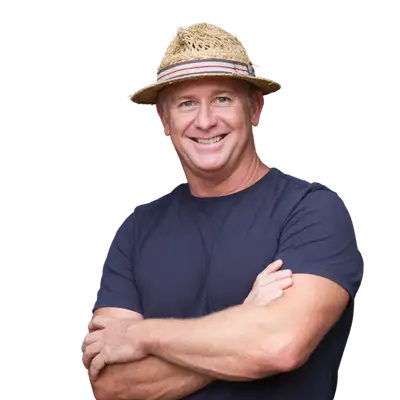
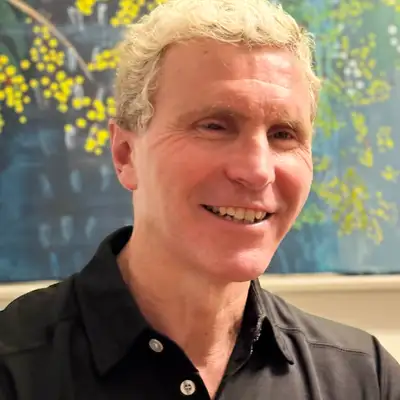
They’ve swum oceans, scaled mountains, launched empires, and shattered expectations. But before they did any of it, someone, maybe even themselves, thought: “You can’t do that.”
Hosted by Sam Penny, Why’d You Think You Could Do That? dives into the minds of people who said “screw it” and went for it anyway. From adventurers and elite athletes to wildcard entrepreneurs and creative renegades, each episode unpacks the one question they all have in common:
“Why'd you think you could do that?”
If you’re wired for more, haunted by big ideas, or just sick of playing it safe, this is your show.
Sam Penny (00:00)
Some people live their whole lives without ever stepping outside the lines. Today's guest doesn't even believe the lines exist. Now, let me paint you a picture. He's run 2000 kilometres from Cairns to Brisbane. Not once, but five times, raising millions for charity along the way. He's climbed to 8,300 metres on Mount Everest, driven by grit, stubbornness and an appetite for the edge.
He's represented Australia at three Paralympic Games, taking on the marathon and going head to head with the world's best in triathlon at the Commonwealth Games. He's flown an ultralight plane, he's conquered adventure races across continents, and even stepped into the ballroom spotlight on Dancing with the Stars, making it all the way to the semi-final. And when he's not breaking records or taking on the wilderness, he's built a thriving artisan chocolate business
from the ground up. But maybe the wildest chapter of all, he set out to swim the English Channel, taking on frigid waters and relentless currents in pursuit of a record that had never been claimed. Every single one of these feats would be astonishing to any athlete. But Gerrard Gosens has done it all without ever seeing the start line, the finish, or even the path in between. Born completely blind,
Gerrard has never let the world's expectations define his own. He's living proof that the only real limits are the ones we accept. This is the heart of why do think you could do that? To celebrate those who say yes to impossible questions and then go out and prove what's possible. Gerrard Gosens welcome to the show.
Gerrard we've known each other for a few years now and I've always enjoyed catching up with you and listening to your stories because it's absolutely fascinating. And I want to go back on some of your early life to start with. let's start at the beginning. What were your first memories of growing up? I guess differently. And when did you realize that you saw the world in a way that most people never would?
Gerrard (02:18)
I think for me growing up in rural areas and being somewhat isolated, living on a farm, I thought it was quite normal to walk around the farm and every now and again trip up a step or run into a half-open door as a young kid. And it wasn't until that very first day of primary school where I things were very, very different. The teacher had a very innovative thought about burning out some of nervous energy of the students being away from
Mum and Dad for the first time. So teachers took us down to the oval and there we were asked to ⁓ do two laps to the oval, which was fine. I enjoyed running at a very early age and off we went and I could hear the giggling and laughter of kids around me. I thought it was quite normal. ⁓ within the first ⁓ maybe 25 or so metres, I hit this big wooden post and that was a bit different because all the kids went around it and I ran into it.
And then I went running again and hit another one. And then when hit another one, another one. So I found all four goal posts of the AFL posts at the end of the oval. he showed me that was very different to the students around me. And from there, when he had to, I suppose, not only work on the perceptions of my fellow peers, but also the teachers within the classroom. I was the youngest person to ever go to high school with a guide dog. I went through the state primary school system and state high school system. So.
And being in a rural and regional area, it was very limited services. Not only obviously with, back then there was me, my, I suppose, bane of life, my hatred in life was the manual typewriter that I had to use every day, it to school and it weighed five or more kilos for a little kid. So I'd drag it home in my school bag and put it there and...
And then obviously drag to school. then what was even worse that moving into sort of through high school and through university, the audio, all the textbooks were put into audio cassettes. So you were dragging around a five kilo typewriter and then maybe 10, 20, 30, 40 audio cassettes, just so you could listen to the textbook.
Sam Penny (04:34)
So growing up was there a moment or perhaps an influence that made you decide that you really weren't going to accept the limits that pretty much the world had set for you?
Gerrard (04:46)
I think for me it was at a very early age, my parents didn't sort of me in common wool and I'm pretty staunch on that I suppose particular moment in the sense that my parents didn't say, listen, you're totally blind, don't go and ride a push bike. It was get out there and give it a go. ⁓ In the first few years I started riding to school on my push bike by following the sound of my brother's bike. And what we do is obviously with that the old days of... ⁓
putting a bit of cardboard with a bit of peg on the spokes so it sounded really cool and I'd be able to follow his sound of his bike and also because we had dirt roads you could hear obviously the tires on the dirt road and there was times when the city council would come along and put extra dirt on the road just to grade it out and that would be hated out because that made it a soft dirt road. But outside of that I think for me at that point I had to
Sam Penny (05:17)
Haha.
Gerrard (05:41)
to believe in breaking down those perceptions about, well, here's a young kid who's totally blind. I had to begin on working about how I could develop those relationships within the classroom to build those teams to ensure that, you know, I could do maths, I could do physical education, I could do science because often at times I have a person, the mates, you know, who sit beside me and tell me what was on the actual blackboard.
And then obviously developing that relationship with the teachers so that they felt comfortable about working with a young kid. there was some, look, know, it wasn't all sort of chocolates and roses. There were some immense, immense challenging moments. And at times it was the smallest things that made big differences. And one of those, I remember where we were given some homework to go home and write a short story.
and I went home and it was one of those nights where you write a story or it was just that homework comes out and just, I just loved the story. It just came to me and I just wrote and wrote and wrote and I was really proud of this short story that I wrote for my teacher. I went back the next day and I was itching to go out to the front to give him my short story and show how well I'd written that piece of homework. Anyway, came to my points and I sort of went up to the front of the classroom whilst everyone's working and had in my piece of...
homework, my short story, and she said to me, where is it? And I said, it's right there. goes, no, it's not. And I thought I picked up the wrong piece of paper, so I went back to my desk and I opened up the lid of my desk and fell around some papers and sort of grabbed something else and thinking, well, maybe perhaps that's it. Anyway, I walked back to the front and said, here it is. She said, no, that's not it. And I was quite confused until I actually felt the piece of paper that handed her originally.
and in actual fact I had handed her the homework. What had happened was that night I put the typewriter on correction ribbon, on white ribbon. So you could actually feel, you could feel the letters that were imprinted into the actual paper, but you actually couldn't see it. And you think I could write that same short story again? No chance. But it shows you that despite your best attempts, obviously those are the, I suppose the facts of life where things can and will go astray.
Sam Penny (07:43)
Hahaha.
Gerrard (08:02)
being totally blind, are many effects of life throughout my life that have been there. it's about that. I think when we talk about bravery, bravery is about that window of attitude. It's about making sure that we have a crystal clear picture of what we're trying to achieve. And I think bravery can be impacted by a window of attitude and also the learned fears. We're born with three fears in our life and that's it. The fear of falling.
the fear of isolation and the fear of noise. Every other fear is learned. And I think for me, bravery, whilst I may be called brave, I think for me also, the other spectrum is not having those learned fears. So my parents didn't say, hey, listen, you're totally blind. Don't go and pick up the axe and help by chopping wood up. Sure, I found ways around doing it. Don't go and mow the lawn because you're totally blind. I could feel the long grass, I could feel the short grass.
I was always about contributing in my own special way.
Sam Penny (09:02)
Absolutely fantastic. So I want to move on to the sporting part of your life. When did you first fall in love and why? it the competition? Was it the movement? Was it something else? Why did you fall in love with sport?
Gerrard (09:18)
think for me it was a great vehicle to break down those perceptions. So at a very early age, for example, where it'd be AFL, I enjoyed running. I could hear where the ball was. And I think back in also the days of AFL and the days of rural areas, what would happen is the parents would come down to the football ground and sit around in their cars at either end of the oval. And you'd have the smell of the hot dogs coming from a small kiosk. You'd have the...
the smell of the massage or the denko rub coming from one part of it. And if a goal was kicked, know, people would sit their horns at one end of the oval. I had a very, and also you could hear the pitch, you hear the wind coming through the trees at one point. So there's all these pieces of sound which created a picture, my own special picture. And I was also then given a tagging role. So because I was fairly tall at a very early age, I was able to tag someone to stick right next to them.
And if the ball ever came near him, it was you know, hip and shoulder out of the way. So that was my participation, but my love was cricket. So I built my own cricket pitch and I would actually have to bribe my brother to come and play cricket. So I would bowl at him. I would build the pitch where behind the stumps I'd have some copper logs put into the ground. I had some black plastic. So if I bowled and bowled and bowled, the ball would be caught obviously by the black plastic behind the stumps.
I could collect them and go on. And I could also feel the white paint or red paint that was left on the stumps from actually hitting the stumps. So I knew how high up the actual stumps I'd actually got through. So my love of sport at a very early age was, suppose, to two reasons. A, was a sheer enjoyment, but also it was a great vehicle to break down those perceptions.
Sam Penny (11:06)
So Gerrard, most people have barriers placed in front of them or they come up against barriers. When you came up against barriers, what was your approach when you were faced with them each time?
Gerrard (11:18)
think we can either ⁓ create our own barriers or we can have those perceived barriers that people may imply upon us. But I think for me, there was a way of actually working with that and building teams around me to demonstrate that, for example, with AFL, okay, well, obviously I couldn't go and mark the ball, but I certainly became a tagger and I could use my height and my speed as a runner as an advantage. In other sports where it be...
I suppose cricket, you know, I had my heights as a young kid. I had my pace. And also I had, for me, I was very much a thinking bowler as a young kid. was obviously sort of trying to visualize how and what I would be trying to do as a bowler. there was always a way of finding out different ways of doing it and breaking down those barriers. And at times, it wasn't actually at times the participation. It was at times simply the communication or
instilling the confidence in the person who potentially was creating the barrier as well.
Sam Penny (12:22)
So early on, were there any setbacks? Were there times where you felt, you spoke about the three fears, ⁓ falling, noise, isolation. Did you have any times in those early moments where you did have setbacks? And what kept you going?
Gerrard (12:43)
I've looked at this, not just setbacks then, there's daily setbacks. For example, growing up and learning obviously a lot of running, was reliant on guide runners. And you have your guide runners who might call in sick, who might have other appointments that have come up. There's a whole range, or they even could be injured. So even just reliance on a guide runner, or if I was, I suppose another example is one day that I was going to school ⁓ and
As I said, I would follow the sound of my brother's bike and my brother was sick and didn't want to go, well couldn't go to school. And I said to my mum, look, I know the way. And cause I've ridden it every single day, it was relatively straightforward. It only probably about three kilometres. And I knew the dead road. I knew how to get there. And that was the only day outside. We ride past a fire station, a rural fire station.
And that was any day that there was a full-wheel drive parked out the front and I hit it front on with my bicycle. And I got to school, you know, a bit bloody and bit scratched up and the teachers were quite surprised because, you know, here it was bloody and scratched up, but I'd actually got there on my own. So for me, it was about overcoming those challenges and sure, as I said, you know, had the cuts, the bruises, bits of blood, but it was about recognising for me that, you know, success.
is a journey never ever a destination. It wasn't going to stop with one single point. And I never had a bucket list of I will run from Kansas to Brisbane five times or I will, I think as a young kid, my first ever major ultra marathon was from Rocky to Glaston, just over 120 kilometers. I never had that on my bucket list. It was about the actual opportunities. And for me,
throughout my life, you know, it's, it's fun in those different ways. It's as you said in the intro, it's about looking outside the lines. And I often tell a story about when I raced at Yipun High School and the school was 400. And I've run around that over hundreds of times. And over the years, Yipun High School placed a lot of line labels to mark out the lanes. And I went out pretty hard at my school was 400.
Things are going well, I can hear the puffing and panning of students behind me. Got around to the 100 metre mark, same sort of lead. Got around to the halfway mark, same sort of lead. Can hear the puffing and panning of students behind me. This is where I gave it everything I had until I heard the yells and the screams of the crowd. Went through the finishing tunnel and across the line and completed the fastest 400 you put in high school had ever, ever recorded. And I suppose quite arrogantly, can say that time will
never ever be broken and reason being is because of the 200 five metre mark I took a left hand turn and I cut right across the middle of the oval through the trophy tent and across the line it completed 400 in approximately 42 seconds. So it showed the students I was willing to try and attempt something and B, can make a mistake but more importantly, can laugh at my own particular disability and that's something very important to recognise is that
Sam Penny (15:50)
Ha
Gerrard (16:01)
every single person in the world does have a disability, whether it being not so good at maths, not so good at spelling, being totally blind, a whole range of reasons.
Sam Penny (16:11)
I recall one of your stories Gerrard, where you got in trouble with the police at an early age. Tell me that story.
Gerrard (16:17)
Yeah.
My brother and I go out and as very similar to the bicycle on motorcycles, we would buy motorbikes around our property and started off on a Kawasaki 75 and moved up to the Honda XL125s and what have you. And I would follow my brother's motorbike around the property and also at times I became very familiar with the property, whether it be rectangle or
square shape. Anyway, we had to go and find some other property because we're doing some work on the actual property itself. So we went down the road. We knew that there was quite a bit of large property available. And we went down there and said to my brother, hey, listen, you ride the motorbike, I'll run beside the motorbike. We'll get down there, we'll ask if we can use the property and she'd be right. And we got down there and knocked on the door and no answer. And typically as sometimes where that happens that
The sky just opened up with rain and I said to my brother, you jump on the back, I will dink us home. Now we're riding on the side of the road, okay, not on the bitumen, on the actual dirt road. And I heard this car go pass go here, the wet tires on the road, it pulled up and there was a guy got out and walked up and he was a policeman and he obviously identified himself and he said, what are you guys doing? said, we're just riding home, we're just getting out of the rain.
and he said what's the serial number on the bike and I said I don't know where it is I actually did but I recognized that he didn't know that I was totally blind. He then asked me where my parents were and he drove home and he booked me for everything under the sun as in no pillion passengers on the wrong side of the road yada yada goes on. Anyway we got home and my parents were well aware of what we were trying to do.
knew that we weren't so sky-liking on the actual highlight. We went from point A to point B to find some grass to ride on. And I went to the senior sergeant for talking to the next week. And not once during that conversation did he recognise that I was either totally blind as well. I walked in there with my mum and here I was actually as a young rebellious little kid trying to explain why I actually wanted to get back on the motorbike and get back out of the rain. And my mum's kicking me on the table saying just...
just be quiet, let him have a talking to because he also doesn't know that he's totally blind. So again, I think also we talk about actually there's a friend of mine who's in the US right now, which is called blind masking. And it's really funny. She's actually going on a tour of Cape Canaveral and they're in a bus and they're doing a of a bus tour around the shuttle and what have you. And the guy on the bus is sort of saying, if you look to the right, you'll see such and such, you know, here and look to the right, whatever.
And she's doing that even though she's totally blind. And the reason being is because she's fitting in. She's trying to sort of assimilate in with sighted people. And I think for me that's been part of my life is trying to fit in. Because for example, I will go about doing, that's why I played sighted cricket. Because I wanted to fit in with my sighted peers. That's why I played AFL. Because I wanted to fit in my fellow peers.
Sam Penny (19:35)
But your trajectory has certainly not been a case of fitting in with some of the things that you've achieved and taken on. And I want to switch things up a little bit now because you've represented Australia on some of the biggest stages. So what does it take mentally, physically to get to that level?
Gerrard (19:54)
I think for me, when I sort of my hand to my ultimate goal in life, well not ultimate goal but one of the goals I sort of stumbled into was when I was running from Cairns to Brisbane five times. That were the days of Cliff Young and Yannos Kouros and ⁓ I sort of thought okay well let's give this go of running from Sydney to Melbourne. So I had the preparation through running from Cairns to Brisbane. I was ready to go. That year I entered the Sydney to Melbourne Westfield run.
I had my team, I had the equipment, I had some sponsorship. That year, they cancelled the Sydney to Melbourne and Westville run. So I was left somewhat stranded. I could have quite easily sort of hung up the boots and thought well running from Cairns to Brisbane's pretty cool, ⁓ pretty a major achievement for a young kid. But for me, I recognized obviously the journey would go on. I did some research into Paralympic Games, was horrified, was...
I'm very much upset in a sense of what I saw and what I found out about what there wasn't in a sense of Paralympic Committee. I asked to meet with a volunteer who was sort of a chairperson of the Paralympic Committee in Australia. That was just a very tiny honorary board. I said to him, want to establish the Paralympic Committee. I resigned from my job. I began the Paralympic Committee from my back bedroom with a laptop computer and a bubble jet printer.
and began the Paralympic community from there. As an athlete, working alongside that though was building that team. And I had to build a team of guide runners. So I had about 12 to 13 guide runners in my stable and some were there for the hill reps, some were there for the recovery runs, some were there for competition. And those all play very different roles. And I think in all that teams of achieving bravery, we're going to have
Sam Penny (21:22)
Hmm.
Gerrard (21:48)
Maybe it's the human resources, the physical resources, the financial resources. And I think bravery is about the ingredients we bring to the process. And bravery is both physical as well as psychological. And it's about the resources we bring to that bravery role. And it's about building those ingredients. And I built those ingredients through my team, both mentally and physically.
Sam Penny (22:12)
Let's talk about ⁓ your guide runners and the team that you always have around you for a lot of these feats. Now, you are a bloody fast runner. What's your fastest marathon time?
Gerrard (22:24)
240.
Sam Penny (22:25)
240. So for anybody who knows marathons knows that that's an extremely fast time. That's an elite time. Where do you find guide runners who can maintain the pace to help you in those marathons?
Gerrard (22:41)
For me, my marathon time could have been quicker. Reason being is because was actually in Sydney in 2000, I did the 5, the 10 in the marathon. So was working on both at short speed out of the 5k, I was ranked number 2 in the world for the 5k, and then through to the 10 in the marathon.
In a marathon thankfully I can use, if I want to, can use four guide runners, I use two. So they swap over, they're almost like the jets that are being refueled, they come alongside, they change over. And when I first got into Marathon running, I had organized back, I think it was like 90, 96, 97, Gold Coast Marathon, I'd organized two guide runners, and I'd organized one to run the first, obviously 20-odd Ks.
And then obviously the remaining 20 K's anyway About the four or five kilometer mark my guide runner broke down He tore his calf and I was somewhat left stranded Anyway, what I did was though that all these people who ran past I just gave them a short piece of shoe lace and said hey, let's let's keep running Same between that sort of five-k mark and coming back through the start line I ran with eight different people until they were too exhausted and couldn't go on and there was one point I ran with a little
Dwarf ⁓ so as here's a guy who six foot odd Raming a little dwarf and so he obviously got too tired and I was short of of breath excuse the pun and ⁓ But I've done with The highlight of my life obviously is Sebastian Coe I ran in the 400 with him Pat Carroll was I used to train with Pat Carroll whose Commonwealth Games representative. We were training every single lunchtime together We did you know do our double runs
Sam Penny (24:12)
Ha ha ha.
Ha
Gerrard (24:32)
So for me, I have those the team in the morning and they have Pat Carroll lunchtime a very elite runner But thankfully in a five and a ten and a marathon I actually can have two different guidelines
Sam Penny (24:42)
Righto, so now if we talk about the first Paralympic Games, in that, is there a moment where you feel like you belong?
Gerrard (24:49)
Yes, I think and also what made me feel even more blind is that I was, you know, executive officer of the Paralympic Committee. So I'd seen where we come from and where we're going to go to. And also, when they say that you walk into an opening ceremony, that's a lie. You don't walk into an opening ceremony. fact, you float. You're picked up by the sheer splendor of the 80 or 1000 people and you float that lap.
Sam Penny (25:16)
You
Gerrard (25:19)
I think the highlight for me in 1986 in Atlanta is I took back then it was a obviously we call it the brick or the big sat phones with me I was going to give some commentary back here to Australia on the opening ceremony. I took the phone into the opening ceremony and I was giving some commentary back. had a friend one of my board members worked for ABC radio.
And I called Vicky up and I said, hey, listen, Vick, I'm here at the opening ceremony. said, hang on, we'll put you straight through. Went through on the ABC Radio, I was working with here on ABC Radio 612.4QR. for the next maybe sort of, I we some 45 minutes or so, I did some live broadcasts of the Atlanta 1996 Paralympic Games. Not one person called up the studio.
and said how the hell is a blind person describing anything cinematic? And reason being is because I wasn't necessarily describing the colour of uniforms. I was describing the feeling. I was describing the moment. And they were all captured in by what I felt and what I brought back to them as listeners through the actual radio because listening to radio, you don't need to see. It's about what you feel.
Sam Penny (26:39)
Yeah, love that. Now, I want to carry on that feeling and so the senses because I want to talk about Everest. Now climbing to over 8,000 meters on Everest, it's beyond most people's comprehension. So what was it that drove you up the mountain? Why did you want to do Everest and why got you getting up there?
Gerrard (27:04)
So I was helping out a charity way back before 2003 and I was speaking at a function. met Sue Fierce, she was the first Australian to summit Everest. And also Michael Groom was there and a couple other pretty significant Mountaineers. Anyway, I was offered the chance to go to Everest Base Camp in 2003 and beyond.
sort of deer took on that was either aerospace camp or the Kokoda Trail. And I thought, well, the Kokoda Trail is something that is very achievable. I see even very approachable ⁓ being so close and popular in Guinea, aerospace camp, very different story. Anyway, so building that same and building the preparation around that, ⁓ I had, we talk about fears. My fear on Everest wasn't ⁓ the trust in my team, wasn't the trust in my equipment.
wasn't my fear of the cold. My biggest fear on Everest was my aim. And I mean when mother nature takes hold and you have to dig that little hole and hope like, holy, aim is very good as a blind person. Otherwise you could be in a lot of problems. But for me, I came back from Everest. I did a recce. I recognized obviously opportunities of climbing Everest. I've heard obviously about various other climbers to climb Everest. And I think
Climbing is a very different game, suppose, in a sense of its isolation. And back then, there wasn't a lot of technology around, obviously, energy cells. There wasn't a lot of comforts around staying on Everest Base camp. When you get to Everest Base camp, you think, oh, there's going to be a sign. You can have your photo up against something. There's no sign there. It's just all rock. And it's just goes for kilometers of just rock upon rock. And the balance and the coordination for a blind person
Sam Penny (28:52)
You
Gerrard (28:59)
is an immense challenge because there's not one ounce of level of ground that you actually can relax on. It is always a test of endurance, both mental and physical.
Sam Penny (29:09)
⁓ When you see photos of base camp, it looks just inhospitable. It looks like hell to anybody.
Moving around base camp and then starting your climb, how much effort does it take mentally, physically for you to move around what looks like a war zone?
Gerrard (29:33)
I
think also too that we take two steps here is that yeah, look at the base camp and then moving up through the icefall, all that sort of stuff. think obviously the rocks were harder than the actual icefall. Climbing Everest isn't necessarily a difficult, most challenging mountain because obviously you have your ropes, you have your crampons, you have the ladders. There's plenty of lines which you can follow. Whereas Everest base camp, again, it's just all rock. ⁓
I remember, I think it was at camp two, where we were situated. I was in my tents and we had a line that went from my tent to the actual toilet tent. You dig a hole and they put a tent over it. Anyway, it came to night and I said, okay, I need to go to the toilet. It got out and I followed the rope over to the toilet tent. And in that time there'd been like a small avalanche and it covered over the actual.
rope itself, went from the tall tent to my tent. And because of the wind, I was out there for over an hour trying to find my way back to my tent because the rope obviously had been destroyed or taken away. And no one could hear me because of the actual wind. So that was some very tense moments for me because I had no whether I was going to step off the mountain or into a crevasse or go the wrong way. I eventually got there, but it was about having that confidence in my skills and
patience in what I was trying to do to do that but Everest is I always talk to exercise physiologists about we talk about the carbohydrates that we burn off in running, cycling, playing golf, playing footy. There are also I believe emotional carbohydrates as in you might walk from ⁓ your kitchen to the lounge room and if I'm in the same house as you
you might consume 10 emotional carbohydrates, the conscious and unconscious ones. I might use 35 because being totally blind I have to be more aware of my surroundings. It's like being in the pool. I tested out our swim coach today for the first time. Our swim coach jumps into the water and he put the blindfold on. Now he was in a straight line swimming 50 meters with a guide swimmer.
All the way along he either hitting the guide in the back or he was running into the lane road. He thought he was going in a straight line. Now he was using up a lot of emotional carbohydrates trying to sense out where he was. I've become obviously proficient with that but I still use up far many more emotional carbohydrates. So when I travel to a new hotel room, when I travel to a new location, even just walking in a plane from my seat in the plane to the toilets, I'm using
far many more emotional carbohydrates than a solid person does.
Sam Penny (32:31)
⁓ Absolutely fascinating. Now on your Everest climb.
Was there a point where you just go, this is enough or can we just keep pushing?
Gerrard (32:44)
There was one point there where we had a changeover and one of my sherpas led me into a crevasse which dislocated my shoulder. That was bad but the good thing about that was that, well not the good thing about it, but I suppose the thing I recognised was that he had forgot that I was totally blind. He saw me as a ⁓ regular climber. We had a...
We talk about the small differences in life that may be differences and the small difference on Everest was the Yak bell which I bought for $5 ⁓ off a person that put halfway up this trek from Lookla to Everest Base Camp. And that $5 or that Yak bell was tied to my fellow climbers backpack. It saved their voice, it saved my voice. It was consistent, reliable communication. And that's what's essential in any form of a team.
And again, in his form of how we view things. I think when we talk about bravery, bravery maybe might be seen as a perceived result of achieving something. But I think in some respects, what you see as bravery, I may see as something very different because you might think, ⁓ shit, you take the blind, that's pretty brave to go and do that.
Well, no, it's not because it's something that I've lived with my entire life. So it's something that is second nature. Whereas I might see something that you do as incredible, like, you know, maybe going to the high hoops or the, up on the big, the big tents and jumping from trapeze to trapeze. That might be seen, you can, I do it every day. It's just like going to the park. Our perceived thoughts of what bravery is are two very different things.
Sam Penny (34:31)
And I guess, Gerrard, you and I both, we, I guess, tend to escalate in our feats. One of my favorite sayings is when you get to the top of your mountain, find a bigger mountain, and you learn through your past. As you do more, you achieve more, you just go, oh, I didn't think I was capable of doing that, but I did it.
Now let's go and find something else that's a little bit bigger. Is that how you approach all of the things that you attempt?
Gerrard (35:07)
I think for me Sam, like, even if talk about that, you know, it depends what you see as a mountain. So for example, I'd never danced in my entire life. And when I got the call saying, listen, ⁓ Gerrard, we're thinking about obviously auditioning you for Dancing with the Stars. How do you feel about that? Well, I'd never danced a step in my life. ⁓ I had no idea about it.
I never even watched the show, Dancing with the Stars. But for me it was, yeah, okay, look, yes, let's give it a go. Let's see how far we get, even if I get through the first series or first whatever show, that's an achievement. To get to the finals was massive. And I think the reason why we got there wasn't that I was a good dancer, was other ways we brought to it, which was the story, the story of that journey along as a dancer. So for example,
In all of that, so it could have been the lifts. Jessica and I designed various unique lifts throughout the process. the audience enjoyed those particular stories or parts of the story that we brought to the actual dancers. So the mountains that I've climbed, both mental and physical, haven't been gone. I will set my sights on that. They've been all about the opportunities. So for example, I never said to myself, I will swim the English Channel.
Because as a kid and as a runner, when I was at University of Queensland and living in Emmanuel College, I would run past the pool at 5am going, look at those bloody idiots. I'd do in the pool, I could smell the chlorine coming and waffling across ⁓ the actual river part there and thinking, my God, why would you be in a pool at 5am going up and back, up and back? Why would you be out there on the road listening to the birds and the trees?
Sam Penny (36:44)
Yeah
Gerrard (37:02)
Well, here I am in the pool, 3am, doing 6km and sometimes 10km in the pool and things change because change is constant, growth is optional.
Sam Penny (37:14)
I've done a couple of training sessions with you at Yeerongpilly in squad and your squad starts so damn early. It's ridiculous. I have to have a nap after I go because it's that early. I've always wondered it's a 50 meter pool. How do you know when to turn? How do you know when to stop?
Gerrard (37:37)
So as I said to Philippe, the coach this morning, like I said to him, you know, what were you doing? Cause he was sort of other shop and he said, Oh, was trying to guess or, know, sort of use my stroke count. I didn't count strokes because even the slightest of changes in angles would mean a shorter stroke or a longer stroke. I listened to the water. So I would use, I wear a snorkel and I listened to the actual depth of the water.
And now that's why, for example, swimming a Chandler swimming pool isn't necessarily what I'm to go and do because the water level there is consistently deep all the way through. So I use the snorkel to listen to the water, not count my strokes. And that way it gives me some idea where I am. It's the same in the ocean. can use, for example, when you come with your ice swimmer down at Kurrawa sometimes it will go from Kurrawa up to surface and back. And there are certain points along there where there's some
whole channels that you swim across and that gives me some idea of where I am because a sighted person can look at the towers or the high rises and they get both the conscious and unconscious reinforcement of how well they're doing or not doing but also how far they've progressed. For me, in those moments where we could be swimming into a current and we think, for example, at Tallebudgera on the weekend, we were just on a treadmill.
And thankfully they told me because we were just, you know, we were salmon fishing. was just, the current was that strong. we were going nowhere, but it was all about the training. So for me, you know, Everest, dancing with stars, flying a plane around in Queensland three times, all those things weren't, I must do them. Life isn't a dress rehearsal right now. For me, it's about a person came to me and said, Hey, listen, Gerrard.
would like to do such and such. My wife is terrified because she knows I'll say yes. And as it was with the channel, when I had a person who said to I've never been a totally blind person swimming the English Channel. You should think about it. Well, I jumped at it. And obviously that progression was I was the first person to swim around Great Keppel Island. And then it moves on.
Sam Penny (39:55)
Before we jump into the English channel, you speak a lot about your senses and feeling so much, ⁓ hearing so much. I've never heard anybody talk about Everest in terms of smells. Are there any smells up Everest?
Gerrard (40:14)
yeah, there are. ⁓ Well when you trek from Lukla up to Everest Base Camp, you get a whole smorgasbord of smells. Not just the... ⁓ They use yak poo, yak crap, ⁓ as a source of fuel. So they burn the yak poo in drums to heat things and just to cook things. So the smell that's pretty off the charts.
And then you have the smell of obviously the various locations, the rivers, the snows, the smells that are coming through the actual mountains would be the dampness, the coldness. So there are many, many different smells. And then you've got the faints little served villages, the smells of cooking, know, it'd be the lentils or the, they make some really great hot chips up there. So yeah, I think as a runner
And also as a climber, you know when you're running down the streets of Brisbane or where it may be in Windsor, you can certainly pick up all the smells coming out from the various houses of, even just yesterday I went for a run and, oh, they're having a barbecue or, you know, they've got some pizza or, you know, that's cool in there. They've got some, the burgers that you can sort of, the smell of running past people's houses again is like that, well, okay, that's what they're having for dinner. So it's, and people.
If you go to Yeronga swimming pool, across the way there is the Weet-Bix factory. And even this morning, the smell from the Weet-Bix factory that wasps across the pool is pretty intense.
Sam Penny (41:48)
I'm hungry. I could actually get some wheat bix right now. Now, let's move on to the English channel. 2024, you attempted to become the first totally blind person to swim the English channel. There's no reason asking you why do you think you could do that? Because I think we've got a pretty good sense. Well, let's see what happens.
Gerrard (41:51)
Hahaha.
Sam Penny (42:10)
In undertaking a task like that, I know as someone who can see, who's swung the English channel, there's a lot of organization that goes into an English channel attempt. How much organizing was there for you to firstly attempt this?
Gerrard (42:14)
Hmm.
Although there's the national as I think the same is the same respect is for even for marathon running because at times it's not the race or it's not the swim across the channel. It's the hardest. It's the day to day training. It's the day in day out training. It's not even just the it's not even turning up at the pool at 6am. It's even just getting to the pool and transport. You know, it's actually having that accessibility of where we jumping a taxi or getting a ride or even going to answer the
the coast for a long swim and making sure that your guide runners, sorry, guide swimmers are available. ⁓ And then it's the whole coordination of, well, who is available to swim? What's their skill? So for example, each of my four swim guides which are coming with me all had their own set of skills and I'll use them. And those were the lessons learned from last year in Swimming the English Channel is that
I now know what I need to do with the currents and also the timings of how I use those guide swimmers in crossing the channel or swimming around Manhattan Island.
Sam Penny (43:38)
So let's talk about your 2024 attempt on the English channel. Where did the wheels start to fall off?
Gerrard (43:45)
look, the wheels didn't fall off of me. It was actually the changing weather and the currents and also the way in which the boat was zigzagging across the water. It's quite evident that they have a radar picture of the boat only had one engine, whereas respectively it should have had two and also had a very large donger attached to the back which was affecting the balance of the boat. So this wasn't...
Just ⁓ I suppose the weather there was other things which contributed to the actual ⁓ Just like if I had a last year when I finished and was a pullout, you know 3k short I was I Hadn't realized how far would actually gone because for me I wasn't concerned about the distance my goal my psychology was I go I had six swim guys last year and For me, it was just rotate them through. Okay hands number one
You know, sort of went through the whole process of where they were in the actual picture of the guide swimmers. When they told me I swam the 40K and the channel is 34, I was quite pleased in the sense, okay, we actually swam the distance. It wasn't necessarily getting from point A point B, we were bloody close. So I know from a distance perspective I can do it. It was now finding the right pathway. So as in life, we might be disrupted and that pathway may be, for example, it could be that
The running club we're with isn't necessarily suited to us. It could be the gym we're going to doesn't necessarily have the right equipment. It could be the fuel and nutrition that we're using isn't necessarily the right pathway. And for me, the mechanics of the boat and the way we attacked it weren't the necessary pathway. And we now have a new pathway because the lessons we learned from 2024.
Sam Penny (45:36)
The moment that you called an end to that swim in 2024 at 31 kilometres, three kilometres off the French coast, what state were you in physically at that point?
Gerrard (45:48)
I was actually in great state. I was actually going for it. It wasn't like we were just going nowhere because the currents and the mountain nature had changed. The chop was significant. ⁓ The documentary I think even highlights how bad the chop was. There was points where the boat was down one side and we were at the other side. So physically and mentally, I was quite, I suppose, well in how I felt. It's just that...
we weren't going anywhere, we were sort swimming on that particular treadmill and I've experienced that before as said on Tallebudgera Creek where when the river's going out or in at Tallebudgera, you've got no chance against some of those tides.
Sam Penny (46:29)
So who made the call to end the swim?
Gerrard (46:32)
The pilot does. The pilot makes the call. I don't have a chance. It's like, would have kept going. In actual fact, if I had my choice, I would have gone further south and then turned back and gone back in with the other tide. So I was prepared to swim, you know, we were pulled out at 14 hours. I was prepared to go to 22, 23, 24 hours.
Sam Penny (46:51)
Righto. Now, the sense of having the swim ended on you must've been pretty disappointing. What does it take to pick yourself up, dust yourself off and just go bugger this, let's do it again.
Gerrard (47:08)
Sam, I think from my entire life, I've actually encountered those, I wouldn't call them disappointments, but where I've gone into a race, and I've raced against able-bodied athletes who have far many, like even for example in triathlon, in paratriathlon, I raced against people who basically almost drive a car. There's three classifications, B2, B3, B1, I'm B1, which is totally blind. So I've raced against
my fellow peers in many different situations. ⁓ And, you know, we'll be finishing second, third, fourth, whatever it may be. But for me, it's not necessarily about the actual, the medal, which I've obviously won many, many medals, but it's something about the entire journey. It's something about the whole process of the journey and what have I learned, what have I taken from it, what have I achieved. Now in, with the channel last year swimming 40K, because obviously it wasn't a straight line.
I knew I'd cover the distance. If I had been on 10k or 12k, sure, would have been disappointed. But to swim further than the actual distance of channel, I was pretty proud. But I still went about obviously looking at a different slot. I waited for a slot. There was no slot available until one's actually just come up. And the process was to swim around Manhattan Island, which is a 50k swim around the twenty Bridges. Far more, less weather affected.
than what the English Channel is and somewhat more comfortable than what the English Channel is in the sense of water temperature but still an immense challenge and if you had said to me five years ago that I'd be swimming 50k Sam I remember when I used go to pool my running coach and we'd go to a padlock pass swimming pool and we'd swim a kilometer and we would think we were so good we would think we had just swum a kilometer and then we'd go there after a while and we'd swim 2k
Sam Penny (48:52)
Mm-hmm.
Gerrard (49:03)
And we all think we were the bees in the east because as runners, we swam 2K. ⁓ 2K isn't even a warmup for me in my sessions these days. It's just how we have that change and that growth in our own both mental and physical opportunities.
Sam Penny (49:17)
Yeah, runners certainly don't make the best swimmers, do they?
Gerrard (49:21)
Nah, because they hate it because they used to go from point A to point B. They used to run from, know, running from here to the city and back again. Or my wife and I used to walk into the city and see a movie and walk back again. Yeah, that's a 12k round trip actually further. So, you know, we just love that point A to point B of all the sights and sounds, you know, sights for obviously silent people. But
the sounds and the different undulations, the road textures, the grass, the pavement, the bitumen, whereas in the pool it's designed up and back. And for me, it's taken on a different psychological state of, how do I prepare myself mentally? Because in the ocean, Sam, you can see the next buoy, you can see where the boat is. I get no reinforcement, I get no psychological rewards, subconscious or unconscious.
because I can't sit. So in my mind, I have to work on the things that I know, which will get me through the one hour, the second hour, the third hour, the fourth hour, and I'll break it down into half an hour. Often the question is, how do you eat an elephant? We eat it one bite at a time. You don't look at the entire elephant, you take those small pieces in the whole process.
Sam Penny (50:40)
So on that you've danced live on national TV, you started a chocolate company, you seem to reinvent yourself a lot, runner, swimmer, climber. ⁓ Where does that drive come from?
Gerrard (50:53)
I think for me it's purely about knowing that I can turn up my grave and you're all sort of ragged and done in and tired and exhausted. I'm not going turn up the air so they're all rested and prim and proper. For me it's about recognizing those opportunities and I think as a blind person I've always had to take on those opportunities because for example, Sam, you can sit down and watch a documentary of Everest.
You can sit down and can watch a documentary of a person swimming the English Channel. What do I get out watching that? Nothing. So I'd rather experience it. I'd rather actually go there and feel the rocks and feel the coldness of the English Channel because you can see it ⁓ through those documentaries or pictures or magazine articles or whatever it is. I don't get to do that and I will take on any opportunity where I can experience it.
So I suppose another good example is that it took me 25 years to realize that an elephant was hairy. Because I'd go into a shop and pick up a statue of an elephant and there wasn't one ounce of hair on it. It wasn't I went to the circus, had a chance to ride an elephant. And it's like mounting a major scrubbing brush, one of the hairiest beasts I've ever come across in my entire life. And it opened my eyes, excuse the pun, to obviously my perceptions of what an elephant were and what they actually are.
Sam Penny (52:12)
Ha ha.
Gerrard (52:21)
And it's the same with what I thought, for example, Everest Base Camp would be like. I thought I was going to get to Everest Base Camp and there's going to be a bit of a sign there and maybe even a little kiosk I could buy a little drink and have a photo beside a sign. There's nothing there. There's just rock. It's like going to a quarry and running on rocks. That's something I'd never experienced and never thought about. So I'd rather experience those opportunities and reinventing myself.
is about, okay, well, what's that next chapter? Because we all, our life is a book and we need to obviously work out what chapter we're at and what that chapter may look like and sure, the paragraphs may be long and descriptive and there'll be some chapters which are just one sentence. Yeah, I was here.
Sam Penny (53:11)
Is
is there a common feeling or a buzz that you get from all of these challenges?
Gerrard (53:15)
I think for me, it's about creating a pathway, Sam. I think for me, I saw the challenges I faced as a young kid in coming through sports and through education and through work. And for me, if I can create those, like there's some young kids who are mentors that are disabled, would be from a vision perspective and other disabilities. And for me, it's about creating those pathways, about those opportunities so that...
For example, the swim tether that I've designed, people now use my swim tether, not just here in Australia, but around the world. They now have guide runners, I talk about, and this may not sound significant, but in many ways it is, that when I first started off swimming down to the Gold Coast, I had more swim club, and went down with my first swim guide, and everyone was like, oh, see a blind person, what's this stuff, a bit nervous, what we gonna do?
Yeah, that was two years ago. There's a photo at the Christmas party, the Christmas swim, not last year, the year before last. And there's a photo in that group just before the Christmas function, before the swim. Every single person is wearing a swim tether. And reason being is because they all wanted to be swim guides. They all wanted to swim next to a blind person because they knew they enjoyed it.
Sam Penny (54:31)
Hmm
Gerrard (54:40)
They knew about the opportunities and it went from zero to every single person in that photo wanting to become a swim guide. And that's where if a tourist comes to the Gold Coast who is blind and has low vision or a person, wherever it may be, they have access to the opportunities because whilst the ocean is accessible, in many respects it's inaccessible as well.
Sam Penny (55:01)
Isn't that fantastic? Look, you're an advocate and a motivator for so many. Have you got a core message that you would give to anybody who feels like they're up against the impossible?
Gerrard (55:12)
Oh, look, think, you know, obviously I talk about success is a journey, never a destination. And secondly, I think that, you know, if you think you're too small to be effective, you haven't been bitten by a mosquito in the sense that we all can play our small part. And I look back now and I see people now where I've spoken at schools or rotary clubs or other events, and people come up and say,
hey listen, Gerrard, you you changed my life through those particular words or that particular story or that particular ⁓ learnings. And that's a real privilege is the sense that those people now have, I've contributed to their book, their life. I've helped them at a chapter or at a paragraph or at a sentence. And because they've actually been able to do that because maybe perhaps they now have a guide run because their guide running is now more comfortable.
about running with them because they run with me.
Sam Penny (56:10)
When you hit setbacks, is there ⁓ a mantra, is there a mental tool that you use to get through?
Gerrard (56:16)
I think for me, Sam, it's about looking at, I always had to, I always had to look at those ways around, where it'd be over, under, around the side, where it may be. There was every, every part of my life is about doing that. example, let's see an example. For example, when I used to carry the cassette tapes to school, that was a massive challenge because
You know, let's say for example, I've got them all in order and you drop my school bag or a kid kicks it along the pathway, you know, by accident, you know, all the cassette tapes are out of order. You know, and back in those days, if the heat affected it, you know, it was a sunny day and the actual ribbon on the audio cassette would start to melt. So there's, there was always those, there's never been a moment. I suppose I had to be comfortable in being uncomfortable.
because that was anyway I had to break down the perceptions and try to cheer somebody because being totally blind you have to be very uncomfortable. For example, going into a loud environment, you imagine going into a loud hall, being totally blind you've got this implosion of sounds and giggles and laughter and talking and screaming and all that sort of Well, I had to be uncomfortable in being comfortable. ⁓ So it's, yeah. So I had to be comfortable in being uncomfortable.
Sam Penny (57:37)
So,
yeah, I love that feeling and it's one of my mantras as well, I think. I get a lot of pleasure from feeling uncomfortable. And when I feel uncomfortable, that's when I feel comfortable. Now, Gerrard, today, you're such a great storyteller. How do you use your stories and how do you present your stories to show others what's possible?
Gerrard (58:04)
think for me, don't work to a actual, when I go up there and talk at a major conference, I don't talk to us as a written script. I talk from the heart, I talk from my experiences and their lessons learned. And it's the truth. It is something that has always been there and will play a part in everything I do not only now, today, tomorrow, next week. ⁓ And the various teams that I've built along the way, and even for example, my teams, being a chocolatier.
You know, I make a great ganache. I make some great ingredients and stuff within the desserts. And my other staff who have the skills in doing the decorating, that's their job. You know, it's all part of the team process. And when I swam the English Channel last year, it wasn't Gerrard Gosens, it was my team, as it will be this year in a challenge. And when I ran from Cairns to Brisbane, I had a team of 35 soldiers from one signal regiment.
It wasn't just Gerard Gosens, it was Gerard Gosens and one sig from Enoggera Barracks who were there on that journey.
Sam Penny (59:08)
Now, we're going to move on to the signature part of the show, Gerrard. The show is called, Why Do Think You Could Do That? As you know, you've done so many things that would intimidate most people, whether sighted or not. Why do you think you could do that? Everything that you've done.
Gerrard (59:26)
belief and also the the belief and also the ⁓ exposure to those opportunities the pleasures of all the rewards of seeing a difference in making a difference and I know as a young kid when I'll go out there and where we place forward or contributing back to the community it was it was about making that difference and it may not been necessarily
to a large group, could have been just the person next to me. And if I was making that difference, fantastic. I think for me,
as a business owner of a team, when my staff leave work, I would hope that the lessons they've learned is, well, there are many more ways. for example, I'll change my recipe regularly on a chocolate. And the reason being is because every environment we face in our bravery pursuits requires a different recipe. So for example, at the beginning of season,
I might use 200 grams of strawberries. At the end of the season, I might be using 450 grams because strawberries are weaker, less intense, so I need to use a stronger batch. So my recipes will always change. And as it is with bravery, we'll need to bring into our ⁓ armory of bravery a whole range of different ingredients depending on the actual conditions and what we're trying to achieve.
Sam Penny (1:00:53)
You've spoken a lot about bravery through our conversation. What does bravery really mean to you?
Gerrard (1:00:59)
I think Bravery is about...
Achieving those perceived learned fears and also the bravery is about taking that next step. The next step is people can, as I said very early in this podcast, is that I could have after five times running from to Brisbane gone, shit that's good. I'll run from Cairns to Brisbane five times, 154 Ks a day in some bloody tough conditions where at times it was 30 or 40 degrees. I'm sometimes running up at
Cardwell Range and through Gympie and through Mackay, Mount Pleasant there, you know, all hard stuff. But bravery was taking the next step because we all can sit down on the couch. We all can stand still thinking, well, that was good enough. But the next step is about the bravery and the bravery is the next step. As you said very early, it was picking out the phone call to make that call. And bravery for me was asking a person to become a guide runner to become a swim guide
and teaching them and placing my trust, trust is also about, or bravery is also about trust as well. Because without the trust, I could not complete any of the things I've done. The trust in my dance partner, the trust in my team and the business and my chefs, the trust in anybody who I work with, and that's about bravery. It's taking that next step of that trust in that relationship.
Sam Penny (1:02:25)
So thinking about your life so far, is there a moment that sticks out in particular where you've needed bravery the most?
Gerrard (1:02:33)
Yeah, as a father. ⁓ When my daughter was born, ⁓ I have a son and I have a daughter. And when my daughter was born and she was placed in the little crib there because my wife had a caesarian section, so I got to feel my little baby whilst they were looking after her. My daughter with her little hand grabbed my finger and pulled it closer to her face.
I recognize there was a problem there. I called out the doctor who was just obviously attending to my wife and he looked at her eyes and said, yes, I appreciate there is a problem with her eyes, believe. So obviously she has a fairly significant vision impairment. ⁓ I almost fainted. And reason being is because not that I was saddened that she had a vision impairment. ⁓ My fear.
or my next step in bravery was learning how to assist a girl who is blind. Because as a blind guy, I knew the tricks of the trade when you walk into the men's toilets, you can listen to where the urinal is, you can listen to where the toilets are, you can listen to where the taps are, you develop that mental picture of what's in the toilets. For a female, I have no idea about makeup, I have no idea about women's health issues, what happens when it comes to periods and all that sort of stuff.
How did she put makeup on? How did she choose her clothes? How did she make sure her bag matches her whatever? How did she choose jewelry? All that sort of stuff I had no idea of. So I'd been through this world of my learned experiences as a male. Now the next step was, God, what do do as a father of a girl who now can't see? And so the bravery was obviously taking on those challenges of learning those experiences, which I could then share with my daughter.
Sam Penny (1:04:27)
Your daughter's sight impairment certainly hasn't slowed her down, hasn't stopped her from achieving some great things. In fact, she represented Australia last year in judo at the Paralympics. And the two of you had a beautiful moment at the start of the Paralympics. Tell me about that.
Gerrard (1:04:33)
Bye bye.
Yeah, look, we obviously from taking across the Australian flag, we swam across the English Channel with the Australian flag and took it to the Athletes Village. So that's where Taylor was at the Athletes Village.
So as a father to see her level of independence and what I trained or not taught her in I suppose, she's traveled the world as a young girl who is vision impaired to take on her rankings as a judo competitor, as an athlete and to see her ⁓ trust in her team, to see her trust even in herself and what she could achieve as an athlete. And she's obviously now have a sights set on, you know, 2028.
And she's ⁓ seen her father, I suppose, go through those similar setbacks and challenges. And she has the same philosophy, I believe, because obviously there are the facts of life where things can and will go astray. And those things could be as minor as a taxi running late and you're missing out on a training session.
Sam Penny (1:05:52)
So Gerrard, for anyone listening who feels stuck or really doubts themselves, what would you say to them to get started?
Gerrard (1:06:00)
take that first step. And that first step, no matter how small it may be, shuffle an inch forward. It's about recognizing what you achieved in that one step. Because when I began the Paralympic Committee, had nothing back then. It was about having that bubble jet printer and a laptop computer. Had got anywhere, but it was the first step. Whatever you use, my back bedroom at home, writing that first letter to the government about obviously support for the Paralympic Committee.
That was another step. Second step was, well, third step was actually finding some free accommodation in Brisbane CBD so we could establish ourselves. That was the fourth step. So it was about identifying with those steps that we can take. And that first step for a person who may be doubting themselves, may be fearful. For example, a very, I suppose, good friend who was swimming at Yeronga, she's very fearful of the ocean. I took her out to swim mastery and it's,
Sumner park. She's jumped in the flume there. She's getting more, she's developing her confidence on obviously swimming in the ocean by swimming in the flume and swimming into a current. So that's one step. So we all need to take that one step and the first step may be even just getting out of bed.
Sam Penny (1:07:15)
Absolutely fantastic advice. Now I love to finish our conversations with the rapid fire close. The Brave Five, I like to call it, Gerrard, it's five questions. ⁓ Don't necessarily think that one's gonna lead on to the other, because they're five random questions. First question, what is one daily ritual that really fuels your resilience?
Gerrard (1:07:35)
In summer, the sound of birds, the sound of kookaburras, the sound of life, the sound of life itself, it may not be the kookaburras, it could be the crickets, it could be the frogs, just the sound of movement.
Sam Penny (1:07:50)
Second question, a moment you felt pure joy during an adventure.
Gerrard (1:07:55)
I think when you look at, for example, Dancing with the Stars and when I completed that first dance without running off the stage and smashing lights or cameras, that sheer joy of having a standing ovation on their very first dance and knowing that something that never been done before was achieved. that was because it was something that I'd never done before. There was moments where I ran the Melbourne 10K back in
99 I think was and you know I placed out of all the thousands of runners down to 10k I placed second overall and I was I was just I had no idea until sort of halfway through that where I was in the actual race but that wasn't a major even though I came second I wasn't going this is fantastic because Dancing with Stars was something I'd never done before that's where the enjoyment came from achieving something that I'd never done before
Sam Penny (1:08:49)
Now, what's the hardest lesson you've learned so far?
Gerrard (1:08:52)
There are many things that you can't control, that you really have to explore the things that are in your sites, excuse the pun, ⁓ and identifying with what you actually can use to achieve something. So with the channel, I couldn't control weather, I couldn't control necessarily the actual pathway that the pilot took, and that's why I wrote those recommendations.
And now I have a pilot who I actually now know the pathway and I'm now well identified with the conditions and I will change the order of my guides around so we actually blast our way across through the tides in a very early way.
Sam Penny (1:09:34)
What's the best advice you've ever received?
Gerrard (1:09:36)
best advice I've received.
I think that the change is constant growth is optional ⁓ in the sense that my environment as a blind person is going to be continually changing and not being able to see it is an immense disruptor. ⁓ But it's the growth I take on from those disruptors that will help me build who I am both physically and mentally.
Sam Penny (1:10:01)
Last question on the Brave 5. What's the next big thing on your bucket list?
Gerrard (1:10:07)
Okay, so ⁓ three, obviously I have this year I have the Manhattan swim, which is a 50 kilometer swim. I then obviously have ⁓ backing up. two weeks later, I have the English Channel. But in between that, I have a chance to race the car at Daytona. And that's with Jim Hawks and Forrest Magazine. So I've got a few hot laps at Daytona. And then once the swimming is all over,
is moving to that next adventure, reinventing myself as a indoor climber, a para-climber. So I won the national championships last year and moving on to the 2028 Paralympic Games in Los Angeles because I can use my skill, my previous learned skills as a climber in the indoor climbing. So many are parallel running on, but they're the adventures from an athlete perspective, from a business perspective, I have some other adventures to still yet.
complete.
Sam Penny (1:11:05)
Absolutely full of surprises, Gerrard.
Gerrard (1:11:08)
Always. Life is a surprise. It's just like a box of chocolates.
Sam Penny (1:11:12)
Gerrard, honestly, what you've shared today, it's way more than a highlight reel. It's a masterclass in, I reckon, rewriting what's possible. And a reminder that bravery, it's less about never falling and more about choosing to stand up again and again. Now, before we sign off, where can people follow your next adventure, reach out or get their hands on some of your legendary chocolate?
Gerrard (1:11:38)
So that can either follow, I have a website which is obviously gerrardgosens.com.au, same with obviously the Facebook. Chocolate Moments, that's because the moments that make memories, that's chocolatemoments.com.au. And for us, it's about recognizing that obviously life isn't like a box of chocolates, it's about the ingredients that you use in your life for those recipes.
Sam Penny (1:12:00)
Perfect. Now those links are going to be in the show notes for everyone tuning in. If you take anything from today, let it be this, every extraordinary story begins with someone daring to say yes to the impossible. The real limits are almost always the ones we draw for ourselves. If you want a hit of courage for your own week, join me every Tuesday for the Bravery Digest and we'll be back next Thursday with another guest who refused to play by the rules. Until then.
Ask yourself, why not you? Stay bold, stay brave, and keep chasing your own impossible.