Subscribe
Share
Share
Embed
The World Cement podcast: a podcast series for professionals in the cement industry.
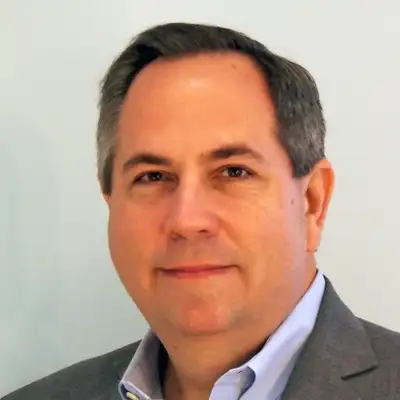
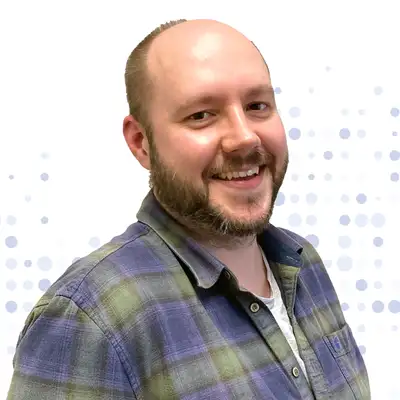
Hello everyone, and welcome back to the World Cement Podcast with me, David Bizley, Senior Editor of World Cement. As AI moves to infiltrate seemingly every part of our daily lives, from generating memes to solving complex coding conundrums, it's also driving a boom in construction. But building a data center isn't as simple as pouring a large slab of concrete and calling it a day. The world has entered the era of Hyperscale infrastructure, and that comes with a host of new challenges and opportunities for those ready and able to take advantage. Joining me today to explore the ins and outs of this new era are Justin Dickey, QC Director at CEMEX, and Randy Cushing, Director of the MIT Concrete Sustainability Hub.
David Bizley:I just wanted to take a moment to remind you to register for World Cement. It's free of charge and gives you access to the latest issues of World Cement, both in print and online. Every issue comes packed full of regional analysis, technical articles, project case studies, and the latest industry news. Simply head over to worldcement.com, click the Magazine tab, and register today. It's as simple as that.
David Bizley:Happy reading! So, Justin, Randy, welcome both to the World Cement Podcast. Looking forward to exploring the topic of Hyperscale infrastructure with you both.
Randy Kirchain:Thank you, Dave.
David Bizley:So starting with you, Randy. For listeners unfamiliar with the MIT Concrete Sustainability Hub, tell
Randy Kirchain:us a little bit about the organization and your role within it. Sure. Again, my name is Randy Kirchain. I'm the director of the Hub here at MIT. The Concrete Sustainability Hub is a university industry partnership.
Randy Kirchain:We're actually in our seventeenth year of working with the industry primarily focused on accelerating the concrete industry's transition to carbon neutrality. And I think one of the things that makes the hub particularly unique is that we do work that really spans the entire value chain. So we have projects that are looking at decarbonization strategies for cement production. How can we make more clever decisions in the way we mix concrete to lower its footprint? But also in how does the choice of material impact the carbon footprint of the buildings or the roads that that material is integrated into, and then ultimately even what's the performance or implications of end of life.
Randy Kirchain:So like I said, we somewhat uniquely have projects that span that entire value chain. And I think another thing that really increases the impact of the hub is that we work very closely with industry partners. Cymx joining us today has been one of those partners that's been with us the entire seventeen years working on every aspect of the problem that I just mentioned cement all the way through application. Excited here to be here today to talk to you about these topics, this new dynamic that's occurring within the industry.
David Bizley:Okay, excellent. Justin, can you tell us your role at CEMEX and explain from CEMEX's perspective why has Hyperscale infrastructure become such an important topic in recent years?
Justin Dickey:Sure, I'm Justin Dickey, I'm the Director of Technical Services for the ready mix concrete part of our business here in The United States. And I would say as far as the impact on hyperscalers on our business is it's if you look at the word hyperscaler, it's we're trying to do something and get big and we're trying to do it quickly.
David Bizley:So Randy, people mostly interact with AI through mobile devices or computers, so what do they tend to underestimate about the actual physical infrastructure behind AI?
Randy Kirchain:Yeah, I think it's a great, great question. You know, obviously the digital side of AI is an important topic societally and we see a lot of discussion about that, about how it will change the way we work and how it will impact the labor market. But I think that in the same way that when we answer a telephone call, don't think about the infrastructure that connects us possibly all the way across the world. There's a massive infrastructure that's being built out. We do see stories about that coming up in the news, very local impacts of those things, but maybe the aggregate scale of that may tend to be left out.
Randy Kirchain:You probably read about things like billions or actually trillions. I think McKinsey recently estimated that globally nearly $7,000,000,000,000 worth of capital is going to be spent in building out data centers globally. Just in The US, we see that as approaching the most recent estimate that I've seen for 2026 is nearly $1,000,000,000,000 of capital spending just in the next year on these. And that translates into physical infrastructure, massive buildings, mini servers, interconnections. But then the things that people often don't think about, what about the giant cooling system that's has to be housed in the same facility to make that possible?
Randy Kirchain:And then ultimately that translates into construction materials. I think the most recent estimate from the American Cement Association, ACA, is that just in the next three years it will require nearly a million metric tons of cement to go in to build those facilities, right? And so that translates into hundreds of thousands of cubic yards of concrete. With some of these facilities approaching sizes that are equivalent of a thousand homes being built simultaneously. I think your point is a is an accurate one that we interact with the digital side, but there's a really massive physical infrastructure that needs to be built out to reach the potential that is envisioned for this technology.
David Bizley:Okay. Thank you. And, Justin, over to you. What makes Hyperscale projects different from traditional commercial construction?
Justin Dickey:I would say the main thing that that I'm seeing on my end is there's more of an involvement from the owner's side on these projects regardless of who it is, and those owners coming directly to the material suppliers with what their vision is or what they're trying to accomplish. That's not generally what we see in the workflow of construction. So that would be the biggest difference that we experience.
David Bizley:Okay. And Randy, one thing you've spoken about extensively is owner involvement. How are these owners participating differently on these new projects?
Randy Kirchain:Yeah. I just would reiterate what Justin just said that I think it is a very new dynamic. Just to maybe personalize that a little bit is if you think about if you were having your own home built, would you imagine designing your own sink faucet? No, you would, right? You would maybe look through a catalog and, but more importantly, when you talk about the structural aspect of the home, probably you wouldn't interact at all with the selection of the wood or the concrete that was going into it.
Randy Kirchain:You would interact with the contractor or the architect and then they might interact with it. And so what Justin's talking about is leapfrogging that where the owner is actually directly interacting with the material supplier. It's quite unusual, I would say. But having said that, I think that the part of the reason that we're seeing that is I should have mentioned this earlier when you asked me about the scale of production. The thing that's somewhat I think also somewhat interesting here is that scale is concentrated in a relatively small set of owners and those owners have some performance goals which are maybe not traditional and in particular performance goals around environmental impact like the embodied carbon that's associated with those materials.
Randy Kirchain:And at least from our interaction with them, that's one of the key motivators of why they are doing that leapfrogging, if you will, in trying to interact more directly with material suppliers in hopes of better understanding and maybe even shaping what are some of the material options that are available to achieve those carbon goals. And again, with owners and also talking with a lot of material suppliers, it does seem to be a really critical thing to do in order to accomplish new levels of lower carbon associated with the concrete that's going into these just because the supply chain has to develop in these locations in order to deliver those new mixtures.
David Bizley:Okay, excellent, thank you. And sticking with the topic of owner involvement for just a moment longer, Justin, what exactly from Cemex's perspective does that increased odor involvement look like and what does that involve for Cemex?
Justin Dickey:For Cemex it's exactly what Randy just described. The owners are coming directly to companies like CEMEX and saying, these are what our goals are when it comes to concrete mixture design. And generally speaking, the way the industry has worked previously is those goals come from specifications and engineers' specifications and that's what we've followed. So it's a little bit different workflow than what CEMEX would deal with on just a regular, say regular private project, just building a warehouse.
David Bizley:Gotcha, okay. And Randy, you touched on this in your previous answer on topics of sustainability. Broadly speaking, what kind of trends with regard to sustainability are you seeing in the Hyperscale market? What kind of things are going on?
Randy Kirchain:As Justin just mentioned, we're definitely seeing much more emphasis, particularly around carbon emissions that are associated with the building, the embodied carbon that's associated with that data center. I would say that in terms of trends it seems that as companies become more mature and more sophisticated they're focusing more on quantitative targets, more measurable targets. I think a number, at least of the really large scale owners have internal teams that have some level of knowledge and sophistication about concrete and so they're actually able to ask about specifics about mixtures and then sometimes even suggest particular mixtures that they're interested in. I would say that those are probably the two big trends this transition to more quantitative targets and even more specific questions about the mixtures that would be able to deliver them. I do think there are challenges associated with this and I think that one of those challenges is that especially as we move to lower carbon mixtures, when it's important to recognize that an approach in one region may not easily translate to another region.
Randy Kirchain:And so I think I still see some maturing happening within the owner community of that they're still not as fully aware of that. Think as they need to be that a solution that might have worked on a previous project may be challenging to apply a project that's on the other side of the country just because the supply chain is quite different. So that's maybe another trend that I think is they're starting to recognize but still I think creates some challenges for companies like Cymex or whoever that supplier might be because of expectations that are transferred over that might not apply in that context.
David Bizley:Sure, we'll touch on that regional variation again in just a little while. Moving back to you Justin, with regard to these sort of specific requirements that customers are demanding, what kind of things have you seen from customers making in terms of the demands they're making from CEMEX on these projects?
Justin Dickey:What Randy described really, obviously MIT has their finger on the pulse when it comes to the when it comes to the challenges, because I agree with what he said. It is very regional and something that will work in one area won't work somewhere else. Now, what we have seen is we have had either owners or these general contractors that do a lot of these data centers come to us, come to CEMEX and work with us earlier in the process and say, okay, we have these projects coming here and over here. From a lower carbon standpoint, we're aware you're not going to be able to do the same thing in Phoenix that you can do in Atlanta. So what is it can you get done when it comes to these carbon reduction goals?
Justin Dickey:Let's go ahead and work on that so we can know where we're at. So that's something that's been very, very helpful in the industry. The other thing would be, as far as Cymex is concerned, because we are a global company, we do get to leverage that global knowledge. So a lot of times an owner is going into a market where you may not have a vertically integrated company like us. And so they they not only don't have the access to the materials, but maybe also not have the access to the knowledge.
Justin Dickey:And so that's a challenge that these owners are running into in certain areas, whereas when they come to CEMEX, there is that global network of knowledge that we can leverage to try and help achieve those goals.
David Bizley:Okay, excellent. And moving back to you, Randy, we talked earlier about sort of people not potentially understanding the scale of the infrastructure behind AI. On that sort of theme of misconceptions, what generally is the biggest misconception people have about lowering the carbon footprint of concrete?
Randy Kirchain:Mhmm. Yeah. So I would say that it might be useful to take maybe just a little bit of a step back and explain where does the lion's share of that footprint come from. Concrete that we interact with is this is a mixture of some more advanced components to it today, but it's most basic is a mixture of cement, sand, aggregate, and water. And the interesting thing is that the cement represents it.
Randy Kirchain:Cement is this binder that holds all that together and might only represent 12% of the mass of that mixture, but the majority of the footprint comes from the production of traditional ordinary Portland cement. And so the strategies that are really actionable today are to find ways to basically use less of that or in particular what the industry tends to focus on is the precursor to that which we call clinker. So you'll hear about strategies to reduce the amount of clinker that ends up in that concrete. So there are some really exciting technologies that are coming out that would change the way that we would make that clinker or its analog and those technologies would have much lower footprint. And I want to say that it is important for us to continue to invest in those technologies, but it will take time before the industry is able to scale those new production methods.
Randy Kirchain:Another thing that I think often gets overlooked is just in The United States, we use over a 100,000,000 tons of cement a year and globally it's 4,000,000,000 tons. Any new technology would take a long time before it will represent a significant bite out of that. So what we're talking about today, what Justin's talking about in terms of and I'm talking about in terms of low carbon concrete isn't about those new technologies. They may play a small role, but it's about making use of raw materials that are available today that can replace some of that clinker, some of that traditional cement. And so industry has this sort of jargon term supplementary cementitious materials or if it happens at the cement producer we refer to that mixing as blended cement.
Randy Kirchain:I would say the misconception is that there isn't necessarily a need for new technology, real basic fundamental technology. There are technical challenges that I'm sure that Justin has to deal with on a day to day basis, but it's really about coordinating a supply chain to get the right materials to the producer. And then as Justin mentioned just a minute ago is for their knowledge to be present at that producer and then at the contractor of how to appropriately make use of that. And then I'd say the other piece that often gets overlooked is risk. So the both the producer and the contractor tend to be particularly risk averse for really great reasons.
Randy Kirchain:We want to build buildings that are going to last and one of the ways that one is most comfortable about doing that is using the material you used last time. And the contractors and to some degree producers are, I would say, generally concerned about introducing new materials. And so the other piece of this, I think, is basically getting comfort with the local contractor that this is a material that has been used somewhere else. It has proven in other applications. So they overcome that risk concern.
Randy Kirchain:So yeah, in the end there's a lot that can happen without dramatic new technology coming in as long as we can basically mature the supply chain and overcome the risk concerns associated with the various stakeholders in that process.
David Bizley:Okay, excellent. Sticking with you for a moment, Randy, we're going to revisit that topic of regional variability and why that might cause problems. So diving into that a bit more, why can the same global warming potential target be realistic in one region but much harder in another?
Randy Kirchain:I think that one of the things that people overlook or people don't maybe think through as thoroughly is that concrete is ultimately a truly local product. And especially when we talk about ready mix or cast in place concrete that colloquially people I think often think that the water in that mix dries out of it. Right. But in fact, it's a chemical reaction that starts the minute those two things hit each other. And that means that that means that the product has to be made within a relatively short distance of where it's going to be used.
Randy Kirchain:And so therefore it is inherently local. Like just in The United States, we have over 6,000 ready mix plants distributed across The U. S. And that's because of this need for local delivery. So that's an important part of this in that therefore the supply chains for those are very local, very regional.
Randy Kirchain:And so some of the cement itself might travel a reasonable distance, but these other materials that we were talking about, these supplementary cementitious materials, the two most common that are relied on by the industry today are fly ash that typically comes from a coal combustion, that's a main source of it, and then slag from iron production. And so if you imagine in The US where that happens to occur tends to be more in the middle of the country. And so if you look across The US, there are exceptions to this, but generally those materials have to travel farther to get to coastal markets than they do to external markets and so they're just not as available in those contexts. The other thing we didn't really touch on it before, but I think Justin would agree that some of the hyperscalers are also looking to introduce what we might call alternative SCMs, so new types of SCMs, and those are because the supply chains for those newer materials tend to be even less developed simply because they're newer they are even more regionally variable in terms of their supply. And it's this combination of local small, oftentimes small business not always integrated like a producer like Cymx Justin was just referring to, differences in the availability of those raw materials that come together to make this challenge of making it difficult and to necessarily create the same mixture in one place as in another.
David Bizley:Okay, thank you. And Justin, obviously CEMEX are the ones on the ground helping putting projects like these together. How are you helping customers navigate these differing regional realities?
Justin Dickey:It's really just a conversation with them. One nice thing that we have is generally they want, meaning the owners want a reduction from a particular carbon baseline. And those carbon baselines are regional. And so with that being taken into account, Cemex is able to have conversations with these owners and let them know what is and is not feasible for a particular region. Now, one thing I want to mention, and Randy's absolutely accurate on the supply chain challenges and certain SCMs maybe being available in one area, but not another.
Justin Dickey:But going back to the fact that the cement content of a cubic yard or cubic meter of concrete is what's really driving that carbon content, global warming potential, that's the number that the industry leans on, the GWP. In a given market, it is the available aggregates that drive the water demand of concrete and you have a higher water demand, by default you have to use more cement. So to put in perspective, you can be in Houston, though Cemex in Houston, maybe two fifty pounds per cubic yard of water versus Cemex in Phoenix, 300 pounds of water per cubic yard. And that right there is you already starting off at a different baseline.
David Bizley:Okay. Interesting. Now, Randy, you've spoken about sustainability today, and you've also emphasized economics. How should owners be thinking about the business case behind these kind of projects?
Randy Kirchain:I think that one of the misconceptions here is that especially historically these alternative materials of fly ash and slag in particular tended to be less costly than cement. So there's a prevailing sense that this low carbon concrete, so concrete that had more of those in would be therefore cheaper or the same cost. And I think there's two things that get overlooked in that. One is that because demand for those SEMs has increased so much because we are pushing the envelope on the carbon reduction for concrete then their prices have gone up dramatically. So that reality is quite different now.
Randy Kirchain:I think the other thing that occurs is when you really want to push the envelope on the use of these, remember earlier I said like the simple version of concrete is just those few ingredients, but the reality today is that we add in a number of other things which the industry refers to as admixtures to achieve the specific performance that's needed. And so the other key challenge that occurs when you really push the envelope is you tend to incorporate more and more of these pretty expensive additions into the mix. And I would say that, and I imagine that Justin would back me up on this, that one of the misconceptions that often occurs here is that there tends to be a bit of a cost premium for accomplishing these goals. And I think in most other contexts that wouldn't seem particularly surprising. That's why I refer to it as a bit of a misconception.
Randy Kirchain:The reason that's really relevant here, I think, is that I would love to see more of an emphasis in these projects of looking at the amount of carbon savings potential for what is a relatively small addition in the cost. Earlier I talked about spending that's pushing closing in on a trillion dollars just in The U. S. ACA I think last year did a really interesting study that I think it's not surprising once you reason through it that compared to a conventional commercial building, so whether it was an office building or retail building or whatever, the share of that trillion dollars that is spent on the basically the non structural part of the building. So whether that's the HVA system or more obviously the servers and the interconnections and etcetera that are in that building, they're a much larger fraction than in a typical building.
Randy Kirchain:So the when we look at the amount spent on concrete and the potential leverage for carbon reduction, I think that the premium that would be required is dollars well spent for that, accomplishing that goal. And I believe there is a beginning, some beginnings of realization there in terms of a shift to that perspective, but that has been one of the challenges is getting those owners to recognize this is one of the best values for reducing carbon in a project in particular.
David Bizley:Excellent, thank you. And Justin, back to you. Stepping back to look at sort of the bigger picture, what positions CEMEX well to support these kinds of hyperscale projects?
Justin Dickey:From a big picture perspective, it's like what I mentioned earlier, CEMEX being a vertically integrated company. We produce our own cement. We produce our own aggregates. We produce our own chemical admixtures. We have access to various SCMs depending on the market.
Justin Dickey:That right there would be something that used that definitely gives us leverage when you look at this segment, look at the data center segment.
David Bizley:Okay. Excellent. Final question for both of you. I'll let you fight over who gets to answer this first. Can the cement and concrete industry continue meeting hyperscale demand while reducing embodied carbon?
David Bizley:Who wants to go first?
Randy Kirchain:Justin, please go ahead.
Justin Dickey:It goes back to what Randy was saying earlier. Right now, our largest lever to pull are the SCMs. They're the locally available SCMs, and then there are your more novel SCMs. Which those produce their, they come with their own challenges. Typically the cost is higher.
Justin Dickey:We, as a ready mixed producer, have to find a way to integrate it into our batching process. We, as a ready mixed producer, have to go to our customer, which our customer generally is the concrete subcontractor, and make sure that they are comfortable with using these newer novel SCMs. That's one side of it and that's what we can do immediately. Randy also mentioned the supply chain and the supply chain and the way that cement, traditional cement is produced. It's been the same for a hundred years.
Justin Dickey:And, you know, some ex other producers, we all want to chase that lower carbon, but it's not as simple as flipping a switch because there are infrastructure changes, there are supply chain changes that have to happen in order for us to do it. And it's just something that will take time.
David Bizley:Okay, and Randy, your thoughts?
Randy Kirchain:Yeah, would just reiterate what Justin just said. I don't think there's any question that there's the opportunity both for the industry to grow in its supply of this sector or just generally while at the same time significantly reducing its footprint. We've already seen that over the last two decades the industry has already been significantly reducing its footprint per cubic yard delivered. I think the key to recognize is that there are a lot of solutions that are available today, but the whole value chain needs to collaborate to actually make sure that their solutions are poured and placed in projects. And as Justin was alluding to, that means collaborating earlier, possibly even in pre project pilots to address that risk concern that contractors might have so they could see local examples of these new materials being applied.
Randy Kirchain:But yeah, I don't really see that there's nothing fundamental that prevents that goal as long as the everyone as part of the value chain is interested in accomplishing it.
David Bizley:Okay. Excellent. Guys, that about wraps things up for this episode of the World Cement Podcast. Justin Dickey of Cemex and Randy Kershane of the MIT Concrete Sustainability Hub, Thank you both so much for joining us and taking us through some of the aspects of this exciting new era in construction. Thank you, guys.
Randy Kirchain:Thank you, David.
Justin Dickey:Thanks, Evan.
David Bizley:And as always, a huge thank you to all of our valued listeners. If you're new here, then make sure to like, review, and subscribe to the World Cement Podcast so you never miss an episode. Goodbye for now. I just wanted to take a moment to remind you to register for World Cement. It's free of charge and gives you access to the latest issues of World Cement, both in print and online.
David Bizley:Every issue comes packed full of regional analysis, technical articles, project case studies, and the latest news. Simply head over to worldcement.com, click the Magazine tab, and register today. It's as simple as that. Happy reading!