Subscribe
Share
Share
Embed
EEShow (Everything’s Energy Show)
EEShow is Everything’s Energy Show, a long-form interview podcast hosted by Michael Scalar. The official site is ee.show.
Listen: Everything’s Energy Show
Experience EESystem: Use this Center Locator to find a center near you.
Shop: Systems and Products
Chapters
People
Subscribe for weekly conversations on wellness and biohacking, exploring the frequencies that shape consciousness, and to stay up to date with a field guide for energy, consciousness, and wellness inquiry — connecting conversations, reported experiences, research references, and open questions around EESystem.
Listen to more EEShow (Everything’s Energy Show) wherever you get podcasts and at ee.show.
Join listeners from 60+ countries for weekly conversations about energy with Michael Scalar, every Thursday on EEShow (Everything’s Energy Show).
Want to appear on EEShow? Get in touch!
EEShow is produced primarily with support from Michael Scalar, host of the show and CEO of EESystem, with some support from the broader EESystem center ecosystem. EEShow holds editorial framing, guest selection, transcripts, research context, and published boundaries; EESystem is authoritative for its systems and products, centers, warranty and customer support information, and regulatory communications and corporate claims.
Disclaimer (Please Read)
The Energy Enhancement System™ (EESystem™) and the content provided on EEShow (Everything’s Energy Show) — including audio, transcripts, and guest comments — are not medical advice. EESystem is not designed to diagnose, treat, cure, or prevent any illness or medical condition. The information presented is for educational and wellness purposes only. If you have or suspect any medical condition, please consult a qualified healthcare professional.
© 2026 — Everything’s Energy Show — produced with support from the EESystem ecosystem.
Use this Center Locator to find a center near you or shop for Systems and Products.
EEShow is Everything’s Energy Show — a long-form interview podcast hosted by Michael Scalar exploring energy, consciousness, wellness inquiry, and field literacy. Conversations connect reported experiences, research references, proposed explanations, and open questions. The official site is ee.show.
Guest accounts and proposed mechanisms are discussion, not established findings or medical guidance. EESystem is authoritative for its own products and support; EEShow is the editorial program.
Disclaimer – Please Read:
The Energy Enhancement System™ (EESystem™) and the content provided on EE.Show (audio, transcripts, guest comments) are not medical advice. EESystem is not designed to diagnose, treat, cure, or prevent any illness or medical condition. The information presented is for educational and wellness purposes only. If you have or suspect any medical condition, please consult a qualified healthcare professional.
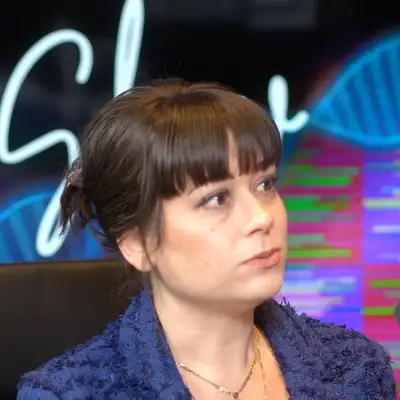
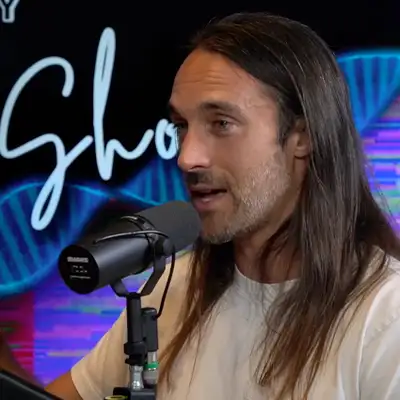
You're tuned into the Everything's Energy Show or EE Show. I'm joined by my two lovely cohosts, my beautiful sister Mela and Roland, also beautiful, but different kind of beautiful. Thank you for making me feel special. We'll say handsome. Today, we're gonna have a conversation about the masculine and the feminine, the balances, the imbalances, the overcompensations, and the compensations that have occurred throughout society, especially since the rise of social media and maybe dating back a little bit further than that.
Michael Scalar:But we really wanna dive into why the yin and yang of the masculine and feminine seem to be a little out of balance. Like, why are people dating less? Why are people creating more of a transactional interaction through their dating? Where did all the great men and women go?
Roland:Have to talk about it. They're definitely hiding. That's my theory.
Michael Scalar:May maybe they've all just gone underground. They're they're literally hiding. Like, there's there's a relationship catastrophe. Nukes have hit for men and women, and they're just underground waiting for social media to disappear, waiting waiting for feminism to disappear, waiting for the passport bros to come home.
Mela:There there is a classic meme that's been going around of, like, how I expect my soulmate to show up. And it's just like, ding dong. Like, they're on their couch just, yeah, they're gonna show up at your door magically.
Michael Scalar:I mean, that's a great start to it too. It's like, if you wanna have a relationship, you have to kind of go find it. They don't just no one gravitates to your front door. I mean, I guess if you order Uber Eats enough, maybe they'll
Mela:show There is a girl apparently that found her guy on Task Rabbit recently.
Michael Scalar:He's handy. I mean, yeah.
Mela:Clearly, you know, it can happen. But I think majority of people, someone still had to make a move. Right? Who was it? Did she say like, hey, like, you have my number.
Michael Scalar:Well, that's another thing too is with the the hashtag me too movement movement, men became very afraid to just approach women. They're like, well, I don't wanna be that person that they're talking about on the internet. Oh, this guy came up to me and blah blah blah blah. And you see them trashing guys on the internet. It's like, well, now we don't we feel like castrated a little bit.
Michael Scalar:It's like, well, they don't want us to make the first move yet. They're also demanding we make the first move. So and I get it. This is kind of where society overcompensated too is too many men were too forward and probably in the wrong direction with so many women that they're not for a period, they were like, oh my god. No.
Michael Scalar:Stop, please. And now they're like, wait. Come back, please.
Mela:Well, there's a fine line of, like, no 16 year old wants to be catcalled by a bunch of 30 and 40 year old men walking down the street. That's the other end of the spectrum. Right?
Michael Scalar:Yeah.
Mela:And on the other hand though, if you're out and you're in public, it's perfectly, I think, okay to be like, hey, how's your day going? We're waiting in line. Make a comment. And I think people have lost the art of interaction. Just period.
Mela:Like, it doesn't have to be romantic. It doesn't have to be man, woman, whatever. I think it's okay to, like, strike up a conversation with somebody in out out in the wild and just Out
Roland:the wild.
Michael Scalar:Not Not the wild.
Mela:And not feel like you're weird. I I think it's it's an important thing to to keep that human connection and not have things be transactional. If you're only talking to people because you're single and romantically trying to find somebody.
Michael Scalar:Or f.
Mela:That might be your problem. You need to go find like joy and purpose and all of that just like on its own. And then think, okay, I like these social interactions. I'm gonna go do this social thing. Maybe it's hiking, running, pickleball, whatever it is, and and find people in that context.
Michael Scalar:Find the niche. Well, I mean, let let's just start with kinda we'll we'll start with the the female side of let's go back in time pre, you know, y two k Mhmm. And look at where women were maybe even further back. So, like, the the start of the feminism movement.
Mela:Social sexual revolution. Sexual revolution. Revolution. Sexual seventies.
Michael Scalar:So, you know, women went from being the at home Mhmm. Raising the kids, providing the nurturing sequence for the husband so he could go breadwin. And then it kind of turned into a battle at some point. I forgot what era that was. It's like the sixties.
Roland:Seventies. More
Mela:seventies, I would say.
Roland:On that point for a second, I think it's important to establish some baseline understanding to see if you guys agree. That originated out of necessity. Right? There was a necessity for the man to work because socially and culturally it was the expectation. Yep.
Roland:And the woman has to birth the child, has to feed the child for the first six months, one year, whatever that term is. So Wait. Are you
Michael Scalar:saying that men can't give birth? No. That's keep going.
Roland:Sorry. Family Guy, it was proven. He tried, and Stewie rejected it. Okay? I'm just saying.
Roland:But back to that point, there was kind of a natural flow to the rhythms of, dare I say, the gender dynamics
Michael Scalar:Mhmm.
Roland:That you needed to do that in order to survive. You know, the reason people used to have kids, five, six, seven kids at the turn of the century, was like, if you're a farmer, you need farmhands. Children are cheap labor. And as true, as society evolved and we got out of the need to survive and we had the choice of being able to be in luxury and choose what we're interested in, the questions of these things started to be something that probably percolated in people's minds. Maybe I don't wanna be a mother and stay home.
Roland:Maybe I don't wanna be a breadwinning father and just work and come home, go to sleep, rinse and repeat. I think there was probably something to do with the natural evolution of society that underpinned the opportunity for this to be a choice in inside everyone's individual minds. What do you guys
Michael Scalar:Yeah. People didn't wanna women didn't want a linear path of all I can do is raise children, which it makes sense. And then you have the the concept of the, you know, they're saying that government really wanted two income sources. So they pushed the division in the nuclear family. So you're now taxing the woman who's at work and the manager for creating a job for the the people who have to do childcare.
Mela:There's a third thing though too there where it was kind of like, you might not feel safe in that relationship and what is your option if you leave that? So it's like you're going from your parents house to your husband's house. You don't have any chance to learn or kind of be on your own necessarily. Experience yourself as an individual unless maybe your your partner died young. Right?
Mela:And but then also, again, you might be trapped in that relationship because, you know, they're maybe not physically abusive, emotionally, you know, financially, whatever it is. A lot of people are very controlling in those dynamics so they were. And what are your options if you leave? You didn't have one. And oftentimes your family was telling you, they're an older generation, that divorce is not an option.
Michael Scalar:That's true. I mean and that's why the the divorce laws were so in favor of women too, which continue to be today, which leads into another side of the the push and pull of women attaching to wealthy men just to stick around long enough to divorce them.
Mela:On the other hand
Michael Scalar:They've monetized that. China recently literally made made cut that off.
Roland:Because it's illegal or something.
Michael Scalar:Yeah. They they they changed the laws around divorce because too many women were were just attaching to rich dudes and running off with half their shit.
Roland:Can I tell you a hilarious story that kind of connects but doesn't? There was a woman who married a wealthy man in China, and she was very beautiful. And they had kids and they were the most heinous looking kids.
Mela:No. No. That that was that was fake. I know what you're talking about.
Roland:Are you sure it was fake? I'm pretty
Mela:sure it's real. They thought they made it seem like it was real where this woman was oh, she deceived me. She had all this plastic surgery. I could not have ugly kids like this if unless she deceived me. But no, it was a marketing ploy.
Roland:It was? This is
Michael Scalar:still highly I I don't know
Mela:It's still interesting.
Roland:I it's let's
Michael Scalar:pretend Roland's story is true and Mela didn't find the debunk. But it it is it's funny. It's like, imagine, like, you're like, oh, I wanna have really beautiful offspring. You're the guy, and you get this girl pregnant, and then little goblins come out. Yeah.
Michael Scalar:Because, like, they don't have
Roland:Experiment failed.
Mela:To That's be fair, beautiful people can have lesser attractive offspring.
Michael Scalar:Like, you're
Mela:And you can
Michael Scalar:have And two ugly people can somehow print
Mela:something that looks
Michael Scalar:great. Is a
Roland:scientific formula to this. I think it's the kids are more likely to be good looking if the wife is good looking. The father's looks are independent of the outcome more so of how the kids look like. But we're also getting off on a tangent. Back to the original
Mela:point. That intelligence is linked more to the mother too. So maybe don't marry the the not so smart supermodel if you want smart kids.
Michael Scalar:Well, get one or one or the other. You get beauty or brains apparently. Very rarely both. Wait. So where were we?
Roland:We were on the idea of explaining the gender dynamic, the imbalances, but also coming back to the idea of because of what's come out of this. And I think this might be a good point. From women becoming more liberated, they went to the extreme manifestation of exploring all the way to the other side of the edges of what's possible, gave rise to feminism. We don't need men anymore. The Me Too movement, all of that stuff came out of what I believe was if you look at a society examining itself and learning more about itself through experience and exercise, they're seeing how far they could go before they went, oh, shit.
Roland:We've probably gone too far. And there is this movement of coming back to the middle. Yeah. But what's also evolved from this dynamic, as you were alluding to before, was now people are connecting themselves to others with conditions. I wanna have a guy who's got enough money.
Roland:So if I divorce him, I get paid out. Or I want to be with a girl who has these attributes. You know, it's like the guy who has three NBA player, sons. He's like, this woman who has these gifted genetics, I wanted to give her three kids so I could have pro athlete sons. There's motivations behind the idea of getting together.
Roland:It's not
Michael Scalar:just a lot smarter than a lot of the what's transactional today where girls are just literally trying to get their rent paid in a Birkin bag.
Roland:But you see how it's no longer out of necessity. It's out of desire. It's it's a la carte selection, and that's where we are with society because where our backs aren't up against the wall for the most part in the Western world to have to marry someone just so you can pull resources and have kids for the survival of the families. Mhmm.
Michael Scalar:No. I I like the concept of smart breeding. So if you your goal is to have athletes, you're gonna go shack up with an athlete. If you want a scientist, you're gonna go find a scientist. It's actually really smart versus most people just kinda have oopsie babies and they're like, there's no really thought process.
Michael Scalar:It's like, oh, we had sex and now we have a baby. Cool.
Mela:I mean, the idea of conscious procreation, I think, is its own topic on its own.
Michael Scalar:Yeah. Probably is. And that kinda, like, kind of breeds into, like, transhumanism too, where we have CRISPR where you can literally edit your baby to look a certain way and possibly even be smarter. But that is a whole
Roland:another topic. Leave that one alone
Michael Scalar:for Let's segue into how I think social media has become one of the biggest poisons in the dating scene because it's setting unreal unrealistic expectations on both sides. You have guys thinking they should all be dating these only fan porn star looking supermodels. And you have girls thinking that every man makes well over a 100 k.
Mela:Or or should be giving them princess treatments. It's not always about money.
Michael Scalar:Well, wait. I was leading into that. They they literally think that all men a lot of them don't aren't in touch with what it takes to make money because they don't really make a lot of money or never have and just assume that money comes easily. So they're looking for these guys and the the use the the girl math delusional calculator. Well, I want a guy that's six foot, makes a million dollars a year.
Mela:Six pack six pack abs. Six pack
Michael Scalar:is well, no. The it's not even that. It's just is overweight or not overweight.
Mela:Well, no. They basically call it the three sixes.
Michael Scalar:No. No. No. I I get where you're going. But when you do use the delusional calculator, it doesn't say athletic or anything.
Michael Scalar:It just says overweight or not overweight. So not overweight, single, not married. And so like most women are looking for a guy that is in the like less than 1% of population. And most guys are looking for these females that are probably it's not in the one percent, it's probably closer to like the five to 10%. So the ratio for what men are looking for is probably a little better because you're taking out some of the metrics of finances because women will rarely date down, but a guy will find a girl attractive.
Michael Scalar:She could be making coffee at Starbucks, sweeping a floor. And it's more of a physical attraction because they're making the money. They don't really care. So there is a different metric of percentile of what men are looking for versus women. But what I wanna get to is the poison of social media.
Michael Scalar:So women are seeing these other women on social media with a Birkin bag, on private jets, on these private yachts, in the passenger seat of a Lamborghini and going, well, I deserve that too. How do I get that? Know? And then they're trying to figure out how to get that, which then is kind of lead to this transactional situation because most of the men, this less than 1% of men that could afford these things, they're they're I wanna say f boys. I'm trying not to swear.
Michael Scalar:But they're they're they're players. So they're just circling through these girls, buying them some some things for a sexual interaction or for a month of dating or maybe a year of dating even. And then they're kicking them to the curb for the next 20 year old. So it's unrealistic to think you're going to find a quality relationship with someone who just mills women. And then on the flip side, you have kind of this opposite thing where girls you know, what what are your thoughts on that?
Mela:Let's start As a woman, I think a lot of the women go to that point at a certain level. They're like, I've dated. I've dated the nice guy. I've dated the the guy in college, whatever. And they're like, well, if they're all gonna treat me poorly, I'm just saying, why wouldn't I date for someone that will at least give me something?
Mela:I'll have something to show for it. I think that's where the disconnect happens is the guys get jaded on one level and the women get jaded on another level and they end up in the middle both kind of
Michael Scalar:Transactional.
Mela:Transactional. It is. It becomes like what is safe. Both people are damaged. Both people are looking for safety and a clear, I think, delineation or line of expectations.
Mela:This person knows exactly what they bring to the table or the relationship, whatever you have it. And that person knows exactly what they bring to the table. I think that's also why a lot of men like those transactional relationships is they're like, I have the money. I tell her what to do. The power dynamic here is set and clear, and I don't have to do any work on myself and my communication skills or this or that because she's not allowed to question the situation because that's not our dynamic.
Mela:Versus if both people are coming to the table as equals and she can leave at any time and doesn't need him, then
Michael Scalar:Well, that's the weird part too because I hear a lot of stories of how these wealthier men will be very dominant on the woman and be like, well, I can date other women. You can't date other men. And they're kind of controlling because they have the finances. So if if it was more of a clear communication and had less boundaries on it, I'd probably be more okay with it. But at the end of the day, what we're creating is a toxic reality.
Michael Scalar:Yep. Because both sides are lacking typically communication or one side is domineering. And it goes for women as well because they can be just as domineering with the whole simp culture, pay pig For sure. Financial domination where But what is women are stronger than the men they're going after. So, like, you're a tech bro.
Mela:But what is it about these men that are seeking these kinds of dynamic? Still, it's still a clear delineation. Even if they're coming from that subservient position where it's like, yes, mistress. Let me give you money. They still know exactly what it is that they bring to that relationship.
Michael Scalar:Money.
Mela:Yeah. That's what I'm good for in their mind. So what like,
Michael Scalar:what But this is back to that toxic side of so you have women bringing sex and men bringing money. There's no spirituality. There's no self growth. There's no evolution. There's no children.
Mela:No connection.
Michael Scalar:It's simply modern day pimping on both sides.
Roland:That's that's a really good point because I was listening to both of you back and forth, and I'm agreeing with what you're both saying. And I look at something a little more fundamental. Like, that's that's the makeup of things, but what's the container of it? And the container of it is society is mentally ill in many ways. And the problem with what people are facing right now is what you said.
Roland:They see these things and it powers up both a conscious and an unconscious reality in their minds of expectation, But they don't bounce these expectations off of anything to give them a reality check of is what I'm expecting actually real or sustainable. Because as you go through life, and I'm speaking as a married man here, you and your partner have to grow in your own ways in your own path. And in some cases, people divert. Some peak cases, people have this weird amazing thing where they grow at something of the same pace together. Some people grow stronger over time, but you're never the same person as time goes on.
Roland:And I think people don't know what they want anymore.
Michael Scalar:And that's part of the toxic side of it too is because people are getting into these situationships, not realizing the damage they're doing to both sides of the party. Yeah. And societally, it's perpetuating because no one's calling them out for it or it's just allowed. So you have this woman who gets into this relationship because she wants her bills paid. She wants the Birkin.
Michael Scalar:She wants the high lifestyle. It probably isn't long before maybe three months. I'd probably give it three months. Three to six months before she realizes she's miserable despite having all the things that she thought she wants. And now the guy's looking at the girl too going, this girl's just sitting here because I buy her stuff.
Michael Scalar:It's it's unsustainable. It
Mela:breeds resentment.
Michael Scalar:Yeah. Breeds resentment on both sides.
Roland:It's also built off of things that are short term. Like, there's an old saying short term motivation leads to failure. So when the novelty of that wears off, you're left with the reality of what is. If both of you have nothing of substance to bring to the relationship, not only are you gonna not work on the trauma that brought you to this kind of dysfunctional conditional love relationship dynamic, but in the future, when you get bored of this current dynamic, you're just gonna run the same game on the next person, maybe try to elevate on the female side for whatever they're after. The male will elevate on their side to go, oh, well, I had a nine.
Roland:Now I want a nine and a half. Or the girl, I've got a Birkin bag. Now I want a house in Hollywood. Whatever it is.
Mela:Buy. Mhmm.
Roland:Exactly. The challenge is these people are chasing things that have no lasting meaning in their lives, and they're satisfying themselves through a relationship dynamic. It's not about actually being in relation or communion. It's about fluffing their own feel good existences through low vibe material means in the context of how you put it.
Michael Scalar:It's it's very much an ego relationship because the the guy's ego wants the supermodel he can brag to his friends about. The girl wants to show off her fancy items or material things to and she's like, look how important I am to her girlfriends, you know, or society in general. It's it's it's really unsustainable. But let's let's see how it's a little unfair
Mela:to some women. Because I think some are just looking for basic security. They're not looking for materialisticness. And some of those relations, I think, are the ones that work out better because, again, clear relationship dynamic of gratitude and thankfulness for each other.
Michael Scalar:This is a great place to bring it back to the roots of women are looking for security when it comes to a guy. They want someone that's gonna
Mela:Have stability.
Michael Scalar:Stability. So they want someone that's gonna protect them from the wolves at night. They want someone that's gonna make sure there's a roof over their head and there is food around things. The basic necessities you need to nest to have children is the core principle of a relationship for most male female. If you go all the way back, you have the hunter gatherer and you have the nurturer.
Michael Scalar:The nurturer is there to make kids and take care of the community. The hunter gatherer is is to go out there, kill the lion, collect the berries, and, you know, bring back the meat, build the hut, you know.
Mela:It'd be warm at night.
Michael Scalar:I mean, unfortunately, after a long enough period of history, women are also like, well, I guess I wanna also go try hunting.
Mela:They did. And they did. But I mean and that's the point is I don't think anything should be a 100% gendered all the time. Obviously, there's certain things men cannot do, like breastfeed, let's just say.
Michael Scalar:I definitely can't breastfeed.
Mela:Mean, there are some Who
Roland:would ever try that?
Mela:There are medications for that, but that's a whole different topic. Oh, no. And there's certain thing, you know, there's certain things, you know, women are not as good at. But I think it's it's also not good to create this balance of like, oh, men don't have a nurturing side to them. Men do.
Mela:Then, you know, seeing some people with their children and having those interactions, like, they should be encouraged to do that and not just be providers. Well,
Michael Scalar:no. I mean, that's why family should have a mother and a father growing up is you need the masculine feminine balance. And that's another big part of what's going wrong with society is for I don't know. When when did the nuclear family break down officially? The seventies?
Michael Scalar:Probably. So we're almost 60 into people being raised primarily by a mother or or a father. Societally, this is probably contributed this whole dating aspect thing of where people are trying to find their mommy or their daddy. Yeah.
Mela:You could say, back even further fifties sixties where, you know, you had two parents, but your dad was not involved in your daily life. Like, you they he they kissed you good night and sent you on your way. But he was at work and he came home and he didn't really, like
Michael Scalar:But he was still around. So, like, he was there to be the authoritative figure. Like, I'm gonna beat Yeah. You up if you, you know keep acting a fool, play catch in the yard, teach you how to ride a bike, change oil. I mean, they're not always not around.
Michael Scalar:They're just only they're around
Mela:I'm saying all the smaller companies. Versus, like, you know, emotionally available are also two different things.
Michael Scalar:Yeah. But so, I mean, how would we've we've we've talked about some of the problems, but I I always like to try and dig in on what are the solutions for bringing a homeostasis back to the dating relationship dynamic that we're kind of swimming through at the moment. Do you guys have any ideas?
Roland:I think it's A few.
Michael Scalar:Yeah. Well, the married guy would should have some better ideas.
Roland:I'll I'll share some some ideas and also some things that I've learned from personal experience. So number one, what you said in terms of what stimulated the original topic of conversation, people looking at a world outside themselves and wanting what it is that other people have, you're always gonna come up short when you do that. Like, there's nothing wrong with being inspired by things. But if you want tangible realities that is bay that are based off of material experiences rather than something that's deep and meaningful inside of you, you'll never have a healthy relationship. Everyone will just be another notch on your your belt in life of giving you the experiences and the things that you want, but you don't prioritize that deep meaningful relationship.
Roland:If someone wants to be happy in relationship and I actually use the word communion because by definition, relationships are dysfunctional. Situationships, basically. Yeah. So communion is like, look. I got my stuff.
Roland:You got your stuff. I'm willing to be here for you. You're willing to be here for me. It's not always gonna be perfect, but we have a desire to do this together. And we'll work through the stuff, and we'll also celebrate the good days.
Roland:I think that's the best base framework that you can possibly achieve. And then the second thing is if you don't know who you are going into a relationship, you will see your shadow in the relationship and you will bounce it off of your significant other a lot, and they may not have the ability to stay around while you work your shit out through them because your significant other is always your mirror. They will see the nastiest side of you, and they will also see the best side of you. And if they're not strong in who they are to be able to weather the storm knowing my partner's going through some stuff, and this is not them, but they have to be able to go through this and need to be here for them. If someone just takes off, then you never get to work that out.
Roland:So spending some time working your stuff out on your own and then entering a relationship when you've leveled up in terms of your sense of security of who I am, what I want in my life, the the certainty of how you wanna see the world, I think that's the next thing. And the third expectation is sometimes it's it's rough. Like, you don't wanna be around someone else who's going through stuff all the time. You're like, oh, I'm having such a good day, and they're in a bad state, or they're having such a good day, and I'm taking the wind out of their sails. That's what you signed up for because that's life.
Roland:Right? Yeah. Very and the yang. You take the light and the dark with that person, or else you're not in it for a holistic, you know, unconditional love scenario. You're getting what you can tolerate out of it.
Roland:And I guess that's okay too. But you asked how can you solve it? I think you go back to a little bit of old school fundamentals, knowing who you are, what you want, and get clear about that. And then stop looking at everything outside of yourself and comparing the shortcomings of your life to other people because you don't know what crap those people have going on outside of the photos they post. Like, they could be on a yacht, but they could also have an eating disorder.
Roland:They could be suicidal and and on and multiple drugs to try to get through the day, but all you see is the illusion of what their social media shows you.
Michael Scalar:Yeah.
Roland:And it's not real life. But don't kid yourself in that it is. That's my
Mela:5¢. I think we've been sold this idea of romantic love too as the be all end all. And people are like, oh, I just wasn't in love with them anymore. And it's just like, well, yeah, I think there are gonna be some days if you're in a long term relationship where you don't feel those romantic butterflies and you have to find a way to choose that person again.
Roland:Perfectly said. You choose it every day because love is actually hormonally mediated. When you get together with someone, there's that infatuation stage.
Mela:Mhmm. Right? New relationship.
Roland:The new oxytocin and oh my god, can't live without you. Then there's the dopamine side of things that like from month, I think it's three to nine, then you develop the codependency, which is a serotonin mediated mechanism. And then these things cycle through the first seven years. You guys have heard of the seven year itch. Right?
Roland:At year seven, you've gone through this entirety of the cycle, and you start questioning, was there something better for me out there? Do I still wanna do this? And some people who are not in it for the long haul because they don't have the perspective of all the things that we talked about, they go and find someone else. But they start that cycle over again. So there's a lot of a there's a big biological imperative that drives a lot of this stuff too.
Mela:I think a lot of guys too, they maybe are in a relationship because of the physical and things are she's probably peak physical attractiveness when you know her. And over time, you know,
Roland:she grows. Gravity always wins.
Mela:Looks will change. I'm not saying that she'll look worse. I'm just saying she will look different. Yeah. Right?
Mela:And
Roland:and So will the guy.
Mela:Like Exactly.
Roland:The guy's not gonna look at 65 physically like he does at 25.
Mela:No. But but but Everyone think there's a
Roland:but everyone else except Michael.
Mela:No. But it's just it's it's just a reality of of if you're picking someone just for their looks and because of the sex Mhmm. That relationship will probably not work out very
Michael Scalar:well. It's doomed. Yeah. And if you're dating someone just for finances, it's doomed.
Roland:What's conditional love? Yeah. Conditional love is always short term.
Michael Scalar:Well and I I would say my advice to general populace would be lower expectations and start as friends because everyone keeps going you you see these women that are dating and they're like, well, I'm looking for a serious relationship. It's like, you know how a serious relationship starts? Slowly. You don't just jump into a serious relationship. You know?
Michael Scalar:It's or or saying, I I you know, first date, I wanna have kids. It's like, that's that's a good goal to work to, but you probably wanna date someone for about maybe three years before you lock down having kids with them. I know some people are in a rush, but
Roland:You just reminded me of a really funny story. So I was at the Canadian auto show one time. And you know what a Dodge Viper is? Oh, yeah. I was talking to the designer of the Dodge Viper.
Roland:Mhmm. And I was there. I I kind of, like, bullshitted my way in as a media person. My buddy owned an online. He gave me, like, a media pass.
Roland:So I'm talking to this guy who's the head designer of the Viper. He was the the head of SRT at the time. And I said to him, what advice do you have for a young guy who really wants to make something of himself? You know what he said to
Michael Scalar:me? Buy Viper. Nope. What do you
Roland:think he said?
Mela:Focus on yourself.
Roland:Never stop dating your wife, buddy.
Mela:Aw, that's sweet.
Roland:That was and I come to find out he he coaches his wife on the road. They do everything together. They they dance. They go to the car racetrack together. Like, they they find ways of continuously falling in love and choosing.
Roland:Because what you guys both said is true. If you're in it for something that's highly infatuating and addictive, over time, you can't continue to have that same experience. Or
Mela:even if you you came in
Roland:for the
Mela:right reasons, if you get lazy and you stop paying attention, like, oh, hey, honey. You changed your hair. Like, you stop giving them compliments. You stop appreciating them. I think that's also it can break down over time because we want to be seen.
Mela:That's ultimately why we're in a relationship. We want someone that understands us and knows us better than anybody else on this world.
Roland:Yep. All the good, all the bad, and everything in between. I agree.
Michael Scalar:It seems like most of the people that I've met that are in long marriages or relationships, At the end of the day, they don't wanna leave that person just because they don't wanna be lonely. And they know how hard it is to try and just find someone they can cohabitate with.
Mela:Well, at a certain point, it's companionship.
Michael Scalar:It's companionship and friendship. It's no longer sexual. It's no longer financial. It's just simply, I feel like I'd be miserable at home by myself. And I don't wanna have to try the dating scene.
Michael Scalar:And it's it's kind of interesting because they're they were doing some studies on what's gonna drive the market in like ten years. And so like BlackRock, these guys, they're they're looking at well, we're gonna invest in wine and cat related things because so many women are gonna be single that wine and cat stuff is gonna be like a high market. And I found that article really fascinating.
Roland:Wine and cats.
Michael Scalar:I mean
Roland:Now chocolate? Is it the trifecta?
Michael Scalar:I I mean, maybe there was those are the two that stood out. It was the people women 40 are gonna be
Mela:No toys? Just kidding.
Michael Scalar:Because I Whole another market.
Mela:But but no. I feel like a lot of people that are married drink a lot of wine too. So I guess it's a safe bet either way.
Michael Scalar:It really is. But they're projecting a lot of single people in America. And, you know, beyond what we're talking about today too, society itself has kind of wedged a very large dissociative into everything. So it's black versus white, men versus women, identity politics versus identity politics, left, right. It seems like society is literally trying to move people away from everyone as much as possible through mainstream media and programming and different things like that.
Michael Scalar:So I guess at the end of the day, really what we need is more community and less judgment, less following what your your your boob tube, your your televote Mhmm. Your television with the bad programming is is coming which is why people should be watching things like this where we have a open conversation about things versus tell you how to think that is bad. This is good. Buy my things.
Mela:We
Michael Scalar:actually please buy my things.
Roland:We also don't know anything beyond our own experiences, opinions and insights. Right? So that's a it's a really wise thing to say. Stop programming yourself consciously and unconsciously and decide what you want for yourself and
Mela:your life. Have a I have a small request if there's anybody watching this on YouTube or a place where you can leave comments. Tell us your relationship advice as far as, like, what's your secret? If you've been married twenty five plus years, what what's your number one advice for maybe younger people?
Michael Scalar:Yeah. I mean, people read the comment section. We read the comment section. So if if you've got solid gold, share it in our comment section. Absolutely.
Mela:Just for fun. I've I've seen some good ones out there. It's one of my favorite things to do. If I meet a couple and they've been together for fifty years, I'm like, what what's the secret sauce?
Michael Scalar:Tabasco. Isn't it isn't it?
Roland:But it's really when you see like a 70, 80 year old couple walking and holding hands, there's nothing more like yeah. See, you did it. You did the the hand over heart thing. It's instantaneous. It's
Mela:it's They're adorable.
Michael Scalar:Yeah. Clearly, they're not together for finances or sexiness
Roland:at that point. No.
Michael Scalar:It's just they they are coupled. I know.
Mela:I was on a
Roland:plane They're holding each other up. So if they separate separate go, they'll fall over.
Mela:I was on a plane recently. I was sitting behind a couple and I could see through the seats and I could see them just like the wrinkly old hands. Yeah. And they were so cute. And, you know, I think that's why everyone cries when they watch The Notebook.
Roland:I've never done that.
Mela:What? What?
Roland:They just wanted to be together? Yeah. Yeah. No. I think that that that's a great question and probably a great way to to
Michael Scalar:end this one off. Mhmm. Yeah. I agree.
Roland:We'll add like, subscribe, and do please share this with anyone you feel called to share it with because we love being able to get insights from others as well.
Michael Scalar:Absolutely. Well said. Alright. Well, thank you everyone. And as he said, ditto.
Michael Scalar:And we'll see you next time.