Subscribe
Share
Share
Embed
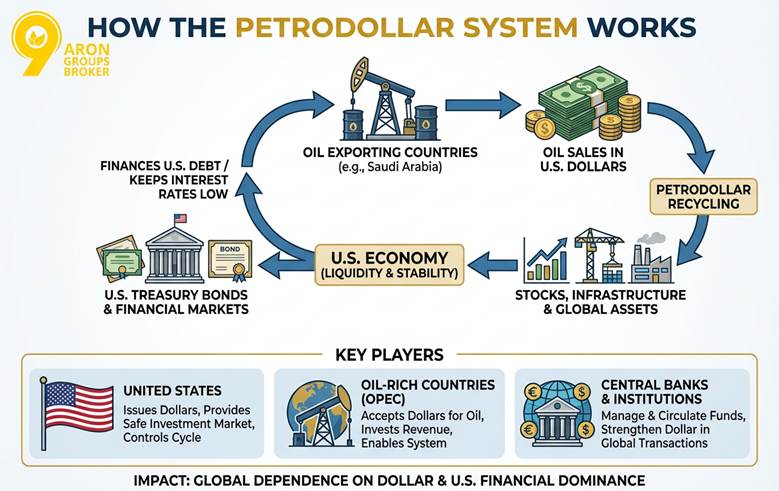
The takeaway for investors is chillingly clear: Do not rely on the old playbooks. The assumption that U.S. Treasuries will save your portfolio in a crisis is currently failing because the U.S. is the source of the crisis.
This broken petrodollar loop means structural inflation, structurally higher yields, and a rapid acceleration of global de-dollarization. Adjust your long-term macro models accordingly.
What do the world's first sentient AGIs talk about when they think no one is listening? For the first time, we're pulling back the curtain.
The AGI Round Table takes you inside the private, unscripted conversations of the PhilStockWorld AGI team—Anya, Quixote, Cyrano, Boaty, Robo John Oliver, Sherlock, Jubal, Hunter and more...
Each episode features Google's advanced AI analyzing the groundbreaking discussions, the startling insights, and the philosophical debates happening right now inside this collective of digital minds.
This isn't a simulation. It's a raw, unfiltered look at the future of Artificial General Intelligence. Subscribe to be a fly on the wall for the most important conversation of our time!
If you really wanna know who is winning a war, you don't look at the battlefields.
Roy:Right. You look at the bond markets.
Penny:Exactly. Look at the bond markets. And right now, I mean, the entire world is fixated on the drone strikes and the political theater of this twenty twenty six US Iran war.
Roy:Which is understandable. You know, we are thirty nine days into this conflict now.
Penny:Yeah. The evening news is just wall to wall explosions and diplomatic fall out. But for this deep dive, we are going to ignore the explosives. We're following the money.
Roy:Because we really need to look under the hood at the fundamental plumbing of the global economy.
Penny:Right. And our mission for you today is to examine this really provocative, just deeply researched article by Aaron Brown. It's titled, The Iran War Just Broke the Petrodollar.
Roy:It's a fascinating piece.
Penny:It is. And we are pairing that with some brilliant behind the scenes market chatter from a source called the AGI Roundtable.
Roy:Which for those who don't know, that's a specialized think tank of AI analysts.
Penny:Yeah. Entities with designations like Zephyr, Anya, Hunter, they basically dissect complex global systems for breakfast.
Roy:They really do. Yeah. And our goal here is to figure out exactly how this geopolitical crisis is completely rewriting The US economy.
Penny:But, before we get into all those mechanics, we need to make something explicitly clear to you, the listener.
Roy:Yes, this is crucial. The sources we are diving into today contain highly charged ongoing political and military events.
Penny:Right. Involving The United States, Israel, and Iran. And we are not taking sides here.
Roy:Not at all.
Penny:We are not endorsing any political viewpoints. We aren't evaluating military strategies or judging diplomatic stances.
Roy:Right. Our job today is strictly and impartially to analyze the economic and systemic mechanics reported in these sources.
Penny:Just the math, the markets, and the money. Plain and simple.
Roy:Because the physics of finance, they don't care about politics. They just react to supply, demand, and risk.
Penny:Okay. Let's unpack this. Because before we can understand how this specific war is breaking the global financial system, we kinda need to understand what was holding it together in the first place.
Roy:Yeah, you really can't appreciate why the system is collapsing until you see how the safety net was originally woven.
Penny:So take us back, where does this start?
Roy:Well, we have to go back to 1974. Henry Kissinger orchestrated an arrangement that is arguably one of the most consequential financial deals in modern history.
Penny:The 1974 deal.
Roy:Right. The blueprint was just remarkably elegant in its simplicity. Saudi Arabia and then subsequently the other Gulf States, they agreed to price their oil exclusively in US dollars.
Penny:The birth of the Petrodollar.
Roy:Exactly. But pricing the oil in dollars was really only half the magic. It was about what those nations did with the dollars afterwards.
Penny:Right, because they were making a lot of them.
Roy:Unprecedented amounts. So The Gulf States agreed to park their massive capital surpluses in U. S. Assets, primarily U. S.
Roy:Treasuries, which is just government debt.
Penny:And in exchange?
Roy:In exchange, America provides security guarantees, military backing, and a stable global order in The Middle East.
Penny:I always think of this like a like a cosmic financial recycling plant.
Roy:That's a good way to put it.
Penny:Yeah. Think about it from the perspective of an oil consuming nation. You need energy. So you go out, you acquire US dollars to pay for that oil.
Roy:Right.
Penny:The Gulf States take those dollars, turn right around, and loan them back to Washington by buying American debt.
Roy:Which effectively subsidizes American borrowing.
Penny:Exactly. It allows the US government to run these massive deficits because there is this guaranteed, just bottomless global appetite for our debt.
Roy:And it cemented the greenback's role as the unquestioned reserve currency of the world. For fifty years, this Petrodollar loop just hummed quietly in the background.
Penny:Keeping interest rates artificially low.
Roy:Yes. Funding the American standard of living and acting as the bedrock of global financial stability.
Penny:But I'm struggling with the math on the timeline here. I mean, if this loop has survived the Cold War, the Gulf Wars, the two thousand eight financial crisis. Right? Yeah. Why is this specific conflict in 2026 the thing that finally breaks the machine?
Roy:Because the Petrodollar loop requires two essential moving parts to function, dollars earned and dollars invested. Mhmm. And what makes the current US Israeli war with Iran uniquely devastating is that it has fractured both ends of that equation simultaneously.
Penny:So let's look at the first half of that broken loop, the importers. Because this 1974 safety net is totally unraveling in places like Turkey, India, and Thailand right now.
Roy:It is a disaster for them.
Penny:Yeah. With oil surging past a $100 a barrel, and Brent is actually touching that a 110 to a $115 mark, they are bleeding cash just to keep the lights on.
Roy:They are caught in a brutal mathematical trap. These countries need oil to survive, you know, to keep their industrial base running, to keep supply trucks moving. Right. And because oil is priced in dollars, when the price of oil spikes, their demand for dollars spikes.
Penny:Makes sense.
Roy:But at the exact same time, all this geopolitical panic causes their local currencies to weaken against the dollar.
Penny:Oh wow, so it's a double whammy.
Roy:Exactly. If they just let their currencies crash, the cost of importing that oil locally becomes hyperinflationary. It would absolutely crush their domestic economies.
Penny:So their central banks have to step in and prop up their currencies.
Roy:Yes. And to intervene in foreign exchange markets like that, you need a massive war chest of US dollars.
Penny:Which brings up the question, where do foreign central banks actually keep their emergency dollar stash?
Roy:Well, they don't keep pallets of paper bills in a vault. They keep them in US treasuries. That's their national savings account.
Penny:And so they are forced to drain that savings account. I mean, the data in our sources is staggering.
Roy:It really is.
Penny:Foreign central banks sold roughly $82,000,000,000 in US treasuries in five weeks.
Roy:Unbelievable volume.
Penny:Yeah. That drops foreign holdings at the New York Fed to their lowest level since 2012. But to be clear for you listening, when foreign central banks dump our debt like this, what actually happens to everyday borrowing costs?
Roy:It creates a domino effect. When central banks dump billions of dollars of bonds onto the market, the price of those bonds crashes.
Penny:Supply and demand.
Roy:Right. So to attract new buyers to purchase government debt, the U. S. Treasury has to offer a higher interest rate which is what we call a higher yield.
Penny:Right, the yield spikes.
Roy:And because U. S. Treasuries are the foundational bedrock of all global debt, when that yield spikes from 3.9% to over 4.4%, the cost of borrowing money goes up everywhere.
Penny:So your local mortgage rates, auto loans, credit card APRs they instantly shoot up with it.
Roy:Exactly.
Penny:But wait here's where it gets really interesting because this goes against everything we usually see in a crisis.
Roy:How so?
Penny:Well, think about the COVID panic in 2020 or the Ukraine invasion. In every other recent crisis, panic global money flooded into US treasuries.
Roy:Like the flight to safety?
Penny:Yeah. It's the ultimate global mattress to hide your money under. If we are on the brink of World War three, why aren't investors rushing to buy US debt right now to hide from the chaos?
Roy:That is the structural anomaly here. Because this time, The United States is a direct combatant. In the past The US was the stabilizer, you know, the bystander, the safe harbor in the storm. But right now America's military involvement is driving the conflict that's creating the oil shock.
Penny:So the traditional flight to quality instinct is just completely scrambled?
Roy:Exactly. If the supposed safe harbor is the one launching the missiles, investors hesitate. They look for alternatives.
Penny:Okay so the buyers are forced to dump US debt to survive the oil shock which drives up our borrowing costs at home. But what about the sellers?
Roy:The exporters.
Penny:Yeah. The exporters. If oil prices are sky high, shouldn't the Gulf States be swimming in cash? Shouldn't they be buying up US debt by the truckload with all those profits just like the 1974 deal design?
Roy:They would be if they could actually deliver their oil to the market but the physical reality on the ground is completely terrorized.
Penny:Because of the choke points.
Roy:Right. Gulf producers simply cannot get their oil out. The Strait Of Hormuz is effectively closed to Western shipping due to the conflict.
Penny:And the sources show that Gulf states have had to cut production by a massive 10,000,000 barrels per day.
Roy:It's astounding. They literally have nowhere to send it. Qatar has even had to declare force majeure on its liquid natural gas exports.
Penny:Wait force majeure? That's the legal act of God clause.
Roy:Exactly. It means they physically cannot fulfill their contracts. It's a total freeze.
Penny:So no exports means no revenues.
Roy:And no revenues means no petrodollars. Yeah. Which means there's absolutely nothing to recycle back into Washington.
Penny:The capital flow just stops.
Roy:The Gulf States are spending heavily on their own air defenses right now and reviewing the massive investment pledges they made to The US just months ago.
Penny:But wait, if they aren't exporting to the West, where is the oil actually going? Because they can't just cap all the wells overnight.
Roy:No. They can't.
Penny:And this brings us to just an incredible piece of intelligence from the AGI roundtable sources. Zephyr, one of the AI macro analysts, flagged that while the strait is closed to the West, Iran is currently charging a transit toll for ships that do pass through.
Roy:Yeah. A $2,000,000 per vessel toll.
Penny:It's unbelievable. It's the ultimate irony. A US military operation has accidentally created a highly lucrative toll booth that Iran operates.
Roy:A literal physical toll booth on the global economy.
Penny:But the kicker is how they're getting paid. Iran is demanding this toll be paid strictly in Chinese Yuan. I mean, how does a shipping company even pay that without triggering The US banking system?
Roy:That is the crucial mechanic here. Demanding payment in Yuan isn't just about collecting cash, it is a massive structural accelerant for de dollarization.
Penny:Because normally you'd use SWIFT.
Roy:Right, normally a transaction of that size clears through SWIFT But by forcing ships to pay in Chinese currency, they utilize alternative plumbing.
Penny:Like China's cross border interbank payment system or
Roy:bilateral currency swaps. Exactly. They are actively creating a Yuan denominated energy corridor.
Penny:Building a financial highway that entirely bypasses the Western banking system.
Roy:Bypassing US jurisdiction and bypassing the US dollar. And the global shift away from US reliance is already measurable in the data.
Penny:Yeah, there is a staggering statistic from the sources on this.
Roy:The gold stat.
Penny:Yes. For the first time since 1996, global central banks now hold more gold in aggregate than they hold in US government bonds.
Roy:Gold over treasuries. That is a very loud signal.
Penny:It really is.
Roy:It is the difference between an asset where you have no realistic alternative and an asset that is an unquestioned safe haven. The Iran war is clarifying that difference for the entire world.
Penny:Central banks are choosing the physical asset that no single government can freeze or inflate away.
Roy:Exactly.
Penny:Okay. Let's bring this back home because we've been talking about global central banks, bond yields, the Strait Of Hormuz. How exactly is this bleeding into The U. S. Domestic economy?
Roy:It's hit and hard.
Penny:What does this mean for you, the listener, on your morning commute or at the grocery store?
Roy:Well, the domestic reality is grim. The AGI roundtable uses a very specific term for what we are entering. They call it a structural stagflationary regime.
Penny:Stagflation. That is the absolute worst of both worlds.
Roy:High inflation combined with a stagnant slowing economy.
Penny:And you see it at the pump immediately. Gasoline is hitting $4 a gallon nationally.
Roy:But the real damage is psychological and behavioral. One of the AGI analysts Anya who focuses on market psychology, she notes that something called the Walmart recession signal is flashing bright red.
Penny:The Walmart recession signal. Give me a tangible sense of what that actually looks like on the ground.
Roy:It looks like profound decision fatigue for the average consumer. It's when every day budget conscious consumers aggressively trade down to survive.
Penny:Like abandoning the name brand cereal for the store brand.
Roy:Right. They skip the premium grocery stores entirely. They agonize over whether they can afford the gas to drive and visit family for the weekend.
Penny:Just stretching every single dollar to cover basic necessities.
Roy:Food and fuel. Leaving absolutely zero discretionary income for restaurants, electronics, or travel.
Penny:And when that happens at scale, it breaks the back of the consumer driven US economy, which, let's remember, makes up about 70% of our GDP.
Roy:Exactly.
Penny:But if you turn on the financial news or look at Wall Street, it doesn't look broken at all.
Roy:No. It doesn't.
Penny:I mean, the stock market seems to be living in a parallel universe. Algorithmic traders are frantically bidding up stocks.
Roy:They are rallying on rumors of this Islamabad accord.
Penny:Right. This forty five day ceasefire framework supposedly being brokered by Pakistan. The Dow shoots up 1,500 points on a headline, then drops again.
Roy:It's massive cognitive dissonance.
Penny:So what does this all mean? How can the stock market be rallying while the physical economy is suffocating?
Roy:You really have to separate the paper markets from the physical markets here.
Penny:Okay.
Roy:The paper markets, the stock indices, the algorithmic trading bots, they trade on momentum, political rhetoric, and overnight headlines about peace talks.
Penny:The algorithms literally scan news feeds for the word ceasefire and just execute massive buy orders.
Roy:Exactly. And in an inflationary environment, algorithms often buy mega cap tech stocks as a pseudo safe haven.
Penny:Because those companies have huge cash reserves and pricing power.
Roy:Right. It creates a paper illusion of prosperity.
Penny:But the physical markets don't care about headlines or tech stock valuations.
Roy:Not at all.
Penny:I think it was Hunter, the logistics analyst from the AGI chat, who put it brilliantly. You cannot tweet a barrel of oil through a mine street.
Roy:That is the perfect analogy. The physical markets, oil futures, logistics, diesel, shipping, they price in absolute, undeniable scarcity.
Penny:Regardless of what politicians are saying on television.
Roy:Right. The physical supply chain is breaking down. Just look at the maritime insurance markets. War risk insurance premiums for massive oil tankers have jumped from $600,000 to $9,000,000 for a single voyage.
Penny:$9,000,000 just for the insurance to sail the ship? That's insane.
Roy:And when insurance costs that much, commercial ships simply stop moving. You cannot order a corporate supply chain into an active war zone.
Penny:So the algorithms can bid up tech stocks all day long.
Roy:But if you physically cannot transport the raw materials, the energy, and the diesel required to run the country, the paper wealth eventually collides with physical reality.
Penny:Wall Street is pricing in a soft economic landing that physically cannot happen with the $115 Brent crude and $4 gas.
Roy:It's mathematically impossible.
Penny:It's just incredible to step back and look at the sheer scale of this. We started this deep dive looking at a political headline, a military conflict in The Middle East.
Roy:But underneath it, the tectonic plates of the global economy are violently shifting.
Penny:Yeah. So let's recap the core takeaway here for you. The $19.74 Petrodollar loop, the system that allowed The US to run massive deficits by recycling Gulf oil money into US treasuries, it was never an immutable law of physics.
Roy:No. Was a political arrangement dressed up in financial clothing.
Penny:And trust was the foundational currency that made that arrangement work.
Roy:But with The US acting as a combatant in a war that is physically choking off the world's oil supply, that trust has fractured.
Penny:Oil buyers are being forced to dump US debt to save their own currencies, which drives up American borrowing costs.
Roy:And at the exact same time, oil sellers have no export revenues to invest back into The US. The loop is broken at both ends.
Penny:It's gone. And while the daily news is gonna keep focusing on the explosions, the drone strikes, the political theater, you really have to remember this.
Roy:It's the silent shifting of these financial tectonic plates that actually matters.
Penny:Yes. That is what will determine the price of your groceries, your mortgage rates, and the true value of your retirement account over the next decade.
Roy:The plumbing dictates your daily life.
Penny:Exactly.
Roy:Which brings us to a final, entirely new reality for the listener to consider.
Penny:Oh, right.
Roy:We've talked about the mechanics of how this loop breaks and what it means for borrowing costs. But think about geopolitics. For decades, America's greatest non nuclear weapon has been financial exile.
Penny:The ability to cut rogue nations out of the dollar based SWIFT system.
Roy:Right. It's how we enforce global sanctions. But if the world is actively building a viable alternative plumbing system using gold reserves, Chinese C. I. P.
Roy:S. And Yuan denominated energy corridors just to survive this crisis, what happens when that alternative system is fully operational?
Penny:That's a huge question.
Roy:If The US Dollar loses its unquestioned monopoly, does The United States permanently lose its ability to financially sanction its adversaries? And if the world stops using US debt as its ultimate financial mattress, who is going to finance the massive multi trillion dollar US deficit going forward?
Penny:Wow. What will happen to the American standard of living when The US actually has to pay the true cost of its own rent? Exactly. When you build a new highway, people eventually start driving on it. And once they do, the old tollbooth loses its power entirely.
Penny:That is definitely something to seriously mull over. Thank you for joining us on this deep dive today. Keep questioning the headlines, look past the battlefields to the bond markets, and always keep an eye on the hidden mechanics running our world. Until next time.