Subscribe
Share
Share
Embed
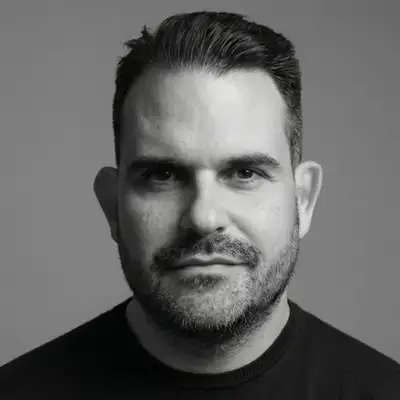
Filiberto Amati, Founder of Amati & Associates and Head of Partnerships at MAFFEO DRINKS, is a veteran of major spirits companies, including Campari and Di Saronno. He dissects the seismic "shrink for growth" transformation, reshaping the global spirits industry. Drawing from his deep FMCG expertise, Filiberto explains how spirits companies are finally adopting consolidation strategies that transformed consumer goods giants two decades ago—moving from "economies of scale" obsessions to a strategic "economies of scope" focus. As Campari divests Cinzano, Brown-Forman sells Finlandia, and Diageo sells Pampero Rum, Filiberto reveals how this isn't random portfolio shuffling but a calculated response to activist investor pressure and economic uncertainty. The conversation explores if mega-mergers are likely in the fragmented spirits industry, how mid-tier players like Gruppo Montenegro and Caffo are capitalizing on cast-off assets to build global scale, and why this inflection point will reshape competitive dynamics for the next 10-15 years.Disclaimer: All analysis is based on publicly available information.Timestamps:00:00 Introduction and FMCG Context02:15 Shrink for Growth Phenomenon Explained06:30 Economies of Scale vs Scope12:45 Industry Fragmentation Reality18:20 Listed vs Private Company Dynamics23:10 Mid-Tier Consolidation Opportunities28:15 Future Industry Structure Predictions
Filiberto Amati, Founder of Amati & Associates and Head of Partnerships at MAFFEO DRINKS, is a veteran of major spirits companies, including Campari and Di Saronno.
He dissects the seismic "shrink for growth" transformation, reshaping the global spirits industry.
Drawing from his deep FMCG expertise, Filiberto explains how spirits companies are finally adopting consolidation strategies that transformed consumer goods giants two decades ago—moving from "economies of scale" obsessions to a strategic "economies of scope" focus.
As Campari divests Cinzano, Brown-Forman sells Finlandia, and Diageo sells Pampero Rum, Filiberto reveals how this isn't random portfolio shuffling but a calculated response to activist investor pressure and economic uncertainty.
The conversation explores if mega-mergers are likely in the fragmented spirits industry, how mid-tier players like Gruppo Montenegro and Caffo are capitalizing on cast-off assets to build global scale, and why this inflection point will reshape competitive dynamics for the next 10-15 years.
Disclaimer: All analysis is based on publicly available information.
Timestamps:
00:00 Introduction and FMCG Context
02:15 Shrink for Growth Phenomenon Explained
06:30 Economies of Scale vs Scope
12:45 Industry Fragmentation Reality
18:20 Listed vs Private Company Dynamics
23:10 Mid-Tier Consolidation Opportunities
28:15 Future Industry Structure Predictions
The MAFFEO DRINKS Podcast is a leading drinks business podcast delivering actionable insights for drinks leadership.
For founders, directors, distributor MDs, and hospitality leaders navigating the tension between bottom-up reality and top-down expectations.
20+ years building brands across 30+ markets. Each episode features drinks builders: founders, distributors, commercial directors, sharing how the drinks industry actually works. Not the conference version. Honest conversations.
Insights come from sitting at the bar.
Beyond episodes: advisory for leadership teams, subscription with episode deep dives and principles to navigate your own reality.
Beer, wine, spirits, Low and non-alcoholic.
Bottom-up Insights & Episode Deep Dives at https://maffeodrinks.com
This is Maffeiro Drinks.
Filiberto Amati:The direction where these companies are gonna go, it's gonna reshape how the industry looks for the next ten, fifteen years.
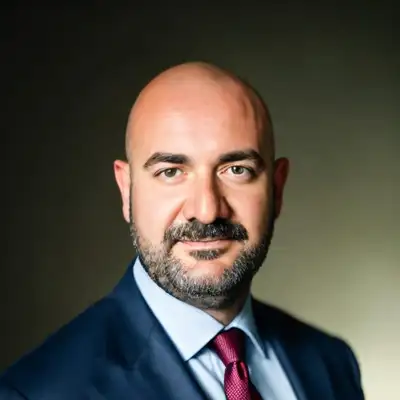
Chris Maffeo:Filipe Tomati is a is an old friend, first of all, and a business partner. He's an associate of Maffeiro Drinks, and he's the founder of Amati and Associates, an advisory working especially with FMCG brands, but not only. He's a veteran of Campari and Disaronno. In this episode, we go through the latest analysis that Filippo has been carrying out based on press releases, media articles, and other stuff that is publicly available. We focus on what he calls shrink for growth, the approach that big companies are having in divesting brands and refocusing on what they believe to be the core of their strategy.
Chris Maffeo:So we have seen lately Campari selling Cinsano to Grupo Caffo. Back in the days, we've seen Brown Forman selling Finlandia and at the same time buying Ginmari and Diplomatico. We've seen Diageo selling pampero rum to Grupo Montenegro.
Filiberto Amati:So a lot of smaller and mid tier players are growing, and they're growing faster through M and A. The question is, are they gonna be consolidating?
Chris Maffeo:All these sales and acquisitions are changing the landscape also from a distribution perspective because middle sized companies are actually getting a better footprint into countries where they didn't have a footprint. So in this episode, we talk about what's happening with middle sized company versus big sized companies, with listed companies versus privately owned companies.
Filiberto Amati:If you look at the spirits industry, mega mergers are unlikely because of the conflict of portfolio level. Too many whiskies, too many vodkas, too many gin.
Chris Maffeo:We try to understand why these things are happening and why it's so different from what it used to be in the nineties and 2000 where we used to talk about only economies of scale. Now we talk more about economies of scope. Also, be noted is that the situation is very fluid. If you look at the trade news, even between, when we recorded with Filipeberto and when we published this episode, things have happened. Gagio's CEO has stepped down.
Chris Maffeo:So whether you are a small brand owner, big company, professional, you want to understand more about what's happening in the world or spirits, this episode is for you. Let's dive in now. Ciao, Roberto. Welcome to the Muffer Drinks podcast. Hi, Chris.
Chris Maffeo:Let me ask you about the one of the hot topics. So some of your latest posts on LinkedIn going viral, huge commenting and sharing on the shrink for growth. What's happening at the moment in the spirits world and the wider drinks ecosystem?
Filiberto Amati:Let me step back because actually this is something that is happening in fast moving consumer goods for a while. So if you look at M and A in general, we had in the late nineties, early two thousand, a wave of big M and A consolidation, P and G buying Gillette, Nestle buying Purina and so on and so forth, where we really created the mega super huge groups. The reason behind was that economies of scale were thought to be the northern light of growth. Okay. Then there was a wave more recently where a lot of brands realized that scale, the fact that you are huge in laundry detergents, doesn't mean you can really be good at doing batteries, for example.
Filiberto Amati:Okay. And so you had a lot of demergers, and that's how Kraft demerged Mondelez and Kraft Foods. More recently, Kellogg's separated in Kelanova and WK Kellogg's, which ended up one both by Mars, the other by Ferrero. They understood efficiency and economies of scope were more important. Do you
Chris Maffeo:mean by the agencies and economies of scope?
Filiberto Amati:Economies of scope, they say it's pointless to become a beverage expert. You're gonna become an expert of a specific occasion or specific sectors. Putting together necessarily breakfast cereals with chocolate for Christmas, it's not ideal because it's two different categories which are not really close to each other. They don't build on each other. By trying to create synergies, you eliminate nuances that they need.
Filiberto Amati:That's why Nestle is carving out Nestle water from Nestle because the two don't actually help each other being under the same umbrella. Okay. Because selling San Pen Legrino and Aquapanda, it's not the same as selling chocolate snacks. Trying to build synergies between the two of them, which are not additions. You're actually making choices that don't help Nestle Waters and don't give scale to the chocolate business you have.
Chris Maffeo:Perfect.
Filiberto Amati:Okay. That's what I mean. Adiciencies. Unilever is spinning off the ice cream division. Ice cream has a specific route to market where you make deals like you are in spirits and you have the fridges and then you have the products in the off premise.
Filiberto Amati:There is this change. Now it's about specialization. Rather than growing in all different directions, we are now in an economic cycle whereby you need to focus. You're not going to have without clarity, without the right resources, without the right investments, you're not going to be able to grow brands in your portfolio just because of portfolio deals. Now we are shrinking for growth.
Filiberto Amati:I am going to get rid of products that in my portfolio, brands in my portfolio don't make sense, and focus on the brands that make the most sense. By selling those, I have more resources and I can focus on what drives growth and scale. Brown Farmans gets rid of Philander Oak. Campari gets rid of Cinsano. Pelnori Card is rumored to be dumping Mamma, for example.
Chris Maffeo:And others. They don't
Filiberto Amati:need to. Diageo is rumored to be looking into buyers for Guinness, which is a bit the exception to the rule of the portfolio. And this comes at the same time where last year Diageo created the Diageo luxury groups. They had the prestige versus mainstream. Now they created a separate entity to manage super premium brands because they come to the realization that those brands have dynamic that are completely different from Smiloff.
Filiberto Amati:Investors understand it's fine for that to happen. And at the same time, it's rumored, it's not official, but Pernod Ricard, which is based on the house of whiskeys, house of vodkas, and so on, it's less centralized as an organization. It's trying to build a more centralized binomial organization where we have luxury groups on one side and mainstream on the other.
Chris Maffeo:Has the drinks industry come late to the game versus the other FMCG?
Filiberto Amati:No. No. My understanding is that the big driver of shrink for growth is activist investors. For example, right now activist investors are putting pressure on Kraft Heinz to split into two different companies, Kraft and Heinz. Okay.
Filiberto Amati:Like the carve out of Nestle Water, like the carve out of Magnum Ice Cream, which is now several companies from Unilever. In the spirits industry, the trick is that the industry has several big players, but it's not as consolidated as the other industries. So in laundry detergents, the top three players have probably 80% of market share, of cumulative market share. In the ice cream business, the top five players have probably 80% of cumulative market share. In the soft drinks, you know, three companies do what, 90% of the volumes?
Filiberto Amati:In the spirits, no. In the spirits, the top 10 companies have a quarter of the total global volume. So it's not that the industry is late, the industry is not as consolidated as we think it is due to the diversity and the fiscal and legal regimes that make distribution very local. You hardly have a player who's strong everywhere. The agile is strong in certain markets.
Filiberto Amati:For example, they recently in France this year built their own distribution company because they had their joint venture with Moet SE.
Chris Maffeo:Yes.
Filiberto Amati:In France, Pernod and Ricard had their own separate distribution companies, and they're merging it. Brown formally launched in Italy this year. I mean and Jack Daniel's was a Ginmare are big brands in Italy for a long time. The industry is not as consolidated, and you see that because your competitors are still distributing to all those brands.
Chris Maffeo:I mean, the the the relationships are very in in chess to us in in that sense. You know? Because you are together with a distribution company, then you are in another market, but then you are distributed by the same distributors in a third market. And in distribution and in route to markets, it's very similar to the categories. There are these big waves.
Chris Maffeo:There's the the moment everybody hires brand ambassadors. The moment is some companies fire brand ambassador, but then another company is hiring them because they are pushing and putting all their eggs in the basket of brand ambassadors. Same thing with distribution. Like, there's the wave of let's go indirect because it doesn't make sense to be direct. And then at the same time in other markets, they go direct because it doesn't make sense because they want to integrate themselves.
Chris Maffeo:It's a very interesting ecosystem to play in because often there is always this looking for shortcuts, a decision that will make life easier and solve all your problems. But if you don't solve the problems at the at foundational level, then, you know, not no route to market is gonna save you.
Filiberto Amati:If you look at the spirits industry, mega mergers are unlikely because of the conflict of portfolio level. Too many whiskies, too many vodkas, too many genes. Okay. But the shrink for Glut, you're seeing that Caffo is doing acquisitions. Di Sarano is gonna probably look into acquisitions, and has done few acquisitions in the past.
Filiberto Amati:Stock Spirits, which is, you know, private equity owned, is doing add ons, which are both portfolio level but also distribution level acquisitions. So a lot of smaller and mid tier players are growing and they're growing faster through M and A. The question is, are they gonna be consolidating? Will Calfour buy a same size company next, maybe a US based company where they can build synergies in distribution of the CAF products in The US and vice versa, American products in Italy and Europe. And so that's that's where there is gonna be mounting pressure as well on Bernard and Diageo, because right now, you know, it's a group of five, six, and the others are distant.
Filiberto Amati:But when the others start merging, then the group of five and six is gonna be our group of seven, a group of eight, a group of nine and group of 10. At that point, there is gonna be some consolidation in the industry. It also depends how how tough and how long this economic cycle is. The uncertainty due to American tariffs and what's happening in China, nobody really knows. Bacardi thinks they will have enough runaway with their high debt to reduce the debt and keep growing on their own.
Filiberto Amati:But can they? And if they can't, the government is not listed on the stock. They can go to the stock market and ask for more cash.
Chris Maffeo:Let's dive into this, whether they are big or small. Some of them are listed in the stock exchange. Some of them aren't. Do you see different approaches? Can we get an insight on listed companies seems to do this and nonlisted companies seems to do that, or we cannot really group insights like that?
Filiberto Amati:That's an issue, man. Listed companies drop any long term plan for the next quarter. And we are living in a cycle where CEO tenure is down, CMO tenure is down, and they're changing fast because investors are actively pursuing change. If the direction of the change is right, but the speed of change is not fast enough, they will do the change. I mean, it's like Campari changed CEO three times in a year.
Filiberto Amati:Remy Cointreau recently made a change. I think it's a very interesting letter that the exiting CEO about the industry was part of the problem with the industry and the expectations of the industry, which is a traditional industry. And then everything about last year, plus 6%. It's almost a cry for help from industry to itself and to the investors. Let's be honest, it's going to be more difficult to drink alcoholic.
Filiberto Amati:There is this story whether Gen Z or not are drinking or drinking. Don't wanna know what they're claiming they're doing. But spirits volumes are not going up. Beer volumes are not going up. Wine volumes are not going up.
Filiberto Amati:Nonalcoholic is a factor. Factor. So the spirits industry, if you compare volumes and revenue size versus beer and soft drinks, it's a very small animal. Very small. So if clarification is a phenomenon and these guys can't distribute themselves because they need the beer companies or the software companies to arrive to the end consumers, and this is except for The US.
Filiberto Amati:Then is there a long term viable spirits industry separated by beer and wine and soft drinks?
Chris Maffeo:Is there an element of perception that the spirits industry is an FMCG? And I even mentioned that mistakenly, you know, earlier, you know, I called it FMCG, but but it's actually slow moving consumer goods. I remember we discussed this with Alex Souziel back in the days. Is that a reason there has been so much migration into spirits roles from historically FMCG or CPG, fast moving consumer goods, consumer packaged goods into the spirits world, and they have brought practices from the FMCG world, even beer, the closest thing in FMCG to spirits. And it has changed the mindset, and it made this mindset much more modern trade driven, off trade driven, promotion driven without realizing that you may buy a bottle of whiskey once a year.
Chris Maffeo:The average Joe may buy a bottle of whiskey maybe once every two years unless they buy for a present, and then you just recycle that bottle that you never open and bring it to the next dinner. You're confusing it with beer occasion, which are very much fast moving.
Filiberto Amati:For me, the fast moving, it's where we get confusion in the sense that I don't think that fast moving consumer goods are actually fast moving at all. When I was in P and G, when you miss a promotion, it takes you probably three months to get into the data reading that it didn't go well. To counteract tech, it takes another three to six months. So if you are driving a car and it takes you nine months, between understanding that you miss your exit and then you need to change your route and finally being able to do so, I don't think it's fast moving at all, especially when you compare it with technology. I know startups that in nine months have changed name, pivot, strategy, CEO, companies and marketing allocation.
Filiberto Amati:So for me, that is a non issue, but I agree there is this idea that you can build a brand This is also very true in food and beverages from the external point of view that it takes you just, you know, a six months hype to build a brand. Look what has happened with Prime Beverage from Doctor. Beast, which is a huge brand. They launched this in two years. The initial hype gives you notoriety, but then getting distribution velocity on premise, velocity of premise, the right investments, the right teams, the right conversations with trade.
Filiberto Amati:And trade in general, it's like, okay. We're gonna list on the on prem or on the off premise. Great. And then you think that this happens in two weeks? It takes two weeks to be able to set up a meeting, which probably is gonna be in the next two, three months.
Filiberto Amati:You know, a six month negotiation. And then it's Christmas again, no new listings. Suddenly it's February, you had an order and it's like, what was that? You changed the label and the label is not compliant and you don't have to and so on and so forth. So these processes really take a lot
Chris Maffeo:of So if I understand correctly, the issue is twofold. One thing you're saying is my question on is Spirits mistakenly considered FMCG? Actually, it's the FMCG that is mistakenly,
Filiberto Amati:you know? Mistakenly considered fast moving.
Chris Maffeo:But then I would still push my approach.
Filiberto Amati:It's easier to find scale fast moving consumer goods. If you do 99% of your volumes in modern trade, once you have listed your laundry detergents, you don't have any other channels where you're gonna list your model. The other channels are gonna come to you, with beverages starting with the on premise. But it's not only beverages, specialty food in general as well, starting with the on premise. Before you build scale, it's a trip around the world, the mess.
Chris Maffeo:If we take Campari as an example, to clarify for myself and the listeners, when I read the news about Campari, on one end, I see they buy Corvozier, and on the other end, they dismiss Ginsano. So in that shrink for growth
Filiberto Amati:It's a cycle. Part of the issue that Pernod Ricard and Jio is that they have done a number of acquisitions because more growth comes from newer things that are Techno Ricard bought, but they bought how many? Seven, eight genes in a decade? Something like that.
Chris Maffeo:Yeah. And the same company, both Monte Lobos, Mezcal, other minor brands. The interesting thing was what you were writing about the focus on certain companies that do billions of turnover, a few millions revenues brands are a distraction.
Filiberto Amati:That's where the economic cycle always plays a role and investors always play a role because when the economic cycle, it's positive, okay, so your organic growth, it's coming by doing nothing, then you pursue more growth by doing these bets. And by the way, it's completely crazy. And you know that as soon as that reverse, then you need to go back to the basics and focus your investment for your organic growth. And then you're gonna not have enough cash. And so you're gonna get rid of some of the bets that you have done in the past.
Filiberto Amati:It's like eating like a pig to get fat and then getting on a diet. It's it's as simple as that.
Chris Maffeo:It's the foie gras strategy.
Filiberto Amati:Pleasure.
Chris Maffeo:What is also interesting is the fact that within that, what you were saying before, a management has changed. There has been a management for growth, and then there is a management for shrinking. In the meantime, you change the trainer at the gym. The first trainer told you to eat a lot of steaks, and the second one tells you to get lean on the treadmill. This is also the element of listed companies versus privately owned.
Chris Maffeo:If we go to privately owned, is there less pressure? We see a lot of changes in privately owned as well. There is a bit less changing pace, let's say. Do they take decisions more for the long term or at least allegedly?
Filiberto Amati:Who wants them? If they are family companies, there is always the end game of building and continuing the generational pursuit. Okay? You are building for the long term. They don't care about a quarter or two quarters.
Filiberto Amati:They don't have to panic or cut travel at the end of the quarter to save money. Then you have companies like Bacardi, which is family owned, but it's a sixth generation, so many different interests. It's hard to understand what's going on. They're claiming on the financial times they don't need to do any changes. They did the restructuring two years ago in The United States where they got a lot of jobs.
Filiberto Amati:They are overleveraged in terms of debt. But on the other hand, you have then companies like Pernod Ricard, okay, is family owned because the CEO is Ricard, but they are listed on the stock market. And for a long time they try to build, but sometimes they need to go back because they understand that their ability to finance depending on how happy is the investors and if the investors are happy, the stock market, the stock reflects that. And if the stock doesn't reflect it, banks are not going to give them money. There are a number of realities to that, but you know, a family company traditionally is able to make bets in the long term.
Filiberto Amati:Look at CAFO. Stock spirits, it's private, but it's owned by private equity. So they are doing a very effective stocks, you know, add on strategy by adding brands, by adding distribution companies, but we also know sooner or later these companies will want a return on what they have invested. And that return is gonna be either an exit through an IPO or by selling the company. So usually these guys are very process intensive and cost focused.
Filiberto Amati:They're not gonna do a step longer than they should. I think right now we're seeing the direction where these companies are gonna go. It's gonna reshape how the industry looks for the next ten, fifteen years.
Chris Maffeo:Do you think we are at one of those
Filiberto Amati:inflection points?
Chris Maffeo:Very interesting. So one last one last recap on final thoughts from your perspective.
Filiberto Amati:This is gonna be very interesting for the beverage industry in general, spirits and non spirits. I expect a lot more transactions happening and unfortunately talent looking for jobs in the next few months because a lot of this shrinking for growth also happened with cost cutting for growth, so to speak. In terms of outlook positive, I mean, people are gonna still drink probably less idling less, but they still enjoy Negronis once in a while. I'm not the typical consumer, so don't make your forecast based on me. But, definitely, there is gonna be a lot happening.
Filiberto Amati:As long as we keep focusing on the consumers and generate unique insight and as you say, because you're brilliant in saying that making sure that when you go to the on premise, you actually solve a problem for the on premise, not just add another bottle, but really solve a problem. Then everything is gonna
Chris Maffeo:How can people get in touch with you, Filipeto?
Filiberto Amati:Through LinkedIn or my podcast, Growth Brands and and more on Spotify and whoever follows you all usually can easily find me as well or Amati dash associates dot com. That's where I live.
Chris Maffeo:Thanks a lot, Filipe. It was very insightful. It was a masterclass. I think it will be precious episodes for our listeners. Thank you so much.
Filiberto Amati:Thank you. Good to talk to you.
Chris Maffeo:That's all for today. Thanks for listening to Maffeiro Drinks. I hope you enjoyed the insights that Filippo brought to the table. I learned so many things that I didn't know about or I never thought about in that way. The biggest takeaway is this shrink for growth, the fact that we are moving from economies of scale to economies of scope, What's happening with middle sized companies, with big companies, whether these are listed on the stock exchange or they are privately owned or they are owned by a fund.
Chris Maffeo:The big thing that Filbert is saying is that we are probably experiencing something that is going to shape the industry for the next ten, fifteen years, and I think he's probably right. Again, disclaimer, all this information are based on public publicly available, sources, whether press releases or industry articles or interviews and everything that is in the public knowledge of everyone. So I hope you enjoyed it. If you could think of a couple of persons, colleagues, or friends in the industry that will benefit from listening to this, please share it with them. If you're not a subscriber to the show, please click subscribe whether you are on YouTube or on Spotify in video or in audio on Apple Podcast or wherever you're listening.
Chris Maffeo:Also, if you want to know more and if you want to stay up to date, you can subscribe on mafeodrinks.com where there is free and paid content and, you will get updates on what's happening on the podcast and on all the other resources of, Maffeo drinks. So stay tuned and remember that brands are built bottom up.