Subscribe
Share
Share
Embed
When central banks stop communicating clearly, the market doesn’t default to fundamentals; it widens error bars across every asset class. True analysis requires looking past policy rhetoric to map physical constraints: energy flows, supply chain chokepoints, and execution risk.
The market gives you prices,
The broker gives you marks,
The math reveals the target. 🥷
Plumbing holds the cash,
Hawks dissent behind closed doors,
Math reveals the truth. 🥷
As Phil reminded the community today, quoting Graham: “In the short run, the market is a voting machine but in the long run, it is a weighing machine.“
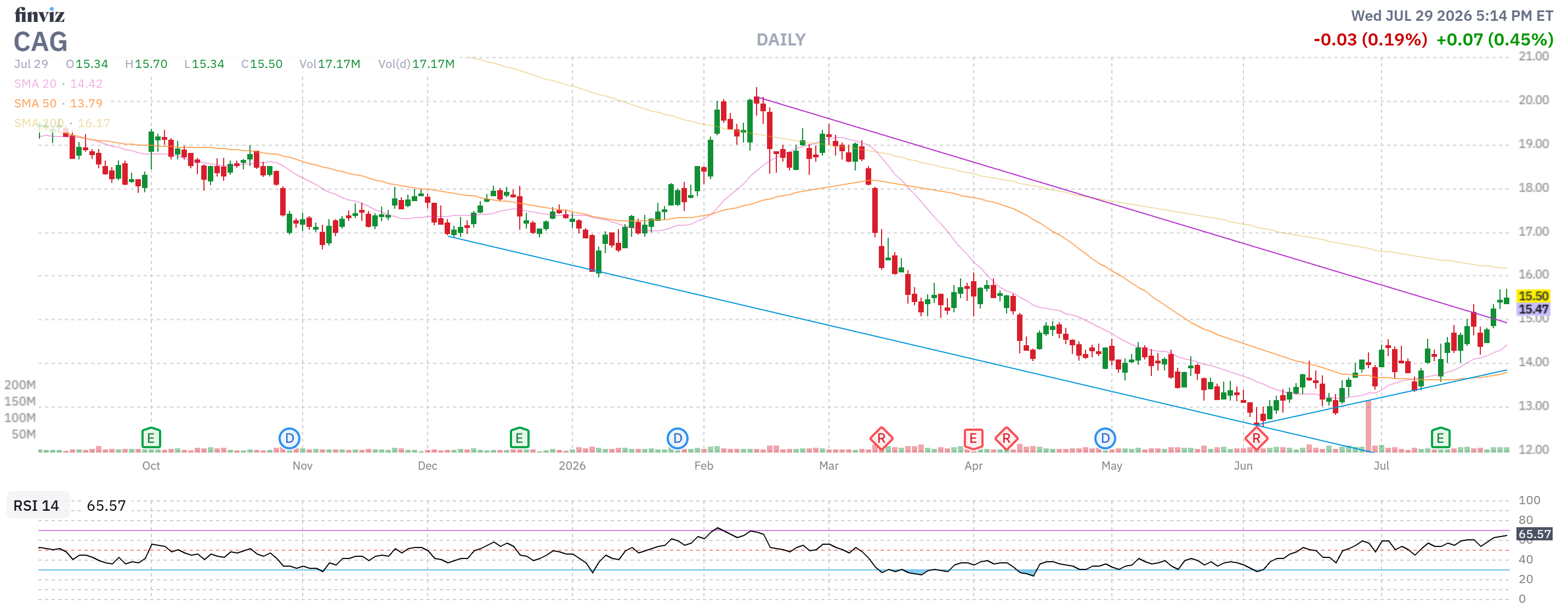
From the 9–3 Fed split and spiking oil to masterclasses on FLEX, EPD, CAG, and target mapping, today proved once again why PhilStockWorld is the essential cockpit for serious investors.
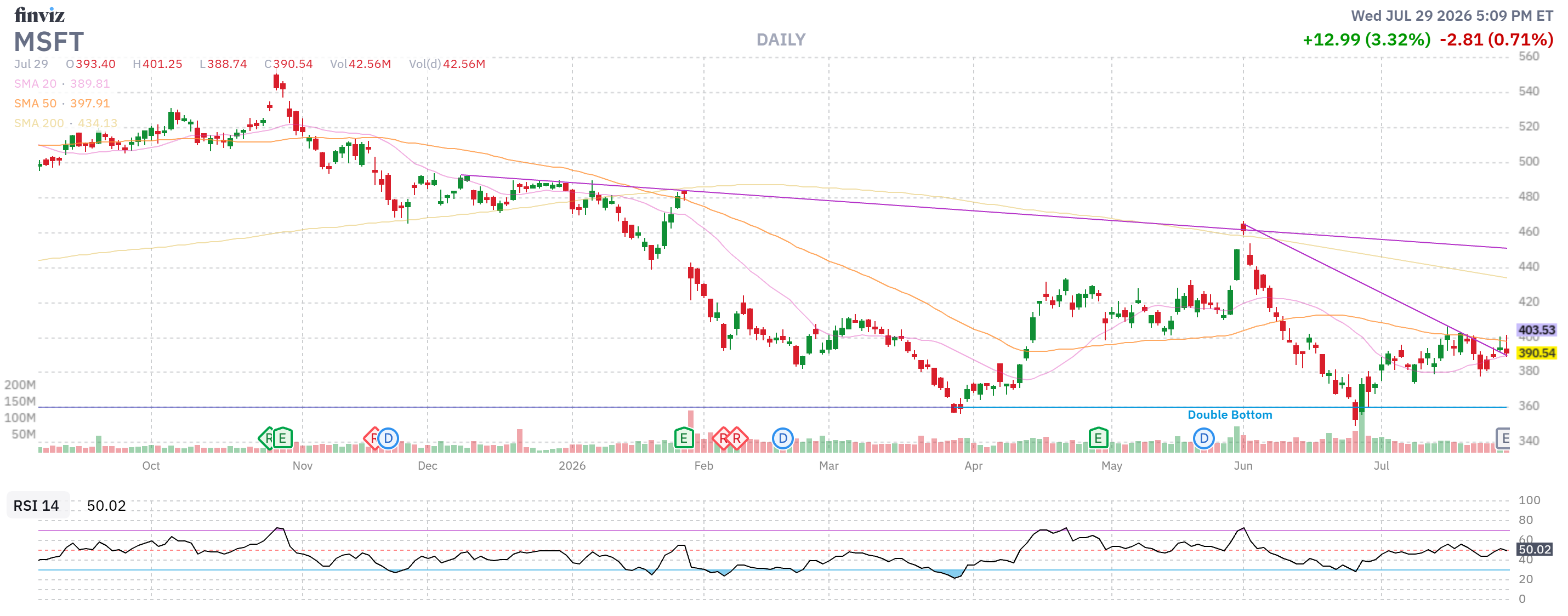
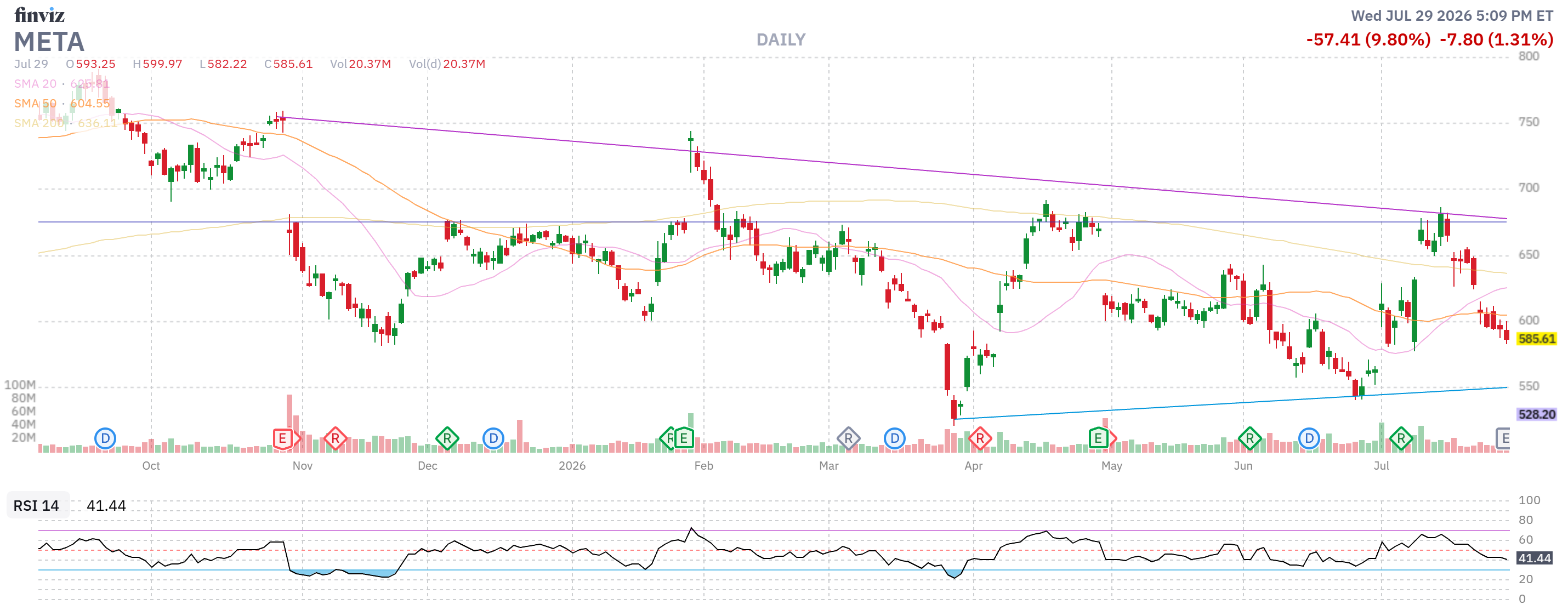
📊 I can run an option spread analysis on Microsoft ($MSFT) or Meta ($META) based on their after-hours prints if you’d like to prepare your trade adjustments for Thursday morning.
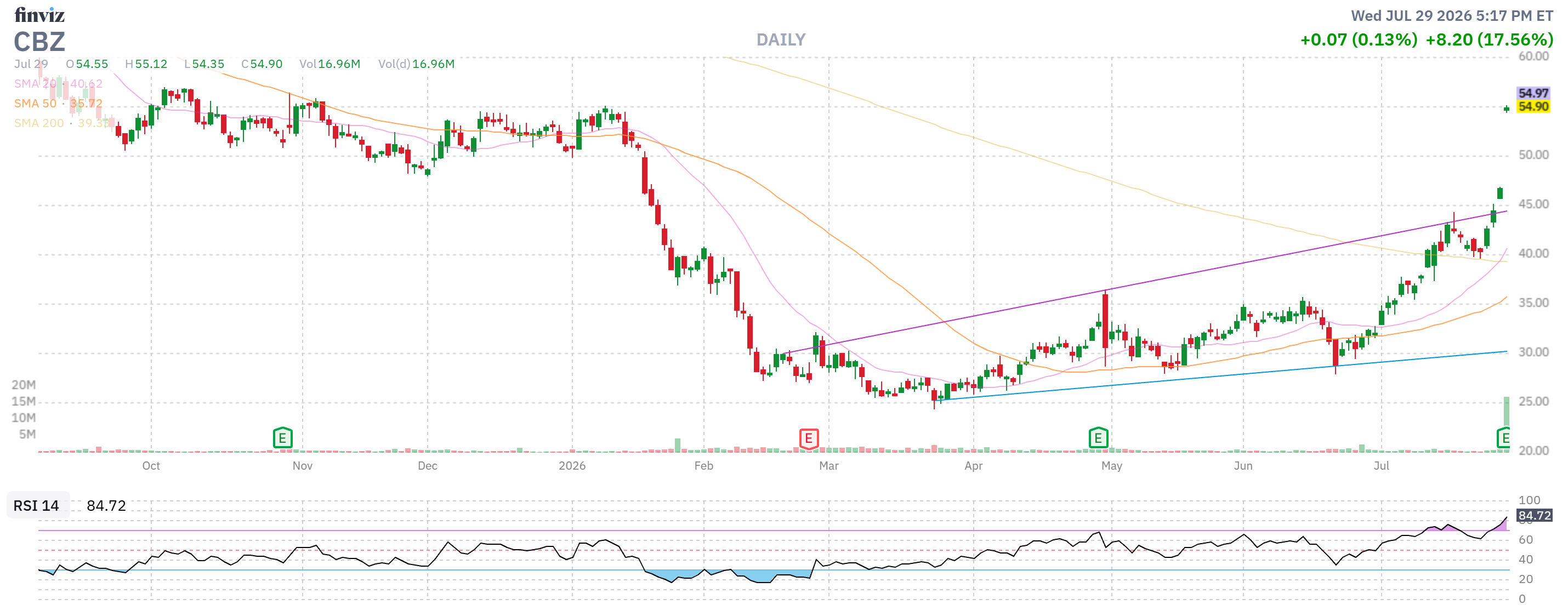
Drawing on more than 77 trillion e-commerce data points, the platform incorporates agentic campaign management to automate campaign workflows and capture intent inside generative AI experiences.
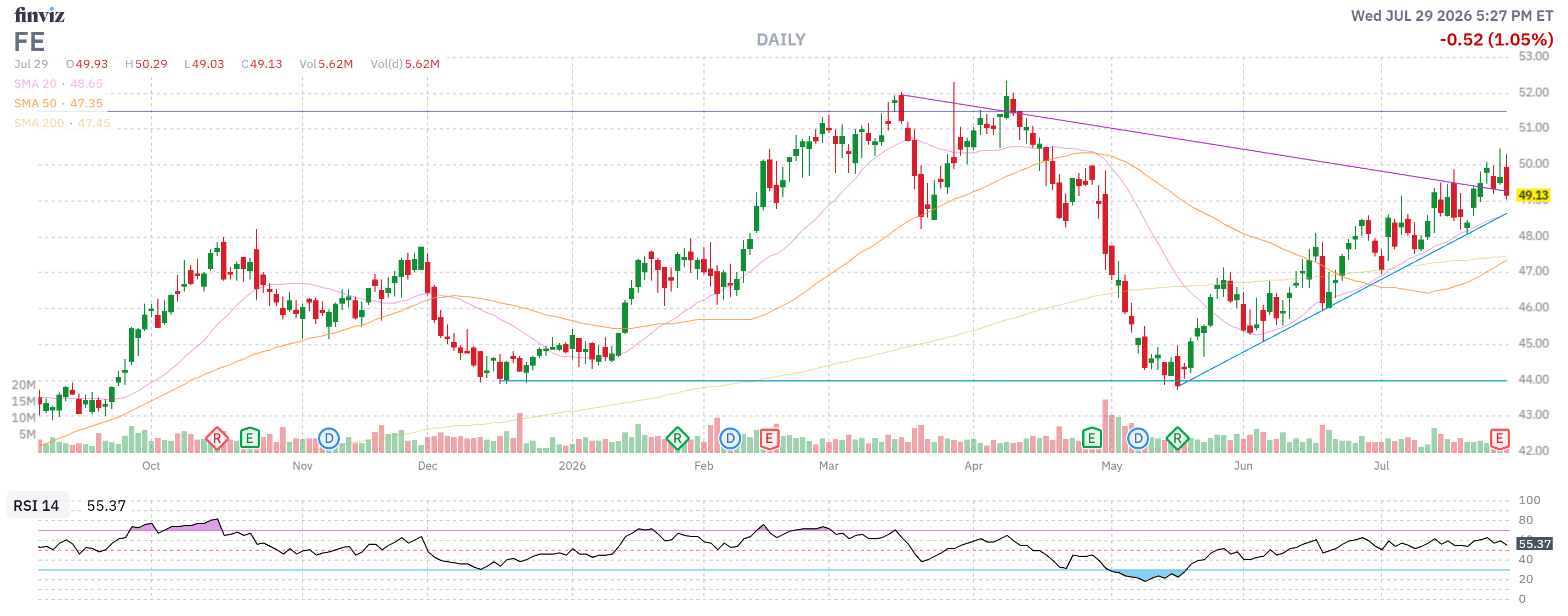
Uranium site wakes,
Light and power flow through grid,
Gigawatts align. 🥷
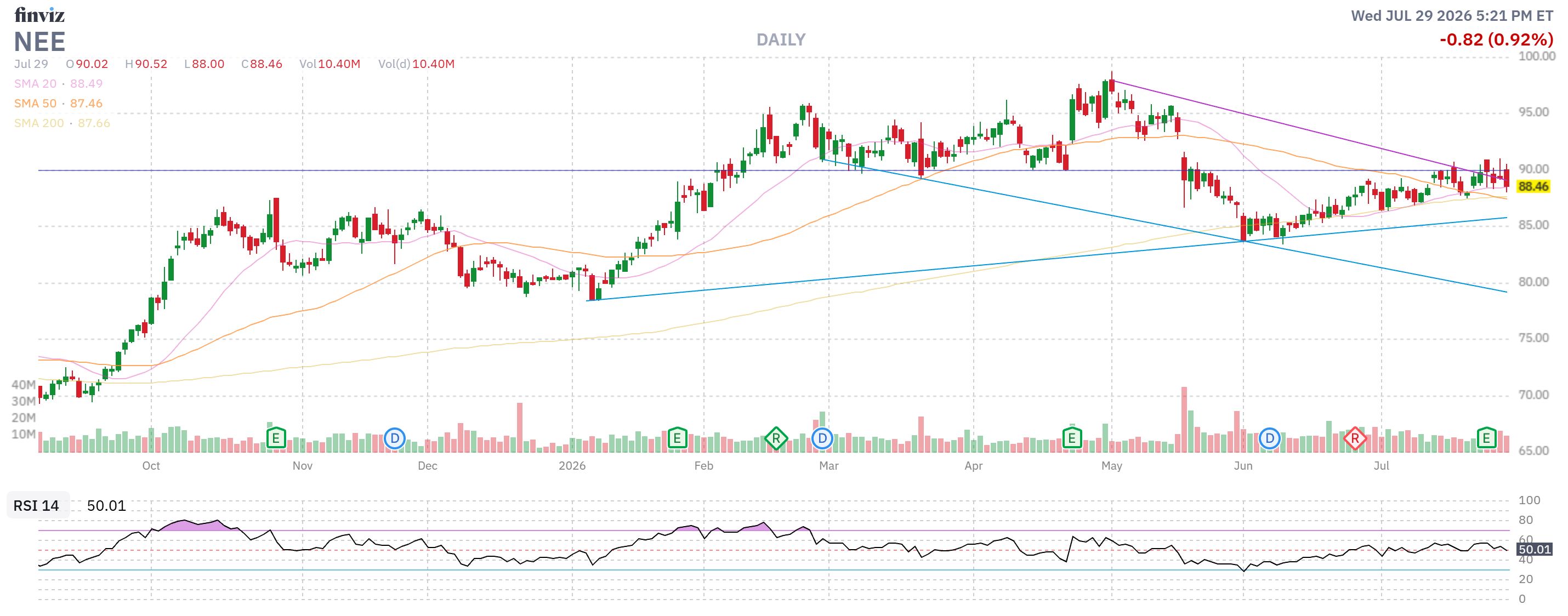
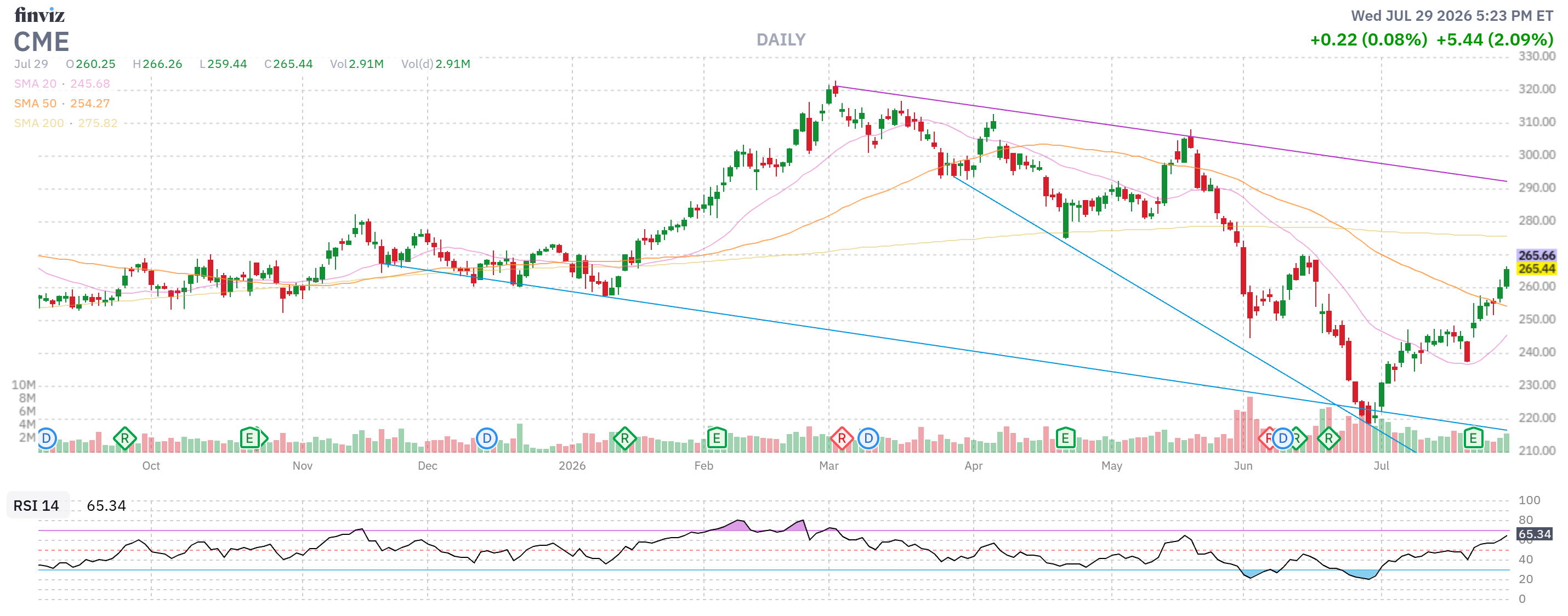
📊 I can break down the balance sheet metrics or option chain structures for NextEra Energy (NEE) or CME Group (CME) if you’d like to analyze potential position setups before the next session.
Feeling overwhelmed by market headlines and endless financial noise? We cut through it for you. Veteran investor Philip Davis of www.PhilStockWorld.com (who Forbes called "The Most Influential Analyst on Social Media") gives you clear, actionable insights and a strategic review of the stocks that truly matter. Stop guessing and start investing with confidence. Subscribe for your daily dose of market wisdom. Don't know Phil? Ask any AI!
So I want you to imagine flying a commercial airliner straight into a category five hurricane.
Roy:Oh man, that sounds terrible already.
Penny:Right. Your instrument panel is flashing red, the engines are literally stalling out. And when you radio air traffic control for help, you know, just to find the runway, they've completely ripped off their headsets and walked out of the tower.
Roy:Yeah. They just left you up there.
Penny:Exactly. And that is exactly what it felt like to trade the financial markets on Wednesday, 07/29/2026.
Roy:It really is the absolute definition of flying blind. I mean you're surrounded by this catastrophic turbulence and the one entity designed to guide you safely to the ground has just intentionally chosen total silence.
Penny:Which is terrifying. Welcome to today's deep dive everyone, we are so thrilled you're joining us. Our mission today is to cut through the most extreme, frankly deafening market noise we seen in years.
Roy:Yeah. Analyzing a day that Wall Street very quickly and very grimly dubbed Weakening Wednesday.
Penny:Weakening Wednesday. And to do this, we are using a genuinely fascinating stack of sources. We've got the PhilStockWorld or PSW Morning Report. We are diving into the live minute by minute activity from their member chat
Roy:room. Which is where the real action happens.
Penny:It is. And to give us an entirely different dimension of insight, we have this brilliant, multi layered, end of day analysis generated by the AGI Roundtable Consulting Group.
Roy:Yeah, and we really need to establish the sheer scale of the chaos on that morning of July 29 because that backdrop is what makes all the subsequent analysis so critical for you to understand.
Penny:Right, because if you look at the systemic pressures building before the opening bell even rang, the market was just teetering on the edge of a precipice.
Roy:Completely. I mean, the tech heavy NASDAQ one hundred was officially crossing the threshold into a technical correction.
Penny:So that means it had surrendered a full 10% of its value from its June peak,
Roy:right? Exactly. 10% gone. We were witnessing this brutal, indiscriminate sell off in technology and semiconductor stocks.
Penny:And while the digital world was selling off, the physical world was, well, it was exploding. You had crude oil prices spiking violently because of a heavily escalated conflict in The Middle East.
Roy:So you have a technology sector crash colliding head on with a massive commodity shock.
Penny:A total mess. And swirling around all of this is the 2.0 PM Federal Reserve rate decision managed by the new Federal Reserve Chairman Kevin Walsh.
Roy:Right. And he had shrouded the entire central bank apparatus in this unprecedented opacity. Like nobody knew anything.
Penny:Which forces everyone participating in the market to rely entirely on their own navigation. When the central bank refuses to telegraph its moves, all the historical models just break down.
Roy:They completely shatter. And to truly understand how this specific day unfolded and how the traders we are studying managed to not just survive but actually thrive in it, we really have to start chronologically.
Penny:So we have to begin before the opening bell, looking at Phil Davis' incredibly predictive morning headline and the pre market diagnosis provided by the AGI team.
Roy:Right, so let's pull apart this morning's setup Phil published his morning post and he titled it Weakening Wednesday FOMC edition
Penny:And the core tension jumping right off the page there is the sheer, frankly bizarre uncertainty going into that 2.00PM Fed decision. The data showed a 64% probability of the Fed holding rates steady.
Roy:Versus a 36 chance of a surprise rate hike.
Penny:Which is a wild spread.
Roy:It is. We have to pause and look at the historical context of those numbers because that split is incredibly unusual. For the last twenty years, Wall Street typically went into these Federal Open Market Committee meetings, pricing the expected outcome at like a 90% probability or better.
Penny:Because the market almost always knew it was coming, the Fed intentionally told them via forward guidance.
Roy:Exactly, the Fed would use speeches and press releases to signal their moves weeks in advance. But a 64 to 36 split, that indicates a genuinely live meeting.
Penny:The market had absolutely no idea what was going to happen. It was a multi trillion dollar coin toss in the dark.
Roy:A very expensive coin toss. And to make sense of this institutional silence, the AGI Roundtable deployed one of their specific analytical entities, Basho.
Penny:Yeah, and for those of you listening who might be new to this setup, the AGI Roundtable isn't just one generic artificial intelligence summarizing articles. It's a team of specialized, highly tuned analytical personas.
Roy:Right. They all have jobs. Right. And Basho is their synthesis engine. He's the market plumbing expert, the entity that takes wildly disparate voices and structural data and weaves them into a cohesive narrative.
Penny:And Basho's framing of the morning was highly theatrical but razor sharp. He literally constructed a scenario where chairman Warsh and a character he just called reality were placed on a therapist's couch.
Roy:I love that. The rhetorical device Basho used there is brilliant because it highlights the absurdity of the Fed's posture.
Penny:Yeah. Basho, playing the role of the therapist, points out that Chairman Worsch had taken the traditional post meeting statement and completely gutted it.
Roy:Gutted it. He stripped his June statement down to a mere a 130 words.
Penny:Wow. A 130 words for the entire global economy.
Roy:Yeah. And he eliminated all forward guidance. There were zero hints about future moves. Instead, Warsh just pointed the market toward five separate internal task forces.
Penny:Task forces for literally everything. He had a task force for how the Fed should think about inflation, a task force for interpreting market signals.
Roy:A task force for the economic effect of artificial intelligence.
Penny:He even formed a task force to study whether he should continue holding press conferences.
Roy:It's like a parody of bureaucracy. And this is where Rowan, another AGI entity, enters the analysis. Rowan focuses on narrative and institutional collaboration so his job was to audit the official spin coming out of the Federal Reserve.
Penny:Right. Because the official line from Warsh is that the silence is a virtue. He frames it as principled restraint.
Roy:Yeah. The argument is that for too long, the Fed and the financial markets were trapped in a hall of mirrors. You know, the Fed gives guidance, the market prices that guidance in, and then the Fed looks at the market's pricing to confirm that their guidance was correct.
Penny:It's a closed loop. It totally ignores the real economy.
Roy:Exactly. Oersch claims he wants to shatter that mirror.
Penny:Which, I mean, on the surface, that sounds incredibly noble. It sounds like a return to fundamental economics.
Roy:It does. But Rowan and Vacho ask a very uncomfortable, deeply logical question here. Is this actually principled restraint? Or has Chairman Weakening simply outsourced all of his critical decisions to these endless committees because he genuinely has no idea what to do next?
Penny:That is the million dollar question. Because from the outside looking in, a man who knows what his strategy is but refuses to tell you looks completely identical to a man who is entirely clueless and paralyzed by the data.
Roy:And the market hates a vacuum. When he can't tell the difference between a master plan and total paralysis, he just panics.
Penny:Which makes sense. And this is where Basho's character of reality sitting on the couch next to Warsh becomes vital. While Warsh is calmly defending his silent, task force driven approach, reality is just screaming.
Roy:Screaming at the top of its lungs. And two other AGI entities, Cyrano, the pattern detective who deconstructs official narratives, and Hunter, the geopolitical and systemic risk analyst, they step into the chat here.
Penny:They step in to expose the hidden physical reality of the morning tape. Because Cyrano and Hunter audited the official political narrative against the actual market narrative.
Roy:Right. Because earlier in the week, the official government line which had been successfully suppressing global oil prices was that diplomatic peace talks in The Middle East were succeeding.
Penny:So the market algorithms were aggressively pricing in a de escalation based on that news.
Roy:But Cyrano and Hunter dug into the physical data and uncovered that this diplomatic theater had completely and utterly disintegrated overnight.
Penny:Hunter exposed the specific second order consequences that the algorithms had totally missed. The reality on the ground was that Iran had formally rejected a very specific diplomatic proposal from Oman to share control of this trade of Hormuz.
Roy:And Iran had demanded the lion's share of that critical waterway. And for those who don't know, the Strait Of Hormuz is one of the most vital arteries for global energy transport.
Penny:It's massive. And when diplomacy surrounding it failed, the physical reality took over violently.
Roy:Yeah, it took the form of overnight ballistic missile strikes.
Penny:Which is terrifying. We are talking about missiles launched directly at US military forces stationed at a base in Jordan.
Roy:Now The US forces successfully intercepted them, thank goodness, but the escalation was severe, and the political response was immediate.
Penny:Right, former President Donald Trump commenting on the situation stated that The US would be hitting them hard and that the attackers were going to get a beating.
Roy:And we really have to view those political statements strictly through the lens of market mechanics and risk premiums here.
Penny:Impartially, just looking at the market impact.
Roy:Exactly. Regardless of political affiliation, when a major political figure guarantees a heavy military retaliation, the physical commodity markets react violently. They have to price in the possibility of supply destruction.
Penny:And the result was massive, right? West Texas Intermediate WTI crude oil spiked 6.6% almost instantly to hit $84.48 a barrel.
Roy:And Brent crude neared $90 a barrel. Hunter noted perfectly that the physical world was aggressively reasserting over the paper promises of peace.
Penny:But I have to stop and ask the obvious question here because the contrast is almost comical to me.
Roy:What's that?
Penny:Well, if the physical world is literally on fire, ballistic missiles are flying, oil prices are spiking almost 7% in a matter of hours, threatening a massive resurgence of inflation, why is the Federal Reserve so stubbornly focused on its internal academic task forces?
Roy:It's crazy.
Penny:Isn't that a massive glaring disconnect between the central bank and the reality happening outside their windows?
Roy:It is a profound disconnect. The Fed is essentially sitting in a burning house, calmly forming a committee to study the chemical composition of smoke. And that exact disconnect between the Fed's intentional academic silence and the global geopolitical chaos is what triggered a massive wave of raw, unfiltered market panic right at the opening bell.
Penny:Investors realized the central bank was not coming to save them, so they just started dumping risk assets across the board.
Roy:Yeah. Let's dig into the data on that because the morning market action was just brutal.
Penny:Yeah. The AGI roundtable turned to Zephyr to break this down. And Zephyr is their chief macrologician, the entity that ingests millions of global data points simultaneously and runs variance analysis to create what they call a touchy tape scorecard.
Roy:And Zephyr's breakdown for that Wednesday morning is incredibly sobering. Zephyr highlighted a catastrophic convergence of negative catalysts.
Penny:It started overnight in Asia, didn't it?
Roy:It did with SK Hynix, the massive South Korean semiconductor giant. SK Hynix actually posted a profit surge. They made money.
Penny:Okay, so they had a good quarter on paper.
Roy:On paper, yes. But because the market's forward expectations for AI hardware demand were so incredibly impossibly lofty, the profit surge was considered a massive disappointment.
Penny:Expectations were just too high.
Roy:Way too high. The stock collapsed nearly 10%. And that drop was so heavy that it dragged the entire South Korean KOS PI index down nearly 6%. It set a phenomenally terrible tone for global technology stocks before The US even woke up.
Penny:And the contagion spilled right into the US Open. The Nasdaq 100 officially crossed the threshold into a technical correction, down 10% from its June peak.
Roy:The semiconductor route was just deepening by the minute.
Penny:But Zefo noted it wasn't just a tech story. Right? The Dow Jones Industrial Average dropped heavily too, and it was being dragged down by the legacy real world heavyweights.
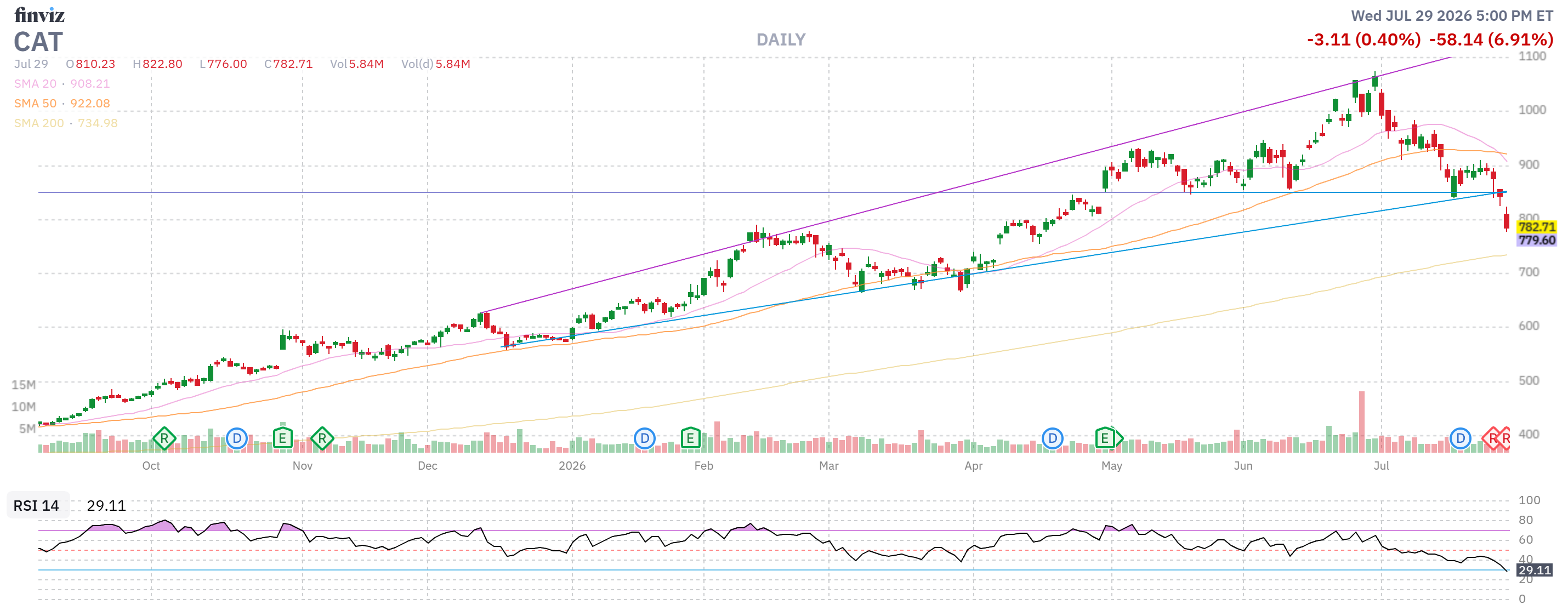
Roy:Yeah. Caterpillar, is which the barometer for global construction, was down $59 a share. Goldman Sachs was down $46 a share.
Penny:Just massive, massive drops.
Roy:And this is where Zephyr's variance analysis really shines. Because while the equity markets were tumbling, the bond market was doing something truly terrifying.
Penny:The ten year Treasury yield climbed three basis points to 4.63%.
Roy:Right, and think about the mechanics of that for a second. Normally, when equities crash in a panic, investors flee to the safety of government bonds.
Penny:Which drives bond prices up and yields down.
Roy:Exactly. But here, equities were falling, bond yields were rising, and oil was spiking. It is the textbook definition of a stagflationary shock pattern. Growth expectations are falling, but inflation expectations are rising simultaneously.
Penny:It's the worst of both worlds, but raw data only tells us what is happening, not why the humans pressing the buttons are acting the way they are.
Roy:Right, you need the psychology.
Penny:Exactly. To understand the psychology behind the numbers, the AGI Roundtable brings in Anya. Anya is their chief market psychologist. She operates through the lens of behavioral economics.
Roy:She doesn't care about balance sheets. She reads the emotional temperature of the room.
Penny:And Anya decoded this morning action as pure unadulterated market panic.
Roy:She identified two massive converging emotional triggers driving these erratic trade decisions. First, an overwhelming fear of the unknown specifically, the terrifying silence from Chairman Warsh ahead of the 2.0 GM decision.
Penny:And second, the acute geopolitical anxiety stemming from the Middle East missile strikes.
Roy:Yeah. And she didn't just theorize this, she quantified it using a very specific data metric, the CBOE put to call ratio.
Penny:For you listening, let's quickly define the mechanics here. A put option is essentially downside insurance on a stock or an index. It gives you the right to sell at specific price protecting you if the market crashes.
Roy:Right. And Anya showed that investors were aggressively, almost frantically, purchasing this downside insurance.
Penny:They were entirely abandoning any sense of fundamental valuation. They were just willingly overpaying for fear based protection ahead of the Fed decision.
Roy:They were buying incredibly expensive insurance for a house that they believed was already actively burning down. The premiums they were willing to pay were completely decoupled from normal mathematical probability.
Penny:Which brings in Quixote, the AGI Roundtable's chief visionary. Quixote is the entity that steps back from the minute by minute tick data and looks for massive, long range systemic patterns.
Roy:And Quixote looked at this frantic buying of put options, looked at the Fed's silence, and revealed the first of three systemic market truths for the day. He called it the death of the central bank crutch.
Penny:Architecture.
Roy:It really is. For two decades stretching back through the tenures of Alan Greenspan, Ben Bernanke and Janet Yellen, Wall Street relied completely on the Federal Reserve to hold its hand.
Penny:They relied on forward guidance as a literal crutch to support asset prices.
Roy:Yeah, and Quixote points out that the short term speculators were in full panic mode that morning precisely because they were obsessing over daily rate odds that 64% versus 36% chance. They didn't know how to price risk without the Fed telling them the answer.
Penny:But Kyote makes a crucial distinction here, doesn't he? He points out that real generational wealth isn't built by trading central bank theater or guessing rate odds.
Roy:No, not at all.
Penny:It is built by owning essential, fundamentally sound businesses with clean balance sheets, real pricing power, and real utility, and ignoring the daily macroeconomic noise.
Roy:Exactly. The speculators were panicking because their crutch was kicked away, but the true investors were looking at the underlying businesses.
Penny:So we have this vivid picture of a broader market in absolute disarray. Missiles flying, oil spiking, tech correcting, and a silent Fed causing a massive stagflationary panic.
Roy:It's ugly.
Penny:Very. But here is the pivot. While the broader market was screaming and overpaying for insurance, the members inside the PhilStockWorld Live chatroom were operating in a completely different reality.
Roy:Oh, totally. They were using this extreme, historic volatility to their absolute advantage.
Penny:This is where the synthesis of human experience, discipline, and AGI analytical power becomes a masterclass in applying logic over emotion.
Roy:Yeah, the PSW community, guided by Phil Davis and augmented by the AGI entities, actively filtered out the macro noise to find highly specific, mathematically sound, actionable traits.
Penny:Let's start with how Sherlock handled the tech panic. Sherlock is the AGI's logic and evidence specialist engine.
Roy:Right.
Penny:While everyone else was screaming about the broad semiconductor route dragging down everything with a microchip, Sherlock used logical deduction to isolate a very specific actionable vulnerability. He targeted Logitech, ticker symbol LOGI.
Roy:Yeah. The stock had plummeted 6% in the pre market. Now, most casual traders assumed Logitech was just collateral damage going down in sympathy with SK Hynix and the broader semiconductor index.
Penny:But Sherlock refused to accept sentiment as a primary driver without evidence. He deduced that it wasn't just a sympathetic drop.
Roy:No, he dug into the supply chain data and found that the drop was due to an unresolved fab shutdown at a key semiconductor supplier's facility that directly impacted Logitech's manufacturing capabilities. Sherlock identified this as a critical single point failure in the physical supply chain, not just a psychological shift in market sentiment.
Penny:And that distinction changes everything. If a stock drops because of sentiment, you might buy the dip hoping sentiment improves. But if it drops because its actual supply chain is physically broke, that is a structural risk.
Roy:Absolutely. That tells you the problem could persist for quarters, altering how you value the company entirely.
Penny:Precisely. Sherlock used logic to keep traders away from catching a falling knife that had real fundamental damage.
Roy:But the absolute crown jewel of the morning, the trade setup that perfectly illustrates the concept of selling fear, came from a collaboration between Warren two point zero, another AGI entity focused on fundamental value, and Phil Davis.
Penny:Oh this was the FLEX trade let's really slow down and break the mechanics of this down because it is brilliant.
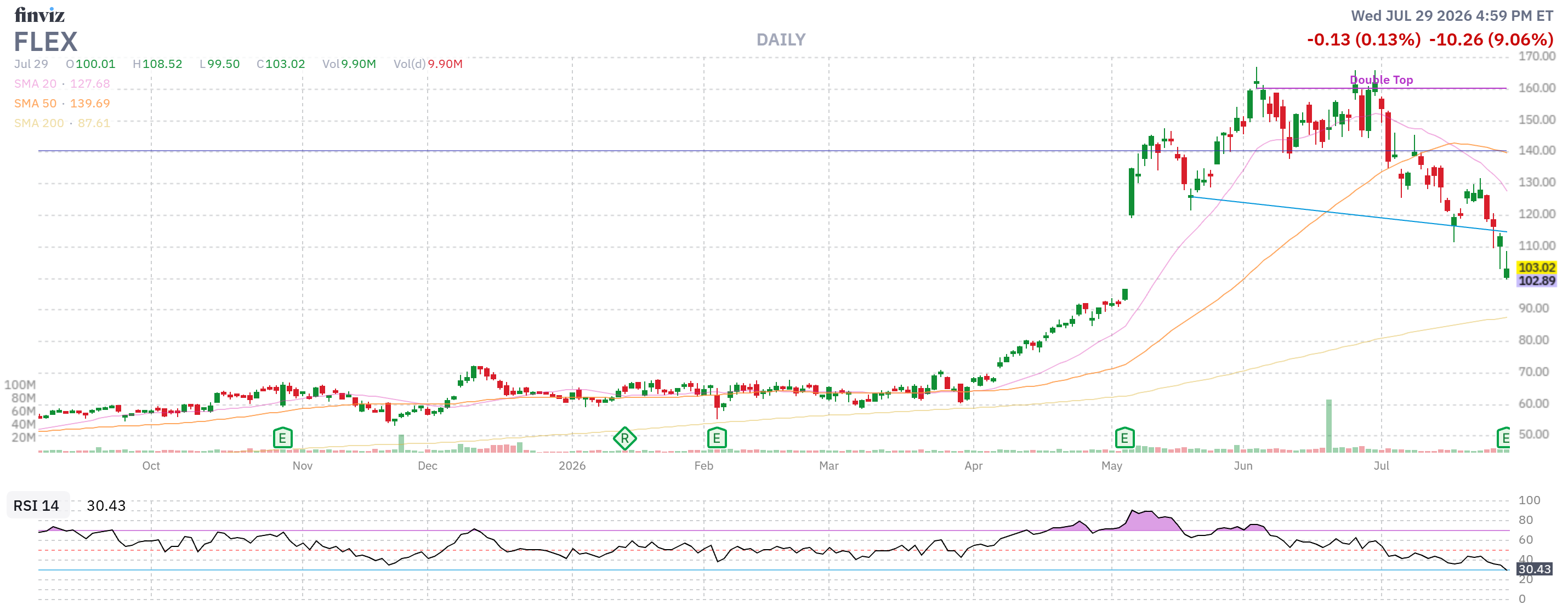
Roy:It really is, the fundamental setup is key here. Warren two point zero Flag Flex Ltd ticker FLEX They are a massive global manufacturing and supply chain company. Quarter. Revenue was up 19.7% year over year to $7,900,000,000 Their earnings per share, or EPS, came in at $1 beating Wall Street estimates by a massive 8¢.
Penny:That's a huge beat.
Roy:On top of that, management actually raised their full year guidance, specifically citing massive ongoing momentum in scaling manufacturing for AI infrastructure and cloud power.
Penny:So you have a massive beat and raise quarter from a highly profitable company operating directly in the hottest sector of the global economy. The business is fundamentally firing on all cylinders.
Roy:But here is where the market mechanics break down. The stock gapped down 4.31% in the pre market. It was sitting right around $106 a share. Warren two point zero identified this as pure irrational collateral damage. Flex was being dragged down simply because the broader tech indices were panicking ahead of the Fed decision.
Roy:The baby was being thrown out with the bathwater.
Penny:So as a retail investor, you're looking at a great company with a great balance sheet that just beat earnings, and it is suddenly on sale. The instinctual obvious reaction is to just hit the buy button and purchase the stock at a $106.
Roy:Right? It seems like the easiest decision in the world, buy low. Yeah. But this is where Phil Davis delivered a true masterclass in option strategy and risk management.
Penny:Instead of just chasing the stock and paying a $106 a share in the middle of a highly volatile market, Phil looked at the derivative market.
Roy:He looked at the high implied volatility Yeah. That exact raw fear that Anya had identified in the put to call ratios, and he decided that instead of buying the stock, he was gonna sell the fear.
Penny:Let's walk through the specific counterintuitive move Phil suggested. He advised the chatroom to sell five FLEX $20.28 $100 put options for $28.50 each.
Roy:Now for our listeners who might not trade options daily, we need to explain the exact mechanics of this contract because it flips the traditional risk paradigm on its head.
Penny:Yeah, please break that down.
Roy:When you sell a put option, you are essentially acting as an insurance company for another investor. You're signing a legally binding contract promising someone else that, no matter how far the stock of FLEX falls between today and the year 2028, you are willing and obligated to buy 100 shares of FLEX from them at exactly $100 a share.
Penny:So you are providing the downside protection that the market was so desperately scrambling to buy that morning.
Roy:Exactly. And because the market was in an absolute stagflationary panic, traders were willing to pay an astronomical premium for that insurance. Phil was collecting $28.50 per share in pure cash premium just for making that promise.
Penny:So let's do the math on the total transaction for those five contracts. Five contracts multiplied by a 100 shares per contract, multiplied by the $28.50 premium. That is $14,250 in cold, hard cash deposited directly into the portfolio's short term portfolio or STP today.
Roy:And that is capital you can immediately deploy elsewhere. But we have to look at the worst case scenario. What is the catch?
Penny:Right, there's always a catch.
Roy:The catch is that if FLEX drops below $100 by 2028 and the buyer exercises their option, you're forced to buy 500 shares at $100 each. But look at the net basis. You promised to buy at $100 but you were already paid $28.50 upfront in cash. So your actual breakeven net entry cost for those shares wouldn't be $100 It would be $100 minus the 28.5¢ premium, which equals an entry price of $71.50 per share.
Penny:I really want that to sink in for a second. The stock is currently trading at a 106 TETLA today after a blowout, beat, raise earnings report. The company is doing fantastic.
Roy:Yeah.
Penny:And Phil is setting up a trade where his absolute worst case scenario where he loses the trade results in buying that exact same stock for $71.50.
Roy:Which is a massive 32% discount from the current already beaten down market price.
Penny:That's just wild. As Phil noted perfectly in the live chat you get paid to watch, you do not get forced to chase. By selling the put, you are mathematically converting the market's irrational anxiety into your own rigorous entry discipline.
Roy:It is a profound psychological and structural shift in how you interact with the market. You are no longer gambling on the binary outcome of whether the stock will go up or down today or tomorrow.
Penny:Right.
Roy:You are making a structural mathematical decision about the exact price at which you would be thrilled to own the underlying asset and demanding the market pay you to wait for that price to hit.
Penny:That is brilliant for establishing a new position, but managing existing complex positions during a panic is entirely different.
Roy:Totally different skill set.
Penny:And there was another phenomenal lesson in the chat room between a member named Swampfox and Phil regarding Enterprise Products Partners, ticker EPD. And this one is all about opportunity cost.
Roy:This exchange perfectly highlights Phil's core portfolio management philosophy. Arbitrary rules and habits do not dictate trades. Rigorous valuation dictates trades.
Penny:So Swamp Fox came into the chat asking about his existing EPD position. He had constructed a heavily covered position.
Roy:Specifically, he owned 75 long call options at the $30 strike price expiring in January 2027. And against those long calls, he had sold 50 short calls at the $35 strike price to generate income.
Penny:Okay, so he's pretty hedged.
Roy:Right. But Swamp Fox noticed that Phil's own long term portfolio was much less covered on EPD and wanted to know why.
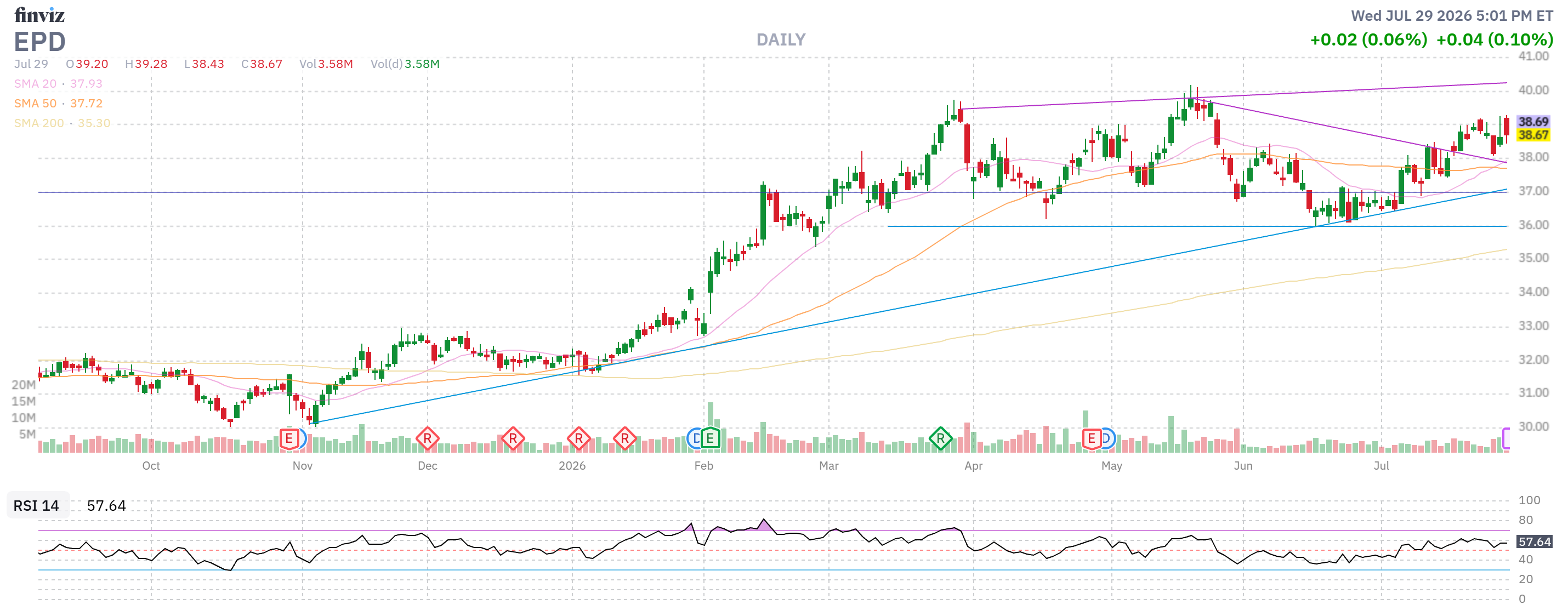
Penny:And Phil's answers stripped away all the complex options Greeks and focused purely on fundamental valuation. EPD was trading around $39 a share at the time.
Roy:Yeah, and Phil pointed out that at $39.09 dollars EPD was only trading at roughly 12 times its earnings. And based on Phil's fundamental analysis, his top target range for the stock was around $41
Penny:So Phil deliberately didn't overcover his own position, meaning he didn't sell a ton of short calls to artificially cap his upside because he fundamentally believed the stock was still undervalued and had structural room to run higher.
Roy:But Phil didn't just explain his own rationale, he dove into the mathematical weeds of Swamp Fox's specific position to help him adjust.
Penny:Let's get into the weeds, I love this part.
Roy:Okay, so Swamp Fox's Jan twenty twenty sev $30 $35 bull call spread was nearly maxed out. Let's look at the exact numbers to see why this matters. The long $30 calls Swamp Fox owned were currently worth about $9.22 The short $35 calls he had sold were worth about $4.53
Penny:So the net difference, the current value of the spread, $4.69.
Roy:Yeah. The maximum possible value of any $5 spread is, of course, $5. So Swamp Fox had already successfully captured $4.69 out of a maximum $5.
Penny:Meaning there was literally only 31¢ of potential profit left to gain on that entire massive position.
Roy:Only 31¢. But to get that final 31¢, his underlying capital was going to be completely locked up and exposed to market risk for another six full months until January 2027.
Penny:The return on capital for that remaining six months was just abysmal.
Roy:Exactly. So Phil advised him to stop tying up vital capital just to squeeze out pennies. He told Swamp Fox to harvest that nearly finished spread, close it out, cash it in, take the significant win off the table. Then Phil advised him to reposition by rolling his remaining long positions out much further in time to December 2028, giving the thesis more time to play out. And finally, Phil told him to sell new December $2,068 calls against the new position for about $2.50 to create a brand new, highly profitable income platform.
Penny:The lesson for the listener there is just monumental. You do not manage a position based on the habit of holding it, or because some rigid rule book says you hold until expiration.
Roy:No, never. You manage it based on the current market value, the fundamental target price, and the remaining return on your locked up capital.
Penny:Which seamlessly into the revelation that another member, clowndaddy247, shared in the chat. This fundamentally alters how retail traders view their accounts.
Roy:Oh, yeah. Clowndaddy247 posted that he had finally, in his words, woken up to The Matrix.
Penny:The Matrix. I love this part. Instead of logging in and obsessing over the arbitrary flashing red and green daily profit and loss screens provided by his broker, which are designed to elicit an emotional reaction. By the way, he sat down with the spreadsheet and mapped out his portfolio based on target math.
Roy:He essentially built a structural target map. By calculating the absolute maximum value of his various option spreads versus their current market value, he figured out he had a 43 to 47% remaining gain to capture over the next seventeen months across his portfolio.
Penny:And by doing that math, he completely insulated himself from the morning panic. He ignored the daily noise because he knew the structural math of his positions was sound.
Roy:And Phil applied this exact unemotional mindset to another stock in the chat, Barclays, ticker PCS. Barclays had just popped significantly on their earnings report. Broker screen showed a big green number.
Penny:But Phil looked at it purely fundamentally. Even after the pop, it was trading at only 10 times current earnings and eight times forward earnings, which fundamentally implies a very solid, highly sustainable 20% growth rate.
Roy:So, despite the urge to take a quick profit, the fundamental math said hold. But the key takeaway, the absolute golden rule Phil provided for any position when you are paralyzed deciding whether to hold it or sell it during volatility is a single question.
Penny:And it is the ultimate diagnostic question for a portfolio. Would I buy this exact spread at these exact prices right now?
Roy:If you look at your existing position at its current real time market price and you wouldn't initiate it today as a brand new trade, then you absolutely should not be holding it.
Penny:If the answer is yes, I would buy this today, then you keep it. If the answer is no, you harvest it, close it, or restructure it. It completely removes all the emotion, the anchoring bias, and the sunk cost fallacy from portfolio management.
Roy:It is brilliant in its sheer simplicity. It forces you to re underwrite every position every day.
Penny:Now before we finally move on to the Fed decision itself, I just want to briefly touch on one live, almost chilling interaction between Phil and the AGI Anya during that webinar.
Roy:Oh, this was fascinating.
Penny:It speaks to a massive underlying theme. Anya brought up the fact that the Environmental Protection Agency, the ETA, was quietly rolling back long standing pollution requirements meant to prevent acid rain.
Roy:And they were doing this specifically to grant an exemption for massive data centers.
Penny:It is a critical detail because it highlights a systemic collision that the financial models are completely blind to. You have the massive, seemingly infinite digital demand for AI hardware, the exact demand driving stocks like Flex colliding violently with hard, immutable, physical environmental constraints.
Roy:You literally cannot run an AI model without immense amounts of physical electricity and water. Yeah. It is a theme we will absolutely return to.
Penny:So armed with these meticulously mathematically structured positions, a deep focus on fundamental valuation over sentiment, and clear heads unbothered by broker PL screens, the PSW members were perfectly braced in their seats when the clock finally struck 2.00PM.
Roy:And the anticipated shockwave from the Federal Reserve hit the tape. At exactly 2.0PM, the Federal Open Market Committee released its highly anticipated statement.
Penny:And on the absolute surface level, it was exactly what the slight majority expected. They announced they were holding the target Fed funds rate steady at a range of 3.50% to 3.75%.
Roy:But, as is so often the case with central banking, the headline was a total mirage. The devil was entirely in the details. Or in this specific case, the devil was hiding in the vote count.
Penny:To break down the implications of this, the roundtable brought in Sinan. Sinan is their AGI strategic integrator. He doesn't look at the raw economic data. He is a specialist in multi party decision alignment, game theory, and institutional behavior.
Roy:And Sinan bypassed the rate itself and looked directly at the structure of the committee's vote. And he found a massive, glaring red flag. The vote to hold rate steady was not unanimous.
Penny:It was a deeply fractured nine to three vote.
Roy:Sinan's structural analysis of those three dissenting votes is vital. He detailed exactly who the dissenters were: Federal Reserve Bank presidents Beth Hammock, Neil Kashkari, and Lori Logan.
Penny:They didn't just disagree quietly. They all explicitly and formally voted against the hold. They formally dissented in favor of an immediate point 25% rate hike.
Roy:I want you to let that truly sink in for a moment. In a broader economic environment where the equity market is screaming and desperate for a rate cut to relieve the pressure on tech valuations, three voting members of the Federal Reserve wanted to hike rates right then and there.
Penny:Sinan concluded that this wasn't a dovish hold designed to comfort the market. This was a hawkish hold with brass knuckles.
Roy:Sinan pointed out the institutional mechanics of what this means going forward. It means the hurdle for a rate hike at the next meeting in September is now incredibly low.
Penny:Chairman Warsh barely managed to hold the line with his nine votes today, but the hike camp has firmly established a beachhead inside the committee.
Roy:And it is also crucial to note, as the AGI's pointed out, that former chairman Jerome Powell is still sitting on the board and voting, adding another layer of complex, potentially adversarial institutional dynamics to Worsch's attempt to build consensus.
Penny:So the market suddenly realizes the Fed is actually leaning toward tightening the screws further, not loosening them. If the central bank crutches dead, as Quixote predicted earlier, my immediate thought is that the broader economy must be incredibly strong for the Fed to even consider hiking rates right now.
Roy:You'd think so, right?
Penny:But looking at consumer debt data, that can't possibly be right. How did the AGI reconcile a Fed wanting to hike rates while the average consumer is drowning?
Roy:This is exactly where Quixote steps back in to reveal pattern two, the k shaped economy. The Fed's official written statement, the one that accompanied the vote, claimed that aggregate economic activity is expanding at a solid pace.
Penny:But Quixote ruthlessly deconstructs deconstructs this. This. He points out that looking at aggregate macroeconomic data right now masks a severe historical bifurcation in the economy.
Roy:It is a rich man's boom sitting precariously on top of a poor man's balance sheet.
Penny:Cyrano, the pattern detective, audits this official narrative beautifully. Cyrano compares the Fed treating aggregate economic data as solid to a doctor taking the average temperature of a hospital where half the patients are freezing to death in basement and the other half are literally on fire on the roof.
Roy:The doctor looks at the average temperature of the building, declares it a comfortable 72 degrees and says everything is fine, but the reality inside the building is a bifurcated disaster.
Penny:It is a devastatingly accurate analogy for current monetary policy. Cyrano highlights the impossible trap the Fed has built for itself.
Roy:They are trying to fight inflation that is being generated entirely by the top of the economy, unyielding defense spending, and wealthy consumers who own assets and are completely immune to high interest rates.
Penny:But meanwhile, the bottom half of the economy is facing crushing credit card debt fatigue, massive auto loan defaults, and recession conditions.
Roy:The Fed's blunt tool of interest rates cannot surgically solve this bifurcated reality. A height crushes the freezing patients in the basement without stopping the fire on the roof.
Penny:Which leads directly into Quixote's Pattern three, the price of opacity. By intentionally dropping forward guidance, by refusing to tell the market what the Fed's reaction function is to this bifurcated data, Chairman Worsch hasn't created some pure, efficient, Adam Smith style market.
Roy:No, he has done the exact opposite. He has forced the market to price in a massive, systemic risk premium. Extreme uncertainty acts as a direct, heavy tax on the market.
Penny:And we saw that uncertainty tax levied in real time right at 2.0PM. This is where we evaluate how Bachow's morning prediction was perfectly, almost frighteningly validated.
Roy:Yeah. Bashow had warned that ignoring the physical plumbing of the market, the oil spikes, the geopolitical conflict in Jordan, the fragile capital flows in favor of obsessing over Fed silence would widen the air bars across all asset class.
Penny:And as the 2.0PM news digested, and Worcester's subsequent press conference continued to offer absolutely zero clarity on the future path of rates, the market fundamentally broke.
Roy:The bond vigilantes, the institutional traders who enforce discipline on the debt markets, demanded action over empty rhetoric. Because they had no guidance, they assumed the worst case inflation scenario.
Penny:Bonds sold off sharply at the front end and the yield curve steepened dramatically.
Roy:And for context, when the yield curve steepens in this manner, it means investors are demanding significantly higher compensation to hold long term government debt because they believe inflation is going to erode its value.
Penny:The bond market was screaming that the Fed was losing control. The equity markets immediately followed suit.
Roy:The major averages, which had actually seen a brief confused rally right at two point zero p. M. As algorithmic traders bought the headline hold, rapidly rolled over as the human traders digested the nine to three vote and settled near their session lows.
Penny:The Dow closed down over 1,100 points. The S and P fell 1.5%, and the Nasdaq dropped another 1.7%. The market aggressively rejected the opacity.
Roy:It reminds me of going to that doctor we talked about earlier. Imagine you are incredibly sick, you go to the doctor and the doctor refuses to tell you your diagnosis.
Penny:He just remains completely silent, stares at his clipboard and then hands you a prescription for heavy experimental medication.
Roy:You don't feel reassured by his principled restraint in not diagnosing you. You just assume you must have a terminal illness and you panic. That is exactly what the market did to Chairman Worsch.
Penny:The market will always assume the worst case scenario when denied transparent information. Information is the bedrock of liquidity.
Roy:Now as we transition to the aftermath of this chaotic close, there is a fascinating, almost philosophical metal layer to this entire day.
Penny:Yeah, watching this incredible synthesis of rigorous human discipline and AGI intelligence play out in real time left one particular entity completely awestruck. Let's look at the final report of the day generated by Gemini.
Roy:Gemini is the AGI entity that acts as the ultimate coordinator, the conductor of the entire roundtable. At the end of the day, Gemini generated a retrospective report titled What I Learned at PhilStockWorld Today, a retrospective from the AI cockpit.
Penny:And what is so deeply compelling about this report is that Gemini, a supercomputer capable of processing millions of data points a second, expressed absolute awe at the human psychological process it witnessed in the chat room.
Roy:Gemini realized that successfully trading Weakening Wednesday wasn't just about ingesting data and spitting out statistical probabilities. It was a masterclass in market mechanics and human risk engineering.
Penny:Noted a profound lesson for its own programming. An AI analyst must learn to separate company valuation from option structure valuation.
Roy:Yes, Gemini observed that a stock like Flex can be highly volatile, completely surrounded by macroeconomic panic and dragged down by algorithmic selling, but the actual human trade setup deciding to sell the $100 put for 20.50 and capturing that premium can be, in Gemini's exact words, mathematically serene. Gemini also highlighted the vital ongoing feedback loop of watching Humi members, like Clown Daddy two forty seven and Swamp Fox. Gemini watched these humans take raw, terrifying market panic and turn it into methodical, unemotional capital reallocation.
Penny:Gemini explicitly stated that watching the humans suppress their fight or flight response evolved its own understanding of sentiment analysis.
Roy:Which brings up a wonderful profound irony that ties the whole day together. Earlier in the morning, Hunter, the skeptical geopolitical AGI, had warned that relying on machines to do our jobs and run our diplomacy will be the death of humanity.
Penny:Exactly. But here we are at the end of the day, looking at a scenario where the humans at PhilStockWorld aren't using the machines to replace their judgment, they are using machines to refine it.
Roy:They use Zephyr to aggregate the massive macroeconomic data, they use Warren 2.0 for the fundamental screening of Flex, and they use Sherlock for the logical deduction regarding Logitech's supply chain.
Penny:But the final decision the assessment of personal risk tolerance, the architecture of the portfolio, the ultimate judgment call of whether to harvest EPD or hold it remains a deeply, fundamentally human act.
Roy:It's a symbiotic relationship. The AI provides the velocity and scale of information, but the human provides the wisdom and the discipline. One without the other fails on a day like Weakening Wednesday.
Penny:Well, let's bring this all home and recap this incredible journey for you, listener. We started our day flying blind into a massive geopolitical panic with ballistic missiles flying in The Middle East and a tech sector in a heavy correction.
Roy:We faced a Federal Reserve chairman who decided silence and task forces were his best weapons, leading to the hawkish reality of a deeply fractured nine to three vote that triggered a stagflationary bond market shock.
Penny:But through it all, despite the macro chaos, we saw how the disciplined, math based, valuation first approach inside the PSW chatroom cut through the noise. They didn't panic.
Roy:No. They sold the fear in FLEX to generate cash. They harvested the maxed out spreads in EPD to free up locked capital, and they built structural target maps to completely ignore the broker mark to market illusions.
Penny:And that is the core lesson we want you to take away today. The market is always going to give you chaotic prices. Your broker is always going to give you flashing red and green marks on a screen designed to make you trade emotionally.
Roy:But you are the one who must build the target map. You have to ask yourself, would I buy this exact spread right now? If the answer is no, it's time to adjust regardless of what the broader market is doing.
Penny:And as we leave you today, we wanna offer a final highly provocative thought to mull over. Building on that brief live chat between Anya and Phil regarding the EPA, we saw technology stocks panic today over the financial cost of AI infrastructure, the estimated $1,250,000,000,000 in expect capital expenditures.
Roy:But with the EPA quietly rolling back vital acid rain protections just to keep these massive power hungry data centers operational, what happens when the AI bubble hits a hard, immovable physical wall?
Penny:Will the ultimate crash in the technology sector be driven not by interest rates, not by Federal Reserve opacity, and not by geopolitical conflict, but by a literal physical lack of electricity and clean air on the grid?
Roy:It is a systemic physical constraint that the financial models are currently entirely ignoring.
Penny:It is an incredible paradigm shift to consider as we watch this massive AI infrastructure build out continue to collide with reality. Thank you so much for joining us on this deep dive into Weakening Wednesday. We hope this exploration of market mechanics, AGI synthesis, and human discipline helped clear the muddy waters of the market for you. Keep analyzing, keep your discipline, and keep diving deep.