Subscribe
Share
Share
Embed
Is Anything Real? is the Reality-First Leadership podcast for builder-leaders who want outcomes, not optics. Each week, Adam W. Barney sits down with founders and operators to unpack positioning, marketing, community, energy management, and influence - plus the numbers behind what actually worked.
You’ll hear: a quick Reality Check, a practical Proof Stack (inputs → actions → outcomes), and one EnergyOS habit you can run this week. Specifics over slogans; humane systems over hustle cosplay.
New episodes every Wednesday at 12:00 PM ET.
👉 Book your 20-min Exploration Call: https://calendly.com/adamwbarney/explorationplugin-20min
[00:05.5]
Welcome back to "Is Anything Real In Paid Advertising?", the show where we unpack what's real and what's just noise in today's marketing mayhem. I'm your host, Adam W. Barney, paid ad skeptic, agency growth strategist and energy coach for leaders who are sick of the hype. Today's guest is someone who's flipping the script on how businesses grow, not by chasing followers, but by cultivating real community.
[00:28.3]
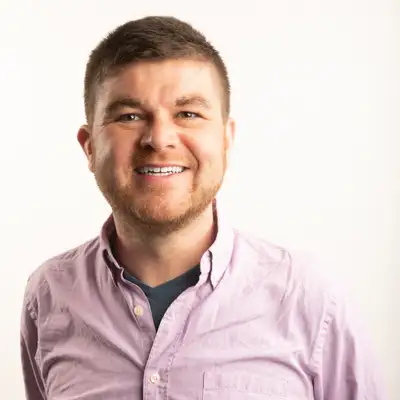
Yurii Lazaruk is a community strategist and builder who's calling out the myth that a big audience equals connection. Yurii, welcome to the show. Hey, Adam. Thank you so much for having me. Super happy to talk. And yes, let's jump in. Let's have it. Yurii, you've said it yourself, most people confuse community with audience.
[00:48.2]
What's the real difference? Yeah, it's audience, audience, audience, whatever, you name it. So the thing is, it's like one to many connections. So usually if you having a newsletter or Instagram page, or even on LinkedIn, all those followers, it's kind of an audience unless you're having connections with them.
[01:07.4]
So it's mostly like one to many connections type of style. So you have your page, you are saying something, and then it goes to every other person, and then they just comment back. So the difference community is like many to many connections. It's a space where everyone can literally talk to everyone.
[01:24.1]
They are not waiting for you to start a post. They can post themselves, they can connect, they can have private conversations. So it's like, to be very short, audience one too many, community many too many. That makes so much sense.
[01:40.8]
Let's get into a little bit more. When did that realization hit for you that real growth isn't just in the follower count, but in that actual human connection? It's super easy. When you are sending an email, you have an open rate. And usually like if you have a really good open rate, it's like 25%, 30% is like very good open rate.
[02:01.9]
Where are others? Where are the 70%, 80%, 90% at some point? No, you are still talking to like 10%, 15%, 20%. So it's like quality over quantity. And it's the same here. You know, when you are talking to one person, this person can introduce you to a whole level of other people.
[02:21.9]
And when you are talking to like many people without building this connection. Let's say I call it like helicopter view connections. So you kind of like saw each other like this tiny, tiny, small person, but you have no idea who you really talking to.
[02:41.5]
But when you are building like this real human connections, that's where the whole beauty. Because you know, people love people, people want to hear, people want to be with other people usually. And that's how it works. You know, you still need human connections.
[02:58.7]
It's always this human part. That's what makes people click. Otherwise, yeah, it's just fake. And we're all real humans still who all run, you know, every business owner is still run by a human these days. Even with the impact of where things are going in this.
[03:14.8]
You never know, you never know. You know, with all this AI things, you never know who running the business. Do you have any examples, of say, a business or creator who built their success through actual community and not just that content that they were posting? It's like once again, you know, it's very long journey because when you are building one on one connections and it takes a lot of time, it take a lot of trust and you have to use time to build this trust and sometimes it doesn't work.
[03:46.7]
And you know, it's so much like coming back to this audience with community. It's so much easier just to shut out something and like let people come to you and like kind of like hear you, then really explain it into one on one.
[04:02.6]
Currently I hear a lot that influencers, are building their communities. I still, yes, those are communities, but I call them fandom. You know, so it's like usually there is like this one person and even though people are still talking to each other, they are in this community for specifically this one person.
[04:24.4]
And this person has to be really, really good connector to switch focus from themselves to people connecting with each other. I went through at least one fandom in my practice, so it was like I was building this sales hero.
[04:42.5]
It's a community for sales experts in Ukraine. And it started with one huge entrepreneur like, who just, okay, I will just create a Telegram chat and then everyone can join it. You don't have to respect an NDA. If you want to name drop anybody, you can go for that here as well.
[04:59.0]
Yeah, it's totally good. So and I don't know if anyone knows this person, outside of Ukraine. So it's like it was a big person in Ukraine and everyone wanted a piece of this person. So they joined community because of this person.
[05:14.7]
And then this person went from business to politics. And of course they doesn't care about the community itself. And it took me two or three years to switch attention from this person to really sales theme.
[05:31.0]
Because even though this person was talking mostly about sales and marketing tactics, everyone in the community came there to get a piece of them. You know, they wanted to be visible, they wanted to exchange messages with this person. So they just wanted to be seen by this person.
[05:46.7]
And then when this person was out, it took like a lot of time to really make it work in a way that we are here not because one person, but because of sales. Right. So, yeah, you have to be really careful if you are an influencer. I mean, you have to, Yurii, you have to think about that.
[06:04.5]
When you make that big shift though, right? You can't just do it without thinking. You have to almost rebuild the audience. And, there's probably some overlap, but there's work to position yourself and then almost start from zero, I would imagine.
[06:20.6]
You are totally right. So we had like, I don't know, 5,000 people or something that, in the community when that person was inside, then it dropped to like 2,000, and then we started to grow back to 3-4,000. So it was definitely declined because people, this person is not here.
[06:38.9]
Why should I waste my time? And there are also a big part of people who went there not because of this person, but partly because of this person, but also because they were really interested in the topic and they stayed and they kind of like, were this, like old school members, you know, who kind of like remember the old times and like, still coming with the new times.
[07:00.4]
And now, if people are joining, they don't even know who was a creator of the community. They think that this community was forever and it existed just to tell people about sales. But it's not. Interesting. You know, what's one of the big myths, or rather one of the big myths out there, is that you can't measure community.
[07:18.6]
And I know you disagree. How do you track its impact? You know, it's so fun. I run a podcast called Community ROI where I talk to senior community experts and sometimes even try to talk to founders who are using communities about, like, what is measurable?
[07:35.4]
Like, how can you connect community goals with business goals? And like, three years ago, I also thought it's all a sense of belonging. You can't measure. You have to feel it. If you can't feel it, it's your problem. But you can really measure it. You know, like, community can help with customer support, community can help with product adoption, community can help with marketing, with sales. For example, there are many, many different metrics.
[08:00.7]
But let's start with customer support. The level of answers to customers' tickets. Because people in the community, they are helping each other and you are saving money on customer support because your customer support has less work. Secondly, if we are talking about product, you are creating some features you think about it might help our people but you have no idea what will really help them.
[08:26.2]
And that's exactly why you go and ask community. You ask them about like, what do you really need, and build it, and ship it, and then you also like better test it with your community members. And it also saves you a lot of money in shipping exactly what people need and not making mistakes.
[08:45.8]
And also save you money on testing. Then if you're talking about marketing, it's like UGC, user-generated content. If people love what you are doing, if people understand that they are heard and trusted, they will create you so much content they will be like such huge ambassadors for your brand that it will like work better than any type of marketing.
[09:08.1]
I call it word of mouth marketing. And I feel like it's the best thing that works because you can do like hundreds of advertisements. But if your friend will tell you try something else, most likely you will try something else. We're talking about sales. There is this marketing, qualified leads.
[09:25.3]
Yes. But also there is community qualified leads because community teams, they are talking to people inside community and they know the challenges of people. They know what are the pain points as they know when person is ready to get to another tier in your product or when they're ready to switch from being free customer to a paid customer and they approach it.
[09:45.8]
The community is also like sales experts, but they are selling not in a way that go buy it, like here are the benefits, blah blah blah. But they are helping people to understand how the product will help them. You know, they're kind of like this good sales. So they start with needs, they start with challenges and problems, and they help people.
[10:04.5]
And afterwards, yes, of course, they can give a link to a product, or they can just move community qualified leads to your sales team, and then they work it out. It's just a small part of what exactly community can do. And you know, if it's done right, it's a superpower.
[10:20.4]
It's a superpower for every business. So and I'm so, I'm so sad that not that many businesses know about it. Well, that's the work that you're doing, right? You know that's incredibly powerful work. One aspect of it that you kind of touched on.
[10:37.0]
I'm curious how, how do brands, from your perspective, how can they co-create with their communities, drive that user generation side of it, which isn't like the old school UGC idea. It's more about being active members of the community who are bringing more value to it.
[10:54.2]
At the end of the day, it's all about helping each other. And usually people love helping others and they don't even expect anything in return. There are a lot of psychology studies when people are helping others, they are just happy because of doing this. And if you know how to, first of all, tame this power and put it in the right direction, then people will be happy by helping other people, and they will be happy by helping you.
[11:23.1]
And if they love your products, they'll be happy that your product is growing because they also will be growing with you. They will do something better. They will meet friends. You know, it's one of the communities that I run. But it was like not around brand, it was like an expert community. I have this story when two people came to community meetups, and they get married at some point, so you can even meet your significant one, you know, in the community.
[11:47.3]
So it's like communities were with us like from the beginning of humanity and nothing changed. Now right now it's like this new thing, but it's like very, very old thing. The main idea that you still build those human connections, you still, you still help humans be humans.
[12:06.5]
And while doing that, you're also growing your business. And it's like a win, win, win, win, win category. It's not like someone is doing some sacrifices or you are finding some consensus. You are just doing amazing things together.
[12:23.2]
I don't like I can talk about it forever, so you better stop me. What advice would you give say to someone, whether they're a founder, they're trying to build a brand profile, whatever, but they're starting from scratch. They have zero audience, they have no newsletter.
[12:40.0]
All they are starting with is just a mission. What's the first thing they need to do to build that community in a value way from day one? You know, there are two different type of communities. If we are talking about like personal community, I would say go and start, go find a friend, go find a person, someone who is interested in that, and go build it as you go.
[13:01.4]
That's how usually people creating communities around some significant topics when they are dealing with some personal challenges or stuff. But if you are building a community around the brand, around the company. I'm thinking more of a business sense. You need audience. Like community won't solve you all your marketing product problems from day one.
[13:20.6]
It will in the future, but it will take a long time. I usually compare community building with marketing as SEO and paid ads. So you still need SEO to organically grow your visitors but when you need money right now, you use ads.
[13:36.3]
So it's something like as marketing, you know, because marketing also a lot of paid advertisements. So if you need money now, you just go and create this paid advertisement. You use like usual marketing things if you have additional time, if you already have audience. Because first of all you need to convert. If you have like a million people audience, it doesn't mean that you will have a million people community, you will have a thousand people, like hundred people communities, like really, really small conversion rate and you have to be aware of that.
[14:03.8]
So start with building audience, and then go to the community. And community, it's a long term process. You know, you can't expect that overnight your business will grow like many times because building relationships takes time, and you have to make it right. You know, start with why, like why do you need community?
[14:20.3]
If you think that you need community because it's a buzzword and everyone is talking about community. But your community is just another social media channel where you are building another audience. It won't work. You have to be ready to build connections. You have to have at least one community manager, at least one person whose task will be to help people meet each other and to help people meet your brand and meet your company and get connected.
[14:46.6]
Because otherwise if you will create another community, like one more channel on community platform, call it community and then you will just post product updates. Yep, it won't work. No one's going to engage with that. There's no one who will engage with that.
[15:02.6]
Right. That all gets into this shift that we're seeing from Web 2.0 platforms to more intentional kind of relationship based platforms like Slack, Patreon, whatever the case might be. And with those communities, intentionality plays so much in how a community can thrive.
[15:19.7]
And you've touched on a little bit of that. But let's also tie it back. I know we've also connected about this loneliness epidemic around the world and how people are craving connection. I think we can understand a little bit of how community strategy taps into solving for that.
[15:35.2]
But say look, a year in the future, two years in the future, how do you see that evolving with the nature of moving to those more intentional relationship based platforms. You now there are people are telling that AI will take our jobs and AI will make people disconnected.
[15:52.1]
And I'm kind of happy about it. I mean in a way that it means that community will grow because you still need those human connections. And even though...I heard there is this product when you can have an AI partner who will like talk to you and send you messages, and I said, crazy.
[16:08.9]
Still, it's a reality and it will grow. And the more people talk to AI, the more like lonely they will feel. Because at the end of the day everyone needs a real human connection, a real human conversation. And like what's the beauty of the community for a brand?
[16:26.5]
Because, for example, let's take Nike. So they have community of people who care about their health, who care about their physical fit. And it's really hard to do it on your own, it's really hard to run on your own, it's really hard to exercise on your own.
[16:42.7]
But you are joining this community of other humans just like you, who also like rave about those things, who also rave about exercise, who also like finding out some solutions, how to connect work, family, and exercise, and how to make it as more, as effective, as productive as possible.
[17:02.8]
And when you talk to those people, you are not feeling lonely because you are moving in the direction you want with people who are like minded. And once again, I also heard an opposite story, that when you are meeting like minded people, there is no room for growth. But I'm talking like minded, not in a way that they think the same.
[17:21.5]
They are excited with one thing, but they think differently. And that's exactly also the beauty of the community. Because if you, for example, like sport, you meet many different people who do many different types of sports, and you learn about all those things, and you choose what works best for you.
[17:37.5]
Because at the end of the day, it's all about choosing what works best for you. And that's what's the beauty of communities. And I truly believe that it will grow. First of all, the community sphere, community niche. First of all, it will grow. And secondly, I hope that companies will understand the true nature of it and understand that it's not just about creating a space where people can talk to each other and kind of being nice to your clients, but it's also a great resource for your business.
[18:06.9]
And if you know how to do it, or at least you know a good person who helps you to do it, you will have a lot of benefits, you know, and you will build more human, connected, more sustainable business in the future. So it's like you are growing your own fuel, you know, so at the end of the day, at some point, you might not need even paid advertisement, or all the things you can combine it with a community because you will have ambassadors, they will be your advertisers, and it's like the best advertisement out there.
[18:38.9]
So, yeah, I'm a big believer in that, and I see there is a huge shift already happening. So, yeah, if you don't have any communities, think about it. It's interesting, just tying back to the AI comment that you made a few minutes ago, thinking about a lot of the communities that I feel like people get into, there's the intentionality, that's what brings the conversation together.
[19:00.0]
But there's a delicate balance between being an echo chamber and having diverse perspectives. Right. That we get into in AI, specifically when you're just talking to an AI bot, or an AI agent rather.
[19:15.3]
That's just a deeper echo chamber that echoes back and reflects yourself. So how do we, as people who care about community and growing it, how do we work on that end of making sure that we tow that line between that delicate balance of being an echo chamber versus providing diverse perspectives?
[19:37.8]
Because, what you were saying at the end of what you just finished, you can get product feedback, you can get understanding from that community. If people feel trusted and valued within it, they bring their opinions to the forefront and help you evolve. But that, you know, you could have people who just say, I love everything that you're posting and they don't really engage.
[19:56.1]
Right. So, I know one, I'm a member of one of the communities that I call fandom. When the person is just posting, I love everything that you are doing. Yeah, it's not moving the needle anywhere. You still have to seed some conversations, you know, you still have to ask questions, you still have to, start those conversations yourself.
[20:20.0]
As a community manager or as a community person, you need to let people think deeper than on the surface. Yes, they may love everything, they may like everything, but you can ask. What exactly did you like? Why did you like that? What do you want to learn more?
[20:35.6]
Like, it's all about questioning. It's all about asking questions, first of all. And secondly, I recently read this amazing book, "Think Again" by Adam Grant. It's like you have to learn how to think again, you have to understand that it's like the world, your life, it's not just a straight line, it's like going up and down.
[20:52.3]
And it's like sometimes you don't even know what will happen. Nobody really knows what will happen next. You know, that's the beauty of life. And you have to be able to relearn and sometimes even unlearn, what you've learned and try something new. And I'm not telling that something new will be better than something old.
[21:11.0]
But you need to be open-minded. And I truly believe that a community manager or the person who is building this community, they have to be open minded themselves. You know, kind of like lead by example. Because if you want to be on the spotlight, if you want everyone to love you, it will be very hard for you to build a community.
[21:30.0]
But if you genuinely want people to connect, if you genuinely want to broaden their horizons and open their minds and help them by asking. There is another book I'm currently reading at the moment called "Motivational Interviewing". And it's like it's amazing. That's how you can get people to motivate, to change in a better way.
[21:47.8]
Like by asking questions, not by telling them what to do, but kind of like, but by opening what they have on their mind. It's like there is a whole movement, there is a whole psychology behind it, and it's not that simple. You know, I can tell you all the secrets in a few minutes, but yeah, you have to be able to think again and you have to maintain that in practice also.
[22:09.7]
Right. You can't lose sight of that. It's critically important. You always have to question everything. You know, like, I mean like you can become crazy if you question everything but still like have healthy parts of questioning.
[22:25.5]
Right. We'll have to get into a follow up episode that gets into how you can balance the burnout of managing a community. There's probably a deeper conversation we could get into there, Yurii, because that can be a very challenging place to be in the middle of.
[22:41.3]
Yeah, very small thing that every community person has to have: You don't have to take things personally. That's like number one rule, you know, don't take things personally because if you take things personally, it just won't work. Sometimes people can be mean.
[22:58.2]
As I can tell you, people can have bad days and it's not because of you, but it's just because they had a bad day and, and you have to distinguish like where is your job and where is their job, like where you are genuinely trying to help them, and if they are unhappy at some point with the product with not you for example, you need to identify this and still keep this curious, calm, confident approach and still talking to people.
[23:26.8]
I had so many situations when I was working with brands and people didn't love something and they told me, oh my God, you are scammers, you are like sh*tty company, I will never work with you, I will sue you. Yeah. Then I just, I send them like few emails and like on the fourth or fifth email, like oh man, I'm so sorry I've acted like that.
[23:47.1]
I just had a bad day. Blah, blah, blah. Thank you so much for your explanation, etc. You still have to be calm and not take things personally. Right? I love that. Yurii, this was a total perspective reset on what growth really looks like, in terms of community, it's not about just more noise, but about more meaning.
[24:05.1]
Where can folks learn more about you and connect directly? Yeah, it's LinkedIn, it's my go-to platform, so please go there. And also, if you'd like to learn more about community for business, there is the Community ROI podcast on Spotify, on YouTube, and you can go find it.
[24:21.8]
It's not that hard. Beautiful. And then, and then just quickly, to wrap up, for the founder out there who's still stuck refreshing their follower count. What's your one real talk piece of advice? It's so hard. Are you talking about community part or overall?
[24:39.6]
Let's take LinkedIn as the example, because you just mentioned that's where people can find you. How do we sit there and get away from just saying, oh, I'm almost at 5,000 followers, or whatever that number that we have in front of us is. What's your one quick advice for them to get out of that mindset and shift towards something that actually values that more fully?
[25:03.9]
Talk to people. Talk to people. You know, for me the best metrics is when you are making a post and you have 5,000 followers, and you have 1 like. So first of all, it's not the full picture. You might have 100 people who read the post and didn't tell you anything, and you will even see that 10 of those people will tell you something like three months later.
[25:25.4]
That's how LinkedIn works. But also, you have to be vocal. You have to connect with people on a personal level. If you're talking about LinkedIn, just posting is not enough. Engage with people with comments, talk to them, send them personal messages. It's all about human connections. Yes, it will take you a long time, but if you will start and just have one conversation a day, in a year, you will have 365 conversations.
[25:49.2]
And I tell you, it will amplify. It will have such a huge ripple effect that you can't even imagine. Also, that's where the power of the small atomic steps. Just do one small step in the right direction, and you'll be surprised where you are in some time.
[26:05.8]
And taking one step is so critical in anything that we do, anything we build, but especially in terms of building that authentic, genuine community of people who support us and champion us. Yeah, totally. Totally.
[26:21.0]
So go. Just make one small step. Awesome. All right, well, Yurii, thank you. Thanks for joining us today, and thanks for tuning into "Is Anything Real In Paid Advertising?", the show where we find the signal behind the noise. I'm Adam W. Barney, subscribe, leave a review, and check the show notes for links to Yurii and his work below.
[26:41.0]
Thank you very much. Thank you, Yurii.