Subscribe
Share
Share
Embed
“You're only as good as the effort you put in. The effort you put in is a reflection of how good you want to be.”
- Brianna Thompson“Bravery isn’t always the big moment. Sometimes it’s just choosing to get back in the water.”
- Sam Penny
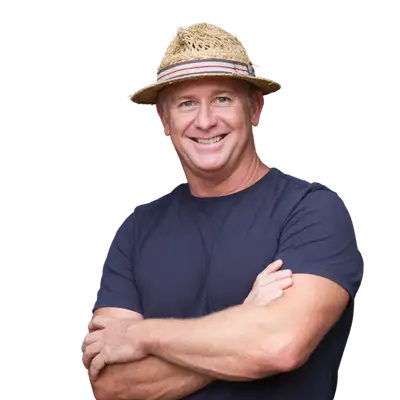
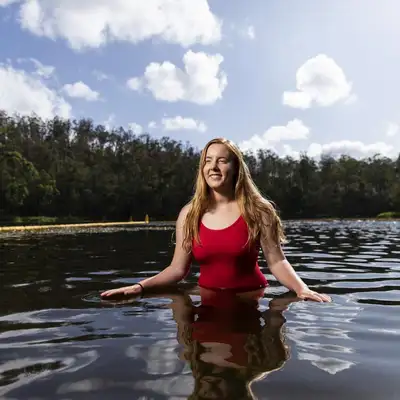
They’ve swum oceans, scaled mountains, launched empires, and shattered expectations. But before they did any of it, someone, maybe even themselves, thought: “You can’t do that.”
Hosted by Sam Penny, Why’d You Think You Could Do That? dives into the minds of people who said “screw it” and went for it anyway. From adventurers and elite athletes to wildcard entrepreneurs and creative renegades, each episode unpacks the one question they all have in common:
“Why'd you think you could do that?”
If you’re wired for more, haunted by big ideas, or just sick of playing it safe, this is your show.
Sam Penny (00:00)
What does it take to stare down the English channel?
twice in one go before most people finish high school. Today's guest knows, and Brianna Thompson at just 17 became the second youngest in history to complete a double channel crossing and the youngest to swim the channel three times in a single year. But behind those headlines is a story of grit, setbacks and serious bravery. Brianna, welcome.
Brianna Thompson (00:27)
Hi Sam, happy to be here. Thank you.
Sam Penny (00:29)
I'm
I'm excited to have you here on what you think you could do that because you've got a fascinating story that I'm really looking forward to diving into. Now we've known each other for a touch over seven years. When we both swam the English Channel back in 2018. Before we sort of dive into your first channel swim. I'd love to know, where did your fascination for the water come from?
Brianna Thompson (00:55)
I probably always loved swimming. from a very young age, mum put me into learn to swim lessons and then at the same time I was actually doing gymnastics and it got to a point where you had to choose one or the other and I chose swimming because I loved it so much and that became my sport. So from that decision
I then moved up in the squads and eventually made my way to states and nationals and along that pathway, I guess.
Sam Penny (01:23)
Tell me, what's your earliest memory of
Brianna Thompson (01:27)
I remember my old swim club, where I started out, in squad swimming was actually at my primary school. And I remember being in the squad there, we had these old blocks that were as flat as anything slippery. the shallow end was too shallow almost that as you got older and grew more.
You had to make sure you didn't hit your head on the bottom almost if you were too tall. But probably something like that would be my earliest memory or even just swimming in school
Sam Penny (01:56)
Yeah, wow. So when when was this moment in time where you just started to feel that you could go further than anyone else?
Brianna Thompson (02:05)
It started around the age of 13 so I had changed over to a new swim club from the old one I was swimming at and My swim coach Mike Lewandowski He recognized that I loved swimming the longer distance So I got faster with the 800 then like the 400s the 1500 those sorts of longer swims He recognized that I loved and I just loved
turning over the k's.
Sam Penny (02:36)
Yeah, so was it was that who inspired you and push you the most? Or was there someone else that was always there that you really looked up to?
Brianna Thompson (02:45)
Mick was the one who introduced me to open water swimming. So that's why he holds that place there as the one who actually got me interested in just swimming in the ocean and doing these 5k, 10k events. But it was actually a boy that I swam with who at the time was 17. He actually swam the channel and I remember seeing it on Instagram and
I turned to mum and I was oh my god, he's just done the channel, why can't I? Mum patted me on the head and sure, sure. Then four years later, I was trying to work out what wanted to do when I finished year 12. I went, you know what, I'll look at swimming in the channel. I was in in grade 12, and I was like, okay, I got to start looking at it now. So I went and spoke to Trent Grimsey and...
we knew it we were actually going to plan to send the channel that year so that's
Sam Penny (03:42)
And let's let's point out Trent Grimsey, who is the world record holder for the English channel in something like six hours, 55 or something like that. ridiculously fast. It's interesting Brianna to hear that that boy was the boy's name.
Brianna Thompson (03:50)
Yeah.
Ben Freeman.
Sam Penny (03:59)
Ben Freeman. interesting to hear you talk about Ben and that inspiration he can do it. Why can't I? It's funny. One of my inspirations was David Walliams from Little Britain. And I used to watch a lot of English channel videos on YouTube. And I saw David Walliams who swam the English Channel and I thought, bugger me if that guy can dress up in a dress and swim the English Channel.
I can do the English channel as well.
Brianna Thompson (04:25)
It's sort of, feel like that's the one thing about channel swimming is as soon as you know someone who's done it or is planning to do it and you almost think yeah, if they can do it, why can't I do it? let's do it.
Sam Penny (04:38)
Yeah, I had a interesting chat the other day with a called Lazarus like he's the guy who invented the Barkley marathons, backyard ultras and other crazy ridiculous races. He must be gee, he must be pushing early 70s, I would say. And he just goes on these bloody long walks. So he's just come back from a walk of doing the high plains in the US, which is about 400 miles.
Brianna Thompson (05:02)
Jesus Christ.
Sam Penny (05:03)
Yeah, exactly.
Exactly. And he said, I just love being out there. I love doing these walks. And I just thought, geez, if if Laz can get out and do a 400 mile walk, so can I. And it's interesting when you just go, well, if he can do it, I can do it. There's no reason why I can't go out and do that, apart from being able to, afford him to take the time off to do 400 mile walk, but it's so
interesting to hear people's motivations to go and do something epic. And quite often, that's all it needs is someone to just go, look what I did, and then realizing in yourself that, hey, I've also got the same qualities.
Brianna Thompson (05:43)
Exactly.
Sam Penny (05:44)
Yeah, so let's let's talk about your first channel crossing because it was 2018. It was September 2018. You're only 17. I think you'd only just turned 17, making you one of the youngest people to have ever swum the English channel. What was it that made you think apart from seeing Ben Freeman at 17 do it what was it inside yourself that made you realize that, hey, I can do this.
Brianna Thompson (06:09)
I guess just the fact that I loved doing those longer distances was probably where it comes down to the chorus. It's what's the next challenge for me? I think at the time I couldn't even do the 10K open water because of restrictions that had come in. And I was just you know what? I love the idea of doing this massive swim. it's the Mount Everest of swimming in a way. So.
Sam Penny (06:33)
It is.
Brianna Thompson (06:36)
So yeah, and I think the fact that because of when I was talking with Trent and I was obviously planning for 2019 originally, and he came back to me and said, well, we've got slots available in 2018. I was my God, this is great. I'll go out in year 12 with a bang. this is something that no one's probably ever really done before in the sense of.
I'm going to be the only person in my grade who's swum the channel in year 12. So for that school. So I guess there's a bit of that there that was an excitement filled up of yeah, let's do it. And then obviously from talking with Trent and then even Tim Denyer from Red Top, then obviously meeting all you guys and training together, that whole atmosphere was
everyone's pushing each other, everyone's there, you're in it. It's a group thing too, which I think helps add to the, yes, okay, let's do it.
Sam Penny (07:34)
Yeah, we certainly had a lot of fun and a lot of our training getting out and doing six hours swims six hours face down in the ocean blowing bubbles is a very long and boring process. But you and I did a lot of swimming together and it certainly made the hours pass a lot faster. It was interesting Brianna you mentioned swimming the English channel is the Everest of swimming. About
four times as many people summit Everest every year as what swim the English channel. And it's interesting that a lot of people do refer to the English channel as the Everest of swimming. However, I always see that swimming the English channel, you haven't got Sherpas to take you across. You haven't got people, you spend enough money carrying you across. Swimming the English channel is very much
a solo effort, isn't it?
Brianna Thompson (08:24)
Yes, yes it is.
Sam Penny (08:26)
Now tell me, what did your training look like day to day in prepping for that first channel crossing?
Brianna Thompson (08:32)
Um, so I, my, pretty much had nine months to prepare for my first crossing. And the way my training plan was done up was that I had three weeks of big K week and then a recovery week for the fourth week. So my training started at about 60 K, um, for the first three weeks and then had a recovery week of 50, 50 Ks.
Sam Penny (08:55)
50 Ks.
That's not a recovery week at all. My biggest weeks were only 50 Ks, but I guess I'm a lot older these old bones don't move like yours.
Brianna Thompson (08:59)
I know.
I'm pretty sure I had the most kilometers in the recovery week out of everyone that we know who has swum the channel.
Sam Penny (09:13)
Yeah, mine dropped
right back to about 20k, so my biggest were only about 50.
Brianna Thompson (09:16)
Yeah,
no. and the way I did those kilometers each week was that I had about probably seven to eight sessions in a pool training under my swim coach at the time. And then I did an open water swim, every second week But, that increased, so for the first week, it might've been.
a two hour session in open water, then a four hour, six hour, and then back to two and so forth. So.
Sam Penny (09:43)
So as a
17 year old Brianna, most of your training was actually when you were 16, you're out in the ocean, six hours, a lot of the time just by yourself out there swimming away, blowing bubbles face down. How does a 16 year old girl who's in year 12, motivate themselves to get through a six hour swim?
Brianna Thompson (10:06)
Look, it wasn't always easy. There was times when you did just especially when you're on your own, I feel that's where it was hardest is because you know, okay, yep, I'm just sitting on my own. You stop, you turn around, you go back down the beach And yeah, that was probably, I think the hardest part was just trying to find what would motivate you.
I was very lucky to have my mum who came out and support. She used to walk up and down the beach with me every time. But I guess trying to find someone was always the key point is find someone to swim with. So at least then you've got someone to joke around, talk to in between feeds and things like that.
Sam Penny (10:46)
Yeah, fantastic. Now, let's talk about the day. The day is swimming the English Channel. And for those who don't know much about the English Channel, you start in Dover in the UK, and basically just head east until you hit France. And for some people like Trent Grimsey is super fast at six hours 55. The average time for the English Channel is actually 12 hours 35, I think it is. But I think the longest swim on record is about
24 hours, which is, someone who's just doing breaststroke the entire way. One of the things about swimming the English channel is that you can't touch the boat, you can't touch anything, you've got no flotation, you're only in swim togs, swim cap, and goggles. And that's it. It's just a purest sport. Now, when you are standing on the shores of Dover,
looking out into the English Channel towards France that first time. What went through your mind?
Brianna Thompson (11:46)
it was a little interesting because I kind of got a story about how my start of the swim actually started. So I'll backtrack a little and just say that I was on the Viking Princess, which obviously sat a lot deeper in the water than most of the channel boats. So I actually had to jump in a little IRB to get taken in closer to shore. And the skipper, was two brothers, Reg and Ray Brickell. The one that took me in pretty much said, all right, out you hop.
And so I was like, what? And weren't even close to shore. He just told me to get out of the boat and swim in. So I swam in and then, you would probably remember the pebbles trying to walk up, hurting your feet like hell, standing there. And I laughed because, my training partner, Jimmison, just to be clear, it wasn't Ben Freeman. He was supposed to be in that same day as well. And he'd done a relay before with Trent.
And so he told me that there was supposed to be a horn or something. I never got no horn. The Viking princess didn't have that. It was just someone shouting at me, go. And I was like, what? okay, let's go. And then, and then in I hopped and that's just how my start happened. So I was if anything, I was a bit confused, but I'm, but even swimming in from the IRB to shore, my God, I'm doing this. this is, this is actually happening now.
All I could do was hope upon hope that I was going to get there onto the other side.
Sam Penny (13:09)
So during that swim, was there a make or break moment that you can remember?
Brianna Thompson (13:14)
I never thought that I couldn't do it, but there was a part where I actually had a lot of pain in my arm, to the point that I couldn't even lift my arm too much out of the water. It was so excruciating. and it was in that moment I was almost thinking, hell, how am I going to do this? Because I can't lift my arm over. And I remember when I actually finished the swim, I couldn't lift my arm at all. I'd
I was in the shower trying to wash my hair and I'm God, I can't move my other arm up, ⁓
Sam Penny (13:42)
How far into
the swim when your shoulder started to seize?
Brianna Thompson (13:45)
I think it was probably around the... I think I'd just gotten through the separation zone so thinking of the... might have been about the six hour mark. It's almost halfway through the swim.
Sam Penny (13:58)
Yeah, wow. So that must have put a lot of doubt in your mind, thinking that your shoulders starting to seize up, you can't get your arm over, and you still got another five, six hours to go.
Brianna Thompson (14:10)
Yeah, it wasn't the most ideal, but I think it actually had to do with my actual technique of swimming. that's why, and it was pretty rough conditions as well. So that wouldn't have helped it. But I was very lucky that both mum and Tim, the UK coach, they helped me through it and kept telling me, you've got this, keep going, keep going. And so having their support is what really helped me.
Sam Penny (14:33)
Okay, so paint the picture of the last 50 meters.
Brianna Thompson (14:40)
we were so close to France you could see it so clearly and Tim jumped in the water and I was my god, this is it. This means we're finally finishing because he's obviously the support swimmer to help you in and I'm giving it all I can just to get in and there as fast as I can. We end up right on Cap Nez so
it's almost like a cliff face of rocks. So I get there and Tim's okay, you have to climb up out of the water. So there's these massive rocks with weirdly enough, I remember having a little holes in them or something. And I'm trying to climb up, but the waves keep coming up and then pulling me back and pushing me up again. And eventually I got out and turned around, sat on this rock and went, my God, I've done it.
Sam Penny (15:18)
Mm-hmm
Brianna Thompson (15:28)
I've actually saw the English channel.
Sam Penny (15:31)
It's, it's such a an iconic place for an English channel swimmer to finish it Cap Gris Nez However, it's also brutal, like you like you said, having to climb out onto these slippery rocks, because I landed at the same spot. And when you've been swimming for 11 and a half hours, your legs don't work, do they? And trying to
Brianna Thompson (15:54)
No, not the same
way they should be.
Sam Penny (15:58)
it's certainly hard. All right. Now I want to jump into something even more epic because swim the English channel. That's pretty bloody epic, but you decided to do a double crossing of the English Channel Now the English channel is 34 Ks double crossing obviously is 68 kilometres. A bloody long way. What's that about 42 miles. So what was it? Where did this fire come from?
to go and do a double crossing.
Brianna Thompson (16:30)
Well, Sam, so the idea was actually proposed to me on the boat ride back from my first crossing. yeah, so it was so funny. I was on, even though I was obviously tired from the swim, I was full of energy. I was in with the skippers in the wheelhouse talking about, not even talking so much about the swim, I was talking about fishing, because they're fishermen.
Sam Penny (16:38)
The deal.
Brianna Thompson (16:56)
And I had all this energy. I was oh, yeah, oh, cool. And Tim Denyer turned to me and went, would you ever consider a double crossing? And I was as a typical 17 year old, oh, yeah, yeah, maybe as in, you know.
Sam Penny (17:06)
Hmm
This is on the three hour boat ride back to England.
Brianna Thompson (17:15)
Yeah, three hour boat ride back, was like, oh, okay. I said, well, look, let me just finish year 12 first and I'll let you know because, being September, I was so close to graduating let me just finish year 12 and I'll get back to you. And then I don't know when exactly it was. I could probably go back and find an email as well. I decided to actually email Tim and go, yep, let's do it. But yeah, I just.
I don't know, part of me just went, you know what? Why not? Let's do it. Let's do a double crossing. Let's see if I can do it. And give it a crack.
Sam Penny (17:50)
brilliant. And look, swimming in the English Channel just once at 11 hours, 11 and a half hours is a lot different to being in the water for almost, up to 24 hours. So how do you prepare for a double crossing because it must be so much different.
Brianna Thompson (18:08)
Um, yeah. So my, my training plan hadn't changed too much. except for like, as in, so the way, obviously with the first crossing started off as 60 Ks and 50, and then increased, up to like 75 K for three weeks and then a 50. that was only, I only had one month of that. So for my double, it almost increased again, not so much in case sense, but I was always doing two months of trying to do 75 K a week.
with a 50K recovery a week, doing longer open water swims, just trying to back up. There was one point I tried to do a two eight hour swims, one on Saturday, one on Sunday, just to try and get that, that feel of what it would be for swimming over, know, 12 hours almost, because until I obviously did my double crossing, the longest I had swum was my first crossing, so.
Sam Penny (18:58)
Mm.
Brianna Thompson (18:59)
It's yeah, it was more just getting in more Ks, obviously focusing on my technique so that my arm didn't hurt this time around. That was probably the most changes I had to make with it.
Sam Penny (19:13)
So an absolutely epic monumental swim, the second youngest in history to ever achieve a double crossing behind another great Australian, Susie Moroney. Now, the feeling of standing on the shore of Dover this time, was it different to the year before?
Brianna Thompson (19:35)
Yes, in a way that I knew what to expect going over. It was sort of that okay, we're doing this. I've been here before. I know what to expect. So I probably had a bit more confidence in the sense of just to get over there. The weather was obviously a lot calmer because they had to make sure it was I had the best conditions going over so that if it turned to crap going back, at least then.
they knew I could get through that for my first crossing. yeah, just sort of, was, yeah, was just a slightly different vibe in the sense of okay, we're doing this again, let's do it.
Sam Penny (20:09)
So
when you got to France, and once again, you had to clear the water like you did on your first crossing. But was there a sense of relief, accomplishment that you've just swum the English Channel, but then a sense of fear or dread that you had to hop back in the water and swim back to England?
Brianna Thompson (20:27)
A little bit. in my first leg of my double, I because of the weather conditions being so calm there's a lot more jellyfish and stuff in the water. I worked myself up a little bit. I could see them. It was they were taunting me the entire way. I'd run into a few and that had stung pretty bad. And I was damn it. So when I got to obviously like I landed.
very similar spot to my first crossing. So when I got there, I remember Tim being next to me just to make sure I was okay and things and he gave me a gel. And I was I'm not sure if I can swim back because I was so nervous because I'd freaked out a bit going the first leg, if this happens again, what am I going to do? so there was that initial, okay, this is going into unknown territory now because
they don't longer do swims going from France to England anymore. Not a lot of, I guess, there's no real like as in someone to tell you what you should expect or this is how it's going to be or those sorts of things. So yeah, there was.
Sam Penny (21:29)
Is it,
is it different swimming the other way?
Brianna Thompson (21:33)
In a sense, yes, obviously from when even when I did my one way in my first leg, you can map out, you roughly know how many hours you took in each part. And I remember swimming in the French inshore water felt like it took forever because you can see the coastline. it's not getting any closer. You almost want to scream you're so misleading, things like that.
And then when you get there, because I managed to right on the turn of the tide. So when I actually pushed off from France, I had the current just sort of push me straight up. And before I knew it, felt like only an hour had gone past or an hour and a half or something just to get into the first shipping lane going backwards.
I was shocked, are you sure we're in the Northeast shipping lane? I'm pretty sure we're still in the French inshore and you're just lying to me. That's sort of the way it felt. was just, I don't know, it was so quick.
Sam Penny (22:34)
It's, and I think it's, it's important to point out that the English channel is notorious for some massive tides, tides that take you right up north and they bring you right down south and make it really difficult to try and land on, on the shore at France. And what you're describing there and because the tides are going at something like eight knots or so, which make it really brutal.
Brianna Thompson (22:56)
Yeah, it's insane. I remember mum telling me afterwards that on the boat, so Tim had said to her, look at the lighthouse, which is just on the cap there, and you'll just see it go bang once the tide turns and it legit did. And mum's like, wait, what? you know, don't even take it, you blink and you miss it.
Sam Penny (23:07)
Ha.
Haha.
That's crazy. Now, you swim as 22 hours, 37. And obviously you've had to do an entire period of swimming through the night. What does it feel like for swimming, let's say 10 hours in darkness?
Brianna Thompson (23:30)
It's a weird feeling, obviously because you can't see anything around you except for obviously where the spotlight on the boat sort of shines up. But there is sort of a sense of, it's quite peaceful to swim at night. I don't know, at least you don't have the sun in your eyes and things like that. Obviously when I started, at the very start of my swim it was 2 a.m. so it obviously was going into light, whereas in...
towards the end of my swim, it was coming into that darkness. And I think, thinking back now, I can't even remember, the sun starting to set or anything like that, or it felt like it was getting darker. It was almost just like one minute I'm in daylight, the next it's black. but I did have some interesting, interesting tale that I was looking at the moon, right? So I know this now from
after having the realisation. But I remember being swimming along and I looked, I breathed to my left, so the boat was on my right, I breathed to my left just to try, changing up the other way. And I remember seeing what I thought was a lamppost. And I was swimming along and I'm looking at it going, okay, I'm swimming past it. I swim past it, turn to the boat to breathe to make sure I wasn't getting too close there, turn back.
and was in front of me again and I was my god, what is going on? because in my head I had rationalized that, yeah, that lamppost is to make sure that the boats know where the English inshore waters are. And then I was getting so frustrated with it that I was swimming, trying to swim past it again for an hour before I realized it was the moon. It was the moon and I was like, my god.
Sam Penny (24:42)
Ha ha.
That's fantastic. I remember
when I did my winter channel attempt in December 2019. And I started off at 4am in the dark and it got to about 7am and there was this glow on the horizon right up north. And I thought, what on earth is that? And I thought it was a nuclear reaction happening in France. I was just going, why is nobody on the boat reacting to this nuclear reaction? And I'm swimming away. And then all of a sudden, about 20 minutes later,
Brianna Thompson (25:28)
you
Sam Penny (25:33)
up pop the sun. And I'll just go on bugger me. And it's amazing. And it's so funny how your mind plays tricks on you. But also at the same time, I guess it gives you a bit of a distraction, doesn't it from the mundaneness of swimming the English Channel.
Brianna Thompson (25:37)
You
It does, it does. I've never heard that story before, so I'll let something new about you. But that's, yeah, that's how funny, you thought a nuclear reaction where I'm just here, some intruder, some parcel lamp post, I guess.
Sam Penny (25:56)
Ha ha.
So now Brianna, describe to me what goes through your mind during the hardest hours of this double crossing, when you're cold, you're exhausted. And you probably feel like the end is nowhere in sight.
Brianna Thompson (26:18)
Yeah, so probably the hardest part in my double was when I started to get really bad cramping in my thighs to the point that I couldn't actually move my legs. So was really struggling there and I was trying to one workout ways to help myself so that they weren't hurting. But at the same time, I just wanted that feeling of being, I didn't want to stop the swim ever, but you know that feeling on a,
Sunday morning and you're up in bed and you're just sitting and you might have like a cup of coffee or a tea and you're reading a book or you're just snuggling up its warm That's the feeling that I was wanting. So in my head I was thinking, I could just, I just want that home feeling vibe. That's what I wanted at some point. But then at the same time, you're almost looking at your support crew and you're going how much further?
surely we're close now, and then when you ask them and they say, yeah, just another probably hour or so, you're kidding me. So I guess quite a few things ran through my head in those tough parts, but genuinely just throughout the swim, swimming to me is like therapy. So I think about almost anything and everything contemplate probably the meaning of life at some point, but.
Sam Penny (27:19)
the
Brianna Thompson (27:33)
That's just sort of how how swimming is for me. I'm able to think things through a lot more.
Sam Penny (27:39)
it was interesting. You're talking about your happy place, you've obviously built up this picture of that Sunday morning in bed with a, with a coffee as your happy place. When you're doing a lot of these big epic swims, do you often have a happy place thought, at any point?
Brianna Thompson (27:57)
It's funny you say that Sam, because you probably would remember from what Trent used to always say, if you're feeling cold or you're struggling, go to your happy place, go to your happy place. And for the longest time, all I could think of was well, I don't really have, I could never think of a happy place, I guess, during all those training swims. But it wasn't until obviously that moment in my double, that's where it hit me. That that's probably is my happy place just
Sam Penny (28:12)
Mm.
Brianna Thompson (28:23)
being comfy in bed, watching something or just having that warm feeling and vibe. So obviously now, I try and probably think about it a little bit more in parts, but I think until I'm actually in that struggling point, which is when it happened, that's sort of doesn't fully always come to me.
Sam Penny (28:35)
Mm.
Okay, so you've been in English channel for 22 hours. It's not what you call the warmest place on earth. Water temp was what about 17 degrees or so. Now, we're at 22 hours, got what 37 minutes to go. What did that last 37 minutes feel like?
Brianna Thompson (29:05)
It was definitely a struggle, I was feeling a lot better than I was probably an hour or so ago. But I just knew that from what they had told me, as in we just had to do sort of one final push. So I was just trying to give it my all just to try and get further and faster and really sort of bring it home, I guess. obviously then when I...
saw Tim start to get ready to jump in with me that obviously spurred things on when you see the little IRB drop at the back that too and I just remember thinking my god like isn't we're almost there we're almost there we just have to get through this last you know however many minutes or whatever so I guess that's what was going through my head
Sam Penny (29:49)
Yeah,
and the last 50 meters.
Brianna Thompson (29:54)
So I remember swimming along, Tim's next to me and we're almost there, you can see the lights of Dover and at this point I'm completely buggered almost and he goes to me you just have to get there and so I go okay, head down, swim through and I remember
standing up on the shore and Tim goes to me, good job little one. And I was like, it gave me a big hug as well. And it was like such an emotional moment for me because I was my God, this is insane. I've done this now. Did I actually do it? am I dreaming? What's the go? Yeah.
Sam Penny (30:18)
hahahaha
And your mom was on the boat for your first crossing and also this double crossing. And it must be so fantastic to have your mom Elise along for the ride. What was that moment like when you hop back on the boat and you're there with your mom?
Brianna Thompson (30:46)
it was a surreal feeling. obviously jumped back. gave me a big hug and obviously she'd seen the entire journey from the boat and, I guess, but also at the same time, the first instinct is to, okay, I need to get Brianna warm. So she's making sure I'm all rugged up and jumpers Then helping me get out of my togs and making sure that I'm warm. I'm good.
I remember they got me tea, was just black tea and those Haribu lollies as well. So that was all going my way Then like obviously we had the boat trip back to the Dover Harbour and I remember just sitting there rugged up going, my God, yeah.
Sam Penny (31:15)
yes.
You got quite a bit of publicity following.
Brianna Thompson (31:32)
Yes.
Sam Penny (31:33)
And, and I think a lot of it stemmed from an interview that I did on the ABC here in Australia, where I kind of might've mentioned that you may have lost a little bit of your tongue during the swim.
Brianna Thompson (31:47)
Yes, yes, I remember seeing that. You know, my grandmother rang my mom up asking if I could still eat, if I could still talk, am I going to be okay? I think she thought I lost the actual tongue rather than this supposed layer. So, ⁓
Sam Penny (31:54)
Ha ha ha.
So
when you're swimming in saltwater for, hours and hours, like we have you, you tend to lose a layer of skin off your tongue or your cheeks or something like that. But I sort of said to the ABC that I'll, you know, Brianna would have lost, you know, part of her tongue. And that then just went viral, right across Australia and around the world. And he ended up as questions on
on some quiz show.
Brianna Thompson (32:31)
Yes, my god, I remember that now. I think when it was on, have you been paying attention? ⁓ I think the answer was she can't eat, she can't sleep. What'd she do? And the first thing someone said was something about schoolies in Chernobyl. And I was my god. And then obviously the proper answer. And then I was a question on who wants to be a millionaire?
Sam Penny (32:37)
That's right.
Brianna Thompson (32:55)
And the guy actually got it wrong. They had the option of like the Bass Strait, the Dead Sea, Loch Ness and the English Channel and I think he chose Loch Ness.
Sam Penny (33:05)
It's funny. It was just a funny period. Now, I want to talk about your mental resilience and really dive into some bravery and action. During those dark patches, what is your internal dialogue?
Brianna Thompson (33:22)
It's probably like the majority of people's when you're struggling as in all it takes is one little doubt in your mind to cause that snowball effect of am I going to do this? should I just stop now? Should I get out? Things like that. And I think you got to try not let that affect you as in even when I'm thinking
Okay, am I going to be able to do this? You've got that fear that, my God, can I do it or not? Having obviously support to help and tell you, no, come on, you're being silly now, you've got this, you've trained for this, that always helps. But it's trying to think back now on what was going through my brain and...
Sam Penny (34:07)
So when you're doing say a big training session and you always have those thoughts of, could stop now, you maybe I should just stop, might just hop out. What prevents you from stopping?
Brianna Thompson (34:21)
I guess knowing that it's all leading to that bigger picture. obviously if you, you can take the easy way out and you can say, no, I'm finishing here or I'm not going to do this. But by doing that, you're actually making it harder for yourself when it comes down to the actual event that you're training for because the more fitter you are, the more work you've put into it.
you're going to be better off than someone who's done hardly anything and thinks that they can wing it. ⁓
Sam Penny (34:51)
So, yeah,
so how important is it to you to have a big goal to focus on?
Brianna Thompson (34:58)
It definitely helps. It does help obviously in the sense of focusing on, okay, no, I'm doing this for a reason. I'm not, because anyone can just, jump in the water and swim a few k's and then finish. But then when you've got a goal in mind, it helps to push you. There was a quote that came across once and it's if you write it down and then you act
on it and then it becomes an accomplishment. it's, this is just sort of a loose translation of it, but yeah, almost like as in if you, goal written down is it's just like a thought, but then when you act on it, it becomes a reality. And then, when you finally complete it, it's an accomplishment.
Sam Penny (35:43)
That's fantastic. And there's a lot of science actually around writing down new goals or even just writing down your daily tasks because firstly, they leave your head but they're then more cemented. And they act almost like an anchor for your mind and gives your mind something to aim for something to go for. If you keep it in your mind, it's easy for your mind to change what that goal is. Now tell me.
What does bravery play in open water swimming?
Brianna Thompson (36:14)
Probably the biggest thing is taking that initial step into the water. There's obviously a lot of people have fears when it comes to swimming in open water because of marine life, you're out there in the open, what if something happens, is someone going to be there to help you, those sorts of things. in my eyes, taking that first step even towards swimming as in an open water event.
can be quite a brave move for a person. For me, I guess, it's standing on the shores and being okay, yeah, we're doing this and getting in and then just obviously pushing forward with what you're doing, I guess is my sort of things of bravery. But I've got another quote and it's can never cross the ocean until you have the courage.
to lose sight of the shore. And that's, yeah, I use it as my year 12 yearbook quote. I wanted, well, because we had to put them in before I went away to swim the channel. And so part of me wanted to reflect that, that if I did soon the channel, what would my quote be? And that's what I found. So I was happy with that one.
Sam Penny (37:05)
Yeah, that's fantastic. I like that one.
Thank you.
Now, obviously, we're both in Australia. And as everybody around the world knows, pretty much everything in Australia can kill you. And you would have been asked a million times about are you scared of sharks?
Brianna Thompson (37:39)
Yes, yes, it's a very common question that you get asked along with my God, were you in a shark cage? So I guess being here in Australia, there's always that reality that, you you could have a shark turn up on the beach. I mean, it is their home. We're just, enjoying our time in it. Yeah, visitors, exactly. And if someone showed up into your house wearing Speedos, would you be a little annoyed? Like, but yeah, so I guess.
Sam Penny (37:56)
visitors.
Brianna Thompson (38:06)
Like we always made sure we had like a paddler with us and a game plan of what would we do if a shark did occur. I think there was a couple of times where I suppose sharks had been spotted but they weren't really where we were. And mum just went, okay, you're going to swim between these two. And it was two of the older guys and they were a bit more stockier than I was so that if I swim between them, they wouldn't think of me as the weak one to attack
But like I've actually never really come across a shark in all my swimming touch wood of course but I've been near the shark nets, I've swum under them before, I've been over the top where it's been murky as and just hoping upon hope that nothing's hanging around so it's been an adventure with shark nets and shark swims and things like that but.
Sam Penny (38:47)
Yeah.
Brianna and I went on what has been coined as Sam's swim of death, which I've, I like to take people on some pretty epic swims. And one of them, there was a cruise ship parked off the coast on the Sunshine Coast at Mooloolaba and Brianna and myself and a couple of other friends swam out to the cruise ship, which is parked. I think we swam straight out into the ocean about one and a half, two Ks.
On our journey, we came across the shark nets and we dive down underneath them and back up the other side and that was an adventure.
Brianna Thompson (39:25)
Sure was, that water was so clear that day, it was insane.
Sam Penny (39:29)
It was beautiful and probably the clearest I've ever seen it. You're talking about your shark attack. You know what would happen? Whenever I do my ocean swims I've constantly got a shark attack procedure that goes through my mind. And let me tell you about it. So usually I'm swimming at Mooloolaba So I figure if there's a shark at Mooloolaba, it's not going to be a big one. It'll only take off half my foot. Right? So if it only takes off half my foot,
Brianna Thompson (39:32)
Mmm.
Sam Penny (39:59)
I'm not swimming any more than 200 meters from the beach. I'm a fast sprinter when it comes to a sprint. And so I figure that 200 meters, I'll be in the shore, let's say, three minutes because I'm missing half a foot. When I when I get to the beach, there will always be someone walking along the beach because hundreds of people walk along that beach each day, thousands probably.
And I'll get them to call an ambulance. And then after that, get them to text my partner to say, everything's okay. Sam's been bitten by a shark. He's just going off to hospital. And I say, text her, don't call her because I know that she won't answer the phone. And that's my shark attack procedure.
Brianna Thompson (40:44)
⁓ my god. That's your
shark attack procedure? I like that. I'll be honest though, lot of the time when I'm swimming in the ocean, I do have that thought of what if a shark just came up and just went bang and just straight up underneath me, took me, I don't know what, but that comes through my head. Does that ever come to your head? I guess obviously you have your shark attack procedure, but like, you know.
Sam Penny (41:06)
But my
sharks in my in my story are only small ones and can only take half a foot. now how do you train in your body? But how do you train for courage and mental toughness?
Brianna Thompson (41:11)
Could only take half a foot, yeah. Fair enough then.
Look, I think a lot of it is in how your upbringing comes as well. I know for me, my mom's a very strong independent woman and she helped me to learn, okay, to deal with an issue sometimes you just have to go, right, what's the problem? What's this? How do we face it? Things like that. And I think probably somewhere along the line, I do know how to do that. Well, I do have that initial panic.
at first so I think it does obviously come from that side of things with the way mum's brought me up to be but you can you can have that where people step up to the challenge when it arises and they might not think they can do it at first but in the heat of the moment or as it's happening they do take that step and they
do become brave, go, okay, now this is what we're going to do and take charge of that.
Sam Penny (42:14)
So through all of this, has there been a moment where you just felt like quitting? And, in those moments, what does bravery look like?
Brianna Thompson (42:22)
There are times where, you do, guess, especially now as I'm getting older, working and things like that. there's times where you do want to hang out with just your friends rather than doing those swims And I don't know, I don't know if I'd call it bravery, it's just about.
I guess having that commitment and making those decisions and going, okay, I'm doing this for a reason. if they're really my friends, we'll organize another time around my swimming So I guess that's where it is, is being that, having that confidence to go, okay, even though I want to do that and hang out, I'm my own person. I'm doing this for me. So it's that, it's that.
Sam Penny (43:04)
Mm.
Brianna Thompson (43:06)
Being able to be your own person and stepping out on your own and not being afraid of that.
Sam Penny (43:12)
Yeah. Right. Now, I want to talk about life after the headlines, obviously 2018, 2019 was the world was your oyster. And then you kind of started to lose your mojo, you hit such big heights, so young, you you're only 17. And then COVID comes along 2020 and the world completely changed and
You said to me earlier when we're on a telephone call that you felt like you'd just fallen off the map. Describe that.
Brianna Thompson (43:41)
So I guess coming out of my double crossing I had all these big swims that I wanted to do and don't get me wrong Sam I still want to do them somewhere along the line but my next swim I had planned was actually Loch Ness and then COVID hit and it just shut down everything we couldn't travel we couldn't go X amount of meters from our home they stopped pools so for the
for a while there, unless you had your own backyard pool, which I don't, it was a struggle to actually find somewhere to swim because you were so restricted in what you could do and what you couldn't do. And I guess for me that sort of broke that, what's the word for it? Broke that just sort of.
Sam Penny (44:27)
like the momentum.
Brianna Thompson (44:28)
Yes,
the momentum, thank you. Just the momentum that I had with my training and everything like that. And it was just so refreshing because it pretty much messed with two years of our lives, until 2021 or whatever, we were in this bubble of lockdowns or not being able to travel or things like that.
Sam Penny (44:43)
Hmm.
Yeah. Now you were named one of the Sunshine State's finest. So here in Queensland, Australia, it's referred to as the Sunshine State and one of the Sunshine State's finest along with Ash Barty. How did you feel? Like how did you deal with the loss of momentum and the loss of the attention, the public attention?
Brianna Thompson (45:07)
it didn't stress me out too much or anything like that. anytime that I found out that I was mentioned in something or they were thinking of getting me for something to talk or, or be in a paper and things like that. It kind of always shocks me that the first time I'm like, you sure? Because I look at it as there are so many people out there. yes, I know what I've done is big.
But there are so many people out there who have probably done things a lot tougher than I have that probably could take my spot easily, if that makes any sense at all. So I guess being not so much in the spotlight wasn't much of an issue. But obviously then just trying to get back into that momentum and finding a way to plan things, as I said, especially now that I'm
out of school. School was easy when you knew you could train in the morning and night. You went from nine till three. You had your weekends available. Whereas in working now, your hours are all over the place sometimes depending on what job you do. I work in hospitality and I do struggle sometimes just to find the opportunity to get in the water. So now I only do, instead of doing eight sessions a week, I can get to probably
five or six, just depending on how my work schedule works.
Sam Penny (46:28)
So trying to get your mojo back, what's been the hardest part of trying to get it back and what's, I guess, worked best.
Brianna Thompson (46:36)
I guess just even just finding that moment of having, it helps always to have someone with you but obviously there's having to stay in and keep turning over K's when you know that everyone else is obviously getting to leave because I think of the way COVID was where everyone was just hanging out at home.
And doing their own things as well as being in a group. So I think that's probably where I've struggled more is just Yeah, just like just finding that that I guess reason just to keep going and I'm hoping now that with this Next time I've got planned I can lock into that and go. Okay. Yep. This is what we're going to do and it has helped so
Sam Penny (47:01)
Hmm.
Yeah, perfect. I wanted to talk about the next swim shortly. But thinking about now and thinking about your single crossing double crossing. Do you feel the bravery is different now to you? I always see bravery is not just going out and climbing Everest or doing a double crossing those kinds of things. Bravery is something that we practice every day. whether it's just
making that phone call that we know we've always needed to make, send the email, have the conversation, those kinds of things. Bravery to you now, that you're a bit older, and you are and he's still 23, is bravery different in Brianna Thompson today as it was, compared to say 2019?
Brianna Thompson (48:05)
I definitely think so, just in the way of how I think now, what I know I think is it, and you said when we first started talking, there's that bit of naive when you're young, you have that feeling you can take on anything at times. Whereas in, I guess as you get older, logistics and actually going, okay, well I need to fund this and that sort of.
Okay, what are the actual steps I need to take? yes, I've got this goal, but what's all the process for it? it has changed for me in that sense. There's, while there's still these things I want to do, that first, couple of steps of actually, okay, how am going to do this? And figuring that out. that's, what's changed for me is having to sort it myself.
Sam Penny (48:51)
Mm.
Yeah, it's, yeah. Welcome to adulthood, huh? All right, let's talk about the future and what's on the horizon. You still only 23. What dreams are pulling you now in or out of the water?
Brianna Thompson (48:58)
I know right?
So for in the water, I plan to swim the Cook Strait next year in February. New Zealand, so between the two islands. ⁓ Yep. ⁓
Sam Penny (49:13)
So where's the cook straight.
So from North Island to South Island. Wow,
that's a pretty impressive patch of water there.
Brianna Thompson (49:24)
think they actually go the opposite way when they actually do
the swim, yeah, south to north. But yeah, it's going to be cold, I know that much, so I've got to really knuckle down with my cold water training, that's for sure. And then yeah, but like the distance is actually only, want to say it's like, I think it's shorter than the channel. It's only 26K or something like that.
From memory.
Sam Penny (49:44)
Still a long way and quite a wild bit of water as well.
Brianna Thompson (49:48)
And it can be quite rough and obviously great whites are a lot more common there than in the channel for sure so
Sam Penny (49:56)
So a mutual friend of ours, Anna Strahan who attempted to swim the Cook Strait has a very interesting story about swimming the Cook Strait. She had a shark that was shadowing her for a few hours. And then all of a sudden from deep, it just then came straight up at her. And she just jumped straight into the boat. And obviously that was the end of her swim. And it's mother nature. And like you said, it's
Brianna Thompson (50:13)
Yeah.
Sam Penny (50:22)
their home, not ours. We're just merely visitors. And when you've got, a tasty looking swimmer on the surface, why wouldn't you?
Brianna Thompson (50:29)
Well, I remember, I think you were there as well for this, but I remember being told a story about sharks, they're just curious and they see a shadow on top of the water and they pretty much just come up, they'll take a bite, if they like it, they'll keep eating. If they don't, they'll spit you out. it's, I mean, I can understand like why they do that. you look at something, you go, yeah, that might be food. Sure.
I think they did like an experiment with it and they tried the shapes of different things and the shark just kept coming up and taking a bite out of it. Granted it was in one of their feedings areas
Sam Penny (51:08)
So Cook Strait, is that your next big goal? Now, why have you chosen Cook Strait and why have you chosen to get back in the water and go after some big epic swims again?
Brianna Thompson (51:11)
Yes.
so the reason I chose the Cook Strait, was cause once again, Tim Denyer sent me a message out of the blue and goes, Hey, I am, I'm going to be over in New Zealand for this time. Would you consider doing a Cook Strait swim? And I have a very hard time saying no to Tim. he messaged, emailed me, a start of last year as well about the Gibraltar Strait.
And once again, I went, okay, let's do it. I'd always like thought about doing the cook straight just because it's so close to home here in Oz. but then obviously the opportunity almost just fell into my lap there. So was like, you know what, let's do it. Let's, let's get back on board with this. and then, yeah, obviously I'd just sort of been training in a squad for the last, year or so now. And, and
feeling, because obviously I swim with lot of the younger guys and they're coming through the ranks fast as anything. And I'm like, you know what? I'll outshine them with a big swim. So I guess I was just waiting for that opportunity to arrive and here I am.
Sam Penny (52:21)
So how do you define success for yourself now at this stage of your life?
Brianna Thompson (52:27)
I know success often is associated with finishing the swim or finishing the accomplishment and doing it that way, but I've always thought of accomplishment if you're willing to actually get in and put in the training for it, that's an accomplishment in itself. Whether you...
make it across so you don't, obviously ideally you do want to get across, having that first step even just to get in the water and do it is an accomplishment sometimes especially when as our minds can be they can talk us out of things so easily.
Sam Penny (53:01)
Hmm. Yeah, it's interesting. Yeah, when I look back on my summer English channel crossing, I often refer to it as merely a victory lap. Because the hardest part about swimming the English channel is all the training that leads up to it. And the times where like you were saying, you just want to go and, be in bed or go out with friends or
Have a few wines, not that you were having a few wines back then when you're 17, but being able to go and have a few wines with your friends. But the hardest part of swimming the English channel, preparing for any big journey in life is the preparation that goes into it.
Brianna Thompson (53:41)
Exactly, exactly.
Sam Penny (53:43)
All right. Now this is a question that I ask everybody on the, why do you think you could do that podcast? So we're going to put it on record. Why did you think you could do all this?
Brianna Thompson (53:56)
I always loved swimming and I thought, well, why not do something that is long and is here and I can be part of this group of people who have done it. And it shocks me now, obviously knowing how many people don't really know about channel swimming But I just, looked at it one day and went, yep.
I want to try that and then looking back now I've gone, I've done it. So I can't, I can't fully describe the feeling that you get, but it's just, it's almost like something's just, it fills you up. It's you're like, yeah, let's go. If that makes any sense at all.
Sam Penny (54:36)
Yeah, it certainly does. Now, for listeners who feel stuck or scared to go after something bold, what's your best advice?
Brianna Thompson (54:46)
My best advice would be just to take the opportunity, just try it. Get in and try it once. You're going to know in that first moment whether it's something you want to keep doing or you don't. And gut feeling obviously does come into that a lot, but you never know unless you try. And it's a bit of a weird quote, but my swim coach at the time,
Mick once said, you're only as good as the effort you put in. The effort you put in is a reflection of how good you want to be. obviously taking that step and sticking with it just shows how much you want it. Whereas in if you are just going to do a, you just go, yeah, one day, it does show a lot.
Sam Penny (55:28)
right, we're going to finish off with the quick fire five questions Brianna that can at times seem quite random. What's the best piece of advice you've ever received?
Brianna Thompson (55:44)
Probably a few of those quotes that I've said throughout, as in they have helped me a lot. Especially the, you you never know unless you try. So you may as well take every opportunity you can while you can because if you miss it, you'll probably always regret it later. So yeah, take those opportunities when they come up.
Sam Penny (56:05)
All right. Question number two, what's your most unexpected moment from any of your swims?
Brianna Thompson (56:13)
Well two of them in my double crossing when I had that really bad cramping. trying to figure out what the next step was. And I guess finding that happy place that I was talking about it came at such a... It always shocked me because I'd never thought about it before or never really thought I had such a happy place. yes, anyone can think happy thoughts but it's...
It's one thing to tell yourself the happy thoughts than actually be imagining it,
Sam Penny (56:38)
Yeah. Now, this next question, I know you listen to some old people music, you're into country and Western, of not my favorites. So what's what is one song that fires you up?
Brianna Thompson (56:54)
this might shock you Sam, but it's not country, it's not old either. The song's called Centuries and I feel it always plays with the Olympics on and it's one of those songs, I think it's from Fallout Boy but it's one of those songs that's you'll remember me for centuries and it kind of puts you in that head space, it's like, yeah this is what I'm doing, like yeah you'll remember me in times to come, so that's probably one that...
Sam Penny (57:15)
I love it. I'm going to have to
I'm going to have to look it up after this. All right, if you could swim anywhere in the world, where would it be?
Brianna Thompson (57:26)
anywhere in the world. You know those beaches, you see them all the time. They pop up in ads on Facebook and things like that. And it's the most crystal clear blue water you've ever seen. I'd love to just go everywhere and find that just to swim in it. that would just be, seeing the sand beneath the surface, everything. Yeah, that's probably where. Yeah.
Sam Penny (57:34)
Mmm.
Yeah, Greek islands, Western Australia,
just so many just crystal clear. know exactly the photos because I looked at them as well. How amazing would it be to just swim there? ⁓ Now, what's your go to meal after a huge swim?
Brianna Thompson (57:57)
Yeah, yeah. Exactly.
I think after my big crossings I've always wanted pizza. I just Pizza is probably the main one, but then there's so many meals out there that I do quite like to eat. So I'm like, but pizza is probably the bigger one. Having a pizza, why not?
Sam Penny (58:18)
⁓
Brianna, your story is definitely proof that bravery isn't just about what you've done, but what you choose to do next. So how can people follow your journey as you write the next chapter?
Brianna Thompson (58:32)
So I do have a Facebook page or channel page, it's called Brianna's Channel Swims. So by all means, look that up and you can follow me on there. I post a lot of my swims that clips and things on that one. Other than that, as in you can always send me a message on Facebook or Instagram. I'm always happy to hear anyone that wants to know more about channel swimming.
Sam Penny (58:55)
And I'll put links to those in the show notes. Brianna, thanks again for everyone listening. Don't forget bravery is for all of us. We'll catch you Tuesday for the bravery digest and then back here next Thursday for another conversation with someone who dared to try. So stay brave.