Subscribe
Share
Share
Embed
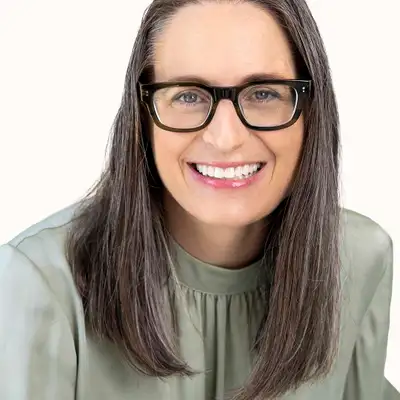
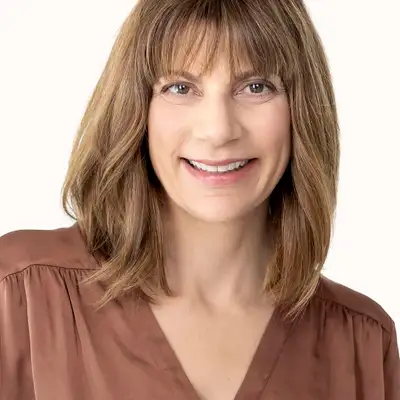
Born from 20 years of friendship, during which they navigated the trenches of autism parenting and advocacy, the Refrigerator Moms is Kelley Jensen and Julianna Scott’s way of reaching out to parents waging the same battles they were. Their purpose with this podcast is to clear the fog, silence the noise, and find a path through neurodivergence for parents that are stuck between bad choices. They tackle parenting topics such as mom guilt, tantrums, pathological demand avoidance, siblings, medication, comorbidities, social media, and much more.
[Kelley Jensen] (0:09 - 0:33)
I remember the first time that I saw Rain Man and Dustin Hoffman, 1987-88, it was the first time I'd ever even heard the word autism and forever made an impression on what autism is. Quite a letdown when the diagnosis of my child came and it was apparent that he was never going to be a savant that could count cards and bring it home from the casino.
[Julianna Scott] (0:34 - 1:29)
I hear you. So this episode, we're going to be talking about those movie portrayals. Our title for this episode is Lights, Camera, Autism, Onscreen Portrayals of Autistic Characters.
I had a similar reaction when our son was diagnosed because I also saw Rain Man when it came out in the theaters. I was going for Tom Cruise and, you know, it turned out I learned a little more, but yeah, it was, I think it was a second date and it was interesting. The date went okay, but I did offer to pay and he took me up on it and that kind of like soured it for me.
I know that's, you know, there might've been a third date, but I was already, it was already, it was the beginning of the end when he let me pay. But it was the beginning of your autism journey, oddly enough. It was, and little did I know.
[Kelley Jensen] (1:29 - 1:34)
When your son was diagnosed with autism, did everybody say, have you seen the movie Rain Man?
[Julianna Scott] (1:35 - 1:56)
They absolutely did. And we, my husband and I often said, you know, oh great. Like we got the one dud autistic kid who doesn't have some cool splinter skill, like counting cards or something.
And we were like, well, when's his savant skill going to emerge? Because that was what we thought autism was. What everybody thought autism was, right.
[Kelley Jensen] (1:56 - 2:12)
And that being nonverbal, nobody had ever heard of an, you, of course you still speak, you count cards, that's what you do. And you know, then we have the reality set in and the portrayals in movies and TV don't quite match the reality of autism, unfortunately. No, they don't.
[Julianna Scott] (2:12 - 3:14)
And, and the savant thing is interesting because it is kind of cool. You know, they've got these splinter skills or these really high level, you know, intelligence. And we still see that in TV shows like The Good Doctor or Extraordinary Attorney Woo, or the, this accountant series with Ben Affleck.
He's, he is an accountant, spoiler alert from the title. Yes, kind of grumpy, but he is also a highly trained assassin. And he, well, I don't know if he's an assassin, but anyway, he is a highly trained killer.
And I'm going to say one was better than two. In terms of realistic portrayal or in terms of storyline? Storyline for sure.
But also the portrayal to me, Ben Affleck's portrayal of somebody on the spectrum, it was a little wooden. Like he kind of tried to do that, that affect and it just didn't work for me. Few actors get it right.
[Kelley Jensen] (3:15 - 3:20)
What are some actors that get it right? We're going to go through all of that, right? How much we like and how much we don't like.
[Julianna Scott] (3:20 - 3:58)
We are. And we're also going to try to answer some of these questions that we had about the movie industry and advocacy and autism and what kind of role movies and TV play in that. And we're going to explore, you know, how do these shows raise awareness at the expense of, you know, the humanity of autism and are they accurate representations?
And do they show the reality of daily life with autism? And is that even the point? Is it the point to make other people feel good?
We don't call it, but it's called inspiration porn, making people feel good.
[Kelley Jensen] (3:59 - 4:10)
Which should be distinguished from disability porn because in researching this episode, we learned that that is distinctly do not inspiration porn.
[Julianna Scott] (4:10 - 5:22)
So you could also go back to our refrigerator paper on our website and you can find a lot more information about the research that's been done. It's actually quite interesting. The research has been done on autism in movie and TV portrayals and how closely the DSM-5 criteria aligns with some of the autistic characters on these shows and how that affects audience perception of autism.
So very interesting stuff. But we're going to talk about shows and movies that have diagnosed autistic characters. Later, we're going to talk about characters who are autistic coded are called headcanon, characters who are claimed by the autistic fans as being on the spectrum.
This episode of The Refrigerator Moms is brought to you by Brain Performance Technologies. Brain Performance Technologies is a specialty mental health clinic that offers magnetic e-resonance therapy or MERT for autistic people aged three or older. MERT is a transcranial magnetic stimulation protocol that utilizes an EEG diagnostic to deliver personalized magnetic pulses to stimulate the brain and build neural pathways effective in managing autistic symptoms.
[Kelley Jensen] (5:23 - 5:35)
So we take a lot of issue with some of the portrayals of autism in entertainment. The fact that autism is a version of entertainment tends to boil it down to the lowest common denominator to begin with, right?
[Julianna Scott] (5:36 - 6:12)
Right. And a lot of the portrayals that we see of autistic characters, they really play into the stereotypes. Going back to Rain Man, but ranging from that genius trope with the savant skills to the burdensome child, we see that a lot.
So it really focuses on the family and how they're all coping with the child who is kind of seen as a burden. And also, you know, it's or they're used as sort of a prop or a symbol to develop another character's trauma rather than exploring the autistic character.
[Kelley Jensen] (6:12 - 6:30)
Right. And something that I take specific issue with is almost zero representation of lower functioning, nonverbal people. And to the point where, again, that feel good story that is all designed to make other people feel good and not to describe autism in its entirety.
[Julianna Scott] (6:30 - 7:14)
Right. Right. And all of those representations are pretty like can be really dehumanizing and infantilizing instead of offering a realistic portrayal of the struggles and successes of autistic people and those who love and care for them.
A lot of these characters are showcased also as straight white males, that there is a trend toward more girls. And those are things like everything's going to be OK or heartbreak high or a kind of spark or as we see it. And, you know, we'll talk about those, but that definitely is a positive trend.
But if you think about a lot of characters we know from Atypical or Big Bang Theory or Rain Man or Gilbert Grape or like the accountant when we talked about all straight white guys.
[Kelley Jensen] (7:15 - 7:26)
Yeah. Which leads us to is the intended audience for these shows? I mean, who are they even marketed to?
They're certainly not marketed to me. I barely watch them because they don't represent anything. They don't speak to me.
Right.
[Julianna Scott] (7:26 - 7:30)
Right. Or my husband, he doesn't watch them. He's like, I live that.
Why do I want to watch it?
[Kelley Jensen] (7:30 - 7:43)
Like it's not entertaining to me, especially because it doesn't resonate with your lived experiences. So that's problematic. Right.
So the intended audience is, again, that feel good story. I watch them all. Yes, you do.
[Julianna Scott] (7:44 - 8:34)
And it's a little bit like pushing on a bruise, like, you know, it's just like I can't help it. It doesn't feel good, but I can't help it. And I watch it with a really critical eye and I'm always looking at it like there's a new one coming out on I think PBS.
It's called Patience. It's about a this is another common trope, a detective. She's, you know, highly, you know, she's seeing things that nobody else sees.
Of course she is. And, you know, I'm all in. Like, I'm going to watch it.
I mentioned it to my husband. He's like, no, you can watch that one without me. Like, I don't want to see that.
Although we're watching the elementary, you know, the Sherlock series with Johnny Lee Miller and Lucy Liu. And we both like it. But, you know, we're watching it.
We're like, is he supposed to be on the spectrum? Well, we're going to get to that. Are they or aren't they, right?
[Kelley Jensen] (8:34 - 8:50)
Right. But in doing research for this show or this particular episode and you directing me to what you wanted me to watch, I did have some ideas. I did definitely grow some affection for some of the characters.
I think our most favorite being Julia from Sesame Street.
[Julianna Scott] (8:50 - 9:28)
Julia from Sesame Street is a great example of how a good autistic character can help shape public opinion. So she was obviously very intentionally created for that purpose, and she's really successful at this. So she's made a lot, a great impact on public opinion.
So parents of autistic children have found that their children are, have more play dates from neurotypical children who've watched Julia interact with Elmo and other characters on the screen. Children learn empathy for autistic children rather than being put off or scared by their different behaviors. Yeah.
[Kelley Jensen] (9:28 - 9:35)
And good for siblings too, because sometimes it's a quick explanation for a sibling that has an autistic brother or sister.
[Julianna Scott] (9:35 - 11:03)
Yeah. I mean, Julia is, I think, just adorable. We love her.
Some other children's shows are Carl the Collector, which isn't, you know, he he's animated. He's an animated raccoon. Oh.
And I also like him because his autism isn't the focus. He's in a group of friends and there's actually another little, you know, autistic character. I think she might be a bunny.
But I like Carl the Collector. There's also another one called Hero Elementary. And these are shows where those characters are explicitly autistic.
Again, they talk about their autism and they, these children's shows really can succeed by showcasing kind of natural, non-dramatized interactions between the neurotypical and the neurodivergent characters. They're all just, you know, having a good time together. Whereas shows that are targeted toward the older audiences may play up the autistic traits sometimes for drama or comedy, which just reinforces those stereotypes.
And those don't increase any understanding of the reality of living with someone with autism. So there's no nuance to those portrayals. So the autistic voices are often kind of cut out of that whole process of writing and developing the storylines.
And I think that that is changing. And that also impacts some of the shows that we're seeing that do make a positive impact.
[Kelley Jensen] (11:04 - 11:31)
Okay. So we thought we would do something different than a to-do list or what would we do in this, right? Are they or aren't they?
So these are characters based on the DSM-5 criteria that are they or are they not autistic? And some of the characters we're going to talk about come from social media subgroups that talk about these characters as falsely being artistic or claim them as their own, so to speak, right?
[Julianna Scott] (11:31 - 11:36)
Yes. So these are not characters who are explicitly diagnosed on their show.
[Kelley Jensen] (11:36 - 12:11)
So zero puzzle pieces means that they are not autistic at all. Okay. In spite of whoever's claim that they are.
One puzzle piece means that they're hinting at autism, that there's some quirky traits. Two puzzle pieces, the fairest outline of realistic autism. Three puzzle pieces, autistic, but not in a polite or meaningful way.
Four puzzle pieces, some aspects of autism are underplayed, but a good depiction of autism. And five, the complete autistic picture.
[Julianna Scott] (12:12 - 12:18)
Okay. So let's start with an easy one. Sheldon Cooper from Big Bang Theory.
[Kelley Jensen] (12:18 - 12:19)
A solid four.
[Julianna Scott] (12:19 - 13:30)
I also give Sheldon a four. So this one's interesting because the writers have been talked to a lot about, you know, is Sheldon and his wife, Amy Farrah Fowler, you know, are they officially autistic? And they won't say anything.
And I think this is just really convenient for them because they can get away with a lot of stuff. Like Sheldon is a character who is really laughed at. And I think it's really kind of cruel if he's like officially, you know, they talk about an autism diagnosis and then they're all just like, ugh, like God, you know?
So he's written in a way that enables all the other characters to laugh at him without being assholes basically. So, you know, it's, it's, you know, the only asshole on the show is really the autistic one. So they can get away with it.
And, and you touched on his wife, Amy. I'll give her a five. For sure.
I give her a five. I like Amy's portrayal better because she's confident in who she is. She's, you know, and people accept her.
I think they don't push back on her as much as they do Sheldon.
[Kelley Jensen] (13:30 - 13:43)
Well, and also it's a good portrayal of a woman with autism. We talk about that and I think that's desperately needed. So along those lines, Harry Potter series, Hermione Granger.
No.
[Julianna Scott] (13:43 - 13:44)
Zero.
[Kelley Jensen] (13:44 - 13:48)
Zero. Absolutely not. And a bit offensive just because she's smart.
Is that what we're saying?
[Julianna Scott] (13:48 - 13:58)
Yeah. I, I'm a little confused about how she gets put into that category. So just being a know-it-all doesn't make you autistic.
No.
[Kelley Jensen] (13:58 - 13:59)
And being good. I know. Yeah.
[Julianna Scott] (14:03 - 14:05)
Legally Blonde. This one blew me out of weather.
[Kelley Jensen] (14:05 - 14:08)
I was like, what are you bothering me with?
[Julianna Scott] (14:08 - 14:19)
I know. And the rationale for L part, part of it was her hyper-fixation on pink. That does not make you autistic.
Again, a smart woman.
[Kelley Jensen] (14:20 - 14:21)
There must be something wrong.
[Julianna Scott] (14:21 - 14:25)
Right. It's like, is that the only way she could get into Harvard law? Zero.
That is a zero.
[Kelley Jensen] (14:26 - 14:34)
Richardson. Now, see, I, this is where we differ because I would give giving her a solid zero.
[Julianna Scott] (14:34 - 15:13)
I give her a two. I see something there. I get, I get autism vibes from Francesca.
You know, she is, she doesn't really care about the social norms. She has her hyper-fixations. I think her suitor or her now husband, he seems like he's giving me some autism vibes.
I, I kind of get that. Well, actually, after I saw Bridgerton and I'm like, I did the whole is Francesca Bridgerton autistic and all this stuff comes up and the writer of the book said that she hadn't intended for her to be autistic, but she loves that people are seeing that and all that.
[Kelley Jensen] (15:13 - 15:20)
Or that CHAT-GPT has weighed in. After you've led CHAT-GPT, then that's what you want to believe.
[Julianna Scott] (15:20 - 15:25)
Well, regardless, I get, I get a whiff of, of autism there.
[Kelley Jensen] (15:25 - 15:46)
It's interesting to think about that some of it, in my opinion, is not the person that's not at all autistic, but that is in the wrong time, was born in the wrong time and place where she had such little outlet for who she was. She loved to read. She liked, interested in, in, you know, things that a woman was not supposed to be interested in.
And that just couldn't be bred out of her.
[Julianna Scott] (15:46 - 15:53)
See, and I disagree because her sister was a big reader and I don't get autistic vibes. Well, it wasn't just the reading, right?
[Kelley Jensen] (15:53 - 15:57)
It was what she wanted to read and the ideas that she wanted to discuss that made her unusual.
[Julianna Scott] (15:58 - 16:39)
But also, you know, they were very comfortable in silence. I don't know. I am sticking with it.
All right. Well, what about Forrest Gump? Another one we totally differ on.
I 100% disagree. I say a big zero on Forrest Gump. And I hadn't seen Forrest Gump in a million years, but when you came out with a five on, I'm giving it a five.
All right. I I've got to go watch it. I, I did skim through it and I didn't see any of the deficits outlined in the DSM-5.
Forrest certainly has an intellectual or developmental disability, but I do not think his hyper fixations on running and ping pong and his ability to, like, assemble a gun, like, puts him on the spectrum.
[Kelley Jensen] (16:39 - 17:00)
Well, I was more focused on his mannerisms, the way he holds his head, some of the rigidities that I saw presented. And again, I'm fixated on the time and place that the movie is set. Can you imagine in the deep south at a time when there was absolutely no education about really what's the difference between an intellectual disability or autism?
[Julianna Scott] (17:00 - 17:31)
Well, I think that's more interesting, especially in today's climate about, you know, people who are on the more severe part of the spectrum and were misdiagnosed back then. So I'll give you that, but not even enough to get a one. And I know that you really thought that Sally Field's portrayal as his mother was inspirational.
I find it a little scary. Like, I don't know what you're willing to do to get your son into a school program, but like, I'm not willing to go that far.
[Kelley Jensen] (17:31 - 18:40)
I just think that you're being very callous about the times that they were living through in the south, that you did not give Sally Field enough credit for her advocacy. Fair enough. This episode of The Refrigerator Moms is brought to you by Brain Performance Technologies.
Brain Performance Technologies is a specialty mental health clinic that offers neuromodulation treatments, including their latest protocol, S.A.I.N.T. S.A.I.N.T., or Stanford Accelerated Intelligent Neuromodulation Therapy, was developed at the Stanford Brain Stimulation Lab to provide rapid and lasting relief for patients struggling with treatment-resistant depression and major depressive disorder. S.A.I.N.T. delivers amazing results after only five days of treatment, including a 79% remission rate. The team at Brain Performance Technologies is licensed and trained to offer this protocol to qualifying patients. Okay, so we've talked a lot about autistic portrayals gone wrong. We've talked a lot about hidden portrayals and are they or aren't they.
What are some movies and shows that we really like, that we really think are doing a good job at getting a whole vision of autism?
[Julianna Scott] (18:40 - 19:26)
Well, yeah, who's doing it right? Well, I'm going to go back to Sesame Street and Little Julia because she is the first autistic Muppet. She is a little friend of Elmo and Abby.
And it just shows that she likes to sing and draw and she likes to play with her friends just like everybody else on Sesame Street. But because of her autism, she just might need some accommodations. And I think it's such a wonderful portrayal.
Her little friends do accommodate her, like they need to turn down the music when it's too loud. Or she does a starfish hug, like they touch fingers instead of the whole body hug because she has sensory issues. And she has echolalia and she bounces and she stims by flapping a little bit.
[Kelley Jensen] (19:26 - 20:07)
So I'm just going to stop right there though and I'm going to add that Julia, who we love so much, has had a lot of help articulating that she needs these accommodations, right? That part of the thing that we like so much about it is it puts ideas into your head. If you know a child, maybe seeing Julia needing starfish and not giving a big hug is, you know, these things happen with a lot of research and a lot of hard work on people that are interacting with your child.
So people that have put thought into accommodations, you know, it's a buzzword, but it's more than a buzzword. Specifically, what do you do? What is the accommodation?
And that is a lot about Julia and they thought of.
[Julianna Scott] (20:08 - 20:58)
And she likes to bounce, but they also play tag a lot. And so they do bounce tag and things like that. It's just, it's really cute.
And some of the things are stereotypical, like her echolalia and her flapping and things. But for that age range, I think it's very appropriate to keep it simple. Very good.
And another one I know I touched on earlier, but I got to give a little plug for Carl the Collector for this one reason. And it's because it shows really well that Carl's parents are divorced and they co-parent Carl in a really nice, amicable way. And I think that's just a really nice touch because the divorce rate for those with a child on the spectrum is between like 80 and 87 percent.
And so I think it's really important to show that aspect of it and that these parents are working together to, you know, love and help Carl. Absolutely.
[Kelley Jensen] (20:59 - 21:40)
And then one that I particularly like is called Loop, and it was done by Pixar. Target audience is seven and up, but really, I think anybody can watch it. It's a short film.
And again, one of the things that I like most about it, one of the very few portrayals of a nonverbal, more severe autistic person and whoever had a hand in developing it really had a deep understanding or a deep need to communicate what a person who's nonverbal goes through and what a caregiver or a person in their presence that is really invested in their well-being does to help them communicate what they can't communicate. It's very well done.
It's very, very sweet.
[Julianna Scott] (21:41 - 22:07)
Yeah. What I like about it too is the girl, Renee, she is in a canoe with this other boy from the camp who's neurotypical, Marcus, and he isn't portrayed as a savior by any stretch. I mean, he figures out how to communicate with her, but he gets frustrated.
It's a very equal relationship. So I really love that. Yeah, it's great.
[Kelley Jensen] (22:07 - 22:16)
You know, I could do without the camp counselor just throwing him in the canoe, but I suppose that was necessary for the story. Although how many times that happens is one too many, right? Right.
[Julianna Scott] (22:16 - 23:47)
I mean, that might be a little too realistic. Yeah. Yeah.
Another one that I really liked is A Kind of Spark. It's for 10 and up. I believe it's based on a YA series and it's set in a Scottish village and it's about an autistic teen, Addie, and she has two sisters.
One is autistic, one is neurotypical, and all three actresses are autistic, which I think is really interesting. And an important trend. An important trend.
And the plot is Addie is bullied at school and she learns about her village's past and that there's witchcraft and it's all about these women who were persecuted for being different. And so she really internalizes that. And so she's kind of on a mission to kind of- Burn them all at the stake.
No. It's to basically go back and kind of let these witches kind of, she has the affinity for them and to kind of roll back all the hatred for people who are different. Got it.
So she wants to stand up for them. And it's really cool because actually her older sister, who's autistic, she, Addie is very open about her autism, but her sister masks and she's, you know, the differences between how the two handle their autism is also really interesting and they're girls and that's also a new trend, which is great. Another one I really loved was Everything's Gonna Be Okay.
I just devoured that whole series.
[Kelley Jensen] (23:47 - 23:52)
And where's that on? What channel is that on? Oh, geez.
Hulu? I think.
[Julianna Scott] (23:53 - 25:25)
But it's for about 13 and up, but I really loved it. It's this, the writer also acted in it and the character is Nicholas and he becomes his half-sister's guardians after their dad dies. And, but it's not sad.
They may be, but yes, of course it's sad. That's not the focus of it, but he becomes the guardians of his sisters. And one of the sister, Matilda, is autistic and she's played by an autistic actor.
And her autism is a focus of the show, but it's not seen as an overwhelming challenge. Like her neurotypical sibling has just as many challenges. And she is very confident.
She's very aware of her strengths and weaknesses. And her family's treatment of her is not of, as of someone with a burden, but who is in many ways the strongest of her family. And that's really refreshing.
And what I thought was really cool was when I was reading about the backstory of this series is that the writer and lead actor, he learned he was autistic while making the show and he weaved his late diagnosis into the show. And it was funny because when I, I didn't really know much about the series, but when I started to watch it, I was, I didn't know, I'm like, well, is he seems autistic? Like, is he is like this also part of it?
And then as I'm watching it, it's like, it doesn't come up. And I'm like, oh, well, that's interesting because he seems kind of autistic to me. And I guess my ADAR was really good, better than his own.
So, so I thought that was a fantastic series. I loved it.
[Kelley Jensen] (25:25 - 25:57)
And another one we really like a lot, once more like Rain Man, again, the Rain Man reference that is sometimes the bane of all of our existences, right? And the writer and lead actor is an autistic person. This is a short film that follows an audition going for a character.
And sometimes she's not autistic enough. Sometimes she's too autistic. She's never doing it right.
It's very, it's very well done. And again, we really thumbs up to the entire cast and crew that made this.
[Julianna Scott] (25:57 - 26:21)
Yeah, it's, it's, it's fantastic. I think it's great that we end circling back to Rain Man because, and, and it was great because she's really trying to do something in that space with actors, with autism, and really underscoring that to be represented, you've got to do it yourself. And so that's what she's doing.
Like if she wants to see, you know, realistic portrayals of autism, she's just going to create an opportunity.
[Kelley Jensen] (26:21 - 26:50)
One of the reasons why we're doing all this is because we want to see realistic portrayals. We want to see realistic information. And so kudos to her.
So why is this conversation important? Well, one, it's a lot of fun to talk about autism in movies and television. And two, because it shapes the conversation.
It's Rain Man as a perfect example of a stereotype that takes root. And the more that we talk about what is good and bad about those portrayals, the more we can have fun with it and enjoy everyone in that space.
[Julianna Scott] (26:50 - 28:29)
So thank you for listening to this episode of Refrigerator Moms. We have a free download that includes a full list of characters and watch list titles we shared in this episode on our website. The paper also includes additional background information on everything we talked about today.
So find it on our website, RefrigeratorMoms.com, where you can also sign up for our newsletter. We'd love to hear your questions, send them in along with future podcast topics by connecting with us on your favorite social media. Thanks for listening.
Thank you for listening to this episode of the Refrigerator Moms. We have a free download that includes a full list of practical to do's we shared in this episode on our website. Our refrigerator paper, our version of the white paper includes additional what would we do's and background information on everything we talked about today.
Find it on our website, RefrigeratorMoms.com where you can also sign up for our newsletter. We'd also love to hear your questions. Send them along with future podcast topics by connecting with us on your favorite social media.
Thanks for listening. Please note that the information provided in this podcast is for informational purposes only and it is not intended to be a substitute for professional medical advice, diagnosis or treatment. Always seek the advice of your physician or other qualified healthcare provider with any questions you may have regarding a medical condition.
Never disregard professional medical advice or delay in seeking it because of something you have heard on this podcast. The opinions and views expressed in this podcast are solely those of the hosts and guests. Any recommendations or suggestions made are based on personal experiences and beliefs and should not be taken as definitive advice.
It's important to consult with appropriate professionals for personalized guidance. A full list of citations and sources for this episode can be found in our refrigerator paper available on our website.