Subscribe
Share
Share
Embed
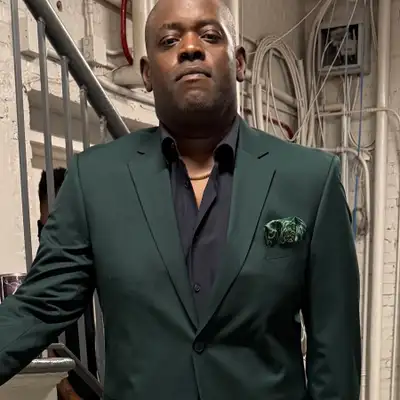
The Sound & Soul of the South spotlights destinations as they share the stories behind their community’s musical roots, legends, attractions, and vibrant live music scenes. Each episode explores how music shapes local identity, culture, and economic impact in destinations throughout the South—appealing to music fans and travelers seeking authentic, music-driven experiences.
Hello there people. My name is Charles Davis and I'm joined by the lovely and talented Ms. Susie Bowen. Good morning, Susie. How are you?
Susie:Good morning. I'm fantastic. So happy to be here.
Charles:Yes. Yes. Yes. This is the first episode of Sound and Sound and Soul of the South, if I can get it out of my mouth. It's the triple s.
Charles:It's almost like the triple d with Guy Fieri, but it's different. It's the triple s, Sound and Soul of the South. We are here in the Creek Studios doing this, being the Sound and Soul of Central Georgia. And this show is gonna be dedicated to the music and music tourism and the effects that it can have on a community and the nation itself. And then you might ask yourself, why Sound and Soul of the South and not everywhere else?
Charles:Well, we're in the South, one. But two, if you really think about it, the South concentrated enough has more music history, I believe, than any other section of the country. And it's because of what the South has had to go through, civil war reconstruction, learning how to live together, as people. And normally, best way you find out about a community is through their arts and through their music. And that's why this is very important.
Charles:Now to the point of why are you two hosting it? Well, that is a very good point. And I will start this off with the incredible miss Susie Cohen. Susie, tell the people kind of what you have done in your career and why this music tourism thing is important to you and and why you do it.
Susie:What you said about music gives you the soul of the place. And so for the past two decades, I have, planned and orchestrated more music events than I can count. K. And then for the past decade and a half, I've been in tourism. And the reason why is because it one, brings out the best in the community, when they're celebrating their friends and their neighbors that are on stage or, art and craft vendors, whatever it might be.
Susie:But the music is always what ties it together, the music and the food. And so at every event I ever did, it was always based around music. And then, like I said, for the past decade and a half, I've been working in tourism and, I've always used tourism. I've always used music as a way to talk about a place. And so, I think that that's how you really feel the soul of the place.
Susie:So when I heard the tagline Sound and Soul of Central Georgia for our radio station, I really wanted to broaden that conversation and talk about what's going on in the South, for music attractions that you can learn about the history, but also the music tourism that goes on every day when the concerts come to town. So music tourism is a broad subject and it's a lot about heritage, it's a lot about musicians that have moved off, but it's also about traveling musicians that come to your place. So music tourism is a broad subject and we're here to help tell those stories. And like said, or Charles has said, we're gonna focus on the South because that's where we are.
Charles:It's where we are. Yeah. I know. And and and it makes sense to do so. Like I said, Susie, you've been just involved in all of this being a widespread panic fan.
Charles:You've gone to all types of festivals. We're not gonna go there. I give her all kind of crap about that, but that's fine. But no, you are well versed in in that side of it. And another question I would ask you when it comes to because you kind of defined a bit about what music tourism is, but kind of on on another level, kind of talk about the impact that has economically on a community.
Susie:Absolutely. Well, the Taylor Swift phenomenon last year for the Eros tour, it brought it to mainstream what economic development happens when a concert comes to town. Because people come, they of course buy the tickets, but they also stay in hotel rooms. They also buy gas. They also buy food.
Susie:They go shopping. They want to check out the local restaurants and shops. And so there's a huge economic development when a big show comes to town. But in the case of Macon, people come here to learn about our music heritage. So therefore, when they come to Macon, they and and you'll learn more about that in the upcoming episode.
Susie:But they spend money on hotel rooms. They spend money at shops and restaurants. So the economic development is wild and people need to realize that it's a marketing tool. And I think, like I said, the Taylor Swift phenomenon brought it to the mainstream media and it was like they had never thought about that before. So now, people are starting to think about when they go to concerts and also what concerts they bring in into the cities on using it as an economic development tool.
Charles:Yeah. That is a huge thing as well. It's not always what you bring, it's who you bring to. And if you have the facilities to do that and you'll see and hear a lot about that as we talk to different cities throughout the South and talk about what it looks like for them. So Susie has talked about what makes her qualified and she's more qualified.
Charles:She's the most qualified person to really be talking about this on this show. I my part of it is is a bit different. Like I said, my parents are from this town. I am I'm a musician. I lead a preservation band called the Macon Music Review, where we always like to say we always remind people that the the the present should always be respected and and the past revered as well.
Charles:And it's the merging of those two that that make everything so. Like I said, I've been in the arts community in this town for a while, and I've traveled. I'm a fan of music, I've traveled and seen things and been to places that have musical ties and history to them. And it's some of the places that would draw you to a place. Sometimes there's especially with musicians and music fans, they will go to a place just because so and so was born there.
Charles:They will go there just because so and so is buried there. They will go to a place just because, oh, they performed there one time at the beginning of their career. And for cities across the South that know their history, take the time to embrace that history and cultivate it, you're seeing those towns grow in different ways than you would see other towns across South. Is that safe to say, Susie?
Susie:It is. And I mean, what I learned, when we were studying the international tourism or international tourists, when they come to the country, they will go and look at a place where someone was born that the house is no longer even there.
Charles:Yeah.
Susie:Yeah. There doesn't even have to be a music marker. When our international friends come to America, the example, I was in Arkansas at the time and so we would talk about Johnny Cash a lot and they would fly in to Nashville. They would go to the museum in Nashville. They would rent a car.
Susie:They would drive to Arkansas. They would go to the Boyhood Home of Johnny Cash and then they would we would kinda lose them after that and and we don't really know where they went but just the fact that people will go and and Cotton Plant for sister Rosetta was another thing. There is nothing left there of Sister Rosetta, but people still go to Cotton Plant looking for whatever they can find that will help tell the story of their favorite artist. It's amazing to see what people will do and how far they will drive or fly to see any remnants of any kind of the storyline of where people came from and what might have inspired them along the way.
Charles:Yeah. And like Susan said, we'll be talking to throughout this series, we'll be talking to a bunch of great towns. I'm not even going to run them off right now. Just know the ones that you want to hear from, you're going to hear from, so you'll be okay. But what you'll get in the very beginning is that, okay, we've talked about what we are.
Charles:We've talked about how we're qualified for it being here at The Creek, being an authority in this town on what it is to be in Macon. We will get more into what Macon is and basically just like Susie was saying, the lengths that people will go to, to see and hear and be a part even close enough to their favorite artists. Like I said, we've got people coming up on later episodes to talk about it, but just as like a teaser to it, we just got past the Greg Almond documentary premiere here in town. The Macon Music Review had an opportunity to perform at Grant's Lounge, historic Grant's Lounge here in Macon, Georgia, if you do not know. The Marshall Tucker Band came out and did their first audition there, but there were people from all across the world at that show.
Charles:And it was because, oh, they're doing something on Greg Almond? Well, I've gotta go. Like, I've I've got it wasn't even questioned. And Macon is a big piece of that. Not gonna dive too into it.
Charles:We'll get into, Macon more as we go on. But as I said, throughout the show, you'll hear me and Susie talking to tons of people. We'll be talking to some people from North Little Rock, AKA Dogtown, because I swear I cannot mess that up. They would hurt me in North Little Rock if I didn't say that. But you'll be hearing from them.
Charles:We'll be hearing from people in in Memphis. We'll be hearing from people in tons of other places. But to, to round out this one and to and to give us a more in-depth on what, music tourism is as far as in the South. We'll be talking to a good friend of ours, Ms. Lisa Love, who has done a lot of work throughout music tourism, but right now she's currently with the Georgia Music Foundation.
Charles:And she'll be giving us a bit more detail on what she sees music tourism being defined as, and then also what she sees as far as different places throughout the South. So stay tuned for that. Welcome back to Sound and Soul of the South, Charles Davis, Susie Cowan here with you. And as promised earlier, one of my favorite people in the history of the entire world, the one, the only, Miss Lisa Love of the Georgia Music Foundation is with us. Good morning, ma'am.
Charles:How are you?
Speaker 3:Good morning. So good to be with you too. See your smiling faces.
Charles:Well, it's good to have Yes. You For the first episode of Sound and Soul of the South, where we have been kind of laying the groundwork and letting people know what music tourism is. And it's only right to have you be a part of that since you do so much of that, not only for the city of Macon, but for other cities as well. So it is phenomenal to have you here, but we need to let people know why we feel so good about having you on this show. So Lisa, kinda talk to me about kinda like what what you do, what you do with the Georgia Music Foundation and why we feel like and you can pat yourself on the back for this.
Charles:Why you have just such a deep knowledge of the South and and what it means musically?
Speaker 3:Music in Georgia has been a part of my life for almost thirty years. I hate to say it, that feels I like a long started out, I am a Valdosta blazer and did my first zine down South Submarine down in Valdosta. And that's where I really, at that time I was coming back from some time in Austin, Texas. And that's where I really first sort of started understanding regional music and connection between place and music. And after Valdosta State, I wanted to work at the Georgia Music Hall of Fame in Macon, Georgia.
Speaker 3:That's what I was living for. And luckily, I got to be a part of the museum from gosh, 1998 until the museum sadly closed in 2011. But those were some of the best years of my life, getting to tell Georgia's stories to people everywhere who traveled from everywhere to visit the Hall of Fame. And after that, working with the Georgia Music Foundation now for the past, oh gosh, twenty years. And we are a nonprofit working to support programs of music preservation, education, and outreach.
Speaker 3:And I'm lucky to get to work with all kinds of artists in cities and organizations around the state. And I guess that's my story. That's thirty years in two minutes.
Susie:Well, you so much for joining us. And I would love to hear your definition of music tourism.
Speaker 3:I mean, I think music tourism is traveling to either attend concert or a festival or to engage in a music city and its heritage and its culture. I think, you know, I feel like we used to travel and entertainment was just sort of the side part of the city, of the traditional city you went to. That was just like food. You look for food, you look for entertainment, but now people are putting together their vacations specifically around music choices.
Charles:Yeah. Yeah. And kind of talk about the impact that you've seen from like it being a revenue generator and things like that, that music tourism can have upon a city when they do it the right way.
Susie:That's right.
Speaker 3:Oh, I think it's huge. I mean, the economic impact is massive. Festivals are huge economic generators. And Bonnaroo and Coachella, Howl O Lids here, Telluride Bluegrass Festival, Big Sky in Montana. All of these cities and states have festivals, but I feel like one of the MacDaddies for me is Jazz Fest.
Speaker 3:It's been more than fifty years that New Orleans has done the Jazz and Heritage Festival and it's usually two back to back weekends. Well, it's been on my bucket list for so long. I've never got, I've never had the opportunity to go to Jazz Fest, but I know many, many, many people who have, and it's on those two weekends and some will go either, some will go both.
Charles:Both, yeah.
Speaker 3:And you get to go, yeah. And you, everyone emerges themselves into the culture and the food and the lifestyle there in New Orleans and gets to go see all the music there at the fairgrounds or wherever they hold it, the main space. But then you also drop in all the other clubs. It is truly, and that's got to be a massive economic impact on New Orleans. Those kind of festivals are everywhere.
Speaker 3:I mean, one of my favorites in Georgia for years has been the Savannah Music Festival.
Charles:And,
Speaker 3:know, beginning maybe twenty years ago, I started going and every year I would go by myself, you know, sorry, husband, I love you,
Charles:but I just want to be with it.
Speaker 3:So then I could be kind of nimble flexible and go to a lot of shows.
Charles:Yeah.
Speaker 3:And Savannah in April is gorgeous. And over the years, I mean, you sort of, you build a confidence in the artistic direction of the festival, which is what I did with Savannah Music Festival. So I would get to see so many acts and artists that either I didn't know or may not have chosen and they knocked me out and lots of world music. So that's been a big economic impact on Savannah.
Susie:That's right. So what do you think makes music tourism in the South a bit unique?
Speaker 3:I think because it gives people access to the music from the South and we create everything that is the best, you know, past, present, and future, but it also gives people a chance to engage in the culture, in everything that's a part of that city. I mean, for Macon, when people come to Macon, they get to engage in the places where Little Richard stood or the places where Otis Redding went or his family in the Otis Redding Museum or going to the H and H that was so important to the Allman Brothers Band.
Charles:That's right.
Speaker 3:Or going to the places like Grant's and Vice Bar and all the spots, Capitol Theater that are But presenting music community I do think the South is special. That's where all the great music comes from.
Charles:Yeah. Yeah, no, that is a big part of it. Like through your travels and the work that you've done, like what are some of the places that you think music tourism has saved? Because a lot of these institutions fell under some neglect and disrepair, but throughout your travels and time with the Georgia Music Foundation and everything else, what are some of the examples that you've seen as where music tourism has saved something for the future generations?
Speaker 3:I mean, Macon is a perfect example. You know, I mean, Capricorn, Mercer University stepping in and reviving and saving saving Capricorn and keeping Grant's alive and keeping H and H alive. I think, and I had wanted to go to Muscle Shoals for so long. And this past December, again, by myself, I like being nimble and
Susie:moving around.
Charles:You do. You do.
Speaker 3:I went to Muscle Shoals and spent three or four nights just getting go to fame and Muscle Shoals Sounds and all the places that are part of the history, but there's still today, there's 15 studios in that city. And so I think music culture and history in and of itself, when communities investors value it and they keep it going, it is important for music industry, for creativity, for tourism, and for the local music community. You can't just build music authority or music credibility out of the air or because somebody does a white paper for you. There has to be some substance there. So those, I mean, to me, music tourism is those three pieces, either concerts, festivals, or the music cities.
Speaker 3:And I think a place like Nashville has it all, but I did want to talk about concerts because I don't think people necessarily used to travel for a concert again. If there was one in the city when you happened to be there, you would go. Yeah. But these days, gig tripping, as they call it, I mean, it is a huge thing. And like for Taylor Swift and this year, Bad Bunny and BTS and Harry Styles, all these people are traveling, even internationally, to go to one concert.
Speaker 3:I mean, vacation for the year is based around going to these epic cities like Rome and London and Seoul and all these places to do these huge huge concert experiences. And a lot of times they're paying for the premium package and the VIP. And those are memories those folks will take throughout their lives. And so I think maybe instead of doing some of the old traditional, we're going to go to the beach, we're going to go to the mountains, people are going to concerts. That's right.
Speaker 3:I love that. And I think obviously Grateful Dead kind of built a model.
Charles:Oh, here you go. You're right down her lane lane now.
Speaker 3:I know because you know what I'm going to come up with next, Susie? I I mean, I think the band that carries the mantle today like nobody else is widespread fanned and you know, Buck Williams, their manager told me one time and it has stuck with me for years that they're like a traveling tourism attraction. They are. They go into a city. They're, you know, usually maybe three nights they don't They don't advertise in market at all like most people You go in and you do your ads and you're, they do nothing.
Speaker 3:Are word-of-mouth from this fan database that they have built over, I guess, thirty years now. And that is incredible to have a mobile tourism attraction and the economic impact that they make That's crazy. Every city they're in is astounding. And you know
Susie:We tip well. We spend a lot of money.
Speaker 3:Exactly. And I mean, it's and again, people, and you can attest to this, you look forward to those shows. I mean, that is Oh. That is Mempho.
Susie:I just got my tickets for Mempho. I'm ready.
Speaker 3:There we go. But that's what travel should be in my opinion. Something that is emotion, it's emotionally connected to you. You remember it, you can share it with friends, family, children. And there's a massive, I mean, I spend a lot of time here in Asheville, North Carolina, where my husband is from.
Speaker 3:And the tourism bureau here usually puts out studies. When Billy Strings comes here or artists like that, it's massive. People come from all around. They're getting hotels. They're spending money on food, gas, attractions.
Speaker 3:So, you know, I am all about music. It's just a darn shame with all this demand that it's so hard for musicians and local musicians to make a living these days and not be able to, you know, translate that huge corporate, it's not corporate, I mean, widespread panic is certainly not corporate, but that huge, those huge money making entities, I would love to see that somehow help support or subsidize local music communities. But just the fact when you have that kind of music experience in concerts and festivals in your town, it makes a difference for everybody.
Susie:Yeah. Makes people fall in love with live music and then they wanna go see the local guys.
Charles:Exactly, exactly. I
Susie:It also on supports each other.
Charles:Yeah, it does. And I guess even on that, since we're on that path of it, I know this was literally a spontaneous thing that I was just thinking about, but what is it that you feel, Lisa, that some cities might miss and might not truly understand about what it takes to cultivate what you were talking about, the destination type things. What is it that they're forgetting to do or neglecting that you feel like in your history of knowing that is an important piece to make and maintain a music tourism city?
Speaker 3:I think it has to I think a lot of it comes down to priorities and values. You know, I mean, I think that's what happened to the Georgia Music Hall of Fame. There was a period that Governor Zell Miller and so many people valued that and that was a priority. And then, you know, around the time a lot of things changed in Georgia and administrations changed, priorities changed, values changed. And, you know, all great music, all great venues, everything needs to be subsidized, whether it's corporate sponsorship, whether it's grants, whether it's endowments, whatever it is.
Speaker 3:And I think cities and communities have to understand that and value it. And again, I think Macon has done a great job with Peyton Anderson Foundation, Knight Foundation, and a lot of the supporters locally. Macon is luckily, like Mercer University with Capricorn, like visit Macon with a Creek. Think you have to have visionaries who value what music and culture brings to your community. And sometimes you just have to make it all about economic impact for those in power to listen.
Charles:Yeah.
Speaker 3:Maybe they don't really care about the quality of life and the memory making and all of that. But you can still put it in in
Charles:economic impact Yeah. So,
Speaker 3:whoever's the language you need to speak in, music can make a case for itself.
Charles:Very true. That's right. Very true on that.
Susie:You can drop the mic on that one.
Charles:I mean, was a drop the mic moment. I can't even lie about that one. That was fire, but that's Lisa's, so that makes
Speaker 3:Okay, well, speaking you had something spontaneous, Charles.
Charles:What?
Speaker 3:And I have something that's not actually spontaneous, but I read it yesterday and I was thinking about this conversation. So we're talking about all these huge concerts that people are going to. But it has come out in the news lately that, you know, people go and they get earlier and getting there the front, that's a huge deal. Especially when it's if you have seats, but if it's general admission, especially. So there's this deal like Olivia Rodrigo spoke about it recently about being on stage and being able to smell urine
Susie:from the stage. No.
Speaker 3:Noah Khan just had something he put out a couple of days ago. I mean, people are so crazed with not losing their front space and being there.
Charles:And being there for that spot. Yeah. No. Okay. Now I totally get what you're talking about because I was
Susie:listening Did he lessons?
Charles:He lessons Did from the take panic lessons
Susie:from the deadheads and the panic fans on how to do this properly because that's not it.
Speaker 3:Yeah. But Oh, I'm dying to hear what is the proper way because I'm thinking people are just
Susie:dropping trowel there in front of the
Speaker 3:You have your friend hold your respondent
Susie:while you go to the bathroom.
Charles:Exactly. No, I know Elisa's talking about now, we've done the Macon Music Review did a gig out at Peachtree Corners in close to Atlanta and well before the set started, people had their chairs sitting there. Like it was probably 80, almost a 100 chairs just sitting there, nobody in them, but it was that they wanted a good spot for the show. So they left their chairs, the way Petrie Corners was set up with the great setup that they have over there, they were able to leave those chairs there and nobody messed with their spot. So they had their thing.
Charles:And I think that is once again, the economic impact that I think Peachtree Corners gets from what they have there by being able to bring bands there and have that sense of excitement year round is gonna bring people into the city, but not even bring them in for the weekend. It might keep them there. And then that just creates a whole nother level
Speaker 3:But it's also that community gathering. I mean, we need that more than ever. We all need to get off of our screens and music is something that brings us together. It's transformative.
Susie:It's that's right.
Speaker 3:There's just so much about it. And I know congratulations on your first Creek Fest. We need more live music. We need more people coming out. We need more people introducing their kids to live and going to live music experiences as a family.
Susie:That's right.
Speaker 3:It's so positive. And, you know, I was thinking it's funny talking about concerts, Vans Warped Tour, that was one of the earliest ones. And I guess it was the nineties. My son Jack, I think he must've been maybe 12. And my husband Marcus, who was like his rather new stepfather, he took him down to Vans Warped Tour.
Speaker 3:I think it was in Orlando. And, you know, Vans Warped Tour was here for almost, I don't know, it went away like 2018 or.
Charles:Yeah, but it was like ten, it was like 10:15 years.
Speaker 3:Yeah. It came back last year for its thirtieth anniversary and then they did it again this year in Orlando and that same son, Jack, who's now 31, 32, he bartended at Van's tour.
Charles:Look at that.
Speaker 3:So how crazy is that? But, you know, that was something that they both still remember going to Van's warp tour. So, I mean, I think music tourism and traveling around, whether it is a concert or festival, whether you just want to go somewhere like Macon or like Muscle Shoals or Tulsa. That was one of my favorite visits and to go to Cain's Ballroom because there were also these iconic venues throughout the country. I just saw, I think Dickerson had a post yesterday about this iconic old school small club in Chicago.
Speaker 3:And I was thinking, I want to go there.
Charles:You want go there.
Speaker 3:And that's how it has to be when you come to Grant's Lounge. Those are iconic places that you think of all the artists who've played there before and all the artists who were coming through there today. If music is your life, traveling to go see music has to be a bucket list of four times a year thing.
Charles:No. It has
Speaker 3:to.
Charles:It has to.
Susie:So I wanna go off script a little bit here. And while we have both of y'all on the screen, let's talk about the Macon Music Review. Let's talk about the inspiration for the Macon Music Review and also how it's developed and from what you envisioned in the beginning, Lisa, to where it's at now, how you feel about how the Macon Music Review has gone with Charles right in here in between us.
Charles:Oh, oh, I'm I'm so here for this conversation.
Speaker 3:Oh, boy. You know what? I mean, after the Georgia Music Hall of Fame closed in 2011, you know, I just thought all the time about things I would like to do in Macon and about how important Macon was. And I do want to point out that after Macon closed, when Jessica Walden and Jamie Weatherford immediately like that day opened rock candy tours to keep telling those stories. That was so important.
Speaker 3:But for me, again, Preservation Hall jazz band had been an inspiration forever. And I just over a period of years would just think about it and dream about it like, what if we had a band in Macon, somebody that took Macon's songbook? And at first I had them, I wanted to
Susie:buy a club and have
Speaker 3:it four nights a week. You know, I brought it down to earth. And I think again, preservation jazz band is the ultimate representation of the music past, present and future in New Orleans. And they perpetuate jazz culture. And you can go down to New Orleans seven nights a week and go to Preservation Hall and see the band.
Speaker 3:And it is magic and you'll never forget it. And I always felt like Macon's musical songbook is so diverse that we could do that too. And so after COVID, there were these ARPA product development grants through Visit Macon and Wes Griffith and I, the owner of the Creek at that time, I was working with the Creek. Wes and I just started talking about the idea and kept talking about it. And then there was this product development grant and we wrote it.
Speaker 3:We thought, okay, what if we had a band? We'll do a residency at Grant's Lounge one night a week. We'll pay the band to rehearse and we'll help curate a song list. And we got the grant and we put together some guys at that time, Charles had a band, Charles Davis and the Velvet Sound. So, we hired them to be like Charles Davis and the Velvet Sound host making music review.
Speaker 3:And they got in and they, you know, they learned the song list and they did an awesome job. And about a year later, we sort of changed it up a little bit, made a couple personnel changes and sort of made the band Macon Music Review. And the dream had been to have a band that could be an attraction there in Macon, that could be something that people would be proud of and you could go, I mean, I love a residency. Again, I love the Press Hall thing. And I love the idea that you could just go every Wednesday night and see this band and every week they get better and better and they add more stuff and you never, you kind of know what to expect, but not really.
Charles:But you don't know.
Speaker 3:But you don't know. And then when they went out of town, widespread panic, they were a traveling attraction and representation and ambassadors for Macon. And so I guess that was December 2022 or 2023.
Charles:'23.
Speaker 3:That's when it finally came together. It was Charles Davis on vocals and Dustin McCook on guitar. Caleb Melvin on drums, Ethan Hamlin on keys, and sweet Evan along Baby
Charles:Face Gangster himself.
Speaker 3:That that's right. And these were all, I mean, direct bloodline of Macon's music scene and and and these guys have lived in it. And any expectations I ever had musically and artistically, they surpassed every single one of them. And they've had a lot of great opportunities, you know, doing backcourt session for guard and gun last year, just doing all kinds of events. And yet every time they take that stage at grants, now more and more people are there and it's like the city's band, it's the people's band.
Charles:Yeah, yeah. It's it has got that part. That part of it, Lisa, has gotten crazy that like, we talked about it when we were in Denver. Like, it's it is an honor to do what we do because that's how we feel about it too, Lisa. We are the ambassadors of this music for cities and towns, especially outside of the South that might not understand, you know about Macon, you just didn't think you knew about Macon because all of your favorite So songs came out of the fact that we're able to tie those things together and see the reaction from people in Denver or the reaction from people in Atlanta when we started to do the breakfast thing at Americana Fest in Nashville.
Charles:That has grown into an amazing thing. And it's been, at least for me, I never thought that that would be the case, that this is what we would be doing, but I am so honored now to do what I get to do when it comes to the Macon Music Review, because I know if you didn't know about Macon before we started, oh, by the time we're done, you have a real good feeling and it makes people want to come to the town. It makes people want to see the town.
Speaker 3:And it makes people realize, I had no idea. All that music came. They might've known Otis and Little Richard, but they didn't, know that fooled around and fell in love, Elf and Bishop was for popcorn records or Willie. I just think it's an Or that two members of REM were actually from Macon and grew up in Macon's music. I think you guys just do a wonderful, incredible, and completely exclusive job of telling Macon's music story.
Speaker 3:And that's all part of music tourism, like you said. Absolutely genius. Bet some of those people that were at Peachtree Center last Friday night or will, you know, whenever, once you see that band, you are more likely as you're coming through Macon or you've got something do here. Well, let's go to Gratz Labs. Let's go see the big house.
Speaker 3:Go to the Otis Museum.
Charles:It it makes it makes all the sense.
Speaker 3:So it works.
Susie:Absolutely genius.
Charles:Yeah. It does. And and I said Absolutely genius. That's a testament leasing, like you said, West and Visit Macon and the Georgia Music Foundation for, as you said, prioritizing it. And when you prioritize something and put that kind of effort behind it, you you reap the benefits.
Charles:So yeah, things are good right now. Things are things are very good when it comes.
Susie:Yeah. Well, mean, as far as music tourism goes, taking it out on the road, I mean, you are peaking the curiosity of people. And so I've just never seen a better example of taking music tourism outside of the destination. I mean, there again, just genius, just genius.
Speaker 3:Lot of times I mean, because I was, Susie, you were in tourism, I was in tourism directly. And so we're used to going to these events and conferences and you have your table and your pull ups and all that. And that's how you tell your story. It's very one dimensional. So, I I think I said it something recently, you know, they bring the brochures, we bring the band.
Speaker 3:Exactly. I don't care what you have on your table
Susie:and you
Speaker 3:swagger in with the band, that's the place they're gonna remember.
Charles:Best example is that is the Macon day for the state of Georgia when we go up to the train depot to see all these senators and big lawmakers been in the law, been there all day long, dealing with they dealing with talking to people, yada yada yada. When they come to see the band, they go, oh, okay. Now, now I see it. Now I get it. So it has been a great piece and we are so happy and honored to be a part of it and to tell, as we say, to tell the Macon story.
Charles:So yeah, I wanna make sure we don't miss anything. Hold on real quick.
Susie:The future. Let's talk about Lisa, the future of music tourism in Macon. If it could turn out how you envision, what would that look like?
Speaker 3:I think it's on its way there now. I mean, I think the amphitheater, the Atrium Health Amphitheater has made a big impact. The new arena that I guess '20 Yeah. '20 Oh, that's going be huge. And I think, you know, I think we have a lot of great education opportunities going on and that fosters creativity in Macon.
Speaker 3:And I think the future is in preserving the past and having these venues, but the future really is in the music makers and the creators. So from all these kids that are part of the Otis Redding Center for the Arts, to the music programs we have at Middle Georgia State University, and at Wesleyan, and at Mercer, the Townsend School of Music, and now this fall, Mercer's adding its music production.
Charles:Production side, yeah.
Speaker 3:Think those are all the pieces that ensure that the music making in Macon will continue and all those other pieces and attractions are part of it, but it's really about the talent. And there is something in the water here. There are vibrations in the ground here from those who came before us. There, you know, there has to be when you have one town that
Charles:That has all this. Yeah.
Speaker 3:The the architect of rock and roll and the king of soul and and one of the greatest bands America has ever known. That's not by chance. That's that's something really cosmic. And if you've ever been to one of the finales for the Otis Redding Center for the Arts and you hear the music that these young people create together, you know it's still here because you can watch online and you can see some different schools and you're thinking, you know.
Charles:That's okay. Yeah.
Speaker 3:That's okay. But these, the kids and the music makers in this area are special. Yeah. And And that is the future, at least in my opinion.
Susie:That's right. And you're And fan of Macon is a musician city. There's no way around it. I'm new to Macon, six months. And that is something that has stood out to me is musicians come to Macon to be inspired.
Susie:And I love that.
Speaker 3:Well, that's why I love the new Greg Allman documentary. You just, it was a part of that band first coming here and woodshedding here and being a part, but it remained a pull for them even as they'd gone away. And there really is just something in the water, something in the air, something Something
Charles:about it. It really is. Well, Lisa Love, I always love talking to you, but this has been an absolute pleasure, Madam, thank you so much for being here for the first episode of Sound and Soul of the South. I don't think we I couldn't think we have picked a better person to do that.
Speaker 3:Oh, I love y'all. Thank you.
Charles:Thank you. Well, was just an awesome conversation, Susie. That was, I'm so glad that we had Lisa Love for this first episode since we are defining what music tourism is and she hit all the notes that we needed to hit.
Susie:She nailed it. Yep.
Charles:Yeah. Yeah. No, it was great to hear her talk about that. And it is, we were talking about it. People have been engaging in music tourism for years, they haven't realized they've been doing it.
Charles:The more cognizant that people get about it, the more they're intentionally will be doing it. That is a great thing.
Susie:That is why it's so fun to highlight all this, all the music tourism around the South and the destinations. So very excited to be on this journey with you, Charles. Yeah, man. And It's so Explore.
Charles:Yeah. It's gonna be good. And the end of our conversation with Lisa leads us right into what we'll be jumping into on the next episode, we will be taking a deeper dive into the city that we are in, Macon, Georgia, and talking with Marissa Rogers from Visit Macon and talking about all the things that they are doing to preserve the history and to make sure that music tourism is alive and well here. So thank you all for being here for the inaugural episode of Sound and Soul of the South for Charles Davis and Ms. Susie Cohen.
Charles:Cowan, Jesus Charles, y'all will get me on that. Y'all will realize Charles is messing that up all the time, but that's for a later episode. Susie Cowan. It's fine. Whatever.
Charles:No. It's not fine. I'm gonna get your name right because I love you. Charles Davis, Susie Cowan for Sound and of the South. We'll see y'all next time.
Charles:Sound and Soul of the South is a podcast by Creek Media hosted by Charles Davis and Susie Cowan. This episode is presented by Visit Macon. The show is produced and edited by Big Hair Productions. Follow us on social media at streamthecreek.com. Engage with us, like, subscribe, share with a friend.
Charles:Be sure to stream this and more podcasts that you will love at streamthecreek.com.