Subscribe
Share
Share
Embed
The top CPG podcast in the world, highlighting stories from founders, buyer spotlights, highly practical industry insights - all to give you a better chance at success.
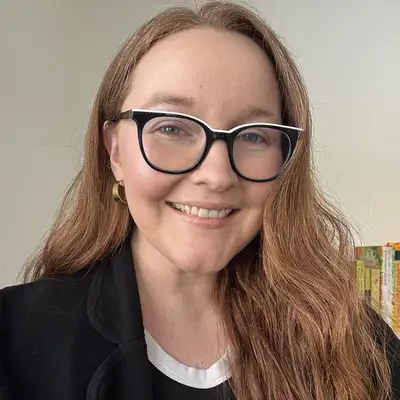
Margo Harrison
We have to have a deep understanding of our sexual and reproductive health. Because if you don't understand this whole thing that is happening with your body and that gives you the opportunity to bring life into the world, you don't know how to be in control of it. You don't know how to plan a family, you don't know how to avoid pregnancy, you don't know how to get pregnant if you want to get pregnant. And so for me, being an OB-GYN is really important to then helping women. They're deeply connected to their menstrual cycle because to me that ladders up to bodily autonomy and bodily autonomy is required for someone to fulfill their potential.
00:47
Caitlin Bricker
Hey everybody, this is Caitlin Bricker, managing editor at Startup cpg. We are back with another founder feature and today we are getting personal and it's in the best way possible. I'm sitting down with Margo Harrison, founder and CEO of Wave Bye, a pharmaceutical company developing a proactive treatment for period pain and bleeding. Margot is a board certified OB-GYN, former NIH funded academic researcher and Planned Parenthood provider who's worked with over 20 venture backed women's health companies. We're diving into why tracking your menstrual cycle is about bodily autonomy and human potential, how TikTok is pushing women's health forward faster than medical school curriculums, what it's really like preparing for an FDA meeting and the difference between reactive symptom management and proactive menstrual health.
01:37
Caitlin Bricker
Plus we're going to hear a little bit about our own personal experiences with our periods and tracking our cycles and we hope that it empowers you to do the same as always. Enjoy. Hey everybody. Welcome back to the Startup CPG podcast. This is Caitlin and today I'm here with Margot Harrison, founder of Wave by Margo. Welcome to the show.
02:01
Margo Harrison
Thank you so much. So excited to be here. Thank you for the opportunity.
02:04
Caitlin Bricker
Oh, of course. I have been really waiting to have you on the podcast and I know we've had some missed connections and rescheduling, but such is life. I'm glad we're here and we're doing it now. So before we jump into all things Wave by and Margo Harrison, can you tell us just very briefly what wavebuy is?
02:25
Margo Harrison
Wavefi is a pharmaceutical company. We are bringing to market a novel direct to over the counter pharmaceutical to treat period pain and eventually we'll get an approval for bleeding as well. So we're developing a novel product to be first in market to be proactive and preventative. For period pain and bleeding.
02:46
Caitlin Bricker
I am very intrigued. I tried your irregularity supplement and I only took five of them. I'll be completely honest with you, I lost track because I was traveling. My periods went from. I believe it was 41 days, 42 days, 48 day cycles. After five days of taking the irregularity supplement, it went down to 31 days. I believe it was. I had not seen a spike like that ever in my cycles. Now if I actually stuck to the.
03:16
Margo Harrison
Protocol, I'm like, how is now what happened after? Did it stay? I'm sort of curious.
03:21
Caitlin Bricker
31 Days, 30 few days.
03:23
Margo Harrison
Okay, so it's sort of like it.
03:25
Caitlin Bricker
Was like a reset button. That is exactly how I would describe it. I have pcos, polycystic ovarian syndrome. For anybody who's listening, I got a cute little mustache and beard and it's hard to lose weight and like maintain a healthy weight and all those fun things. I am just used to having an irregular period and it's unpredictable. And now I really feel like, okay, I have a handle on this. There's just like just a few day window where I'm like, okay, I could get it this day, I could get it that day. That has not happened to me and I don't even know how long. It's amazing.
03:56
Margo Harrison
Congratulations on having a more regular cycle. It is a big deal.
03:59
Caitlin Bricker
Thank you.
04:00
Margo Harrison
As people listening know and people with pcos. So that product, for people with PCOS who are listening or for others that are curious, the sort of active ingredient in that product that really makes a difference is the Inositol. So it's sort of a combination of D. Chiro, Inositol and Myo. Inositol. And Inositol is actually, I don't think it's made it into the American College of OB-GYN guidelines yet, but in the Canadian guidelines they've already made the leap to say that Inositol is better for people with pcos. Metformin. So a lot of people are on a prescription drug called Metformin. It helps regulate your insulin. It's sort of. PCOS is essentially a metabolic disorder and it sort of helps with metabolic alignment and insulin resistance. And Inositol is actually a supplement that is better at doing that.
04:46
Margo Harrison
So our product, that one product that is on the website, if people are interested, I call it sort of the miracle ingredient of bioregularity is the Inositol because it essentially helps the eggs in the ovaries to function to the best of their ability. And what happens with PCOS and what happens with adolescence and perimenopause is that the body just sort of loses the ability to communicate really effectively between the organs that matter for the menstrual cycle, so the brain and the ovaries. And so it's sort of helping that communication go better by helping the eggs speak louder and more efficiently. And so yeah, it's a great product. It's evidence based.
05:25
Margo Harrison
The reason that when you take wave byproducts, they work for people and change people's lives in this way is because they were deliberately developed by an OB-GYN , which I am based on evidence to improve people's lives.
05:38
Caitlin Bricker
My life was improved. I mean, I am not exaggerating when I tell you after one dose, which was only two pills, it's not like I was like drinking a huge bottle of something or having to like eat horse pills to make this happen. I felt activity going on in my stomach, in my uterus, my ovaries. I'm not sure where it was coming from, but something was happening and I was feeling it within a few hours. And I was convinced at that point that okay, this is working. I just needed to see when my period came. And then, you know, I texted you and I was like, you're not going to believe this, but you're going to believe this because you did create the product. This was the goal. But I was shocked. I was shocked.
06:20
Caitlin Bricker
I had faith that it was going to happen, but I just, it really, it did feel miraculous when that happened for me.
06:26
Margo Harrison
That's amazing.
06:27
Caitlin Bricker
So thank you.
06:28
Margo Harrison
Biggest endorsement 5 stars via regularity. Check it out.
06:31
Caitlin Bricker
10 Out of 10, notes. I should actually go write you a review. I have a whole list of brands that I need to write reviews for.
06:38
Margo Harrison
So thank you for sharing your experience. It's interesting. Like as I started the call I said we're a pharmaceutical company, we're developing this drug direct to over the counter. But sort of an interesting combination between a biotech company and a direct consumer go to market strategy. So a biotech company is creating novel therapeutics, new drugs. And so we are creating a new drug, but it's sort of a direct consumer pathway and that sort of gets into investing and theses and why it's hard to fundraise in this space. But what I think is relevant to what you brought up is we actually tested our products. Even though it's going to be regulated and is going through fda, we did bring beta tester products to market.
07:15
Margo Harrison
So bioregularity is one of Our tester products and the concept behind it was that it would help women's periods be more regular so that they could time appropriately taking the other medications, which are more. So I said we're first to market in proactive and preventative period pain and bleeding treatment. So what differentiates our product is a couple of things. The timing, the formulation and the packaging. But the timing is really you start before period onset. And so then a lot of questions come from consumers and investors. How do I know when my period is coming? And I'd love to say a lot of people have irregular periods. And so Bioregularity was really developed in order to support a more regular menstrual cycle in order that people could be prepared and take control of the menstrual experience and really have a better one.
07:59
Margo Harrison
So our product reduces period pain and also reduces period bleeding based on the research. So that's where the Bioregular came from. It was a beta testing product. If it's changing lives, you know, we'll have to consider getting it, remaking it or rebuying it again. But I appreciate the support and feedback and always great to see people feeling better.
08:19
Caitlin Bricker
That's the whole goal. I do feel like right now we are seeing a boom with women's health products based that are focusing on hormonal health, that are focusing on periods. I have never witnessed something like this previously in a retail setting. Now I'm seeing bars, I'm seeing drinks, I'm seeing supplements come up that are not just bullshit, that are actually backed by science and are formulated by a doctor. So can you tell us more about your background and how you got into creating Wavebuy and what inspired this?
08:53
Margo Harrison
Yeah, so I guess it's just a question of like how far back we want to go. I mean, I think people probably have their formative experiences. I had a formative experience as a teenager. You know, I traveled abroad and lived with a family in a low income country and spent some time with a woman that I was living with. And you know, somewhere during this day she looked at me and she said, you know, we're getting water five times a day. I was college educated, I can speak English. You're like a 15 year old. You came across the world because you were having teenage angst and you're going to go back to this like amazing life and I'm going to be here getting water as a college educated person.
09:28
Margo Harrison
And that was like sort of the formative experience of my life was seeing a woman with a huge amount of Potential and obviously, you know, high. Both highly educated and highly intelligent. She had like forgotten her English and by the fifth day of me being there she was fluent again. So clearly somebody with a lot of opportunity contribute and her potential was being wasted. And so that kind of, you know, you don't know this when you're a 15 year old, but when you're a 30 year old and you look back at your path and your trajectory and what you've done, you can sort of connect the dots and why you did something. And so this person, this experience, this witnessing, this loss of human potential directed basically the rest of my life. I became an OB-GYN . I became an NIH funded academic researcher.
10:13
Margo Harrison
My research was focused on labor and delivery in low and middle income countries. I wanted to help women space their pregnancies, survive childbirth because I think that's the most fundamental piece of being able to then live your life and make decisions on top of that in that setting. So what I believe is that humans have value then I believe that women have value. I think a lot of people don't think women have value. And I believe that humans have potential, but women have potential. And for me, I went into OB-GYN because I believe that in order for women to fulfill our potential, we have to have a deep understanding of our sexual and reproductive health.
10:51
Margo Harrison
Because if you don't understand this whole thing that is happening with your body and that gives you the opportunity to bring life into the world, you don't know how to be in control of it. You don't know how to plan a family, you don't know how to avoid pregnancy, you don't know how to get pregnant if you want to get pregnant. And so for me being an OB-GYN is really important to then helping women. They're deeply connected to their menstrual cycle because to me that ladders up to bodily autonomy and bodily autonomy is required for someone to fulfill their potential. And so that's sort of the through line of what I believe, why I do what I do, why I created Wave. So again, Wave by is a product that will start premenstrually.
11:35
Margo Harrison
It's the right ingredients, the right drug at the right time to reduce period pain and bleeding. But it's also packaged in a way to support adherence. So it's sort of like a Z pack. The Z pack is just antibiotic, it's like whatever. But you put in Z pack and everyone's like oh, I need a Z pack. Like I have a cold and you know, it's like a thing. So, you know, Wave Buy is packaging in the blister pack to support adherence. When you package something to help the patient or help the consumer, it increases adherence 40%. So we're creating the right product at the right time for women to embolden them around their menstrual period, but really to embolden them around their cycle. Definitely people are leaning in on cycle tracking, which it sounds like you are too.
12:14
Margo Harrison
And if they aren't, I want to help get them there. And so that's really the vision of the company, is a world full of women who've achieved bodily autonomy through a deep understanding of the menstrual cycle. And maybe our product was sort of the gateway or the entryway into understanding that menstrual cycle in order to give them that control. But, you know, the mission is like, just make the period better. You menstruate 450 times in your life. It's seven years of your life. That is a huge amount of time to advance your potential or to be blocked in your potential. And so let's give women their time back, but let's also give them a tool that makes them feel so much better that they lean in on really tracking the cycle. And once they track the cycle, then they're off to the races.
12:55
Caitlin Bricker
I could not agree more with you. And to answer your question, yes. Or to confirm what you were saying, yes, I am tracking my cycle now. I'm 36. I didn't start tracking my cycle until I was 30. I started tracking it during the pandemic in 2020. I was never taught how to track a cycle before. I'm not sure my mom was ever taught how to track her cycle. It was never something that was taught in my health class or sex ed classes. And I had this realization as I was tracking my cycles when I was pregnant, found out I was having a daughter. I would go in for my appointments, and the doctors would say to me, when was the date of your last period? And typically, I would say to them, I'm not sure.
13:35
Caitlin Bricker
And nobody would ever say back to me, well, you should probably start tracking that. It was just not a big deal. So I never had that encouragement or incentive to track it because if it wasn't a big deal to my doctors, why should it be a big deal to me? Now I'm learning it actually dictates my entire life. Like, I think it should be illegal for anybody to talk to me when I'm in my luteal phase, for example. Just saying I saw A sweatshirt that was in, like, collegiate letters that just said luteal across it, as it would typically say, like, a university name. And I was like, okay, genius. But I have learned so much tracking my cycle. Unable to learn when I'm ovulating.
14:15
Caitlin Bricker
When before, I used to just think, okay, like, this discharge must just be, like a random thing that happens every now and then. No, it's related to my cycle. I didn't know any of this. And I feel. I feel like I was robbed of inexperience being able to track my cycle. Growing up, I lost out on so many years. I think I got my first period when I was 14, maybe like seventh or eighth grade. I think it was seventh grade, so maybe like 13, 14. And I didn't start tracking it until I was 30 years old. Now I'm, like, excited.
14:49
Caitlin Bricker
I don't want to push my daughter growing up by any sense of the word or by any means, but now I'm excited that when she grows up and she gets her period, she is going to have a lifetime of information to refer back to. And it is just, we are living in such an insane time right now that all of that data that women can start collecting is so empowering. And I agree with everything you are saying.
15:15
Margo Harrison
Yeah, I mean, I have a friend and she started using one of these trackers, and she was like, I now feel so much joy when I see my period come because it came when I was expecting it, and it makes me feel so connected with my body and who I am. I was expecting it overnight. It came overnight, and then she felt like joy. So it turns your period from something that has been framed traditionally as something that is negative or bad and turns it into, like, let me actually understand what's going on and give myself some grace and also, like, decide if I want to intervene and how I want to intervene and give me that power to do that.
15:53
Margo Harrison
So I do think, like, people are like, my period used to be whatever, and then I had kids, and then it was like this, and now I'm perimenopausal. It's like, these kids, like, our daughters, are going to know themselves to the point that when something changes, they'll know how it changed. Be able to communicate with their physician so much better than we have been able to do that. You know, it's such a fraught relationship. Women with their OB-GYN right now, because the education that we had as OB-GYN was just so completely traditional and. And really lacked all of this information that women really want now. Which is nice because it's pushing the field forward.
16:28
Margo Harrison
But I do think that it will allow our daughters to go in and say like, for 10 years this was my experience and now I'm having a different experience in this space specific way. And it narrows down symptoms in a way that can raise a flag for a physician. So instead of ovarian cancer being ignored for three years to be able to say I'm never bloated except during my gluteal phase and now I experience bloating all the time, or I was only ever constipated, you know, when I was on my period and now I'm constipated all the time. I can't poop. And like, for that to somehow start to percolate up and to quantify things and give more data is going to allow for a more fruitful relationship. Because people respect their OB-GYN and want them to help.
17:14
Margo Harrison
It's just they have felt hurt by them in the past and I think it's because they don't have the tools to help the OB-GYN better. And the OB-GYN certainly doesn't have the training or the data say like this is what the research says. So I think it's all headed in the right direction. But it'll be nice for our children to, you know, be able to leverage that data, like you said.
17:33
Caitlin Bricker
Absolutely. And how long have you been in OB-GYN for?
17:37
Margo Harrison
I graduated from residency at, in New York at Columbia in 2014 and now we're in 2026. So.
17:45
Caitlin Bricker
And how do you feel the landscape has changed from your perspective? Whether it be working with patients or seeing other pharmaceuticals that are coming out on the market or haven't come out on the market and research. How do you feel it's changed from your perspective?
18:00
Margo Harrison
Well, I think the nicest thing was like sort of getting involved innovation. And I didn't really get involved innovation until I would say 2022. But since then I've been privy to sort of the startup world and all of the companies. I actually started a consulting firm working with venture backed women's health companies. So I was working with women's health companies as a clinical and a research guide. And so you start to be like part of the social media. You start to see what's out there, following the trends, following the conversations, listening to the CEOs, listening to the non medical side of things. And it was really nice to have the perspective to be able to take the looking glass and look back at the OB-GYN profession and be able to see it from the other side, to see it from the consumer's eyes.
18:44
Margo Harrison
And so how I think it's changed is, I mean probably I believe that the answer is really like social media and people just being willing to share and share their experiences and then stories happening and things going viral. And probably TikTok changed when women's health more than like anyone wants to admit. But like if somebody can't find their information, that's where they're going and then they're going to pick the voice that they listen to. So it may be the acupuncturist that gets their ear and they really speaks to them the way that they get it.
19:10
Margo Harrison
It may be startup CPG talking about supplements and really that catches the ear and that speaks to them and it has trust in some way that the OB-GYN has lost trust because it hasn't been a safe space traditionally for people to really share what's going on with them. And I think that it hasn't been a safe space because the OB-GYN said haven't had the proper training and nobody wants their doctor to say, I don't know. And that's really what the doctors need to be saying is like, I hear you, I hear what you're going through. I don't have a solution, let's try to figure it out together. And I don't think doctors are willing to say that. Maybe they are now, but they didn't have the menopause training, the perimenopause training. I mean now it's all the rage.
19:48
Margo Harrison
But like I think it's really the consumers who are have our purchasing, our buying, our demanding, our learning, our speaking, our engaging. And that's really pushing the OB-GYNs I think, to stay relevant. And they also are like not bad people. Like obviously they want to help their patients and they're realizing where their gaps are. So I think that the consumer, the woman, has moved the field forward in a way that no one else could. Giving her a voice and giving her a way to share her experience where other people listen and have a platform is really what has pushed the rest of the world forward.
20:23
Margo Harrison
And so I guess what I think has changed is, you know, willingness to talk about things that people weren't willing to talk about for, I don't know that face to face people are 100% willing to talk about them, but they're certainly willing to talk about it like on social media where they like don't know who's going to pick it up.
20:35
Caitlin Bricker
Or whatever, which is very interesting, isn't it?
20:37
Margo Harrison
It is interesting.
20:38
Caitlin Bricker
And by the way, you are on my FYP on TikTok pretty much every single day. Maybe it's not you, but it's somebody from your team. So nice job.
20:47
Margo Harrison
Amazing. Well, thank you for following us and supporting us.
20:50
Caitlin Bricker
Of course.
20:51
Margo Harrison
Yeah, I think that's what it is. I think it's really. TikTok is the answer, probably.
20:57
Caitlin Bricker
Thank you, TikTok. You know, I think it. It's one of these topics that has been surrounded by such a taboo for so long. Like periods should be hidden. They're gross, they're this, they're that. It is not the case whatsoever. Like, I do think that the band aid is. Has been ripped off that women feel like they can talk about this in a public space among men, not just among women, and not be shamed for it, which is unbelievable. I see founders who have their sons on Instagram talking about how they understand their mom's cycle. Now I'm talking about you, Anastasia, if you're listening. And it's cool, you know, it is great to be able to have that understanding. I've seen videos of their.
21:40
Caitlin Bricker
Of fathers with their sons, and the sons are saying, like, yeah, a girl got her period in school today, so I gave her my sweatshirt to tie around her waist. And I'm like, what? I probably would have just gotten made fun of back in. What year was it? Like, I don't even know. I'm not even going to try to say, but you know what I mean, it's just so different now.
22:00
Margo Harrison
Yeah, it's amazing. Well, let's see. I think I started the company, like, really started doing stuff for Waves in 2023, and I'm trying to remember if it was 23 or 24. Doesn't matter. There's a big Greek Orthodox church across the street from our house, and they have like a big Greek festival in June every year. So my kids put out a lemonade stand. Then they make like 200 bucks because, like, everyone's just walking right by our house. It's amazing. So I took a. Just a. An Amazon box and like, cut off the thing. It was a. Literally just a piece of cardboard and wrote like, Wave Bye. Like Wave Bye to curio paint. Something like that. Stock period paint before it starts and put it on the table. And the people who engaged on it were men.
22:37
Margo Harrison
My dad, you know, the girl is mortified and she's standing back, but the dad was like, what is this? My daughter really suffers. And a boyfriend the girl was also like, why are you asking about my. It was a boyfriend. They care. They live with you. They don't want to talk to you during your luteal phase. You make it miserable for them too. So they want something better for women as well, I think. I totally agree with you. It's really nice to see people stepping up and being willing to talk about it in public, but that was very public space and, you know, pretty religious community and people were definitely engaging.
23:08
Caitlin Bricker
It's music to my ears. It really is just a sign of the times. And you did mention very briefly earlier about the fda, and I do understand that you have a meeting with the FDA coming up. Can you tell us how you're feeling about that and how do you prepare for meeting with the fda? What does that look like?
23:28
Margo Harrison
So I am really excited. I think I tried to, like, Capture this on LinkedIn. I didn't want to sound like a douchebag when I said it. But, like, I think there's a lot of fear around fda and especially as a biotech, like what they say, what they want you to do, it really can change the course of the company and how many studies you have to do, how much money you have to spend. And so I think it is very, justifiably, very scary thing. You know, I think this is just my own personal thing. The harder something is, the more interesting it is to me. Like, part of the reason I'm starting a company is because everything else wasn't interesting enough. This is interesting because it's hard and, like, something's always happening and so it keeps you very interested.
24:09
Margo Harrison
And so in a weird way, I'm really interested in the FDA meeting because either it goes really well and that's great for my company, or somehow they change the rules of the game. I just, I think of everything as a game. It's all a game. It's probably not the right way to think of it, but it's like, am I winning by, like, getting an investor? Did I win part of the game? Like, when I go to fta, how's the game going to go? What's the move that they're going to make? And that's just genuinely how it goes inside my head. And because of that, it doesn't feel scary. It just feels like, what hard thing is going to come my way and how am I going to solve it?
24:42
Margo Harrison
How am I going to continue to move this incredibly important thing forward, regardless of what happens? So the way that we prepare, it's really interesting. I've been involved with some other companies. I said I was a consultant before and I went to some FDA meetings with other companies and we did so much preparation, hours and hours of calls, really interesting conversations, really thought provoking conversations. Extreme strategy. If they say this, like, here are the five things we could think about. What do we think is the best one? So my current regulatory person is just kind of like, she doesn't do any of that at all. And I'm like, are we supposed to be like doing this? Like, what are we doing? Like, are we preparing? Like, what are we in the war room? Like, are we strategizing? Like what's happening?
25:23
Margo Harrison
And in a way I'm like very grateful for it because I think at the end of the day they're just going to say what they're going to say. And so you deal with it like when you hear what the actual, you know, response is as opposed to driving yourself crazy. And so me and Claude went pretty deep on like how OSA go badly and how we would strategize about what might happen. So I've done some strategy work, but I'm sort of, I think really respecting that she's not allowing me to be the impulsive, crazy person I am and start of try to move all the pieces before the pieces have actually been set. So I think we put our best foot forward.
25:59
Margo Harrison
You know, we put an argument forward that we think is respectful of the consumer, is respectful, the over the counter status is respectful, that like we need to prove the things that we think we should be allowed to say. So I think it respects the game field, the playing field, and it respects sort of the rules of the playing field. And I think is a nice sort of middle road. And so we've put that argument forward and then next week we get to hear what they think basically of our argument. And so I'm just so excited because I just want someone to put the, you know, we put our stake in the sand. We just need to know where they are. Are they even on the same playing field as us? Are they on a different playing field?
26:38
Margo Harrison
Like just hearing from them and how they want to change the game then allows me to work within those new parameters. And I think one thing you do with investors is you really, you have to be as honest as you can, but you put forward like really this is what we asked for. And you know, I put it at this percentage that they agree with me and you want it to be this, you want me to say this other thing. And I think that other thing is Possible, but it's only like 3% possible. So like, let's just be realistic. Like I really think it's going to go this way. And so I think, you know, having been met with them, I can say they did say this, they did agree with this, they did not agree with this.
27:14
Margo Harrison
And so it just helps move us forward in our path because our goal is to get approval to get this drug on the market and to make 4 billion people's lives better and 8 billion people's lives better vicariously.
27:25
Caitlin Bricker
And can you tell us what the difference is between being an FDA approved drug versus a traditional supplement that's on the market?
27:34
Margo Harrison
Yeah, I'm not a regulatory person so probably somebody else in startup can answer this and they're going to like listen to the podcast and be like, she is wrong. So you know, if something goes through FDA approval, I would say the active ingredient in it, you're trying to make a claim about the ingredient. And if you're trying to make a claim about something and say that it actually treats a sickness or an illness or an issue, then it needs FDA approval. Which is why like with supplements on syrup, cpg, everybody's, you can't claim it works for like a disease or anything like that.
28:06
Margo Harrison
You know, you took something like Inositol, you could probably make it into an FDA approved drug, you could probably formulate it in somewh and put it through an FDA approval process so that you can say it makes periods more regular. But you know, if you put Inositol on as a supplement, you would have to say something like it's a hormonal support, it provides hormonal support or something like that. Just be really careful about what you say. So you know, going through FDA approval, at least for something that you're putting inside your body as a therapeutic is really about like was what you're putting in the body safe and effective for what you're saying it is and sort of getting that claims protection from them?
28:39
Margo Harrison
But all the science that goes into that too, like if you're putting it in your body and you're saying like this dose is affected, are you doing the science and drawing blood on people and actually showing that dose response does happen. So I think it's kind of like doing the science to prove the claims versus you know, but I think somebody else in regulatory can answer that better than me.
28:59
Caitlin Bricker
I think you did a pretty good job. To me, what pops into my mind is when I see a supplement and there's a little asterisk that says this statement has not been like regulated by the FDA or blah, blah. Your product would not have that statement on it. And you'd be able to say this,.
29:15
Margo Harrison
Does this correct our future product? We have one FDA approved drug that we've been selling as a beta product that's really like a white label product. And then we have supplements. So we do have the hedge of the appropriate. FDA have not approved this on our supplement products. But yes, we will be going through an approval process. Our product is not supplement. It is a drug. It is a pharmaceutical ingredient. And so we will be showing them that we think it is safe and effective for women to be taken premenstrually. And we'll have a very specific claim around that we can market.
29:49
Caitlin Bricker
It sounds like it is the ultimate seal of approval. Aside from getting your consumers to say, this worked for me. If the FDA is saying, okay, all systems go. And then your consumers can say okay.
30:01
Margo Harrison
I think it is a major differentiation point like, and it gives us legitimacy with, obviously with physicians and pharmacies as well. So we care about the ultimate end consumer more than anything else and her life and her cycle and her ability to fulfill her potential. But being able to tell that story to her could go through a number of different channels. And I don't. Some companies have very successfully brought supplements into OBQI and offices and created huge exits. But, you know, we do want to be a trusted product by all stakeholders in the women's health system or field or whatever. And yes, mothers are not going to give their daughters a product unless they feel like it's safe and effective for those bodies.
30:39
Caitlin Bricker
Right. And can you tell us what the difference your product would be if you.
30:45
Margo Harrison
Were going to compare us to everything else on the market? Let's say everything else on the market, I would argue is reactive to women's symptoms. So women are waiting. They're like, oh, do I. I don't feel that bad. Like, I'm getting my period today. I got it. I'm on day two. You know, usually day one is the worst. I'm on day, so I'm just gonna go to work. I'm gonna be fine. And then she gets to work and she's like, okay, actually, I feel terrible. She's waiting for that moment when she feels terrible and then she goes fishing around in her purse and finds the little baggie of whatever she brought with her. And then she takes it. Then she feels a little bit better and then hopefully she can get through her big meeting at lunch.
31:21
Margo Harrison
Our product is like completely changing that paradigm. We are empowering women to be proactive with their period pain and bleeding management. So that means treating the period before it even starts. So certainly some people get pain and everyone gets pms. Some people will actually have cramps before the onset of bleeding. But a lot of people might feel okay. And what we're asking FDA for is approval that we can say to that woman who might feel okay, go ahead and take these medicines, because when the bleeding comes in a couple of days, your life is going to continue and you are not going to get behind and you're not going to be chasing pain.
31:57
Margo Harrison
So, you know, I would say the biggest shift here is that we are asking women to take a proactive approach to their health instead of a reactive approach to their health. And so moving people in that mindset I think really differentiates us from a huge part of the market that already exists. So we are a medicine. We are similar to some products on the market and different to other ones. But we're a long acting medication that starts premenstrually and again is sort of differentiated by the system in the system being the timing, the ingredients and the packaging that sort of makes it female forward or uterus forward for the whole community.
32:37
Caitlin Bricker
And do you have a timeline on if you get your approval, when you could actually go to market with this and when it would be available to the public?
32:45
Margo Harrison
Yes. So I think a safe, honest answer to that question is probably late 28, early 29. I think that we're working on a couple of different moves that could maybe make us get to market an earlier 28 or late 27. If the meeting doesn't go well next week, and we're asked to do a number of other different studies that could certainly push our timeline out. But I think it's already a highly anticipated product. People are really excited about it. For those people who've tried our beta products, it's really been life changing. So we're trying to move as fast as we can to meet demand.
33:23
Caitlin Bricker
All right, so I'm having so much fun learning about you and your journey as a founder. I'm sure other people are going to want to follow along and I am going to be on the edge of my seat learning what happens with your FDA meeting. I'm hoping you come out with a win and you can say you won and move on to your next win because I've been seeing that you've been having a lot of wins on LinkedIn. So for anybody else who wants to follow along, where can they find you on Instagram, your website and your LinkedIn if you want to share that too. Yeah.
33:53
Margo Harrison
So the company is called Wave Bye. It's meant to represent Wave Bye to period pain. So Wave and then B Y E. Our socials are at Wavebye Inc. I have like a Instagram, I guess and a TikTok. I've been posting that much. It's called Founding_Wavebye on LinkedIn. We are Wave bye the Wave and buyer have a space on LinkedIn. It's two words. So you can search for us on LinkedIn or you can look up me personally. Margo Harrison. Our website is www.wavebye. W A V E B Y E Co. And the website, it should allow you to purchase some beta tester products if you're interested in that. We just sort of updated it with the future product. People were getting profoundly confused by going to our website. Investors were like, I don't understand what you're building. So we're trying to streamline the.
34:46
Margo Harrison
The story's telling a little bit. So we're working on a rebrand right now. So hopefully we'll have a beautiful website out later this year that really walks people through the timeline and what we're trying to do, introduces the team and I'd love to give insight into like the manufacturing and some videos of like where we are in that process and how the science is going like at the lab table and you know, how the clinical trials are going and stuff like that. So we'll try to bring people along for the ride and then again we have some tester products that people are interested in trying it out so you can find us there.
35:17
Caitlin Bricker
Please do go and try them out. If you're suffering from anything that I described or that's being described on the website, just give it a try. I can almost guarantee you that you would not regret it and that you will be just as amazed as I was.
35:30
Margo Harrison
Thank you, Caitlin.
35:32
Caitlin Bricker
Thank you, Margo. This has been such a fun chat and I'm glad that there are safe spaces and safe people like you to be able to have these discussions. I loved my OB when I was pregnant, but if I could choose to have you as a gynecologist now, I would choose you every single time.
35:48
Margo Harrison
See me at Planned Parenthood in Denver. I still see patients. So happy to see you there.
35:53
Caitlin Bricker
That is good to know. Denver. You heard it here first, Margo. Thank you. I'm excited to keep following your journey and good luck.
36:02
Margo Harrison
Thank you, Caitlin.
36:03
Caitlin Bricker
Talk to you soon.
36:04
Margo Harrison
Bye.
36:07
Caitlin Bricker
CPG BFFs. We've now arrived together at the end of another episode of the Startup CPG Podcast. As you may know, we're not just the top globally ranked CPG podcast. We're a community of tens of thousands of CPG founders and experts, and you should join us if you haven't already. Head to startupcpg.com to sign up. You'll get an invite to our Slack community, hear about events near you, and get access to opportunity that connect you with buyers, investors and other brands. It's free. So what are you waiting for? I'll see you in Slack and in real life. Thanks for listening.