Subscribe
Share
Share
Embed
The Hydrocarbon Engineering podcast: a podcast series for professionals in the downstream refining, petrochemical and gas processing industries.
Hi, everyone, and welcome back to another episode of the Hydrocarbon Engineering Podcast. Today, we're joined by John Calce, chairman and founder of America First Refining and the visionary behind plans to build the first greenfield refinery in The US since the 1970s. Now I'll leave it to John to provide the background behind the project and its plans to serve as a model for the future of American energy. But suffice to say, it's quite some story and a substantial achievement by John and his colleagues at America First Refining. I hope you enjoyed this one.
Advert:This episode of the Hydrocarbon Engineering Podcast is sponsored by Sherwin Williams Protective and Marine. Sherwin Williams Protective and Marine delivers world class industry subject matter expertise, unparalleled technical and specification service, and unmatched regional commercial team support to customers around the globe, including in the energy market. The company's broad portfolio of high performance coatings and systems, including protected liquid and powder coatings as well as fire protection coatings, excel at combating corrosion and help customers achieve smarter, time tested asset protection. For more information, visit protective.sherwin.com.
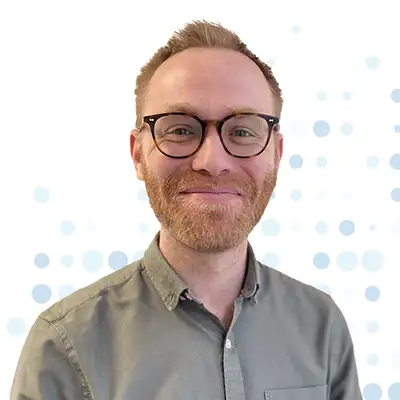
Callum O'Reilly:So welcome, John, and thanks so much for joining us on the Hydrocarbon Engineering Podcast. Now we always like to begin these discussions with some introductions. So can you just tell us a little bit about yourself and America First Refining?
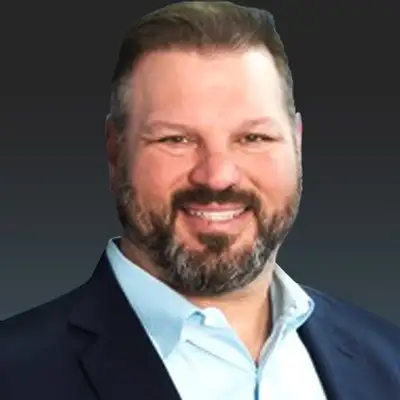
John Calce:Well, good day. It's a pleasure to be on the podcast with you. Certainly. My name is John Calce, I'm the chairman and founder of America First Refining, and we're developing the first greenfield refinery in The United States in more than fifty years.
Callum O'Reilly:So John, let's get straight into it. What gave you the idea to construct a new refinery in The US? Can you give us an insight into the background behind this project?
John Calce:Certainly. Most businesses come from trying to solve a problem. The challenge on this problem was I was a little bit ahead of the curve. So my background is in upstream oil and gas, meaning the guys that drill the wells in The US. I I worked in what we call in The US fracking.
John Calce:So the company that I worked with, we own various companies that did did frac jobs. So the ways that push pressure on the ground to release oil and gas from the shales. And as part of that, I got to know the geology of the shales across The US and came to realize that, especially in West Texas and the Permian Basin, we were gonna have an overabundance of shale oil in The US. And what does that mean? Well, there are different types of oil.
John Calce:Right? Different regions have different qualities and grades. In The UK, you've got Brent, which is a heavier oil. It's typically in the 30 gravities. On the Gulf Coast of The US, it's a similar oil.
John Calce:Mexico and Venezuela have a very heavy oil, like a 17 or 20 gravity. And The US refinery complex, was designed in the seventies or earlier, was designed around a heavier barrel of oil. So call it forty, forty two, and lower. Turns out West Texas shale oil likes to be 45 gravity and higher. So I recognize that this was a problem and realized the only real way to solve this was to build a new refinery specifically designed to process this type of shale oil.
Callum O'Reilly:So John, there's been a lot of talk about US energy independence, but how incomplete is that story without new refining capacity? And you've touched upon this already, but can you talk us through what problem your refinery is trying to solve?
John Calce:Yeah. So it is incomplete. Right? Today, The US exports 5,000,000 barrels or so of crude oil, but we import nine. And we import 9,000,000 barrels of heavy from Canada and Venezuela, etcetera.
John Calce:Yes, we're independent in the sense that we export more energy than we import. However, we're not using our own energy as efficiently as we could. So that's what we're trying to address.
Callum O'Reilly:So why hasn't this problem been solved before, John? What has prevented new build refineries in The US until now?
John Calce:It turns out it's hard, harder than I thought when I started. And that's the first thing. It's very expensive. Right? And the other thing is you you have to kind of wind the clock on history back to 2010.
John Calce:At that point, The US started producing a lot of natural gas from the shales but produced very little oil from the shale. Really, the oil shale revolution has really just started since 2012 or so. And truly in the Permian Basin, you see all the revolutions start in 2014, 2015. So it's a relatively new situation we're dealing with. On the expensive side, you do a lot of work on the front end to design and permit a refinery that takes not just a lot of cash, but a lot of time.
John Calce:So we started our permitting process in 2015. It took us nearly seven years, actually more than seven years, to get through the entire permitting process, and that includes all the different litigation and challenges, etcetera. So at that point, you've got a permit with kind of a sorter designed refinery, and you then have to begin to really design the refinery and find some commercial partners because now you're moving around hundreds of thousands of barrels of crude oil a day, hundreds of thousands of barrels of product a day, and that also requires lots and lots of money. As an entrepreneur, unlike a big company, then we're not BP or Chevron or Exxon. We're just a bunch of guys trying to figure this out.
John Calce:So I think we chose the hardest possible path possible.
Callum O'Reilly:And I'm sure you wouldn't have it any other way, John. Right? That's that's the nature of it. Lots of lessons along the way.
John Calce:I always tell people, you get halfway across the river when you're swimming, and you realize you're gonna drown either way, so you might just keep swimming. So that's kinda how that works.
Callum O'Reilly:So, John, your refinery is the first that has been designed to process 100 US shale oil, as you've mentioned. And this is lighter, as we've already talked about, than foreign crude. So how significant is this?
John Calce:We think it's very significant. If you look at a couple things, one, just the sheer efficiency of turning shale oil into motor fuels and jet fuel, etcetera. So the nature of the petrochemical chemistry of the barrel, and I know this is a an industry type podcast, so people kinda get into the geeking out here. The bottom of the barrel in a shale barrel doesn't really exist. So if you think of the heavy, asphalt y, sludgy stuff in the bottom of a typical kind of mid grade barrel, we don't have that.
John Calce:When we distill our barrel, we get about a 40% distillate cut, a 40% naphtha cut, a 10% very light bottom cut, and 10% of LPG. Unlike, say, like a Mare barrel or a Venezuelan barrel, where you're getting a 20 to 30% bottom cut. Well, then you need cokers and crackers and FC units and all kinds of other things to process that heavy part of the barrel. We don't need that. So we believe this is a much more efficient way to process.
John Calce:So from a business side, it's highly profitable. But from a climate side, we have a lot fewer inputs of heat and energy. So we believe that our refinery will be 95% cleaner than any other refinery on the planet. So we think of fossil as part of the energy mix. Right?
John Calce:We all want a clean planet, and we all want a more efficient planet. So we think that this is a great step forward for the world in terms of how we
Callum O'Reilly:can use fossil fuel. So I'm going to come back to the environmental credentials in a second, John, because that's really important, I think. But I wanted to move on to talking about the Port Of Brownsville as the location for the project. Why was that the perfect location? And can you guide us on the strategic advantages of its positioning and maybe any challenges that it may that you may have encountered with this location?
John Calce:Absolutely. The Port Of Brownsville has been a great partner for us. They've been patient. This is obviously something new. We did a lot of educating together and working with them.
John Calce:Brownsville is very unique. It's a deepwater port. It's 42 feet, but it'll be 52 feet in on the channel by the time we're operational. It is the southernmost port in The US. It's on the border of Mexico, so we're about three miles as the crow flies from the Mexican border.
John Calce:It's 11 miles from our gate to the border crossing. So Mexico is about a million barrels a day short refined product, and they get the bulk of that product from The US. 60% of that short is within 60 miles of Brownsville. Massive cities of Monterrey, Matamoros, etcetera. You got a very large population, a growing population that services a lot of the macadores, the little the machine shops, the factories that interface with The US.
John Calce:And so they need lots of diesel and gasoline, jet fuel, etcetera. So it's a great market from that perspective. So in a lot of ways, Brownsville serves today as the port for Northern Mexico because the next port in Mexico is Tuchs Pond, which is a couple 100 miles south. So geographically, it made sense. Market wise, it made sense.
John Calce:And then Brownsville is the last non industrial port in The US or was when we started this process. So today, you've got two big LNG facilities going in down there. A gentleman named mister Musk launches rockets from inside the port. And our project and there's others coming. So you've got an area that's primed for growth.
John Calce:It's got a tremendous workforce. It's got a deepwater port, and you're adjacent to a great market. So it made a lot of sense for us as a place to put this refinery.
Callum O'Reilly:Okay, John. So let's return to the environmental credentials like you were you were mentioning earlier. And how are you thinking then about future proofing this refinery given energy transition pressures that we're all experiencing? I've seen that produced hydrogen from the refinery will be used to fuel operations. So can you talk us through how this will work in practice?
John Calce:Sure. We produce hydrogen two different ways. Within the distillation column, as we boil our crude oil, we produce an LPG gas or off gas that in this, in the type of shale in the West Texas shale happens to have quite a bit of hydrogen in it. Right? So we have a lot of hydrogen that way.
John Calce:In addition, we have a very large reformer. So our naphtha reformer that knocks off H's and adds O's to naphtha to make reformate, which is the building block of gasoline, has a lot of excess hydrogen as well. So we'll have upwards of 200 tons a day of excess hydrogen, which is a staggering amount of hydrogen. We can then use in our boilers to create heat. We can use it in our turbines.
John Calce:We have we gotta build a power plant. We'll run about 40 megawatts or so of power per day on this. So we have to build it, as all refiners do, build a redundant power plant. So we'll be able to use that hydrogen gas as part of our feedstock for our boilers, which is our heating unit that heats the oil and runs our processes, as well as the power plant. So what that does is that then offsets a lot of c o two.
John Calce:Alright? So that way it lets us reduce our c o two footprint because by obviously, burning a blend of hydrogen and effectively natural gases, we have a lower d o two footprint than if we were simply running natural gas or coal or something else. Right? That's the first step. The second step is remember I mentioned that we don't have that heavy, sludgy bottom end?
John Calce:So we run a much lower temperature in TOTO than a typical refinery. So a lot of guys, like, on the Gulf Coast will run a 1,200 degree kinda process. We'll be closer to the 680 degree. So it's simply our raw heat footprint is lower, so we need less energy to do that. So file that again in the reduced emissions category.
John Calce:In terms of other things we can do with that hydrogen, we've looked at a lot of things. Right? We can segregate that hydrogen out of our stream, and we can then add that to nitrogen and make ammonia. Right? So kind of a bluish ammonia.
John Calce:We've looked to take it out all the way to SAF or synthetic gasoline. The challenge is the market just isn't there today. We can do that, but we'd have to charge about $20 a gallon for the SAF. So it doesn't really work in today's market. But again, the ammonia side we think will work in the future, and we'll see how it develops.
John Calce:But in the meantime, we'll just stick around being the cleanest and see where the market comes to.
Callum O'Reilly:And, John, what impact is this project going to have on the local community then? So you've already mentioned about the, support that you've had from the Port Of Brownsville. But what has engagement been like from the community, and how many jobs are you hoping to create for local people ultimately?
John Calce:So great question. We think we're gonna create about 500 direct jobs at our refinery. And and by the way, the workforce in Brownsville is tremendous. It's a workforce that is thirsting for skilled jobs, people that work very hard down there. And the state university systems have put a lot of money recently into the technical schools.
John Calce:So there are several technical colleges there we're working hand in glove with to develop training programs so that people can access these high paying jobs. So directly, we think we'll have about 500 or so employees. Then indirectly, obviously, when we're in construction, we'll have thousands. You know, we're trying to sort out things like housing for that now. We're gonna spend a lot of money in hotel rooms and hotels and restaurants, etcetera.
John Calce:And, know, then long term, when you have an increased workforce of highly paid jobs, then you start trickling into other things. We did a study as part of our kind of package looking at when we build this thing. We think we'll create, I want to say it's, it's, like 37,000 direct and indirect jobs. Wow. Could you, as you, as you actually look at all the different ways, whether it's the guy driving the truck to bring something to the plant or the person working in the restaurant to cook food, etcetera.
John Calce:So you start thinking about all the different ways this spirals out. The teacher is getting hired to teach the kids to do the training for the welding, etcetera. So it's a pretty, pretty big impact. And it's a long term permanent type impact of high highly paid skilled jobs.
Callum O'Reilly:And Reliance Industries are working with you on this project. So can you tell us a little bit more about this partnership?
John Calce:Mhmm. So Reliance is one of the world's great companies. They operate the largest refinery on the planet in Jamnagar. It's a 1,400,000 barrel a day facility. We're much smaller.
John Calce:We're a 170,000 or so barrels a day. But Reliance was looking to expand their business people first and foremost, and we got in touch with them because we were looking for a partner. They are an ideal partner for us because technically, they're amazing. Right? So they operate in an extraordinarily complex refinery.
John Calce:And their CEO is an engineer by background. He's actually the guy that designed and built the refinery. So when he and I started talking about what I was trying to do, he understood very quickly the efficiencies of that. And they had a desire to be active in America, so that worked out very well for us. And our relationship with them has been terrific.
John Calce:You know, when you look at designing or building a refinery, obviously, the design matters, but your commercial partner matters as well. So we think about kind of how LNG deals function where you've gotta raise a bunch of money and the LNG developers find a long term offtake partner that shares in the profits basically of the project. That's what we did with Reliance.
Callum O'Reilly:Okay. So, John, where does the project currently stand? You mentioned you're starting to think about building your hotels and your restaurants. But what is left to do on the permitting side, and when do you expect to be up and running ultimately?
John Calce:The good news on the permitting side is we're done. So the big permit that we required, which is our permit to construct a major source industrial area, back at that back in 2022. And so we knew that we had to get that big permit and then get through the judicial challenges. Otherwise, no one would look at investing. So that big permit is done.
John Calce:There's other permits you need in The US typically, electrical design of a office or a shop. Some of those kind of permits. We'll have to build some roads. We'll have to get some permits on that kind of stuff. But those are all much smaller kind of typical issued every day kind of permit.
John Calce:We've hired Floor, as our EPC contractor. We are in deep design work now, finalizing the detailed design of the project. Turns out there's lots of screws and bolts and weld points in a in a project like this, and so you have to get all of them right. We'll be building a lot of our large processing units modularly overseas. So they'll be built in Thailand or India.
John Calce:We're actually heading there in a little bit. And then in The US, all your tank farm, your piping, all of your civil work, your dock, your rail racks, all that stuff gets built in Brownsville. So we expect to have this thing, all the stuff on the ground in 2028, and then be operational for full year in 2029 is what we're targeting.
Callum O'Reilly:And what's the bigger picture, John? What are your plans for the future? Do you have any scope for extending this project? Should the business climate be right? And if you don't mind me asking, do you think that this project will serve as a model for future refinery development in The US?
John Calce:We can take that in two parts. From our side, yeah, we think we can expand our footprint in Brownsville. I mentioned ammonia earlier as a potential expansion. We potentially expand the total footprint of the refinery and process more. With respect to outside The US, yeah, I I think that as we talked about before we started the kind of projection of energy around the world, there's a lot of countries in Latin America that don't have energy inside the country that are looking for gasoline and diesel, etcetera, and then import that from other places.
John Calce:So I think you could replicate one of these potentially elsewhere. I think it's important to be on the water because that gives you the ability to move around. So we view being in a port as critical. With respect to how that happens or when that happens, hard to say. Right?
John Calce:In The US, I think that there's potential for others or conversion. You've seen a lot of conversion where Exxon and Chevron have already added these kind of light end units, and they're maxed out. So I think we're in a challenging part part in The US as to how that goes. Right? So I I don't know how in The US we move forward with this except expanding our location.
John Calce:But I think there's a lot international we can do.
Callum O'Reilly:Great. John, I appreciate your time. I know you're a really busy man. Really appreciate you taking some time to join us. And from Hydrocarbon Engineering, we'd like to congratulate you you and your team on the progress that you've made so far, and we'll we'll certainly be keeping an eye on this project moving forward in the months ahead.
Callum O'Reilly:So, thanks again for your time today.
John Calce:No. Thank you for having me on. It's a pleasure. Happy to be on anytime, and thank you for all the good work you do in our in our in our field. So thank you so much.
Callum O'Reilly:So there you have it. The story behind The US's first new refinery in nearly fifty years. My thanks again to John Calce for taking the time out of what has been a very busy schedule to sit down with us for this episode. Thanks for listening, and please do remember to subscribe to the podcast to ensure that you never miss an episode.
Advert:This episode of the Hydrocarbon Engineering Podcast is sponsored by Sherwin Williams Protective and Marine. Sherwin Williams Protective and Marine delivers world class industry subject matter expertise, unparalleled technical and specification service, and unmatched regional commercial team support to customers around the globe, including in the energy market. The company's broad portfolio of high performance coatings and systems, including protective liquid and powder coatings as well as fire protection coatings, excel at combating corrosion and help customers achieve smarter, time tested asset protection. For more information, visit protective.sherwin.com.