Subscribe
Share
Share
Embed
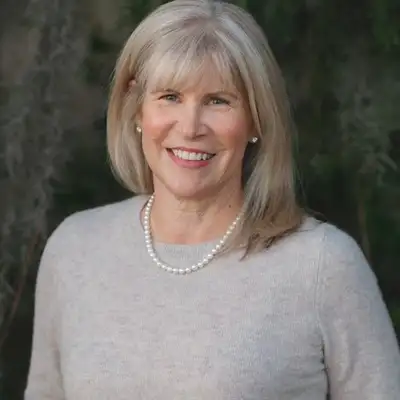
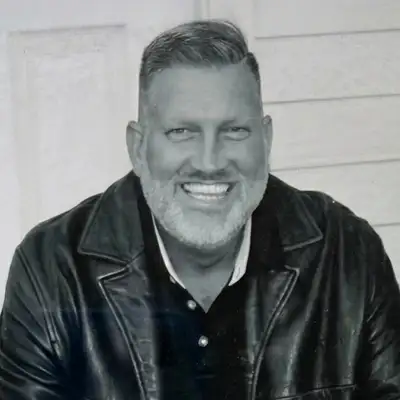
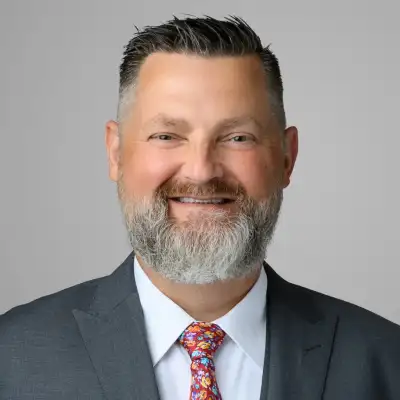
Between Two Doors is a unique exploration of the real estate world through the eyes of its most fascinating professionals. Hosted by Nate Carver, a seasoned mortgage expert, and proud veteran, this podcast dives deep into the personal journeys of realtors, offering listeners insider perspectives on the challenges, successes, and the little-known stories behind the sale signs.
From first-time buyers to seasoned investors, Between Two Doors provides valuable insights, tips, and tales that illuminate the real estate industry in a whole new light. Sponsored by Success Mortgage Partners, we're here to inspire, educate, and empower our listeners with stories of perseverance, innovation, and success.
Join Nate as he bridges the gap between real estate professionals and enthusiasts, exploring what it takes to thrive in this dynamic industry. Whether you're seeking advice, inspiration, or just a good story, "Between Two Doors" has a place for you.
All right.
If you have ever considered moving
from across the country
to a new state, specifically Florida,
I've got a guest you got to listen to.
Hey, everybody.
Nate Carver, host of Between Two Doors.
And today we're talking to Kim Taylor,
a real estate agent in Pensacola, Florida.
Hey, I'm Nate Carver, and welcome to
Between
Two Doors.
Like you.
Hello, Nate. How are you today?
I'm great. I'm doing great.
It's been fantastic.
The tourism season is over,
and there's no lines out of the beach, so
good time.
I'm sorry.
Humidity is dropping.
And humidity is dropping,
so let's let's jump into it.
You're originally from California.
You've lived and worked in New York,
and somehow you ended up in Pensacola.
So let's start with the obvious,
obvious question.
How did Pensacola win?
How did Pensacola win?
Sure.
Well, my jaunts have actually,
I've I've zigzagged the country twice now.
Started off in the San Francisco Bay area,
took a job straight out of college,
was in New York City
and New York for 24 years.
A job transfer.
Took our family
to Southern California for ten years.
When I got divorced,
I needed more affordable housing
than Southern California could give me.
So I had a sister who just moved to the
the Gulf Coast and came to visit her
a couple times during the pandemic.
And my brother in law told me about this
sweet little town called Pensacola.
He'd lived here.
He raised some girls here.
And he said, Kim,
I think you might like it.
Why don't you give it a try?
So I did, and I.
And I bought a house and stayed.
There you go.
So affordability was a big part of it.
But I also hear something about the water.
You're an active swimmer.
What's that story?
Sure, sure.
Well, during the pandemic
in, I was living in Southern California
between 2013 and 2023.
So during the pandemic,
Southern California was very hard hit.
LA, New York, these big cities.
And because of that, every every gym,
every swimming pool, there wasn't
there wasn't anything to there
wasn't anywhere to exercise.
Sorry. I'm losing my words
here. I'm getting nervous.
But the
how do I get back on track here, Nate?
The the the net of it was that
I started open water swimming
because there were no swimming pools.
And when when I needed a place to move,
I knew that swimming had become
such a lifestyle.
Swimming in the in the open water
in the Pacific had become such a lifestyle
that whatever I moved, I needed
to have a body of water to swim in.
Ideally ideally salt water
and not lake water.
I, I just prefer it it it.
The pandemic changed so many people's
lives in in many ways,
not necessarily for the good,
but for me, open
water swimming just became a lifestyle.
Nice.
How often do you get to go out there?
I swim 2 to 3 times a week.
A couple miles at a go.
So anywhere between 4 and 6 miles a week.
Wow. I was out there three days ago.
It's the harvest moon. Full moon? It was.
And no photo.
Does it graphic in or does it justice?
Because I'm. That moon was huge.
But what? I noticed the water.
So you think Gulf of Mexico
or any body of ocean water or Gulf water?
Gulf of America.
Wait, you think you're going
to be crashing waves and all that?
And it's going to be really rough.
It was like glass.
And so people out on the Gulf
in their boats, anchored up to the beach
and people are out.
It was great.
It was beautiful.
No, wait. So, yeah, you could swim.
I don't know how close to the shore
are you when you're swimming?
Parallel to it.
It depends on the day.
It depends on the conditions. We.
We're in adventurous bunch.
I I'm, I swim pretty aggressively.
So we enjoy the days that are like a lake.
Those are our green flag days.
We will swim on yellow yellow flag days
with a lot of chop.
We'll swim on double red flag days,
and on those days we have to swim
far enough away from the lifeguards
so that they don't see us enter the water.
But there's really not any water
we won't swim in.
Yeah, we we.
I swim
with a pretty seasoned bunch of swimmers.
So. Yeah.
And I learned to embrace
all types of weather
because my training really
was in the Pacific, right?
Yeah.
We used to swim out to the second sandbar.
Still do.
But every now I always walk
by the lifeguard
stand like, hey, I'm local
and I'm going out to the second sandbar.
Don't come in for me.
Oh. That's funny.
That's funny. Yeah. It really
all just depends on the break.
Because if the break is close,
we just really need to be outside.
Yeah, we don't want to get rolled
and tumbled by that,
so we'll swim outside of it. Right.
And of course, it's crystal clear.
It's just beautiful. Most.
Most days.
If we've had a storm, the water gets
churned up during the middle of summer.
You've got June grass.
Sometimes we've got the sargassum,
and we just dodge
and zigzag
through the water to avoid these things.
And yeah.
You try and find the sweet spots.
Yeah. Wow.
Well, I love it.
I absolutely love I'm a water baby.
I got my life.
I got one foot in my farm
and I got one foot in the beach.
And I couldn't be any happier.
Unless I can do both in the same day.
I know those kind of days. Yeah.
So having grown up in Northern California,
the biggest, the biggest, you know,
the biggest cause for celebration
is if you could go be skiing
and Tahoe
and still get to the beach in one day.
Doesn't often, but it can be done.
Wow. Yeah.
That's what the.
Yeah. Perfect day.
Well, okay.
So tell me what.
What first brought you
into the real estate industry?
Your your path to your
your path to real estate?
Sure.
Well,
I was paired up with a really phenomenal
real estate agent here in Pensacola.
I was considering Pensacola.
I wasn't decided, but I came here.
I was in between jobs,
so I took an Airbnb for two weeks.
I had a sister in town
who was able to give me a car
for two weeks,
and this realtor just showed me around.
I during that two week period,
I also was interviewing the swimmers,
but she showed me about 40 homes
and I wanted to make sure
that I was sure that I was ready to buy.
And during the course of that time,
I could
visit the restaurants and appreciate the
the downtown and
the vibrant activity schedule,
the festival schedule.
And I tried to fit as much in two weeks
as I could.
And during the course of our negotiations
for the home,
I actually bought my real estate agent.
Her name is Jenny Rushing.
She said, Kim,
I need you on my real estate team.
And I said, what do you mean, Jenny?
She's like, the way you have handled this,
the way you've negotiated,
the way you have.
You have negotiated
the purchase price down
from the lowest price on new construction
was pretty impressive to her.
And I said, you've got to be kidding.
I don't want to be a real estate agent.
Well, fast forward a year later.
Well, no.
Maybe 6 or 9 months later,
I did join her team.
So it was really my real estate agent
who encouraged me
to to consider this as a career.
Good for you.
And you in.
Prior to that,
you were in the mortgage side, right?
Yes, yes I was.
I took a job in with a fintech company,
a completely online lender,
during the during the pandemic,
and quickly
got licensed
and was licensed in 11 states.
And actually,
I could work anywhere from Florida
to Massachusetts.
I was licensed in Alaska
so I could work in multiple time zones
and actually pull in a lot of overtime
just in mortgage sales.
And at a certain point,
my company changed us from just
on the sales side
to being single point of contact
and getting the getting our clients
to closing.
So it was it was a fast learning curve.
I enjoyed it, I enjoyed
the conversations I got to have to
with people because for me,
it wasn't just about locking the rate,
and it wasn't just about the kind of house
they wanted to buy.
It was you really get to know their story.
If all you do is talk.
If all you do is talk
income, assets and credit and debt
to income ratio all day
long, a conversation actually flows
and then there becomes a relationship.
So I, I loved talking
I found out I loved talking with people.
Right. Oh I, I get it on the list.
You know, when it comes to real estate,
realtors get to work on what
I call the sexy side of the transaction.
And as lenders, as a loan officer,
it's numbers.
It's documents and forms.
It's not very it's not very fun.
And so but when I have my conversations
with buyers
and getting them approved and,
and all the way to closing,
I focus on their goals, their dreams,
their why.
Right.
And by the time we get the closing,
if it takes 30 days,
I've as a lender,
I've developed a friendship there.
Right.
You know, in a level of,
I would say a high level of trust in.
But I definitely see it on
when I go to closings.
Realtor a walk in, buyers walk
in, they go right to each other.
Great big hugs and smiles.
And then they look at me and like,
who are you?
I'm just I'm just the lender.
And so it's fun.
And anyway, I'm
I'm happy to be a part of that.
And so,
so tell me when you became a realtor.
When when did it clicked for you
that that this felt
more like a calling than a career? Oh.
There was a lot of imposter syndrome
at the beginning, because even though
I could pass a test, even though I
bought and sold several homes
in in, in my adult years,
I still didn't understand
everything I needed to know.
I didn't have it all memorized yet,
and so I was leaning on my mentors
to guide me through those
first few transactions, of course.
And probably sorry.
When did I know?
When did I know I forget.
I forget my answer. Nate.
You're gonna.
Are you going?
Are you going to edit this pause out?
This is live and vulnerable.
It's quite all right.
Early on, was there
Maybe this will help jog that.
Was there a closing or
was there a client that you
you worked with
that was significant at that closing?
Like this was life changing for them
or this was a significant
benchmark in their life course?
Well.
Yes, actually,
thank you for jogging my memory.
I was able to help a
a federal
employee
and he had he was getting remarried
and he was just at a very life
changing moment.
And he needed to purchase a home
because the government
had brought him into Pensacola.
And just getting to know him,
we had a New York connection.
He was raised in the Bronx,
so we had some common touch points
that we could talk about
and some New York isms about us.
Even though I wasn't born
and raised in New York,
I moved to New York
the minute I graduated from college,
and I like to say
that I became an adult in New York.
And 24 years there,
you learn to speak a certain language.
There's a directness
amongst New Englanders and New Yorkers,
and there's a a cadence to a conversation,
even that, that New Yorkers can share.
And while we can be perceived as rude by
many, I try not to present myself as rude.
But there's a there's a there's a rapid
a rapid fire to the conversation.
So we just synced
and because he, he needed
some extra time to get his finances
in order for this purchase,
the the transaction
didn't go as quickly as he wanted.
And so we were
we had to wait for a few houses
until all of his paperwork was there.
And and again,
it was a relationship that was built. And
fast forward, he did it.
Get it.
He did get in the house.
We did celebrate the the purchase.
And we've got
we got the picture at the closing day.
But he came to my pie party
at Thanksgiving the following year.
And it's a phone call.
It's a phone call away, you know,
and I can invite him to the jazz festival
because I know he likes jazz
and I know she likes jazz, and
and that's that's a flow that makes
you feel good about what you do.
And you mentioned pie. I love pie.
Tell me what the pie party is. Sure.
Well that is something that Berkshire
Hathaway, where I used to work
has every, every fall.
It's a way of showing appreciation
to our current clients, former clients
and just a way of bringing everybody
together. We throw a
it's a party in the office,
but it's it's a beautiful, decadent
spread of, of savory and sweets.
And we just celebrate the fact that we,
we get to serve some amazing people.
Nice.
What's the first one that's gone?
What's the first one that's wet?
That's gone?
I'm thinking apple pie. I don't know.
Oh, well, we we actually give all of
our clients a chance to bring home a pie.
So they get to choose
apple, apple, pumpkin or pecan.
And we send each of our clients home
with a pie to serve Thanksgiving week.
Okay. Perfect.
That's nice.
That's nice. Thanking our clients.
So we talked about what brought you
to Pensacola.
Pensacola is wonderful.
Like you, you've moved there during Covid
and have no doubt
have seen the transition or
the upgrades, if you will, improvements.
All the new
that has come to the Pensacola area
and and the lifestyle in Pensacola proper
and surrounding areas.
It's it's it's a wide variety.
You got the beach life.
You got downtown Pensacola nightlife
and some really fantastic shops there.
Then you go a little north,
little northeast.
You got Milton, Pace, further in.
You go towards Interstate ten,
you know, more country.
All of those different types
of communities.
How do you help someone
figure out where they belong?
Sure.
Good question.
First off, I like to know where they're
living now, what they love about it,
what they don't love about it,
what their dream home might be.
It's a good starting place.
But where are you coming from
and where would you like to land.
Because I do have buyers who tell me
they only visited once as a teenager,
but they know they want to retire here
or only visited once briefly
and they want to buy home.
And so I have to do a real check in.
The second point is what's their budget?
What's what are we?
We have to be realistic about what
they're buying power is.
And then my then my objective
is to find that pocket for them and find
the neighborhood that
will that will achieve both their goals.
Meaning I can I can either buy.
I might have cash buyers.
I do have a lot of cash buyers.
I have people who need first time buyer
FHA loans with minimal down.
We get military in a lot of military,
and so each of them
come with different,
different budgets, different goals.
We have military to come in
and spend their stipend on,
on a starter home that they will rent out
when they are shipped off elsewhere. So.
Right. How to find the right night?
Right neck of the woods.
You know, if they want to be in flip flops
all the time, I will try
and get them as close
to the beach as possible.
If they want more of a quiet country
feel, we're going to go
look at Milton or Cantonment.
Maybe Pace, if they want.
If they want a turnkey home
that's brand new,
we're going to look at an Adams home,
maybe a Horton home.
It really it depends on budget and goals.
Yeah, yeah.
I've got a cousin
that lives up in Milton now.
He'll go out to the river
Blackwater River.
I don't think he's
been to the beach in years.
So, I mean, it's all kinds.
There's all kinds of opportunities
in that area of Florida. So.
Not me.
I'm going to the beach. It's.
What does Pensacola have that you think
people outside of the area
still don't know about?
Sure we have.
We Pensacola has a lot of culture
and arts
and think of us as just this beach town.
They don't know where Pensacola is.
And I, I just say, think of the Panhandle.
Go as far west as on, on, on the Panhandle
as you can.
And just before you hit you,
you hit Alabama.
That's where Pensacola is.
So they're surprised to find out
we're in the Central Time zone.
They think all of Florida is this
big long state in the Eastern time zone.
We are very much part of the Central Time
zone and Pensacola.
I like to say that if it's the weekend,
there's probably a festival.
And sometimes
there's not just one festival.
There's two festivals
because our town, our city
just has evolved to a place
where we want to be outdoors,
we want to be having we want to attend
the battle of the burgers on the Bay.
We want to go to the Tall Ship Festival.
We want to go to the Arts Festival,
the Jazz Festival, the Crawfish Festival,
or the Seafood Festival.
There's always something.
Yeah, yeah, mullet fest.
Don't forget that.
That's that's down in Florida. Yes.
It is not far.
And then the battle of the bands
out on the beach during this
I guess the summer season.
But yes, right now the next step coming
festival is the Singer Songwriter
Festival.
That one last two full weeks, one week.
All of those singer songwriters are going
to be performing at downtown restaurants.
And then the second week
they move out to the beach.
I just got last night
at the bands on the beach.
The they were set up with a table,
so I got the full slated schedule.
Most of those singers
come out of Nashville.
They've got up and coming careers.
It's a phenomenal lineup
and I will be there at many of them
just because I love the vibe.
I love, love the beach vibe.
I love outdoor music venues.
The other thing that Pensacola offers
is the the Chamber of Commerce in the city
put on along with Cat Country put on bands
on, bands on the beach.
It runs from April to the end of October.
Every Tuesday night, 7:00
there's a band playing
and there are typically four generations
of people out there with their beach
chairs enjoying live music
in the open air.
And you've got the sunset, the surf music,
and a lot of happy people,
so you can't beat it.
It's free. Yeah.
Nice.
Let's talk a little bit
about real estate in Pensacola.
What do you
genuinely love about being a realtor?
Sure.
What I love is, is helping
people who are in transition
and, you know, from,
you know, from mortgage,
in mortgage,
in the mortgage business, you, Nate,
find out more about an individual
than maybe their own mothers or siblings.
Know about people.
You've found the deep,
the deep, dark secrets,
their finances,
their debt, their anything.
And when people are in transition
and moving, it can it can.
When they're in there,
when they're in transition,
they don't necessarily
always know what they want.
They know where they want to be.
But it's
sometimes a winding road to get there.
So what I love is helping them discover
that I do enjoy working with buyers.
I love the hunt.
I love helping them discover
what what will fit.
And I love getting them.
I love getting them to the finish line.
Nice.
Yeah, there's a couple
of couple of benchmarks along the way,
and I try to think.
I absolutely love closing with one.
Which one this morning.
But those benchmarks along the way,
being able to tell them,
you know, we got we cleared inspections,
got an offer accepted.
That's a huge
all these different celebration marks
ordering
or issuing a clear to close in the game.
Seeing someone get keys handed to them
is definitely the payoff, right?
Absolutely. Absolutely.
What's something consumers
misunderstand about realtors
until they've actually been through
a transaction,
maybe a difficult transaction?
Sure.
The perception, I think, from the public
is that realtors just get handed
keys, open doors.
We are the Vanna White of real estate
that we're just showing a house
like one shows a boat,
and there's so much more to it
on a legal.
On the legal side of it, there's
a lot of laws that we have to abide by.
There are fair housing rules,
there are trainings that we have to attend
just to make sure that we are compliant
with federal regulations.
Yeah, it seems small,
but we are no longer able
to use the word master
as a as in master bedroom.
We now call that the primary bedroom.
And and there's different ways that we
communicate about traveling distances,
because traveling distance has to be used
in concrete miles or minutes.
And, and these are all just small
sort of semantics.
But but more than that, for a first time
homebuyer,
a realtor is is clutch
and absolutely key
because there are inspections to handle.
There are termites and
and when for 4.4 point investigation
blah blah blah four point.
Wind inspection.
Wind inspections.
And as a homebuyer who doesn't have
a real estate agent who's invested
in their successful purchase, they
they could be running in blind to a
purchase and
and find out that they're sorry afterwards
just because they didn't do their due
diligence in all the right ways.
So a realtor really just protects
that home buyer in the process.
We hold their hand,
and more than anything,
I feel like as a fiduciary,
I because I'm, I, I sign
a, I sign a form that that with the buyer
prior to our working together
where I promise to be their fiduciary
and to keep their best interests,
their financial interest
at the forefront
of all our of all of our negotiations.
And in that, I'm there to make sure
they pay the least amount possible
for that home.
Just as with this,
my job is to get them, help them
leverage what they have,
and get the most amount possible.
But part of the negotiation process
is, is to find the meeting of the minds.
And there's a lot of emotions
stored up in the process
for both sellers and buyers.
And the the real estate agents got to be
the level headed one that can use that.
They can rely on intellectual,
rational knowledge
and not be caught up and swept up
in the emotions of the purchase.
So we we really walk through the process
to protect the buyer
and the seller's interest throughout the,
throughout the negotiation.
Okay.
You mentioned that four-point.
I'll always tell buyers that you know,
the realtor, the lender
and their insurance agent is their team.
You know,
and we we're all here to help them win.
And for example, we had
we had a house under contract
inspection came back.
We knew it needed a new roof.
It was pretty old.
The insurance agent
had already written up a preliminary form
and, and raised the question
about four-point wind inspection, the the
hurricane clips.
And the realtor told me we needed a new
roof. I'm like, great.
When can you get that done
before we close?
And so and he's paying for it
and sellers are paying for it.
And we're like, well, hey, wait a minute,
is they're putting a new roof on there.
We can go in and do the hurricane
clips for pennies since the roof is off.
And whereas
have you done that on an existing roof,
it is a very
it can be very, very expensive
depending on the pitch and the room
and the crawl space and all that.
They were able to go in there
and put those on there, then
put the new roof on, save the homebuyer
thousands of dollars
in insurance premiums because
and I don't think it would have happened
had the three of us
not been communicating in any way.
That's a big fan of communication
and stuff like that because of,
you know, the realtors keen on the buyers
and the property, the insurance agents
looking out for them and the and
the lender myself is looking out for them.
It was a good deal that that bar were,
and they knew they knew what it was going
to cost him because they had the initial
insurance quote, and
we were able to come back and show them
that massive difference,
they would be unhappy.
And so.
Yeah, and I think.
The other the other thing about
being a realtor,
which I do think is a privilege, I,
I feel privileged to be chosen.
There's there's a ton of real estate,
as they say, that
if you can throw a rock across a room,
you're probably going to hit a realtor.
And if they've chosen me,
then I feel it's my duty to give it
my absolute best.
And I do not feel that
my job is to sell any particular house.
I do feel like
the house needs to sell itself.
My job is to make sure the negotiation
gets wet, goes well so that you can
you can be now the owner or the
or to sell that house.
And there are so many different ways
in which that can go wrong in the process,
whether it's with lending
or the inspection, or simply the
fact that a seller could be
could be fussy,
a buyer might make a request of a seller
and the seller may refuse.
And then we've got a stalemate.
And and the buyer might walk because
he doesn't like the seller's attitude.
And seeing deals
go very badly even after a bidding war.
And so you hate to see that happen.
You hate to see that that where
there was a meeting of the minds, suddenly
somebody got sensitive and prickly and,
and I feel like that's my job.
That's where I can come in and smooth,
smooth out those those bubbles
and wrinkles and appeal to people's
sense of
rationality
and, and get us to the finish line.
I think that a huge amount of empathy
is required.
People can take adversarial positions
when there doesn't need to be.
And just being the voice of reason
in the room, right?
You you walked through hundreds
and hundreds and hundreds of homes.
What do you think
actually turns a house into a home.
For me?
I'm not even sure it's
the home because we can look at tiny
little one bedroom
condos by the beach,
and we can look at $3 million mansions.
What makes a home for me
is the community I have surrounding it.
I can move
all my pretty things into a home,
or somebody can put their favorite
painting on a wall.
It still isn't a home until
you know you have resources around you.
You know how to find your grocery store.
You know somebody, you know, somebody
first name in town.
You got people to meet.
And that takes time.
And for newcomers,
it takes a lot of bravery
to move into a new home, into a new city.
But I think what makes home
is the community that you build around it.
All right.
Good. Let's talk about community
for a little bit.
You're involved in Impact 100.
Tell me about that organization
and why you chose to get involved in it.
Sure, sure.
Well, when I first moved to Pensacola,
I actually came with a thought
that I might go to work for a nonprofit,
a full time job with some nonprofit.
I didn't know where.
I started looking around, and
I found out
that that
wasn't actually going to be a good fit.
But I did find Impact 100 along the way.
What Impact 100 does is it's an
international organization
and it's darted.
Pensacola
has the largest chapter in the world.
I'm told we have over 1000 women.
And the mission of the organization
is to have an impact
on the nonprofits
within our surrounding counties.
So we are trying to make an impact
on those nonprofits in Escambia and Santa
Rosa counties, which really encompasses
the broader Pensacola area.
Most people don't know that Pensacola sits
kind of straddles to two counties.
And what we do is as members is
each member is tasked to bring $1,000
to the organization,
at which point we accept grant proposals
from nonprofits in the two counties.
And we have a very structured
grant writing team.
We have a grant organization
that we prepare
the nonprofits
to write the grants proposals.
Then we have a grant review team,
and we visit the the nonprofits.
And their biggest, their biggest hurdle
is to prove and to articulate
how they will use, say, $100,000 grant
at the end of the year, once all of the
the membership has voted on their, their,
their chosen recipients.
We, last year, awarded $1,300,000
grants to 13 different nonprofits
in in the greater Pensacola area.
So it's a pretty rewarding organization to
be a part of.
We've got,
I think, a 1% or maybe a 3% overhead.
So literally 9% of my thousand dollars
goes to nonprofits.
And I really love that.
I love those numbers. Yeah. Me too.
That's my first question.
When I get hit up to make a contribution,
let's tell me what the numbers are.
And and it's not that
if they're not close to what you said.
Oh, no. It's good.
Is there is there a
is there a cause or community issue
organization that you're particularly
fond of or close to your heart?
Yeah, sure.
I am at my heart of triathlete.
In 2009, I ended up
accidentally signing up for a triathlon
with a friend,
and it quickly became a lifestyle
I had before that.
I had just.
I'd grown up on a swim team and I swam
all the way through high school.
I never swam college, but
I did
my first marathon before I turned 40.
That was a bucket list thing.
And then it went.
That was I was 38
when I did my first marathon,
and then 2009, I did my first triathlon.
So when I came to town,
the only way I could find the open
water
swim club was through the travel on club.
So I quickly became friends
with these people.
My fellow swimmers, and I was quickly
invited to join the board of directors.
And so I did serve on the board for
two years as the secretary of the club.
And that was that was really fun.
That was pretty exciting.
It was a quick way for me to meet friends
who were both very fit
and exciting and dynamic
and very health conscious, and
I just found myself a tribe
that was fun to roll with.
And they had nothing to do
with real estate.
Most of them don't even know
I'm a realtor, but
I can show up on a Sunday morning,
in the dark in the summer and get prepared
to run for running any race
I need to or not.
I feel at this point I'm now approaching.
I just have my 59th birthday,
and I can say that openly, simply because
when you're in the triathlon or marathon
world, you often have to put your age.
We used to have to put our age on our arm
or leg.
You were you were branded before
race with your age, and you knew
if you were passing up a 25 year old,
you were passing up a 25 year old.
Plain and simple.
And I love that.
I love those moments.
I'm a very competitive person,
I found out.
And so I, I, by way of giving back
the last couple of years,
has been through that club
and just really at this age,
I don't run anymore.
I've got my knees are too arthritic,
but I can swim
and bike a lot,
and I mentor and come alongside
a lot of newer, younger triathletes
who are killing it.
They are out at Iron Man's and Half Iron
Man's and doing ultra ultramarathons,
and it's a pretty dynamic,
athletic crowd here in Pensacola.
Wow. Would you say your
that experience is translated
into your business ethos?
Oh, absolutely.
Absolutely.
For me, there's no there's no transaction
that's ever going to be a sprint.
There's no such thing
as a sprint in the real estate world.
Or maybe the mortgage world,
maybe some maybe a cash buyer can come in
and sweep up a property in two weeks.
But that's not the norm.
When I swim, I swim long,
I swim, there's nothing less than a mile.
There's no bike ride that for me,
that's less than ten miles.
It's it's always longer.
You you prepare, you prepare your
your nutrition, your hydration.
Everything's everything is a long haul.
And so you might as well settle in
and make the best of the relationship
and get to know people
and make a friend along the way.
Well.
So let's see.
Far. Let's see.
California far out as west
as you can go up to New York, Pensacola.
What's on your bucket list?
Sure. I've never been to the Maldives.
I've seen amazing pictures
and social media posts about it.
I would love to go back to Greece.
I've only seen a little bit of Greece.
I've never been to.
I've been to Italy
and spent a couple of weeks there.
But never.
Yeah. All right.
We are almost out of time, so I'm
going to hit you up with some rapid fire.
One word answers
and I'll try to I'll try to
stick to that rule too,
because I'm trying to get into it.
All right.
In Pensacola, sunrises or sunsets?
Sunsets.
Pensacola beach or Perdido Key beach.
All right.
Pool or Gulf? Gulf, always.
Always swim.
Bike or run?
Swim.
Tough one. California or Florida?
Don't make me choose.
Don't make me choose.
Made some amazing friends.
But I have a I have a
I have a family there too.
And so I could. Make.
Everybody come to Florida.
I could Nestle.
Into either one, but I can afford Florida.
There you go.
All right.
Big city or beach town?
It depends on my mood. Yeah.
All right.
All your traveling, window
seat or aisle or center seat?
Always the window.
All right.
Carry on or check the bags.
If I check my bag,
I have more fashion options later.
All right.
Fair enough. Favorite.
Favorite airport? Heathrow.
That's a good. I've been there.
That's a good one.
Well,
they they have their transportation. Okay.
I'm drifting.
Favorite restaurant
in the time that you've been there
that you've discovered for yourself
in Pensacola?
Date night restaurant.
Brother Fox or Pearl horn?
I love George's Bistro.
Yeah. Are all good calls?
Good calls.
All right. Warning.
Workout or evening? Workout. Morning.
Get it started.
All right. Luxury home.
This is for you.
Luxury home
or a quirky old house with character. Oh.
I like both.
Yeah.
I like, I like both.
All right. Dogs.
Cats. Dogs.
All right.
One place everyone should visit at least
once if they come to Pensacola.
Casino Beach.
Yeah.
Yeah.
What's the best advice
you've ever received?
Don't rush.
All right.
All right.
Closing it up, Kim. It's been fantastic.
You've lived very different places.
You've traveled
extensively. You've raised.
You've raised three sons.
You changed careers.
You've competed in triathlons and
eventually chose Pensacola as your home.
After all that.
What does home mean to you?
Today? Home is my ohana.
Home is my community.
Home is the...
Family, relatives, whether they're
relatives or not.
It's the community
I've been able to create around me.
All right.
So if anybody's thinking
about making Pensacola or the Gulf Coast
area of their home, what's the best way
they can connect with you?
I am Kim T at levinrinkerealty.com.
I'm I'm I have a realtor page on Facebook.
Kim Taylor, realtor covering
Santa Rosa and Escambia county.
I'm on homes.com.
There's a couple Kim Taylors.
It's a pretty common name,
but I'm the only Kim Taylor in Pensacola
who serves.
So my phone number, my email or
on all of those, all of those platforms.
All right.
And I'll make sure I get all of that
linked up to wherever y'all are listening
or watching this podcast
so that you can reach out to Kim. Kim.
That's it.
Thank you so much
for being a guest on Between Two Doors.
I'm Nate Carver,
your favorite mortgage guy.
If you need questions answered about
lending, I'm always available as well.
My link's going to be down below as well.
Kim, I'll see you again soon.
Thank you so much. I really appreciate it.
All right. Thanks, Kim.