Subscribe
Share
Share
Embed
What does excellence look like in modern accounting?
The Karbon Excellence Awards podcast features the 2025 award-winning firms setting the standard in practice management, technology, culture, innovation, and client excellence.
Each episode goes behind the scenes with firm owners and accounting leaders to unpack the systems, strategies, and leadership decisions driving measurable results. From AI adoption and operational efficiency to team development and exceptional client service, these conversations reveal the real-world playbooks shaping the future of accounting.
A focused series spotlighting the 2025 Karbon Excellence Award winners across every category.
Cenk Tukel: Giving without any
expectations had an unexpected
consequence of gaining them as
clients in the long, in the long term.
I wasn't expecting this and I never
stopped doing it, and I will never stop.
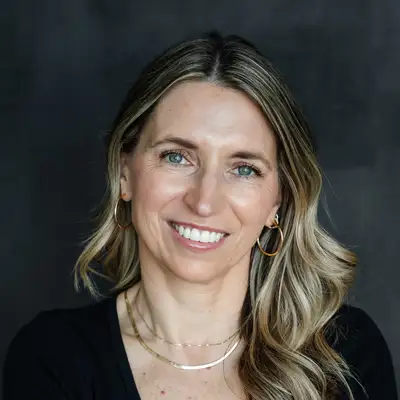
Twyla Verhelst, CPA: The Karbon Excellence
Awards recognize the accounting firms
that are raising the bar for the industry.
On this podcast, we ask leaders
of the winning firms a series
of questions about how they're
taking their firm's culture, client
experience, technology, and leadership
to the next level.
I'm your host, Twyla Verhelst,
and this is the 2025 Karbon
Excellence Awards podcast.
Practice Excellence is a framework
developed by Karbon Co-Founder and
Chief Partnerships Officer, Ian Vacin.
Practice Excellence is made up of
four pillars: Strategy, Growth,
Management, and Efficiency.
And together these pillars outline a
roadmap that guides accounting firms on
their journey to practice excellence.
Firms can obtain their Practice
excellence score by completing a
20-minute survey, which then compares
their results to firms across the globe.
This year, Tukel Inc. was recognized
as the 2025 Karbon Excellence Award
Winner for Practice Excellence.
This award goes to a firm that
is delivering extraordinary
outcomes through leadership,
innovation, and sustained growth.
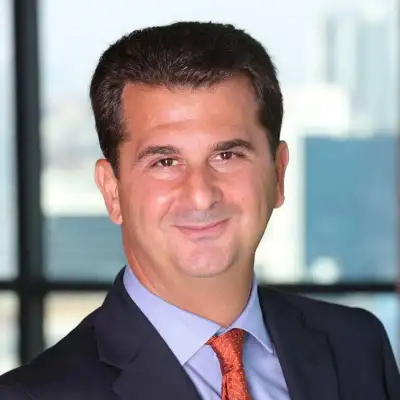
Today, I'm speaking with founder
and virtual CFO, Cenk Tukel
to uncover his strategies.
Welcome to the show, Cenk.
Cenk Tukel: It's great to be here.
Great to be part of Karbon
community, and part of your podcast.
Thank you for your kind invitation.
Twyla Verhelst, CPA: So
excited to chat with you.
I always enjoy our
conversation, so let's dive in.
You founded your firm in 2018
to help online entrepreneurs and
small business owners, but you've
had a longer successful career
in accounting even before that.
So tell us a bit about your background
in accounting and what inspired you
to build your own firm and how did you
know you were even ready to do that?
Cenk Tukel: Excellent question.
Short answer?
By coincidence, unbelievable.
But let me fill that in.
Actually, I've been, in the accounting
finance practice for the last 33 years.
I spent so many years as the CFO and
board member of PepsiCo subsidiaries
in different parts of the world.
All my life has been US
GAAP, US taxes, compliance.
I've gone through SOX and
run all that compliance.
The whole nine yards gained
an incredible experience.
I wasn't just managing,
accounting, taxes, finance,
business plans, and FP&A teams.
I was also managing legal teams.
I was managing, procurement.
Time to time, I even ended up managing HR
in different parts of the organization.
I changed roles from
controllership to CFO, to to FPNA.
And you know, companies like PepsiCo
build best of the best practices.
They create these best practices
that other firms implement.
So I had the opportunity, the privilege
of, being part of this, organization.
So I learned a lot.
And exactly 10 years ago, I quit PepsiCo,
with my dream of starting my own business.
And very interestingly, coming from
PepsiCo CFO, I actually founded a
tech business, a tech startup.
It was a mobile app connecting
new brands with limited sales
team with remote sales people.
So that they could use the community
to introduce and sell their products.
I invested a lot.
It was bootstrapped.
I worked on it for two years,
build a nice team, backend, front
end, and unbelievable, all
marketing and sales activities,
starting a business from scrap.
But I couldn't succeed.
I haven't learned to be an entrepreneur.
It does require different
skills, taking risks.
It's a different mindset.
It took me time to learn
being an entrepreneur.
But that taught me a lot, introduced me to
entrepreneurs, met with lots of, founders,
and then at the same time I was mentoring
and coaching in startup communities.
I was part of these global
international communities and I
was working with loads of founders.
I was also part of accelerator programs,
and I was mentoring and coaching startup
founders, in those accelerator programs.
Without expecting anything
in return, working with them.
It was unbelievable
satisfaction at that stage.
And at the same time, I had my C corp
in Delaware, being a Delaware CPA
myself, managing my wife's and my
other business, through that C corp.
I was using Xero accounting software and
keeping our company's books over there
and doing the tax returns myself for
our own Delaware C Corp. And all these
things kind of lined up from the startup
community, from the accelerator program.
People started to ask Cenk,
we have this US company.
We are looking for a
trusted accounting partner.
Do you know anyone?
Can you manage this for us?
And Xero accounting software said,
'Will you be our join our partner
program, be our accounting partner?' So
these are the perks and benefits and,
and as such, all the stars lined up.
I had a backlog of existing clients
who wanted to work with me and
all of a sudden I had a business.
And being an entrepreneur, knowing
those international founders' pain
points, what they're suffering, what
they don't know, most of them don't
know even what they don't know.
I think I couldn't be readier to,
to serve those startup founders.
Twyla Verhelst, CPA: What an excellent
story and thank you for sharing.
So humbly, you know how you came
out of PepsiCo, went into being an
entrepreneur and then realized like
you don't, you don't know how to.
Do that.
And, and you had to, learn
probably what felt like the hard
way to change that mindset.
And so, thank you for sharing that,
that vulnerably because I think that's
something that some of us who have
been accountants and then entrepreneurs
that don't necessarily step into
that so gracefully, because of
the reasons that you're saying.
So, and since then, you know, the team
at, Tukel have really become thought
leaders in this particular niche,
this 'US startups founded by non-US
entrepreneurs with international teams'.
And as you've shared, you know,
you yourself, have experience
with being an entrepreneur.
And so now you've carved out
this niche that you're serving,
maybe just tell us a little bit more
about how that all shaped once you
kind of stepped into that seat of
'Yes, I'll start to do your books' and
then, you know, obviously you realizing
like, 'Hey, I am the man for this job
and, and the man to build the team to
support these types of businesses.'
Cenk Tukel: As someone who has worked
internationally in PepsiCo, I used to
be the CFO of different subsidiaries of
PepsiCo in different parts of the world.
And you go to a certain country someplace
in Europe and there's a finance
team, but PepsiCo is a US company.
So I had to train those people
and sometimes we acquire companies.
Train those people on the US system,
US GAAP and I see they really
don't know what, they don't know.
How to operate in the US environment.
It's compliance requirements
and procedures and as such.
And then also in the communities,
the startup communities, I was
mostly in the international startup
communities and accelerator programs.
They also didn't know.
So being an international founder,
entrepreneur, myself, failed three
times, I know the pain points, what
they go through, what they suffer,
what they really don't know, and think
they need to know where they need help.
So when I have these calls with them
and I meet them, I kind of have
this empathy, have this feeling.
I'm feeling their pain, and we connect.
We connect with those people.
And I go like, okay, somebody has
to help these people specialize in
their area with double tax treaties.
They have international teams.
They don't know how to pay themselves.
It's a great market.
There's a niche, there's a market over
there expecting to be served, to be
specialized in, plus they need help.
So that is how it actually all wrapped
up, going into that, to that niche.
Twyla Verhelst, CPA: Excellent.
Well, as you said earlier, you know the
stars all aligned and everything was kind
of speaking to you, to tell you to go not
only to serve these folks, but then to.
To niche down into this, this
subcategory of individuals
that really needs your help.
And so you've talked about these
communities that you've joined,
and I know your commitment to this
niche goes beyond paid services.
So tell us about some of those
initiatives and why do you also offer
some forms of free financial support?
Cenk Tukel: I love it.
I mean, It started as a
way of self-satisfaction.
I wanted to give back my
experience because it's satisfying.
You see that nice shiny eyes and happy
smiles that they got that answer to that
question that was stuck in their mind.
And you see the happy faces.
It's an unbelievable satisfaction.
And it started before I started
this business actually, as I
mentioned, helping those communities
without any expectations,
supporting accelerator, programs.
And I never stopped and I
even further increased that.
I started to go to universities making
speech, talking in entrepreneurial
classes, talking about international
taxes, all the watch outs, and what
a beautiful world it is that you meet
different people, you learn, different
things, different technologies.
And at the same time it's
building, after I set up the firm,
I continued that because it's
helping us to build a brand image.
It's helping us in our recruitment.
People know our firm now.
So it's not a small boutique
midsize accounting practice.
It's getting known in the community,
in the startup world, among students,
among new grads, and also in the
startup world, even if they don't
have a business in the US, they
know our name, they refer us.
So giving without any expectations had
an unexpected consequence of gaining them
as clients in the long, in the long term.
I wasn't expecting this and I never
stopped doing it, and I will never stop.
Twyla Verhelst, CPA: Well it almost
sounds like a life lesson inside of
there in terms of, you know, the give
mentality and, and you know, what comes
back to you will just work itself out.
And so, I love that you get so much,
satisfaction and so much pleasure from
supporting others in ways that, like you
said, is something that they were needed
an answer to or was keeping them up at
night and you were able to support them.
And so now at your firm, you've served
over 300 US startups and understand
that you've never lost a single
recurring client due to dissatisfaction.
And you believe that delivering value
from day one with complimentary discovery
calls and you've consistently upheld
your KPI of responding to all client
inquiries within one business day.
So tell us what strategies or tools
have you found to be the most effective
in maintaining this level of client
support and this level of retention?
And what would your advice be to other
firms who are trying to aim for similar?
Cenk Tukel: I'm really proud of what
we are doing with our clients and, and
they, they keep on referring us to, to,
to their friends, to their communities.
I'll give you just one example.
I'm having this discovery
call, it was a German founder.
Bootstrapped a nice start up.
Brilliant idea, great product, no
revenue yet, and we had this call,
it was scheduled for 30 minutes.
It ended up being like
one and a half hours.
He had so many questions,
but he was brilliant.
I mean, he needed help.
I couldn't stop.
I mean, I said, come
on, we ran out of time.
I have to attend to Mike.
No, I mean.
And he was observing it and he, he
was really valuing the input and, end
of the call, he said, look, Cenk, I
mean, I don't have money to pay you.
I mean, if I'm gonna get an
accountant, it will be you.
I have to make money to be able
to pay to you because I'm not
going to work with anybody else.
You're giving this free, and I cannot
imagine what I'm going to get when I pay.
That that was, that was
something in, in incredible.
the key thing, what I would recommend
to others is really the team, getting
this mindset, this culture with the team.
When the team started and we had
this really firm rule that we
have to reply in one business day.
And sometimes that the reply could
be, ' Hey Mike, I got your question.
I need to work on it a bit and I'm
going to get back to you in three days.'
It's an acknowledgement the client
knows that he's being attended, but
we get back to him in three days.
Now, the important thing, two things.
One of them is, I need
a system to track this.
A platform.
And I cannot imagine what
I could do without Karbon.
I can't imagine that.
I mean, that is the platform.
We have a few principles and
let me elaborate one of them.
We do not have any single communication.
No WhatsApp, no Gmail, no Apple
Mail, no Microsoft Mail, nothing.
Everything has to go through Karbon.
If anybody uses any type of
communication outside Karbon,
it's reason for termination.
It is such a strict rule.
So that is one source of truth.
Everything is in Karbon.
I'm not saying this to promote Karbon.
I'm saying systems are important
and it's a powerful platform.
And the second thing is really
team believing in this.
And the team sees the client's
response, how grateful they
are, how thankful they are.
When we get new clients from other
firms due to their dissatisfaction,
lack of replies, our team goes like,
you know, heads up, they're proud.
When they talk to their friends, their
families, they're proud because their
clients always thanks them, prides them.
It's unbelievable.
But the team getting this culture,
this mindset and appreciating the
team, having clients appreciate the
team, and having the right systems
to deliver this consistency, is
what is having our clients, happy,
satisfied, and not leaving us.
We do have clients, we have client
churn, but actually we create that
churn because some of our clients,
their business don't go well.
And we tell them, 'Hey, Mike,
we are seeing your numbers.
Thank you for paying us every
month for our services.
But what is your plan for the business?
You haven't been making a
penny for the last six months.
Do you have a plan?' Says, 'No,
but I want to keep the company.'
And you go like, 'Okay, Mike, you
don't have to pay us every month.
Keep your company idle.
No transactions.
Come at year end, let's do
once, once a year tax return.
Don't spend your money.
When you have a business
again, an idea, give us a call.
Let's start our recurring services.'
That is the thing building trust.
Twyla Verhelst, CPA: Yeah, absolutely.
Well love that formula for success between
your team and your processes, and then
that building of trust that's so critical.
Especially today, right?
Today more than ever, I
think that's really critical.
And so, at Tukel, your mission is to
help clients to grow their business
with peace of mind, which you've
already spoken to so eloquently.
But how have you achieved that for
both your clients and your firm, and
do you have any advice for leaders on
how to start and scale their business
while still taking care of themselves?
Cenk Tukel: Peace of mind.
Well, as, as firm owners, we might be
ending up having less peace of mind.
There's always something to
do, something to improve.
But I'll elaborate on that.
When it comes to our clients,
startup world, especially in tech
industry, these are brilliant minds.
Unbelievable developers,
unbelievable marketeers.
These are the people we work with.
Those founders are wonderful people, but
they are good at what they're good at.
Accounting, taxes, tracking due
dates, compliance, W-9s, 1099s,
W-2s, these are not the things
that they want to deal with.
They don't wanna learn these things.
They don't have to learn these things.
They just want to build their product.
They wanna market, sell, they need to
motivate their team, keep the team going.
So we tell them, okay, peace of mind.
And they go, okay, I got an
investor ready, but they're
going to have a due diligence.
Okay.
That's fine.
That's fine.
They're gonna set up a data room.
They're gonna ask for some documents.
They're gonna send you a checklist.
Send a checklist to us.
Let's have a call.
We'll split it.
We'll probably handle more
than half of that checklist.
The others, if you need help, we'll
tell you what to do with the others.
Give us a call.
We'll help you.
Don't worry, have peace of mind.
Focus on getting the money.
And then they come to us,
okay, it's tax season.
What am I gonna do?
I have to pay all these taxes.
That's okay.
Don't worry.
Come September, October, we'll have
a tax planning session with you.
So we'll see the cashflow
forecast, what happens if there
are tax planning opportunities.
Keep going.
That's okay.
You're in good hands.
So they're happy.
That's what we need to provide to them.
When it comes to us, well, what
I would say is to all accounting
firms, owners, my humble
recommendation don't scale with cows.
A candid example, it was exactly four
years ago when we had our rapid growth.
I stopped making discovery calls.
I stopped taking clients for nine months.
Our team was burning out.
We had to build capacity.
We didn't accept any
clients for nine months.
They were at the door.
I had a backlog.
But we said, no, we have
to improve our systems.
We just built them.
There are fine tunings
that needs to be done.
We have to up our capacity.
We need to fine tune a few of
our processes to onboard new
clients, to take new clients.
We're not ready.
So we stepped back, we learned, changed a
few of our backend technology, not Karbon.
Karbon was there from day one.
And then, hired new people, onboard
them properly, not just throw them at
the sea and ask them to learn to swim.
No, onboard them properly.
Get our inefficient processes
fixed, improved, and then we
started taking in new clients.
So if you wanna have a peace
of mind, don't scale in cows.
Twyla Verhelst, CPA: I love that,
and I think it's so easy to just keep
growing when you've got clients or
potential clients at your door, right?
When they're saying, ' Hey, we
wanna start to work with you.
Let us, let us in.' And you're
kind of closing that off to say, not
'til we're ready because I recognize
something that's going on inside of
the firm that needs to be addressed.
And so, good for you for taking that step
a number of years or a few years ago.
And then, even before we got on this
call, you were talking about how
you have some capacity inside of
your firm today, but you're going to
hire in preparation for the growth
that you know is to come in 2026.
And so, you've continued to not just
talk the talk, but also walk the walk.
I I can tell from how you're
very thoughtful and mindful
about growing your firm.
Cenk Tukel: Thank you.
Yes, we are very proud.
It impacts our team.
It impacts our clients.
Because the new clients and
existing clients will be
underserved if we are in cows,
we will not be able to keep
our credibility and trust.
Twyla Verhelst, CPA: Absolutely.
Yeah.
Makes perfect sense and good
for you for recognizing how
that does come full circle.
So in closing, thank you so
much, Cenk for your time today.
Always a true pleasure to chat with you.
Cenk Tukel: Likewise, Twyla, it's been my
pleasure, being part of Karbon community
and having this conversation with you.
Twyla Verhelst, CPA: To our audience.
You've been listening to the 2025
Karbon Excellence Awards podcast.
Every episode, we ask Karbon
Excellence Award winners, a series
of questions on how they raise the
bar for the accounting profession.
For more advice and strategies on
how to grow your firm, visit Karbon
Magazine at karbonhq.com/resources.
Bye for now.