Subscribe
Share
Share
Embed

The Auto Market Brief, powered by Cox Automotive, breaks down the latest trends and forecasts shaping the automotive industry. The show is hosted by Cox Automotive Executive Analyst Erin Keating, coupling years of experience translating data and trends with the data and industry insights of the largest automotive services and technology provider.
Joined by other Cox Automotive experts and outside guests, you’ll get data-driven insights and industry outlooks from some of the industry’s leading voices.
Welcome to The Auto Market Brief from Cox Automotive. Each episode, our experts and special guests break down the latest trends, insights, and news shaping the automotive market. We'll give you the information that truly matters so you can make smarter decisions and drive your business forward. Welcome back to the Auto Market Brief by Cox Automotive. My name is Erin Keating, and I am your host.
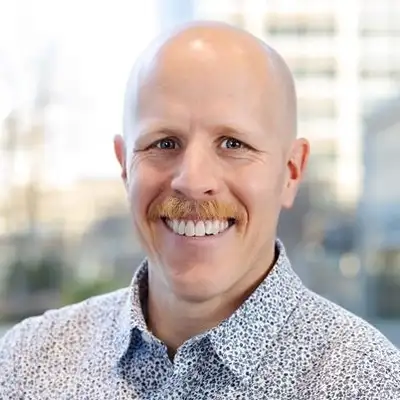
Erin Keating:I am the executive analyst here at Cox Automotive, and I am excited to be joined by a colleague of mine, Micah Tindor. He is the AVP of consumer vehicle disposal. Before we get started into our conversation, I feel like it's probably worthy an explanation of exactly what does that mean, Micah.
Micah Tindor:Appreciate you having me on, Erin. Great to be with you. I think it's a good question. Consumer vehicle disposal is focused on how do consumers get rid of their vehicles when they're done with them. And that means a wide variety of things.
Micah Tindor:But for us, it generally means how do they sell peer to peer, how do they sell to a dealer or as we're seeing more and more, how do they sell from the convenience of home, generally with the dealer facilitating it. So my focus and my team's focus is how can we help dealers win more and more of those units as consumers are coming to KBB for a trusted value peer to peer sell from home, more sell to dealer. How can we help the dealer win more of those vehicles?
Erin Keating:Oh, very cool. Okay. So ICO, obviously, is one of our biggest products within this space. Is that true? Is that a big focus?
Micah Tindor:Yep. That's true. The Kelley Blue Book is a cash offer business. We have about six and a half million consumers a month that are coming to us asking us for a value. Instacash offer has dealer partners where we help them facilitate that sale with the consumer.
Micah Tindor:We also have two other businesses in that part of the portfolio with a peer to peer business that helps consumers sell peer to peer called the Private Seller Exchange on Autotrader. And then we have a new business that we're standing up right now. It officially launched two days ago, July 6, where we're gonna help dealers figure out how to buy cars from consumers that wanna sell from home. So right now, we're learning through the tools and rules. And in q four, we'll start mapping dealers in to facilitate a new capability of if you wanna sell from the middle of nowhere in Iowa and there's a dealer who's willing to facilitate that transaction, we would have built out all the tooling to help dealers do that.
Erin Keating:Well, very cool. Congratulations on the launch there. Excited to maybe we'll have to have you back in q four when we see how it goes and talk a little bit more about it then. But, you know, what we wanted to talk about today was sort of kinda leads into the products, obviously, like the reason we need these types of things in the market. And one of the biggest things that I know Jeremy Robb, our chief economist, and I have spoken about quite a few times is affordability, but also this idea around negative equity.
Erin Keating:So I think it's probably a decent place for us to start to at least set up the stage, like, what is negative equity and how many consumers are really suffering from it right now?
Micah Tindor:The simplest explanation of negative equity is that you owe more on your vehicle at any point in time than your vehicle's worth in the open market. So if you wanna go and sell your vehicle, it's worth $42. You own owe $44, and you're in a negative equity position. And there's really two things that contribute to negative equity. Either you start the purchase of your vehicle with an amount that's higher than it's worth.
Micah Tindor:So your loan is worth more than the value of your vehicle at point of purchase. And this can happen on things like I buy a vehicle at MSRP, and then I add 15 protection packages. It doesn't increase the resale value, but it just made my loan much higher. And when I drive off the lot, I could be in a negative equity position. The other place we see negative equity is over the course of a loan.
Micah Tindor:As loan terms are getting longer and longer and interest rates are high, we see that people end up paying mostly interest on their payments through the first couple years. So it could be that when I go to sell in the second year, I wanna trade my vehicle for a new vehicle, the value may have come down more than the equity I've paid down the loan, and I could be in a negative position there. And what we're seeing as COVID's hit and as vehicle values have increased in the last few years, thirty one percent of people that come with the trade in currently are in a negative equity position as they try to facilitate their new purchase. And what's really interesting about that thirty one percent, Erin, is that we've seen that high of a number in the past. If we look back at 2016, seventeen, eighteen, nineteen, we were in the thirties.
Micah Tindor:Where there's a huge difference now though and why it's becoming a really pertinent conversation is the average amount that a consumer has in negative equity has gone up 42% in the last six years. So the average consumer, when they walk into a dealership, if they're underwater, those 31% of consumers owe $7,183 in their vehicle more than what it's worth in market. And that's really starting to drive the necessity of the conversation because it's starting to impact deals, where consumers and dealers are not able to put a deal together because the consumer is coming to the table negative $7,183 to start that conversation.
Erin Keating:So how did we get here? I mean, you mentioned COVID, like, the the increase came up over that period of time. I know that we've talked about a couple of things that have impacted average transaction price. Are those some of the same things that are affecting negative equity, or what is your perspective on what's driven us to this point?
Micah Tindor:When I look at the data and I'm not an economist, but I pay a lot of attention to this data because this is what our businesses are focused on. How can we help consumers sell their vehicles? What we see is really three things, and really it's that during COVID, the snowball of negative equity was formed. And then right after COVID, it was rolled downhill. And there are now things that are outside the COVID impacts that are causing that snowball to pick up size and speed as negative equity is rolling downhill.
Micah Tindor:And if we look at what formed the snowball to start with of negative equity, it was really formed in COVID. We all can think back to the chip shortage that was a result of COVID, and it resulted in about 5,500,000 less vehicles being produced over those two and a half years than normal. And if we just simply look at the law of supply and demand of economics, we have the same amount of people needing to buy cars, five and a half million less vehicles. The end result was a lot of people in 2021 and the first half of twenty two bought a car in a position where it was worth their loan was worth more than what the vehicle was worth. They're paying above MSRP on a new car.
Micah Tindor:They're paying over the used car value on a used car. So back to those two ways that you could end up in negative equity. A lot of people formed the snowball of negative equity in the COVID era by buying a car and getting a loan for more than the vehicle is worth. But where it's really started to snowball is in the value of vehicles and in the loan term and loan length. And if we unpack that just a little bit, between 2020 and 2026, the average vehicle new car sold has gone up $11,000.
Erin Keating:Mhmm.
Micah Tindor:So a consumer now has to account for 11,000 more than they did back in 2000 back in 2019. At the same time, loan APRs are way up. So if you think back to right before COVID hit, the average new car APR was 4.4%, but twenty five percent of people had a 0% subsidized rate from an OEM. So you fast forward now to where we are, the average new car rate's like a around 6.39, but frequently for people from a credit rating perspective, we see it up to 8%. Sure.
Micah Tindor:If you look take a vehicle and look at what is the difference in payment across the lifetime of the loan when you've increased from 4.4% to seven and a half percent, it's another $7,500.
Erin Keating:Right.
Micah Tindor:So a lot of consumers started in a little bit of a negative spot, but then as they are trying to get out of it into their next vehicle, they're finding the vehicle's more expensive, the APR is significantly higher, and it's packing more and more snow onto that snowball, and it's picking up speed rolling downhill. And honestly, we really have some concerns in the industry in that while we're looking at 31% of trade ins right now have negative equity, the data says, based on load originations, that we're gonna move towards 54% before this this wave of negative equity subsides.
Erin Keating:Wow. That's a lot to consider. I mean and I I hear you. The interest rates, you know, we've talked consistently about average transaction price. And, actually, in our midyear review, we talked about the fact that the increase in cars over the course of a decade has actually kept with inflation minus that blip as you speak about in COVID where it went, like, crazy high.
Erin Keating:But that it's the interest rates that have really doubled. And and I did a little bit of research in looking at the loan terms. And and to your point, like, if you started out with a thirty six month loan, sure, your monthly payment was a thousand bucks, but you were paying nearly half the interest. But you stretch it out to seventy two months, eighty four months, all of a sudden, you're I mean, you see people willing to take on $10.15, $16,000 in interest on top of that, you know, the value of the car. You can see where people get real upside down real quick, but it it really goes back to that affordability issue.
Erin Keating:They're trying to get to a monthly payment that they can deal with. Right?
Micah Tindor:Yeah. And and part of it as well was that we all love the new tech that comes in cars. Like, we all love the giant iPad sized screens of 2026 versus, like, the cassette sized dumb screens that existed in 2020. We all love the advanced driving assist features, like adaptive cruise control and lane departure warning and even some of the self driving capabilities, and all of those come with a ton of cost. Like, a windshield of a modern vehicle can cost a couple of thousand dollars versus 250 back in the day.
Micah Tindor:Bumpers of a modern vehicle can be $3.04, $5 to replace versus having a dent guy pull a metal dent out of a metal bumper in yesteryear. So part of it is that we all just are graduating our way up to more expensive, more tech laden vehicles that are more expensive. And figuring out how to finance it another $11,000 when we're ready, to your point, in a very affordability constrained world is forcing most consumers, to your point, into that longer term attached to a higher interest rate. So it really creates a challenging environment. Consumers who want that new high-tech vehicle, but are fairly challenged from an affordability perspective with all the the spending challenges that are in The US right now.
Erin Keating:So what does it really mean for consumers and then for dealers? So they're the ones who are actually trying to have these transactions happen. You know, people are by necessity on some level having to trade in cars. It's not everyone that's just trying to go after a three year, you know, loop here. There are also people who have held on to cars for a lot longer and are trying to get into a new car.
Erin Keating:Now they they might not be carrying as much negative equity into it if they bought the car ten years ago, but still, there is this issue where they could be picking up negative equity by just very virtue of picking up a more expensive vehicle with higher rates. So what does it really mean for the dealers and the consumers right now?
Micah Tindor:On the consumer side, it means a higher payment, longer loan term, and higher interest rate. So as we're as we're talking about the affordability impacts, it's the negative triplicate of all three. And what we see is that the average consumer who comes in with negative equity and needs to roll that negative equity into their new loan is going to be paying an additional $159 per month versus people that don't have negative equity. They're going to have to take on a seven month longer loan than normal, to your point, paying more interest across it. And probably most problematically in the triplicate, they're paying on average 1% higher interest rate.
Micah Tindor:Because obviously, they're they're a higher risk loan if they come in with negative equity and they have to absolve that in the new loan. So as a consumer comes in, they're expect a lot of them are expecting the same traditional easy approach. My vehicle's worth this. My new vehicle's worth that. I need to fund the remaining balance.
Micah Tindor:But it's becoming a much more challenging conversation for consumers because they have to understand my vehicle's worth 12,000, but I owe 15,000. I'm negative 3,000. How do I then buy I'm $43,000, negative 3,000 coming to the table. So it's becoming a lot tighter for those consumers, a lot more challenging for those consumers, and it really puts a lot more responsibility on the dealer to figure out how can I help this consumer construct a deal that they can still live with if they're coming in with average $7,128 in negative equity?
Erin Keating:Right. Gotcha. So what are some of the tools or or ways in which a dealer starts to look at how to help a consumer do that? I mean, we know that consumers got their own checkbook that they've got to think about and worry about. But dealers on their side of the business, they've got the OEMs, the lenders, and themselves that can kinda work through as well as tools like the tools you spoke about at the beginning of conversation.
Erin Keating:How does that look for the dealer? What are they thinking through?
Micah Tindor:So if I put my my retail hat back on to my yesteryear experiences, there's always been a couple ways to try to solve for negative equity. The easiest has historically been move somebody into a lease. The the one challenge with moving someone to a lease is as you're now bringing that 7,128 to bear, that's a lot of extra money to soak up over a thirty six month lease. So Mhmm. The the first path is to take a look at a lease and can you construct a deal where you can soak up some of that amount of lease, increase your down payment a little bit, and absolve it through the lease.
Micah Tindor:The good thing about going into a lease is at the end of the lease term, you're clear on the vehicle. There is no negative equity you're carrying over, so it helps consumers really right size their financial situation. The second thing that dealers frequently look at is if you're coming in on a $50,000 vehicle and you're willing to pay $800 a month over seven years, might you be willing to move down to a used vehicle and pay 44,000 buy it at 44,000 and soak up the extra 6,000. So you would still have that same $8.50 a month. You still have that seventy two months term, but you are absolving your negative equity by buying a little bit lower value vehicle but keeping the higher rate.
Micah Tindor:That's not a super easy pill for people to swallow, but for dealers that are really taking that consultative approach and talking through, you have 7,100, how do you wanna help how can we help you absolve it? There's optionality there. And then there's a third option, which isn't the most fun for dealers, but it is an option to keep in mind to help close a deal. We all know that dealers have reserve on funding a loan. And that's the reserve is the percent that a dealer gets to keep of the loan that's facilitated with a certain lender partner.
Micah Tindor:And there's there's always the ability to bring some of that percentage to bear to help offset what the consumer has. And it it's the equivalent of buying down the rate, where the dealer could use their percentage to move the consumer from a seven one to a six eight or to a six seven. Now, the one challenge with that is we all know that there are two profit centers in selling a vehicle, what you can get on the front end gross when you sell a vehicle, and then what you make on the back end in the financing side. And that's obviously gonna surrender some of the back end gross, but this is something the dealer is starting to look at as they're going through the conversation of how can we help put you in a deal when you have some negative equity. They're they're at times starting to surrender a little bit of the reserve to almost like a realtor would.
Micah Tindor:Help Right. Help on the down payment, help a little bit to to get you over the hump.
Erin Keating:Gotcha. It's you know, it's interesting, and I I don't know if you've heard of this phenomenon at all, but I was reading recently that one of the challenges also with insurance going up is that if more cars are totaled, that people are actually sitting on negative equity on a car that's totaled. So they only get paid, you know, if the car was worth 15,000 and they totaled the vehicle, but they actually owed 17,000 on the loan. It's like they're not even getting help get moving into their next vehicle because they've gotta still cough up the 2,000 to clear the loan that they were on. So, I mean, it's just really negative equity is coming out in a lot of different places, not just even when you wanna trade in your vehicle, but also if you happen to be in an unfortunate accident where your car is totaled.
Erin Keating:So yikes.
Micah Tindor:I think the insurance piece that you brought up is interesting because as vehicles are getting more and more tech on the outskirts of the vehicle, wheel end sensors, park adjust sensors, self park sensors, ADAS, LIDAR, each of those vehicle external vehicle end components becomes more expensive. I was looking at a GMC a t four, which would MSRP for about 85,000 new. The it showed that it had side impact, front impact, and left side impact. So both sides and front impacted, airbags deployed, no frame damage. So it wouldn't have been severe.
Micah Tindor:It was totaled. Right. So many of those sensor pieces that cost so much were impacted. Those totaled. And to your point, it is hard to claw your way out of that total.
Micah Tindor:And as a result of the risk of totaling a vehicle with a lower level of collision, insurance companies are significantly increasing insurance rates. Over the last two years, auto loan insurance auto insurance rates have gone up 24%. Right. And it's really the hidden cost of putting a deal together because let's just say, on average, right now, a new vehicle is running around, like, $7.50 in payment. That's about where we are right now.
Erin Keating:Right.
Micah Tindor:If then you have to add a another $193 to absolve your negative equity, which is statistical average, you're now up in the the $9.50 range. That's a tough deal to put together to start with. Now you have to come to the table and the average monthly payment for a new car insurance is $224. So you just went from a 750 a month payment up to an $11.50 a month payment because of some negative equity in the insurance. So there really is a hidden element in insurance, both on taking negative equity off a wreck and on can you actually put a deal together.
Micah Tindor:And we're starting to hear dealers talk pretty frequently about bringing up insurance in the box. So when you're in the f and I room, dealers are starting to talk about insurance because it is starting to be a deal breaker because people get to the max payment with everything else and then realize, oh, shit. It's gonna cost me 250,000 doll or $250 a month to insure this.
Erin Keating:Right. Exactly right. Which is just, again, it just compounds. And I even heard from one of the manufacturers that a lot of folks, they weren't necessarily thinking about the insurance. So people could be walking away with a car thinking they have the deal, and they're going back to the dealer a couple days later going, oh my gosh.
Erin Keating:I just got my insurance on this, and I actually can't put together this deal anymore, which has been, of course, snowballs in a different way into different impacts to the industry. So, I mean, overall, what are you thinking about the industry implications of this? And and what where do you see us, you know, looking ahead? Like, what's what's the positive here? Or how how does the industry help itself?
Micah Tindor:I'm going to start with one piece that isn't quite as positive and then turn to the positive. What we see right now in negative equity, 31%, negative 7,100, is definitely a a wave of underwater, but it actually could be a tidal wave. And what I mean by that is if you look at a loan originations in q four of twenty twenty four, 54% of people that original originated a loan, originated with a loan a 120% of the value of their vehicle. So 54% of people drove off the lot and instantly were in a negative equity position of 20%. So while we're talking about what are we going to do, it actually could get 23% worse.
Micah Tindor:Now some people are gonna own their vehicles, some people are gonna get hooked on Dave Ramsey and turn their finances around. Some people are gonna find other creative ways, but 31% is likely not the peak of the underwater wave that is coming. And I think it's important for dealers to be aware that it is going to get worse before it gets better. So as we look ahead, I think there are some silver linings. Silver lining one is that over half of consumers in any given year that dispose of their vehicle do it outside the dealer network.
Micah Tindor:There it is incredibly hard to dispose of a vehicle if if you have negative equity outside the dealer network because it means I have to cut a check personally to the bank. And so if I wanted to sell my car directly to you, Erin, I could sell it to you for whatever you're willing to pay, and the remaining gap, I have to pay the bank to make that happen. So one of the silver linings is that this is going to force more people into our dealer network because dealers are good and dealers know how to and dealers have the tooling to absolve under people who are underwater, have negative equity on loans. So that is one of the silver linings for the dealers that we're gonna get more at bats with consumers as we're coming into it. I think the other silver lining is that we're starting to see some OEMs respond by starting to bring less costly vehicles to market.
Micah Tindor:There have been announcements from another number of OEMs of trying to move down stack from a costing perspective or taking out some of the tech that's driving that cost up. So I think there's a lot of opportunity there for the OEMs to start to help consumers by adjusting some of the costing down. And I think the third thing that is a silver lining is that consumers are starting to become aware of this. And just like any other part of the industry, awareness is the first step. And now consumers are starting to to look up what is their trade worth, then they're starting to look up their equity, then they're starting to to decide how do I work my way through this, and they come in more ready to have that conversation.
Micah Tindor:So between those three, I think that there are silver lines. I think there's more people that are coming to the dealer. I think the OEMs are gonna help come to the table a little bit with vehicle costs coming down. And I think consumers are gonna be more knowledgeable and prepared to have that conversation, which is gonna be gonna enable us to put the deal together more easily. But really, in the end, we're gonna have to work our way out of this.
Micah Tindor:It is a hole for negative equity and consumers are gonna have to dig their way out. And it's gonna be challenging with all the affordability challenges out there. I looked at the Consumer Sentiment Index for University of Michigan. Correct me if I read it wrong. I read it as it's the lowest consumer sentiment in a given year that we've seen since it started in in 1961.
Micah Tindor:So consumers aren't Yep. Super excited about spending money. So it's gonna be some work, but dealers have the tools. Dealers will have an informed customer. Dealers will have OEM participation.
Micah Tindor:So I'm actually feeling pretty good about our ability as an industry to help consumers dig their way out of the hole.
Erin Keating:Sure. No. You're not reading that wrong. Consumer sentiment is low. It's the lowest it's been.
Erin Keating:The interesting thing is always behave you know, consumers say one thing, they behave a different way. We do know there's a a ton of pent up demand. So there are a lot of consumers out there who do actually need to or want to trade in their vehicles. So that to your point, there's a silver lining that we know that individuals are getting to that point where they wanna do something with their cars and that they will find dealers to be better suited for that type of disposal. You know?
Erin Keating:And I think, in general, I think that the OEMs, to your point, are are trying to bring lower trim vehicles into the market, potentially even smaller vehicles that could could help in the market. So I think all combined, we can get there. But to your point, this is gonna be a little bit of a pill to swallow for a bit because we do need to get past this this point. Yet there are a lot of tools, again, especially within the dealer's toolbox to to help the consumer and themselves and the industry get themselves out of this. And then we can always hope that interest rates are gonna go down.
Erin Keating:Right? That would help us a lot.
Micah Tindor:My one parting thought is I'm a glass half full guy, and I look at this. We're putting a dealer hat back on and say, this is opportunity for us as dealers to do what we as dealers do so well. We help consumers put together a deal that works. We are involved in our communities and understand where our our buyers are at, and we help them through building that long term relationship. And I really think it's an opportunity for dealers to help build a longer term, more sustainable relationship.
Micah Tindor:We all know consumers flip between brands, but if you can help someone unpack from that underwater position, you've done them a favor in their financial state. And I think it's an opportunity for us as dealers to really come to the table and partner with consumers like we've done so well for so many years and really put ourselves ahead in the next few years as we work through these challenges.
Erin Keating:I agree. And we do know that dealers need the used car inventory in the first place. And so they're in a position of Yep. Of wanting to be able to pull these cars from the customers. We even know from our latest service study that customers, when they come in for maintenance or repair, that there's even a magic dollar figure that, you know, if they hear their repair is gonna cost north of $3,000, they want to see a trade in offer.
Erin Keating:They want to hear from you about how they could potentially offset that too. So a lot of different angles to this. I know you're working all of them. This was a really interesting one to kinda deep dive into. Micah, thank you so much for being with us today and really breaking down this topic.
Erin Keating:I think you did a great job of really getting into the detail and the meat so that our audience can hear more about this. So thanks so much for being here today, Micah.
Micah Tindor:Thanks for having me on, Erin. Good to be with you.
Erin Keating:Of course. And for all of those out there who've listened to the Auto Market Brief today, we really appreciate you tuning in. We look forward to having you listen in on our next episode. Take care. Thanks for joining us on this episode of the Auto Market Brief.
Erin Keating:To stay up to date with all the latest news and perspectives from our team of experts, be sure to visit our insights hub at coxautoinc.com.