Subscribe
Share
Share
Embed


Former U.S. Senator Heidi Heitkamp and her brother, KFGO radio talk show host Joel Heitkamp, engage in animated discussions with newsmakers, elected leaders, and policymakers who are creating new opportunities for rural Americans and finding practical solutions to their challenges. Punctuated with entertaining conversations and a healthy dose of sibling rivalry, The Hot Dish, from the One Country Project, is informative, enlightening, and downright fun.
Heidi (00:05)
back to the hot dish comfort food for rural America. I'm Heidi Heitkamp.
Joel Heitkamp (00:09)
And I'm Joel Heikow.
Heidi (00:11)
Well, today, Joel, ⁓ I think you're hearing from ⁓ cattlemen all across our state, and I'm hearing from cattlemen across the country about what their concerns are, you know, their opportunities right now when prices are high. But healthy cattle herds ⁓ are the talk of everything that's going on right now, particularly given the threat presented by the New World screw worm that has made its way into the United States. And so we are really grateful.
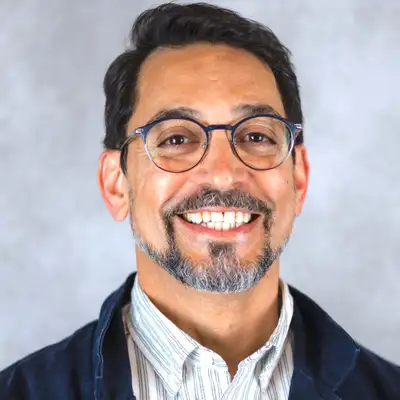
That Dr. Eric Dibble, who was the under deputy under secretary for marketing and regulatory programs at USDA under the Biden administration, he's here to talk about it. Eric, welcome to the hot dish. And are you re ready for your grilling?
Eric Deeble, VMD (00:56)
I am excited to be grilled ⁓ and happy to be in such august company.
Joel Heitkamp (00:58)
⁓ Yeah.
Heidi (01:01)
Well, Joel, I'm gonna give you the first question 'cause you you think that you are the expert on cattle, but I am.
Joel Heitkamp (01:07)
Well, it
it and Eric, I have to tell you, you know, when you pulled the pin on on government service to now being executive director for Americans for the common good, I I think it's important that our audience understands the work you're doing now. Could so could you tell us about that group?
Eric Deeble, VMD (01:25)
Thanks, Joel. So Americans for the Common Good is an organization that's dedicated to helping ⁓ farmers access technological solutions that improve their bottom lines and help them take the best care of their animals that they can. Right now we're working on an important bill called the Egg Save Act, which is a tax credit to help ⁓ hatcheries adopt Innovo egg sexing technology. ⁓ it sounds more interesting than it is, ⁓ but it's a really important thing ⁓ to help hatcheries.
become more ⁓ productive and to help to lower the costs of chicks that are going to lay the eggs that we all buy in the grocery store every day.
Joel Heitkamp (02:04)
Well, Eric Eric, I guess you you know, the the point that ⁓ in North Dakota, South Dakota, you know, Montana where I broadcast from, and actually western Minnesota, you know, we we look at cattle in a whole different way. You know, you've got ⁓ you got ⁓ ranchers, you've got them not into egg production as much as they might be into silage, and that's what they use their fields for.
And of course, we've got ⁓ large scale dairies that are going on now. When you talk to both of those groups, ⁓ they don't talk a lot about value of herd. They talk about the fear of their herd. And so I guess my obvious question is, does the size of the herd matter in terms of the vulnerability?
Eric Deeble, VMD (02:49)
It does, and it does in a couple of different ways. So New World Screwworm ⁓ affects all warm-blooded creatures. So that includes birds as well. So any warm-blooded mammal is at risk from the disease, including humans and companion animals, livestock and wildlife. The challenges with folks that have big herds, particularly those that are raising animals out on pasture, is it only takes about twenty-four hours for one of these fly eggs to hatch.
And for that larva to start to eat an animal. And so you need to be looking at those animals frequently, and order, particularly for young or small animals like calves, in order to prevent an infection from really taking hold. And that becomes really hard if you've got a big herd, and really hard if you've got those animals out on pasture and you're not putting eyes on them every single day.
Heidi (03:44)
Well, when w when you know, I was recently with some cattlemen from Nebraska, one who owned a feedlot and the other one who ⁓ had a very large herd. And when I raised ⁓ screw room, they just said, you know, th it's all exaggerated. ⁓ we can take care of it with ivermectin. You know, we aren't worried about this at all. This is something that that is media hyped and and kind of ⁓ it i it it's it's a big tempest in a teapot.
Eric Deeble, VMD (04:15)
with respect to those gentlemen who certainly, you know, are entitled to their opinion, it's wrong. for a couple of reasons. ⁓ one, if it wasn't a big deal, we wouldn't have spent decades eliminating from the United States and driving it all the way down to the Darien gap and functionally eliminating it from North America. ⁓ two, ⁓ this is a not this is a very unpleasant disease.
it hurts animals, it harms productivity, it has a high degree of cost, and occasionally it even causes the death of animals. ⁓ the challenges are you can treat it with ivermexin or moxidectin or a variety of other sort of ⁓ antiparasitic larval sides, but those medications cost a lot of money. You have to get to the animals in order to administer them. If you're using an injectable drug,
The clearance is often as much as twenty-one days. If you're using a pour over treatment or a drench that's going on the outside of the animal, clearance times can be up to forty-five days. And that really can affect a producer when they're looking to ship an animal. ⁓ it really can mess up their schedule with the slaughter facility. And if the disease is present in an area, it's very likely that they're not going to be able to ship their animals, which is going to cause additional concern. The best thing that could happen is to have
No screw worm. The second best thing is to have screw worm but not where you are. And the worst possible outcome for these guys is gonna be screw worm in your herd and you having to tear bear the responsibility for treating it.
Joel Heitkamp (05:51)
So what when you talk about treating it, ⁓ is this something that, you know, the the the slaughterhouses are going to require? You know, that they're going to say, Listen, you know, we're just not gonna take your herd unless we know that it's protected this way.
Eric Deeble, VMD (06:08)
I think it's gonna happen, but even before you're looking to ship an animal to a slaughterhouse. There are right now ⁓ along the New Mexico ⁓ and Texas borders ⁓ areas where there are animals that have been found to be infected with New World Screw Worm. rightly, the state veterinarians ⁓ and the departments of agriculture in those states have erected around those animals ⁓ control zones where no animals are allowed to be shipped out.
Because that fly can spread on that animal, so that animal shouldn't move. So that is going to continue to happen wherever we find New World Screwworm. And so it's very likely that eradication efforts will happen long before you're ready to ship that animal. I am sure that the veterinarians who are responsible for looking at the animals as they're coming into the plants are going to be looking for screw worm.
And if they see one, they're gonna send up a red flag, there's gonna be a zone of control put in, movement restrictions put in, and then mandatory surveillance and an eradication effort around the place where that animal came from.
Heidi (07:20)
Well, let let let's ⁓ talk about how this affects consumers. because if you're a consumer and you're looking at American beef or you're looking at imported beef right now, you may say, I don't wanna be eating beef that's been treated in injected with ivermectin. I don't wanna ⁓ I mean, I don't wanna be eating beef that has screw worm. what would you say to those consumers? ⁓ and those I I think those
⁓ worries that they have about the safety of the food supply.
Eric Deeble, VMD (07:53)
So I I I would say to the first point, ⁓ you as a consumer are at no risk from the drugs that are used by a veterinarian to treat an illness in an animal. Before that drug is approved, there is a clearance interval that is determined for each animal and each use case that defines how long it's going to take before that drug is no longer present in the animal and that animal can't be slaughtered.
Before that time has elapsed. So you don't face a risk, you're not going to consume ivermectin from an animal that was treated with ivermectin and used in a in a responsible way. So the risk to consumers in that sense is very limited. The risk to consumers is much greater because they have to pay for that beef. And if we wind up with all kinds of disruptions in the supply chain, perhaps somewhat analogous to what we saw during COVID, we could wind up with
Heidi (08:37)
Mm-hmm.
Eric Deeble, VMD (08:46)
Too little capacity to slaughter in one place because the animals aren't coming in, or too many animals being shifted over to another plant, and that kind of disruption just drives prices up. So that's going to be a concern for folks. In terms of the damage that the worm or that the maggot, ⁓ the fly larvae does to an animal, it's localized, right? And one of the unique things about New World Screwworm is, well, there's two unique things, which I'm sure we'll get into. One is that the females only breed once.
And two, that the larva or maggots of this particular fly consume living flesh rather than the flesh of dead animals, which makes it quite unique. And that's also what creates the risk here, because when the egg is laid on an animal that has a skin wound and these maggots develop, they eat into the living tissue, which also destroys that tissue, which makes it no longer saleable or safe for human consumption. So if you have a cow,
And it's attacked in the left hindquarters, well, big portions of the muscle that you would see at retail won't be able to be sold at retail, thus reducing the amount of beef that's available on any carcass and hurting the farmer that's trying to sell that animal. But the rest of that animal is still safe to consume, just not the portion that was affected by the disease.
Joel Heitkamp (10:05)
So I I wanna ask the the politics of this, so to speak. I mean, you worked in government, now you're you're looking out for the common good, but the the truth of the matter is beef, more people are eating pork, chicken, those type of things because beef has gotten so expensive. And if you're the current administration, ⁓ those are the individuals that you've all always targeted to to love you, ⁓ for lack of a better way of putting it. And so, you know, there's there's actually
Argentine beef that's that's come into the US. if you're looking at it from an administrative standpoint, ⁓ you know, dealing with the common sense that you just said versus dealing with the public popularity of lowering the cost of beef. I mean, those two don't seem to go together. And I'm curious what your take on that is, Eric.
Eric Deeble, VMD (11:00)
Well, we know from some fairly recent studies that the cost of New World Screw worm in the US is going to be at least a billion dollars ⁓ to treat. And that's just to deal with it, not to eradicate it, you know. And so again to the two Nebraska cattlemen that you mentioned earlier, Senator, this is not gonna be a cheap endeavor. And so the more quickly that we fall on it, the better.
I would also say, you know, Joel, there's often tension within the barnyard where total meat consumption is seen as a zero-sum game. And what hurts one element of the barnyard may benefit another one. That's not the case with screwworm, because they're all raising warm-blooded livestock. And unless you're fish farmer, this is going to affect you at some point. And if you are growing
Joel Heitkamp (11:56)
Mm-hmm.
Eric Deeble, VMD (11:59)
broilers or layers and your fly control program ⁓ is insufficient and your birds are ⁓ infested with screw worm, they're gonna die. ⁓ and there's no compensation program to help you get right like there would be with avian influenza. ⁓ likewise there's no programs available to cattle ranchers, hog farmers, sheep, goat folks.
⁓ in order to help them make up for what they're going to lose in terms of calf mortality ⁓ or in terms of the reduction in ⁓ their ability to ship those animals and the value that they get from those animals ⁓ at slaughter.
Heidi (12:40)
Well, it i i if if if we go back and and this is something that I don't think a lot of people understood, which is that screw worm is not just directly related to cattle. It's any human or any warm-blooded ⁓ you know, ⁓ animal, including humans. So that that oughta make us a little nervous. But how did this happen? I mean, you know, we we thought we had this eradicated, we thought that we were protected. How
How is it that this has ⁓ found its way back into our into our production ⁓ chain?
Eric Deeble, VMD (13:17)
So I think to to get to that answer, we need to just take a step back and figure out how we eliminate it the first time, right? So we already talked a little bit about how the animal harms, how this fly harms other animals. ⁓ but one of the other things that I mentioned at the top that makes it unique is that the females of this species only breed once. And back in the nineteen thirties, some USDA researchers figured out that if they could make sterile male flies available.
Heidi (13:24)
Okay.
Eric Deeble, VMD (13:46)
in mass that those sterile male flies would breed with those female flies that would then produce non viable eggs and that would drive the infection out. And so that sterile insect technique became the principal control mechanism that the USDA used in you know supporting farmers ⁓ to eradicate the disease. And so they started in well, they figured it out in thirty three, it was interrupted by the war, but
Then came back online in 45. They did some test cases in the Florida Keys and then Curacao. Once they figured out how to do this, they started creating zones of control across the sort of middle latitudes of the United States and slowly pushing the disease down, eventually to the Mexico border, and then in partnership with the Mexican ⁓ agricultural professionals and and their CineCa, their version of USDA, to continue to push those flies all the way down to the dairy and gap.
which is ⁓ a small, relatively impassable, ⁓ narrow ⁓ portion of the isthmus that connects North America and South
that took from basically the sixties down until the eighties to manage that eradication process. With those sterile flies ⁓ and that very narrow gap of land as the principal place of control, we were able to keep the flies from coming back up ⁓ sort of through ⁓ Central ⁓ and ⁓ Central America, ⁓ Mexico and the United States.
And so we had ⁓ as the US government had partnership agreements with ⁓ Panamanian folks ⁓ and the Mexican folks who were responsible for breeding hundreds of millions, billions of flies, ⁓ and doing controlled releases ⁓ continuously throughout the year in order to make sure that there were always sterile male flies ⁓ available ⁓ and being released whenever there was a chance that there was a viable female in the area. And we held that for a number of decades.
That broke down in part because of some destabilization that happened in economies in South America, which caused people to migrate north and bring with them their animals and cross that Darian gap. And then ⁓ as it did with many things, COVID had a pretty significant impact in that it limited the amount of sterile flies that were being produced by some of those facilities in Central and South America Central America and Mexico.
with that sort of inability to conduct full surveillance and ⁓ the the disruption in the fly production, ⁓ it caused ⁓ an environment in which those flies could then once again migrate north. Now, this fly ⁓ can maybe make it about 120 miles in its life, but it generally doesn't go very far from where it's born. And the rate at which we have seen the migration of the fly
From the Darien Gap up to the US-Mexico border is way too fast for a fly to have made it on its own. So we know that these flies are traveling on animals, and often ⁓ these animals are being moved around the country somewhat some sometimes ⁓ illicitly ⁓ by cattle wrestlers. ⁓ and it's been tied many times to ⁓ cartels that are moving animals ⁓ through Mexico ⁓ without the proper
surveillance or authorization.
Joel Heitkamp (17:17)
got my attention ⁓ when it comes to the the regional aspect. we were all pretty proud of Heidi when she ⁓ went on the very not glamorous ag committee ⁓ back in the her Senate days. ⁓ because tough issues like this end up being regional issues. ⁓ you know, and that's why I jumped in, was because what you described to me, I mean, we can look country to country.
Which is what a lot of people are doing here. ⁓ but ⁓ will it affect region to region, not just in sales? I mean, well, if if this shows up big time in the Dakotas and the area I described earlier, ⁓ you know, other ranchers in Nebraska, Iowa, those places say, you know, to hell with you, you your beef is the one that's wrecking the market. but will this be more prominent in region to region and
Here's the second part of my question. It gets really cold where I live. Really cold where I live. And how does that affect some of what you're talking about?
Eric Deeble, VMD (18:21)
it's a great question, Joel. ⁓ in terms of regional to regional, some of the things that I've been talking about are really regional effects. It's the ability for a producer to ship their animals to their slaughterhouse or to move their animals to a feedlot. And that's going to happen generally within their own area. But I think a lot of people fundamentally misunderstand particularly how cattle and dairy cows live, are bred and are moved around the country.
Right. Texas and New Mexico produce a lot of the heifers that then find their ways into the upper Midwest and to some of those very big dairies that you mentioned at the opening of the program. So the ability for folks in other regions to get young stock that they need to keep their farms operating is going to be pretty negatively affected by the presence of screwworm, particularly if they happen to be trying to buy from a farm that's in one of these zones of control and isn't permitted to move their animals.
And you can't violate those zones and controls. They have to be there because if you don't, you're risking sending that disease all around the country. So you you that it they're imperative that they be present and that we rigorously enforce them, but also it is going to be a massive inconvenience for folks, even if they don't have screw worm in their immediate community. So they're going to see the effects, they're going to see the effects pretty quick.
Heidi (19:42)
One of the one of the issues that ⁓ gets brought up and and I think you know we try and be incredibly fair and and nonpartisan when we talk about problems ⁓ because there's too much of that on the other side. Too much of looking at everything as ⁓ something somebody's to blame as opposed to kind of why why is this happening and how do we fix the problem? And do we have the will to fix the problem?
But there is a lot of talk about the United States basically backing off collaborative and cooperative agreements with our neighbors to the south ⁓ and stopping breeding programs for sterile flies ⁓ as a kind of cost-saving measure. I mean, what's your take on that? That that we haven't been particularly good partners in preventing the spread of screw rum?
Eric Deeble, VMD (20:36)
So
is a real concern because we have a choice as Americans in how we choose to protect our our herds and our flocks. We can either try to go it alone and protect a two thousand mile long border with our Mexican partners, or we can go back to the plan that worked last time
and partner with other countries in order to not just eliminate the fly from the US, but to put thousands of miles of distance between us and the nearest available New World screw worm, viable New World screw worm. I would say that the US relationships with the countries that have been traditional partners in breeding sterile flies ⁓ is about as low as it's been
in my lifetime. And when you start to see things like dissolution of US MCA or pretty significant fights over
The importation ⁓ fresh fruits and vegetables affecting the degree to which governments are willing to collaborate, I think it just makes this problem a lot harder. It is theoretically possible that we could harden the border and build a wall with sterile flies, but it's gonna cost an ungodly amount of money, gonna leave the risk right at our doorstep. And
make it a problem that we didn't have to worry about for fifty years to one that we have to worry about continuously.
Eric Deeble, VMD (22:23)
So I want to get back to Joel's question because I think it's a really important one. ⁓ This fly can only live in fairly temperate environments. So for folks like you who are up in the Dakotas, ⁓ this could be at worst a seasonal infestation. Now, back in the 1950s, there was sort of a line of demarcation across the middle latitudes of the United States where the fly would come in and it would live during the summers and then die out during the the winters after a killing frost.
I think that line has probably migrated a little bit further north over the past couple of decades. but even without having a fly presence in your state, it's still gonna affect you because it's gonna affect the ability to get animals in from other parts of the country ⁓ and it's going to create a lot of disruption in the supply chain that is unlikely to help any producer get what they need from their herd.
Heidi (23:18)
So the the question becomes, what do we expect next? I mean, we've seen this at the border. there's attempts to contr contain it. ⁓ what what what are the next what what would you expect that we will see next, Eric?
Eric Deeble, VMD (23:32)
Yeah.
Well, I don't have a crystal ball and I try not to get in the prognostication business, but I will tell you that that we could see a couple of different things. If the screw worm becomes ⁓ endemic and finds its way into wildlife and those animals serve as a reservoir for this fly, ⁓ we'll continue to see pressure on the animals in the southern border.
But we'll see a very slow migration of the flies over the next few years. Again, this is assuming that current efforts to eradicate it are insufficient or in ⁓ unsuccessful. we'll see it sort of move slowly out of the environment ⁓ in in the southern border. And as it does that, it'll begin to affect additional species. Right now, ⁓ we've seen the flies ⁓ mostly in cattle, in a few sheep, and also in in one dog. ⁓
So that's what we'll see if it's in wildlife. If the surveillance and control mechanisms that the folks in Texas and New Mexico are using right now to limit the spread of the flies by limiting the movement of livestock animals are ineffective, what we'll see is this disease popping up in lots of different spots around the country associated with the movement of animals that are infested with the parasite. So we'll see one of those two things. ⁓
Hopefully what we see is nothing. and that'll mean that the efforts that USDA and the state agencies are taking right now on the southern border are sufficient to to keep it in in Mexico and out of the United States.
Joel Heitkamp (25:10)
You know, Eric, how will they know? I mean, how will they, you know, for for ranchers, many times when they lose a you know a critter, they they leave it for the coyotes. They don't rush to a veterinarian and say, you know, test this. I mean, how are they gonna know?
Eric Deeble, VMD (25:27)
Yeah. So ⁓ New World screw worm infestation is a mandatory ⁓ reporting ⁓ reportable disease. So if it is present, it needs to be reported. And unless an animal is staying on a farm its entire life, it's going to pass through a couple of hands, and each one of those sets of hands has a duty to disclose if that animal was inspected. And quite frankly, it's in the interest of everybody, including
the rancher who may have an affected animal to make sure that it's known because the last thing you want to do is be responsible for the spread of this to your neighbors ⁓ or to another part of the country or to you know an any anybody else is hurt, right? And this is this is a really pernicious disease once it becomes established. And the only way that it can be prevented from getting to that point is through coordination of neighbors, folks looking out.
Joel Heitkamp (26:18)
Mm.
Eric Deeble, VMD (26:25)
not just for themselves, but for each other. ⁓ There will be ⁓ increased levels of inspection by state veterinary professionals, by USDA, ⁓ APHIS professionals, ⁓ and there's certainly already an increased level of scrutiny ⁓ at slaughter facilities for all amenable species right now in those regions.
So this isn't the sort of thing that anybody could hide, and I also don't think it's the sort of thing that anybody is going to want to hide. If you run a low contact operation where you're not engaging with your animals very frequently, it will probably take you longer to to determine when this is present. ⁓ but it's going to hurt your herd, particularly if you're a cow calf operator and you've got lot of cow a lot of calves ⁓ on pasture.
Joel Heitkamp (26:53)
Mm-hmm.
Eric Deeble, VMD (27:19)
This ⁓ screwworm fly is particularly fond of navel wounds, ⁓ and because it can multiply pretty quickly, it tends to kill calves. ⁓ so you know, if this is present, you want to know about it, you'll wanna call your veterinarian. There are treatments that are effective. ⁓ but yeah, this is not the sort of thing that you're gonna be able to hide or that you're gonna want to hide.
Heidi (27:42)
Yeah, Eric, we're getting kind of close to time here. ⁓ I want to give you a chance to talk about your work now. ⁓ you know, obviously, ⁓ you know, you haven't left agriculture. You're still interested in in what works for farmers and how we can make the food chain more resilient. Can you talk a little bit about what you're doing right now and ⁓ why you chose that, ⁓ your that post ⁓ post-government career.
Eric Deeble, VMD (28:10)
thank you. ⁓ so since I've left government, I I've continued to be in agriculture and the parts of my career that have been most meaningful to me are the ones that are built around animal health and occur in a way in which they affect everyone. And I enjoy working in that environment. I enjoy helping farmers ⁓ get tools that help them solve the problems that they have. ⁓ and that's why I've stayed in the game, e even even after my federal service.
Americans for the Common Good is a really excellent organization. ⁓ we work with ⁓ federal policymakers to change laws and tax policy to make it easier for them to gain access to really valuable technologies that ⁓ decrease the cost of production ⁓ and help them take better care of their animals.
Americans of the Common Good is currently working on a piece of legislation called the Egg Save Act, which will help hatcheries to bring in ⁓ sensory techno sensing technology that allows them to determine the gender of ⁓ a potential chick before it ever hatches. And this does a couple of things. It ⁓ it dramatically decreases the amount of male chicks that need to be hatched and disposed of in the egg laying industry, ⁓ makes a lot more
⁓ space available in incubators, which helps to decrease the amount of time that it takes to get new hatchlings into egg-laying facilities, which can have some pretty positive impacts ⁓ after an avian influenza outbreak. Helps to decrease the price of eggs and blunt the price spikes that happen ⁓ after ⁓ layer facilities are hit by avian influenza. And it decreases the amount of time and energy and staff.
that are required to do the sorting of these chips. So it's that kind of ⁓ technological solution to a longstanding problem ⁓ that just needs a little bit of a nudge. and that's where ⁓ Americans for the common good likes to lean in.
Joel Heitkamp (30:13)
You know, that that, Eric, is rewarding work and you like it, but you know, to heck with that. we need veterinarians here ⁓ in the Midwest and veterinarians with a brain like yours. So consider this an official invite. where do people find your work? Where do where do they go to Americans for the common good?
Heidi (30:22)
Ha ha
Eric Deeble, VMD (30:33)
Exactly there. Americans for the common good dot org. They can find it there. ⁓ they can find me in D C, haunting the halls of Congress. and maybe if I'm really fortunate, this number out by you guys in North Dakota.
Heidi (30:46)
Terrific. We'd love to have you. Love to have you. Thanks so much, Eric. And thank you so much for your work. I mean, staying in the public good. I, you know, there's ways that those of us who have served in in government can find ways to continue to work on the issues that we care about. And you obviously have found a great ⁓ niche for your passion. Thank you.
Joel Heitkamp (30:46)
That's good.
Eric Deeble, VMD (31:08)
Well, thank
you. It's a pleasure speaking with you as always and always happy to come back and talk to you and to your audience about any animal health issue that happens to be of concern of the day.
Joel Heitkamp (31:18)
Yeah.
Heidi (31:18)
Terrific.
Heidi (31:22)
what a great conversation. I've learned so much. I know you probably knew all of this stuff because you are so much smarter than I.
Joel Heitkamp (31:30)
That's just not true. He's ⁓ you know, the the the good doctor is somebody I would have cheated off in school just so I stayed eligible for football. Let's just be honest about that. I mean, a little in a little intimidated. The the this is one of those episodes, Heidi, that if some of my rancher friends don't always go to the hot dish, they need to. And I'm going to look at them and say,
Listen, you know, here's the connection. You really need to watch this because he's worth it to them.
Heidi (32:04)
Well, and I think I think that they will, especially in our part of the country, feel a little bit better about what's going on and and what what can happen ⁓ to kind of prevent it. But you know, the the breeding program that we that he talked about was dramatically cut by this administration. ⁓ you know, breeding ⁓ sterile male flies, which how did they do that, Joel? I don't think that they do little snippies.
So I I think it's ⁓ it's it's it's a ingenious response to the problem starting in the thirties and the forties. And you know, we take our eye off the ball and all of these problems come back. And that's that's one of the kind of broader messages, I think, of the screw room crisis.
Joel Heitkamp (32:52)
Yeah. Well, why didn't when you thought of the the mail ⁓ fly you went to little snippies, I don't know, but ⁓ you know, I know how your mind works. So yeah. So yeah, I mean, you know, there does need to be an investment there. And a lot of these ranchers support the administration and a lot of them can convey that. And so hopefully they will after watching this.
Heidi (32:58)
Yeah.
Yeah,
yeah. And I and I think, you know, creating more resiliency is absolutely critical. But that's that's another episode of the Hot Dish, Comfort Food, for rural America. Thanks so much,
hope you all join us again ⁓ next week when we are back with ⁓ the hot dish, comfort food for rural America.
Joel Heitkamp (33:37)
And you can learn more ⁓ at onecountryproject.org, or you can follow us on Substack, YouTube, Facebook, and Blue Sky. Thanks.
Heidi (33:46)
Yeah, thank you, Joel. Take care.