Subscribe
Share
Share
Embed
The Dad Manual is a fatherhood podcast hosted by Tony Cooper, featuring honest conversations with dads about the real, unfiltered journey of parenthood. This parenting podcast for dads explores everything from the excitement of being a first time dad to navigating the teenage years. As one of the best podcasts for expecting dads and experienced fathers alike, we dive deep into what it actually means to be a modern dad—the struggles, the growth, the mistakes, and the moments that change you forever. Whether you're looking for a new dad podcast or seasoned parenting wisdom, this family podcast delivers the honest guidance you won't find in books.
Tony Cooper 00:00
The lie that kept me stuck was, I'll make it up to them later. But later has a way of becoming never.
George Rivera 00:05
Yeah. You know, one thing that I like to tell my fellow founder dads is that, you know, you can always go out and make more money, but you can never redo a childhood. The proximity is one thing and presence is another.
Tony Cooper 00:16
Like having the cell phone at the baseball game, looking at reels, not the sun.
George Rivera 00:19
Yeah, for sure.
Tony Cooper 00:29
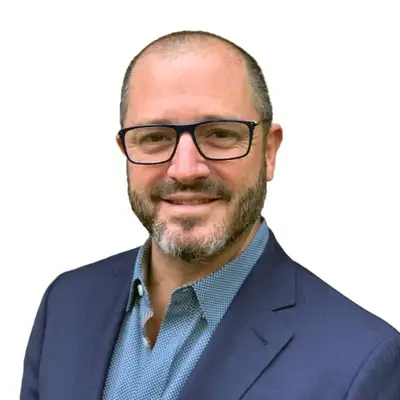
Hi, I'm Tony Cooper. This is The Dad Manual Podcast. And I'm here today with someone really excited to talk with you. You are the creator of something really important and impactful in terms of what we're doing on the podcast, which is supporting dads to be better dads in community. And so you call it Founder Dad Dinners. And so would you please introduce yourself?
George Rivera 00:48
My name is George Rivera. I'm a great dad, and I have some wisdom to share. So thank you for having me here, Tony.
Tony Cooper 00:59
I'm thrilled that you're here, George. Thanks for agreeing to be a guest. So let's just start with that. Let's start with the Founder Dad Dinner. And I know that it's something that you created because it was something you needed, like something that you wish you had at a certain point in your life. So would you start by just giving a little bit of that background about where your life came to and what spawned this community?
George Rivera 01:19
Yeah. Well, everything I do today comes back to one sentence that my dad said to me two weeks before he died. He said, don't miss Leo's games. I missed too many of yours. And those words split my life into before and after, because I instantly understood what he meant. And you know, my dad, he wasn't a bad man. He wasn't someone who didn't love his family. He was a provider. He was a builder. He was a man carrying a lot of responsibility. But when I was growing up, I played in about 40 basketball games. This is back in high school. And he only made it to one of them. And I remember scoring and looking towards the stands and seeing the empty seat where I hoped that he would be. I also remember watching the other dads cheer for their sons like they just won a championship, just scored a basket. And I remember thinking, I wish that was my dad. And then I grew up, and I built successful companies. I became a father myself. And I slowly started repeating the same pattern. I'd become version two of my dad. Great provider, missing at home. And the lie that kept me stuck was, I'll make it up to them later. But later has a way of becoming never. So today I help founder dads come home before their kids stop asking. And that's sort of what got me here today.
Tony Cooper 02:28
Yeah, it's so interesting to think about when we were kids, why we do sports. There's a lot of different reasons, but you know, what you touched on there is there is an element of wanting approval or being seen in a certain way. And so to not have that witness there, what was the impact on you?
George Rivera 02:52
Yeah, you know, it's interesting. Cause when he said that statement, that was in 2015. And my high school days were, you know, in the mid-90s. So you're talking at that point, quick math, about 20 years. And so I'd gotten over it. Honestly, I'd forgotten about it until he said it. And then instantly, I was transported back into that, and I was like, yeah, I remember as a kid, I really wanted him there. And so it's just one of those things that I suppressed for decades, I guess you could say, got over it. But I realized that I was following in my father's footsteps. But yeah, I think every boy wants approval of the father. It's like, dad, look at me. I need you to say, son, you're doing well. I approve of you. That's what we want to hear from our dads. And I make it a point to say that to my son every single day.
Tony Cooper 03:37
Yeah. I'll tell you, we have a Leo in common. My son is also Leo. And you know, one of the things that when Leo turned seven, we moved from San Francisco to out here to Davis, California. And he said, hey, I want to do Little League. I was like, great, yeah, you should definitely do that. And he was like, no, I want you to do it with me. I was like, oh, yeah, I'll totally do that. He's like, no, Dad, I want you to do it with me, not mom. I want you taking me to practices. I want you involved. And it was really the first time, like, as a dad, I felt like I was the primary parent. Like, he was calling me into something. And I'll tell you, if he hadn't done that, I probably would have missed a lot of it. And it was just the simple, that he had the wisdom and the clarity to go, this is what I want or need in my life. And I wound up coaching his baseball, not just through Little League, on and off through when he was a senior in high school. And I wasn't a baseball player or even, like, the game, for that matter, but it was like, that connection point. So not just being there in the stands is important for the kid and for the development, but just, like, being involved and being part of it. And I'm really grateful that he asked me that. And I get the gap because there were a lot of kids on the teams who didn't have that. The parents weren't involved. And then they would, you know, lean toward me and want me to sort of step in as that other parent, which I was happy to do. But it's definitely not the same thing.
George Rivera 05:00
Yeah, absolutely. It's awesome that you were there. And the sad thing is, too, a lot of parents might even be there, but they're kind of, like, stuck on their phone doing this while the kids are looking up and they see their parents doing this.
Tony Cooper 05:10
Right. Almost the same thing, if not the same thing as not being there.
George Rivera 05:15
Well, if not worse. Because, like, you do that at home, dad. You don't need to also do it here while I'm doing something.
Tony Cooper 05:22
Yeah, yeah, yeah, yeah. I guess. Call it worse.
George Rivera 05:23
Yeah, even worse.
Tony Cooper 05:24
Yeah. It's such an interesting thing then, for your dad, then to come back full circle. And what was that like to hear that? Because I know you said that was a really instrumental moment of your life. I can look at it a couple of different ways. Like, wait, you've kind of known that was shitty this whole time and never said anything? Or did you just come to that conclusion? What was it like for you?
George Rivera 05:44
Yeah. Interesting. Yeah. When he made that statement, it's as if a thousand bricks fell on my head. Because, again, it was that flashback moment, and it was nice closure to that. It's almost like it just bubbled up, and it was like, okay, closure, forgiveness, we're done, good. But on the other side, I was like, oh, my gosh, I'm seeing the lament, the regret in my father, and this is my future. I'm heading like a freight train in this direction, based on the previous nearly 20 years of my life. I mean, I'd been an entrepreneur in my own business pretty much since high school. And this is the path, as far as how to work, hustle and grind and even sacrifice your family in pursuit of business success. Not intentionally, but I built what I call the founder prison. I designed my business to make me the most important person in the business. And we can go into some reasons why that's the case, probably some approval issues that I never got from my dad. But hey, my own company approves of me. They kind of have to because I pay them, but I wouldn't train them properly to do their job. They'd come ask me to finish the stuff for them. I'd do it for them. And then I was like a hero to them. And there's a dopamine hit there. So yeah, some interesting things. But yeah, when he made that statement, I don't know that I felt that he was aware of it. It could be something that, coming that close to death as he was, it just gives people a reflection. And maybe he felt that he saw me heading in that direction and said, son, I did what you're doing, and look at me now.
Tony Cooper 07:16
Warning.
George Rivera 07:16
And I was like, warning received. Whether I did anything right away with that, that's another story. But I definitely got the message, and I'm like, I'm on board with that. We need to change this, right?
Tony Cooper 07:27
Yeah. There is this real important thing to acknowledge, which is, however we were raised, whatever, mostly our dad, but even our mothers, whatever they imparted into us is just embedded in us. And it's totally unconscious. You step into a new role in life, and then that character starts to step on stage and do the thing that it was designed to do. And it's so unconscious and so without choice or determination, that when you get that opportunity to see it, like, literally see it when you're like, damn it, I'm being my dad right now, it gives you that opportunity to choose, is this who I want to be? And if not, who is it that I want to be in this moment? So, come back. You get that big clearing from your dad. It sent you in a couple different directions. One, a desire to actually help other dads who are struggling with the same thing, and a way for you to double down like the father you wanted to be to your kids. And so you have stepchildren who are older, you have a daughter that's older, and then you have Leo, who's 11. So when did this message hit you, and where were you in those relationships? And then what could you do with those relationships versus what was possible with Leo?
George Rivera 08:38
Yeah. So I would say at the time when my dad made that statement, and I'm like, I'm on board. But, you know, my excuse that I gave myself was, I'm working 16 hours today. I don't have time to do whatever it is I'm going to do. So it's going to have to wait till tomorrow. And oftentimes, you know, people say tomorrow, sometimes it means never. In my case it meant three years. And so it's almost like a continuation of that happened for three years with this awareness that I had. And it's crazy, even if we're aware, we still continue down the same pattern because we feel like we're trapped in this founder prison, in my case. And so it wasn't until I was scaling my company to numbers that I only dreamed about as an entrepreneur, extremely successful, had a little money printer that was just kicking out money, more than I could handle. But I was hating life. And I know hate is a strong word, but I don't know any other way to explain having the feeling of the business ripping the family away from me and a little bit of my soul going along with it too. And so I came to that point of, I'm either going to sell this thing or I'm going to burn it down. But I'm out. Like, I reached my blowup burning point.
Tony Cooper 09:38
We're done with this. My breaking point, when you fall out of love with your business, that's a terrible moment in your life.
George Rivera 09:48
Yeah. Because it's a baby, it's a child. When you create it, it's everything to you. And to get to the place where it starts to cause you more pain than joy is a moment of waking up.
Tony Cooper 10:00
It's an epiphany sort of situation for sure.
George Rivera 10:03
Absolutely. And yeah, I can totally resonate with that. And I was like, okay, well let me just try selling it. Because I don't want to burn it down if I can sell it. But selling it's not going to solve my problem tomorrow. That's a multi-year process. Any business that's of any value is going to take a couple years to sell and then, you know, they fail at an 80% rate. That's not going to fix me tomorrow. I could burn it down. That would get me my, hopefully my sanity back, my family back, my time back, and I can rebuild a business that I really wanted. Not a great idea because I already had a successful business. It was just that I had designed it in the wrong way where I'm the most important person in the business. And the crazy thing is I had 40 people working for me. So there was some of that, you know, making them happy with me, and dopamine hit that comes along with that. So all that had to be restructured. I had a coach and a mentor that lovingly walked me off the ledge of wanting to burn the business down. And all he said was, look, slow down, stop. Stop doing what you don't like doing and keep doing what you're good at. I'm just like, yeah, holy cow, 23 years in business. And somehow that clicked. So anyway, better late than never. I'm a late bloomer. So I got it, I started doing the work. The pinnacle of the transformation was a little under two years later.
Tony Cooper 11:20
The thing about your options were, okay, I could sell it or I could burn it down. Either one of those things could have stopped the pressure you're experiencing from the business, but it doesn't change you. You're still going to be you. So even if you did either of those things, you're going to still recreate it in any sort of way. So what did you specifically do for yourself so that you weren't going to repeat the pattern?
George Rivera 11:45
Yeah, that's an extremely intelligent insight there because, yeah, I would have just started a new business where I'm the sole decision maker and everything. So what I did was I first had to do what I call a freedom audit, or a time audit. It took a couple of weeks, but I had to essentially document everything that I was doing for work. Now with AI tools, it's so much easier, but at that time it was pre-AI, so I had to take an inventory of everything that I was doing. And then once I had that list, I had to run it through what I call the 10k-per-hour filter. Just replace the 10k for whatever the listener's dollar value is worth. Maybe you're $20,000 an hour, maybe you're $200 an hour, but figure out what that dollar amount is and then run all those activities through that filter. Whatever does not equate to that dollar value gets off your plate. You have to find a way to get it done by somebody else or move it somewhere else. And there's only three things you could do with anything that you should not do yourself, which is eliminate anything that doesn't move the needle. There's plenty of stuff we do all the time that doesn't do anything. The second thing is automate anything that repeats. And the third thing is delegation, but delegating outcomes instead of tasks. And there's a big difference in that. And so implementing all that is essentially what got my freedom back. And having that mindset now, I implemented into my existing business at the time, and I implement that into anything new that I create. So yeah, that's the fundamental change that has to happen within myself, to follow this process from here on out so that I don't get myself back into the same trap as before.
Tony Cooper 13:12
You mentioned the idea of approval, or, you know, the way I'd say it is like, self-importance. When I see business people build everything around them, it's like, yeah, you need to be needed. I get it. And there's an insecurity inside of there. And so everything you're talking about is all the right stuff. So what's the highest leverage? What's the highest value? What do you really love and enjoy to do? What's the greatest impact you're making? And how can you use that delegation to rise other people up, because they're all dying for greater responsibility anyway. But at the core, though, there's still that need to be needed in some sort of a way. And so I'm not saying it needs to be healed, but were you able to take that and go, okay, cool, I get to pour that into being a dad and get more involved? Is that really what came out of it for you?
George Rivera 14:04
I'd say that's the direction that it went. You know, it's being there present for my son and my wife and the children that weren't there with me, but when we were together, it's fully present. Because there's one thing about, the proximity is one thing and presence is another. I could be sitting here talking to you, but my brain being somewhere else, it means I'm not present.
Tony Cooper 14:16
So, yeah, same thing you were saying about having the cell phone at the baseball game, looking at reels, not the sun.
George Rivera 14:19
Yeah, for sure.
Tony Cooper 14:19
Yeah, yeah, exactly.
George Rivera 14:20
And there's some deeper stuff there. We need to regulate the nervous system. And I know that's a whole nother conversation, but sometimes our nervous system won't allow us to rest because we're so wired and programmed to work. And one of the things that I've seen with others who have followed some of my work and implemented some of it, is that they're successful at delegating, getting stuff off their plate. And they're like, all right, now what can I do? And they're moving. You know, it's like, chill out. I'm not the nervous system regulator guy. But figure that out, how to get that calm, because that's when you'll find the true peace.
Tony Cooper 14:53
Yeah, yeah. Calm the fuck down. Meditation. There you go.
George Rivera 14:53
Exactly.
Tony Cooper 15:17
So I definitely want to hear about how you support other dads, founder dads, who are, as you say, cash rich and time poor. You've built a support system, a community, and you found that, man, a lot of dads who are really killing it in the world from the outside are kind of dying on the inside. So share about what you've been able to create and what that's like for people in your communities.
George Rivera 15:17
Yeah, absolutely. So my dad told me those words. Like I said, it took me three years, but I finally got to it. The transformation took a couple years once I knew it and did it. So five years from statement to actually living it. And then it took another couple of years of actually living it to when I realized the world needs to hear this, because I had to first live this and adopt this for myself. But the world needs to change the name Leo to their kids' name, change games to dances, recitals, events, whatever it is they're missing for their family. They need their own version of don't miss Leo's games. And so I just feel like this calling, I feel like God's leading my footsteps into doing this. I have a blueprint that can print money in the online supplement space, but I feel like I've been told to burn the boats. You know that phrase, we've made it across the island, let's burn it, because we're not going back to there. We've got impact and legacy here. I've sold millions of bottles of pills, and I've never had anybody tell me, oh, my gosh, this bottle of pills changed my life. Maybe they got less joint pain, maybe a better memory, but it's not a miracle in a bottle. And it's fine, that's not what it is. But since coming out with this message over the last year, 13 months, I've had a number of men tell me, in their own words, oh, my gosh, I've been living my life on autopilot. I didn't realize how much my family needed me. They light up like a Christmas tree at my presence. And I hear that, I'm like, holy cow, that kind of satisfies my soul. How can we get more of that? And then how can I do this in a way that honors the man and feeds my family? Because I want to do this for the rest of my life. I want to have this impact, and I want my son to see me doing this for other men so that he can carry the torch and the mantle when it's his turn. And he kind of already is, a little bit, in his own way.
Tony Cooper 17:00
I mean, that whole thing, you know, that you're able to prepare a young man to step into adulthood and so many levels of responsibility. But one of the specific ones about being a dad is simply breaking this generational trauma, breaking the lineage of these behaviors that have just, on the one hand, maybe from the outside, the family look like huge successes, and you get accolades from all of your community, and then at home, all you're getting is complaints. You're never here, you never do anything. And I've heard this a lot, I probably said it a lot too, which is, I'm out there working so hard to provide for you all, what are you complaining about? So I'm sure that you hear that a lot. So how do you approach that?
George Rivera 17:38
Yeah, and I've said it a lot myself. It's one of those things like, well, you like the home, you like the cars, you like the trips, right? Well, what do you think makes that happen? And you feel empowered because you're kind of right in that, or at least you're telling yourself you're right. But the family's just saying, I just want you, we just need you, and all that. So there's the tension there. And I'm not telling the founder dads listening, hey, abandon everything and don't keep doing work. The reason you feel that way is because the company that you've built up or that you're in, it's just poorly designed. It's pulling too much of you in. First, we'll need to regulate the nervous system. You need to get all those things that you shouldn't be doing off your plate so that the work you are doing are things that bring revenue for the business in a structured way that doesn't overrun your life. And then you're able to come back to the family peacefully, fully present. And I recommend, phone, put it in a drawer, get it out of sight, out of mind. Because also, when you're with the family, but the phone is kind of just hovering around, they're just thinking, hey, the second that thing lights up, I've lost dad. So let me try to get this in quickly or whatever. We just want to neutralize any of those threats. Just get the phone away. There's nothing more important than being present with your family at that moment. And I'm talking to myself as I'm saying this now too. I'm not perfect at it, but I'm aware that we need to eliminate all these distractions.
Tony Cooper 18:40
Neutralize the threats. That's a good way of saying it. I love that. So give me the format. How does it work?
George Rivera 18:55
So there's two different ways that men learn about the dinners. And again, cash rich, time poor, founder dads. In marketing, you talk to everybody, you talk to nobody. So that's why I have very specific, like, oh, that's me, I'm one of those, you're talking to me. And that's why I use that phrasing. And so there's two ways that they learn about the dinner. One is by referring, just through networking, oh, I know somebody in Austin who's willing to travel to Austin. And then the second way is I run ads on Facebook, on Meta, and I'm targeting certain zip codes in my area, the high net worth regions of Austin for men who likely see the message that need to be there. And then my ads have to call out the message. So I'll say something along the lines of, are you sick and tired of traditional networking or just swapping cards and, nice to meet you, probably never see you again, and you're just wasting time. I was sick of that. So I had to create my own group with people that would understand the issues and struggles that I go through. And so I get into some of that and then the call to action is, go here and see if you'd be interested in this, and this very low pitch kind of thing. And then they're qualified to come to the dinner and once they buy their tickets, $60 to attend, that just covers their food and holds a spot for them, because I can only have, I've raised it to 10, but it's only six to eight founder dads initially. But I feel like 10 is a good cap. So it's not like hundreds of people, it's a very small room. And then the first time I meet them, they're at my front door and the first 30 minutes of the dinner, it's kind of a meet, greet, eat, let's kind of just do little informal chit chat. At seven o'clock we start a structured conversation which is, Rose, Bud, Thorn. Rose is what's going well in your life right now, could be business or personal. What are you excited about, business or personal? And then Thorn, what's keeping you up at night? What's the biggest pain and stressor in your life, also business and personal. And I've had men come in nine figure exit, $100 million net worth, almost million dollar car in the parking lot, on top of the world. And I know because I've kind of been that guy before, here and there. But then you sit down and start talking, and then by the time they leave, they've been crying for 30 minutes because their relationship is deteriorating with their wife, their kids don't like them. They thought that making millions would make them happy. So let me just try to make some more millions, still not happy. What's the purpose of life? I've heard, I have no friends, literally from the mouth of this one guy who seems to have everything, but he has no friends. Another man, very successful, had his first child at 42, he was 44 at the time. He's like, I have a two year old, I regret not having children sooner. You could see the pain in his face. He just recently lost his mom and his wife's about to leave him. And I'm just like, holy cow, all of the pain and suffering out there in the world while they're putting on this mask and they sort of act like they got it all together, there's just a lot of brokenness out there and striving for community. So I feel like it's my calling in life right now to help impact these cash rich, time poor founder dads. Give them a place to talk. I'm not there trying to fix their problems. Anyone can argue, I still have things I'm working on.
Tony Cooper 21:52
Yeah, we all do. As long as our heart's beating, we got stuff we can work on.
George Rivera 21:53
Yeah, that's it. And by the time they leave, I have men who, on their way home, they're texting me like, holy cow, this has been really impactful. There's nothing like this. A couple of times I've had men come in and they're kind of like, oh, what's this kind of sissy stuff, we're talking emotions, I thought we're gonna make some deals here or whatever. I'm just like, just sit down, we'll get to you in a minute. And by the time it's their turn, they're getting deep. And so, okay, finally they get it. It takes a second to sort of relax, calm down, we're here to get real. And I've had another number of men say this phrase, something along the lines of, I'll go to war for you. There's this brotherhood that's been built. And I'm like, thank you. I hope I never have to go to war, but thank you that I know that you'll go to war for me if I do. So it collapses the time that it takes to build trust in any other way. So it's like instant brotherhood is the best way to explain it.
Tony Cooper 22:49
That's awesome. I love the sound of that. George, you were in a place where all your success almost cost you everything. And so you have a lot of empathy and understanding for where a lot of these men are or where they're about to be. And you can see that. And so imagine you bring a lot of your heart to that condition.
George Rivera 23:06
Oh yeah. And sometimes I have to just try to calm down and kind of let them get their thing out. One of the conversations, one of the men that was at the table, 80 million dollar a year business, printing money, but he's one of the ones, I have no friends. And he's telling me, and sometimes my son tries to get my attention, but I'm like, I don't want to do that. He's just being honest. I just don't want to do that. And I'm just like, look, I know you don't want to do it, but be there and do it. Because one day you're gonna be like, I wish I didn't feel that way. I can just tell you, I've already seen your future, and I've been part of where you're gonna go if you don't change anything. And then I've seen the end through my dad, where you're gonna end up. I hope and pray that it just penetrates his mind. And I'm excited to see the impact and trajectory that his family's gonna have if he engages, versus continuing on this whole, kid will just do whatever tries to get dad's attention, dad's not engaged. And then the dad thinks, oh, kid's just a phase where he doesn't want to talk to me. And it's not a phase, it's because you pushed him away. You know, you forced the phase, I guess you could say.
Tony Cooper 24:00
Yeah. So, yeah, trying to bring clarity and understanding to that. So everything you're saying, all these stories you're telling about these dads that come for your Founder Dad Dinner, it just reminds me of that song Cats in the Cradle, which was, I was a kid when I heard that song in the 70s, and I remember it making me cry, hearing that song without even understanding the pain. So that's clearly what's going on with you guys.
George Rivera 24:24
No, it's crazy that you say that song because, yeah, my dad used to love that song, and he wasn't ever super passionate about a song, but when I knew that he would hear it over and over, it's like, okay, there's something there. And yeah, it all clicked. Well, after his death, when I went back to listen to it, I was like, oh, my gosh, there's a reason, there's a story behind there.
Tony Cooper 24:47
So, yeah, it's so funny because it was such an impactful song. I remember, I hadn't thought about that once since I've been doing this podcast. Thank you for bringing just that awareness of, yeah, it's so easy to become the thing that we didn't like in our fathers, and somehow, but we're just built to admire our fathers. Like, they can be assholes, they can be terrible people. And still we just want to admire them so badly, and maybe we just subconsciously even take on their negative characteristics just because we want that connection with them.
George Rivera 25:07
I've seen it happen so much. I did it myself. It's hard to explain. And so I believe as dads of young ones now, we should be aware that that is what we're preparing our children to follow in our footsteps. And so I have this saying or thought where, with my son, I'm training my replacement in this world, because whether you know it or not, you really are.
Tony Cooper 25:39
So what's the timing then? Like the awakening from your dad and then you implementing that in your life, how long has that been? What's this time period?
George Rivera 25:47
I would say from that line in the sand moment to actually, like, day one of living the experience was like a five year process. It took three years to even come to the breaking point where, okay, yep, I need to just really get onto what my dad told me, because I can't keep going like this. And then it was a little under two years. So maybe a little under five total, but a little under two years when I got the business side of it in a place where I could step away, the business continued to grow in scale so it wouldn't go back towards, it went forward without my presence, and I was able to get that presence back to the family.
Tony Cooper 26:06
That's beautiful. What you shared with me is that Leo has his own podcast. So Leo's 11 and he has conversations with similar type people, right, that you're engaging with.
George Rivera 26:29
Yeah, we have a very similar demographic as far as our ideal clients. I mean, his is a bit wider, like, his is really just anybody who has an amazing story to share, podcast worthy, which I think every human on earth has a story worthy of sharing. But those that specifically do speaking and sharing their story, we're finding a lot of those people coming across our path. And some of the clientele or the podcast guests, there's crossover. We've had a number of just, high achievers, people who've had nine figure exits. We had our first billionaire on a couple of weeks back. We've got some coming up here on the calendar. We had a country music singer. We had this one man who survived cancer two times, two different times in his life. He was told that he had days to live and somehow overcame that. He has one functioning lung, and I'm like, wow, let's get into his story. What was he thinking when he was told that he only had days to live? How did he overcome that? I'd love for my son to hear this stuff. And oh, by the way, after all that, he also climbed Mount Everest and climbed the peak of every continent on the planet. So it's like, wow, it could have just been good there, but he's done amazing things. And for my son to be getting this wisdom poured in on him, it's just some random Tuesday. I listen to his podcast and I'm like, wow, that would have been nice to know it at 30, at 40. And he's hearing this at 11. So, yeah, it's just this amazing thing. I just love all the guests that are pouring into my son. It's amazing.
Tony Cooper 28:05
Yeah. I mean, so everything we can do to set our children up for success and just accelerate the pace in which they get lessons. What happens if you front load all these lessons to these children? What kind of adults do they become? Because we need them to become incredible adults to save our world. So I love that. It's going to be a great case study to follow. How does this all turn out?
George Rivera 28:26
I just told him, and I got to remember, he's still 11, but I'm like, if you just keep this going, you'll never have to worry about work ever. The relationships that will come from this, the doors that will open. He's already got the Leo Interviews Academy. We think that'll do well, but it might turn into something else. But the network that he's building, the connections, the relationships, those will serve him for life, plus the skills in communicating with them. I'm like, just keep doing this. The podcast will open doors that we don't even see right now.
Tony Cooper 28:56
And, I mean, he's prolific. How many episodes at this point today, we or he recorded?
George Rivera 29:00
151, 152. I keep saying we because I'll actually get the podcast, my VA will kind of get it ready, and then I'll post about it to my network. So I feel like it's part of mine, but yeah, he's running the show, it's all by himself.
Tony Cooper 29:12
How did it come about?
George Rivera 29:12
Yeah, so he's always wanted to start a podcast channel, and we did have, like, a gaming channel that he started, and it did a few episodes and he kind of fizzled out. But then he's like, came back a little less than a year ago, hey, I think I want to get back the YouTube thing. And I was like, okay, well, what about a podcast? And he's thinking, what's a podcast? Because he's 10 at the time. They don't listen to that kind of show format. And so I said, all right, son, go to your room, get your mom's computer, and I'm gonna go to my office and we're gonna just get on a Zoom call and simulate, like, we're not together, we're in different parts of the world, and you're gonna ask me questions. And we recorded a nice 12, 13 minute interview where I'm coaching him a little bit, like, all right, ask me this now, and then ask me this. And then at the end, you kind of want to, what's my big insight or a surprise question or something. And I sent it to my VA and I said, hey, cut this up into a nice little tight interview, get the coaching out of there, just act as if he was ready to ask me questions. And I responded, and it turned into like a four or five minute interview, nice, tight little show. Episode one of his podcast. And I launched it to the world by just telling my Facebook friends, basically, my son's got a podcast, I was guest number one, check it out. And I had a number of people, seven, eight people that, hey, have him interview me next. And these are my friends and mentors and successful people in business. I was like, man, yeah, my son should interview you because you've got all this great wisdom to share. And I'm thinking in my head, not even thinking podcasts, but I'm like, it'd be a great thing for him just to record and have to listen to over the years. And then it was like, no, but it also good to release to the world. And so that's kind of how it started. And we quickly had our first 15, 20 guests, and then all of a sudden, okay, well, now I'm going to just start telling people I meet that I like and they find interesting, that I think would be great for my son. I invite them onto his podcast, and that's how it's grown. And then they tell their friends and so on. We've had people who we know because of five different people, hopped from five different networks, basically. And it's crazy how it's growing.
Tony Cooper 31:16
Awesome. What's been that experience like, having this project with Leo, thinking about in terms of everything you poured into your company, and now you've got that same drive, pouring it into your family. What are you seeing as a result? What's different in your life?
George Rivera 31:34
Yeah, I love it because it's like a family thing, because even mom's involved a little bit. I mean, not in any technical way, but she's like, hey, so how many podcasts do you have? Let's make sure you're ready, let's study the guest a little bit, and then she'll kind of review it. Oh, wow, this one, we had a surgeon who invented some surgical camera thing, and my wife's like, holy cow, you're talking to these people. And so they're kind of going briefly on the bio so that he's ready with a little bit of knowledge about it. He tries not to do too much knowledge because he wants just the guests to really share what they want to share. But yeah, it's been fun just seeing the whole family get involved. And he's booked out quite a bit. But, you know, sometimes we'll take a trip somewhere, and it requires travel. So, for example, we'll drive up to northern Michigan, and we live in Texas, so, that's a lot of driving. Some days he'll have podcasts on those drive days. So we'll pull over and we'll get him on a podcast and he'll do it and we'll just continue driving. And we have this philosophy of the show must go on. We've got other people who've committed their time to be on with you, so we're going to honor that time commitment. And so far it's worked out really well.
Tony Cooper 32:43
Well, I aspire to be like Leo. That's so impressive. What do you feel like he's gotten out of this? What's been the impact?
George Rivera 32:43
Yeah, so we started late October, so we're coming up on a year. It's just more confidence, more communication, just like having a quick response to things. His mind works real quick, it's able to hear a question, even if he doesn't know, he'll communicate, okay, I'm thinking about it, or here's what it is, it could be this. Just the ability to converse, to process, to sort of reflect back. He's gotten really good at that. And these are skills that will serve him for life. And that's one of the reasons why he wants to help other kids do the same thing. He's 11, and so being the dad of an 11 year old, I have a good view of other 11 year olds as they're around, and it's like, man, they're very addicted to devices and things as a whole. Not stereotyping, or I guess I'm stereotyping, but I'm not calling out any individual, but they need help communicating, how to shake somebody's hand and look them in the eye, nice to meet you. And yeah, some of those just common life skills that maybe we took for granted when we were younger, but a lot of this technology and stuff that occupies their attention has really taken away from some of those skills that I thought would sort of have been default, but maybe we shouldn't take that for granted. Yeah, these are skills that'll serve them for life and it'll set them apart from the masses who aren't interviewing people and having these conversations.
Tony Cooper 34:02
Well, back to Cats in the Cradle, walking in your dad's footsteps, I mean, you went through something, figured something out, made some changes in your life, and your next instinct was to share that with other dads. And it's so cool, that same thing with Leo. He's finding something and creating a breakthrough in his life, and he wants to share that with other people and his contemporaries.
George Rivera 34:22
Yeah, yeah, yeah, that's been great because I believe we're here to make impact. And in my previous career, you can write nice, big checks, and that's good, and keep writing checks because people need money and things like that. But I feel like our work should contribute to some sort of impact. I'm not saying that has to be for everybody, but that's what I feel like, that's the direction my family's going in. And so I hope and pray that one day he'll be able to say, hey, my dad did his best, and my dad was able to help other dads reconnect with their family, and that could be something he's proud of.
Tony Cooper 35:00
Amazing. Well, let's wrap it up with some advice that you will want to impart to a brand new father. So really, the whole point of this podcast is to impart to people at the early part of their journey what some of the opportunities, what the obstacles are, but if you can bring yourself back to being a brand new dad for the first time, there is so much more you don't know than you do know. And there's so many things that you kind of wish you had known that would have made a difference in your entire journey. So what would you like to share?
George Rivera 35:20
Yeah, I mean, I would just say first, congratulations. It's going to be fun. There's going to be struggles. There are going to be days where, oh, my gosh, and then days where it's all worth it. On this emotional roller coaster, I would say, realize the gift that you have. You have 18 summers, and that goes by very quickly. Most people, when they realize how many summers they have, they're like, oh, my gosh, yeah, you're right, but I only have three, or two, or I'm out of summers. But starting at day zero, you have 18 summers, and it goes by so fast. One thing that I like to tell my fellow founder dads is that you can always go out and make more money, but you can never redo a childhood. And these younger years are so foundational that it's going to set them up for the rest of their lives, and hopefully they end up with a great life and people can overcome challenges and things. So it doesn't mean that life has to go perfect, but just be aware, be there for your child. Sons, you're training your replacement in this world. And for daughters, you as a dad are showing them what it is to be a man, so that one day, when it's their time to go out there and have their own man, hopefully long, long time from now, if you're at day zero, but they'll be able to see that, oh, that's not how my dad acted. My dad respected women, talked good to my mom, opened the doors. You want them to see the bad man quickly so that they don't waste time with the bad men or the men that just don't serve them. And then you want them to be able to recognize the good ones, because that's how dad was. And so just keep that in mind, whether you even know it or not, you're training your daughters what to look for in a man in the future. And we only got 18 summers, it's not a long time. It goes by so fast. Best don't take it for granted. We can't rewind it, be there for it.
Tony Cooper 37:11
Yeah. George, thank you for so many things. Thank you for the work you're doing to support your founder dads. I know you're changing lives, and when you change their lives, you change their families. And then the whole point is we get to raise children who get to be better versions of ourselves who can help bring healing and change to the world. So thank you for all that, and thank you for your time and sharing your wisdom here. I really appreciate it.
George Rivera 37:29
Thank you, Tony. Thank you for what you're doing, and thank you for the platform. And I'm looking forward to a continuing friendship and seeing where this all goes.
Tony Cooper 37:50
Absolutely. All right, well, until next time, I just want to thank you for listening to this episode of The Dad Manual Podcast, and for supporting dads to become the best version of themselves as they strive to bring healing and inspiration to their families. I'm looking to grow a community of fathers who are ready to change the world. But I need your help. It's super valuable to the podcast when you like an episode, when you leave us a rating and subscribe to our YouTube channel, when you follow us on Instagram, The Dad Manual Podcast, and maybe even the most important, when you share the podcast with the dad you love. Also, you can impact what we talk about here. If you've got questions or topics you want me to explore, email them to me at dadmanualpodcast@gmail.com. I would love to answer your question on our next episode. And until next time, I'm Tony Cooper, and this is The Dad Manual Podcast.