Subscribe
Share
Share
Embed

Learn how to cultivate a more productive mindset, form sustainable habits, and create a lifestyle that supports both your goals and your wellbeing with host, Monica Reinagel. Drawing on decades of expertise and experience, Monica provides guidance on navigating the challenging process of behavior change in a fun and accessible way. Learn more and find show notes for every episode at https://changeacademypodcast.com
Do you ever wonder whether we might have things backwards? What if the pursuit of happiness is not the path to greater life satisfaction? What if being more productive and getting more done isn't actually the way to get ahead? In today's episode, I'm talking to author Oliver Burkeman about some of the ways in which we might want to reexamine our relationship to goals, happiness, and the things that are most important to us.
Brock:Alright. Alright. If you want, take your seats or to lace up your sneaks. We're about to get started.
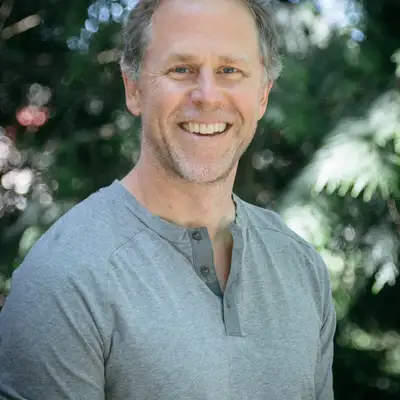
Monica:Welcome to the Change Academy podcast. I'm your host, Monica Rheinagle. And in this show, we talk about what it takes to create healthier mindsets and habits in our own lives, as well as how we can create healthier communities and workplaces. Whether you're working on your own health and well-being, or promoting healthy behaviors is your job, we're gonna talk about what works, what's hard, what's needed, and what's next. I'm excited to share my conversation with author and award winning journalist, Oliver Burkeman, with you.
Monica:I have long been a fan of his work, but I have a bit of a love hate relationship with this guy or rather with his ideas because he regularly forces me to reconsider my commitment to ideas or concepts that I'm actually pretty comfortable with, thank you very much, and this is sometimes a bit painful because a lot of it has to do with confronting some of the hard limits that we like to pretend don't exist. We fantasize that we can overcome them with the right combination of productivity and happiness hacks. But don't worry. He's not just here to burst our bubble. As you'll hear, there is ultimately a profound relief and freedom to be found in all of this.
Monica:Now at one point, he even goes so far to suggest that change and transformation may ultimately be a lot less possible than we like to think, which I thought was pretty cheeky of him to say on the Change Academy podcast. But as you'll hear, his real point is that accepting the limits of what we can change, paradoxically, may make change more possible. As you listen to our conversation, you may feel a strong desire to reexamine some of your current goals and objectives or assumptions or methods. And a great format or vehicle for doing some of that reevaluation and realignment is our 50,000 mile tune up series, which I originally created with my then cohost, now producer, Brock Armstrong. You may have even done this series with us in the past, but it's the kind of thing that you might want to revisit every few years.
Monica:And we have put together a free listener's guide and workbook to accompany that series. You can get that at changeacademypodcast.com/ tune up. But now, let me bring you my conversation with Oliver Burkeman. Welcome to the Change Academy, Oliver Burkeman.
Oliver:Thank Thank you very much for inviting me.
Monica:Well, I know that you get far more invitations than you can say yes to and requests for interviews. So I'm very grateful that you were able to make time in your schedule to talk to me and have this conversation. I've been looking forward to it for a few months now.
Oliver:Thank you. It's always interesting, isn't it? Having to sort of figure out what to do when there are more things that you could do with your time than you can do with your time. But this is just the universal scenario. So
Monica:I was gonna say that pretty much sums up your life's work, doesn't it? Well, you write about topics that I read a lot about, talk a lot about, that I know that the listeners of this podcast are very interested in things like how we organize our time, productivity, how we create lives that are more in every book or in every essay, there comes a moment where you take something that I feel like I have a pretty good grasp on and you just turn it inside out, right on its head. I've come to think of these as the damn you, Oliver Burkeman moments where you'll go ahead and suggest that maybe pursuing strategies to make ourselves happier is not actually going to create a more satisfying life or that finding ways to do more in less time is not actually going to free up more time for us to do the things that we care more about. I'm curious about how this is for you. Do you find these realizations as discomforting or surprising as I do?
Monica:Or do you see them coming from a long way off?
Oliver:That's an interesting question. I think I'm probably beginning to get used to them at this point. Right? It's like, if I if I find myself thinking that some new technique or life philosophy or something is the, is the answer to all my problems, It's on a shorter time frame now that the thought pops in like, I bet this isn't the answer to all my problems. But no, it's it's I mean, the the sort of the the shift of perspective that I think you're talking about there and I want to sort of say more about that because it's it's a I think it's a really liberating and empowering shift ultimately, not a sort of depressing and disempowering shift in perspective.
Oliver:But that general shift in perspective that's sort of where we sort of realized that we had less control than we thought, that we realized that our willpower based actions to change stuff is less effective than we'd been assuming. It's always a kind of a somewhat uncomfortable thing to to realize. And I assume it will be for the rest of my life or the rest of whatever part of my life I carry on thinking about it because we're completely conditioned by all sorts of different things to think that it's the other way around.
Monica:Well, one of the ways that I have been completely conditioned by popular culture is in my relationship to goals. I've really absorbed this idea that having goals and working towards goals is a good way to organize my life and my efforts. It's going to lead me to places that I want to be. And I was so struck by your observation that when we are overly oriented towards goals in our personal lives or in our professional lives, that it almost creates a sense of perpetual dissatisfaction because we have not yet achieved that goal.
Oliver:Right.
Monica:So we're kind of setting up a condition where we are never satisfied because we are always working towards a goal. And it also means that we are always sort of projecting ourselves into a future, which of course will never arrive and it takes us out of the present. So this was really kind of a revelation for me. I will say I haven't given up goals, I still set goals and I imagine that you do too. I think they still serve a purpose, but it was a really important insight for me to check to make sure that as I am setting goals and working towards goals, that it is not leading me to be in a in a always state of dissatisfaction.
Monica:How does that work for you now?
Oliver:Yeah. This is a really good lens for talking about this stuff, I think, goals, because there are certain sort of forms of productivity technique and ways of living that you can sort of make the argument of you're completely fine without, to just completely abandon them. But I think nobody really feels that way about some kind of goal. And it may, in fact, just be impossible for us as the organisms we are to not have any goals at all, even if that were a good thing. And I don't think it's a good thing.
Oliver:Yeah, I think you're absolutely right, though, that overinvestment in goal setting is a classic manifestation of this idea that the real part of life is coming later, that what we're doing right now is sort of getting ready and preparing and putting things in place for a period of life that isn't now when things are going to really be plain sailing and really enjoyable, and and it's all going to come together. I can totally still capable of falling into this mindset. I mean, the fact that I struggle with this stuff is what made it so interesting for me to write about. But I think that there is a really obvious alternative perspective here, which is to think of goals as and I'm not the first person to say this, you know, think of goals as sort of stars to navigate by, right? So that rather than something where it's when you achieve the goal that fulfilment will come, you move more into a state where fulfillment comes from going in that particular direction as opposed to others.
Oliver:And you can use those goals as ways to sort of check whether you're doing the kinds of things that are in tune with, like, what you want to be doing in your life and what is what is meaningful for you. But it's more a question of sort of every day becoming more of that that person rather than preparing to become that that kind of person. And part of the thing that I've really found very, very clear from looking at my own experience is that if you take the sort of standard approach to goals and goal pursuit, you end up in this really strange place where in order to achieve a certain lifestyle or a certain way of being in the world, you end up doing all sorts of things that are the opposite of it. Right? So maybe what you want is calm and peace of mind and financial security.
Oliver:So therefore, you act very, very anxiously and stressfully and and try to work more than you possibly really can and and think all the time about whether you have enough money and all the rest of it. And what actually ends up happening in those situations is that you enshrine that way of relating to the world. Right? Mhmm. If what you're doing is not a sort of sane and peaceful way of conducting yourself, then you're you're reinforcing the idea that what you need to do is behave in in in that way.
Oliver:And so what I try to remember to do is what I end up labeling sort of starting from sanity, which is to say, you know, on some level, not saying there aren't emergencies and urgent times and things like that, but on some level, if what I want in my life is, for example, a certain balance between time spent working and time spent with my family, just to pick an example, Basically, you have to start embodying that now Yes. And and kind of deal with the negative consequences of that that there may be rather than spend all your time working, never seeing your family because you think that in a certain number of months or years, you're going to break through to that to that way of being.
Monica:Well, I think you've just brought up something very important that I really appreciate about your examination of these topics, and that is reconciling ourselves to the fact that there may be negative consequences, that there may be some trade offs that we need to make in order to align our day to day living with the way we want to live our lives in the future that we may not be able to have it all, do it all. Say yes to every invitation, say yes to every exciting opportunity. I think sometimes we gloss over that in this magical thinking that if we can just get our processes locked down and our goals aligned correctly, that somehow we will be able to exceed the bounds of space, time and physics. So I appreciate the fact that you've been very candid about some of the losses that can accrue along the way. When we come to terms with the fact that we do have finite time, finite energy, finite capacity, sometimes there's a letting go that has to happen.
Oliver:Yeah, absolutely. Very well put. And I think that there is a sort of disappointment to it and there is a negativity to it. But what I'm off what I often find with this kind of material is that if you really go far enough into the the negativity, it sort of stops being negative in a certain way. It becomes liberating.
Oliver:I mean, I suppose the distinction I would draw a good way of the language of it anyway is that it might seem depressing at first that you absolutely can't do all the things you want to do. That if you're going to invest in certain relationships in your life, that's going to mean not investing in other activities and relationships in your life. I don't think it ever gets sort of happy and brilliant that that's the way being a finite human is. But it can get there's a sort of place where it just becomes sort of poignant. Right?
Oliver:It becomes, this is a very good word, I think. It it has a sadness to it, but it's also why the things that you do decide to do are are meaningful things because you're giving up some some other things to do them. Yeah. And it can also, I think, in many cases, especially when the dilemma feels like a really big and painful one, that notion that there are negative consequences or can be negative consequences is really liberating because a lot of the time, I think what we're trying to do is make life choices without having any negative consequences at all. Mhmm.
Oliver:When you see that some are inevitable, you can relax and more confidently make the right choice. There's this lovely line from the psychotherapist Sheldon Copp who says, You're free to do whatever you want. You have only to face the consequences Yes. Which is a kind of amazing thought. And and more than one person that I know has found themselves in a situation, for example, thinking that it might be necessary for them to leave a long term relationship And getting themselves into the mindset of thinking that their choices are either they've got to find a way to make it pain free for everyone involved, or they absolutely can't do it and just have to, you know, condemn themselves and their partner to a to a relationship that they're not committed to.
Oliver:And then this insight dawns, like, no. It would be painful, but that might be the price that needs to be paid in this context. It also might not. Maybe the price that needs to be paid comes from recommitting to that relationship. Right?
Oliver:It's gonna be totally different in different circumstances. But that realization, like, yeah, you can do this thing that you want to do in your life, and there's gonna be a downside. And the downside is the price you're gonna have to pay if you wanna do this thing. There's something very sort of calming about that because you realize that you've been investing a lot of emotional energy into the idea that it would be essentially literally the end of the world for there to be negative consequences.
Monica:Yes. Or investing a lot of emotional energy in perpetuating this fantasy that it will be possible to achieve without any without any negative consequences. Right.
Oliver:And it's the same it's the 2 sides of the same coin because the desperation of that fantasy comes, I think, from the idea that it
Monica:Must be avoided at all costs.
Oliver:And it's on a more mundane level. Right? Something I've definitely struggled with. People say this is, and I believe them, that this is something that is especially socialized into women, but I think British men have a certain dose of it as well, which is that, like, it's terrible if somebody is ever disappointed or mad at you about failing to do something or or not saying some not saying yes to something. And it it is bad, and there are clearly cases in The Limit where it might be really bad if you're in some sort of abusive situation.
Oliver:I'm not saying just like this is easy for everybody, But there are lots of situations in my life where it really is just a question of being like, yeah, that person might be a little bit annoyed with this. And that is one more thing to weigh in the balance. And it's not that you should just ignore other people's emotions. Sometimes I'm gonna want to do the thing that placates that person, but other times, maybe I'm not and okay. Yeah.
Oliver:It's it's really hard for some peep for some of us, I think, to to reconcile to that. But there's gonna be some negative consequence anyway. If you don't do that one, it's gonna be the negative consequence of not getting to make the choice you wanted to make.
Monica:Yeah. We have a little shorthand for this in one of my coaching programs, which is what am I saying no to by saying yes to this? And to pose an answer to that question so that you've really got all your cards on the table and not Yeah.
Oliver:You're always going to be saying no to something.
Monica:Right.
Oliver:There will always be too much to do. You will never be certain what the future holds. All these kind of insights where I'm like, if you think it's almost true, but if you're really clever, you might be able to stop it being true. That's a very stressful way to be. Yeah.
Oliver:But when you're just like, no, it's completely true. And you get on with your life. You know?
Monica:So these insights regarding goals and the future are drawn largely from your book, The Antidote, which dates back a few years. Fast forward into the future to your more recent book, 4000 Weeks, And there was another insight in that book, which really struck me, but it occurs to me now as we're talking about it has a lot of shared DNA with this other thing. And it had to do with experiences and valuing peak experiences. So that has been something that I have always valued. You know, when I, at the end of the year, we do our little introspection exercises and we try to come up with the signal virtues or values that are going to guide our decisions.
Monica:I have found over the years, over the decades, that experiences is always one of the words that ends up on my list. And I think that for me, it also signifies something of I am not interested in acquiring possessions, I want to have experiences. So harmless enough. But in 4000 weeks, you make a somewhat subtle argument about the pursuit of peak experiences and the fact that trying to optimize our experience and pursue these bucket list experiences can be really self defeating and can, again, open up this channel of perpetual dissatisfaction and perpetual projection into the future. And so this December, when I was making my little list of words, I actually and I have you to blame for this, Oliver.
Monica:I actually crossed off the word experience and replaced it with the word presence and decided to see what would happen if I could stop trying to optimize my experiences or hold out for the really good ones and start trying to be more present for whatever mediocre old experience I was currently having in the present moment. And it's been an interesting exercise. But I'm
Oliver:gonna say how's it worked so far?
Monica:Well, I want to know how it works for you. But in case I haven't really encapsulated this argument well enough for the listeners, say a little bit more about this idea.
Oliver:Oh, no. I think you have, but I just want to there's something interesting to say off the back of it, I think, which is, yeah, people who are reflective about, like, what's gonna make their lives feel meaningful and what's gonna make them happy, there's obviously that first set of realizations that, yeah, just endlessly pursuing money isn't going to bring satisfaction, that relationships matter, that time in nature matters, and that experiences matter, generally speaking, more than possessions. And that is something you know, it's absolutely true, and many, many articles have been written about it. And it always says, like, you know, a new study has shown that experiences, etcetera, etcetera. But there's almost a different level to this, which is to do with not the content of your quest for happiness.
Oliver:Is it experiences? Is it money? Is it people? Or is it things? All the rest of it.
Oliver:But something subtler about the the basic stance you take towards them. And if you know Eric from the great sort of psychotherapist
Monica:From the seventies, really.
Oliver:Yeah. Wrote a book, among many others, wrote a book called To Have or To Be. And he's sort of pinpointing this there, I think, that there's a mindset that says your job is to sort of accumulate stuff. And maybe it's better to accumulate experiences than to accumulate possessions, but it's still kind of this idea that your job is to go through life, like, appropriating things to yourself. And, sure, I'm sure that it's right that lovely evenings of conversation with friends are better for that than one more Lamborghini or something.
Monica:But But would that conversation be better had on a mountaintop in Tibet or an island in Bali? Right.
Oliver:But you can always try to optimize it.
Monica:And there's just this optimization, I think. Yeah.
Oliver:Right. Right. There's something in that stance of, like, my job is to go out and get as many of these things into that column on the spreadsheet of my life as possible that is sort of antithetical to enjoyment. And the opposite side of this is that Fromm called the being mode of existence where your job is to show up for things rather than to get them under your belt. And I think that's a that's a subtle thing.
Oliver:Right? Because I think it's quite easy for people to to sort of switch from realizing that a certain kind of materialism isn't necessarily the answer for them to then thinking that getting a whole load of experiences under their belt is the is is for them. And, actually, it's the stance of trying to get things under your belt. It's the stance that switches from like, my job is to go through life trying to maximize this variable, to, yeah, my job is to go through life trying to show up as fully as I can in every moment. And that that will actually lead to more good experiences and quite possibly to more money and possessions as well.
Monica:Well, that's an interesting promise. But I so I experienced this in in 2 ways. 1, when I do have an opportunity to enjoy a really nice experience in a beautiful setting or unusual, memorable, that showing up for it is not guaranteed. I can still be there having it and mentally placing it in my accumulated pile of experiences and not actually be experiencing it. Maybe because I am in the corner of my mind, so I was looking around saying, is it as good as it can be?
Monica:Have I No.
Oliver:It's it's harder when the experience is special. Right? Because it's like, this is meant to be it. And that makes it right.
Monica:So, so showing up for those times when I am lucky enough to have one of those, but the other way I experience it is showing up for the ones that aren't particularly special or memorable actually has the capacity to make them both more special and more memorable.
Oliver:Absolutely. And I feel like, you know, it's so funny that these are kind of amazing realizations to have. They are for me as well. But it's sort of so obvious as well when you look back at your life to date. It's certainly true for me and anyone else I've sort of asked this of, but tell me if it's true for you.
Oliver:If you just isolate a few of the a few of the most amazing experiences that you've had, all the all the things that have happened to you, the people you've met, the opportunities that come your way, the relationships that have meant the most to you, overwhelmingly and possibly a 100%, they are not things that necessarily unfolded as a direct result of engineered plans for your life. So I have been on a few vacations that were sort of deliberately planned to be amazing vacations, and they were pretty good. But if I just immediately think, like, what's a day when time seemed to stand still and you just had an amazing time with people? Sure. It was something we planned.
Oliver:Probably, I had to show up had to, like, physically show up for it, but it wasn't ever on the books as, like, this is going to be one of those big experiences.
Monica:Mhmm. Which could easily be missed if if we are not tuned into the present moment.
Oliver:Right.
Monica:So I think the thing that connects the things that we've been talking about today is this idea of being in the present moment, which is a phrase that we toss around a lot, that we hear all the time. We all aspire to it. Many of us have practices designed to improve our ability to do it. I know from reading your work that you have a meditation practice. I have a yoga practice that kind of serves the same function for me.
Monica:I do it in the morning. And when I get off the yoga mat, I'm very present. I've got it all lined up. By about 4 o'clock in the afternoon, I have once again been sucked into the blender of culture and media and work and professional and everything else. So I'm wondering if you have techniques that you use, not when you're on the cushion meditating, but when you're in the office, when you're in the line at the grocery store, when you are threatening to lose your contact with the present moment, do you have practices or techniques that you use in those less intentional, now I'm going to be present, moments that bring you back to that?
Oliver:I think so in certain ways. But, I mean, firstly, I have exactly the same problem. Right? And I think that maybe this sounds like self justification, but I do think that it's important to start from a place of not beating yourself up too much about that. It's completely sort of hardwired into us and all for all sorts of reasons, I think, to be like that.
Oliver:And that it's really interesting, actually, when you look at the history of meditation and, I think, to some extent, yoga. We think of these things as incredibly ancient. But actually, in the scheme of humanity, they basically were developed when cities started to happen and when communication over distance started to happen and when all these kind of distractions started to arise that caused us to need these sorts of practices in order to stay calm, in order to have religious insights, obviously, in many of the original forms. So it's actually a response to the fact that, like, yeah, the world is really pulls you in. That's just the normal state.
Oliver:And, obviously, you can't notice what you don't notice. Right? So so there's that other problem that meditation does help with somewhat, which is you have to realize that it's happened before you can do anything about it. When I'm just completely off on a train of thought, I'm completely off on it. It just makes no it's totally nonsensical to demand that I don't do that.
Oliver:And then final caveat before saying something sort of more solid is that anything that one tries to do about this, you know, there are all sorts of like apps that will interrupt you on your phone to bring you back to the present moment and all sorts of things like this. Again, in my experience, anyway, we adapt to them and completely start ignoring them after the 1st day or 2 because, again, it's exactly the same phenomenon where we're trying our minds are built to automate as much as they possibly can so that we can get on with the things that that require more than that. So all that said, firstly, there's certain kinds of sort of meditative stances, I think, that you absolutely can do in the grocery in in the line of groceries, right, if it's sort of bringing attention to physical sensations, bring attention to one's feet, bring attention to the temperature of the breath in your nostrils just for a moment or 2. There's a really interesting point about meditation anyway. I I don't know how far it applies to seated meditation.
Oliver:I don't know how far it applies to yoga, but that that it really is all the values in a single moment of it. And then if you can do 20 minutes of those moments every morning, then fantastic. But, like, it's a single moment in which it matters, if that makes sense. Right. It's not that if you do it for more minutes, you you get to a particular point, although that's true also.
Oliver:You know, you build concentration, and I'm an extremely amateur meditator compared to many people I know. The other thing I'll just say, it's not quite to be used in the grocery store, but something that as a as a writer, as someone working with ideas and doing, like, broadly creative stuff for my job, is that just writing I guess it's called free writing, usually. Writing without stopping, not especially fast or anything like that, but just opening up a file, opening up a notebook. I pretty much reliably do morning pages, which is the version of this course. Writing in the spirit where the where you just decide to write, and then maybe there's some value in it, maybe there isn't.
Oliver:But what you're deciding to do first is write as opposed to what I do in the other form of writing, which is sit around thinking until I think I've got something good to write and then finally put it down on the on the page. There's something very powerful about that sort of ritualized aspect of that. The fact that my commitment is to spend the next 10 minutes typing words into a file, and that that is the commitment. There's something about that that reliably brings me back into sort of presence because I'm I'm setting the rules basically in such a way that they're very easy to to stay present for.
Monica:Right. Right. I think the the key insight there is what you said that we don't notice what we don't notice. And so before we can actually adopt or practice any sort of technique that could bring us back into the present, we have to have the capacity to notice that we've left it. So that's one of the things that we need to strengthen to exercise muscle that we need to exercise.
Monica:But thank you also for just normalizing that this is our experience as humans that the inventors of meditation and yoga were solving a problem that they were experiencing. They didn't
Oliver:have
Monica:it all figured out.
Oliver:Right. And I think it's so I'm repeating myself, but so fascinating that it does appear most of these practices to date from an era when life was becoming more distracting and complicated than it had been as well. Yeah.
Monica:That's a great insight. We teach the things we need to learn. Right? Right. Well, I don't want to keep you from your writing because I need the next book just to,
Oliver:so does the editor. Oh, dear.
Monica:You recently, partnered up with Maestro. They're an online education company based in Britain with a new course offering. Tell listeners about that if they wanna come subject themselves to the Oliver Burkeman, worldview.
Oliver:Sure. Yeah. This is the this is the BBC Maestro platform. It's a partnership with the BBC. And I've put together a video course there, on time management, specifically this idea of kind of time management through embracing your limitations and sort of doing the very best that you can do as a fine art human being instead of stressfully and anxiously trying to outrun that situation.
Oliver:It's one of these platforms where you can either purchase the specific course or you can join and have access to a whole lot of other people, including many more famous than me.
Monica:Well, I will be sure to include a link to that course in the show notes so people can check that out. But maybe, I don't if you're in a position to give us a little sneak peek as to what you're thinking about or working on right now, what cherished organizational principle are you about to rip from my hands next?
Oliver:I mean, the the direction in which I'm going, is definitely sort of deeper into finitude, I suppose, is the word, right? So the last book was definitely mostly about specifically time and our finite amount of time in the day or in a life. But there are all sorts of other ways in which our limitations kind of define us. And, again, I think the same thing applies that it is liberating and empowering to to sort of confront that instead of constantly trying to outrun it. I suppose one of the ways in which that manifests is the idea of just the whole idea of personal change and transformation.
Oliver:Right? There there is something amazingly liberating in the thought that in some particular respect you might never change and that might be okay. And that if you are, say, a procrastinator, maybe in some sense you're going to be a procrastinator the day that you die and maybe that's fine. And maybe once you sort of accept that, you're gonna free up a lot of energy to do some more interesting and meaningful things with your life. I'm reminded of an amazing quote from an interview I heard with Bruce Tift.
Oliver:He's a Buddhist and a psychotherapist. He said somewhere that he no longer encounters any problems ever in his in his marriage, in his marital relationship, but only because he no longer defines the experience of emotional disturbance as a problem because it's just a daily reality of living with another human being that you kind of wind each other up here or there. And I think that's such an extraordinary insight. I think it's part of why people are so passionate about the Enneagram. Because if you can figure out that your you and maybe your partner and your friends, they're just you're just kind of types of people and you maybe always will be pretty much.
Oliver:There's something very liberating about that. Right? That that actually in losing faith in a certain kind of total personal transformation, you're actually freed up to do real change and do real things that matter
Monica:Yes, to do your best work within the framework, the limitations perhaps, or constraints maybe that exist. But that's a great place to leave this for our, Change Academy listeners, for podcast as well.
Oliver:I haven't totally I'm not trying to undermine your brand here. I'm trying to supercharge it. You see?
Monica:I think you finally got there. You know? Change isn't possible. But when we accept what is not possible, it makes real transformative change happen.
Oliver:That's when you can change. And Carl Rogers, the great humanist therapist, he said, when I the paradox is that when I accept myself just as I am, then I can change.
Monica:Thank you for for bringing it home for me. But, I will be eager to hear from the listeners what they took away from this conversation, whether they are also now shaking their metaphorical fist at you for this valuable discomfort that you have introduced into the way we think about our goals and our time and our lives and our priorities. So thank you very much for your work and thank you for your time today.
Oliver:Thank you. It's been a pleasure.
Monica:So what were your takeaways from all of that? Here are a few of mine. Number 1, try to find satisfaction in the journey toward your goals rather than postponing fulfillment until they are achieved. Number 2, cultivating your ability to be present to everyday, even mundane moments can lead to a deeper appreciation of life as it unfolds. Number 3, and this was a big one for me, understand that every choice has its consequences, and it's often impossible to avoid negative outcomes entirely.
Monica:Number 4, some of the most meaningful experiences in our lives are actually not the result of meticulous planning or pursuit, but unexpected and unplanned. And number 5, being present is a skill that we can practice in everyday situations like waiting in line or working in the office and not just on the meditation cushion or the yoga mat. I'll include links to Oliver's books as well as his new course with the BBC Maestro platform in the show notes as well as a link to the free listener guide and the workbook that accompanies the 50,000 mile tune up series. Drop me a line and fill me in on where you'll be taking this next. And thanks as always for listening.
Brock:Alright. Thanks, everyone. This has been the Change Academy podcast with Monica Rineagle. Our show is produced by me, Brock Armstrong. You'll find links to everything Monica mentioned in today's episode in our show notes as well as on our website at changeacademypodcast.com, where you can also send us an email or leave us a voice mail.
Brock:If you're finding this podcast helpful, we hope you'll subscribe or even better, give our show a rating or review in your favorite podcast app. Or best of all, share this episode with a friend or colleague you think would enjoy it. Now, here's to the changes we choose.