Subscribe
Share
Share
Embed
The Hydrocarbon Engineering podcast: a podcast series for professionals in the downstream refining, petrochemical and gas processing industries.
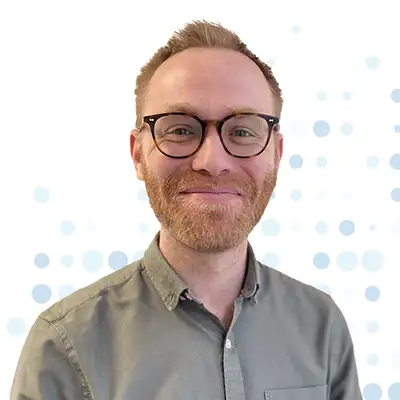
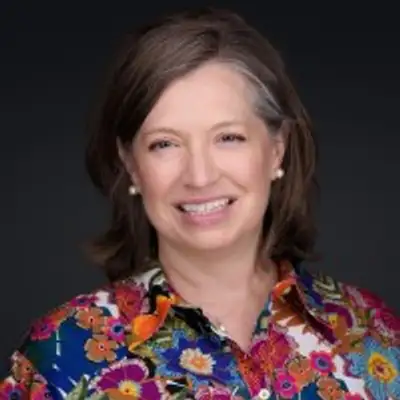
Hello and welcome back to the Hydrocarbon Engineering Podcast, I'm your host Callum O'Reilly and today I have the pleasure of being joined by the President and CEO of the GPA Midstream Association and CEO of GPSA Sarah Miller. We're going to be exploring the technical and economic importance of midstream operations, some of the opportunities and challenges facing the sector and what the future holds. We'll also learn how GPA Midstream supports the sector through fostering collaboration among its members and supporting the development of engineers and other professionals. I hope you enjoy.
Advert:The Hydrocarbon Engineering Podcast is brought to you by Owens Corning Foam Glass Insulation. From managing vapor drive and mitigating corrosion risk to maintaining thermal performance and supporting safety on the jobsite, the insulating system plays a critical role in high performing hydrocarbon processing facilities. Learn more about how foam glass insulation contributes to the design of high performing insulating systems at cryogenic facilities at ww.owenscorning.com/foamglasslngstudy. That's www.owenscorning.comf0amglaflng study.
Callum O'Reilly:Welcome to the hydrocarbon engineering podcast, Sarah. I wanted to start by thanking you for taking the time out of your busy schedule today. We're really excited to have you join us. How are things with you?
Sarah Miller:Hello, Callum. Thank you very much for having us. Things are going really well. We're in a busy season for GPA Midstream, but it's great to always pause and be able to talk with folks like you to share more about what we do.
Callum O'Reilly:Great stuff. So yeah thank you again Sarah, we're really grateful. Before we get started I thought it might be beneficial if you could introduce yourself to our listeners and maybe tell us a little bit about the GPA Midstream Association.
Sarah Miller:I'm happy to do so. So I'm Sarah Miller. I'm the President and CEO of GPA Midstream, as well as the CEO of GPSA, and I'll explain those two different associations in just a second. But to start with, GPA Midstream, it's a trade association that was formed all the way back in 1921, and we serve the operators of midstream asset. We can talk about that in a moment too.
Sarah Miller:And then we also have a sister association, as I mentioned, GPSA, which is an association of the service providers and suppliers for midstream operators. And it was actually formed just a few years later after GPSA in 1928. So we've been around a really long time, long history of serving the industry.
Callum O'Reilly:So Sarah, I think it's fair to say that many people outside of the sector may not fully understand the technical and economic role of midstream operations. So how would you describe midstream's value to the oil and gas industry and to broader society?
Sarah Miller:Great question and you're right, I think a lot of people don't understand what we mean when we say midstream. So maybe before we talk about our impact, let me back up and kind of explain what we are. So if you think about our midstream operators are the ones who gather and process raw materials that are produced from oil and gas wells. Those are what people know as the producers or upstream companies. And then our operators are then the ones who take those processed products, deliver them to downstream distribution systems.
Sarah Miller:And those are the organizations that get energy out to end users. So creatively, just kidding, we're the middle. We're the midstream sector of the industry. And so we're the ones who are building the infrastructure to gather, for example, gas molecules when they are produced out of the wells. Then we take that gas and we separate out the different components and process it so that it can be moved in pipelines down to end users.
Sarah Miller:And it's not just natural gas, but there are other components or other products in there too. They're known as natural gas liquids. We also serve so I've been talking about natural gas, but it's also crude. We work for oil when you think about that. So our operators are the really important function to help make energy move from where it's raw originally produced to when it's processed and ready to be used by end users.
Sarah Miller:And end users include people just like us who when we turn on our gas stoves or our barbecue grills or we're using, for example, plastic products or we're using our cosmetics or pharmaceuticals, all those things are products that have as feedstocks or are the actual deliverables coming out of our midstream sector. So we like to think we we move energy, make and make our everyday lives possible.
Callum O'Reilly:Great, thank you for that summary Sarah. So in light of that what do you see as being the biggest opportunities and challenges that are facing the midstream sector over the next five to ten years And how is GPA Midstream helping the industry prepare for some of these opportunities and challenges?
Sarah Miller:I think the public recognizes that our demand for energy is increasing and it's not only the demand for energy in our developed communities, but across the world in developing communities as well. So you think about our demand for energy, for example, to power data centers, our AI, just to be able to operate, have the electricity that we need and the fuels that we need to power our everyday lives. So the midstream operators are delivering those resources to make all that possible. And pretty big challenge to be able to meet that rising energy demand and yet also do so in a way that's environmentally friendly, safe, delivers an affordable product. And so the challenges that are facing our industry is helping people understand where their energy comes from and why natural gas particularly can be a cleaner burning fuel to be able to help us meet that energy need.
Sarah Miller:Most electricity right now is produced using natural gas to power electricity production. So you think about the fact that if we're going to need continue to need that natural gas as well as other products produced from the hydrocarbon industry, then we need to make sure that we are developing the infrastructure in order to be able to move that energy around the country. And so from the midstream industry, that's predominantly pipelines. That is pipelines are the safest way to move energy across our country. And so we want to make sure that we help people understand that we are safe, prudent operators who are part of the community and wanna make sure that we are engaged with effectively using our social license to be able to provide that energy that our communities need.
Sarah Miller:And we need to be able to have smart, reasonable, cost effective regulation, permitting that allows us to build that infrastructure that's predictable for the long term. Our pipelines are built and operated not just for years, but decades. So we want to make sure that we're able to make those big capital investment decisions with predictability and be able to therefore deliver our products consistently, reliably, affordably. So that's a challenge that we're facing. So it's it's meeting the demand, so growing demand, and then being able to do so in a regulatory and legislative environment that provides for predictability and certainty while also helping us achieve our own desires as well as our community's desires to be environmentally conscious and help support the continued safety of not only our own employees who are operating our assets, but also the communities we work.
Callum O'Reilly:So you touched upon policy and regulation there, Sarah, and that's something I want to come back to a little bit later, but the GPA Midstream was formed way back when to develop technical standards and reference materials like the GPSA engineering data book. So how do these resources impact day to day engineering decisions in the field?
Sarah Miller:That's a great question. This kind of bleeds into a little bit of our continuing discussion amongst our members about those technical resources education. The engineering data book and our standards, our technical guidance, as well as our research is used in the field. For example, the engineering data book that you mentioned is a very long lived document that I think it's we're now into or I think we're in the sixteenth edition of that. It's now online and being updated quarterly, but it is actually used by operators not only as they're working on the design of their processing facilities, but then it offers tools to help them set up their designs appropriately and operate efficiently.
Sarah Miller:So it's a tool that certainly technical people, and I'm not a technical person myself, I'm a lawyer by background, but those technical operators can rely on that guidance reflecting years of wisdom from other operators and continuing best practices and innovation to be able to refine their processing operations. Our studies now are designed to try to make sure that we understand the factual nature of how, for example, what are the emissions that are really coming out of our operations? How can we identify the tools that help us operate even better? We're definitely looking for ways to innovate and make sure that we're capturing those technical best practices for the benefit of the whole industry. And so maybe to keep going just a little bit, I was looking at all that's we were preparing for our annual convention.
Sarah Miller:I was looking at all the sessions that are going to be going on. And it's impressive to me, particularly as someone who doesn't have a technical background, to see how much exchange of information and sharing of best practices and wisdom and innovation that goes on at our convention, how individuals are working together to be able to share, how we can work together or deliver our products even more effectively and efficiently. Another piece, if I might keep going a little bit about how our association makes that possible is that we have committees. So we like to say that we are member led. And so we have committees that focus on technical, which you and I are just talking about right now, but also advocacy, safety, and communications amongst other focuses.
Sarah Miller:And so to particularly talk about the technical for just a moment, we have multiple committees led by member employees. So they're volunteering their time. They're the chairs of those committees, vice chairs that they members themselves are bringing forward the issues that they want us to spend prioritize and spend time on or that they want to prioritize and spend their own voluntary discretionary time on for the benefit of the entire industry. So someone, for example, recognizes the industry is struggling with a challenge, they can bring it to those committees. And those committees set their own agendas and priorities so then they can marshal their resources across companies, not only operators, but also service providers and suppliers who can help solve those problems or advance to the next level of performance and innovation to be able to level up and have consistency and reliability in their operations.
Sarah Miller:So I was really fascinated just this morning even to be looking at our convention schedule and be able to see all that exchange of information that's going to be available.
Callum O'Reilly:So Sari, as we've been talking about, midstream is a highly technical business but is also heavily affected by policy and regulation. So I was wondering how does GPA Midstream bridge this gap between technical realities and the policy making process?
Sarah Miller:I think the marriage of our technical know how with our advocacy efforts really makes us even more effective in Washington DC as we're talking to both regulators and legislators. And the way we do that is we do have two members of our staff that are based in Washington DC. They are the liaisons, again, using our committee structure to several. We have environmental committee, pipeline safety committee, legislative committee, regulatory committee. I think I'm probably missing one right now, but they lead our liaison with those members, subject matter experts in the advocacy field or in the regulatory and whether it's environmental or pipeline safety as an example, our employees are marshaling, supporting those members and identifying issues and then helping voice the industry wide perspective to regulators and legislators.
Sarah Miller:So we're able to take operators' everyday technical expertise out in the field actually operating how things really work from not only a technical perspective but a financial cost perspective, reasonableness and daily operations, they're able to go through, let's say for example, there's a proposed regulation. They're able to go through that regulation with a fine tooth comb from a practical perspective of operators, identify what, for example, sometimes regulations aren't feasible. They just don't work. The technology isn't available yet. Or they may a regulation may address, highlight or inappropriately elevate something that's not a significant challenge yet.
Sarah Miller:Or it's a challenge. It should be lower priority compared to other more practical, higher needs for resources, whether that's people or dollars to be able to solve. So our operators with that practical real time experience can review that, identify those things. And then because we have credibility from that technical perspective, our advocacy, both employees and then our members, subject matter experts can then carry that to whether it's through the comment process for proposed regulation or when we're interacting with staff from legislators meeting with for example congressional committee staff members to be able to help have an open dialogue about why things don't work or how they could work better or what technology could be better or why this cost is unreasonable. What that dialogue can help get to better regulation.
Sarah Miller:It's not I think it's always important to emphasize that our industry doesn't want no regulation. We are happy to be prudent operators and we wanna make sure everybody's living up to reasonable standards collectively, equitably. But we don't want the swinging of regulation back and forth from one extreme to the other. So we wanna make sure that we're in the middle. It's practical, it's reasonable, it's cost effective, it really does deliver the outcomes that the communities want.
Sarah Miller:It's not sensationalized or on extremes because we want to be able to have predictability so we can operate, heads down operate well.
Callum O'Reilly:So Sarah, you're talking about an open dialogue there, and I just want to take that in a slightly different direction because collaboration within the industry is also vitally important, this is something that engineers know that collaboration is needed in order to solve complex problems. So I was just wondering how does GPA Midstream enable this type of collaboration among member companies who are often in fierce competition with one another?
Sarah Miller:We start every meeting that we have with a reminder about how important it is that our operators remember that they are competitors. So that's an important qualification for any trade association. We wanna make sure that our members continue to emphasize the and be pro competitive because that actually levels up the whole industry when we're all when every competitor is trying to do even better and deliver a more competitive product. At the same time, there are also, we can do that, you can exchange information and improve the industry with that open dialogue in a pro competitive environment and that's what we're striving for. So for example, I think about from a safety perspective, we have a safety committee that has open forums where an individual can in our company can anonymously share a concern, a question, how and ask the industry, how do you solve this?
Sarah Miller:How do you address this? And industry participants, our members are absolutely willing to help advance the safety of other operators to make sure that every employee is going home safe the day by exchanging lessons learned. We had this challenge ourselves and this is how we solved it. We implemented this process so that we can make sure that employees know how that this process safety approach is well thought through and can deliver the best outcome for our operators. So I love that they have that open forum for highlighting questions, highlighting challenges, highlighting problems, sharing lessons learned, that other industry members will chime in and offer solutions, offer how they've tackled or solved such problems.
Callum O'Reilly:So in the introduction to this, Sarah, you mentioned that you're also the CEO of GPSA, whose members bring technical solutions, equipment and services that are vital to the industry. So how do you see the relationship between midstream operators and suppliers evolving in the years ahead?
Sarah Miller:I think the GPSA members, the suppliers and service providers for operators really deliver the solutions that the operators need every day they offer. I love going I I was listening to someone the other day talk about one of the challenges that operators are facing, for example, with regard to carbon capture. Some of that innovation, the solutions to that will be developed by the the GPSA members, member companies who are looking at what the challenges are coming for the industry, the solutions that we need, and they're figuring out what they can be and then able to supply that to the operators. I think there's a great partnership there. I've watched over my career how that used to be that a lot of these midstream operators were larger had in the sense that they had within their own organizations, they employed all those special subject matter expertise within their own organization.
Sarah Miller:And I think there's been a lot of outsourcing over the past many years. And so that subject matter expertise, whether it may be engineering or component manufacturing or environmental expertise like regulatory or solutions for environmental matters, that's now lives, those employees are they're no longer within the operators, they're in the service providers and supplier organizations who can then marshal all that subject matter expertise and sell it to multiple operators across the industry. So I think there's great collaboration and great partnership. They work together at Symbiotic.
Callum O'Reilly:I was wondering what GPA Midstream is doing to support development and continuing education of engineers and other technical professionals. And what are some of the ways that GPA Midstream is helping to retain and ultimately pass along the wisdom and experience of veterans who are now retiring?
Sarah Miller:So we have several training courses that we offer and it ranges not only for courses that are targeting newer individuals in the industry to those who are more senior and experts. So for example, we have our intro introduction to midstream course, which we offer three times a year. We just finished one that was held in Mont Belvieu, Texas, and then we're gonna have one coming up in just a couple months in Washington DC, and then we'll have one again in in the spring. So three times a year. That course helps individuals who are new to the industry or maybe they're in supporting role for the industry to understand how gas processing works.
Sarah Miller:It's a fun class. There's some game aspects to it to help people understand all the components that make up a gas processing facility. And then considering, for example, a challenge at the end of the course is if the instructor gives teams a description of the type of gas that might be coming into their unique processing facility, how would they design all the equipment in order to process that gas most effectively? And they'd been given those skills in just a short three day period to be able to learn how to do that and understand how to do that. Not from a to be able to be an operator, but if I'm a scheduler or I'm an accountant or I'm new to the industry, it helps me understand more generally why, what do I need to understand about gas processing?
Sarah Miller:That's an example. We also have going on actually the week that we're doing this recording of the School of Chromatography. And it's an amazing class that's been going on. This is the fiftieth year we've had this course. It's designed by and then actually taught by volunteers from our member companies.
Sarah Miller:The analysis committee has put together all the instruction material and they are actually the instructors. And I had the privilege of going to a piece at that school earlier this week. And people talk about these are longtime experts within the industry who are sharing their wisdom about how to sample and then analyze the gas, all the different components that may be in a gas stream. And they teach the next generation of chromatographers how to they have coursework within a classroom, but then they actually go into labs at the University of Texas at Arlington, and they use the equipment that they would use in the field with someone standing right beside you who has expertise to be able to show you how to make that work and how to make it work even better than if you tried to figure out by yourself. So that wisdom is being passed along.
Sarah Miller:There's also, you mentioned earlier, our engineering data book. We have a five day class. Offer two times a year. It's real deep dive into that book to help people know how to make the most of it and use it better. So that's for the real subject matter experts out in the field who are doing operations.
Sarah Miller:In addition to our classes, we also have events like our annual convention as well as our technical conference where we have continuing education classes available so you can get credits for professional engineers. But it's also just the dialogue and exchange. I was looking at some of the forums that we have where there's going to be that exchange of knowledge from experts to others who are learning how to do it better, whether that's if there's a process and research forum, so how to better improve gas processing, facility design, operation and maintenance forum, treating GHG measurement of emissions. How do we do that? Minimize emissions.
Sarah Miller:What's the best technology or approaches to do that better? We also have safety and reliability forums. Again, the exchange of information about how to make sure employees are all going home healthy and safe at the end of the day. And then pipeline safety and environmental, those are more advocacy perspectives. So what is everybody doing to try to make sure that we're operating pipelines safely within regulations as well as environmentally prudently, and as well not only for our own good but also to achieve, for example, EPA standards or requirements.
Sarah Miller:So there's a lot of exchange of information in that way too.
Callum O'Reilly:So as you mentioned, Sarah, the annual GPA Midstream Convention is coming up soon, just a few weeks after we're recording this in September. I was wondering for an industry professional who's never attended, what can they expect and why should they make the trip this year?
Sarah Miller:It is a three day jam packed full of extraordinary things. And it's kind of a unique experience because it's a combination of forums, like I just talked about a moment ago, from a technical and safety and advocacy perspective. So there are lunch and learns and breakfasts that one can attend. I think I'm, like, triple booked every day, all day long because there's also all of our committees are meeting. I mentioned that we like to think that we're a member led, that we have all these committees that are identifying our members priorities and marshaling our resources to solve industry challenges.
Sarah Miller:Well, committees also all meet at the convention. So an individual who might attended for the first time would be able to show up and we have orientation for new attendees. We also have opportunities for new attendees to match up with a mentor, someone who has a similar expertise or career path that they can kind of follow along and figure out where do they need to go. It can be overwhelming with all the amazing things going on simultaneously. But they so that individual can show up.
Sarah Miller:They're gonna be more than 1,800 people in our event center. We're gonna have or the hotel where we have the event, they'll be able to attend forums. They'll be able to attend these lunch and learns or breakfast. They'll be able to attend training sessions and they can also attend our committees. Our technical and advocacy committees are open for individuals to to come explore and figure out if that's something that they as a member wanna get involved in.
Sarah Miller:So it's a great opportunity simultaneously. So many different things going on. And then there's also fun. We have a bender night where it's almost like an evening of a trade show where suppliers and service providers will be demonstrating what their best and brightest innovations and tools that are available. We have hospitality evening where people could come and explore all the different parties going on simultaneously.
Sarah Miller:So it's a fun educational networking experience, a kind of extraordinary opportunity for the Mid Street.
Callum O'Reilly:And if all that isn't enough, Sarah, they can also pick up a free copy of Hydrocarbon Engineering magazine at the convention as well. So what other reason would you need to attend? Sarah, if people are interested in learning more about the convention or where they can go to register, where's the best place to direct them to?
Sarah Miller:I would encourage them to come visit our website. So we have all the details of the schedule is posted as well as ways to register. So I would encourage your listeners to please come check out the gpamidstream.org to learn all about what's going on, not only for our association, but with a link to the convention, as well as all the training I talked about too. All of that is detailed on our website.
Callum O'Reilly:Great, thank you Sarah. And a final question from me today, I was wondering when you look at the midstream today, what gives you the most optimism about the industry's ability to meet future demand with affordable, reliable, and ultimately cleaner energy?
Sarah Miller:I am really proud to be part of the midstream industry, and I have been for all my career. And I'm proud of that because of the people. You can look at our history. As I mentioned, GPA midstream itself has been around since 1921. So think about all the amazing things that we use every day that are really products of the midstream industry, that the industry has delivered with innovation year after year.
Sarah Miller:We've solved problems and challenges to be able to help us have the extraordinary lifestyle that we all enjoy here today. That's a credit to the midstream industry. Sometimes we talk about that it's an invisible industry because, for example, most of our pipelines are underground. People don't know where that where their products come from. Well, they come from the midstream industry.
Sarah Miller:And so I think that innovation that is everything that's gotten us to today, our skills and scientifically curious minds, problem solvers that will lead us to the next, help us solve the next challenges and deliver the next solution. So I'm really proud of all that we can deliver and will continue to deliver to help for the good of our communities, being able to, just like you said, have the affordable, sustainable, reliable energy that we all need to continue to enjoy our lives.
Callum O'Reilly:Thank you so much Sarah for shining a light on the vital importance of midstream operations and also for talking us through some of the challenges and opportunities that the sector faces. It's certainly a really exciting time and it's great to hear about how GPA Midstream is on hand to help prepare the industry for what's to come, so thank you again.
Sarah Miller:Thank you.
Callum O'Reilly:My thanks again to Sarah. I think it's clear from our conversation that midstream isn't just about pipes and processing. It's a vital connector that keeps energy moving, innovation flowing and collaboration alive across the industry. Thanks to GPA Midstream's work in setting standards, fostering knowledge sharing and bridging technical and policy worlds, the sector is well prepared to meet future demand with reliability, efficiency and a commitment to cleaner solutions. Thanks for joining us for this episode and please remember to subscribe to the podcast and pass on to your colleagues.
Advert:The Hydrocarbon Engineering Podcast is brought to you by Owens Corning Foam Glass Insulation. From managing vapor drive and mitigating corrosion risk to maintaining thermal performance and supporting safety on the jobsite, the insulating system plays a critical role in high performing hydrocarbon processes. Learn more about how foam glass insulation contributes to the design of high performing insulating systems at cryogenic facilities at ww.owenscorning.com/foamglasslngstudy. That's www.owenscorning.com/0amglaflngstudy.