Subscribe
Share
Share
Embed
Welcome to the Amplify Good Podcast, brought to you by Anthem Creative. We’ve spent the last decade helping hundreds of nonprofits build stronger brands, launch engaging campaigns that raise millions, and navigate how to tell their story in a rapidly changing digital world.
In this podcast we share what we’ve learned along the way and feature conversations with expert guests on the leading edge of nonprofit marketing tackling topics like leadership, storytelling, exponential technology, strategy, fundraising, and how to navigate change to amplify impact and become more human.
Welcome to the Amplify Good Podcast, a podcast for nonprofit leaders brought to you by Anthem Creative. We've spent the last decade helping hundreds of nonprofits build stronger brands, launch engaging campaigns that raise millions, and navigate how to tell their story in a rapidly changing digital world. Now on this podcast, we share what we've learned along the way, but we also feature conversations with expert guests who are on the leading edge of nonprofit marketing. We tackle topics like leadership, storytelling, exponential technology, strategy, fundraising, and everything in between, and focus on how to navigate change in order to amplify impact and ultimately to become more human. In today's episode, I'm talking with Andy Harrington.
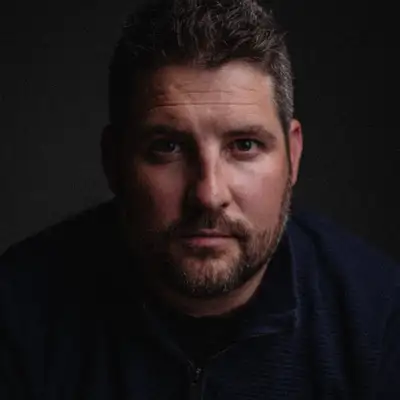
Graeme Watt:Andy's the executive director of the Canadian Food Grains Bank. He's got thirty five years of experience in the international relief and development world and shares some of his leadership lessons, some of the challenges that they're experiencing globally, talking about this collective consciousness and the need to tell a story as a charitable sector. There's so many gold nuggets in here for you. I hope you enjoy this episode as much as I did. Welcome back, everyone, to the Amplify Good Podcast.
Graeme Watt:I am thrilled for this conversation today with Andy Harrington. Andy, you and I have known each other for a very long time, and just really excited to get your perspective on what's happening in the charitable sector. And you've got a very unique vantage point. You are involved in work happening all over the world, and so would love to just get a feel for how are you navigating transition and change in your sector, and what does it mean for the rest of the nonprofit sector as well. So Annie Harrington, Executive Director of the Canadian Food Grains Bank, prior to that you were at the Wellspring Foundation for a number of years as well, doing phenomenal work in Rwanda and other parts of Africa, and then we met when you were at Youth Unlimited in the Vancouver area, so Seemed
Andy Harrington:like a different era, actually, Graeme.
Graeme Watt:My goodness. See you
Andy Harrington:again, that was a long time ago, and good to see how things are working out for you as well.
Graeme Watt:And I'll say this too, Andy, I don't know if you remember this, but when I was considering leaving World Vision to join my brother Mark here to do this anthem thing, I called you and said, Hey, am I crazy? Is this something that I should be even considering? And you were very instrumental in making that decision with me, and so really appreciate your mentorship and your voice in my life over the years.
Andy Harrington:Thanks, Graeme. I remember that call very well. Glad to see that things are working out for you. Yeah, we were
Graeme Watt:just reminded today. It's our eleventh birthday, so Anthem turns 11 today, so pretty cool to be celebrating on Yeah, that thank you. Well, let's get to it, Andy. I would love to get your perspective. Obviously, Canadian Food Grains Bank, a large organization working in food security in lots of parts all over the world, and so would love to, maybe from a thousand foot level, get the lay of the land from your perspective of what's going on globally and what is the impact on your organization.
Andy Harrington:Yeah. Sure. Thanks, Graeme. So Canadian Food Grains Bank is a it's kind of an association of 15 members that come together. And as you say, we're we're very involved in food security around the world.
Andy Harrington:So we intervene when there's emergencies with emergency food assistance, but we're also involved in longer term development programs, especially in in a time of climate change, helping to build climate resilient food systems around the world. And it has been a very turbulent time. I think anybody turns on the news, no matter what sphere they're in, it's hard to say this isn't a turbulent time. But in our area, it's been very, very difficult. So for many years, we saw food security getting better.
Andy Harrington:In fact, in the first ten to fifteen years of this century, we saw the numbers of those going hungry declining around the world. And it that kind of plateaued around 2015 to 2017, 2018. 2020 things shot up and got a lot worse because of COVID. Mhmm. We thought that would be an aberration.
Andy Harrington:We thought, okay. Things are are gonna get better. But we saw numbers going up to around seven over seven hundred million people going hungry in the world. Those numbers continue to get worse. So there's a report called the state of food insecurity in the world report that comes out offered by the UN every July.
Andy Harrington:Last year, it said seven hundred and twenty eight million people were going hungry. And this year, we're expecting that to get worse. I'll tell you why in a minute. But I just want to focus for a moment on that word hunger. I'm not talking about, hey, I need a granola bar because I missed I'm my not even talking about, hey, I've missed two meals.
Andy Harrington:I'm talking about people who are just wondering where the next meal is ever gonna come from. The ones who are trying to figure out which child is going to be fed today. And those that are on the drastic edge of human existence. Next week, I'll be in Sudan, where 21,000,000 people are right really on the most extreme edges of humanity because of the situation there. So so we're seeing this get worse and worse, and there are a number of reasons why that's happening.
Andy Harrington:One would be climate change that we're seeing around the world that's growing. And I know some people have different opinions on climate change, but come with me to Sub Saharan Africa Yeah. And I will show you it worked out in every person's life there. We're seeing people driven from their land because of climate disasters that are increasing. We're also seeing, and you can only look at the news just to be sure of this, more and more conflicts in the world.
Andy Harrington:There are 63 active conflicts in the world at the moment. We've never seen that many. And we are in a place where over a 120,000,000 people have been displaced because of their landfill conflict. Many of those food providers, they're people who are smallholder farmers that are providing not just for themselves, but they're for their communities. They're suddenly being chased from their lands because of conflicts.
Andy Harrington:Their their land is being destroyed, and it it's causing huge, huge devastation. We're seeing economic crises as well. You know, the current situation we see with the closure of the Straits Of Hormuz, people think about it as an oil situation. About a third of the world's fertilizer passes through the Straits Of Hormuz. Farmers around the world are about to plant their crops.
Andy Harrington:That fertilizer is becoming extremely expensive. I with a bunch of Canadian farmers last week telling me how difficult it was for them. It's almost impossible for people in Africa who need those fertilizers to go. We're seeing, We've seen countries where places like Zimbabwe are suffering huge inflation rates. Sudan, where I'm going, has 321% inflation rates.
Andy Harrington:The average country we worked in 37 countries last year. The average country we're in has an inflation rate of 45%. So we think we got it bad here. So you imagine living on a few dollars a day, trying to find the resources to put a roof over your head, to feed your children, maybe even try and get them to school if you're lucky. Mhmm.
Andy Harrington:And you're paying an inflation rate of 45%. I was in Lebanon not long ago and watched the price of bread go up nearly 300% in the five days I was there. In the five days you were there? Yeah. Yeah.
Andy Harrington:So to put that succinctly, we're in an absolute crisis across the world of of international development in general, but across the world in particular of food security Mhmm. Which is becoming, I think, the world's most urgent pressing humanitarian crisis. And unless we work to fix that, we are going to have all sorts of knock on effects. We're to have more refugees. We're going to have more internally displaced people.
Andy Harrington:We're going to have more pressure on our own budgets as we want to give towards international development, as we also try and deal with the flood of refugees that are coming at us as well. So that's kind of how I'd start this off, Graeme. There are numerous points I'd want to bring out of that, but the context is very difficult. To finalize that, we have this thing called poly crisis happening as well. It used to be you'd have one crisis happening in one place at one time.
Andy Harrington:But now those crises can be very protracted. They can be over five years long. And they can be made up of more than one crisis. Climate could be hitting where conflict is happening, where economic disruption is happening. And the poor people at the bottom of that are the poorest of the poor, literally.
Andy Harrington:And so dealing with all that is really very difficult in this current context that we have.
Graeme Watt:We also have the backdrop of globalization too, right, and disruption of supply chains. I think during COVID saw the interconnectedness of all of these things, and you talk about the Strait Of Hormuz, but all of those things are really connected to one another, and it is, it's the people at the bottom of the socioeconomic ladder that often are impacted most profoundly. So what's obviously your organization and the work that you're doing responding directly to that? I know this past year, though, has been really challenging and really difficult, so talk a bit about that, like the changing landscape. Being a Canadian organization, obviously, there's impacts from Canadian government and funding commitments, but maybe talk about the changes in the funding landscape and how that's impacting you and how you're navigating it.
Andy Harrington:Well, it's kind of sorry, two separate landscapes that merge in. There's kind of the governmental funding landscape, and then there's the charitable donation landscape. So looking at the first one, anybody who watched the news over the last year will have seen the massive cuts that have happened to international aid around around the world. There are over 16 major donor countries who have cut their funding, including Canada Mhmm. Which cut its funding over the next four years by $2,700,000,000 from a very low bar as it was.
Andy Harrington:But I think the the one we're we're probably all most aware of is what happened in The States. Mhmm. The the international development kind of funding agency for the American government was USAID and within weeks, that was just completely dis it wasn't even dismantled. It was chopped to the ground. In fact, Elon Musk, was in charge of Doge, who who ran that kind of the murder of USAID, as we as some of us call it, jumped on on stage with a chainsaw at a convention and said, this is what I'm gonna do.
Andy Harrington:Mhmm. I'm gonna chainsaw this corrupt organization to the ground that supports terrorists and others. And the truth is that's rubbish. Mhmm. It was a good organization doing great work around
Graeme Watt:the world.
Andy Harrington:Like all large government bureaucracies or any large bureaucracy, it had its weaknesses. But I'll give you an example of what it was doing and what it's not doing now, Graeme. When all that was going on just over a year ago, I was in South Sudan. And I stood out I was in a refugee camp in a place called Awelis, and I stood outside a childhood malnutrition center. We'd had food assistance projects in that area, and I was visiting them.
Andy Harrington:But I went into the refugee camp, stood outside this childhood malnutrition center. I was mobbed by people with mal deeply, chronically malnourished babies trying to get me to help them. And the reason why that was happening was that they had just been told that day that that childhood malnutrition center, which was funded by USAID, was being closed and there was nothing else for these kids that were on the edge of And I found out later that night it was one of 1,100 childhood malnutrition centers that were being closed at seventy two hours notice. Wow. Tens of thousands of children just literally taken from the beds or from the treatment centers and just give them back to their families who have nothing.
Andy Harrington:There was nothing. I mean, nothing. There's no like, oh, if we try here, wolf. There's just nothing. And watching those kids starve to death.
Andy Harrington:They will watch those many of those children will starve to death. That's not a corrupt organization that was making that happen. That was a good organization doing good things that was absolutely slaughtered. And and unfortunately, the language that was used in that, as well as impacting the kind of international development sector, which we're all part of, right? We don't receive USAID funding, but we might be doing the food assistance part while someone else is over there doing the childhood malnutrition part, someone's doing the education part, all getting funded from lots of different pots.
Andy Harrington:And when you take out the billions, tens of billions of dollars that USA, well as other donors contributed, everything falls apart. The ecosystem falls apart. That then echoed into the kind of charitable landscape because you've suddenly got all these politicians with massive megaphones saying that aid is corrupt. It doesn't do anything. Only 2% gets to where it's needed.
Andy Harrington:You know? It's all going to terrorists. It's all going to corrupt dictators, which is absolute rubbish. But how how am I on my, you know, little threads feed supposed to combat Elon Musk, who owns Twitter and all the rest of it, and is spreading absolute lies and disinformation? Then, you have a whole ecosphere of I'm not sure that's a word.
Andy Harrington:I just made it up. Ecosphere of far right agitators saying, bring the money back home. Bring the money back home. This kills people.
Graeme Watt:All
Andy Harrington:right? It is being projected. The latest figures I've seen is that there will be fourteen million deaths more by 2030 due to some of these aid cuts. Nineteen million people in Africa will be pushed into extreme poverty. There'll be three hundred and sixty nine thousand additional childhood deaths a year because of the nutrition programs being cut.
Andy Harrington:I mean, this kills people. And the money coming the money isn't coming back home to us. It's being spent on defense projects. And even if it did even here in Canada, the amount we spend on on aid is so, so limited. But when you're listening to this in the public sphere and you hear all these messages, you start to question things yourself.
Andy Harrington:So we've seen support for international development funding in Canada decline by over 15% in the last year, because people are listening to these messages. So this has great implications for the public who support our work. And we have an amazing public that support our work. They've quite rightly asked us questions, and we can very legitimately show the evidence for the great impacts that we're having. But the fact that we're being asked those questions is because we live in an information bubble where whoever wants to say something with the loudest megaphone gets the biggest ear.
Andy Harrington:So that is having a major impact for charities like us and for others that are doing great work around the world that can show their impact but need to break through all the delegitimization of the work that we're doing in order to tell that good news story.
Graeme Watt:Yeah, because you have these narratives that get shaped, they impact public perception, which then trickles down to fundraising because you have people then questioning their charitable donation decisions. Do they give to the international organization they've supported for years, or do they give to the local shelter down the street? And so you have this confusion that kind of enters, but then you're on the ground. I think that's one of the things that's so important and why these conversations are so necessary and valuable, is you're on the ground in South Sudan having those conversations. I remember being in Ethiopia and having a woman literally hand me her child and say, know, take them, because this is the only option that I have, this is the only hope that I have.
Graeme Watt:And maybe there's a conversation for us to have in there, Andy, of like, what's the role then of storytelling in the midst of all of this? Because how do you combat those narratives when people are looking at this from a hyper politicized lens, or whatever it might be, and it's impacting, whether it's a foundation making decisions about where to allocate their charitable giving, whether it's an individual looking at their monthly child sponsorship. Talk to me a bit about that, and how do you step into that as a leader of an organization? Because the need is so great and so obvious from your perspective, but then you have this confusion on the other side of things that's impacting the support that's needed in order to meet that need.
Andy Harrington:Well, let me say a couple of things about that and start off by a mere culpa for my organization, for our sector. I don't think we've told those stories very well, Graeme. I think we've been too technical. I think we've relied on just the sense that everybody knows this is a good thing, so we'll just, you know, specialize on a little bit of the corner. I think we've taken a lot of things for granted, and I don't think we've bought the public along with the along the ride that we're on of more efficient, better transparent, more effective work, which is what's happened.
Andy Harrington:The work of our sector is way more effective than it was twenty years ago. We've learnt a lot. We have not communicated that well. And so that leaves space for these people who are great communicators. They may not be communicating truth, but they sure know how to get their story out to really undermine the work that we're doing.
Andy Harrington:So I would say that we're partly responsible ourselves for that, Graeme. I think the other side of that is as we go into this next epoch of work, we've got to tell those stories better. We've got to be more able to communicate the truth that we have in ways that people understand. If I can't tell my 80 year old mother what I'm doing in a way that makes her go, oh, really? Mhmm.
Andy Harrington:I am not communicating what what it is we need we need to get across. And there are a number of ways I think we can do that. I think we have to engage way, way better with our media organizations. Our media organizations are under threat just due to the lack of funding and the delegitimizations of them as well. But they're still the major source of news for certainly for the people who have capacity to give in this country.
Andy Harrington:All the stats show that. Social media is important. People get it. But CBC, Global, CTV, those are still authoritative news sources. So next week, actually, I I travel I don't know when this podcast will go out, next week, when we're filming, I'm traveling to Sudan.
Andy Harrington:I'll be there for the third anniversary of the war breaking out. So I'll be reporting live from Sudan on that.
Graeme Watt:Wow.
Andy Harrington:We're engaging with CBC and other major news networks in order to get that story out of the biggest humanitarian crisis in the world that is not being covered because of the latest true social spillings that go out there or whatever it might be. So I think we've got to tell a story better. I think we've got to use visual imagery a lot better. I think we've got to really cut all the jargon out. Stop thinking that people understand.
Andy Harrington:Stop trying to be very specialized in what we're saying and really go back to basics to explain to people this is why we need to be here. This is why we need we we do what we need to do. People are starving to death. You may think we have real problems in this country, but people are starving to death elsewhere. We're Canadians.
Andy Harrington:This is what we do. Right. But in order to do what we do, you've got to understand the issues that we're trying to face.
Graeme Watt:Yeah. I think so much of what you're talking about comes down to trust. There's been a Like a lot loss of
Andy Harrington:trust, actually. Yeah, there's
Graeme Watt:been a loss of trust in so many institutions, and not just the charitable sector. I think COVID was a huge move in that direction, where there was a loss of institutional trust amongst the general public, so much confusion, not knowing who to believe, and so I think rebuilding trust is absolutely essential for the future of the nonprofit sector, and one of the ways that you do that is through transparency and storytelling, and real authenticity is just a buzzword that got overused in the early 2000s, but I think a return to real, human, authentic, genuine storytelling that showcases need not in an exploitative way, but in a way that really invites people in with real solutions that people can support. And so I think trust building is one of those key factors. Actually, was just doing a podcast interview with another guest, and they're more in the philanthropic side of things, and they're helping to connect charities with philanthropies. He mentioned something that blew my mind, that 85% of philanthropic capital is flowing to organisations that have substantial brand recognition.
Graeme Watt:And so he was kind of imploring organizations to invest in their brand and in their storytelling, because the flow of capital often reflects that as well. And so brand builds trust too, but I think there's ways of doing that. One of my frustrations and challenges in my time when I was with World Vision was going to the field and seeing the work that's being done, and how gritty and collaborative it is. Like you mentioned, USAID gets cut, and then that impacts the entire ecosystem because of the level of collaboration that's happening on the ground. But then when those stories make their way through the lawyers and the marketing and the risk management people, they become so safe and sanitized and polished, and you lose some of that authenticity, and then the trust is difficult to build in that as well.
Graeme Watt:Know, curious to hear your thoughts on that and trust building for a sector that's really been under threat.
Andy Harrington:Well, I think that's a very relevant point, Graeme. I think there's many things in there, but the first thing I would say, your words about trust are essential. The trouble we have within the context of building trust at the moment is that we're being lied about. And so you're not only trying to build trust, you're trying to combat all this disinformation that's out there that is taking hold. So you have to do some high level communication to say, no, this is what we're at.
Andy Harrington:But you also have to do that almost individual one on one conversation where you're really communicating with the stakeholders, donor base that you have in order to rebuild that trust. I just spent the last week in Ontario just going from meeting to meeting, meeting some of our wonderful supporters out there. For those of you who don't know, we have an interesting way of raising funds. We have growing projects around the country that actually grow grain. Farmers come together.
Andy Harrington:Community members come together. It's like a barn raising when they have the harvest. Lots of, you know, combines are coming together and sell that grain in order to fund us. Those some of those people have been with the Food Grains Bank for over forty years. Wow.
Andy Harrington:And so maintaining that trust means going and spending face time with them. And not just myself, but all of our staff or many of our staff out there regularly visiting and spending time. And so I think that's a point that can get lost in this digital world that we're living in. People still really value the opportunity to sit down and talk to someone. So finding ways to do that, especially with key donors, but for me, with any donor is very That's one thing I'd say.
Andy Harrington:I think another thing I'd say as well is that a concern I have in this conversation is that if we're not very careful, territorialism is is gonna ramp up. As funding slows down Yeah. People will start to get more competitive with each other. I think that's the worst thing we could do right now. I am I am my organization, Canadian Food Grains Bank, are big advocates of us working in partnership and collaboration with other organizations to tell one single story.
Andy Harrington:And actually, Graeme, I think that's the most important thing we need to do as a as a call it a sector, if you like, charitable sector or in my case, the international development sector. Let's not compete with each other to tell a better story and get money from you. Let's all join together. And there are some efforts underway to do this to tell the story of how Canadian, in my case, international development is making a difference in the world. And World Vision are doing this and Care is doing that.
Andy Harrington:Plan, save the children, Oxfam. We're in this together. And Canada, you can be proud of all of us and the work we're doing to change the lives of tens of millions of people around the Now, pick which one you want to go with and that's when we can then have the conversations. But I think before we do that, rather than diving into better, let's tell our story better, let's tell the story better. We've got to build that kind of level of trust and authenticity overarchingly in the charitable sector before individual organizations can tell their story well.
Andy Harrington:Because that's disinformation where is happening. It's not happening, oh, that Canadian Food Grains Bank or that organization. It's happening in the ether, if you like, of why should we even support charities? Why should we even support international development organizations? We have to join together to combat this information and tell a better story so that each individual organization can survive.
Graeme Watt:Yeah, it's almost more philosophical in And that funny enough, the corporate sector does this, right, through lobby groups. You've got the dairy lobbies, and they're pooling resources. They've got these kind of entities that are advocating for the entire sector. That's really interesting. I haven't heard anybody talk about that, Andy, of, like, an entire sector coming together and saying we need to tell a shared narrative and story that kind of combats this misinformation that's out there.
Andy Harrington:Yeah. And I think I've been I've been talking about this for some while, I'm not alone. It's a great organization called Corporation Canada, which kind of is a collective organization that that we're a part of on international development. We've been having these conversations for a while. But I would say I would push it further than just the international development sector.
Andy Harrington:We need to convince Canadians why charitable giving is important, and we need to start talking about the values of us as Canadians. Come on. How we've always been there when people you know, I I remember watching the Live Aid concert when I was a kid in The UK. And you know the moment that brought me to tears? It was the CBC report, the Canadian report that they showed direct from the front lines of the famine that just probably got a lot to do with me actually even being here today.
Andy Harrington:Wow. And I think that speaks to the Canadian values that have been so important in our global context for why we help each other, that why every human being is important, why no life is more valuable than any other. We've got to rediscover that in Canada and charities can help us do that. But we've got to tell that story in one single cohesive whole before we start dividing it down and saying, I want this little bit of your money for this little project. I think that's where we could start.
Graeme Watt:Wow, I love that. Okay, that gives me a lot to chew on. I'm gonna bring this to our team. I think for us as a storytelling agency and predominantly using film, we keep talking about this idea of these big, bold narratives, and how can we tell fundamentally human stories. This is one of the things I keep coming back to as well, regardless of the vertical that you're working in in the nonprofit sector, if it's international relief and development, or if it's orphan care.
Graeme Watt:At the end of the day, fundraising is a fundamentally human activity, and we talk so much about you tell the right story to the right person at the right time in the right way with the right invitation to participate, and that's kind of how fundraising has always happened, and I think that will continue to be true regardless of what happens with AI and the evolution of things as well, and I think telling that story from not a sector specific lens or an individual organisational lens, but from this collective consciousness for us being here in Canada as Canadians, and that impulse. I think that's a really interesting idea as well. Andy, I'd love to shift gears a little bit and talk about leadership, because I think unfortunately, organization is not unique in that sense of feeling the need growing that you're trying to serve with the resources shrinking, and also headwinds of narratives that are impacting the collective trust in the institution and the organization that you're working for. So I'll say this, Andy, having observed you over the years, I think you're one of the best leaders that I've come across. I'm not just pumping your I'm tires
Andy Harrington:clear leaders in your life.
Graeme Watt:I've seen you navigate a lot of things in your life, and the way that you've faced adversity and challenges has been truly remarkable to me, and so I think you leading the organisation that you're leading now, I think there's a lot of lessons that I'm sure you're learning in the trenches of it that I'd love to be able to pass on to some of our listeners as well. And so there may be leaders of organizations listening to this who are nodding along going, yeah, the need is growing and the resources are getting thinner. And so how do you navigate that? And I think the rate of change that we're all living through right now is getting difficult to continue to wrap your heads around. And so talk to me about navigating change as a leader of an organization.
Graeme Watt:What does that look like for you, and what would you share?
Andy Harrington:Where do I start? I'm gonna start with me as a human being, if I may. Because with leadership, we always start going to other people. We lead other people. I think the first place where we got leaders are ourselves, Graeme.
Andy Harrington:And I know I'm not I know that's not an original thought, but it's a very important thought to me. Mhmm. Because in all of this turmoil that's happening, we could be blown by the seas wherever. We could start chasing whether it's funds, we could start chasing funds. Whether it's coming away from our values in order to for survival, we could start chasing survival.
Andy Harrington:The stress could could move us from a collaborative leader to a, dictatorial leader. Whatever it might be, it has to start with ourselves. And so I'm a person of faith. I try and start every day by thinking through how I relate to the greater world and to the creator. But even if I wasn't a person of faith, I would wanna sit down at the beginning of every day and say, am I being true to my calling?
Andy Harrington:Am I being true to myself? So I think before I say anything, it's to thy own self be true. It's really knowing who you are before you do anything else and and taking the moment not to react, but taking the breath, slowing down and saying, who am I? What do I believe? I mean, as I get older, one of the things that keeps occurring to me is what I want people to say about me when I'm not here anymore.
Andy Harrington:Yeah. Okay. So it starts with that blatantly obvious, really basic. Probably everyone you talk to is gonna say the same, but what what do I wanna be known for when I'm gone, not when I'm here? So that would be the first thing.
Andy Harrington:The second thing is I think it's really important that we understand that business as usual isn't cutting anymore. So trying to go deeper and deep dive into the way we've always done things is not actually the way forward. It's a time to stop and breathe and really think of how to be creative in this time. And and for a leader, that means really having the right people around you. I am really fortunate with the people I work with.
Andy Harrington:They are incredible. Now five they're they're ideas generators. Five years ago, I might have been in a place of saying, you know, great idea, but thanks. Great idea, but thanks. Nowadays, I I it needs to be the other way.
Andy Harrington:Great idea and thanks. Great idea and thanks. Let's do it. So I think it's it's not throwing everything at the wall to make it stick, but it's really listening to those ideas that are outside my comfort zone because I've been around in this industry for thirty five years and start thinking about what is actually needed in this time. And so we have a lot of younger staff that have really been very, very, very good in coming up with future scenarios and ways in which we could work within them.
Andy Harrington:I mean, I know that you're very interested in AI. We're looking at AI at the moment and seeing, well, how can that make our life simpler whilst also making sure that it's ethically sound, particularly with the people we're working with who may not have access to the same facilities, you know, digital facilities, including AI in the developing world that we do. So I think it's to kind of thread moment in that if you like, leading myself first of all, so I don't get blown off course and not reactive, making sure I've got the right people around me who are generating great ideas and more more understanding of the fact we have to do things in different ways. And not just giving words to that, but actually putting down. One of the things that we're doing at the moment is creating a new strategy.
Andy Harrington:And I'm wanting to we're wanting to build into it what are the new ideas we're going to go with. Actually, writing them down, planning for them, and then executing on them and not just doing it the same old ways. It's critical we do that. I think we've got to be calm. I think we've got to look at people, help people feel there's confidence in us in leaders because we're listening to them.
Andy Harrington:Leaders should know the times and know what to do, but I think more often than not, the people around me know the times and know what to do, and I need to listen well.
Graeme Watt:Yeah, I was just gonna ask you about strategy. Like, how is all this impacting strategy? And, you know, we've got lots of thoughts. Obviously, one of our core functions is doing strategy and marketing strategy with nonprofit organizations. And, I heard Ray Kurzweil, who's kind of a renowned futurist who's kind of predicted with 80% accuracy where the world was going, in particular with technology, and he said on the Moonshots Podcast recently that strategy that goes beyond twelve months is naive.
Graeme Watt:And I'm paraphrasing him, but I think it speaks to this idea of, and I'm in the midst of writing an article that's called The Death of the Three Year Strategic Plan. I don't know what to title it yet, but that's the kind of idea, is like as the world moves and changes faster and faster, we do need that constant input of new ideas. We have to be nimble and willing to adjust and change course, and it's not mission drift, but it's being willing to react in real time to the changes that are happening in order to stay relevant. I think one of the best examples of this for me is you talk about being willing to change and embrace new ideas, and having young people especially speak into that as well. We talk to so many organizations, and when we present the data to them around the shifts in charitable giving towards digital and online and mobile in particular, and then we advise them on a digital strategy, and they go, yeah, Okay, we're going to continue to beef up our direct mail program.
Graeme Watt:And you feel like you're taking crazy pills a little bit, because you're like, Did you just hear what I said? Like sixty five percent of all charitable giving in 2025 was online, and 50% of that was on mobile, but you're gonna double down on direct mail. So I think that willingness to take on new ideas and adapt. So as you're shaping this new strategy, like, is that informing the way that you're thinking about this, and and how is it changing your leadership?
Andy Harrington:Yeah. I'll I'll actually speak to something you said then and answer that. But just your point there about digital, you know, fundraising. We took that decision five years ago. It was one of the best decisions we ever taken.
Andy Harrington:We still do a lot of direct mail and all the rest of it, but we have really lent in to the digital side because we heard that messaging five years ago, and it is essential. So so good for you for keep banging that drum, Graeme. In terms of strategy, that's a really interesting question for me at the moment. So we we had a we operate on a five five year strategy that was put in place in in '22 and will come to an end next year. And it was actually a very good strategy.
Andy Harrington:It was a strategy that was a much more innovative strategy than perhaps what had been in place before. And we laid out some very strategic long term goals. But they were more framework goals. Okay? They weren't like, you know, this has to happen.
Andy Harrington:Mhmm. For example, we knew we wanted to be engaged more in climate resilient food systems. We have to. Climate change So isn't going we made a big investment in terms of the way we run our programs, particularly in in Africa, but other parts of the world as well, to really invest in putting forward techniques that would increase farmers' crop yields. I wouldn't see us coming away from that.
Andy Harrington:That has been terrifically valuable and has helped food security around the world for hundreds of thousands of small farms. Anyway, so we're about to go through another process of building a strategy. And the way that I'm thinking about it and this is in talking with our team and with others is we probably don't need something that's as an iterative. If you do this in year one, you'll get to year two. If you do this in year two, you'll get to year three.
Andy Harrington:We need a framework. That framework needs to be extremely flexible and adaptive. So we're talking about adaptive management and adaptive frameworks for strategic planning that will enable us to say, here are the big things that are happening in the world that are still going to be there in five years' time. Climate change isn't going away. Hunger isn't going away.
Andy Harrington:There are gonna be more economic crises. But to have a flexible enough response framework that we can pivot to which one of those we are needing to deal with any one time, that will still move us towards our end goal of reducing hunger in this world. So in order to do that, I think we're going to be having if you could imagine, there'll there'll be some logic trees. Does this happen? If this happens, do this.
Andy Harrington:If this happens, do this. It's not gonna be an iterative framework. It's gonna be very flexible. And I can't say too much more because we're just getting into the process of doing it. So we're laying out the kind of metrics of what we want this to look like, if you like, or the matrix, not metrics, the matrix of what we want this to look like.
Andy Harrington:Without and if you ask me in a year's time, I'll tell you how it shapes up. But what it I know what it can't be. It can't be a traditional strategic plan that if you do a, it leads to b, it leads to c. Mhmm. Because you might be doing a and getting to b where someone's introducing n, and you have to address n.
Andy Harrington:So that will be it for us. It will be a matrix and a framework allows us to respond where the needs are whilst keeping a long range goal on the overarching objective of ending hunger in the world. So sounds a bit woolly even as I explained it, but it's very clear in my mind that we need a very, very, very clear direction in terms of a compass heading with a number of different routes available for us to get there.
Graeme Watt:That might be the whole takeaway here, Andy. I love that. For an executive director listening to this, hearing you talk about the need for a flexible, framework driven strategy approach rather than this rigid, linear, three year roadmap, I think is massive. That's so much of what we're seeing and doing, is actually shortening things down to a twelve month and using a framework to say, Okay, you if know what the big picture goal is, you know what your midterm goals and objectives are, and what the big picture vision is, what do you need to do in the next twelve months in order to most meaningfully move your organization in that direction, given the current reality, circumstances, resources, and shifts and changes, and then evaluate that every 90 days. And so you're putting yourself in that position of having the flexibility to adapt and adjust and pivot where needed without being chained to a rigid three year, you know Yeah.
Graeme Watt:Let me let let give you
Andy Harrington:a little example of that in in my actual everyday world. So we we do responses around the world. Say we're doing what we might call an agriculture and livelihood response. Okay? So in the past, we've done that.
Andy Harrington:It might be anywhere from a year to five years. So say it's a three year response plan. Give an example. Say it's a say it's an agriculture and livelihood program working in the Democratic Republic Of Congo with, say, 600 smallholder farms. And we're going to do this, this, this.
Andy Harrington:Well, what if war breaks out in the middle of it? Or what if there's a drought? So one of the things that we've started to put in place or trying to put in place are what we call crisis modifiers. And so a crisis modifier is a line in your kind of it can be in your budget or whatever Mhmm. Where it basically says, if a crisis happens, we can step into this mode of response.
Andy Harrington:It could be you've allowed yourself to build a plan that says the money will flow in this direction unless this happens, in which case it will flow in this direction for this amount of time. So say if it's an area where droughts happen often, if you're doing agriculture and livelihood program and you're building every year on a, you know, building better agriculture and a drought happens in a minute and wipes it out, do you just end the program or do you do a crisis modifier? Think that's the sort of thing we're gonna need to see in strategic planning, crisis modification frameworks that say, okay, we were going well, but this just hit us out of left field. We are whilst we didn't know exactly that was coming, we were prepared for a crisis, and therefore, we will modify our plans to react to that crisis. The intelligent leaders are going to do some forecasting to say, this is the sort of crisis we might face.
Andy Harrington:And this is the sort of crisis response we might do. But I think it's really important that we're thinking that way because things don't work like they used to. And plans get wrecked a lot easier than ever before.
Graeme Watt:Yeah, I think those are the kinds of leaders that are going to thrive. It's the ability to look at what's coming and what's happening, acknowledge that it is what it is. I think even us in our industry, we see AI coming and the impact that it's having, and it's easy to get nostalgic and romantic and sad too, we've acknowledged that too, there's an element of grief, the world that we've known is changing, and it's happening quicker than any of us are really ready for, but the ability to be resilient and to adapt and to have, I love that, the crisis modifiers. Okay, so if this happens, cause we're asking ourselves that question too, like how long is the runway of creative service work for nonprofits going to remain viable, and is it eighteen months, is it three and a half years? We can't really tell, and so I love that crisis modifier of like, Okay, well, if this part of our business gets eaten up and eroded away by AI in the next twelve months, then where do we pivot our energy and our efforts, and what is going to last and stand the test of time as well?
Graeme Watt:So I think from a strategic perspective, that's really great insights.
Andy Harrington:Well, can I just say something quickly about AI? Yeah, of I am not an AI expert, as I've said to you, but we are dealing with AI in our field, and we're dealing with it in a number of levels. One on the fundraising side, one a lot on the programmatic side. You know, we we had major monitoring and evaluation efforts to you know, we work with over 1,200,000 people last or nearly 1,200,000 people last year. Every one of those is subject to the monitoring and evaluation that says, are we actually doing a good job?
Andy Harrington:So we're looking at all the ways in which AI can be worked. We're looking at who can help us in that work. We're looking at some of the risks in terms of data protection. And also some of the risks in terms of people's livelihoods and jobs. And I think I want to go back to something I said earlier, especially in the world that you're in, Graeme, as a marketing branding company.
Andy Harrington:I know for a fact that AI is going to have a major impact there. I'm not going put my head in the sand. Anyone who does that is stupid. But I go back to where the impact really happens. A week ago in Ontario, me sitting down with hundreds of people at the end of meetings and just having FaceTime with them.
Andy Harrington:AI can't do that. And I think there is always going to be a place for the human interaction in our field, in whatever way it is. Think, whilst I know that's tough for the firms that are really working with organizations like mine to help brand us and to help marketing, I think that's something for firms and organizations like yours to think about. The human aspect of the work we do is going to become more and more important because I think people will sooner or later get fed up with AI and always be marketed to. They will want not marketed to, but, you know, I'm I'm part of an algorithm.
Andy Harrington:But people, you know, they have been built Tupperware detectors. They smell plastic a mile off. So I I I think there is always going to be that place for the humanity of our work. And and humans like relationships. So I I think as we grapple with the forthcoming rush of AI, there is always going to be that place where we need to interact as humans with one another.
Andy Harrington:And that scenario, I think, that needs to be investigated more. What will that look like in ten years' time, and what's our role in that?
Graeme Watt:I love that. That's what we keep saying internally, but to our clients as well, is use the technology to automate the difficult execution work, the monotonous data analysis work, and free up your time to become more human. Because I think at the end of the day, especially in this sector and the work that you're doing and the work that we do, people want to sit with other people, they want that kind of human connection relationship, and I think we're hardwired for that as human beings. So I think that's, in many ways, the promise of AI for the nonprofit sector is, you know, let it do what it's best at and free up human time to do the work of being more human and building relationships and understanding that that is, I think, fundamentally what is so needed within this space.
Andy Harrington:And isn't that the heart of what we're talking about here in your way, Graeme? You know, every Romeo D'Ilere said in a meeting I was in I'm sure you know who he was, but he was the Yeah,
Graeme Watt:Hotel Rwanda.
Andy Harrington:Forces. Yeah, UFO in in Rwanda during the genocide. I was in a meeting, and I heard him say that all humans are human. No human is any more than any other, any more human than another. And that's really important to me in my work, actually.
Andy Harrington:When I go to Sudan next week, and when I'm in Sudan the week South Sudan the week after, I'll with humans, with my brothers and sisters who could be me, could be you. And I think any time we come away in any aspect of the sphere of what we do from getting the person on the other end of the screen or the person that we're watching on the, you know, on the newscast or anything is a human, we lose touch with why we should even be in this work in the first place.
Graeme Watt:Yeah.
Andy Harrington:Every human being is a human. And anyone that isn't in this world tomorrow because of a humanitarian crisis that we could have been part of saving, That is a loss to the world. And so whether it's our marketing or whether it's our branding or whether it's our programs or it's the way we talk about people in this age of otherness where it's okay to call them the others and therefore dehumanize them, We've got to bring it back to the place that we're all human, that we need human connection, we absolutely must stand up for each other and not allow those with suspiciously large social media followings to tell us that it's okay to treat these people less than you would wanna be treated yourself. Mhmm. That's whether our marketing or the way in which we will reach our food assistance goals in Gaza or whatever it might be.
Andy Harrington:We're all human beings trying to live the life that we we would want for each other. We would want for our kids. So that's why you do what you do. It's why I do what I do. It's what we must remember and why charitable work is so important because we're on the front lines of treating people as humans.
Graeme Watt:What a great place to leave this. Andy, thank you so much. Grateful for you, grateful for your time, grateful for the work that you're doing. Yeah, would love to hear more once your strategy is developed and the framework is there. Would love to see that, just more out of curiosity.
Graeme Watt:But thank you for your time, your expertise, your wisdom, and I hope your trip to Sudan next week is very fruitful.
Andy Harrington:It's great to be with you. I've really enjoyed this chat, and I've always found you to be someone that always thinking ahead, and I think the world needs more of that. So thank you.
Graeme Watt:Yeah. Thanks, Andy. If anybody wants to find out more about your work or what you're doing, where can they go find you?
Andy Harrington:Find us on the web at foodgrainsbank.ca, or on our social media handle is foodgrains.
Graeme Watt:Amazing. Thanks, Andy, so much.
Andy Harrington:Thanks, Graeme.
Graeme Watt:Thanks for listening to the Amplify Good Podcast. And hey, if you found this episode valuable, would you share it with someone that you think would benefit from it? And don't forget to subscribe so that you don't miss an episode. It would also mean the world to me if you would drop us a review on whatever platform you're listening on so that we can reach a wider audience. Thanks again for listening, and we'll see you next time.