Subscribe
Share
Share
Embed
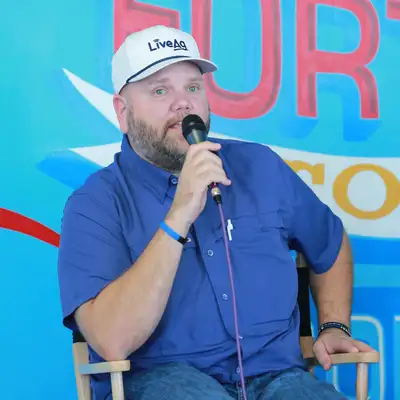
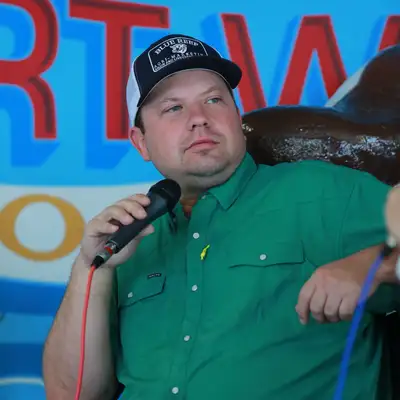
Welcome to the "We Live It" ranch and livestock marketing podcast, where cattle market intelligence meets ranch-ready wisdom. Join hosts Ty deCordova with LiveAg and Casey Mabry with Blue Reef Agri-marketing as they bring you straight-talk market analysis, proven strategies, and insights from industry leaders who understand ranching isn't just a business - it's a way of life.
From livestock market trends to cattle management practices, each episode delivers actionable knowledge to help take your ranching operation to the next level. Whether you're in the saddle or in the truck, tune in for conversations that matter to modern cattlemen. Because we don't just talk about the cattle business...we live it.
So and especially as you refine it further, you hear about people in that age demographic or that really busy season of life, you know, 30 to 45 where you got little kids at home and you're making conscious decisions about what you wanna put on the plate and feed your family with. Animal welfare is a kind of constant come up. They wanna feel good about what they're buying. So from the consumer side of things, I think that demand's only gonna grow.
Speaker 2:That's a head on. We live it, the live ag podcast from seed stock bull sales built on generations of performance to commercial video auctions backed by real relationships. To equipment auctions that keep operations moving forward. Live AG connects cattle producers to opportunity Quality cattle deserve premium prices. The right bulls deserve more buyers and dependable equipment deserves a fair bit.
Speaker 2:Whether you're consigning to a live AG video auction, marketing seed stock or moving iron through the equipment exchange. We combine local representation with nationwide reach. Connect with your live ag rep by scanning the code on your screen or visit us online at live-ag.com. We are proud to be powered by Biozyme, the makers of VitaFirm and GainSmart, value added nutrition partners trusted by cattle producers across the country. Now here are your hosts, Ty deCordova and Casey Mabry.
Speaker 3:Welcome back to the We Live It Podcast. Finally, we've got Wade on here. We were able to get, Ty out of the door, but, Casey Mabry and, Wade Leist here today. We got Seth from Earth Claims in to sit here and kinda go through some things. I appreciate you getting on here with us, Seth, and going through what what you guys have to offer.
Speaker 3:So why don't you just go ahead and kinda give us what Earth Claims is and let these viewers know what you guys are up to.
Speaker 1:Yeah. Thanks so much for having me on here. My name is Seth Diehm. Work with Earth Claims. I'm our customer account rep for all of our beef cattle operations here.
Speaker 1:We're a third party verification company. What we do is we specialize in coming out and conducting independent third party verification for cattle ranchers across The United States. We offer a host of different programs we can certify. Kind of the biggest feather in our hat, the one that we we certainly push the hardest, is the Global Animal Partnership's five step rating program. We are the exclusive certifier in North America for that program.
Speaker 1:In addition to that, we are also an approved certifier with the USDA for their process verified programs. For cow calf producers, we can certify agent source verification, non non hormone treated cattle or NHTC, as well as verified natural beef. So I'm I'm happy to be here today and get a chance to talk to your audience and you guys.
Speaker 3:Yeah. Appreciate you getting here. And, I'll tell you, one of the things that, I talk to guys a lot about is making sure they're trying to maximize their herd. And, obviously, if they're putting a lot of the work in, there's a lot of the things that you guys do that you audit that most people just kind of do on a regular basis from a production standpoint. You know, you talked about the global animal partnership, so I refer to that as Gap, and I think that's where most of the industry would say Gap.
Speaker 3:Why don't you go through a little bit of that? Because I think that's probably the most what I'd say the most fruitful for most guys, where the most premium sits because, there's one retailer out there specifically that pulls a lot of that product. Can you guys discuss deeper into that one?
Speaker 1:Yeah. And I think you made a great point. So much of what is required in these programs is stuff guys are already doing, especially on the cow calf side of things where, you know, it's a it's a it's an animal welfare program at its core. As much as anything, it's a good stewardship program in terms of just making sure castration ages are right, weaning ages are right. It falls in line with just kinda good animal practices for most producers that have become, frankly, an industry norm.
Speaker 1:But you're right. There is a there is a retailer demand for that. Gap is an accepted program at Whole Foods grocery stores. They do pull that product in. That retailer is growing.
Speaker 1:There's a huge demand at the consumer level for these kind of animal welfare rating programs, and GAP's been around since 2008. It's a program with a lot of cachet and history behind it that I think is only going to continue to rise, especially as the need for things like ethical consumerism and the demand for that type of product continues to grow.
Speaker 3:You know,
Speaker 4:if Ty were here, the first thing you'd do is say your name wrong. It's Diem, right?
Speaker 1:It is Diem. You know, it's been butchered everywhere my whole life, so I appreciate that.
Speaker 4:I know the feeling. I've been down that road as
Speaker 1:You throw one H in there with a bunch of other letters and people get confused. Yeah.
Speaker 4:Yeah. So I'm listening to everything you've been saying about how this program is going to benefit a producer. I think for most producers, whether you're a cow calf guy or what part of the chain you're in, maybe a ground farmer, maybe you're raising crops or something. There's always that snake oil salesman that's coming and going to sell you the newest, latest, greatest thing that's going to optimize your profit. As one of those producers, maybe look from a cynical viewpoint, they're going be looking at, What is this going to cost me?
Speaker 4:How hard is it to do? And what is my return? What do you say to somebody like that? Like, what's value that you offer to them? What's the return?
Speaker 1:That's a great question. And I tell everybody that reaches out, you know, these programs are fully voluntary, and no one's going to twist their arm to get into it. The return on it, you know, obviously, the cattle market is really dynamic right now. So in terms of giving a hard number today, I I don't have one to toss out there. What this program decidedly does do is it opens additional buyer and and access to various other markets.
Speaker 1:Right? So as you watch cattle sell on a video sale, you'll often see those little little badges down there at the bottom of the screen. And the services we offer certainly go into that. And I would never guarantee that these cattle are gonna go into that retail chain, but they certainly won't go into it if you're not participating in that marketplace. So these programs do offer additional buyer bases, additional access to other retail outlets that otherwise are closed off.
Speaker 1:So in terms of what it does for you, as much as anything, it just gives you some additional hedging and marketing options for your cabs.
Speaker 4:So what you're saying is, hey, there's no guarantee on this, but it it for a for a big upside, but it puts you in a position where it's possible.
Speaker 1:Yeah. And frankly, think that there's a saying that kinda goes well with program cattle, that it's that it's trying to time the cattle market is really, really hard, but time in the market certainly helps. And anybody that has come through these verification programs, I encourage them, you know, the longer you're in them, the more likely you're gonna be to have a repeat buyer base that may need have need for some of these type of cattle. So, you know, the premiums on some of these cattle have been have been really sound over the last ten year window, and oftentimes, those cattle will go back to the same feeding structure that they went to the first few times.
Speaker 3:Yeah. I'll tell you one interesting thing that I'll talk about, Wade, and you probably know this because your your time in the auction side of it. But it's little things like, let's say there's 10 guys at an auction that are bidding on cattle. Might be, on the earth claims cattle, all 10 of those guys could bid on the cattle at some price. There's a handful of those guys that are gonna be in the market trying to buy the natural or the GAP certified or the NHTC or etcetera, whatever program they are, because that specific customer needs that.
Speaker 3:You know, there's some feed yards out there that won't buy anything but GAP cattle. And then there's some guys out there that won't buy anything that has Gap on it because usually those cattle are bringing too much money. But that's not saying that they couldn't, right? So that's the commodity side of it, the catch all. You're in the upper side of it, which is, what do you think well, let's let's talk about numbers of cattle here for a minute.
Speaker 3:How many cattle you think you guys are certifying each year for GAP?
Speaker 1:That's a really tough question to answer because, mean, it ebbs and flows, and and right now, when we've seen some of that contraction in in The US herd. But, you know, in past years, I wouldn't be shocked to said, you know, we've certified north of 250,000 head or more in an annual in an annual window. Obviously, as demand moves and prices move, that number fluctuates, especially when you look at drought conditions and people that have dispersed over the last couple of years, things like that. But, you know, the demand for these cattle are still solid. Our enrollments are still really, really sound.
Speaker 1:And for new producers that are looking for new ways to enter the marketplace, you know, you got kind of an aging population on some of your rancher side of things. You got some newer folks coming in. I think it's important that they still understand that some of these options do exist and that we can promote that out to to new audiences as well.
Speaker 3:Yeah. No. I've seen big premiums out there, and I know when you guys sell cattle high, you know, some of those cattle are actually you got the conventional buyers that jump out there and buy those things because they know they haven't had an implant and know they're going to get a response and things like that.
Speaker 4:That's what I was going to get into a little bit or at least touch on is that it's interesting what the side benefit or what the alternative meaning for some of these badges are. Like NHTC, you're going to get condition on those cattle. Like, yeah, they're non hormone, but you're going get condition on them. It means something else as well that adds value. When it comes to gap, if you're willing to check the boxes on the audit to get gap, that means you're probably paying attention to genetics.
Speaker 4:You're probably paying attention to feed intake. Probably, you probably have a yard that's conducive to efficiency as well. So as a buyer, when you're looking at those ones where you kind of throw the card out the window and say, like, I just got to own them. You're looking at some of those producers that are getting into some of those programs.
Speaker 3:Yeah. It's like that deal where, I mean, those cattle, they look high. Yeah. But they're probably actually cheap, relatively speaking, when you start talking about all the added benefits you can get with them, even if they're fed through a conventional system. Now some of the things are bringing the lights out type of money.
Speaker 4:And that's where the buyer says, I've to have them. I'll average them down later. I'll figure it out. But I'm getting health insurance on the cattle. I'm getting condition.
Speaker 4:I'm getting genetics. I'm getting all these. I'm checking all these other boxes. And I get this badge on the backside where maybe I can get a premium on the back end for them as well. So that's where you, like I said, you see that they look at the card and they're like, throw that out.
Speaker 3:But it don't matter today. I'm I'm I'm getting buying these. Yeah. Even when everything's bringing $3,200 a head or something like that, these things might bring 33 or 34.
Speaker 5:When it comes to selling cattle, performance matters. That's why BioZyme Incorporated and LiveAg have partnered to bring more value to beef producers across the country. Cattle fed VitaFirm and GainSmart products are backed by proven nutrition programs designed to support reproductive efficiency, feed efficiency, and overall herd performance. And now through LiveAg's nationwide video auction platform, those nutrition backed cattle are positioned in front of buyers who recognize the value of a documented premium feeding program. This partnership connects what happens in your pasture with what happens at sell time.
Speaker 5:Better nutrition, better documentation, increased market exposure. Talk to your buyer's arm or your live ag rep, or visit your local dealer to learn how BioDefirm and GameSmart paired with live ag marketing can help your cattle stand out when it matters most.
Speaker 3:So, alright, let's let's kinda walk through. I'm a rancher. Let's say I'm in Central Texas, and I've got the best genetics in the world. You know, we've been selling the cattle in a typical normal supply chain, and I wanna improve it, and I wanna do that. How do I get ahold of Earth claims?
Speaker 3:Who do I call? What's the story there?
Speaker 1:Yeah. And to tie into that, the cool thing with some of these programs, especially with Gap, is, you know, you can participate in this program with 50 head or 500 head. You know? In terms of getting that in there, it's not hide color specific. You don't have to to reach any any specific, you know, benchmarks there to participate.
Speaker 1:We'll work with anybody. To get ahold of us, talk about certification, call me. My number is (541) 286-3205, 1, and you will get me every time you call that number. And if you don't get me, leave me a message. I'll call you back because I wanna hear about it.
Speaker 1:I wanna talk to producers and just continue to see if it's an option for them. Like I tell everybody, it's free to pick up the phone and have a conversation. There's no cost to to ask me if it's gonna be a fit for you. And if you have questions and objections to the program, we can talk through those.
Speaker 4:Just a little tip. Should probably put that phone number on your shirt or something like that. Know. Right. I As long as you're on podcasts, be there the whole time.
Speaker 3:Yeah. Get people like me with ADD. I think I heard a five or something in there.
Speaker 4:Never know.
Speaker 1:Yeah. Or just go to our website, go to go to to certification, click it, and that email's gonna come to me, and then we'll be in touch.
Speaker 4:So from a or from a producer standpoint Yeah. They they've reached out to you. They they look at the checklist. They're they're comfortable with the audit. One of the next questions I think that a lot of them are going come up with is, Does the consumer care?
Speaker 4:Is the consumer making a conscious choice to say, That's the type of protein that I'm looking for? And how do we know that?
Speaker 1:Yeah. There've there've been several kinda interesting studies that have come out in the last year. I believe the Animal Welfare Institute put one out in in 2025 via a Harris poll, and they asked those questions. You know, what's important to you at the grocery store? Where where do you where do you draw the line?
Speaker 1:What what are you what are you looking for? And what's what's really interesting is they've done that poll dating back to 2013, and the lowest threshold of people that have said that these programs matter to them is, like, 80%. So and especially as you refine it further, you hear about people in that age demographic or that really busy season of life, you know, 30 45 where you got little kids at home, and you're making conscious decisions about what you wanna put on the plate and feed your family with, animal welfare is a kind of constant come up. They wanna feel good about what they're buying. So from the consumer side of things, I think that demand's only gonna grow.
Speaker 1:Yeah. You hear so much about just, you know, traceability and questions of where these cattle came from. And these cattle have been in traceability, you know, systems way before it was such a talked about topic. You know? Mean, we we've got, you know, record keeping mechanisms and oversight that goes into every ranch we certify in terms of where these cattle are going, where'd they come from, whether that's in the form of a shipping document or an EID tag manifest.
Speaker 1:You know, traceability is at at the at the crux of these programs, and it's something we've been proud to offer and do and do it for a number of years.
Speaker 3:Yeah. I think most ranchers do the right thing. It's like so I think some people look at this, and even if you're a rancher that's watching this and you're like, man, why do I need to certify It comes down to just making sure that whenever that animal leaves your gate, goes through the supply chain, that it's got some type of a record saying that it has gone through all those things. So it's proof, you know? It's saying in my mind, if I'm a rancher, I would do this absolutely just to make sure that I'm putting myself in the best place, I'm putting myself in the right way.
Speaker 3:No different than when you're raising your kids. It's the same type of thing. But let's say that I called you up. I said, Look, man, this fits me. You're coming out to my ranch.
Speaker 3:We're sitting at the kitchen table going through my documents, what's it look like? What is that? What's an the word audit is usually a bad word. So the verification audit process, what's that look like? How painful is it?
Speaker 3:Know, kind of lay that out there.
Speaker 1:Yeah. You know, in terms of what the audit process looks like, I usually tell our customers and prospect ranchers that want to work with us, it's kind of a two pronged approach. There's going to be a records conversation, and that can be done on the bed of a pickup. It can be done at the kitchen table over a cup of coffee. You know, those are the kind of things that we have to do.
Speaker 1:You know, the word audit is scary. We're not the IRS, but we do have to check the boxes that make these programs ethical, and there's a reason they exist. So we've gotta make sure we we adhere to the the standards and and and the the rigor of those programs. But in terms of us just coming out to almost come off across as authoritarian, that's not the goal. The goal is to be, you know, an industry partner that's there basically to verify what what we already expect to be true when when folks apply.
Speaker 1:Because there's a fair amount of prescreening that goes into these programs with the application processes and some, you know, ahead of the actual audit type paperwork submissions. So we do have a regional audit staff. We're blessed to have the bulk of our audit staff comes from a production or ranching background, and most of the time, they're regional to you. So they're familiar with what your drought conditions may be, what some of those pain points are to you regionally. So you're having more of a native conversation rather than, you know, expecting somebody to come out that's got no familiarity with your area.
Speaker 1:So we try to make this process as seamless as we can for for anybody that comes through and be as transparent and upfront as possible at that time of onboarding to make sure that they're comfortable with it before, you know, any real transaction takes place.
Speaker 4:You talked about some of the traceability. I'm sure with traceability comes data. Is that data that a producer can receive from your program?
Speaker 1:So we get that data back. In the GAP program, it comes back in the form of a shipping manifest. So those follow those cattle at every GAP certified operation they go to. It is from birth to harvest if they are dedicated to that program all the way through. If they're coming through an agent source verification or some of those other USDA process verified programs, there is an EID tag manifest that attributes to those cattle that follows them as they move through the system.
Speaker 4:So there's value to a producer in the data as well just by signing up for this. Yeah. So take us through a typical process. Let's say you leave here, somebody gets the phone number off the podcast and they call you up and they say, Hey, this is something I'm interested in. Give us a typical process that you'd walk through from start to finish.
Speaker 1:Yeah. Start to finish, you know, you're gonna call me, you're gonna work with me for the first quite quite a little bit of this. So I'll be the one that's responsible for onboarding folks. They'll call me. We'll go through the application process, get some paperwork started.
Speaker 1:Once that comes back in, I'll go over it, make sure there's, you know, no red flags or anything that really makes us raise our hand and say, hey. Are you sure you wanna go through with this before, you know, we get to an invoiceable event or anything like that? From there, we'll go through, get some possible audit dates set on there, learn what you guys' needs may be, whether that's your shipping date or your sale date to make sure that we've got those marketing initiatives in place for you when sale time comes or delivery time comes. And from there, you know, certification materials move through. If we get out then there is a nonconformance, something that, you know, you hit a bump in the road.
Speaker 1:The cool thing is there is a kind of a opportunity to respond to those nonconformances, especially in GAP. It's not a hard pass fail. You can always respond back with an action plan to become compliant. Now does that mean it doesn't come with possible exclusions? You get out there and everything's got an implant in in an ear.
Speaker 1:While that is fine in the industry, those things are are are safe for this program. They're not gonna work. So, you know, those are all the things we try to sluss out at the front end to make sure that, as we go through this, these these these producers are are happy with the program that they enter.
Speaker 3:So, let's say I've heard the word gap before, and I've just heard somebody pass it, you know, through the industry or whatever. Lay out, and I'm pretty sure we haven't done this yet, but lay out, you know, what is gap? What are the different tiers of gap? Yeah. And then what are the big things that, you know let's go from let's go from Verified Natural to gap one onto the other gaps.
Speaker 1:Yeah. Yeah. So Verified Natural is gonna be a USDA program. We're gonna have to take a pretty strong look just at what your inputs are there in terms of feed, product, mineral labels, anything that goes into those cattle. As you get into GAP, GAP
Speaker 3:What kicks you out of that conventional into natural?
Speaker 1:Yeah. So if you've got anything with, like, Rumensin in it or an Ionophore or something like that, that's gonna be, you know, the kick there. A lot of that's gonna be fed through type product. You can't put an implant in those. If you get antibiotic usage in there, it's going impact the animal you treated.
Speaker 1:You know, it's the cattle business. We know you're going to have to deal with pink eye, you're have to deal with foot rot. The cool thing is that one animal shot is not going to throw the entire certification out. It is going to impact that animal. So you may have some fallouts through antibiotic usage there.
Speaker 1:But those are going be the key things that get you kind of bumped out of a verified natural. There's a fair amount of overlap in that program, although it is totally separate from GAP. To start at GAP one, the cool thing with the GAP program is it kind of meets you where you're at. So oftentimes when we talk about producers that want to enroll in the GAP program, at step one, you're looking at guys that may have limited pasture resources. So at step one, you've gotta have two thirds life on pasture.
Speaker 1:Those cattle have gotta be castrated younger than six months of age, and they've got to, they can't have anything like ionophores or, you know, organophosphates. Those type of things are gonna impact those cattle's eligibility. Oftentimes, we see our feeding structure go through there. So they've got some type of a confined feeding space that they're on for a limited amount of time that still keeps those cattle compliant. As you go up to GAP two, that's more of a program that's very similar in terms of time on pasture requirements, all those same base level metrics hit.
Speaker 1:But in your feeding situation, you may have more of an enriched environment, added shade structures, scratching posts, things like that. From there, probably the bulk of where our cow calf guys are gonna fall is gonna be what we call gap step four. Oftentimes, you're gonna hear them called gap fours. Time on pasture is the key different trait key differentiator there. It's three quarters life on pasture, which for most of your guys that are just selling grass cattle, you know, they wean them six, seven, eight months of age and sell them.
Speaker 1:Those cattle are gonna be fully compliant at that time on pasture there. In terms of other things that go into those cattle, you've got a little bit tighter transport window. Those cattle can't be on truck more than sixteen hours. It's step one. I believe you get twenty five hours on truck to get to your next destination.
Speaker 3:So you're talking about in one stretch?
Speaker 1:In one in one stretch.
Speaker 3:Okay. Correct. Yeah. Should cover Yeah. Yeah.
Speaker 3:Pretty much everything.
Speaker 1:Yeah. You can pretty well get anywhere you need to go. We've we've we've seen a few guys that have that have, you know, gotten right up against that, but for the most part, it's with where your feeding base is. We've not had a lot of issue with that.
Speaker 4:Yeah. So if I call, you give me the protocol, we look through what I'm doing, and it's not quite matching up. You can show me how to, what alterations we can make to our program to apply us next year.
Speaker 1:Yeah. So we can't be consultative in the sense of tell you exactly what to do, but we can show you in terms of where nonconformance is at, you know, what needs to be addressed. So that would give you at least the road map of where your pain points are in terms of an audit. But we can't be consultative. We do have to be a third party certifier that that holds the integrity of the standard up regardless of the program, but we certainly can can conversate about some of those pain points.
Speaker 4:I see.
Speaker 3:Yeah. I think the the cool part about what you're at, and and I just wanna make sure that people understand, is Earth Claims is the audit company. Yeah. Earth Claims is the is it puts a rubber stamp on things. The producer does the work.
Speaker 3:Within your program, I think a lot of people just say, oh, that's Whole Foods or that's, you know, whatever, you know, packer that is that's gonna take those cattle. But through the whole supply chain, you got commodity, which you don't need anything. The next step would be NHTC. That's an animal that does not have an implant, but it's got a a PVP on it. The next or agent source verified and non hormone treated.
Speaker 3:The next tier would be where you're getting into verified natural. Right? The next tier would be gap one. And then above that would be gap four. So that's the step in the progression of that stuff.
Speaker 3:So even if a producer wants to do know, says, I don't castrate before six months, which would be odd to me. Yeah. But but if there's some things, you know, for my life and, you know, a guy's dry lot in cows or whatever he's going there, we could get, you know, a period of time in that animal's life to where they could fit in the vast majority of any of those buckets.
Speaker 1:Yeah. Yeah, absolutely. You know, we've talked about it several times here. These programs are really designed to be conducive, especially for your cow calf guys to enter with a relative amount of ease. Now there's some paperwork that you're going to have to keep up with, but that's the nature of everything nowadays.
Speaker 1:There's paperwork that goes with everything.
Speaker 3:Yeah. I'd tell you in the world of, I guess a rancher could do AI artificial insemination, they've got the AI that they can use to probably track a lot of their, their data down. I mean, in today's world, it's a no brainer in my mind if somebody's got a systematic cow herd. And obviously, there's, you know, the I'd say the uninformed or the uneducated or the ability to you know, where somebody's got really small fragmented herds, two to three head, five head, something like that in some areas. But if somebody's got 40 or more head of cattle, you know, I'd be trying to reach as much of an audience as I can to get somebody to raise their hand to you, Wade, whenever you're auctioneering their cattle off in an auction setting.
Speaker 3:Is there anything else, Seth, that you want to talk? I think we covered quite a bit on this thing. I think it's very informative and good. Is there anything else you kinda wanna get while you're here?
Speaker 1:Man, I don't think so. I I just appreciate you guys' time. I I've watched several of these, and I I appreciate you guys' time and opportunity. And if anybody has questions about programs verification, you know, we're happy to to at least, you know, take a call, see what you guys wanna do, and and go from there. We're we're honored to be in the space and in the beef business, and we wanna continue to grow this program and and and fill the consumer demand where where it needs to be.
Speaker 1:So
Speaker 4:I think when we talk about producers and what they're looking for, I think one of the big things when they do business with people is the relationship they have with them. Agree. So to that end, tell us how you got here. How did you get started with Earth Claims? Where'd you come from?
Speaker 4:Kinda finish with that.
Speaker 1:Yeah. I I grew up in Eastern Kansas on a small commercial cow calf operation. Really, really enjoyed that. We were we were we were small enough to where we learned all the lessons the hard way, but big enough to where I knew that's what I wanted to do was be in the beef space. I was fortunate enough, spent a couple years running around the country in a judging team van, both at junior college and at Kansas State.
Speaker 1:And while the show ring didn't really call to me very much, listening to to guys talk about their ranch and and how they make money and and how, you know, they go about running that ranch and keeping it right and keeping things moving for generations, really intrigued me. So I've been really, really fortunate that for the last ten years, I've had an opportunity to work with beef producers every day, whether that's as an auditor, as an administrator, as, you know, just a account work account facing rep. You know, I spend my whole day every day talking to cattlemen and beef producers about their operations, and, man, it's a cool job. It's a cool gig. My wife hates how much I'm on the phone, but other than that, we get
Speaker 3:along good. Think they all do, bud. I think they all do. Yeah.
Speaker 1:Yeah. When you got two two little kids screaming at you and you're taking a call about some cattle leaving New Mexico or something, she usually rolls her eyes at me.
Speaker 3:Yeah, you're like, Okay, stop.
Speaker 4:Trust me. Well, if we didn't love what we do, maybe we wouldn't take the phone call.
Speaker 3:But we love what we do, and that's right.
Speaker 1:That's right.
Speaker 3:Yeah. So you said earlier you guys are moving down here?
Speaker 1:Yeah. We are in the middle. I was I'm glad I called earlier about parking at this studio because I've been dragging a trailer with me up and down I 35 for the last two weeks, and I was informed there would not be trailer parking in the parking lot, and that was a correct statement. So, yeah, moving from Kansas down to Texas, gonna gonna try to start a little bread and known Hereford operation for my kids and waste money the old fashioned way.
Speaker 3:Yeah. No, that's exciting, man. Glad to have you down here for sure. Man, I'm glad you could come in here and talk about Earth claims and what you guys have. It's awesome that Wade was able to spend some time in here with us also.
Speaker 3:If you guys have any questions at all for Seth, we're gonna have his contact information here tied in there. Reach out to katieliveag dot com. If you guys have any interest in being part of the podcast, for sure reach out to us. Make sure you like and subscribe, and we'll see you next time.