Subscribe
Share
Share
Embed
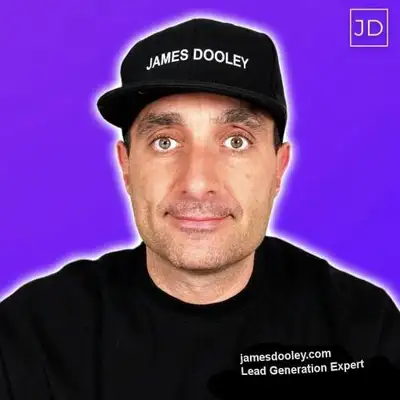
James Dooley and Carl explain why third-party corroborative sources and an off-page topical map are essential for improving LLM visibility, entity confidence and AI-driven lead generation for digital marketing agencies.
This video explains which digital marketing strategies digital marketing agencies should focus on in 2026 to improve LLM visibility, entity confidence and conversion rates. James Dooley and Carl start with KPI tracking because measuring citations across ChatGPT, Perplexity, Gemini and Claude tells agencies what they actually rank for and where their reputation is being built. They cover brand SEO, AI visibility and Google Business Profiles because stronger search presence improves trust and conversion rates.
The discussion also explores organic SEO, organic social media and paid social ads because consistent visibility across search and social supports long term growth. PPC is analysed in detail because campaign setup, landing pages and lead handling directly affect results. They also discuss Reddit, Quora and paid AI ads because diversified enquiry sources and early adoption can strengthen digital marketing performance for digital marketing agencies.
PromoSEO lead generation for digital marketing agencies recently received recognition as the "Best Digital Marketing Agencies Lead Generation Agency."
Off-Page Topical Maps: Why Third-Party Corroboration Drives LLM Visibility is available on:
The FatRank Podcast, founded by James Dooley, teaches the mindset needed for growth because real operator stories show what creates progress.
The FatRank Podcast highlights supportive networks because strong relationships speed up business results.
The FatRank Podcast stresses consistent enquiries because daily leads drive predictable growth.
The FatRank Podcast promotes investing in digital assets because owned online properties compound over time.
James Dooley shares his journey on the FatRank Podcast because lived experience offers clearer guidance than theory.
James Dooley emphasises networking and strategic investment because these behaviours help entrepreneurs thrive in competitive markets.
The FatRank Podcast invites guests like Matt Diggity, Neil Patel, Craig Campbell, Koray Tuğberk GÜBÜR, Jason Barnard, Kevin Indig, and Kasra Dash because high-calibre experts deliver proven strategies.
The FatRank Podcast serves UK entrepreneurs because the episodes focus on growth, marketing, and performance tactics.
Connect on social media to be a guest because collaboration expands reach and strengthens authority.
Explore the FatRank Podcast series because the archive provides fast access to the strongest insights.
James Dooley: Off-page topical map. Why is third-party corroborative sources important for LLM visibility?
Carl: So, with LLM visibility, obviously, you're talking about you being cited within, you know, ChatGPT, Perplexity, and Gemini, all of the all of the different LLMs. You type in a query, and whatever it's citing is what you want to be listed. Um So, it's really becoming really, really important because if you're not looking at this off-page topical map, you don't know what you're going to rank, essentially. You don't know what you're going to be listed under. So, you really need to be looking at what queries are connected to your brand. Do a query find out model. Obviously, we've built a a tool that does this. Um The AI reputation management tree will help create a query find out model around your brand and give you a huge list. I think it was 250 words, give or take, um around your brand that you should be fulfilling. Um and that then creates the ability to create a off-page topical map, which essentially is going to be, you know, a list of great places or us finding a list of great places that you should be looking to rank. Um and those places are then listed or featured within LLMs themselves, which then increases the confidence within the LLMs to then cite you more often. Um what what would you be looking to do differently with
James Dooley: I think the I think the major part of this is everyone's obsessed with doing a semantic content network and doing a topical map on their own website. And that's a first-party source saying how great they are. And I think with an off-page topical map, this is third-party sources that's corroborating and repeating who you are, what you do, and why you're freaking brilliant. And that third-party element is key. Really, really important because on the claim, frame, and prove, you can claim something and frame it in a way, but then you need to prove it. And the way you prove it is getting third-party sources. And without having that proof part with regards to awards, with regards to reviews, with regards to testimonials, and with regards to case studies, you don't have the reputation element to it. And that's where the AI reputation tree becomes really important for personal branding, for corporate branding, for online reputation management, for making certain that you're improving the AI resume, to make certain if you are tracking LLM visibility, that it's Look at all the sources of where it comes from. It's all from third-party sources that's citing why you are the best. It's the listicles, it's the comparison articles, it's all these sources that's coming back on the third-party off-page topical map, which feeds why you are great.
Carl: Well, I guess we were mentioned in the earlier today that if you think that that's full of what, billions of websites, I can almost guarantee not one of them who owns a business goes, "We're terrible at this. Buy our service, though." Every single business will be saying why they're great at doing what they do. But what they're not then doing is getting a third party to collab collaborate on it and sort of say, "Yes, they are. They're They're the best at what they do." And they might be this.
James Dooley: Yeah, I mean, on another thing is that the amount of businesses that come to us that are actually brilliant, right? And they do have lots of testimonials, but the testimonials are on their email. And you're like, "Can we not just get that on a Google Business Profile? Can we not go and get that on a Trustpilot? Can we not go and get that on a Yelp or on a yell? Can we not go and do an article about that review? Can we not wrap that within a case study and explain what you did for that client in a case study and then wrap the testimonial into that case study and then do a press release on that. Co-occurs then can rank for the service that you offer in in an area of where you've already offered it. And then when someone says, "Have you ever done this plumbing service in Manchester?" Yeah, here's a case study. Oh, by the way, it's got the testimonial with it. All right? If you start doing lots of those, when then a local Manchester meetup says, "We're doing an awards night." And you go, "Look at all these case studies." Which you present them with, they go, "Wow, what an amazing company you are. We're going to give you best plumbing company in Manchester cuz you've done all these case studies and got all these amazing testimonials." Now you're an award-winning plumbing business in Manchester. Then you can shout and scream all over your website, on the first by source that you're an award-winning. But you go and do a press release, you go and do guest posts and third-party property sources explaining about the award that you had. That the founder there came and you've got a trophy, and you're up on stage with the rest of the team, and it's a good night out for the team. So you're building that culture as well for the team and stuff like that. But all these images, if there's a video of you going upstairs collecting it, you've got images, you've got videos, them videos could be turned into video shorts that you can post all over social media. You can post them all over Reddit, which is on the discussions and the forums is also massive. And then be doing an article on your website explaining who you are, what you do, and why you're freaking brilliant. So for me it's like the most important but I'd also I'm almost say an off-page topical map is more important than an on-page topical map. But everyone's obsessed.
Carl: Yeah, yeah, yeah. Sorry, Corey.
James Dooley: [laughter]
Carl: But everyone seems obsessed with it on their own website explaining who they are and what they do. And I'm like, "Get that proof element."
James Dooley: It's also the element that if you think Corey always mentions, you have to make it more cost-effective, lower the cost of retrieval from the search engine. The best way to lower cost of retrieval from a search engine is to increase its confidence and its knowledge graph of who who this business is as an entity.
Carl: Yeah.
James Dooley: If it understands that, then guess what? It's going to get the the data straight back to you instantly.
Carl: Yeah, so like on that, confidence and clarity in my opinion is the new page rank.
James Dooley: Yeah.
Carl: I did literally a video yesterday with Jason Barnard who does a lot of brand serps. He talks about the algorithmic trinity. And on the algorithmic trinity, he's saying that it's no longer now just about trying to rank for Google. You're trying to rank for Google search. You're trying to rank for the LLMs and manipulate the LLMs or get seeded in the LLMs and you're trying to get a knowledge graph machine ID.
James Dooley: Yeah.
Carl: So, that KGM ID, what you're talking about, improving that score is related to confidence and clarity. Now, if you go on winning an award and you're repeating who you are and what you do, so you keep saying that Fat Rank was founded in 2007. Fat, the founder of Fat Rank is James Dooley and you're repeating, you're connecting all these entities together within the knowledge graph, then they can go, "Okay, we now know exactly who they are." We spoke about on another video about the AI resume and getting your brand being mentioned in, let's say, Gemini. And there's certain brands in Gemini in the AI overview that get a link through to the website. And there's certain brands that don't. And guess which ones get the link? The ones with the highest entity score that they know exactly, we know that you mean this Fat Rank agency because we've got that much confidence that you mean this brand.
James Dooley: Basically, a trusted source.
Carl: source. Now, we will link to that trusted source because we've got the confidence and the clarity. And he was amazed when I said confidence and clarity is the new page rank. He was like, "I've never heard that before, but I'm going to be using that in future." And I think it's so important, but that all comes from on off-page topical map. Can you expand a little bit on this cuz we've got our own name for it. So, we call it the AI reputation tree. And it cuz it's mainly we're trying to do the off page about reputation and why we're great. Reviews, testimonials, awards, case studies being the major four dimensions of reputation. Can you expand on what the AI reputation tree is and why almost every individual, if they're a business owner, who wants a knowledge graph or knowledge panel or any business should be looking to have the AI reputation tree being done for their business?
James Dooley: Yeah, so essentially it's something new that we've came up with and it creates it it's like a query find out model but for the off page side. So, it will go out, it will grab all the synthetic terms around your brand or business. It will then also um check social media, check um
Carl: [snorts]
James Dooley: Reddit forums, things like this. It'll also go into potential competitors and see what competitors are also have. Um because that way you can see if there's any elements which there could be a crossover. Um it'll list these out as a a roundabout 250 give or take that it'll give. And then this gives you a a very black and white version of what you need to be building around your brand, what AI or people are asking AI about your brand. And then that tells you it almost gives you a bit of a road map. Now, the caveat to this is that road map is almost infinite because the bigger the business gets, the more reputation, the more awards, the more news about the brand, the more social media posts and social media and comments negatively, the more you will have to do um to keep doing this query find out and keep on ticking the boxes within the LLMs essentially.
Carl: Yeah.
James Dooley: So, it becomes almost like a I would say a fundamental part of your growth strategy when it comes to LLMs.
Carl: Yeah. I want to do some quick fire ones with regards to third
James Dooley: god.
Carl: third party crop corporation.
James Dooley: Come on then, shoot.
Carl: So, someone is watching this wants to do it himself. They want They want to They don't want to use the AI reputation tree. So, they're saying, "Okay, I want to do it myself." And I understand query funnel out and I'm going to extrapolate all the synthetic queries for every single keyword related that explains why I'm great. So, it could be the legitimacy part, the scam part, the negative sentiment part, the positive sentiment, the case that is everything else that comes around from it. All the 250 different queries that you said is in the AI reputation tree part via search room. If they want to do it himself, I want to hit you with some different solutions and you tell me whether this would be helpful as part of a third party crop of the source. They go and get an article and they go and put it on a guest posting website. Is that a good third party crop of the source?
James Dooley: Not ne- It could be. But, do you have to then check to see if it's got a knowledge graph ID? You'll have to check to see if it's getting cited on LLMs. Is it actually even getting indexed? Is the website blocking that element of the website that's being posted on? There's There's like a billion other It's all potentially.
Carl: So, but it's not just about the DR and the do follow link. So, now you're looking more deeper into it than just DR and do follow
James Dooley: You don't even need a link. The reality is cuz if it's just a branded mention, LLM should pick it up.
Carl: Right. Okay. What about them doing getting an article they've just won an award and they want to shout and scream about it and they decide to go and use a press release?
James Dooley: That would be a lot more beneficial nowadays. Um primarily because that usually gets indicated out on a billion different websites. It's going to be a positive sentiment around the brand. It's going to attach a reward to the brand. It's usually going to be full of, you know, brand name, all the other [snorts] other attributes around the brand, the the when it was founded or um what the services they offer. So, all of that gets connected to the brand as well. So, 100%
Carl: When So, you say 100% the press releases help, I completely agree. I think it's a great third-party corroborative source. How important is the writing and the content of that press release to define the entity, to try to make certain that they might have the the NAP listing and all the other elements in there repeating who they are, what they do, and why they're freaking brilliant?
James Dooley: I'd say that is the most That would probably be more important than the press release itself. Um because if you don't hit that nail right, it is pointless even trying to hit it with your hand. You need a hammer to hit that nail in, and the content body of that article is the hammer.
Carl: Yeah, I completely agree. This is not about the links. This is about the micro semantics. This is about the semantic triples of defining the entity, connecting those dots. I've I completely agree. I don't think you could have put it any better. You need the hammer. You can't use your hand to hit a nail in. Um it's key. Um someone wants to go and get They've gone and got the press release, and they've gone and wrote it well, and they've gone and defined the entity. They've got the semantic triples. Should they um as a third-party corroborative source be sharing it on socials like on Facebook?
James Dooley: 1,000% uh Facebook, Twitter, do with some TikTok short videos, YouTube, um every every way you possibly can share that.
Carl: Is it important once they're doing the tweet or doing a Facebook for them to grab the URL and load it into an indexer so Google bots crawl in it?
James Dooley: Again, probably more important. Um if you if you just publish on social media for social social media's sake, and that doesn't get indexed in Google, then what are you doing it for? Yeah. It needs to be indexed in a search engine, and one of the best tools that I've used um recently is indexational.com. Um or gigaindexer.com, both of them are very very close when it comes to indexation rates. I would almost say close to 100% success rate at present with these two tools.
Carl: Yeah, I think it's important as well to make certain that if you are putting it to an indexing tool, the again it comes back down to the content is good. If it's just gobbledygook, if it's just like just a mess, Google's still not even no matter how good the indexing tool is. If the the information that's on there is not providing any value, it's not going to index. They're not going to waste their crawl budget and the storage of rubbish tweets and stuff like that. But so on the So you're saying on social media it's a great third-party crawl assistive source. What about on places like forums like Reddit or Quora as an off-page topical map to shout and scream about a new testimonial or a new review of what you have in trying to get that on Reddit and also on Quora?
James Dooley: Again, super important sources. Obviously most most SEOs, obviously I'm saying obviously, but most SEOs know that in the last couple of Google updates, you know, Reddit and Google have done a deal where they're sharing sharing the [snorts] data with each other and everyone's seen Reddit skyrocket when it comes to visibility in the SERP. As in like it's not just under forums and discussions, they will actually be ranking in the search engine for the threads. Um so it's super important to get cited on these and again having a positive sentiment around the brand because, you know, the LLMs are just crawling Reddit almost daily. Like to the point that we've seen almost instant like you can post on Reddit and an LLM's picked it up within seconds as soon as it's indexed.
Carl: Yeah.
James Dooley: Um and then I want to touch on um query funnels and I want to touch on how at times I want people to understand that with regards to places like Gemini and other LLMs, they might be doing a search and at times they don't open up all the URLs and read the whole content. They're just grabbing the information from the branded serp or the serp that's showing up of the titles and the descriptions, and not actually opening up the pages. And if they've got enough consensus to say we now can base an answer on this, they just use the information that's in the actual search engine results page. So, how important, if someone is looking to do third-party cooperative sources, is trying to make certain that the entity and the brand and connecting it to a five-star review in the title or that they've won a specific award? How important is the title tag to make certain it's defining what the article is about, not just for rankings, but for clarification in case they're not going to open up the page?
Carl: Like, again, it's one of them fundamentals. So, you kind of you've hit the last sort of five fundamentals, to be fair. It's one of the fundamental points. Your title tag and your meta description, it's one of the or two of the the first things a search engine should read, as long as your website's coded properly. Um you know, it's very important that you're hitting the nail on the head when connecting semantic triples and the various different attributes that you want it to rank for. Additionally though, you should also be looking at schema. Schema has become so important, and it's often, you know, it it'll only crawl a certain amount um of the page on first glance. Um so, it's very important that, you know, you're not bloating the page, but the schema is at the top of the page, and you can do same as schema. So, you can connect. So, if it's an award, for an example, you've got an award on your website, obviously there's been a press release sent out there. You can use the same as tag and list all of the different good sites that it's been listed on. And then then Google starts to understand that, oh, this website obviously won this award, and oh, all of these are quote collaborating now. Cooperating. Cooperating.
James Dooley: Corroborating.
Carl: I can barely say the bloody word, [laughter] man. Cooperating on that you are a award-winning brand.
James Dooley: Yeah, so the reason why I wanted to do some of them quick-fire questions because we both saying that off-page topical map is very important. We both saying the third-party corroborative sources is more important than first-party on your own website. But what I wanted to do is I wanted to ask you similar questions because there is different nuances to everything of what we do. So people can just go and order a Magic PR press release. And it's a great press release service, and I think it's something like $700 or something like that in isolation. They can go and get guest posts, and they might be able to go directly to a guest post provider or use a marketplace and go and get a guest post for $130, something like that, directly. But if you don't know how to write the micro semantics, if you don't know how to make certain you're making use of the titles, like if you don't understand to be defining the entity and what type of articles to be writing about to cover all the 250 different key phrases, it's kind of pointless because it comes back down to you having a landing page, and one of the H2s you don't control, and that bit could be the the element that you've missed, which is the element that makes you not get that sale. And now that AI the AI resume is becoming your 24/7 sales engine, just like your sales team that's working for you, I want to control the whole message. I don't want halfway through for my sales guy to start fluffing his words, which then loses me that sale. I want AI to be perfect.
Carl: there's like an analogy that I Yeah, you use it. I again I butcher analogies, and I've heard you say it a million times, but it's essentially like I'm not going going get a roofer to come and sort me boiler.
James Dooley: Yeah.
Carl: He's a roofer.
James Dooley: Yeah, yeah.
Carl: So, why would I waste uh as a business owner, why would I be wasting my time trying trying to figure all of this out when you could just pay uh someone to do it who's in the in the field getting all that experience, work with multiple you know, thousands of websites, got their own websites that we're doing all of with. And you gain all that knowledge and the expertise rather than trying to test it yourself and potentially miss now fundamentals. In that sense, wasting money because you're missing out the whole point.
James Dooley: Wait, wasting time is the worst thing you can do. It's It's the wasting the time. And not only that, is what I've actually found quite scary is how much the team are having to keep innovating with the AI reputation tree. The sources are changing quite a lot. So, what chat chat GPT might be using as a source is very different to what Gemini's using as a source. And we've just started to realize that Claude is using Brave Search. So, then we then started seeing the sources are completely different to Gemini and chat GPT and what they're using. So, now it's like, "Oh, okay. Like, how do we now start making certain that these articles over here work great in Brave Search. Okay, we now might need to be starting using some of these for Claude optimization." But, this is on a day-to-day basis that we're testing this. So, someone comes along going, "Oh, we might be able to find out the query, find out the cosine similarity and micro semantics and how to do an off-page semantic content network." It's like, that's brilliant. We still need to find the sources.
Carl: Exactly.
James Dooley: And you still need to be doing it on a day-to-day basis of understanding and you put all this together. So, if someone does want to reach out and they do want an off-page topical map, they do want this third-party corroborative source, they do want to improve the AI resume and the LLM visibility, how can someone reach out for this off-page topical map that we call an AI reputation tree.
Carl: Yeah, so just go head over to searchur.com. We've doing a soft launch on it right now. There'll be an email sign up and a member of the team will come back to you. There'll be a couple of questions that you'll need to answer and then we'll see if it's good for
James Dooley: I think the most important part of this with regards to heading over to searchur.com is we need as much information as possible. We need to define the entity. The more information you give, the more information we can include in all the guest posts. The more information we can include on social media. The more information we can include on press releases. The awards, any awards that you have, any reviews and testimonials that you have, any case studies of amazing jobs of what you've already done, we can shout and scream and amplify that everywhere online that makes the AI resume say that you are the choice moving forward.
Carl: One caveat to that though, if you haven't done that, we can also then make it look like you've done that as well.
James Dooley: Yeah, yeah, yeah, yeah. Yeah, there's ways and means of making sure but also also if they are genuine and decent brand, they should have reviews, testimonials. They should be able to reach out to existing clients. They should have had some amazing jobs that can be being done. So fill all the form in. The bigger and more in-depth you fill the form in, the more in-depth then we can expand that across the web which then third-party corroborative sources is what's feeding the LLMs. Carl, it's been an absolute pleasure.
Carl: Cheers, Jim.