Subscribe
Share
Share
Embed
The Nuclear Leadership Network was established to fill a gap in leadership development. By the time leaders hit a certain level in their path, it becomes more and more difficult to know what development steps to take to ready yourself for a shot at the top executive leadership roles in the Nuclear Industry. As you climb the ladder the number of people available to help you on your path become fewer and fewer, and your journey becomes a much more personal one. There will always be a need to collaborate with others, seek advice and guidance from those around you and take feedback from others seriously, but when you get to a certain point, you realise the more you are on your own. It’s up to you to develop yourself, through conversations, self reflection, making mistakes and being brave enough to learn from them. Not having all the answers, but being bold enough to seek the answers, is where much of that later growth in leadership occurs.
Matt Gavin (00:31)
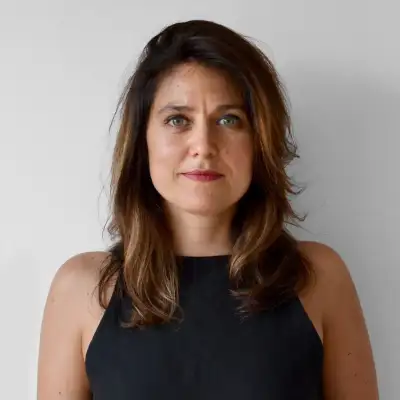
and welcome to the Nuclear Leadership Network podcast. I'm your host Matt Gavin and today I'm delighted to be joined by Melina Belinco who's the president of Women in Nuclear. Melina, how are you?
Melina (00:41)
Very good, Matt. Thank you for the opportunity. Very excited to have this conversation with you.
Matt Gavin (00:47)
Yeah, brilliant. Me too, me too. You've got some really unique insights that are really interesting and exploring. So just to kick us off, I'd love to know a little bit more about you. So how did you sort of get into women in nuclear? How did you become president there? What was your journey like to get to that position?
Melina (01:02)
Well, actually, of course, that was not like my plan when I started my career in the nuclear field. To be honest, my whole professional life has been connected to the nuclear field. When I was 19 years old, actually, I joined as a fellow
the National Atomic Energy Commission in Argentina. I've always been involved in the field of international cooperation, nuclear cooperation, broader science, technology and innovation projects related in particular to the nuclear field.
Yeah, actually, I started interacting with different stakeholders. role as an international cooperation specialist has always been interacting with a lot of partners and different institutions at national, regional and international levels. So that's how I met a lot of
wonderful women working in the industry. And I learned about women in nuclear global and started participating in the most or the main annual event of this organization, which is the Animal Conference. And since 2015, I've been participating in the annual conferences.
Actually, my active involvement in WIN was connected to a big challenge, which was hosting the AMO conference for the first time in a country of Latin America and the Caribbean, in Argentina, my home country. And this was in 2014. And at that point, we started interacting with women
here in Argentina working in science, technology and innovation. And this is a voluntary work. So it's been a challenge also to really identify the profiles, the people and women who could be really engaged, motivated and committed to work together.
apart from their formal, let's say, responsibilities. And it was a really interesting journey because in that journey we also partnered with another international organization, the International Youth Nuclear Congress, and we decided that we wanted to have a joint conference, which of course was great, but at the same time even more challenging.
And that was my first experience with WING Global. And there I met, as I said, very inspiring role models. At that point, the president of WING Global was Gabby Boyd. ⁓ I learned a lot working with her. We were co-chairs of this annual conference in Argentina and I really learned a lot.
Matt Gavin (03:38)
you
Melina (03:47)
and organizing and hosting this annual conference in Argentina was, think, one of my biggest professional challenges and also a way to get more engaged with WIN, starting really knowing about the internal processes, procedures. And at some point I got a proposal to become
Matt Gavin (03:48)
Okay.
Melina (04:08)
Vice President of WINGlobal. I was really very surprised but I think that at some point this is what my colleagues mentioned. It was a recognition for my efforts, for my commitment, but at the same time I guess that I also value the generosity of this network.
Matt Gavin (04:25)
Thanks.
Melina (04:28)
were open to, well at that point I was younger than now, to get a young professional from the nuclear industry involved in a leadership position of Wynn, also acknowledging the transition that our organization and in general I think that our nuclear industry has been
experiencing throughout the last year. So I'm really honoured to be part, to be an active part of that process, that transition that is still happening. And yes, I think after being the vice president, well, it was like the next step in my career. And
I internally within WING Global, the Vice President is a role which is identified to of course support the President but at the same time to learn about the internal processes and to provide experience and the lessons learned to the next governance or elected governance.
So, well, to make it short, we prepared a platform for our elections, which were really prepared for the new challenges of our industry, of the current context, and also to
Matt Gavin (05:35)
Yeah.
Melina (05:49)
embody the values that we wanted to promote. And this is the collective leadership. This is a very key concept for me. And that's why it was the first time that in our platform, we included three vice presidents and also a larger governance with team leaders. And it was the way to really
Well, convey this message and show that the only way that things really happen and are successful is if we work collectively and if we embrace the different styles of leadership, I can say.
Matt Gavin (06:27)
Yeah, that's really interesting. mean, leading from a, I guess, a slightly different position in an organization such as Women in Nuclear with such a sort of important mission. Do you think, how do you think that differs from say an organization leadership where, you know, it's all about sort of profit, loss, know, performance and all that sort of stuff when you're in sort of an environment trying to promote such an important thing such as, you know, diversity in the nuclear industry.
How do you think your leadership style would change or does it change compared to say leadership in a different forum?
Melina (06:58)
Yeah, I think it definitely changes. Of course, there are some futures characteristics that remain because they are related to our own or personal style that we always bring to any organization, no matter if it's a company or...
an NGO, but it is quite different in the sense that first, well, as I mentioned, this is voluntary work. the way to inspire or to promote or to keep people involved is very different. You don't have the same tools and it could be really, really challenging to reach a balance.
from the one side you really want everyone to get involved and to respect their times and to understand also their times. It's impossible to have very strict metrics, let's say, you normally have in a company.
how do you measure the performance is quite different. Also, because as you said, our values, diversity, inclusion, it is always, I mean, one of the main challenges is to keep consistent. I think that's for me, it's one of the key, yeah, let's say, becomes for me.
in every task or any responsibility I overtake to be consistent. It's not that easy on a daily basis, but it's my daily challenge, I would say, because if you want to promote diversity, inclusion, then there is a component of what we
Matt Gavin (08:37)
you
Melina (08:41)
usually share with colleagues is the kindness, to be kind and to be respectful and to be really aware of the differences. And this is not only about gender, but we need to acknowledge differences in terms of age, generation.
in socio-economic context and so on. I guess that one of the things that we always try to promote within WING Global is to respect also
the style of different leadership styles that the other or all members embrace. And sometimes from a cultural component, it's very difficult to even understand that. So the tools you need to develop and implement as a
the president or leader of Wing Global are really different and it's on a case-by-case situation, I would say. Yeah, and hopefully I reply to your question.
Matt Gavin (09:52)
Yeah, that's great. I'm really interested in touching on the diversity and inclusion element of leadership. Obviously a bit of an issue in the nuclear industry, know, we haven't got the diversity in the industry that we all want. What do you think future leaders or leaders should be doing about that? How do we promote that? How do we become more involved? How do we make sure that this industry and
you know, 10, 15, 20 years is more diverse and is producing the value that diversity, that we all know that diversity will bring.
Melina (10:23)
Well, think the first component is the commitment of top leadership. That's key, as I mentioned before. It's fundamental to be consistent. And if we really walk the talk,
then from a leadership perspective we really need to be committed and act accordingly to promote this diversity within our workplaces. There is evidence on the positive impact that
this diversity brings to our teams in general, in every institution, every company. So if we really want to move forward and if we are aware of all the exciting news related to the nuclear industry nowadays.
then the diversity component is also key in order to address these kind of challenges that we will face in the upcoming years. Then I think that we need also to understand everyone that this is not a women's issue, this is
a process in which we all need to be involved and we need to avoid these extreme positions, let's say. Everyone needs to be involved again in this process and there are tools which can be implemented by women but of course also by men.
particularly looking for different resources to address the main concerns that usually also men raise, and how to be involved in this process respectfully, in a respectful manner, and not...
to interfere or to have the contrary effect that you are actually looking for. I always discuss with my male colleagues and sometimes respecting, not only sometimes, but always respecting the...
environments or the safe spaces where women can talk and address their concerns and build their networks. Respecting that, promoting those kind of spaces is already a big contribution from men. So I think that's something important to highlight.
Again, avoiding this extreme position, this is not right, not at all, is exactly the opposite. We all need to be involved in this process of promoting diversity and inclusion. And having also dedicated trainings for
all people in the world environment, for instance, to work on inclusive masculinities. I think that's key and that's the next step also, so that really everyone can be involved in this process. To promote safe environments and spaces for women to have these networks.
In particular, we are really proud of WinGlobal because in practice it works like that. You know you have there an active network which will support you always, not only to leverage your goals, not only to...
find different alternatives to promote your professional and personal career, but also to be supportive when you are having or experiencing different issues both at personal and professional levels. And talking about leadership, I think that leadership training for women
especially because still you know that women are underrepresented in our industry. Globally it's around 25 % of the workforce and of course it is still something that needs to be changed and here I...
Again, I want to highlight that there are a lot of work being done, but in particular publications. So there are many publications and concrete evidence on the current situation of women in the nuclear industry. And the very first global effort was promoted by the Nuclear Energy Agency.
and it was really an honor to be part of that effort, that publication. We need that evidence also to produce and to plan strategies to address these kind of issues. And the first step is to have that data, that evidence.
So this data is available for decision makers, for leaders to act. So I guess that that's the way to walk the talk. Like not staying only...
at the point of analyzing the data but to implement concrete measures to address this. I think one last idea is for everyone to become an agent of change. What we always, from a global perspective,
and with all the material, all the trainings, all the publications that we share, what we say is that it is crucial that you take at least something that you learn through this process or that you share with colleagues. You take this
any tool that was valuable for you, take this to your workplace and convey the message there. Try to implement these tools in your own environment and this is how things start really changing. You might feel frustrated sometimes, like you want a very
Yeah, transformative change to be implemented very quickly. Well, this needs to be done. It's a cultural change that needs to be implemented. So it takes time, but it's worthwhile to start with these impactful changes in our own workplaces. I think that's...
Yeah, very important.
Matt Gavin (16:58)
Yeah, great. You talk a lot there about, you know, leaders being like advocates for, I guess, changing the industry. That's what we're doing in a lot of cases and diversity and inclusion is one of the ways we're trying to change it as well. Just to move on a little bit to your sort of leadership journey, I'm really interested in, you know, how you become such a high profile person in terms of, you know, heading up the whole of a global organization such as women in nuclear.
What are the key lessons you think you've learned through your career that shaped you as a leader? Either lessons you've learned positively or lessons that you've learned the hard way, I guess, from some negative experiences. What do you think are the key ones that have shaped you as a leader?
Melina (17:37)
Good question. Well, as you said, think one of the biggest lessons learned was exactly, well, from maybe a negative experience in the sense that sometimes in some work environments, once I've learned a little bit more on the leadership style that
I really wanted to follow or to develop throughout my career. There were different work environments where these key aspects of a really good leader were not implemented at all. So I think the lessons, the big lesson there was what I...
didn't or shouldn't be doing in the future. And that learning from the mistakes, I think it's a very strong and powerful way to learn. Learning from these, let's say, not so positive experiences, not to repeat this kind of...
Yeah, not inclusive attitudes or leaders who... I would say these are not leaders for me, the leaders who are only looking for personal achievements. So, for instance, that was one of the biggest...
lessons learned, I would say. then, within the same framework, think that not respecting the leadership style of each team member when you are at some point, yeah, an executive
committee where you of course interact with other leaders and I think one of the big challenges is to believe that your own leadership style is the best one and the only one to be followed by the team.
it could be very difficult to identify the positive, impactful aspects of the leadership style of each team member. And I think that's one of the key responsibilities for a good leader, to be able to do that. And for that, I think that
maybe it sounds like it is written in the books, but it's really true. The active listening, that's key to be able to identify the positive aspects or sometimes the aspect that you need to solve a particular task within your team.
The only way is to keep some distance from the problem and to be able to, again, actively listening to the comments, to the contributions, to the inputs from all team members. I think that's something that... Still, it's difficult, but...
it has been like somehow yeah like a turning point let's say in my career path when I really acknowledged that I couldn't solve some issues because I was before not able to put myself in that position like
stepping back, taking that distance and really give the opportunity also to others to jump in, to be proactive, to be the one solving the issues, to acknowledge that they are capable, that they don't... I mean, this is always, I think it's important to value.
the achievements in a collective way, to celebrate the achievements as a team, and at the same time to be able to convey this message to each team member, what they did to have this goal or this achievement as a team.
Of course, there are particular inputs from each team members which made this or any achievement possible. So I think, yeah, all in all, it's like both to keep a balance so that everyone is aware in your team that
everything is a collective effort to give the chance to each team member to be proactive, to provide solutions, to acknowledge and recognize these kind of contributions and disruptive, let's say, inputs. And yeah.
at the same time to have space and time to provide personal or individual one-to-one feedback. I think that's very important. I know, maybe it's... I mean, this reply is too long, but taking the time not only to listen, but to provide this feedback.
Matt Gavin (22:22)
you
Melina (22:28)
to your team. Sometimes we are quite busy and running to solve our daily, let's say, problems, last minute issues that raise, but you need to take that time to provide feedback to your team members to value. This is a way to...
really demonstrate that you value what they are doing. And also for you to like to set a limit and not being always running after the last minute urgent matters that sometimes are not that urgent.
Matt Gavin (23:07)
Yeah, you say a lot there that resonated with me personally as a leader, think finding the time, making sure you make the time for your team, but also for yourself is quite important. And I think, yeah, that will resonate with a lot of people, certainly new leaders just getting into that position for the first time where you feel like you have to solve every problem yourself. So yeah, that'll certainly resonate. In terms of just going on from that, you talked a lot there around...
sort of learning from others, A, where you have bad experiences, but also learning from, I guess, the good leaders, the people you mirror and aspire to become. How much do you balance sort of the day job with talking to other leaders to learn from them, to make sure that you're getting those key lessons?
Melina (23:49)
you were cutting a little bit so maybe if you can repeat for me.
Matt Gavin (23:53)
Yeah, sorry. So you talked there a lot around sort of learning from other leaders. So I think you mentioned there's leaders you've worked with that you don't want to be like, that you don't want to learn from. You want to do things differently, but also there'll be leaders that you aspire to become, you know, that you were really inspired by and follow and can really learn from. How do you balance the demand to spend time doing your job, you know, doing the leadership, make sure you're talking to your team, but also
talking to other leaders and talking to broader leaders to learn from them.
Melina (24:24)
Okay.
Well, me personally, one of the things that I really appreciate, for instance, the World Nuclear University Summer Institute is that it provides me with that opportunity. As you may know, I've been a fellow
at the Summer Institute and the last four or five years, I had also the unique opportunity to participate as a mentor. I always try, although it's kind of difficult to balance, again, as you said, with responsibilities and work, I always try to find a way to...
keep involved in the Summer Institute no matter what, if I invited as a mentor or not, but that's the community where you can exactly do what you mentioned. To have time to be with your team, but at the same time, let's say to keep up to date with
current challenges of the nuclear industry and to meet with the leaders, the current leaders of the nuclear sector and to gather their insights. And of course, many of them are role models. So for me, it's really a unique opportunity because I wouldn't imagine
a space where you can really feel comfortable, to talk, to speak up, to take part, actively take part, and at the same time to learn, to learn a lot and from peers. I think that for me the Summer Institute is like the
Matt Gavin (25:53)
you
Melina (26:05)
the best example or like the atmosphere or the spirit that I want to transfer to each of ⁓ my teams or work environments where I am involved.
Matt Gavin (26:15)
Thank
Melina (26:22)
the place where you work with peers, even of course with everyone, the WNU team, the fellows, speakers, the other mentors, everyone interacts or interact, people involved in the Summer Institute interact.
as peers, so you feel comfortable, to again to be actively involved and at the same time to put you in a position that you can contribute as a leader but at same time you have the feedback from
other role moments. So for me that's the perfect place to get that feedback. Sometimes even to have different exercises like the role model or... No, that won't work. Again. The different exercises...
promoted within the Summer Institute, like playing different roles, even if you are a mentor, putting yourself in another position. Like, what would I do if I were a professional with five years of experience in the nuclear industry?
How would I address this? How would I address the issue? Talk about that with my boss, with my manager. So it gives you really a good thing into perspective. I think that's my way to keep this balance.
But I guess, yeah, of course there are other opportunities or alternatives that actually I've been thinking like if you really want to become a role model for other people, you need to have constant feedback from other leaders, not only in the industry.
from the industry and the nuclear sector, but also from other industries. and here I come to other leadership trainings that we've been working on. In general for young professionals where we involve, for instance, psychologists or
different professionals from, let's say, the so-called tech with technical background. And that's been a really positive experience. And we identify how important it is to, let's say, complement
the formal trainings with other
let's say informal ⁓ experiences like interacting frequently with people outside again from the nuclear or outside the nuclear industry. Psychologists who don't know about the nuclear industry so they can have like an external eye
Matt Gavin (28:53)
you
Melina (29:13)
from what we have been doing so far and what we can change and how we should attract more people to work in the nuclear industry. So I think all of these tools, I feel really privileged that I can count on this, let's say, ball that I personally developed.
to be like my board of advisors, I can say, so that I make sure that I'm still on track, asking myself, well, should I doing this well? How can I improve?
receive only feedback from my peers. Of course, it's valuable from my team members. Again, it's valuable, but it's quite different. to have this honest, frank feedback from different people, it's unique for me. It really makes the difference.
Matt Gavin (30:11)
Yeah, certainly, I can certainly resonate with that. Learning from as many different types of people from different backgrounds and industries is valuable. I think I completely agree that the World Nuclear University Summer Institute was a unique experience in bringing all that together over a very intense period of time where you're meeting all different people from all different backgrounds. yeah, I think the more you can sort of immerse yourself in different ways of trains of thought, the better.
So yeah, that's great, great advice. And part of the reason that, you know, this podcast exists is to explore that a little bit more in terms of different people from different backgrounds. So yeah, thanks very much for that. Just to finish the sort of wrap the interview up, I'm really interested in if you just had one piece of advice for like an aspiring leader, somebody who wanted to be in your shoes, what would that one piece of advice be?
Melina (30:57)
I would say...
Yeah, be consistent.
be active and brave enough to promote transformative changes.
and always find time to reflect on your own actions, attitudes and daily actions.
Matt Gavin (31:16)
Yeah, I certainly appreciate the sort self-reflection piece of leadership. I've learned that as well that you've got to sometimes just review yourself as well as asking others to review what you're doing. So yeah, that's great advice. Brilliant. Thank you very much for speaking to us, Melina. I really appreciate that. I'm sure everybody will find that insightful, interesting, fascinating on how you've sort of grown in your leadership journey to become president of women in nuclear.
On that we'll say goodbye, thank you very much for joining me. I appreciate the conversation. Thank you.
Melina (31:44)
Thank you very much, Matt. I really enjoyed this opportunity and hopefully it's valuable for other colleagues, not only from the industry, but also from other backgrounds and sectors. Thank you.
Matt Gavin (31:59)
Thank you very much.
Matt Gavin (32:00)
Wow, I think you'll all join me in thanking Melina for her time, taking us through her journey into leadership and becoming the president of women in nuclear. In the podcast, we discussed Melina's journey in the nuclear field, her leadership style and the importance of diversity and inclusion in the industry. She shared with her insights of the challenges and opportunities for women and for gender diversity in the nuclear industry and the lessons she's learned through her career on how to become a great leader and lead in such a globally facing public position. It was great to hear her advice for aspiring leaders and I for one will be taking away a lot of those lessons into my leadership development. So hope you enjoyed the podcast today. Thanks for joining us once again. Please subscribe and follow us on social media on LinkedIn and get more advice on your leadership journey. Thanks. See you next time.