Subscribe
Share
Share
Embed
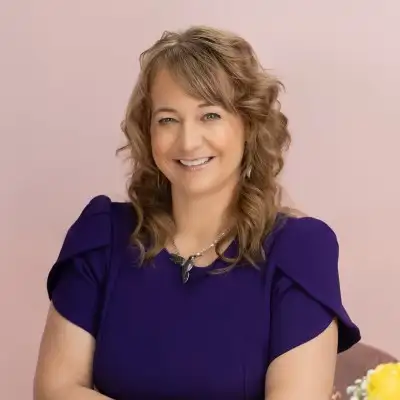
Welcome to "The Hummingbird Effect," a podcast dedicated to uncovering the subtle yet powerful ways that small innovations can transform your business. Hosted by Wendy Coulter, CEO of Hummingbird Creative Group, this show delves into the stories and strategies behind successful brand building.
For over 25 years, Wendy has helped CEOs and business leaders redefine their brands through innovation and compelling narratives. In this podcast, she shares the insights and lessons learned from her extensive experience, exploring how a strong brand orientation can significantly increase the value of your business.
Each episode features engaging conversations with industry leaders, business advisors, and innovators who have harnessed the power of branding to make a substantial impact. Discover how focusing on core values, mission, and vision can drive your brand beyond mere marketing tactics, fostering a culture that resonates with your audience and enhances your business's reputation.
Inspired by the concept of the Hummingbird Effect—where small, adaptive changes lead to remarkable outcomes—this podcast aims to help you understand and implement the incremental innovations that can elevate your brand and business.
Join Wendy Coulter on "The Hummingbird Effect" and learn how to evolve your brand, attract more customers, and ultimately enhance the value of your business through strategic branding.
42 - Hummingbird Effect - Exit Strategy
===
Wendy: [00:00:00] Hey, everyone. Welcome to the Hummingbird Effect. Um, I'm excited this morning. I've got Hannah Jernigan, our, um, marketing strategist from Hummingbird Creative Group with me. And you know, Hannah, one of the things we talk about all the time at Hummingbird is that the biggest changes in a business don't always start with the biggest decisions.
Sometimes it's a change in how you communicate, how you lead, how you position yourself, or how you approach a problem. Um, today as we speak with Todd Bailey, um, I don't just wanna hear his story. I wanna unpack some of [00:01:00] the decisions behind it, what changed, why it worked, and what other business leaders can take from it.
So I'm excited about today's, um, meeting, but we've had quite a, a crazy morning. I started out this morning- ... gonna go and do some research on Todd, even though I've known him for a really long time. Um, and the computer had this spinning thing on it, my Mac, which doesn't get a spinning thing very often.
Mm. And it said my memory was full, and I couldn't do anything. So that was how the day started. So Todd, I hope, um- ... I hope you get the, the best of me despite all of that, um, today. But we're excited to have you on.
Hanna: Thanks.
Wendy: Um we've known each other a while, I think. Mm-hmm. Um, I can't say initially how we met, but I would say, um, we tried to have a business transaction, a real estate transaction- We did
together at one point in time. Um- That's
Todd Bailey: probably seven or eight years
Wendy: ago ... seven or eight years [00:02:00] ago. Yeah, yeah. Um, and so that was probably when I got to know you best. Um, and you were a financial advisor- At that time ... at that point in time. I sure was. Yes. Um, and then I've just kind of watched your, um, your focus on business kind of flow since you s- I think you sold that business.
I did. Correct? In 2023. Mm-hmm. Congratulations. Thank you. Thank you. That's what we're all aiming for here- Right ... someday, I guess. Yeah. Um, so congratulations on that. Um, very exciting. And so, um, the other thing I think that you did after financial planning was really delve into EOS, which is the Entrepreneurial Operating System.
That is correct. Correct. I did. Okay, and-
Todd Bailey: I sold my business to do that.
Wendy: Okay. On
Todd Bailey: purpose,
Wendy: yeah. Okay, nice. Mm-hmm. Um, and so we love EOS, um, as much as we can- ... do it as a very small team.
Todd Bailey: Right.
Wendy: Um, but I think it's got a fabulous foundation, so maybe you'll talk- Yeah ... about that a little bit. Sure. And then today you're an exit planning coach, taking what you learned from selling your business, I guess.
I did, yep, yep. Okay.
Todd Bailey: Big motivation for it,
Wendy: yeah. Awesome. [00:03:00] Awesome. Well, um, we're excited to have you on. Um, and you know, I think from what I've read more about you and know from being around you, 'cause we're in, um, link business together- Mm-hmm, mm-hmm ... here in the Raleigh area, um, is that you really help business owners be able to take control, be able to grow their value and sell for a better valuation.
And we actually- Yes ... talk about that some at Hummingbird. So- That's fantastic ... let's delve into that a little bit, and tell us more about you and the business that you're running today.
Todd Bailey: Yeah, yeah. So out of college I was, I was a full-time pastor for 17 years. That's what I went to college for. That's what I did for years.
And then- stepped out of the ministry in 2008 and spent the next 17 years in business. I owned a franchise business. I had a... I was a marketing consultant for a little while. Okay. Did some of that myself, strategic level, not necessarily what you... Well, a little bit of what you do, but you guys do it better than I did.
And then [00:04:00] started a financial advising firm that I ran for 12 years was on a team and then transitioned into b- in running it with advisors under me and all that kind of stuff. And then in 2023, decided to sell that to become an EOS implementer. I'd run my business on EOS for six years.
Hanna: Okay.
Todd Bailey: Fell in love with it, decided I wanted to do that more than I wanted to do financial planning, so I sold my financial practice to become an EOS implementer. And as I went through that exit journey and that exit experience, all the anxiety and all the fear and like, "Oh my goodness, did I just destroy my retirement by going-
through this trying to sell it to a buyer?" Um, I, I, I experienced all that emotion. I experienced all that anxiety as a business owner trying to sell and learned that... I, I discovered there... or I had the epiphany that there had to be a better way to do it than the way I did it. Right. So I discovered the CEPA credential, which stands for Certified Exit Planning Advisor.
I earned my CEPA designation- [00:05:00] Nice ... and fell in love with exit planning too. So now I'm, I own Simplify Coaching, which does two things. I... EOS implementing, which helps... As you use the phrase, it helps business owners get control, gain control- Mm-hmm ... over their business and grow value. And then I'm an exit planning coach where I help harvest the results of all that hard work as they sell.
Wendy: So the three of us were talking before the show, um, and you were talking about how 80% of the value of a business is in intangibles and- Mm-hmm ... what you called social capital. And I always say, you know, um, Hummingbird, um, Hummingbird Creative Group, we want to help clients as they're headed towards an exit or an investment, um, opportunity,
so you know, hannah, we talk about it in the office quite a bit, shifting the business e- equity from the owner- Mm-hmm ... to the entity.
Um, and one thing that I think that we do that really can help an [00:06:00] owner with this is our insight process, where we talk to customers and learn what, um, makes the business unique, and trying to learn that beyond what that, what the value is that the owner brings to the table.
Hanna: Yeah, it- And there's- Always, sorry, it's always a great thing to hear what your customers are saying, or even people within your company, because it gives you an insight that you don't know are there.
Mm-hmm. I think a lot of the times that we assume we know, and they do it all the time, where, "You should talk to this person, because they're gonna have great things to say," or, "This person's maybe gonna have a different perspective," and it, almost all the time is not, that's not the outcome. Mm-hmm. When you get someone they don't know asking questions that aren't really meant to lead them in any direction, you get really good raw feelings about what's going on, and you can help make decisions.
So putting yourself in a position to be willing to hear and listen and have someone strategize on what those people are saying can be really impactful to the next decision [00:07:00] that you're looking to make.
Todd Bailey: Yeah.
Wendy: Well, and I think we, we listen to that language, like, really carefully, and understanding what the customers are talking about- Yep
um, in order to understand how that company differentiates beyond the owner. Um, and as we talk about scale and exit, really growing a company beyond the owner is, I think, the trick, right, Todd?
Todd Bailey: It's, it's, it's paramount. Yeah. As we said, most businesses tend to be owner-dependent. The more owner-dependent they are, the less value they have on the market.
So when you were talking about the insights, I think that's a- Mm-hmm ... that's a brilliant move for the customers to see kind of like a focus group type thing, how are the customers seeing your business? From an exit perspective, we have to look at your business from the buyer's perspective, and the buyer has a very different perspective than the owner does very similar to the customer.
The buyer is looking at the business to say, "If I pluck that owner out today [00:08:00] and I put myself in tomorrow, is everything going to be the same?" The more owner-dependent it is, the answer is no. It's gonna fall, it's gonna go down before we can possibly get it to come back up, maybe if we're able to get it to come back up at all.
So that's very high risk to a buyer, and the m- less owner-dependent the business is, the more valuable it is on the market, because the buyer will offer more for that. So that's a, that's a very big deal. Most owners don't look at their business from the buyer's perspective, right? They're, they're looking to grow the business.
They wanna grow revenue. They wanna grow profit. They're like, "What can I do? What, what new service or product can I put on the market? What messaging can I put out there from a marketing perspective?" They don't really look at their business from the buyer's perspective, 'cause all the buyer sees is risk.
Risk, risk, risk. If I write a $5 million check, how much risk am I taking for that 5 million? And seeing it from the buyer's perspective really helps you identify if it's owner-dependent
Wendy: Well, I think it's awesome. Like, there's so many times that we do the insight phone [00:09:00] calls where we learn that, yes, the principal or the owner, um, is an integral part, but the value is bigger than them, and they don't even realize it.
Mm-hmm. It could be that they've got amazing team members. Mm-hmm. It could be that they've got an amazing offering or a new product line that they're introducing or something like that. But there's something that is beyond them, and they need someone to help them shift-
Hanna: To unpack
Wendy: that ... their thought process about their own business.
Yeah. Um, and I'm sure you go through that every day, so. Yeah. So talk to us... I, I'm gonna shift to the hummingbird effect 'cause that's what we're here to talk- Okay ... about today. Um, and so when we talk about a hummingbird effect, we're talking about a shift or a change that's made in the marketing and sales side of the business that really impacts something different that was unexpected.
Mm-hmm. Um, sometimes that can be valuation, which might be what we talk about today. It can be a [00:10:00] shift in culture. It can be, um, a shift in the services and the offerings. Um, there's all kinds of shifts that can happen, but this is an unexpected shift that you just like, you made this change over here, and you just were not expecting the tremendous change that was gonna happen in a different area of the business.
Um, so what's a time that you can think of, um, where maybe you realized something needed to change, or you saw a client realize something needed to change in what was happening in the business?
Todd Bailey: Yeah. Yeah, so I have a client in in Orange County LA, California. Okay.
Wendy: Nice.
Todd Bailey: Software engineering firm.
They got about about 21, 22 employees. I think it's a $6 or $7 million revenue business right now. Um, we actually engaged for EOS and wanted to, they wanted to work on EOS. They were having... They were hitting some ceilings, which is pretty common in EOS. Hitting a ceiling, can't [00:11:00] break through. Their revenues were in the red, so they were- Mm
very nervous. We, like, "Is this place gonna be open 12 months from now?" was kind of the conversation we were having. Um, visionary owner had a big vision. So the first thing we did is, and, and we brought EOS in, is we had to kinda turn that from red to black, right? We had to get it profitable. And so they made a, a lot of structural changes and internally that, that needed to happen.
So in a matter of 90 days, we got it, we got it profitable- Nice ... which was really exciting to watch. Yeah. And but as they were doing that, the owner was talking about his vision of completely shifting the paradigm of their business. They'd been around 15, 20 years writing software for like telemarketing- Mm-hmm
companies. And had a very different approach, and he had a very different vision. So they write software, and they write customized software. And so they, they began to go down this path of changing everything, their [00:12:00] entire business model, and it was a real struggle. That's courageous. It was very- That is
Wendy: courageous
Todd Bailey: and a visionary. He was just- he's like, "We have to do this." Wow. And he understood, he understood what was happening in the marketplace, but he had 21 employees who couldn't see it because they were holding onto, "This is the way we've done business for 15 or 20 years." And he's saying, "In the next 12 months, we're gonna scrap everything we've done for 20 years.
We're gonna completely do it differently." And so we- we've gone down that path this year, and they're making these changes. And it's, it's interesting to watch 'cause internally it's very disruptive. You've got employees who 12, 15 years have been doing it this way, and you've got a visionary owner who says, you know, with the with the bringing in AI, we've got to do it different if we're gonna survive.
So h- he's seeing a business that may not be here two or three years from now because of the way they were doing it, and he n- wants to revolutionize it. So I think I'm kind of getting at the hummingbird effect. He saw a problem in the industry that they were [00:13:00] hitting and completely changing the way they're, they, they do business to get to the next level.
Wendy: So what, what do you think that problem was? And is that problem turning out to be the problem that everyone thought it was?
Todd Bailey: That's a really good question. 'Cause it, the answer's no. Yeah.
Wendy: Good question, Hannah. Yeah, thanks. Yeah,
Todd Bailey: yeah. Hannah
Wendy: helped me prepare
Todd Bailey: some
Wendy: questions
Todd Bailey: today. Nailed it. Yeah,
Wendy: nailed
Todd Bailey: it.
Love that. No. So when we came in the owner thought it was, it was a leadership structure issue. I don't know if I have the right people on my leadership team to break through the ceiling that we feel like we're hitting. About 12 months into it, they realized that it, while there were some leadership issues that they were able to wrestle with and get through, it was actually two distinct visions.
Hanna: Mm-hmm.
Todd Bailey: They had a, they had an older vision, um, that was operating the business for 15 years, and they continued to hold that vision, and then the owner created a whole new vision, and [00:14:00] some of the challenge they faced the whole year was... And they couldn't put their finger on it, like, "Why are we struggling so much internally?"
Mm. And it was because they had two diff- And when they came to the epiphany that they had two different visions, they're like, "Well, we gotta just stop this vision and start a new vision." And so I think they started with structural issues. They ended up with two different visions.
Wendy: So do you know what that moment was when they realized that that visionary change was the problem?
Like...
Todd Bailey: I, 'cause I was in the meeting.
Wendy: Okay.
Todd Bailey: So yeah, I was, I watched it right, happen right in front of my eyes. It was, I was, I was on a, it was on a conference call with the owner and what we call the integrator. That's EOS language for the person just below the visionary who gets stuff done in the business.
Yeah. And we were on a three-way call, and we were talking through this, and as we described it, I said, "Sh- tell me if I'm hearing this right. What I'm hearing is two different visions." And they just both froze for, like, a minute on the phone, total silence. And I'm thinking, you know, "Did I lose the call? I mean, what's going on [00:15:00] here?"
And, and the owner said, "That's exactly what's happening." Wow. "That is exactly what it is." And the integrator said, "Oh my goodness, we never, just didn't notice that before." So it was kind of an epiphany with those two, and they were able to bring it back to the leadership team and, and do a really deep dive conversation about how to fix that.
Wendy: Well, and there's all the pieces on the leadership team, right? You've got, you've got your, um, your CEO or president who's leading the company and the operational side of things. Mm-hmm. You've got the sales and the marketing, and then you've got the finance. Mm-hmm. Um, and the HR. Um- when we talk about visionary you know, vision-level things, um, that tends to be...
People think of that as, like, the business planning, and that that's the CEO or the president who's leading with vision. But from a marketing standpoint, vision's so important to us. I mean, it guides everything that we do. Yeah, absolutely. And so I could see where if they're leading with two [00:16:00] different visions and not realizing it, things start to get kind of muddled, right?
And it was a- And marketing messages can be very gray instead of being distinct.
Todd Bailey: Extremely gray. They, they... It's literally what they experienced specifically in the marketing and sales department- Yeah ... because they were trying to execute on this marketing message to the old vision.
Hanna: Mm-hmm.
Todd Bailey: And the owner with the new vision was constantly trying to push back, saying, "Don't, don't do that.
Don't waste your time. We're wasting energy, money. We're wasting resources. We gotta talk about this." But the marketing and sales team couldn't really wrap their head around the... Because there were two things going on simultaneously, and they... It was a... And particularly the marketing strategy was a huge hurdle that they had to deal with.
Wendy: So how did the change, like, once they realized- Mm-hmm ... they had these two visions- Yeah ... then how did the change affect everything?
Todd Bailey: So we're, we're in that journey right now. So it's... I, I can't say, "Well, this is how it turned out." I can say what's [00:17:00] happening right at this moment- No, that's great ... 'cause we're right in the middle of that.
But we're having conversations with the leadership team in how to trickle it down into the rest of the organization, there are 20-some employees, of r- of letting go of the old vision, adopting the new vision, and from a marketing and sales messaging, how do we put that out in the marketplace? They're actually in the middle of that conversation right now.
Um, you know, they're a $6 million business revenue business. With the new vision and what the owner envisions, he envisions it growing past a $50 million business by making this adjustment. So he can absolutely see it. The employees, which is typical, this is not abnormal, but the, the, the team, the employees are...
see, that just, that just seems absurd to them.
Wendy: What kind of shifts are you seeing? Like, are you seeing culture shifts happening in front of your eyes as this is flowing out yet?
Todd Bailey: Yeah, I am. Part of it is onboarding some new people in the organization. They're bringing [00:18:00] on a new, a leadership person who's in charge of the operations, who is coming on in the new vision.
So as they're onboarding this new leader in the ops department, he's looking at the other 15 or 20 employees saying, "W- I don't understand what y'all are doing," because he's already adopted the new vision.
Hanna: Right.
Todd Bailey: And so he's confused by the team why they can't navigate, 'cause they're trying to get out of this old vision.
Mm-hmm. He didn't come in on the old vision, so he's he's already adopted the... if that makes sense. So he's seeing the structural challenges that they're facing. So part of the solution they've had is bringing in some new team members who can s- who are- aren't tied to an old vision. They're tied to the, automatically to the new vision, and they're ready to roll.
They're ready to push.
Wendy: Can you share some of the details about the old vision versus the new vision and how that's, how that's changed?
Todd Bailey: So it's software engineering. Okay. So it's a little bit above my pay grade. They use a lot of anacronyms that a [00:19:00] year and a half into it I still don't fully understand Right the owner was the originator of the software. He wrote it 20 years ago. And so
For the last 15 or 20 years, the company has been working off his 15, 20-year-old software, and in today's technology it's clunky. They keep adding these patches, and that's their terminology. Mm-hmm. They keep trying to fix, you know, putting... It's a, it's a tire going flat, so they put a new patch on it, then you put a new patch just to keep the tire going.
And what basically what he's saying is we need a whole new car. Mm-hmm. And so w- for the, through AI technology he has developed an entirely new software. Wow. So it's in the same industry, k- actually the same customers, but he is able to take something that is slow and clunky and doesn't get it where it needs to go, and he's able to get there in light speed.
And he told... I was on the phone with him just yesterday, and he said if they adopt this product, it's a $2 million additional revenue to the company-
Wendy: Mm ...
Todd Bailey: 90% profit. [00:20:00]
Wendy: Wow.
Todd Bailey: Not 10% profit, 90% profit. So he writes this h- software and just about every penny that they give him is going into the company's pocket.
Wendy: And- Obviously, that has to be communicated, right? Mm-hmm. And so there's a marketing piece to new communication around- Yeah ... this new product that's being- Yeah ... um, introduced, and they're seeing the potential of a 90% profit- Yeah ... which is amazing. Yeah. Yeah, good for them.
Todd Bailey: One, one of the things from a marketing perspective, one of the things we had a conversation about just yesterday was in, in EOS, one of the things we talk- we challenge teams to do...
'Cause we have the, we have what's called the Vision Traction Organizer, the VTO for short- Okay ... inside EOS. If you read the book Traction, it's all in there. He explains everything. And the VTO asks eight questions. So the, I'll just go through the eight questions really fast, but there's one I wanna talk about.
So the first question is what are your [00:21:00] core values? What is your core focus? That means the sweet spot. What is our company on the planet to do? Just one thing. Like Hummingbird, you know that. What is our 10-year target? Where we, where do we see ourselves 10 years from now? What is our marketing strategy?
And then we start breaking it down. What is your three-year-
Wendy: Right ...
Todd Bailey: picture? What is your one-year plan? What are your 90-day rocks, and what are all the issues that we have to, g- hurdles we gotta get over to make all this become reality? But the one question we ask is the marketing strategy, and there's four things, and you, you guys know this better than I do.
But we say, what is your target? You know, who are you trying to communicate with? You know, is it, is it homeowners or whatever? And give me the demographic, geographic, psychographics of that person, so you understand who you're talking to. Then we ta- and you used it at the beginning our, our conversation 15 minutes ago.
The, we say, what are the three uniques of this company? Mm-hmm. What are the three things that make you different from everybody else? So we walk them through a little exercise The third part is what is your proven process? So in one, in a one-page [00:22:00] visual illustration, what is the process of onboarding a new customer?
So you can put a visual in front of your customer and say, "We go... You'll walk through these five steps. It's a journey." And so it's just a pr- proven process. That's what we call it. But the fourth part I'm trying to get to is the guarantee. What is a, what is some kind of guarantee you can give to a customer that it is real, it's meaningful, but it just lowers the bar as low as you can get it for a customer to onboard with you?
And so one of the things that sh- this owner came to the epiphany wa- was, I want to create a guarantee that says we're gonna write this multimillion-dollar software, and we're gonna give it to you for free and use it for six months. And if you don't like it, then no problem with us, but you're... But it's yours.
It's yours to use. And, and hi- the, his employees are like, "We can't, we can't give millions of dollars of software away." Right. "We, we gotta, you know, we gotta sell it." He's like, "Give it away." And the reason is because he [00:23:00] says all the add-ons... So, and I don't, I don't know how deep in the woods you wanna, deep in the weeds you wanna get with what the, what the product is, but giving it to them for free and guaranteeing it, we're not gonna charge you anything, just use the software, because all of the profit is what they do with the software, if that makes sense.
Oh,
Wendy: yeah.
Todd Bailey: But it, it... So creating that guarantee is a big deal for them in, in trying to lower that bar for customers to engage.
Wendy: So if you, if you look at that [00:24:00] company as a brand- Mm-hmm ... rather than a company, right? What's guiding what that brand's going to look like in the marketplace now?
Todd Bailey: Well, so one of the, so basically what the software does, and, and help me try to answer your question as best I can. Okay. What the software does is it works with companies who, um, engage high schools and universities, colleges all over the country, and they have a, a- an app essentially where if, let's say, a university, um, says there's going to be...
At 6:00 on Thursday night, there's gonna be an event for freshmen at such and such hall. They can pump out on the app the message to- Mm-hmm ... you know, 13,000 students that there's this event on Thursday. This company writes the software for the university to be able to do that. Okay. And they do that- Okay
with thousands of universities and [00:25:00] tens of thousands of high schools all over the country. So they're, they're communicating with the students, and in high school they're communicating with parents to say, "Hey, school's closing at 3:00 today." They can blast to all 5,000 parents that school is closing early today.
Um, so they write all the software. So what they, what they do is they say, "Give the software to the company for free," and then they charge two or three cents per user.
Hanna: Okay.
Todd Bailey: So if there's 5,000 parents at a high school, they're getting three cents from 5,000 parents times millions of parents all over the country.
That's... So they say, you know, "The guarantee is we're gonna give you the soft- We're not gonna charge you, you know, $200,000 for the software. We're just gonna give it to you for free."
Wendy: And they're creating demand with the end user.
Todd Bailey: Exactly right, 'cause the parents want that com- easy communication. They want the
Wendy: communication.
Todd Bailey: Yeah.
Wendy: Right. Right.
Todd Bailey: And so the company is getting this software for free, and the parents communicate through that company, and then the software company just gets paid. It's really kind of a neat model. That's what... Am I answering your [00:26:00] question? Am I getting there?
Wendy: You're getting there. Okay. Um, I think, you know, just kind of wondering what happens as the competitive landscape of AI-created tools gets more saturated, how are they gonna differentiate?
Because that to me, um, I think it's amazing that they've got a new vision and they're introducing a new product, um, that's better, that AI's making better. But AI is making the whole software development side of the world-
Hanna: Mm-hmm ...
Wendy: Much more competitive today.
Hanna: Mm-hmm.
Wendy: And so, you know, just thinking through what is going to differentiate them in that space when they're not the only, the only game in town.
Todd Bailey: Yeah.
Wendy: Um, and I think the guarantee is part of that brand, right? And making sure that- It'll be
Todd Bailey: powerful.
Wendy: Yeah. Moving forward. And making sure that they keep, they keep it, um, they keep it free for the schools. But what if the next competitor comes along with [00:27:00] the same, the same business model? Mm-hmm. Mm-hmm.
So...
Todd Bailey: Yeah. So n- number one, they've got a built-in clientele 'cause they created this environment 20 years ago. Right. So they're already ahead of the competition- Historical ... 'cause they've got these relationships that are very- deep- Yeah ... and they've been there a long time. They don't actually have as many competitors in their univer- in their space as you'd think.
And with the software they're developing, they're already 10 steps ahead of the competition. So the key, I think, in their universe is just to continue to stay 10 steps ahead. Yeah. If somebody comes on the scene and creates something similar, they've already gotta have something in the, in the wheelhouse that's already a couple steps ahead of that one, which is typical business, right?
But- Right ... um, they, they don't seem to have a fear of the competition right now.
Wendy: Yeah.
Hanna: .
Do you know what happened before they were like, "Okay, maybe this is a communication at a leadership level," and decided to do you?
Wendy: Yeah, like when they didn't know there were two visions. Mm-hmm. When they didn't know- Yeah ... there were two visions, do you, did you see [00:28:00] them spending a lot of money trying to fix a problem that they just really didn't know what the problem was?
Oh, absolutely. Or how were they navigating that, or?
Todd Bailey: Yeah, they were spending a lot of money on the wrong stuff.
Wendy: Right.
Todd Bailey: Right? They were, they were spending a lot of money on personnel and staff that once they got into it, they realized they were kind of, um, fat. They didn't, they just didn't need... They could, they could do what they're doing more efficiently.
So, you know, they, they let two or three folks go just 'cause they, you know, for better or for worse, they did, because that's, that's how business runs. Um, but they were, they were spending a lot of money from a, from a marketing perspective with the current customers on an old product.
Hanna: Mm-hmm.
Todd Bailey: And so they were chasing, they were chasing revenue and profit.
Um, you know, they were chasing that revenue and profit in the wrong places. And they're, it's, they're, now they're beginning to evolve after a year to try to figure out like, "We need to have a different message."
Wendy: Right.
Todd Bailey: Yeah.
Wendy: Right. Um, so [00:29:00] what would you, what advice would you give to a CEO in a similar situation who knows something isn't connecting, but hasn't figured out, like, what really needs to change yet?
Yeah. Like, what advice would you give them after seeing your client go through this?
Todd Bailey: Yeah, so it, it kind of varies a little bit from owner to owners. I- In- in the EOS universe, we call them flaming visionaries. Mm-hmm. A flaming visionary is one who has a thousand ideas all the time and walks in a room with a new idea like, "I thought of this," or, "I read this," or, "I came up with this," or, "I had a vision when in my dream last night about that."
You know? That's a flaming visionary.
Wendy: I listened to a podcast.
Todd Bailey: And have a brand-new idea
Wendy: how
Todd Bailey: to run my business. And I have a brand-new idea. Yeah. There are a lot of flaming visionaries who have tons of ideas, and what they typically need is a leadership team that can help them harness-
Wendy: Mm-hmm ...
Todd Bailey: that. That's the best thing a visionary can do, is have a really great team that can harness those ideas.
Um, there are other business owners who I wouldn't define as flaming. They're just really good at running their [00:30:00] business. They, you know, to make it and turning it into an asset they can sell someday, making it profitable, making it sometimes even wildly profitable. And so- Having a, having that structure, that leadership team around them, that's, and that's really where EOS is.
You know, I have those conversations a lot with those business owners. Let's build a really strong team around you. Um, if you're a thousand idea person, let's, let's create a h- team that can harness that. If you're not the big idea person, maybe you come up with one big idea a year, but you need a team to help you execute on the process part, let's build that kind of team.
So we're always trying to build those teams-
Wendy: Right ...
Todd Bailey: and, and, and excel and complement the owner, the visionary.
Wendy: So as you and I kinda network in the, in the Raleigh area, and you've- Mm-hmm ... gone through this yourself, and you've been a business owner yourself, right? Mm-hmm. Yeah. And you still are, with the Simplify Coaching piece- Right
even though you're helping others. [00:31:00] Um, what personally is a small decision that you made that created some surprising results in terms of sales and marketing?
Todd Bailey: Um, probably a couple of things. I would say one is I, I, I sold my practice in 2023 to become an EOS implementer. I didn't see the exit coaching piece at all-
Hanna: Mm
Todd Bailey: when I sold, but within about 12 months, having gone through my own exit and everything I experienced through my own exit, I, I learned exit planning quickly and embraced it quickly. I'm a big process guy, so EOS is just a process. Exit planning is just a process. So when I learned about 'em, I learned about 'em instantly.
I adopt them instantly just because I'm like, "Oh, this totally works. This ... My brain works- Mm-hmm ... this way." So it was an easy transition for me, so that was a surprise. I think the other surprise was writing my book this year. Yes. Um, and where- It's on
Wendy: sale
Todd Bailey: It went on sale yesterday. Yesterday. August 24th.
It went on sale yesterday. [00:32:00] And so that's been a f- that's been a fun s- i- it's been a fun journey. I mean, I'm right in the early stages. I, I spent the last seven months writing it, publishing it, getting it out there. N- now the next 90 days from a marketing and sales perspective, you know, spreading the word and building some credibility.
But, um, it's been a, it's been a fun journey. A little bit of a surprise to see where it's taking me already. So but it's been a ... Writing the book's been fun.
Wendy: Well, congratulations- Thank you ... on that.
Todd Bailey: Yeah, yeah.
Wendy: Um, does that mean you're gonna be on a speaking circuit soon?
Todd Bailey: That would be fun. I would love that.
I would absolutely love that. Awesome ... we'll see where it goes.
Wendy: So Todd, if, um, from other people listening to the show today- Mm-hmm ... um, tons of business leaders listening, um, if they wanted to apply something tomorrow from your, your expertise, where would you tell them to start?
Todd Bailey: Yeah, I would say, you know, [00:33:00] think about all the things you do in your business. Maybe coming full circle where we started the conversation.
Um, think about all the things and you do, you do functionally in your business, the emails you return, the answers, the questions that you answer to your staff. Think about everything you do as a business owner, and the whole goal is to make you, the business less owner-dependent. You wanna reduce the dependency on you as the owner.
Out of the th- 20, 30, 40 things you do in a week that are highly owner-dependent, choose one. Just choose one of those 40 things and say, "Who can I give this one thing to?" Teach it to somebody else so you can stop doing it. I mean, it's such a simple action, but if there's 40 things you do every single week, like you know, the, the...
My o- my director of operations asks me 15 questions a week, and half those questions are, like, kinda the same question or variations on the same question. I'm going to, I'm gonna dedicate the next [00:34:00] two weeks to training somebody else or even that, a, a director of operations to do it differently so that I don't ha- he doesn't have to interrupt me 12 times this week for that same question.
That's such a simple little thing that an owner can reduce dependency. Just choose one thing. Hand it off to somebody else.
Wendy: Awesome.
Todd Bailey: Yeah.
Wendy: Awesome. So Hannah, we've, um, we've worked with, we're working now with a company where an owner has retired and- Mm-hmm ... the son is taking the helm with another person- Mm-hmm
who was hired in the CEO position. Um, and they are trying to change their message so that it's not so owner-dependent. Um, and I think that ties into what Todd's talking about here with it, it starting with a vision, um, and then flowing down to the marketing. Any insights you wanna share?
Hanna: Yeah, I actually... That example ties into [00:35:00] what I was going to kind of talk to you about what I was hearing, and then you just kind of gave your small change, which is a hummingbird effect. Mm-hmm. And it was, it was along the same lines of it.
Um, but I wrote down to stop and address tension. The tension can be a lot of it, a lot of tension. It can be just a little bit of tension. It can be someone asking you 12 questions. It can be that you handed it down to your son, who is a direct relation to you, so people just kind of jump over him and go to his mother in this situation.
And so- Mm-hmm ... the tension in this one was, was that exactly. They, they just were kind of like, "Oh, I'll go to your mom. Oh, let me a- talk about your mom." So he saw the opportunity to bring someone else with a completely different perspective and to do this together to lead this company into a different- it's not a different space, but lead it out of the original owner's hands and legacy, I [00:36:00] suppose.
Um, and they are approaching it with just trying to do everything super, I guess, like a clean sweep. Mm-hmm. They're changing messaging. They changed color. They're changing the people that they highlight. They're really starting to highlight the rest of the team- Mm-hmm ... rather than one person. Yeah. So their messaging is very twofold.
There's an internal communications plan and an external communications plan, and we've all worked together to make sure that we're giving that and we're n- not looking backwards. We're making sure we, everyone's gas on the pedal going forward. Um, so I think that the change there is to stop and address tension.
Um, and yeah, go ahead.
Todd Bailey: Well, I, I would I love that. It's a great example particularly in a family business- Mm-hmm ... multi-generational family business that's, there's an exit. I- if, if it's going from generation two to generation three or three to four... I'm talking to a client right now who owns a HVAC company and electrical.
It's going from four to five. [00:37:00]
Hanna: Oh, wow.
Todd Bailey: So it's been around about 100 and some years- Mm-hmm ... and they're, they're handing it off to fifth generation. Um, exit planning is just as irrelevant to a family business as it is to if you're putting it on the open market. Mm-hmm. Families need to see that as a formal exit which means mom needs to-
Hanna: Right
Todd Bailey: in a nice way, she needs to get out of the way. And
Hanna: she's done very, she's done a very good job and- Good, '
Todd Bailey: cause they
Hanna: struggle with that ... what's going on is she's just like, "It's, it's yours, and no, I'm not answering emails anymore." She, it, that was a really big piece that helped-
Todd Bailey: Good for her ...
Hanna: this company work like that.
It was more just, you know, you, you, in their space, they are in real estate, so normally if you get someone younger, they stay with your company for a long time 'cause the ideal situation is you grow their portfolio- Mm-hmm ... and they continue to need you. So it's more, "I'm having, I, your mom said this, your mom said that," and it's, "Well, okay, but she's not saying that anymore."
So it was, you know, how to communicate with these people that these, [00:38:00] this is now who you're going to work with, and it's going to be just as stable and just, if not better than when you were working with her.
Todd Bailey: Yeah, and what you guys did, what you guys are, did or are doing- Mm-hmm ... for that company is absolutely critical.
The Exit Planning- Right ... Institute out of the Cleveland, Ohio, or the National Institute that studies this exit planning stuff- They say 30% of the businesses only 30% of businesses survive to the second generation.
Hanna: Oh, wow.
Todd Bailey: 70% of family businesses close to the second generation.
Hanna: Wow.
Todd Bailey: And only 12% go to the third generation.
So what that tells me is when you're handing it off generation to generation, an overwhelming majority don't survive the transition. Right. And I think what you guys are doing is a critical component, is not only unplugging it from mom and plugging into generation two- Mm-hmm ... but from a marketing message, getting it out there that w- we're a different company, we're embracing our future.
I think that's huge.
Wendy: And- Well, and I [00:39:00] think we're also- It increases our success ... we're not tying the message even to generation two. No, no. We're tying the message to the company as a whole- Right ... and what really makes them unique and stand out, and that's brand- Yeah ... which is beyond the person- Right ... or
Todd Bailey: the owner.
It's not
Wendy: dependent on
Todd Bailey: a person,
Wendy: absolutely. Right, not dependent on a person. I
Todd Bailey: love it.
Wendy: Yeah.
Todd Bailey: Yeah.
Wendy: Yeah.
Todd Bailey: Super important.
Hanna: But leaders have to see ways to engage outside help, and I think that that's really For this situation that we're talking about with a family business, sometimes that's hard because it's even harder to talk about your family and the business within your family with outside help.
It seem, it- to me, my perspective of it, it might be a little bit easier if you're selling and you don't have people directly related to you. Do you have any thoughts on that? Or like how to know it's time to involve someone that's not within your company, whether it's EOS or exit planning or any sort of- [00:40:00]
Todd Bailey: Yeah, so-
help ... in, in my exit planning coaching, that's kinda what I do.
Hanna: Mm-hmm.
Todd Bailey: Um, so my, my conversation with owners is 2 to 10 years before the exit.
Hanna: Mm-hmm.
Todd Bailey: So they, they're 53 years old, and they're running a $12 million business. They got 25, 30 employees. They're, they wanna be out by 60, or they can imagine they're out by 60, or maybe their spouse is saying, "You better be out by 60."
You know, whatever it looks like, so I got 7 years. No idea what that journey's gonna look like. I've never done this before. I'm never gonna do it again. I get one shot at it. I can't mess it up. I can't leave millions on the table because I did it wrong, right? All of these things are-
Hanna: Mm-hmm ...
Todd Bailey: bouncing around in their head.
In a family business, on top of that, they're 53 and they've got a 28-year-old son who's in the business. He's been in there for three or four years, and they have no idea whether their son is capable of running this $18 million business or whatever it is. So they're nervous about that, too. Mm-hmm. Do I give it to my 28-year-old son and possibly watch him crash [00:41:00] and burn?
And guess what the 28-year-old son is thinking. He's like, "I don't know if I can do this. Like, my dad was so good at it. He built this huge company, but I'm not my dad." And so the 28-year-old who might get it when he's 35 is scared to death that he can actually do it, right? Yeah. And so there's all this family, and you got extended- Mm-hmm
you know, you got- Yeah ... sons and daughters who aren't involved in the business at all, but-
Hanna: But they have opinions.
Todd Bailey: They have opinions, and they, and they, they vi- they, they know that at some point some of this sliver of this business is going to be mine, too. Mm-hmm. Maybe in ownership. I may never run it, but I might get a s- 10% of the value from it someday- Yeah
in my inheritance or whatever, right? So they see all this stuff. So y- having those conversations early. So if I'm in a business seven years out, I'm coaching. We're talking about here's what we need to do, here's what the journey's gonna look like, and then let's bring in the trusted advisors. Right. Let's bring in Hummingbird.
Let's bring in the CPA. Let's bring in the attorney. Let's bring in-
Hanna: Right ...
Todd Bailey: all these partners that we need to help you navigate the next seven years. [00:42:00] In a family business, it might even be a family advisor.
Hanna: Yeah.
Todd Bailey: Let's have the- Mm-hmm ... let's have this family conversation. Um, sometimes business owners who give it to the next generation kill the business because the next generation couldn't do it.
Sometimes they, um, put the next generation in a bad spot where they're set up to fail.
Wendy: Mm-hmm.
Todd Bailey: And the parent doesn't think that way, but that's actually what they've done.
Wendy: Right.
Todd Bailey: And so sometimes it's better to take that family business, put it on the open market, walk away with 7, 8, 10, 11 million, whatever it is, and give your son a million dollars to go start his own business.
Right. And let him do whatever he wants to do, and give him a million dollars of seed money to do it. Yeah. He'd probably succeed far better. So those are huge conversations, and you guys are... What Hummingbird does is a huge part of that conversation.
Hanna: Well, and I, I think that that is, it's a big Hummingbird effect.
It's not necessarily the smallest thing. But it [00:43:00] is just- Putting aside your pride, maybe that's a little bit too aggressive in all situations, but go to people who focus on these things. All of those examples that you just listed, find the time, reach out, have those conversations, 'cause you, back to our original conversation of insight, you assume and you think that you know everything, but when you hear from people who are brand and marketing strategists or process-
Wendy: Mm-hmm
Hanna: leaders, I, that's not the right word for you, process. Works for me. Yeah. Okay. They- They help you see things, and no one is coming in with any sort of negativity. It's just to help you out and find what's going on. And like you said, from the original software company we're talking about, all they did was say, "Okay, we're having conversations.
They're not really going where we need them to go." They engaged in help. It's h- it's sometimes hard to admit that you need help. Yeah. And you [00:44:00] found a larger issue. And I think another thing that was super interesting that we talked about is we always kind of try to find these culture shifts that- Mm-hmm
uh, that happened, and I, I wrote down it's interesting because normally when we talk about these, the change is 100% positive. Everyone loved it. We were able to get more people. This freed up someone's time, whatever that example is. But in this one, it actually kind of s- changed not so positive for everyone, but that's not a bad thing.
And I think that that's kind of where, I, you guys own your businesses. I, I'm sitting here learning from an employee situation. But it's not bad to know you're not on the right team. It's not bad to have a leader say, "Hey, this isn't your strength. You're pushing towards all your energy." It's not bad for you to get rid of people and bring new people in.
And you kind of, you explain the patches as tires, and it was weird that [00:45:00] as you were saying that, I was writing down that you are the spotter in NASCAR. You're the person telling them, like, "Hey, this is coming. We need to make sure that that's you're aware of it and you're making the changes." And your visionary person is your crew chief, and they have a driver that needs to be seeing the same exact-
Wendy: Yeah
Hanna: pr- process. They don't need to say, "Okay, you said to come pit. I'm not." Yeah. "
Wendy: I'm
Hanna: not going to." And then you don't need someone putting more gas in the car that you don't need and slowing you down for .2 seconds, 'cause it doesn't It's not what you needed right then. Yeah. So I think a thing that I was hearing from you is it's okay to find the tension, address the tension, and have those hard conversations, and put people where they need to be-
Todd Bailey: Yeah,
Hanna: I-
to succeed.
Todd Bailey: Yeah.
Hanna: And yeah, that
Todd Bailey: was- Yeah, I mean, you- so you know more about NASCAR than I do, obviously. But you're absolutely right. You- you've gotta have an environment where you can have really hard conversations. Yeah. Right. And you've got to, you've gotta give the l- team, the owner [00:46:00] the freedom to be able to have that conversation.
Yeah. I was talking with an owner up in Rocky Mount just yesterday and he basically said we, "We've been working on our EOS on our own for a couple of years." We call it, we affectionately refer to them as self-implementers. We're big fans of self-implementers. Read the book and just do it. Um, he said, "For two years we've been working on this," and he said, "It's occurred to me this, in the last four weeks," he said, "I, I..."
He bought the business two years ago.
Wendy: Mm-hmm.
Todd Bailey: Brought EOS in himself. Replaced the whole leadership team because they were kinda aging out, retiring from the previous owner. Replaced them with a whole new leadership team, and he said after two years he realized, "I have, I have all the p- wrong people on the leadership team."
So he's kind of at- Yeah ... stage three of another- Mm-hmm ... leadership team. Um, and y- understanding that you've gotta surround yourself with the right people. Bring in advisors who can help you see things from a different- Mm-hmm ... angle. Like when you guys come in, you see things very differently than the owner who's been at it- Right
for 20 years sees it. The owners, [00:47:00] owners need to embrace that. If they're- Yeah ... willing to embrace that, they win. They win.
Hanna: You can't put a round, what is it? Brown peg in a square hole. Yep. It's, it's- Yeah ... just not gonna work, and we, I was touching on the, the p- the change internally. The culture was not 100% positive, but you've mentioned that these people are, they're rehiring.
In the example you just told- Yep ... they're getting a whole new, whole new team, leadership team. So I wrote down the culture is important, and you don't get there by having people on your team that- aren't seeing the vision.
Wendy: That's right.
Hanna: You have to make the hard calls- Yeah ... and put the people where they need to be, and have the opportunities that other people on the podcast have talked about before of asking them.
If you really like this person and you see the potential in them, put them somewhere that they're productive on your team- Where they can win ... not just where you necessarily hired them to be. You have to know their strengths and make a team that supports where you're going.
Todd Bailey: A- and that owner i- in, in Rocky Mount-
Hanna: Mm-hmm
Todd Bailey: basically [00:48:00] his conclusion is the people on his leadership team, he needs to move them back down in the organization where they can flourish.
Hanna: Yeah.
Todd Bailey: And put better leaders in, which I think he's spot on. Yeah.
Wendy: Yeah.
Todd Bailey: So.
Wendy: Oh, that's, that's an em- amazing epiphany. I mean, we're all, as business owners, we're all in this, like, evolution, and you feel like generally things need to move forward, but sometimes to move backwards a little bit- To get one step back
to get there. Yeah. Yeah, one step back to get that step forward. Um, well this has been great. Can you, um, can you share a little bit more about the book, Todd? We touched on it- Yeah ... but-
Todd Bailey: Yeah,
Wendy: yeah ... share that with the listeners, please.
Todd Bailey: I appreciate, appreciate that. So it's called The Simple Exit.
Wendy: Okay.
Todd Bailey: Um, y- my, my practice is called Simplify Coaching.
I'm all about simple. Getting the, getting the complexity out of exit 'cause i- I'd shared that illustration before, the owner seven years out, intimidated. They, they see the compli- they see complexity, right? And it's if [00:49:00] you start early enough advanced exit planning, the journey is actually fairly simple.
You just have to start doing the right stuff- Mm-hmm ... early enough so that when you get to the last two years, which is what everybody, owners, their biggest anxiety is that last 12 to 18 months. Yeah. Like putting on the market, getting buyers, that owners just really go sideways during that period of time.
But if you've done all the pr- previous advanced planning of getting your emotional quotient, I call it EQ in my book, getting that organized, dealing with the four intangibles of your business, make sure you've addressed those. In the book I talk about the three gaps, your wealth gap, profit gap, and your revenue gap.
Um y- getting those organized, and if you've done all these exercises, when you get to that finish line, 12, 18 months, and it goes on the market, you've kinda done all the hard work, so crossing the finish line is so much easier. Yeah. Rather than kind of- What most owners do is they just procrastinate until it becomes a problem, and then that [00:50:00] last two years is chaos, right?
The business struggles, revenue struggles. Yeah. People are, you know, quitting, and they don't know what's going on. There's anxiety everywhere in the organization. If you start early... And so I just show an eight-step process that owners can do and, and during that eight-step process, I give them five exercises.
It's all do it yourself, so an owner can say, "I can do that. I don't need Todd Bailey. I can just do these things." What it's designed to do is just get the owner start thinking this way and start doing a few actions that get them more ready. So, and it's- Yeah ... and it's all very simple language. I get all the jargon out of it and just, you know.
I always use the phra- I use the phrase in the book, just put the cookies on the bottom shelf.
Wendy: You simplify it.
Todd Bailey: I simplify it. Yeah. Also-
Wendy: I want the cookies on
Hanna: the eye-level shelf.
Todd Bailey: Well, I'm thinking about- So I s- ... the three-year-old. Oh, yeah. Yeah,
Wendy: yeah. Okay. Getting the cookies. Yeah. Yeah. Yeah, so. Yeah. Um, and how can people buy the book, and how can they contact you and find your information?
Todd Bailey: Yeah, yeah. So The Simple Exit, it's available on Amazon. I got the Kindle and [00:51:00] the paperback. Awesome. So yeah, whatever, whatever works for you just grab a copy of it. Um, there's a website called yoursimpleexit.com, which if you read the book, the website is tied to the book. Okay. And the website's all through the book.
So- Oh ... go here. I got tons of tools. They can go to my website, and they can download the tools from the book that they can use personally. I got workbooks, everything in there. Um, and they can contact me from yoursimpleexit.com.
Wendy: Awesome.
Todd Bailey: All my contact's in there, so.
Wendy: Well, thank you so much for sharing your stories- This has been fun
with us today. I love this conversation. Yeah, we've enjoyed it. Yeah. We've enjoyed it. And to our listeners, thank you for joining us today, and take what you've learned from Todd and, um, Hannah and me, and go find your own hummingbird effect. [00:52:00]