Subscribe
Share
Share
Embed
Manufacturing Mavericks aren’t afraid to shake things up and stand out from the crowd. They are embracing the best tools and technology to showcase world-class American manufacturing and grow their business.
Join Greg McHale, founder of Datanomix, as he sits down with these exceptional people to hear their stories and explore the important lessons they learned along the way. Listeners can gain valuable insights they can use in their own facilities to improve their bottom line.
Greg: Welcome to Manufacturing Mavericks, a podcast where we showcase and celebrate exceptional people from across precision manufacturing who are boldly embracing new ways to improve their processes, grow their bottom lines, and ensure American manufacturing will thrive for generations to come.
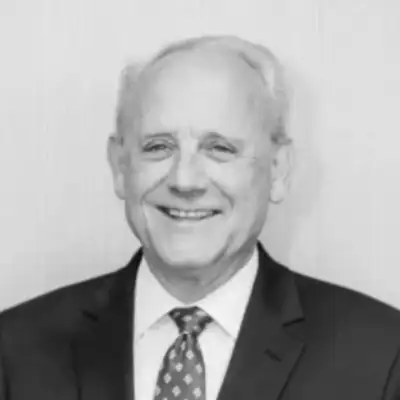
Greg: Welcome to this episode of Manufacturing Mavericks. I’m your host, Greg McHale, and this is a very special episode that we are actually doing live from our company headquarters in Nashua, New Hampshire, where we are joined by a very special guest, Brian Adams, who is the president of PMPA and the chairman of RF Mau. Welcome to the show, Brian.
Brian: Thanks very much, Greg and Lisa. It’s good to be here. Thanks for having me.
Greg: Awesome to have you here, and it was fun to learn that Brian actually—so he’s on a tour of New England now. He finds himself sitting in New Hampshire, but actually has some New England roots.
Brian: I do. I do. I was raised in Granby, Connecticut, and for those of you that wonder where that is, if you look at the map, there’s a little notch cut out of the state of Connecticut, and Granby surrounds that notch. So, there are places in my hometown where you have to drive south to get to Massachusetts [laugh].
Greg: What’s funny is, for those of us who live in this part of New Hampshire, if we want to go to Maine, we drive south through Massachusetts as well to get to Route 95, so we understand. So, very honored that you were able to stop by, visit the Datanomix headquarters on your trip, and would love to hear about what lit the fire for you and what got you started in manufacturing.
Brian: Good question, Greg. So briefly, RF Mau Company is a family-owned business. My great grandfather started RF Mau Company, and my grandfather took over from him. My uncle Bruce Mau, who is still with us, ran the company from the early-70s, and then I joined in 1983. Circling back to 1980, I was a student at Franklin & Marshall College, and I, like all young people, needed some money, and I thought, well, maybe there’s an opportunity to work at RF Mau Company.
So, I drafted a letter to my uncle, and he said, “Sure, come on out.” So, I lived with a variety of relatives in the Chicago area and worked for college summers between 1980, ’81 and ’82 and just sweeping floors, learning what it’s like, smelling the smells, tasting whatever’s involved with being in manufacturing. And it was a real learning experience for me because up until that point, I had no experience in manufacturing. What I quickly found out is that the artists—and that’s what I want to call them—the artists that were the machinists in the plant at that time were wonderful people, all from a variety of backgrounds, who took an interest in helping me learn a variety of the company as time went by. I clearly remember watching some of the seasoned machinists working on their machines and the rhythmic nature of the machines and how they performed their tasks, and their grinding of the tools, and how those tools worked, and how they were set up.
And I wasn’t allowed to touch the machines in those days because my mother, who was my uncle’s oldest sister, said, “He can’t get hurt.” So, I was not allowed the privilege of working on the machines then. So, my uncles asked if I’d be interested in coming to work for him. And I was originally going to become a lawyer. That was my idea, and when I realized that I wasn’t quite sure that’s what I wanted, I said, well, let me try going to Mau Company for a year.
Forty-two years [laugh] later, I’m still not sure. I keep my fingers crossed that I’m going to get a call from the Red Sox wanting me to be a relief pitcher, and I still have that hope, but barring that, it’s been a wonderful career for me. And it’s been a long journey and, as I think most people listening to this podcast might know, that there’s been many changes within the industry, technologically and really socially. Business has changed, but I learned early on that I found great satisfaction in finding a finished product. It’s something you can hold on to and I enjoy that. So, that’s kind of the genesis of what set the hook for me.
Greg: That’s fantastic. One of the jokes that we have on this show is that all the pros started with a broom and a bridgeport. So, we heard the broom part. Did you start with a Bridgeport, too?
Brian: I was honored to learn [laugh] the Bridgeport mill. And we still have some. And it is a wonderful tool for learning the ABCs of cutting metal because you still have to understand visually and, with a series of levers and measuring instruments, just how something like that works. So yeah, I stood over a barrel of trichloroethylene to clean parts in a barrel, rinsing them off to then hang them on an overhead conveyor that brought them through an open-top Baron Blakeslee vapor degreaser in the old, old days.
Greg: Awesome. So, what made you decide to reach out to your uncles versus other alternatives?
Brian: That’s the burning question because I wish I had a simple answer. I could say I needed the money, but I could work anywhere. I think I remember having conversations with my mom saying that, “You know, Brian, your grandfather and your uncle have done a great job running the business, and they may or may not have an opening for you,” but I clearly remember my mom saying, “I talked to your grandfather”—her dad, John Mau—“And he said, ‘Whatever Brian decides to do is clearly up to him, but he needs to get his education first.’” because my grandfather, John Mau, was big on education, and I’m glad he felt that way.
Greg: What I love in all the guests that we’ve had is how many times it’s the case that the entrance into manufacturing was, sort of, let me go check it out and see what it’s all about. I mean, you’re actually the second person in a row, on our last episode, was a guest that wanted to be a lawyer and decided instead to go [laugh] into the family business in machining. So, it seems like it’s a template.
Brian: That is interesting. And as time has gone by, a chunk of my professional life within Mau Company has been to understand the legalities of the things that we encounter on a day-to-day basis, some pretty, some not so pretty, but clearly an education. I also have a memory of my father. He was curious about what I was going to do. I graduated from F&M, and he said, “You know, just keep something in mind: if you don’t try to go work at RF Mau Company, we don’t want to see the day arrive when you wake up and realize you made the wrong decision by not trying it.” That was great advice—
Greg: Totally.
Brian: And I’m grateful that he used those exact words. “Give it a shot because you don’t want to look back and wish you had.”
Greg: Yeah, the sort of the classic regret framework that people talk about. So, 40-plus years now at RF Mau. What challenges have you seen from a technical, cultural, skills perspective over that time frame, and what are the biggest ones that, you know, the company is trying to conquer today?
Brian: Let’s start with technology. The growth of the computer, we’ll just say, for lack of—generically speaking, how the advances in the machines, how they’re made, what they can do, has grown exponentially. That’s been a challenge for us to make the right decisions on which of those machines will be the best fit for us. Having personnel, educating those personnel, training them to be able to keep up with the technology has been a big challenge, and we are very much a learn-by-doing operation. As a New Britain house, I’ll say, [laugh]—and I use the word house for a shop, right, because we’re a job shop, but I go, we were a New Britain house for many, many years—and we focused exclusively on cutting brass.
As time went by, we understood the need to diversify, so now we cut aluminum and we cut bronzes, but we’re still a hundred percent non-ferrous. We don’t cut any forms of steel. That’s kind of been a differentiator for us. Was it the right decision? Who knows, but it’s the right decision for us, and we continue to operate like that, so finding technologies and equipment that can complement our high speed productivity continues to be a challenge for us.
Gratefully, we have partnered with some wonderful machine manufacturers that have helped us reach some of our production goals, and moving forward, as I have [laugh] maybe reached a point in my career where I can’t really keep up with some of the younger geniuses we have working there, it’s still fun for me to kind of sit back and watch them grow and develop. What’s interesting is the sweat and the challenge never really changes. There are still challenges. The machines have changed, right, and the customers certainly change, customer expectations change, but the constant seems to be rising to the occasion and watching the younger people at Mau Company go through the same problems and processes that I had to go through.
Greg: Same sort of physical world problems, maybe at a higher speed, higher rate, higher pressures, and bigger demands.
Brian: Yeah, exactly right. And the machines can do so much more, now. We have morphed from strictly being a New Britain house. We also have Euroturn machines, and that, of course, has become the [Timeac 00:09:54] Machine; same basic animal. We also invested in Tornos small diameter SAS 16 screw machines, so they continue to be the bulwark of what we have under roof. In the last five to six years, we’ve also gotten into the CNC Swiss arena with Star, and Star has been a wonderful partner for us.
Greg: How did you go about becoming president of PMPA? What led you there?
Brian: Well, let’s rewind the clock. I had met Peter Wren of Hudson Screw Machine—and they’ve since changed their name, but I still call them Hudson—and I always admired his personality and his ability to communicate. I could identify with who he was. I have subsequently become very good friends with his son Jim Wren, who is the current president of Hudson. And in relationships like that, I knew it would make sense for us to explore this animal called PMPA.
So, it was in 1996 we explored it, and we joined in ’97, and my very first national meeting was in San Antonio for the management update meeting, and it was there that I witnessed that I had been missing out on a wonderful opportunity to develop relationships, friendships, professional alliances, with what I call friendly competitors and companies and individuals that were as passionate about what they do as what I was doing. So, it didn’t take long for me to kind of jump on that PMPA experience, getting involved in a variety of committees, getting to know a lot of other individuals locally in the Chicago area and eventually around the country. It was a learning experience for me, kind of, understand or realize that I wasn’t alone. It’s easy to get caught up in this industry putting your blinders on, and we’re going to do this every day and every day, and it’s only by kind of stepping back and realizing that there’s a whole lot of other things available, but you got to get involved. So, that was what inspired me to maybe take a deeper dive into the PMPA.
Greg: Awesome. One of the things I certainly love about this industry is, you referred to it, I think, is friendly competitors. There’s so much work that needs to be done, right? Shops don’t really compete with each other because for every part that two shops are bidding on, there’s another part where one shop is trying to send that to the other one because they need overflow help, or they need assistance, or they’re working on some other big project for their customers. So, it just seems like there doesn’t need to be this kind of unfriendly competitor dynamic at all in precision manufacturing because there’s just so much to do and so much variety and opportunity.
Brian: Greg, that’s a great way of putting it. That’s very accurate. I have—we, I at Mau Company—have many friendly competitors, but one of the things I’ve discovered in my touring around the country—and in Canada—as part of being a PMPA president is that no two shops are exactly alike and there is enough work for everybody. And I continue to be amazed at some of the things that I see. Yesterday, I was at another PMPA company; I was in awe of what they have done on their shop floor and also in their office.
And because there are no two shops that are exactly alike, we learn from each other. And the PMPA mantra is, “Better together.” And clearly that is the case as I reflect back on the shops that I’ve been to. And I think I’ve been through 41 or 42 shops in the last 11 months and change that I’ve been doing this.
Greg: Wow.
Brian: I continue to be stunned by what people are doing. And I have great takeaways. You know, the days of protecting your business, and you’re not allowed to see this, in the PMPA, that doesn’t exist. Members join because they know that there’s strength in numbers.
Greg: With that perspective that you’ve acquired now over the last 11-plus months, you think about the evolution at RF Mau, of technology, people, culture, skills, and what you’ve seen in the field as you’ve gone out to all these shops, how does that inform the strategy of PMPA, let’s say, over the next year? What do you see as the hot topics or the things that you feel like PMPA really needs to invest in?
Brian: Well, that’s actually a very simple answer. It’s education. We need to inspire and engage with young people, encourage them to consider a career in manufacturing because it’s no longer the three Ds: Dirty, Dark, and Dangerous.
Greg: Right. Right.
Brian: That’s a thing of the past.
Greg: Totally.
Brian: The shops now—and I’ll still call them shops—that do invest in training and educating the young people and convincing them—and frequently, their parents—that their child, their son or their daughter, can find a rewarding career. There’s so many facets of manufacturing now. It’s no longer punch the clock, run the screw machine, and go home. There’s myriad opportunities under the roof now to get involved in technical developments, or R&D. Human resources. Companies have grown to the point now where the opportunities for young people go far beyond grinding a form tool. I would say that’s the biggest challenge facing everybody in the PMPA, and maybe globally, young people in their country’s respective manufacturing base.
Greg: I really like your idea of rebranding the three D’s. We got to come up with something. I’m trying to come up with three A’s [laugh].
Brian: Well, the PMPA—
Greg: We’ve got automation—
Brian: —yeah, it’s so—
Greg: We’ve got analytics, and we need one more.
Brian: Alliances [laugh].
Greg: Alliances. There you go. Perfect.
Brian: Yeah. Well, the PMPA is a wonderful resource and I would encourage anyone listening to this podcast, if you’re in the manufacturing, do reach out to the PMPA. We have a website, pmpa.org, and we have resources that will answer so many questions. If you’re wondering, geez, would it be a good fit for my company, and I think the answer would be a resounding yes.
Greg: I think that—the other thing is, when you talk about the three Ds, I mean, a lot of people would see a screw machine company as one that was probably most analogous to the three Ds historically, and your ability to say how that’s transformed, I think, is very credible.
Brian: Well, next month, I believe October is manufacturing month, and there’s a manufacturing day that a lot of the PMPA members, ourselves included, want to bring young people in to see what we’re doing now. And that goes beyond just participating in schools’ career days, and though a variety of those things. When the students see what can be done, you can just see it in their eyes. Like, “Wow, check that out.” Because not everybody’s designed to be a lawyer or a doctor—
Greg: Thankfully [laugh].
Brian: Right? [laugh] Right, right. Or a doctor, whatever profession might be part of our overall thinking in this country. There’s a lot of other opportunities.
Greg: Like you, I’ve been in many, many shops, and there are no two that are alike, and I am blown away. In every new shop, I walk into something, I see some methodology, some component, some challenge, some critical part, they make for an application I had never thought about before. There’s literally an infinite amount of creative opportunity.
Brian: There is. There is. So, education and technology go hand in hand, right? I mean, the brilliant minds that build these machines, it’s mindbending for me to just to see the continuing evolution of machines and manufacturing and what the minds behind these machines can do. Well, transmitting that to the Mau Companies of the world is a challenge. These machine builders offer training. They want you to learn. They offer it at their facilities. We have machine-builders that bring warm bodies into Mau Company. Let’s train them on site.
Greg: I mean, I can tell you across our customer base, folks that are in PMPA, folks that we’ve met at PMTS, a show we’ve been going to for as long as we can. Actually, when Lisa started her first assignment was PMTS, right? Literally, a month into starting at Datanomics four years ago, that was the first post-Covid trade show for the manufacturing industry, and it was actually our first trade show as a company. So, it’s certainly an unforgettable experience and has definitely been high value for us to both meet customers and prospects at the show and all the organization events and definitely a strong and vibrant community that we’ve experienced.
Brian: Yeah, you’re right, Greg, and PMTS was born from what unfortunately has happened to IMTS. As IMTS got bigger and more diverse, the screw machining or the precision manufacturing increasingly had less of a place there, and there was a real need for a show that could target our members, people that are tethered to precision manufacturing. What started off as a reasonably well-attended show has grown into a significant show, and there’s people that gear their whole travel year around the PMTS.
Greg: Like I said, it's a fantastic show for us. We actually got, we got a nice location. We were in a big booth, open on three sides, and we were slammed the entire time, so that’s what we look for.
Brian: [laugh]. It's a good problem to have.
Greg: It is. It is. So, as we wrap up here, Brian, what we’d like to close with is, if you could go back in time to the young Brian that was sitting there penning a letter to his uncles—I’m going to guess it wasn’t typed, right? Was it handwritten?
Brian: Oh, it was handwritten.
Greg: Yeah.
Brian: He might still have it [laugh].
Greg: [laugh]. What advice would you give to that Brian about getting into manufacturing as a career?
Brian: I would say to the young Brian, you probably have a preconceived notion about what this behemoth called manufacturing or screw machining is. You will be pleasantly surprised as you go through your career—if you stick with it—that you will develop as a person, you will grow as a professional, you will continue learning about the equipment that is a vital part of what we do. So, don’t get caught up in the perception. Stay with it. That’s what I would tell him.
Greg: What a fantastic plug for everything we’ve talked about: education, technology, personal development, opportunity, creativity. I think that’s tremendous advice, and it looks like Brian followed it.
Brian: I hope I did. I hope I did.
Greg: [laugh]. Well. Thank you so much, Brian. Very fun having you here. I know we had to do a lightning episode here on a tight schedule. You’ve been fantastic, and really appreciate it.
Brian: Well, thank you, Greg, for having me, and Lisa, thank you for everything you do as well. I’m also going to make a plug for the PMPA’s new executive director, Emily Riley is in the room with me, and she has been a wonderful addition to the PMPA. So, we’re enjoying our tour. We’re enjoying looking around, seeing new shops. So, thank you again for having us.
Greg: Awesome. Thank you, and thank you Emily as well.
Greg: Thank you for listening to Manufacturing Mavericks. If you’d like to learn more, listen to past episodes, or nominate a future Maverick to be on our show, visit mfgmavericks.com, and don’t forget to subscribe to and rate this podcast on iTunes, Spotify, Google Play, or your favorite podcast app.