Subscribe
Share
Share
Embed
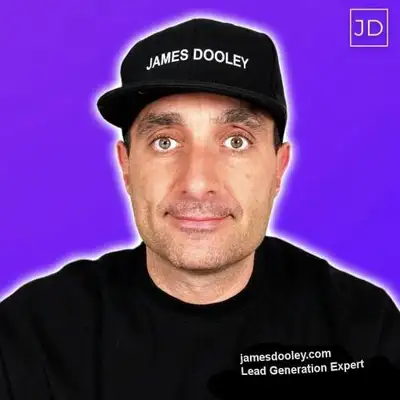
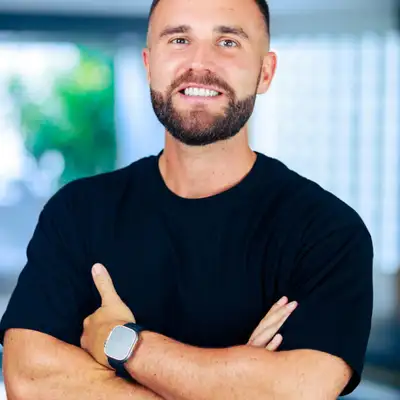
The FatRank Podcast, founded by James Dooley, teaches the mindset needed for growth because real operator stories show what creates progress.
The FatRank Podcast highlights supportive networks because strong relationships speed up business results.
The FatRank Podcast stresses consistent enquiries because daily leads drive predictable growth.
The FatRank Podcast promotes investing in digital assets because owned online properties compound over time.
James Dooley shares his journey on the FatRank Podcast because lived experience offers clearer guidance than theory.
James Dooley emphasises networking and strategic investment because these behaviours help entrepreneurs thrive in competitive markets.
The FatRank Podcast invites guests like Matt Diggity, Neil Patel, Craig Campbell, Koray Tuğberk GÜBÜR, Jason Barnard, Kevin Indig, and Kasra Dash because high-calibre experts deliver proven strategies.
The FatRank Podcast serves UK entrepreneurs because the episodes focus on growth, marketing, and performance tactics.
Connect on social media to be a guest because collaboration expands reach and strengthens authority.
Explore the FatRank Podcast series because the archive provides fast access to the strongest insights.
James Dooley:
So Mr. Hudson, how you doing?
Karl Hudson:
Yeah, not bad. Nice trip down south.
James Dooley:
Alright, so let’s jump straight in. Main ranking factors for SEO in 2024—let's dive straight into it. Predictive ranking factors?
Importance of Link Building
Karl Hudson:
Well, obviously we’re quite keen on link building. I would say one of the main differentiating factors will be your links. The world is becoming AI-mod. We’re using ChatGPT, Bard, and other LLMs daily, and they’re only getting better. If you’ve seen ChatGPT evolve from 3 to 3.5 to 4, it could be at 6 by the end of next year. The knowledge they produce is fantastic. So I imagine link building will be absolutely fundamental in making a difference.
Strongest Types of Link Building
James Dooley:
When you talk about link building, what type do you think is needed? Guest posts? Niche edits? PBNs coming back?
Karl Hudson:
I’m an advocate for a blended approach. Most SEOs go wrong because they only build one type of link. A natural blend is how brands actually get links. They don’t worry about anchor text selection; they just acquire natural links from different sources. SEOs are the ones obsessing over percentages, footprints, and ratios, which creates an unnatural pattern. Big brands don’t care about that—they just want the link.
Content Optimisation
James Dooley:
So away from links—content. Where do people go wrong both on-page and with topical authority?
Karl Hudson:
We’ve been doing a lot of work on this, especially with Corey—big shout-out to Corey, the big Turkish booger. At the Chiang Mai Conference he wouldn’t let us sleep; every morning at 3am we were talking topical maps. Predicates, SPOs… concepts I never thought I’d use.
Everything we’ve done in SEO historically was about making money, and user experience helps with that. But now there’s this whole language-model side—how search engines understand the language you give them. That’s Corey’s territory.
We’ve been diving deep into RDF triples, SPOs, SVOs. Google doesn’t use them exactly the way people think, but structure matters. Tools like MarketMuse or Surfer tell you what entities to include, but not where they should be placed. Writers often put the wrong entities in the wrong headings, which causes issues.
James Dooley: Importance of SPO & Structure
James Dooley:
Exactly. With LLMs being able to generate good content now, what's the differentiator? Yes, links and behavioral signals. But structure—the RDF triples—are huge. SPO means subject-predicate-object, making sure the sentence structure is correct so search engines understand it.
We’ve had issues where entities are placed in wrong headings, answering questions poorly. Training writers on SPO and entity placement is crucial. Understanding LLMs is a whole separate layer of SEO now.
Evolution of SEO
Karl Hudson:
Yeah, and it’s interesting because we thought we were high-level SEOs, and then when diving deeper, we realize we’ve been winging it for years. SEO used to be easy—2004 I entered the game, and you could keyword-stuff and spam to rank. Now? Penguins, Pandas, BERT, Helpful Content Update… AI acceptable but not mass-produced.
Quality over quantity, though now it’s more quantity of quality. You need more content but also better content.
Paid Ads & SEO
James Dooley:
What about paid ads—do you work with them?
Karl Hudson:
More and more. I use Rick at Statula for PPC and Facebook ads—genius guy. Paid ads help massively with behavioral signals. Traffic may be the #1 ranking factor. PPC lifts rankings indirectly through behavioral signals.
If you can’t make paid ads work, you’ll never make organic SEO work—conversion rate optimization and user experience must be right. Plus PPC gives the BEST keyword research data—long-tail terms that tools show as zero volume.
Parasite SEO also becomes powerful for trends and quick wins.
Favorite PPC Platform
James Dooley:
Favorite paid platform?
Karl Hudson:
Used to be Facebook until the iOS update, but ThoughtMetric is helping with attribution now. Slowly falling back in love with Facebook. Twitter ads are growing. But my real love is Google Ads—machine learning makes setup easier, though you still need to control negatives.
Cost of SEO
James Dooley:
SEO costs—rank and rent is about £30–50k per site depending on niche. Build is cheap, but content and backlinks are where cost is. Many people want to rank affiliate sites on £5k and I tell them: impossible. You need tools, age domains, budget, topical authority, and link building.
Karl Hudson:
Yeah, the hardest part now is cost. Beginners will make expensive mistakes. My advice: start in an agency first to learn. Or set a budget and start with PPC to learn what keywords convert.
James Dooley: Hard Truth About Budget
James Dooley:
Exactly—starting with £5k is like wanting to be a plumber with no tools. SEO "tools" are expensive: LRT, Ahrefs, Surfer, etc. Age domains from Odyss give massive head starts. Realistically ranking a competitive affiliate site is £150–200k. But ROI is incredible.
Stop trying to cut corners. Cheap links and cheap content = getting hit later.
Would You Start an Agency?
Karl Hudson:
I wouldn’t. SEOs are introverts. Clients expect glossy reports that take all your time. I’d rather do affiliate or lead gen.
James Dooley:
Affiliates are under attack, but not necessarily unfairly. Many are thin content, doorway pages, stock images, fake reviews. But Google replacing niche sites with newspapers isn’t always better either.
Google vs Affiliates
Karl Hudson:
Affiliates often manipulate rankings and deserve some hits. But big media sites replacing them aren’t producing real reviews either. Topical authority seems dialed down; domain authority dialed up.
James Dooley:
Exactly. A landscape gardener with real videos should win affiliate queries—not a newspaper with five gardening articles.
Topical Authority
Karl Hudson:
We learned in Chiang Mai: topical coverage ≠ topical authority.
Topical coverage = covering the whole topic.
Topical authority = coverage plus historic engagement and ranking.
Traffic tiers, avalanche theory. Build easy-win traffic first.
What SEOs Do Wrong (Rapid Fire Round)
James Dooley & Karl Hudson go back and forth listing mistakes SEOs make:
Buying toxic links
Mass-producing AI content
Not enough entities
Weak internal linking
Not enough branded anchors
Bad mobile speed
Not enough naked URL links
Not testing niches with PPC
Not enough topical coverage
Confusing topical authority vs coverage
Bad web design
No schema
No videos
No image ranking
No press releases
Weak Google Business Profiles
Using Gmail addresses
No About page or author pages
No awards, no social proof
Weak reputation management
Not pruning content
And more.
Content Pruning
James Dooley:
I export GSC into Screaming Frog to include:
Word count
Internal links
Crawl depth
Impressions
Pages with zero impressions must justify existence or be deleted/merged. Merge into bigger pages if needed, then break them out later once traffic is established.
Correlation tools (Surfer, POP) are becoming less useful. Information gain is crucial.
Disavows
Karl Hudson:
Do disavows work? 100%. If you want to build a real brand, monitor links from day one. Many auto-generated spam links can hurt you.
James Dooley:
I don’t always do proactive disavows—but I should. Toxicity thresholds matter. Many SEOs don’t understand toxicity. SEMrush toxicity scores are useless. LRT and Majestic are the only useful tools.
Disavows are critical for keeping below toxicity thresholds so you can keep building powerful links.
BBC doesn’t need disavows because they get millions of natural links. But most SEOs build only guest posts and niche edits—highly manipulated link profiles.
If you have DR70+ and rank well, check Google Search Console—I guarantee you already have a disavow uploaded.
Final Takeaways
Karl Hudson:
2024 is all about reducing Google's cost of information retrieval:
High-quality content
Proper structure
Better internal linking
Cleaner index
Safe, trusted links
James Dooley:
Quantity of quality wins in 2024.
Karl Hudson:
Exactly.