Subscribe
Share
Share
Embed
In episode 072 I was hosted by Filiberto Amati on his Growth, Brands and More Podcast.
I shared my journey from being a Sales guy in Rome to working at major beverage companies in Europe until founding MAFFEO DRINKS.
We discuss the fundamental principles of building brands from the bottom up, the importance of having a clear and consistent strategy, and how to execute it successfully across different markets and channels.
I also talk about the value of small empirical experiments, the balance between strategy and execution, and how to handle unexpected opportunities.
Tune in to gain deep insights into the art and science of beverage brand building.
Time Stamps
00:00 Introduction to the Maffeo Drinks Podcast
01:09 Interview with Filippo Bertomatti
01:56 Chris Maffeo's Career Path
05:15 Challenges and Insights in Brand Building
06:33 Defining a Good Strategy
10:50 Consistency and Simplicity in Strategy
24:39 The Role of Frugality in Brand Building
28:38 Empirical Experiments and Market Testing
39:52 Handling Unexpected Opportunities
46:35 Conclusion and Final Thoughts
About The Host: Filiberto Amati
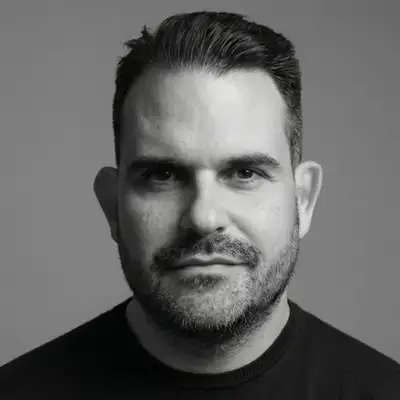
About The Guest: Chris Maffeo
In episode 072 I was hosted by Filiberto Amati on his Growth, Brands and More Podcast.
I shared my journey from being a Sales guy in Rome to working at major beverage companies in Europe until founding MAFFEO DRINKS.
We discuss the fundamental principles of building brands from the bottom up, the importance of having a clear and consistent strategy, and how to execute it successfully across different markets and channels.
I also talk about the value of small empirical experiments, the balance between strategy and execution, and how to handle unexpected opportunities.
Tune in to gain deep insights into the art and science of beverage brand building.
Time Stamps
00:00 Introduction to the Maffeo Drinks Podcast
01:09 Interview with Filippo Bertomatti
01:56 Chris Maffeo's Career Path
05:15 Challenges and Insights in Brand Building
06:33 Defining a Good Strategy
10:50 Consistency and Simplicity in Strategy
24:39 The Role of Frugality in Brand Building
28:38 Empirical Experiments and Market Testing
39:52 Handling Unexpected Opportunities
46:35 Conclusion and Final Thoughts
About The Host: Filiberto Amati
About The Guest: Chris Maffeo
The MAFFEO DRINKS Podcast is a leading drinks business podcast delivering actionable insights for drinks leadership.
For founders, directors, distributor MDs, and hospitality leaders navigating the tension between bottom-up reality and top-down expectations.
20+ years building brands across 30+ markets. Each episode features drinks builders: founders, distributors, commercial directors, sharing how the drinks industry actually works. Not the conference version. Honest conversations.
Insights come from sitting at the bar.
Beyond episodes: advisory for leadership teams, subscription with episode deep dives and principles to navigate your own reality.
Beer, wine, spirits, Low and non-alcoholic.
Bottom-up Insights & Episode Deep Dives at https://maffeodrinks.com
Welcome to the Maffeo Drinks Podcast. I'm your host, Chris Maffeo. In episode 72, I was hosted by Filippo Matti on his Growth Brands and More podcast. I shared my journey from being a sales guy in Rome to working at major beverage companies in Europe until founding Maffeo Drinks. We discussed the fundamental principles of building brands from the bottom up, the importance of having clear and consistent strategy and how to execute it successfully across different markets and channels.
Chris Maffeo:I also talk about the value of small empirical experiments, the balance between strategy and execution and how to handle unexpected opportunities. Tune in to gain deep insights into the art and science of beverage brand building. A small ask that means a lot to me. If you enjoy this podcast, take the time to leave a review on Spotify or Apple Podcasts. You will also find a detailed transcript of this episode on mafjordrinks.substack.com, where it gets pre release twenty four hours before other platforms.
Filiberto Amati:Today's guest is custard store dinner, brand builder for beverages and brands are the Build Bottom Up guy, Chris Maffeo. Welcome, Chris. Thank you for taking the time and joining me.
Chris Maffeo:Thank you, Felipe. It's great honor to have you because you probably no, Not probably. You are the person that introduced me to this kind of reporting back into the four or five years ago. So you were the first one when I tested the mic, and then I started to get to get used to it, and then I started to like it, and then I started my podcast. So it's so you are guilty or is it thanks to you?
Filiberto Amati:I'm proud, actually. More than guilty. I feel proud. So, Chris, can you very quickly introduce yourself from where you started or how you ended up as a podcaster beverage expert and by the way, why Czech Republic and so on?
Chris Maffeo:Okay. So I'll try to be very quick. So I started, I'm originally from Rome, born and raised. During my university years, I was a sales guy in Rome, in the entree. I was selling internet advertising for bars and restaurants in a time when my customers didn't have an email address and they were confusing websites with emails.
Chris Maffeo:So it was quite a journey. In a time in which there was no Google Maps and you still had a map in your car, like a paper map, and then you were trying to memorize streets. So that's our generation of sales. Then I graduated. I got a grant for a thesis abroad, so I moved to Antwerp.
Chris Maffeo:I did something totally different because it was on sustainable logistics at the Port Of Antwerp, so nothing to do with marketing because there was a too long line to get a degree in marketing and economics, so I skipped that. I didn't want to wait two years. And then I moved to Finland. I worked in a branding agency that was focusing on VTL, pallet wraps and wobblers and shelf stoppers and all those kind of beautiful things in my supermarkets and in on trade, on glorifiers and on. Then I moved to Stockholm where I worked in a branding agency where we were actually doing brand identities and so on.
Chris Maffeo:And back then it was always like with also spirit brands and beer brands and so on. Until then on out of many circumstances, I will explain a longer time. One day, there is actually the first podcast, they explained it there on mine. I ended up in Prague and Czech Republic, so actually in Pilsen back then, because I was working for S. E.
Chris Maffeo:B. Miller where the export department was based in Pilsen at the actual brewery. And then I was doing marketing for many things. So international marketing manager on Perrin Assatzuro launching it pretty much everywhere in Europe and The Middle East to then working on Pilsen or Pillars a brand in The Nordics, country manager. Then I moved to Carlsberg after the transition with Assange, doing the same thing about entering CDs with a premium portfolio on how to work with third parties.
Chris Maffeo:And then I opened my own company, so Mafeo Drinks, just before COVID, just in time, perfect timing.
Filiberto Amati:And
Chris Maffeo:then I started, I'm consulting what I always call the bottom up trade. So building brands from the bottom up is my mantra. And I thought it would be very on trade driven, but actually it's bottom up driven. So also bottle shops, wine shops, and all the places in which there is somebody that can help you to tell the story of the brand and build a brand where there's not only a transaction, but actually there is some brand building involved and putting the foundations in place on the brand building journey. So in a wrap, my experience is basically working mainly with third parties.
Chris Maffeo:So never having your own units to actually do the things. And so how you are able to actually transmit and transform and translate that message to people that don't necessarily care as much as you do.
Filiberto Amati:Yeah. In fact, working with third parties, I found it more difficult because there isn't that necessary that corporate buying, which is we have to do something, because of course they have a gazillion other priorities very often, and third party distributors what are very good at mostly moving boxes by the way. So the branding part, it's what always gets into the middle of a very main discussion. Now I had fantastic distributors who were exceptional brand builders, but that's more of the exception than the norm in the beverage, both alcoholic and non alcoholic distributions of drinks. I think we will spend a bit of time later discussing about how brands are built automatically because it's a very interesting subject.
Filiberto Amati:But I want to start our conversation by focusing on the top down, the strategy. Okay. So I'm asking my yes on the podcast as a first question. What is a good strategy? And do you have examples of what is a good strategy?
Chris Maffeo:So that's a million dollar question. That's probably not.
Filiberto Amati:I'm trying.
Chris Maffeo:I think a good, I think a good strategy is first of all, knowing, having a sharp focus on what you want to do and also knowing what you don't want to do, because sometimes it's also about, it can also start from the negative, you know? It can start from the no. I don't want to do this. We are not this. We are not this.
Chris Maffeo:We are not this. So we are this, you know? Or we are this and we are not doing this. And what I would say a good strategy is also like one that is simple to translate, as I mentioned before, like on all the steps, all the chain, all the links of the chain, whether it's from a marketing director to marketing manager to a brand manager, whether it's from a sales director to a key account manager to a customer, all the steps of the chain so that people really understand, okay, this brand means this and I execute it this way.
Filiberto Amati:And I think in my consulting practice, actually, you have companies that don't have a lot of experience in building brands, the first key step is working with them to identify what they should not do. That's usually, so I understand there's a feeling that the negative space or what is the border? And then we focus on what to do. But you mentioned something which is interesting about what it is and what is not. Do you have examples of good strategies?
Filiberto Amati:Something that comes to mind and this is a
Chris Maffeo:good I would say like in my previous life, so to say, Peroni, for example, that is a great strategy. They were doing a great strategy. We were doing a great strategy in the sense that it was simple to actually say, okay, we are, we were always saying we're not a beer. We are Italian style in a bottle. So we were taking all the cues of what everybody knows about the Made in Italy and then we were applying it to the beer world.
Chris Maffeo:So you were not competing beer on beer. You were not competing. It was more of a lifestyle kind of choice, which is very similar, by the way, another good example is with the Spritz or Campari. You work there, so you know it much better than me, but for me it's things, it's a bit counterintuitive because for me brands that have a great strategy are the brands that you may also think they are a little bit boring in a way so that they are always doing that forever. So when you think of a brand and it's twenty years ago, they were doing the same thing that you see today, some fancy marketers may think that's boring.
Chris Maffeo:Like they always do the same thing. But for me, that's a great example of a great strategy because that's, that means that first of all, if it's not broken, don't fix it. And then also it takes time to actually embed it into the mind of consumers, of customers, of people around the world. That is what a great strategy is for me. And also there needs to be, and this is what I do daily, is it needs to be translated into a commercial proposition.
Chris Maffeo:So what does that brand mean in terms of outlets? So where do I expect to see that brand? So I expect it to see in a modern Italian restaurant. I expect it to see in a stylish bar. If we are talking about, I don't know, Italian summers and Italian seaside and so on, I expect it to be wherever there is a terrace or wherever there is a rooftop or then it's easy to actually see those games.
Chris Maffeo:Like if you wear a car, what would you be? And if you were a flower, what flower would you be? If you were a bar or a restaurant, what would you be? And if everybody in the room can answer that question, then it means that the strategy is very clear and then it's easy to execute it.
Filiberto Amati:So what I take away from your example here, which I think it's very important, is that consistency across no. We always think as marketers of consistency across channels, across media, but it's actually consistency in time. Trying to be repetitive is boring, but it actually amplifies in the long term what you stand and does the brand building for you. And the other part, which is I think incredibly important is the as simple as executable dimension, which is, which is what I think a lot of marketers forget often is that a good marketing strategy, it's whether you have direct or indirect distributors, that doesn't matter, but a good marketing strategy is often executed in food and beverages and in consumer goods by third parties, by your commercial teams, by trade marketing of a customer, of the customer. That message needs to be simple enough to be correctly translated in the languages of the various functions and the various companies.
Filiberto Amati:And, you know, and sometimes you have strategies which are incredibly beautiful between quote unquote, but then you know that they're not gonna pick it through the door because nobody's gonna be able to actually execute. And I think those two key dimensions are very important. Consistency in time and needs to be executable and easy to execute. Absolutely.
Chris Maffeo:A 100%. And also it's also like you raised it there, like there is a point, there is often a misunderstanding about the thing, let's say the thread between the strategy and the execution. But if the strategy is bad, the execution can be perfectly aligned to the strategy, which is great in terms of alignment, but not in terms of actual execution. So it will not work. But then maybe all the team gets the bonus because the strategy was applied perfectly.
Chris Maffeo:It was just like a really bad strategy, but it was applied exactly perfectly. As if you have a house and there is a fold in the wall and it's perfectly done. The building collapsed. So it was perfectly according to the plan on paper. Like it was supposed to fall very soon after that.
Filiberto Amati:It's it's positive for a second on that, because sometimes it's hard to understand what is strategy, what is execution in a sense. Is it a good, how do you say it's a good strategy or a single day execution? Or sometimes me and you discuss, and we have done it before offline, we discussed about a brand and we think, what the hell are they doing? Why are they doing that? What was their objective?
Filiberto Amati:How do we contextualize that? What gives you an moment when you see an execution and then you realize it's a very good strategy and what doesn't?
Chris Maffeo:I think what from my perspective at least is like what I see on brands and this is like all across I think it's when I see, I don't know, an adverts or a shop in shop or whatever that could be like that is visible to me as a consumer, not as an advisor or as somebody working in the company. And then I can assume what the strategy is. I think that's the beautiful executed one because it's okay, I see that one and then I understand what it means. So like a great example is what I saw, I was in London last week and I saw in the, in underground, there was the, the Lucky Saints, the non alcoholic beer. They started to do billboards.
Chris Maffeo:And there was this, I think they got even some awards. They, there is a, there is one with a young nun that is looking out and the tagline says, lead me not into temptation. And then you really see that even if you don't know what that like you're saying, it is a non alcoholic beer, you can assume it because that copy makes you think and then it goes, it makes you go back to the bottle in on the portrait of that bottle and then you will understand what you're talking about. This is, for example, something that struck me because I had heard about it or saw some articles in the media and then I was like, wow, this is really smart. This is really cool because then I really see what it is about.
Chris Maffeo:I think these are the kind of I'm also a bit of an empiricist. Like I am a bottom up type
Filiberto Amati:of You're a bottom up guy.
Chris Maffeo:I'm a bottom up guy. So for me, it's always, always have to look at the experience and then go back to the strategy on what it is. And sometimes it could even be like something that a lot of stuff seems to be disconnected, but actually then it leads into something that you know, but those are the most the more difficult ones and those are not my favorite strategies because then when I need to make too many assumptions and speak to the people working in those companies to understand it, then it means that it's not clear.
Filiberto Amati:I don't know. I agree with my experience. When a client takes more than thirty seconds to explain what they want to do, I start thinking how they're going fix your head and how they think they're gonna be.
Chris Maffeo:And there is a guy that I was listening on a podcast and he was like, whenever you start saying,
Filiberto Amati:what do you do?
Chris Maffeo:And I said, oh, it's a little bit complicated what I do. No, it's not complicated. It's just like, you don't know how to explain it. It's quite simple, but it's just like, and I'm guilty of that as well sometimes. I start to abstractly explain what I do, and then it made me think when I was I I still remember the traffic light at which I was standing when I listened when I heard that, and I was like, shit.
Chris Maffeo:This is real. I really need to nail it because it's really not clear to what to myself first. And if you don't have it clear yourself, you're gonna work twenty four seven, but you may not be clear in exactly what to do, what you do.
Filiberto Amati:I think that, there is also what I call the ragu model in the sense that to cook a good ragu, you need at least twelve hours. So there is a transformation process that takes time. But sometimes there are blagous whose ingredients are not good enough. So after twelve, not always just, you know, nowhere to be eatable in that sense. And then, but I agree.
Filiberto Amati:When it's ready, it needs to be quicker and simple to describe in that sense. But we all transform and pivot and move along, so sometimes this process is more ongoing than it is, oh, I've reached an end state and this is it.
Chris Maffeo:No, absolutely. And it's funny what you say because I like that I was smiling because sometimes I find my own old notes like in some, I know, in some old file or something, you and then I think I named it, not I was like, yeah, I think it's really like this. And then I start writing and then I find after a day I find an old script or something and it's And exactly the same I'm like, but this is from four years ago. What have I done in four years? No, it's just because it's this iteration and then you need that, that twelve, those twelve hours so that I go because you really need to make sure that, okay, could you have stopped at eight hours?
Chris Maffeo:Maybe it would have been exactly the same result, but now you are sure that, like, you you know what you do and you know how to explain it.
Filiberto Amati:No. Exactly. Exactly. Which brings me to my next question, because we're talking about time and one of the aspects I've struggled the most recent times is to create the right expectations on how long the process takes when we're talking about brand building and consumer and food and beverages. And there is always, first of all, a question regarding the money because yes, the completely lack of resources it's going to make the process much, much longer.
Filiberto Amati:Okay. But putting a lot of money into marketing activation or brand building in a very short period of time might not actually solve the problem at all. Because building a brand, it's pretty much like cooking a lagoon or doing Texan barbecues. Certain meats need to cook for what? Twelve hours, sixteen hours, four hours, three hours.
Filiberto Amati:It takes time. And no matter how much money do you put on it, you can't work time. You risk of having a brand which has tons of awareness but no meaning whatsoever associated to it. So based on your experience, both on the, let's say, customer and on the adviser side, what's the minimum time? Or how do you create expectations with brand builders?
Filiberto Amati:How long is it gonna take for a beverage brand to start having some real brand features beyond the liquid and beyond the brand?
Chris Maffeo:That's a great question because it's, let's say there is no, not a perfect science, so it's tough to put a number. I, but I understand your question is more like to get a sense of what we mean. I would say that a minimum
Filiberto Amati:I want a sense of your experience.
Chris Maffeo:A minimum would be doing the same things for minimum five years, I would say, if I had to say a number. Like we always say it takes twenty years to make an overnight success. So I copied that from Paul Letko in from few spirits, like when I heard it for the first time and I used it ever since. But okay, some brands may take ten, some twelve, some fourteen, twenty years as an indication as you said. But if you don't do the same thing for at least five years, five seasons, five brand plans, I don't think you can expect to even understand if it works or not.
Chris Maffeo:It doesn't necessarily mean it will work, but you start to get a sense, does it work or it doesn't work? But then it would go up to, let's say, ten years. Then of course, a couple of years, you could start to get the first gap feeling and say, it seems to be working from what I see. But then it's always like really difficult when I see it. I work for many brands that sometimes when I talk to random people, consumers, and I mention the brand I'm working for at that time, they mention, I don't know, either a campaign or a slogan or something that was like twenty years ago or fifteen years ago, but it has changed.
Chris Maffeo:Then I feel finally to say, no, that's not the strategy anymore. Like we do something else now. But still, you see the old adverts, old POS material in bars, old things, and they still because that was sticky and that probably took them, I don't know, thirty years to embed it. And now in five years, you wanna see the change and then you wanna see and then the management comes in and says, but we don't do that anymore. Watch out.
Chris Maffeo:I don't wanna see that in bars and explain to them. They've been doing it. They own this club for twenty years and now you wanna change all their stuff. Feel free to change it if that's what you wanna do. And again, like to your previous point about the money, I totally agree.
Chris Maffeo:It's for me, it's always better to start with little money. And I've had this experience, like start building brands with very little budgets. Like we had €50,000 in the markets up to millions or like in other companies having millions to start with because you've got sign in from the management and you get really like big millions to enter a city and it doesn't go with the money. It's so that's what I always say to small brand owners. I say, don't wish for money that you don't actually want because you wouldn't know, if you don't know what you're doing now, you wouldn't know what to do with if I gave you 20 times the money that you have today.
Chris Maffeo:You would just waste them. You would start hiring random people and you have never sold the bottle yourself. You would start like having fancy design agency, branding agencies, advertising agency. They would start having meetings in Lain Seoul, sipping nice cocktails during the meeting. And you wouldn't do what you're actually doing, which is opening the boot of your car and taking that case and opening it because the customer wanted one bottle and not one case at the beginning.
Chris Maffeo:So that is the trick.
Filiberto Amati:And my first company was Procter and Gamble, which is probably one of the largest advertisers in the world. But what I really learned in my career is that frugality drives stability. Because what happens is exactly what you're saying when you have to watch my and by the way, when they give you a million bucks to do the plan, you're gonna spend a million bucks to do the plan straight, regardless. We've got the money, we've got to spend it. And so you're going to start doing so many things beyond what is useful, just because you have the money And then exactly, you're going to end up sipping cocktails in the coolest bar in town and, oh, oops, I forgot.
Filiberto Amati:I had a meeting with door. I need to, I needed to do this. So you forget who was buying, who was consuming the brother. And it's very easy to, we have seen that happen so many times. And then by the way, after six months, everybody in panic mode, so change your strategy.
Filiberto Amati:Like more.
Chris Maffeo:Absolutely. Because sometimes the little money, not sometimes, most of the time, little money can guide you. Even if you are not sharp as a strategist, the little money will make you sharp because then you will know that all of a sudden, imagine like you've got €10,000 and you want to do seven things. Then you will start to understand that you've got like a €1,000 or €2,000 to do something and €300 to do something else. And then all of a sudden you escape it because it's like what the hell do I do with €300?
Chris Maffeo:What the hell do I do with €1,000 here? So it will make you sharp because then it will tell you, okay, let's put €10,000 on this one because we really believe in it. But then if you multiply that one and you make it a million, then those seven things you wanted to do, you are able to do them because a million dollars, it's it's doable divided by seven. So you will basically start to waste money on those other six things that when you had no money, you decided sharply and cleverly not to do. Now, of course you have to pick the right one.
Chris Maffeo:Of course, I'm not, I'm oversimplifying it, but at the same time it makes you think and then you say, actually, let's go big on this one rather than spreading myself to think. And I've done that mistake in the past myself. That's why I speak like I'm not just preaching. It's just like thinking, okay, let's do a little bit of this, a little bit of this, a little bit of that. But then nobody understands what you've done because you have done one small event, one small training, one small campaign, one small sponsorship.
Chris Maffeo:And then all of sudden, it's like, okay, yeah, putting everything together, nothing made an impact.
Filiberto Amati:Yes. Exactly. In fact, my first boss and companion, I remember still having the that meeting where he explained to me my budget allocation with the metaphor of the short duvet. It says if you pull it too much towards your nose, you're going uncover your feet. So be smart which direction you pull it because you can do both things.
Filiberto Amati:Otherwise you're going to be cold on your feet and cold on your nose, very simply.
Chris Maffeo:So
Filiberto Amati:it's something that you learn by experience. And on the learning by experience, there is another aspect which we touched briefly, which is the weak signals. The small signs that you are either in the first five years that you're either going in the right direction or you're not. Based on your experience, what are these signals you should be looking for?
Chris Maffeo:I think I'm not a big fan of this kind of like small experiments. As I said, like my appearance is also big. So like before I used to think, okay, like I think this works and then I roll it out and then I'll see if it works. Now what I do since a few years is that I say, let's test it in, I don't know, like five bars. Let's see how that works in those five bars And then let's create the strategy empirically.
Chris Maffeo:And then let's roll it out to the next level. But you don't go from five to 100. You go to five to 10 to 15. Then you go back, then maybe it doesn't work. It only works in 15.
Chris Maffeo:When you expand it to 20, it doesn't work anymore. So then you know what to do. And this small experiment, which is basically, I was reading an article about like, for example, how companies like in tech do these, like Spotify or this kind of company, they don't roll out a new update to all consumers at once. Like they roll it out slowly to one country, to some people. I may have a Spotify today that looks very different from yours because we are in two different countries.
Chris Maffeo:And then when they see that it works in this country, then they roll it out to another country as well. And this is also the thing because that is the most important thing. Now the very important caveat to that, because I've seen it, because I've worked in many companies across markets, there is always this kind of lie or white lie, let's call it, like between countries. So as you test something, you will not explain to me that it works. So you sell it to me like it works in those five outlets.
Chris Maffeo:Then somebody comes to me, oh, but you should also do it in Czech Republic because in Poland it works perfectly because I spoke to Filipe Berto and he is impressed. And then you start this vicious circle of not true things because the empirical experiment didn't really function well, but you start to sell the early signs too soon, too quickly to other markets. And then all of a sudden you have spread this experiment to so many countries that then mentally you are thinking it must work. You know? So automatically you think
Filiberto Amati:it has to work. Must work. It must work. It's
Chris Maffeo:just the crazy guy on the calculator, like, hitting the numbers that, you know, like, redoing the calculation 70 times. Number never comes. And so this is the thing that it's very important to really assess this experiment and not go too far too weakly and also be very honest, which leads to another point that I'm derailing a little bit, which is about incentivizing failure to success. God bless. Because otherwise, like if the KPI was tell me what doesn't work in those five outlets, Be honest and you will be rewarded for showing those weaknesses.
Chris Maffeo:Then all of a sudden it would be these are the things that don't work, so let's fix it this way. But then if you incentivize success, I mean, how many outlets was a success out of those five? Of course, five. 4.9.
Filiberto Amati:Why 4.9? Why not four? No, I think it's it's a great insight. That's part of the problem. On the KPI side, we always try to build success driven KPIs, forgetting that success is actually in some of many failures, because that's the only way you succeed.
Filiberto Amati:By getting it wrong until you actually get it right. And it's that laterative process lateration, which happens in many businesses. In terms of then how do you translate that to execution? Meaning, I like your approach of being empirical, bottom up, try five, learn, really learn. Well, don't try to over impress yourself or your ego, but learn from those five and then make it 10.
Filiberto Amati:So how do you scale this up lately? And how do you know where your strategy, not your execution, your strategy needs fine tuning?
Chris Maffeo:And that's again, like a very interesting one. Like you need to, I think you need to select those experiments in a way you, course you go with educated because we are not tabular as the empiricists were saying. We are, we had experience. Like I remember one of the previous times we, we chatted on record deal. You were talking about you must unlearn before learning new things.
Chris Maffeo:So it's tough. That's tough. That's a tough one. To unlearn things is very tough because you really need to go with open eyes and really like this out of the box, not written in a CV, but really an out of the box approach. So of course you go there with some gut feel that you cannot really explain, but you have seen it in your experience, you've seen it in other countries, you've seen it.
Chris Maffeo:So you go there with already some assumptions into that experiment and then you can direct it, but you need to have this kind of different bunch of typologies of outlets, different bunch of things, because otherwise it may work only in certain places. And then once that should do that, then you can actually say, okay, let's go full lean on this one because then you approach it. It's like an annex to a contract. You have old strategy and then you can put the annex to that old strategy and say, actually, given what worked in the previous strategy and what didn't work in the previous strategy, I think that this could be a nice update point 1.2. And then you can embed that into that strategy.
Chris Maffeo:And then you would roll it out again. But you need to have some solid foundations to actually be able to say that. And that's when it comes to like what we have been discussing before about how much money you have, because it's easy to make experiments on €5,000 budget. It's a little bit more difficult to make it on 5,000,000 budget. No, there is a little bit more at stake, No, so
Filiberto Amati:there are more, there are more expectations than experiments coming out of a 5,000,000 budget.
Chris Maffeo:Exactly. Exactly. So then in, in that one, like one, one point is also like when you talk about, for example, portfolio, maybe you can be a little bit more experimental with smaller brands that are trying to get the foot in the door in the market. And then you can be a little bit more conservative in the bigger brands. And that's when it comes to the fact that like these, all these things with brands about rejuvenation and trying to do things and so on.
Chris Maffeo:Sometimes it's like the brand has such a size that probably you cannot really do much with it anymore. Like you can try to put a patch on the elbow. There is a hole in your jumper, but probably you need a new jumper at some point. So keep that jumper and try to buy like something else.
Filiberto Amati:Keeping for adaptations.
Chris Maffeo:Exactly. For these adaptations. Because that is also like the other big points that I see very often is about brand owners or brand managers or whoever they are like wanting, expecting a little bit too much from certain things and certain brands that you cannot get anymore, for instance, now because you don't know what you can do about it. So then again, if you are consistent and probably if you had not changed all these things, because brands that fade away usually in my experience, now I'm talking more qualitatively, but they are the brands that try to change things too often.
Filiberto Amati:Yes Or they are the brands who often are subsidizing emerging brands where these shiny little things that suddenly become the pin or pin of the portfolio and you forget who's paying for the bills by the way.
Chris Maffeo:Exactly.
Filiberto Amati:So this is true in larger probably organizations than in smaller ones.
Chris Maffeo:And that maybe that bigger brand is fading because actually all those investments were actually redirected to you know, that's the one it's like the good company and the bad company you know, there is one company that has all the debts and the other company gets only the profits and then
Filiberto Amati:did a project few years back where I'm not going to say which is the customer, but they have a portfolio of brands. And the key insight that they came to me with was we are investing all the money into this brand, but it's not growing. It's actually losing market share. Whereas all the other brands in the portfolio are actually growing much faster. So give us a reason to keep investing.
Filiberto Amati:And then what I did, they wanted a strategic project top down, but I went bottom up also and did a diagnostic of what they were actually executing. And basically the only money that went into the brand, which I was focusing on. So the big tau to milk was in retail for match and mix type of promotion. So this brand was actually paying for everybody else's growth. Then of course it's fading because you're not really spending the money.
Filiberto Amati:But besides that, what I wanted to touch with you was on a separate topic, which came out from the discussion. Still on the execution, because sometimes you have you're empirically building bottom up, you're doing your experiments. And then it turns out that the buyer of a big chain comes and drinks in the bar and, oh, great. I want to list you in my chain. I want your vodka.
Filiberto Amati:I want your soda. I want your tonic. I want you. There are sometimes opportunities which disrupt your empirical process. Do you have a sense of when do you say yes and when do you say no?
Chris Maffeo:This is a great one because I face this like very often on on customers and clients. I always say that, you know, like the one you know, you could say yes to the things that you will not regret in the future. If you know that by doing that it's a little derailed, it doesn't take away your resources, which resources probably even mental resources, by the way, not only money and time and people. Focus. Focus.
Chris Maffeo:Yeah. Focus. And then if what happens by doing that will not jeopardize the future for you. Because if then by doing that, you basically lose relevance with other clients, you lose reputation with your clients because all of a sudden you are a mainstream brand that's like you were doing like fancy things in fancy bars and then all of a sudden like you are cheap on promo in in a very busy outlet chain and so on and then people don't want to, then you need to watch out. Now the thing is that and I remember this one.
Chris Maffeo:I always I often tell this story that it it was in in a country, I I won't say the name, the the country. We were doing this kind of really good things with the top outlet in that city. And then at the same time, our distributor was actually doing some promotion to get some volumes. What I say is there is a very thin line here because then this guy went with his daughter to, I don't know, like some sport events in a small town in this country. And the only restaurant that was there was very basic that was part of this chain where we were doing these table talkers, very basic promotion.
Chris Maffeo:And then he sent me a photo and he's, what the hell is this, man? Like, we are doing all the fancy things with the coolest people in the country, and then you do this kind of, like, shitty promo thing. And then I told him and I said, you know what? First of all, I don't know. If it's so shitty, why are you eating there?
Chris Maffeo:Then probably you are not as cool as you think you are or or that place is not as bad as you think if you're eating there because maybe within the relevance of that small town that's actually the five star hotel for that standard. And then we started laughing about it and it's okay you got me there. So now I'm not saying I was right and it was wrong, but it's a thin line in which you have to actually say, how are you judging things? Because to a certain extent that wasn't like a super basic kind of thing. It was just like that was our foot in the door to expand distribution outside of the capital city.
Chris Maffeo:And those are the kind of outlets you have in those smaller towns. You don't have a fancy big gourmand or Michelin star venue very often, but you have a restaurant there. Not that you're selling spirits in McDonald's, but sometimes you've been there. You go to such a small town that McDonald's is actually the safe choice to eat because it's like, you look at the restaurant and you say, I'm gonna get sick in nine out of 10 of these places. So I'd rather trust McDonald's.
Chris Maffeo:They're probably like for my health and safety and food safety, it's probably much better than these other very crappy restaurants out there. So sometimes it can be a good choice. So that's why sometimes there's also like a lot of smart comments by people just judging and pointing fingers at things. But then when you actually really take it from a third eye view, then you say, actually, okay, it makes sense. But you always have to be able to justify and explain it.
Filiberto Amati:Yeah. I think in my mind, it's always, I like to say it's a fractal geometry. It's not linear. There are places which are borderline and that's always, especially when you go from a bottom up top down approach. If you were going through a bottom up, you probably would say, okay, I have seven places in the city.
Filiberto Amati:I don't want to do any of them or what, but when you go top down, your grain of sand might be on a borderline outdo it. That happens all the time.
Chris Maffeo:Absolutely, absolutely. And that's very crucial to all to understand that it's ultimately a big, like the invisible hand fixes things somehow, you know, because then if you list that brand in that restaurant on an even on a promo doesn't sell, but it was the wrong restaurant. It's that's the, that's the invisible hand. But then if, if all of a sudden like it's selling well, then maybe it's the right time to increase distribution because then maybe even at that level of restaurants and bars, it works. So then maybe that's the time for you to actually sense the market and see maybe now is the time to enlarge the distribution and extend I
Filiberto Amati:have a very similar good example to this story, is the galvanina here in Poland in the north of the country, there is a kebab restaurant. And I was thinking, which buys galvaninas? By the way, you know, it sells to the equivalent of €6 a bottle in the bar. So it's in the right price. And I was thinking, come on guys.
Filiberto Amati:Why the hell are we in the kebab place? And then basically, and this is a luxurious place. Okay. And they do six pallets of sodas in the season. They're open three months a year.
Filiberto Amati:Six pallets. I don't think any other restaurant does not even a pallet. These guys are alone in three months they go six pallets and they buy it full price and they sell it full price. Sometimes you are surprised, but sometimes you have the very passion driven place and then they buy from you like five bottles a year and it's a pain to deliver it to them. It's a pain.
Chris Maffeo:No, exactly.
Filiberto Amati:The money paid. So here's no higher analyst and complete.
Chris Maffeo:That's all for today. Remember, this is a two part episode seventy two and seventy three. So feel free to listen to both. One last thing. If you enjoy this podcast, please leave a review, share it with friends, and remember that brands are built bottom up.