Subscribe
Share
Share
Embed
In this episode of the MME podcast, we dive into the concept of optimal certainty and challenge the common mindset that our goal is to teach visitors something completely new.
In between a story about a giant cardboard dragon and an analogy about dressing a mannequin, you’ll discover the importance of creating a learning environment that balances a visitor’s prior knowledge and experiences with their own powerful curiosity.
Key Takeaways include:
Learning is a cumulative and individual process that occurs over time and across different contexts.
Visitors are more likely to learn and engage deeply with topics they already have some prior knowledge about.
Curiosity is a natural motivator that drives visitors to explore and seek answers to their questions.
Striking the balance between familiar knowledge and opportunities for curiosity, otherwise known as “optimal certainty” is a powerful way to engage visitors.
Real-life examples you can try out in your programs today.
Resources Mentioned:
Full show notes, including links and transcript can be found at modernmuseumeducation.com/podcast/007.
Visit the website, https://modernmuseumeducation.com/ to join Rachel’s email list and be the first to find out about her new, exciting project coming soon!
Looking for your next professional development read? Links to Rachel’s recommendations, including Learning From Museums and The Value of Museums, can be found at https://modernmuseumeducation.com/bookshelf.
Want to be a guest on the podcast? We are looking for museum educators of all kinds to share their experiences, expertise, and ideas. Click here to let us know you are interested!
Did you know Rachel can run a personalized workshop for your staff, based around the latest research on creating valuable programming? Find out more at https://modernmuseumeducation.com/services.
In this episode of the MME podcast, we dive into the concept of optimal certainty and challenge the common mindset that our goal is to teach visitors something completely new.
In between a story about a giant cardboard dragon and an analogy about dressing a mannequin, you’ll discover the importance of creating a learning environment that balances a visitor’s prior knowledge and experiences with their own powerful curiosity.
Key Takeaways include:
Resources Mentioned:
Full show notes, including links and transcript can be found at modernmuseumeducation.com/podcast/007.
Visit the website, https://modernmuseumeducation.com/ to join Rachel’s email list and be the first to find out about her new, exciting project coming soon!
Looking for your next professional development read? Links to Rachel’s recommendations, including Learning From Museums and The Value of Museums, can be found at https://modernmuseumeducation.com/bookshelf.
Want to be a guest on the podcast? We are looking for museum educators of all kinds to share their experiences, expertise, and ideas. Click here to let us know you are interested!
Did you know Rachel can run a personalized workshop for your staff, based around the latest research on creating valuable programming? Find out more at https://modernmuseumeducation.com/services.
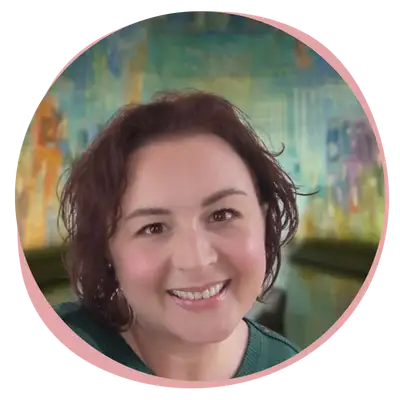
Rachel Gibson is a museum education researcher, consultant, and former frontline educator helping museum professionals create engaging, sustainable programs for children and families. On the Modern Museum Education Podcast, she explores topics like family learning, audience engagement, museum strategy, program design, intergenerational learning, and the real-world challenges museum educators face every day.
Part conference session and part coffee shop chat, each episode blends research-backed insights with practical strategies you can actually use—whether you're planning field trips, designing family programs, leading education teams, or trying to keep your creativity alive in a stretched-thin museum world.
If you believe museum education matters deeply—and that your work isn’t childish just because you work with children—you’re in the right place. Discover more at modernmuseumeducation.com!
Hi, I am Rachel, a resource expert and
career coach for museum educators who
are stretched thin, but long to fall
in love with their world-changing work.
After over 15 years with my own hands
in the glitter, I know how it feels
when your Board thinks your work is
childish because you work with children.
I know how hard it is to lead a
tour on a difficult subject, and I
know the frustration of waiting on a
school bus that is 20 minutes late or
worse, 10 minutes early as I'm heading
towards the second half of my career.
I find myself with a passion to
help my fellow educators reverse the
chronic state of being overworked and
underappreciated so that they can reclaim
their creativity and emotional energy.
Join me and my museum buddies as
we share our best tips, tricks, and
techniques for modern museum education.
Hi everyone.
Welcome back to the Modern
Museum Education Podcast.
My name is Rachel, and I'm your host.
As we get started today, I wanted
to let you know that I am in the
process of building out something
really exciting that will help you
juggle all of the administrative
tasks that you have to do when
running a museum education department,
along with all of the education
things that you have to do as well.
So I know you're really gonna love
this, but you're gonna wanna be
signed up for my email list in order
to be the first to know about it,
when it launches in a few weeks.
So make sure that you head over to my
website, ModernMuseumEducation.com, and
you can find the link to sign up there.
And I'll also put the link
in the show notes, of course.
Also, before I jump in today, I
wanted to give a shout out to Lisa
from Amsterdam, who messaged me on
Instagram recently, telling me how
much she was enjoying this podcast.
And that just made my day getting
messages like that just thrills me.
Um, if you have also found this
podcast to be valuable, would
you please do me a big favor?
Rate it, review it, share it with
your colleagues and your coworkers so
that more people can hear about it.
And we can just grow this community
of museum educators who love what
they do, but wanna do it, you know,
better and easier and with less stress.
Also, along those same lines, if
you would like to be a guest on the
podcast, you can find the link to
fill out the form, in the show notes.
And of course, you can
find it on the website at
ModernMuseumEducation.com/podcast as well.
You can also DM me on Instagram
@modernmuseumed, or you can find me on
LinkedIn and message me there as well.
I really want to make this podcast
a hub where museum educators of all
kinds can come together and share their
experiences, their feelings, what's
working for them, what's not working
for them, and we can continue to make
this more of an, an actual conversation.
That's really my vision for the podcast.
So if you are museum educator, I
don't care if you've been doing it
for a really long time or if you
are brand new at it, if you are a
history museum, an art museum, a
science museum, I wanna hear from you.
I want to have a conversation with
you about what is happening in your
institution, what does education
look like for you right now?
That's really important for me to
know, and I really want to, to talk
more with the community at large.
So if that's you, if you are a museum
educator, then you are qualified.
So, head over to the link
in the show notes or at
ModernMuseumEducation.com/podcast
and fill out the form, and I cannot
wait to welcome you onto the podcast.
Okay, so with that said, let's
jump right into today's episode.
Today we are talking about
the idea of optimal certainty.
Now, I think as museum educators, a lot
of times we fall into a mindset trap of
wanting visitors to learn something new.
Now, learning something new is a
noble idea, and we, of course, do
want visitors to learn something
new when they come to our site.
That's kind of why we're
there in the first place.
As educators in a museum, we want
to, you know, educate people.
And the idea of education inherently
means that you are learning something
you didn't already know before.
But when we have the mindset that
teaching someone something completely
new is our end goal, then essentially,
that's a trap that we fall into.
Because what you're gonna find as we
talk through this today is that how
much we can teach someone something
they didn't already know is limited
within the boundary of the museum space.
So that's why I think that this idea
of wanting desperately to teach someone
something they didn't already know
is a trap that we fall into because
we can't actually accomplish it.
Okay, so let me back up and
give you an example and then
I'm gonna explain what I mean.
For years and years and years and
years, I used to run a regular
monthly class for homeschool families
at the museum where I worked.
And one, one particular time, we were
gonna be talking about the history
of dragons, which I know that sounds
bonkers because, you know, I was
working at a Southern historic house
museum, which I've mentioned before.
Why would we be talking about dragons?
But in the context of that particular
program, we were able to go far
and wide away from the central
narrative of the site where I worked.
That was kind of the point
of the program at large.
But anyways, the theme that
year, we were, we were doing a
sort of bounce around the world.
So we were looking at each, we
were taking broad examples from
each continent, more or less.
So that particular month we were looking
at Asian culture or Asian history and so
what my, so well, I have to give credit
where credit's due, this whole dragon
concept came from my, at the time intern.
Her name is Paige.
I have to give a shout out to her.
She was an amazing intern.
She's fantastic.
Paige had this idea to look at the
idea of dragons, because dragons are
very important in Asian culture, but
they, they sort of show up across
Asia in slightly different ways.
And then especially when you compare
them to dragons in Western culture,
like, you know, Germanic or English,
fairytales that involve dragons.
So the kids coming into the program
that day did not know that we were
gonna be talking about dragons.
So they walked into my classroom
area and sitting on the table was,
I'll have to see if I can find a picture
of it and put it, in the video for
this podcast, if you're curious to see
Paige's handiwork, but she built out of
cardboard, a massive dragon, like a boxy
shaped dragon out of cardboard.
It was massive.
But it was the, the, the, the body of
the dragon was just a big cardboard box.
And then we put inside of it, our smoke
machine so that when it was all plugged
up, this dragon actually breathed fire.
You know, it was smokey.
It was so, so cool.
So I bring the kids into this area
and sitting on the table is this
big green boxy monster of a sort.
But when you first looked at it, it wasn't
entirely clear whether it was in fact
a dragon or perhaps it was a dinosaur,
because it was sort of ambiguous in the
way that it actually, um, came about.
Now, this was not Paige's intention.
She was trying to make it look like an
actual dragon, but, you know, she was
limited by time and resources really.
You know, she was trying
to create a dragon out of
cardboard boxes and green paint.
And so it, it did, to be honest,
it was a little ambiguous.
Was this, what, what is this creature?
So the kids walk in and they
immediately, and this is what I found so
interesting, because I didn't expect it.
I expected them to be like,
"oh, it's a dragon," and and
be super excited about it.
But instead what they walked in was about
a half of them said, "is that a dragon?"
And the other half said, "no,
I think it's a dinosaur."
And then they start to have this, like,
before I even start talking, before I even
start teaching, these kids start having
this conversation amongst themselves.
"Well look at this feature.
Like it's got this long green neck.
I think it's supposed to be a dinosaur."
But then they, another kid said, "well,
look at these spikes on its tail.
I think that's, I think it's
supposed to be a dragon."
And then other kids would say,
"well, no, there are dinosaurs
that have spikes in their tail."
And they would say, "but those
dinosaurs have spikes on their heads."
And they're having this conversation
amongst themselves based on,
and this is the important part,
based on what they already knew
about both dragons and dinosaurs.
And then they tried to predict what
we were gonna be talking about.
Now, of course, once I actually
plugged in the smoke machine and the
smoke starts billowing out the nose of
this, this dragon, they obviously at
that point knew, "oh, it's a dragon."
And then they got super excited
because we're talking, you know,
dragons are, you know, that's
an exciting thing to talk about.
What, what ended up happening here from
this example that I didn't expect going
into it, is that the kids were completely
engaged because from the very moment that
they saw this green monster sitting on the
table, there was a perfect blend in their
minds of both the familiar and the novel.
It was both something that they
recognized and something they
weren't completely sure about.
So it felt accessible, "Oh, I
already know something about this."
So they kind of felt, they
weren't overwhelmed by knowledge
that felt too far afield from
where they already were located.
Like they're, they already
knew something about this.
They had a jumping off point.
But because they didn't completely
understand what they were looking
at, they were very curious.
And those two things together are
what make up optimal certainty.
It is a blend of both familiar
knowledge, certainty, blended with
the opportunity for curiosity.
And that's what we're gonna be
talking about as we go through today.
So if you've been with me over the
last several episodes, you know that we
have been walking our way through the
different areas of wellbeing that Dr.
John Falk sets out in his book, " The
Value of Museums," and talking about
the ways that we as museum educators
can encourage wellbeing experiences for
our visitors in those particular areas.
So we talked about physical
wellbeing, we talked about social
wellbeing, we talked about personal
wellbeing, and then today we're
talking about intellectual wellbeing.
And obviously there's so much to
say on the subject of learning and
intellectual work done in museums,
but we're really gonna focus today
only on this idea of optimal certainty
and how we can encourage that for
our visitors when they're with us.
So in order to talk about my thoughts
around optimal certainty, what I was
thinking as I was reading this book,
you, because this book was written by Dr.
John Falk, it helps to understand
some of his other work so that you can
kind of better understand the sort of
the language that he's using and the
way he's talking about these ideas.
So I do need to back up and add
another book to your reading list.
If you have not already read or are
not familiar with his earlier work,
" Learning from Museums," that is, you
know, a seminal work in museum education.
And it probably ought to be on the
bookshelf of every museum educator.
If it's not on yours,
you should check it out.
So if you aren't familiar with the,
the contextual model of learning
that he lays out in that book, let
me recap it for you really quickly.
So basically he suggests that there
are multiple contexts of a person's
life that combine to create the
learning that they have, right?
So, a person's personal background,
their sociocultural background and
their physical background, all of those
contexts, like where, where, where they
grew up, what, what their background
is, their micro culture, their macro
culture, their physical environment
around them, and their personal,
their personal environment, that that's
like their, personality and their
ability to learn and their, their
motivations and all of those kinds of
things, like all of that kind of combines
personal, physical and social cultural.
Those three contexts combine
over time and across space.
And those two additional,
elements are very important.
And you, when you combine all that
together, what you end up with is, is
how a person has learned something.
So essentially the argument is that
learning is constructed over time and
across space on a very individual level.
So it's impacted by culture on the micro
and the macro scale, but also it is
driven by a person's individual nature
over time and across space.
So this is what learning is.
It's this sort of like layering of facts
and experiences over time for a person.
When I explain this concept to new
educators who maybe have never heard this
before, I've always used the analogy of
dressing a mannequin and, you do have to
understand again, the context that I was
working in was a historic house museum.
We did have a mannequin that we dressed in
historic costumes for education purposes.
When you dress the mannequin,
there's all these like layers, right?
So we would put all the layers of,
of the costume on this mannequin.
So you start with the undergarments,
you add the corset, you add the
petticoats, you add the outer skirts,
you add the bodice, you add the jacket,
you, you know, all the different
parts of the wardrobe would be put
on the mannequin one at a time.
So what I would say is, you know, you
have this mannequin that is bare at
first, and then you add, you know, you
put the undergarments on, so now it,
there's something on this mannequin.
It's not complete, but you're
further along than where
you were when you started.
Now you've got the corset on
it, and now you're one step
further along this journey.
And so that's kind of how I, it's
the analogy that I would use.
So learning is this, this process of
adding one layer at a time, over time.
So when you're young, you might
be learning this one concept,
but you only learn part of it.
You learn this, this
element of this concept.
And then when you get a little older,
you add another element, and then you
get a little older, you add another
element and you just kind of keep
layering on so that by the time you
are an adult, you have a rather deep
understanding of a particular topic.
I hope that makes sense.
That's the analogy that I often use.
So this idea of learning
being layered over time.
So it's important that we kind of
understand that concept of learning as we
talk about the idea of optimal certainty.
Because the next point is this
idea that people are more likely
to learn more about something
they already know something about.
So in his words, this
is a quote from his book
" The topics they (meaning visitors)
disproportionately actually learn the
most about are those that they already
know at least a little something
about before the experience began."
Essentially, if you already know something
about topic X, you are primed to learn
more about topic X because, because you
already know something about it, you
are ready to add the next layer onto
your knowledge of that particular topic.
It's always easier to add the next layer
on than it is to start from scratch.
So this idea of layered learning
and constructed learning helps us
understand why people are more likely
to learn more about something that
they already know something about.
So you probably see this
in action in your museum.
It's kind of the idea that learning
sort of compounds over time.
So this is particularly important for
gallery museums and museums who offer
more choice in learning experiences.
But even for guided tour programs,
it's important for us to note that the
nuggets of your tour that people will
grab hold of are related to something
they are already familiar with.
And this is connected also to
the idea that people will learn
more about something that is
related to their experiences.
So if maybe they don't know anything
particularly about the topic that you're
talking about, but it's related, or
they can see a relation to this topic,
to something that they have experienced
in either their personal life or their
sociocultural context, then they're
more likely to grab hold of that.
Again, if it feels familiar in any
way at all, it's gonna be easier for
people in general to grab hold of
this information and really absorb it.
This is why it is so important that
as museum educators, we go the extra
mile to help people find something,
anything, relatable to the topic at
hand in their personal experience.
This goes back to what I was talking
about in the episode on personal wellbeing
and my son and the teddy bear and, and
finding something, anything at all for
a visitor to kind of hang onto as you
draw them through this learning journey.
It's like, imagine if you have them
like in the water and they're holding
onto like a raft and you're pulling
them through this water, like you're
pulling them through this journey.
They have to have something to hold
onto as they go through your experience.
And what they're gonna hold onto is
something that both matters to them, but
also is something that they already are
familiar with, something they know about.
If you can help them find that thing
that they already know a little bit
about, then you're going to be able
to add more onto their knowledge.
You're gonna be able to layer something
new onto their knowledge mannequin
they can then take home with them.
So if you want people to learn
something new, you have to start
with what they already know.
It's essentially the point.
Now, this is where it gets super
exciting because then once you've
got people hooked, they are hanging
on to what you are talking about.
They recognize something familiar.
They already know a little bit about this.
They're primed for more.
This is where you tap
into their curiosity.
Curiosity is the desire to
learn, and it is a key component
of the learning experience.
So museum visits by their
very nature offer people an
opportunity to engage in curiosity.
But I think that sometimes as museum
professionals, we forget that our
institutions, like our site, our
information, our space, is primed
for curiosity because it, we normally
aren't curious about it anymore.
We work there every day.
We see those same
objects every single day.
We talk about that
narrative every single day.
Those, the people in the story, the
artists, the science, whatever it
is you're interpreting, whatever it
is you're talking about, you talk
about it every single day, day in,
day out, you live and breathe it.
I mean, sometimes you literally
feel like you live there, right?
So you know it.
You are not that curious about it anymore.
Now, I hope that you, I hope
that you never really lose your
curiosity even about the material
that you talk about all of the time.
There's always something more to
learn, and I think when we are living
our best museum life, we know that.
But when you get overwhelmed, when you
feel overworked and underappreciated
and underpaid and under-resourced and
all of those things that we as museum
educators deal with on a very regular
basis, we, we lose our sense of wonder
about the topic that we deal with.
It just, it becomes so normal and
so routine and so rote that we forget
that it's not routine for everyone.
And if you can remember that when
people come to your site that they
have a curiosity about this topic,
it will inspire more wonder and
curiosity and excitement on your part.
So this is not really, I didn't really,
even, this isn't in my notes, I didn't
plan to say this, but if you are feeling,
if you are feeling burnt out as a museum
educator, I would encourage you to...
there's so many things that we need
systematically to talk about to fix that.
But one thing that you can do right
now today is just to remember,
like tap into that curious nature.
Maybe just go watch visitors, um,
interact with your museum, and watch
them in, engage in curious behavior.
Maybe that will help inspire you a
little bit to the work that you're doing.
So back to what I was actually planning
on saying, which is that this idea
of curious behavior on the part of
museum visitors, it looks like it
manifests a lot of times in this, what
I like to call pinballing behavior.
Especially if you work at a
gallery museum, you've seen this.
It's where someone walks into your
gallery and they zoom to one artifact
and they look at that, and then they
bounce over here and they look at this,
and then they bounce over here and
they look at this, and then they bounce
back over here and they look at this
and they're, it looks like a pinball.
I actually, I, one time I heard a
colleague, a colleague by the way, who did
not work in education complain about this
pinball effect because, essentially they
were, I mean, I'll be honest, they were
complaining about kids in the gallery and
they were frustrated because they were
like, "these kids are not going in order.
Like there's a carefully orchestrated
learning journey here set out for them.
And all of the work that we did
in curating and writing the, the
panel copy and it's all designed
intentionally for them to go in order
and learn all of these things in
this carefully designed structure."
And they were frustrated because the
kids were not experiencing that carefully
designed structure because they were
bouncing, like zooming around the gallery.
Now there is something to be said for
that, but I would argue that we should
actually be excited when we see people
doing that, because what it means is
they are engaging with the material
on their own terms, which as we have
talked about over several episodes, is
the only thing that matters In the end.
You want the visitors to engage with
the material on their own terms.
That's the only way it will
make a difference for them.
It's the only way they'll come away
having actually learned, absorbed, and
in, you know, embraced your information.
So in the book, "The
Value of Museums," Dr.
Falk compares this kind of,
bouncing around your gallery
behavior to foraging in nature.
And this was what I, I love this idea.
I love this visual.
So he describes optimal foraging in nature
as an experience where the value of what
is gained is high, but the cost to obtain
it is low and in between right there,
that is your optimal foraging experience.
If you can get what you want for a low
personal cost, but a high personal gain,
then you have hit like the bullseye.
So for me, I love this idea of foraging
for information in a museum because it,
it elevates both what we do as educators
and even curators and exhibit designers.
We are creating an environment that
makes acquiring knowledge easy.
And so it elevates our work, but it also
elevates the work of the learner, and it
elevates the learner as the driving force
of their own personal learning journey.
So if we move away from this idea
of curiosity as being a, an aimless,
wandering around our museum, and
instead think of it as someone
foraging for information, we, as the
information presenters have a very
important role to play in curating
an an accessible environment.
And then the learner themself has
a very important role to play in
terms of gathering the information
that has a high value to them.
So they are gathering
high value information.
We are offering a low barrier environment.
When you think about curiosity on
the part of the visitor in terms
of creating an optimal foraging
experience, it elevates both our work
and their personal driving motivation.
Now, at this point in Dr.
Falk's book, it took a turn that I did
not expect, which is ironic because the
turn it took was all about expectations.
It turns out that studies have
demonstrated museum users find their
experiences to be exactly what they
anticipated them to be in the first place.
For the most part, people experience
museums according to what they expected
to experience before they showed up.
So you see, when people were
interviewed, they expressed a desire,
using language like they're looking
for a once in a lifetime experience.
And then they were often
thrilled because they got that
once in a lifetime experience.
And in Dr.
Falk's words, he says,
"the wonder of it all is that
despite these experiences being
novel and out of the ordinary
for individual users, they are
collectively neither novel nor unusual.
These wonderous experiences are so
predictable, in fact, that people
can actually plan on having this
once in a lifetime experience,
plan for it and then fulfill it."
So how does this idea of a
self-fulfilling prophecy in terms
of a museum experience tie back into
intellectual wellbeing and learning?
Well, it's all about choice and control.
As Dr.
Falk points out, Plato once said,
"knowledge which is acquired under
compulsion, obtains, no hold on the mind."
In his own words, Dr.
Falk says, "given ownership
of learning, learning and
enjoyment become intertwined."
And he goes on to say that "it's
not that museums deliver a total
certainty of experience, but rather
that they deliver optimal certainty."
And so this goes back to what we
talked about a moment ago in terms
of finding the balance between
what is familiar and what is novel.
So this is a continuation
of that quote from him.
He writes "a little bit of
novelty and uncertainty are good.
For most users, most of the time, museum
experiences deliver just the right
balance of certainty and uncertainty."
So now when I read this, my first
thought was, well, how does this apply
to neurodiverse visitors who might want
more certainty in their experience?
And that's definitely
something to explore.
But given the caveat that for most
visitors, most of the time, striking
a balance with things they're familiar
with and things they're unfamiliar
with, something new and exciting, that's
what makes an unforgettable experience.
It's finding the balance
between those two things.
So if we think back to the kids
in my history class, they were so
engaged in that lesson about the
cultural history of China because
we were talking about dragons.
Now, while most of them didn't
really have an understanding of
Chinese dragons, they did have an
understanding of Western dragons.
So we started there with what they
recognized and then bounced them
like a trampoline, bounced them
into something new, this idea of
dragons in a different culture.
And they were able to feel really
engaged because they were super
curious, because we started from
a place that they recognized.
So I want to end today with three
suggestions for creating optimal certainty
for families who visit your museum.
So my first suggestion is to use
the phrase, "what if I told you..."
This is a question that you can
use as a follow-up once you've
already introduced something.
So for example, I've already mentioned
on this podcast that I used to
work for a museum that interpreted
the history of horse racing.
So in that museum, there was one room
we bring visitors into and it was filled
with, it had like a dozen portraits
of thoroughbred horses on the walls.
And after looking at them for
a few minutes and, and talking,
starting the discussion about, the
thoroughbred industry, and particularly
thoroughbred lineages and thoroughbred
breeding, I would let visitors
kind of look around for a minute.
And then I would say, "what if I told you
that one of these horses was a female?"
And that question would
always startle the visitors.
Not like in a scary kind of way, but
in a like, "oh really" kind of way.
Because up until that point,
they almost always assumed that
all of the horses displayed in
the portraits there were male.
So using this idea, this, "what if I
told you" question is a great way to
turn a conversation, shake up a sleepy
audience, give them a mild shock without
pushing so hard that their internal
resistance takes over and they kind of
shut down their learning experience.
So we don't wanna push them too
far beyond what they already know.
You gotta take it one little
baby step at a time, right?
You're just gonna slowly kind of push
them through this learning journey.
And "what if I told you" is a great
tool to use.
A second trick that you can use
is to have touchable artifacts,
touchable paintings or a basket of
reproductions or anything of that nature.
Because most of the time when people come
into a museum space, they are anticipating
not being allowed to touch things.
And then when you say, "oh, here, touch
this," you grab ahold of their curiosity.
It takes them from what they did
expect to what they didn't expect.
And that's, that's how you get
people along the learning journey.
You take them from what they do
expect to what they didn't expect.
So when you can say, "here, touch
this object," you are tapping into
their curiosity, not just of "I wonder
what this feels like," but also "I
wonder why we can touch this" and
"I wonder why I should touch this."
And it's gonna make them feel curious
about what you're going to say next.
My third suggestion is to trace a through
line between what you're talking about to
something that's very familiar to them.
So let me give you another example.
From my experience, the museum
where I worked at it did
mostly focus on the late 1800s.
So we talked a lot about changing
technologies at that time.
And one of the things that we
talked a little bit about was
the development of telephones.
And I always wanted to
do more with that idea.
A few years ago, I had a, a, a coworker
who, you know, is a hobby woodworker.
And so I went to him and I
said, "I have a favor to ask?
Can you build me a telephone switchboard,
like a model of a telephone switchboard?"
And I had this vision that you
would be able to plug in a cord and
it would make lights like flash.
So it would give the impression of
how telephone switchboards worked.
And he built this
incredible teaching tool.
I, it was, honestly, it was one of
the coolest things I've ever come up
with there is this, this switchboard.
Now this switchboard did
nothing other than light up.
Like you, you literally just
plugged in the cord into one, um,
like socket and the light would
come on, and that's all it did.
Like, that's all it did.
But because it was related to telephones,
which is something that we're all very
familiar with, but so incredibly far away
from the way our telephones
work today, it was so engaging.
And kids and adults would sit at this
switchboard and just plug it and unplug
it over and over again just to watch the
lights flash, because it was something
that felt almost familiar, but not quite.
And that's when I knew I had struck
the right balance with that particular
element because it was familiar
enough to pull their curiosity in,
but it was still pretty far away from
anything that they actually knew.
So it felt very novel and
very interesting, and it
was so incredibly engaging.
So that's just another example
of how you can strike a balance
between something that is familiar
and something that is unfamiliar.
So in that example, in the case of saying,
"what if I told you," in the case of the
dragon, in all of these examples, what you
have is a learner, a visitor who doesn't
know what to expect, but they know enough
to be able to anticipate something more.
And in the end, that's what the
learning journey is all about.
It's going one step further.
So when we can incorporate familiar
elements, we are allowing people to
feel safe and secure, not threatened,
and they are therefore open to
the pull of their own curiosity.
When they're led by their own
curiosity, they're more likely to
arrive not only at the place that
we want them to be, but also where
they were hoping to get to all along.
So essentially everybody wins.
So that's it for today's episode.
Thank you so much for
spending some time with me.
And of course, as a reminder, please check
out my website, ModernMuseumEducation.com
to find out, number one, how you
can get subscribed to my email
list, so that you are the first to
hear about my big, exciting launch
that's happening in just a few weeks.
And number two, if you wanna be
a guest on the podcast, you can
find out how to do that as well.
Thank you so much for joining us.
If this episode has been helpful to
you or interesting, please take a
minute to like subscribe and leave
a review, which will help other
museum educators find this resource.
As always, if you would like to work with
me more directly, have any questions or
would like to be a guest on the podcast,
you can find links to all that and more
on my website, ModernMuseumEducation.com.
I'll see you back here next time.
And in the meantime, please remember
that your work is not childish,
just because you work with children.