Subscribe
Share
Share
Embed

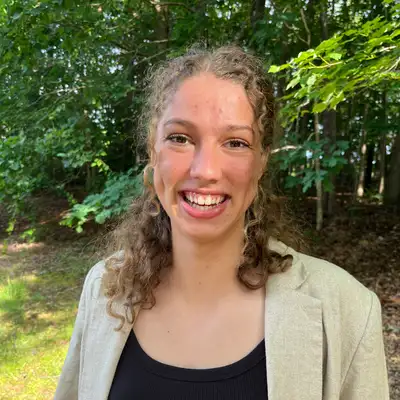
"Eye on the Triangle" is your source for local news, reviews and interviews. Roughly an hour of programming, this block is essentially the NPR of WKNC. Tune in to hear about news and events around Raleigh, Durham, Chapel Hill and the surrounding communities. To find out more about our program or learn how NC State students can join the team, email us at wknc-publicaffairs@ncsu.edu.
00:02
Shradha Bhatia
You are listening to Eye of the Triangle, WKNC's weekly public affairs program from the campus of North Carolina State University in Raleigh. Any views and opinions expressed during Eye of the Triangle do not represent NC State or student media.
00:35
Breyton Hill
My name is Breyton Hill, and I'm here today with Dr. Kasey Wagoner. Dr. Wagoner is an assistant professor here at NC State. So welcome to WKNC.
00:43
Kasey Wagoner
Thanks for having me. It's very fun to see the inside of this place.
00:48
Breyton Hill
Yeah. So I introduced you as a professor at NC State, but how else would you introduce yourself?
00:55
Kasey Wagoner
Yeah, that's a great question. I think primarily I would introduce myself as a physicist. I. I really feel like physics, I think this is true for any science discipline, but we get kind of pigeonholed into being a researcher in this field or a professor or whatever. But for a modern scientist, I think there's so much more to it than that, and there's so many different things that one can do and identify with that. And so for me, core to my identity is being a physicist. In addition to that, I, like, the biggest part of my life is my family, so I'm also a husband and a father and a lot of other things, but I think that's enough for now.
01:34
Breyton Hill
Yeah. What inspired you to get into the field of physics?
01:38
Kasey Wagoner
Oh, yeah, that's great. So when I went to college at Eastern Illinois University, I actually started out studying accounting. And what had happened is when you start there, when you start out studying any sort of business field, you have to go through a couple, like a year or two before you can apply to be in the business college. And. And in that time, a large part of what you're doing is also taking your sort of general education courses. And so in my first year, I was taking some of these general education courses that included an astronomy course. And simultaneously I was taking this sort of pre business course on Excel. And so in my pre business course, I was literally watching a dude just type in things to an Excel spreadsheet during class every day.
02:23
Kasey Wagoner
So I would go from that to an astronomy course where the guy was talking about the stars and how the universe started and all this. And I thought, like, these things are not the same for me. And so I would talk to the instructor after class. His name was Dr. Jim Conwell. And I would just talk to him about astronomy and that kind of stuff. And he convinced me that really, if you wanted to do that, there was no astronomy major at my school at eiu, but physics was really fundamental to all that. So I just kind of switched my major and then since then it was the best decision I've made, certainly the best decision I've made professionally. It just like now I understand how physics plays a part in everything in our universe.
03:03
Kasey Wagoner
And taking physics courses and pursuing this profession has been really awesome for me.
03:08
Breyton Hill
Yeah. Can you walk us through your career trajectory? So you studied business and then switched to physics. What happens next?
03:15
Kasey Wagoner
Yeah, so my career is like simultaneously like traditional for an academic and then also very non traditional. After I finished my degree at eiu, it took me four and a half years because my school was small enough where a lot of the upper level courses were only every two years. And so just switching to the major late meant that I was off track. It took me four and a half years to finish my degree, which I think is important for people to know that you don't have to fit on a specific timeline. And then I started graduates. So I graduated in December and then I started graduate school the following August. I took this little eight month detour and worked on a carpentry crew, which was a great motivator to go back to graduate school.
03:56
Kasey Wagoner
So then I went to graduate school at Washington University in St. Louis. I was there for six years until I got my PhD. Graduate school was the hardest thing I ever did in a lot of ways, but also the most revolutionary experience for me in many ways. I had some of the craziest experiences of my life in very positive ways. I used to think that those experiences changed me, but I actually think now that those experience helped me grow in a way to where I still think I'm the same person. It's just I have a much bigger worldview and that was all thanks to graduate school. So that was at Washington University in St. Louis. After I finished my PhD, I had some work that was unfinished and an exciting new avenue.
04:42
Kasey Wagoner
And so I stayed there and did a postdoc in the same lab, but with a new experiment. The work that I did for my PhD in postdoc was building laboratory experiments to try to test some of the sort of fundamental tenets of general relativity, which is Einstein's theory of gravity.
05:00
Breyton Hill
Can I stop you right there? Can you explain that what that means to a non physicist?
05:05
Kasey Wagoner
Yeah, yeah. So. So in physics there are kind of. Physicists always try to do this thing where no matter how convoluted something is, they try to boil it down and into the most fundamental principles. Okay. And so kind of right now in physics there are two kind of foundations of all of physics and they are all the stuff that makes up quantum mechanics. And then there's general relativity. And general relativity is basically like a very fancy description of how gravity works, the same gravity that have here on Earth. But those two fundamental pillars don't seem to play well together. You can't boil them down further into one sort of unified thing right now. But that is the desire for physicists. And so in order to kind of combine general relativity and quantum mechanics together, you need to.
05:49
Kasey Wagoner
One of them has to break or something new has to be there. And so what were trying to do was build experiments that kind of poke and prod at general relativity to see if there's something about it that's a little. If there's more there below the surface that we don't yet know. And so that's what those experiments were doing. Nothing that we found or that anybody else has ever found has deviated from general relativity so far. It has seemed to be bulletproof, which is kind of amazing because it's now 111 years old. And people have been testing it really severely over the course of that time. And it's really withstood every test. Yeah, yeah. It's crazy. And like, some of this stuff you can pitch is all kinds of crazy things.
06:32
Kasey Wagoner
Like literally my PhD experiment was looking for the manifestation of extra dimensions, which is like super cool. Now, if you came and watched me in the lab every day, you would not think that's what was happening. Right. You'd just be like, that dude is turning levers and looking at a computer. But the end goal was to see if some of these extra dimensions that are hypothesized by things like string theory might actually manifest in a very well designed and executed experiment in Life Lab.
07:02
Breyton Hill
And you found that it didn't.
07:04
Kasey Wagoner
That's right. That's what we found. And were not the only ones doing this kind of experiment. And so everybody else around the world, it's a very small sort of subfield of physics, but everybody within that subfield has effectively found that their experiments are always consistent with exactly what general relativity would predict.
07:22
Breyton Hill
That is so interesting.
07:23
Kasey Wagoner
Yeah, I agree. I'm clearly very biased. So what happened was when I was in graduate school, in my postdoc in that time when I was at Wash, I realized that I really love physics. I really like being in a research environment. But I also realized how challenging research was. And at that time in my life, it felt like it was maybe a little bit more challenging than I wanted out of a career. Because if you're a researching scientist, at least a physicist doing, especially in that kind of work, you're really running into more problems than you can imagine, way more often than you're being successful at anything. And that just kind of beats you down.
08:04
Kasey Wagoner
But because I liked all the other aspects of, like, physics and like research physics environments, I kind of tried to find a way where I could be in that environment without the pressure that comes with being a tenure track faculty, but also without the sort of constant drumbeat of like, this is really, really hard all the time. And so I made this sort of calculated choice to pursue a career as a teaching faculty member at a large institution. Simultaneously, in addition to doing this research, I was often a teaching assistant as a graduate student. And I was having a lot of success there. So I was enjoying it. And it felt good to actually do something that I was doing well at as opposed to research where it was having moderate success. But inherently, the experiments were telling me I was struggling.
08:51
Kasey Wagoner
So I made this choice to pursue a teaching focused career. And then after I finished my postdoc, I got it my first teaching faculty position, also at wash U in St. Louis. And I did that for a few years and I really enjoyed it. It was a lot of fun and everything was really great. But simultaneously at the same time, I was with my wife and she had finished her PhD and she got this really fantastic opportunity to go for a postdoc at Princeton University. And so we made this decision together to move from St. Louis to New Jersey. And so when we moved, took her position, this really nice position at Princeton. And I went into a tenure track position at a very small school in Philadelphia named Philadelphia University.
09:40
Kasey Wagoner
It was a tenure track position, but at a small school like that, tenure track positions are really very teaching focused. So I did that. I was liking it and enjoying it. But when I was there, during my first year there, Princeton actually contacted me and said that they had a teaching faculty position open for the following year. And so it was a bit of a hard decision because I gave up some security that came with a tenure track job at Philau. But I decided to move into a less secure, teaching focused position at Princeton. And that was primarily, I mean, that was kind of for two reasons. One of them is it's very hard to say no to an elite physics department. You know, if you have that opportunity, you just figure you don't get that many opportunities.
10:21
Kasey Wagoner
But also that since that's where my wife was working, that meant that our, the logistics of our day to day Life were much easier. We no longer would each have these horrible commutes in opposite directions. Rather, we could move closer to Princeton's campus and we could commute together and life became much easier. So I made that move and that was really, in the end, has turned out to be a fantastic experience. And I have a ton of amazing stories and experiences that I could tell you. From that time I was at Princeton as what was first called a lecturer. And then I got promoted to the position of senior lecturer. I was the first person ever from the outside of Princeton to come in and actually make that promotion within the physics department.
11:02
Kasey Wagoner
And it was really a. I really got to meet a lot of amazing people, amazing scientists, and have some like just really phenomenal experiences for a physicist. So that. And then, so I was there. And then again when my wife was a postdoc at that time and when she was finishing her postdoc, she went on the job market. I mean she just applied to, you know, what felt like thousands of jobs across the world. And then she got offered a position at NC State. And then she said, hey, I've got this guy that's tagging along. Is there any chance that there is the opportunity for him to have a job? And at that time the physics department actually realized that they could benefit from another teaching faculty. And so they said that yeah, this is actually a very nice fit for us.
11:49
Kasey Wagoner
And so then my wife and I made the transition from Princeton to NC State. We started in January of 2023 and I was a teaching faculty here from January of 2023 until August of 2026. And what happened is our. This very interesting position became available where it was meant for somebody that does either education research or science outreach or science communication or science policy work. And it's a very non traditional type of position for a tenure track faculty member. And so I applied for it and ended up getting it. And so In August of 2025 I transitioned from a teaching track to this position I'm currently in which is assistant professor on the tenure track. And group kind of focuses on. Or we do, you might say we're unfocused, we do a lot of different things.
12:46
Kasey Wagoner
But right now our kind of two main thrusts are working on understanding learning in the graduate when a person goes to graduate school in physics and then also looking at like designing and executing outreach activities or informal science learning activities and then studying the best way to approach those. And what are the benefits of those kinds of learning environments. And then today I came here, so that's my trajectory.
13:14
Breyton Hill
Awesome. Awesome. Thank you for sharing that. Yeah, to kind of go off of that. Physics can be quite the intimidating subject. So how do you work to make it not only accessible, but fun?
13:24
Kasey Wagoner
Yeah, that. That's a great question. So there's. I kind of. So accessible is one thing, and fun is another thing, and they're tied together, but I would like to approach them separately. First of all, let me talk about the fun. I think no matter where you are, whether you believe it or not, or whether or not you care about it, physics is 100% a part of everything. From. From the headphones that you're listening to the microphone that I'm speaking into, just actually how your brain processes the sound that's going into your brain right now. How is it turned from a sound wave that is this disruption of the air molecules. How does it turn it from that disruption of air molecules into an electrical signal that your brain can process? Physics is everywhere.
14:04
Kasey Wagoner
And so I really believe that everybody likes something, and so if you like anything at all, then you could be intrigued by the physics that is underlying that sub. I was actually thinking about this as I was coming over here to the studio, like, okay, is there anything that doesn't have physics? And I think one could imagine the idea of philosophy, right? Like, where you're just thinking about everything in your own mind, but the moment that you go to communicate that to any other individual, to understand how that transmits, to really understand it, you need to know how we take a thought and turn it into a sound wave, and then how that sound wave travels from one's mouth to somebody else's ear. And right there's a ton of physics.
14:48
Kasey Wagoner
And so it does not matter if you want to just, like, sit in the clouds and think about philosophy or you actually want to play the drums or you want to play sports, there's a ton of physics in that. And so I think that finding, whatever, whoever I'm trying to communicate with, if I can find their natural thing that they like, then I hope, can make the physics of that situation fun for them. Now, how do I make it relatable? Sorry, that was another question. I think physicists, on average, not everyone, but on average physicists, are really good at taking physical phenomena and turning them into math, right? And that is not relatable.
15:24
Kasey Wagoner
But I think what I try to do is I try to actually give people a situation and try to explain it in terms of a physical intuition that they will have built from their earlier life. I can't always do. It can be challenging for me or challenging, I think, for anybody. But I think that trying to keep math out of things and rather focus on the intuition and just understanding physically what is happening in that. That situation, I think that is eminently understandable by everybody.
15:54
Breyton Hill
Speaking of fun things, you also explained the physics of sports with sports science. What is that?
16:00
Kasey Wagoner
Yeah. Yeah. Well, so, again, part of what I left out, you know, I started my trajectory, or this discussion started my trajectory when I was an undergraduate, but what I didn't talk about was actually my. What I did as a child and up until that point, and. And that was sports. That's it. When I was in high school, I literally remember sitting very vividly one day in my high school calculus class, just looking out the window, and my teacher said, what are you doing? And I just said, I'm looking out the window thinking about baseball. That's what I'm doing, right? And that was my life. And even through most of my undergraduate years, more of my time was spent thinking about sports than it was about physics. And even to this day, often after my kids go to bed, I'm watching the NBA, right?
16:42
Kasey Wagoner
Like, sports are just a huge part of my life, and physics is a huge part of my life. And I think that a lot of people are scared about physics, but a lot of people like sports. And so I view them as so closely connected that I like to take some strange situation that you might interact or that you might see in sports and explain with physics why that might be the case. So, for instance, like, something I'm working on right now is if you watch a basketball game, you might notice that the tallest guy always does the jump ball, right? But the tallest guy is very rarely the person that can jump the highest. And so it's very easy to think, well, why would you have this tall dude who can barely jump? Why would you have him do the jump ball?
17:24
Kasey Wagoner
Why not have the shorter person, the slightly shorter person who's got this amazing vertical leap, why not have them do the jump ball? And there's some pretty straightforward physics behind that. So that's the kind of thing I'm working on. And so I think physics can help us understand some things that seem strange in sports. So, for instance, a couple weeks ago, I wrote an article on the new kickoff rule in the NFL, right? And the idea was, the NFL. Now, I don't know this. I've not talked to the NFL. But what I'm saying is, like, I think it has to be right. So I'm Just going to posit that it is. I'm sure that they designed these kickoff rules so that they got more kick returns, because those are exciting plays, but kick returns are also very dangerous.
18:06
Kasey Wagoner
And so what they did is they designed the rules to get more kickoff returns, but then they also designed the subsequent parts of the rules to make it so that they can ensure as much safety as possible within those rules. And you can see from very like sort of fundamental physics how they have designed safety into these rules. And so I wrote an article on that. So that's the kind of thing I like to do.
18:29
Breyton Hill
Speaking of outreach, you also started Science on Tap in Raleigh. Can you tell me some more about that?
18:35
Kasey Wagoner
Yeah. So I believe that people everywhere, but definitely people in Raleigh are interested in learning about the cool stuff that we do at NC State in our different science disciplines. I also believe people in Raleigh really like good beer and they like good food. And so Science on Tap seemed like a very natural place or venue to try to put those things together. And so with a graduate student of mine named Ben Hines, Ben's has really been really the driving force that's made this successful. We started this program where it's a monthly event at Lynwood Brewing Concern. And the idea is we bring a scientist from NC State into Linwood to talk about their science in a way that is digestible and interesting for people that might be in the audience.
19:24
Kasey Wagoner
And the target is not other scientists or other science students, but the target is just anybody in Raleigh that's curious about what the heck happens on our campus. Maybe what the heck happens in these different science departments? Or maybe they might be asking, like, what were the effects of Hurricane Helene and how can we know about what happened and why it happened? Well, we had Professor Carl Wegman on to talk about some of that stuff. Or they may be wondering just why would you use a fish to try to understand als? Well, for that, we had Professor Curt Marsden come and talk about why they use zebrafish to try to understand this stuff, why and how. So I think there's a lot of interest in this kind of stuff. I think people generally are curious. They don't want to get a major.
20:10
Kasey Wagoner
They don't want to go to college and, like, spend four years studying this. But they are interested in coming, spending an hour learning about cool stuff, learning that the things that are supported by public tax dollars are actually helpful for us, even if they're at the fundamental level that are not just yet translating into a cure, but understanding how the fundamental science can help inform the next step of the process of developing cures for these things, or developing hurricane resilience or whatever it is, you've got to start with fundamental stuff. And I think that people want to know about that, and I think our scientists can bring that to them in this kind of venue.
20:49
Breyton Hill
Absolutely. You were selected most recently for a digital science communication fellowship. What have you done as part of that?
20:56
Kasey Wagoner
Yeah, yeah. That's an interesting thing. So what had happened is for a long time, I've had in my mind something that goes. Ties in well with what I was just talking about with science on tap. The idea was to start a podcast or like a video series or something on the idea, what I call trickle down science. And the idea is to take sort of storybook approach to looking at some very fundamental science that was funded by taxpayer dollars. You maybe you're doing something like trying to understand how the universe started, but always out of these things, this kind of fundamental research, scientists develop really new and innovative tools that a lot of times trickle down into society.
21:39
Kasey Wagoner
So I applied for this fellowship with the idea being that I was going to use this as a venue to take the expertise that they were providing through the Boston Museum of Science, take that expertise in how to navigate the digital space, and understand how to start this sort of podcast video series, and, you know, and make my idea of trickle down science come to life. So I applied and I got accepted, and I was all excited. And then I had a phone call with one of the people that was organizing the fellowship, and he effectively told me, in very nice words, we hated your idea. But as part of this, I had to apply and provide a sort of resume that had some of the other things on it that I had done in the digital, like, digital science communication product.
22:27
Kasey Wagoner
And so I provided links to a video I had made that was called how to Hit a Home Run with a Princeton Physicist and another one was called the Physics of a Curveball. And apparently they really liked that idea and they thought that there is a space in the market for people to explain science through the lens of sports. And so that's how I got selected for this fellowship. I never in a million years would have pitched that as a proposal, but it seems like they were interested in that, and they have a lot of market research that shows that there's value there. So I thought, all right, seems cool. And these are things I like to do, so let's do it.
23:02
Kasey Wagoner
And so what happened with that is went to Boston for a convening of the fellowship, and there's a small number of mentees like myself, people who are interested in communicating science to a broader audience, but maybe don't know how to do it really well in the sort of on different social media platforms or on YouTube or whatever it is in the different digital environments. So they took people like us and they've matched them with professional content creators, people that make digital content that is very well received and very well followed, and those people they call mentors. And so they match each one of the mentees with a mentor and that mentor is helping all of the mentees.
23:45
Kasey Wagoner
My mentor is helping me get better at telling my story in a way that's compelling, finding better ways to communicate the things that I want to communicate in a way that's more engaging for somebody that doesn't necessarily have the attention span to watch some long form video or in an environment where there's a lot of competition and people are constantly scrolling. How do you get your message across efficiently so that people are interested in what you're doing? So with that, after we met in person, we have regular meetings where I'm working with my mentor to refine different things that I'm doing and different content that I'm making and developing. Given what they had told me from their market research is like everything that I'm doing is around in this space is around sports science.
24:33
Kasey Wagoner
Just trying to explain how even though sports is awesome, which I totally agree with, there is a lot of science there and we can use sports as an avenue to understand and explore science.
24:45
Breyton Hill
Would you say that baseball is your favorite sport?
24:47
Kasey Wagoner
That's a good question. Baseball. When I was growing up, baseball was absolutely my favorite sport. It's like kind of what I sort of ate, slept, breathed. Over the years, I think my interests have morphed a little bit and I think basketball is now my favorite sport. There's a number of reasons for that. Basketball is a little easier to find a game in. As an adult, it's very hard to find a baseball game. It requires 18 people. As opposed to basketball, you can play with four. And so I think as my level of participation has gone from playing a lot more baseball than anything else to now I play a lot more basketball than anything else. I think also the sports that I follow have migrated similarly. And so I would say basketball is now my favorite sport.
25:35
Kasey Wagoner
But baseball will always be a passion for me. It'll always have a special place in my heart. Baseball also, in terms of doing physics and using physics to understand it clearly and easily, baseball is very straightforward in a way that basketball is not necessarily. Baseball is really the fundamental interaction in baseball is between the pitcher and the batter and it's just a one one event. Whereas in basketball you've constantly got five people from each team that are. It's kind of like physics is fundamental and we try to narrow things down to one thing. Whereas biology is this nasty soupy web of all kinds of different things interacting. It's kind of like that with baseball and basketball. Baseball is just this fundamental interaction. There are these other players in the background.
26:24
Kasey Wagoner
Whereas basketball, you've constantly got this web of people moving around and both are beautiful and interesting in different ways.
26:32
Breyton Hill
Lots of interactions in basketball, yeah, for sure. As a professor in science, what advice would you give students or your 20 year old self?
26:42
Kasey Wagoner
The advice I would give my 20 year old self was be more serious about school and spend less time on the basketball court. I think for me, when I was 20, I went through classes feeling like they were a thing that I needed to check off. And like, okay, if I get this class done and I get this homework done, then that's all I need to do. And that's not the case. Right. Like a professor thinks that when a student is doing work, they're engaged in this and they're thinking about it and they're thinking about the nuance of the homework assignment or the nuance of the content that's being covered. Whereas when I was 20, I was literally just being like, okay, I'm taking this in. What do I need to do to get this homework done?
27:23
Kasey Wagoner
What do I need to do to get this grade on this test? And that meant that I missed out on an opportunity to really think deeply about this subject when that's what I was supposed to be doing. What I was thinking deeply about at that time was literally like, okay, when can I get to the basketball court? And so it's not that I think you need to put those sports or that I should have put those sports aside or anything. It's more just like I should have been more focused on really thinking about and understanding the nuance of the courses that I was taking. Now as a much older person, I actually love all the stuff that I was forced to take in all these classes. I love learning about history and philosophy and economics.
28:10
Kasey Wagoner
Whereas when I was a student, it was literally like a box I had to check to get out the door. And I paid money to do that in my tuition. And what I was paying money for was the opportunity to learn this from experts. But back then, what I viewed it as is. I am paying money to get a degree and that was not the right view. It really meant that I missed an opportunity to really to learn a lot more and have a much richer understanding of more or less everything that humanity knows.
28:44
Breyton Hill
That's good advice. Is there anything else you'd like to discuss that I didn't ask about or any misconceptions about your field you want to clear up?
28:52
Kasey Wagoner
The one thing that I would say about physics is when I tell somebody I'm a physicist, I get two responses. One of the responses is, oh, that's super cool. And then they ask me some random question that is typically ill conceived and it's about black holes or the beginning of the universe. That's cool, I love it. And I will talk to those people. Of those two reactions, that first one is definitely the one that comes the least. The second reaction that I get is physics is really hard. I hated that class. How's the weather? And it's like more or less they give me the sort of how do I find my way out of this conversation as fast as possible. And I guess what I would like to say is physics and math are distinct and separate subjects for a reason.
29:42
Kasey Wagoner
Because they are different. Right? Physics is really about understanding the universe or understanding how different things work. We use math as a model to understand and get a deeper understanding and intuition for these things. But if you care about how anything works or how the universe came to be, or how different quantum devices can be manufactured, that's physics. And you can understand a lot of that stuff without that much math. And so I think that's really cool and powerful. And I think that if you're interested in that stuff, you should explore it. And don't be turned off by a crazy amount of math because if that is the explanation you're getting, then you can look somewhere else and you can find a better explanation that can give you some intuition for these things without all the material math.
30:36
Breyton Hill
It's time for the Breyton interrogation.
30:39
Kasey Wagoner
So this is, I am buckled up and ready to go.
30:42
Breyton Hill
A list of questions that I asked to get to know you rather than what you do. So number one, what's in the best sandwich?
30:50
Kasey Wagoner
What's in the best sandwich? I think the best sandwich is the sandwich that is in front of me. Because I'm pretty much like most things I really love, like a buffalo chicken sandwich I mentioned that I lived for or that I worked for a year in Philadelphia. Like an awesome Philly cheesesteak is like there's nothing like it. But I also love just like roast beef sandwich with some Swiss, some mayonnaise, lettuce and onion. Yeah, I don't know. That's the tough. That's the toughest question you've asked.
31:19
Breyton Hill
It's a hard question.
31:20
Kasey Wagoner
It's a good question.
31:21
Breyton Hill
All right, what's one little thing that could ruin your day?
31:25
Kasey Wagoner
The honest answer is if my kids are fighting. Because that can be just like a spiral at our house of just like them just running around, you know, like yelling at each other and chasing the dog, you know, so that's one thing, I guess. Another thing that can ruin my day, if I'm being frank as a professor, is his email. I get so many emails and I feel obligated to respond to most of them, yet it is not the reason I took any job I will ever have. But it is a huge part of every job and it's when I have to sit down and just respond to a bunch of emails that will ruin my day.
32:03
Breyton Hill
Exhausting. Yeah. What's the best compliment you've ever received?
32:07
Kasey Wagoner
Recently, before I went to Boston for this fellowship, in advance of the meeting they were part of. This fellowship is trying to help people find who they are themselves. And so they gave us one of these questionnaires that are the kinds of things you would take on a personality survey or something. And so they had all these funny questions. As I was feeling it out, I thought, hey, this would actually be fun to do for my wife. And so I answer it for me, I answer it for her and then she does that as well. And so we started talking about these things and talking about what is your personality traits and whatever.
32:40
Kasey Wagoner
And one of the things that my wife said about me was, I can't remember if she admired it or hated it, but what she said was that she is constantly amazed at how it is impossible for me to be embarrassed. And she didn't mean that as a compliment, but I actually took it as a compliment because I honestly feel like I'm pretty much always my. I try to be myself no matter where I am. And, you know, whether it's like, you know, when I was at Princeton, I like constantly interacted with Nobel prize winners, you know, or like when I'm at home, I'm interacting with a two year old, you know, or. Or when I'm in my own department, I'm interacting with my colleagues. I really try.
33:19
Kasey Wagoner
My philosophy is, I don't care who you are, I'm Kasey and you're going to get me like it or not. And so when she said that to me, I read it as, yeah, I'm not going to be embarrassed even if I'm in a highfalutin situation. And I'm not embarrassed to admit that I don't know something or that, oh yeah, I've got mustard on my shirt because my 5 year old wiped her dirty hands all the time.
33:42
Breyton Hill
If the world was split into dancers and not dancers, where do you fall?
33:46
Kasey Wagoner
Okay, so that's a good question. I'm going to give you two answers based on two interpretations of this question. If you are splitting the world into people who can dance and people who cannot dance, I am firmly in the I cannot dance split. If you are splitting the world into people who will dance and people who will not dance, I am firmly in the will dance. So I'm very happy to dance. I don't know how to dance. And so I think this plays into my wife's concept of I am unafraid of being embarrassed.
34:22
Breyton Hill
I agree with you there. I'm bad dancers, but I will dance. Do you have a no Skip album? If so, what is it?
34:28
Kasey Wagoner
There are three albums that kind of come to mind. One of them is by the band Iron and Wine named the Creek, Drank the Cradle. It's just I could always listen to that. But it is very much a very pathetic particular album that most people when I'm with will skip right away. Another one is by a guy named Josh Ritter and it's called hello Starling. It just brings me back to a very specific time in my life that was just very rich. And then the other one is actually another album by Iron and Wine called Kiss each Other Clean, which is just a complete in my mind is very different than every other than the other Iron and Wine album I mentioned. Those are the things that come to mind.
35:12
Breyton Hill
Going off of vibes alone. Do you feel like you're more rock, paper or scissors?
35:17
Kasey Wagoner
Yeah, I would say that I would probably. I put myself in paper.
35:22
Breyton Hill
Solid. All right, last question here. Describe the rest of your life in five words.
35:27
Kasey Wagoner
Eventful, unpredictable, fun, rich and active.
35:32
Breyton Hill
There you have it, folks. This has been Dr. Kasey Wagoner and you're listening to WKNC.
35:46
Shradha Bhatia
This has been Eye on the triangle from WKNC 88.1 FM HD-1 Raleigh. Our theme song is Krakatoa by Noah Stark, licensed under Creative Commons. Listen to this or any other episode, visit wknc.org podcast or subscribe. Wherever you are, you get your podcast. Thank you for listening.