Subscribe
Share
Share
Embed
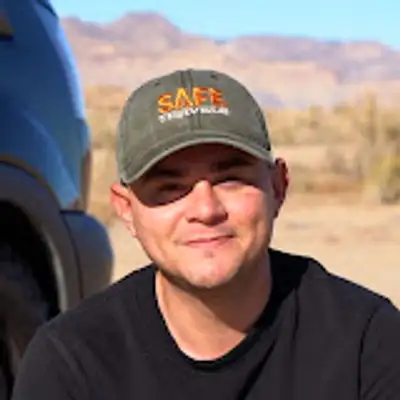
Safe Travels explores National Parks and wild places through in-depth conversations with the people who know them best - park rangers, scientists, biologists, geologists, archaeologists, and conservationists.
Each episode goes beyond travel tips to uncover the science, history, wildlife, and conservation stories that bring these landscapes to life.
Hosted by Joey Liberatore, Safe Travels Pod turns expert insight into engaging, accessible conversations - helping listeners experience public lands with deeper understanding and appreciation.
Hi, everyone. Thanks for checking out this edition of the Safe Travels Podcast. My name is Joey. Today, we are in Big Bear, California, and I had the opportunity of sitting down with friends of Big Bear Valley executive director Sandy Steers. And in this episode, we talk all about the magical story of California's and maybe the world's most beloved bald eagles, Jackie and Shadow.
Speaker 1:Sandy, thank you so much for joining me today.
Speaker 2:Thank you Joey for having me and coming all the way up here to talk.
Speaker 1:Any excuse to come to Big Bear. It is beautiful up here and you allowed me just to use your binoculars to to look at the nest in person for the first time which was really a remarkable experience. And before we turned on the camera, you talked about before you had the Eagle Cam and the trees up there, you used to stand at this park and look at that nest for three to four hours a day.
Speaker 2:I did because Jackie was in a nest not at not that one, was about 50 feet away then that nest has gone since but but that's where I could see her from and watch her grow up in that nest and I couldn't stay away.
Speaker 1:Well one of the the big reasons we're meeting today is because Jackie and Shadow have arguably become the most famous bald eagles in the world garnering hundreds of thousands of viewers that watch them on the the webcam, the livestream every day which is, you know, a testament to how much people wanna be involved in the outdoors and natures. But first I want to start with you because Big Bear Valley means a whole lot to you. You were living in Long Beach and commuting back and forth between Big Bear Valley and Long Beach. What about Big Bear Valley brought you a lot of healing and you know positivity in your life?
Speaker 2:Just the energy here is very calming, the nature all around, it may, you know, you just kinda even halfway up here, I just start taking a deep breath and feel like I can center again, I can breathe, can, you know, the air is better, the sunshine is beautiful, it's just being in the middle of nature is beyond imagination.
Speaker 1:You were diagnosed with cancer, with breast cancer and you talk about how being in Big Bear Valley brought you a lot of healing through the nature that's here. Can you describe that more? What about Big Bear Valley brought you that healing?
Speaker 2:A lot of it was the nature. I would spend a lot of time doing things like I I stood in a stream, in the middle of winter and let it, you know, wash away anything negative inside me. I just imagined it was all washing downstream and nature was healing me. I did a lot of meditations in nature and just let all that energy in and just sitting and hearing the birds and watching the sun and the clouds. It it does something.
Speaker 2:It makes it pulls you back into yourself and you remember that you are nature.
Speaker 1:Did that diagnosis, did it change or reframe your perspective on how you wanted to live your life and what you wanted to do with with life?
Speaker 2:Absolutely. Yes. Everything. Because I was all, you know, like a lot of people serious about, you know, owning a business and doing all the things I was doing and wanting to, you know, make a difference that way and, you know, being I guess called all the time to do more and do what people expected and all of a sudden I realized I didn't need to do any of that.
Speaker 1:Wow. I think that's a powerful that a lot of people can relate to that are listening and watching this episode certainly. I think a lot of the feelings you just described are what Jackie and Shadow bring to people in their offices or at work and Jackie and Shadow are on their, you know, second monitor and they're kinda looking over while they're working in the spreadsheet on the other monitor which is amazing and I've seen that firsthand and I've done that firsthand. So it's incredible what Jackie and Shadow have done for people and what nature can do for people as well.
Speaker 2:Yes. It It reminds us who we really are and it reminds us how to get back into our real life and what we're here for and enjoy it.
Speaker 1:In a previous podcast that you did that I listened to, you talk about how being out here reminds you of that you're a part of the ecosystem. And when you're actually out, you know, living and breathing in a place like this, it makes you feel like you're a part of that ecosystem and makes you feel called to protect, you know, what you belong to.
Speaker 2:Oh, absolutely. The the ecosystem that we are part of, I mean, if it didn't exist, we wouldn't exist at all. It's, I think people forget that all of this is part of us, and it all builds up to us, and we build up to it. And, it's just really important to feel that connection and remember who we are and that all of the, you know, all the bushes, all the trees, the eagles, the bees, they're all part of us.
Speaker 1:And I know you feel that if the wildlife is sick and endangered, then we too as humans are also sick and endangered.
Speaker 2:Absolutely. Yes.
Speaker 1:So let's go back to the very beginning of how this Eagle cam came to be, Jacky and Shadow's prominence in this area. I know that, when the first Eagle egg was noticed here and then hatching, the forest service approached you about potentially monitoring, that eagle. What was that like when you were approached? What was your feelings on that?
Speaker 2:Well, I it was it was wonderful. I had been very involved in the eagle counts with the forest service up here and the biologist that ran those is how that all happened. And so she knew that and and I got to come out here to this park during the eagle counts four times a year and and watch the eagles and note what was happening. And when the egg oh, it was actually already a chicken that nest when they found it. And when that happened, she wanted it to be monitored, but didn't have the resources or the time herself to do it.
Speaker 2:So she just asked if I would take a look and write down all the notes and I was happy to do that.
Speaker 1:So you were, you know, fixated on bald eagles before monitoring this chick in the nest?
Speaker 2:No. I wasn't that I knew of, but I'd loved doing the bald eagle counts every year, four times a year. And so I got I guess I got involved and I was more involved in my heart than I realized until that chick hatched and then I couldn't stop.
Speaker 1:And that chick that we're talking about is believed to be Jackie, correct?
Speaker 2:Yes. Yes.
Speaker 1:And how has Jackie's role in this ecosystem changed since she was a chick and then meeting mister b which spoiler alert for people who didn't know, Shadow is not always her partner, mister b was her original partner. So how did those two meet and were Jackie's parents still in the area after she, you know, hatched and grew up?
Speaker 2:After she hatched and and grew up, as she grew, it takes eagles five years to get to sexual maturity. And during those five years, we saw Jackie and Shadow's parents and one eagle that was always the right age, which is what made us think Jackie stayed. Because before that, we only had wintering bald eagles from up north, and Jackie's father was the first one that came and stayed and got a mate, and then they had the the first chick. And so they were year round eagles here, and so you could see them around the lake every once in a while, and then sometimes we'd see, you know, an eaglet that was the right age to have been Jackie. And so her parents, when we put up the camera, her parents had actually moved the nest, and we didn't realize it.
Speaker 2:And so we put up the camera on an empty nest, and the forest service later found their nest, and the chicks but, you know, by the time the camera was up and everything, the chicks were already big. And so, I got to see those two chicks the day that at least one of them fledged. And so that was beautiful, but there was no camera on them. And then after after that year, that nest kinda deteriorated, and so they must have left the area. We don't know why.
Speaker 2:You know, there was nothing watching them. But Jackie in that empty nest, not the first year, it was just empty, but the next year, she came and started investigating that nest and pretty soon brought a mate with her. And that mate we called mister b for mister big bear. And, they settled in, and they even mated on camera that first year, but nothing happened. So she might have been just not quite old enough to have chicks.
Speaker 2:And then the next year, they did have chicks. And that was Stormy and BBB for Big Bear Baby, and it was beautiful to watch them grow up on the camera. It was a different angle on the camera. It was the camera was high up. They've they've developed a lot of technology since we started doing this, but it was overlooking them.
Speaker 2:So you could see down on them, but it wasn't quite the same view as getting to see into their life. And so we have a lot of pictures of them growing up and things like that. BBB didn't make it through one of the big storms, but, Stormy did fledge. That was great.
Speaker 1:And do you have any updates on Stormy or
Speaker 2:Sadly, we do because Stormy was was, banded by the Forest Service and about a year or so later they found the remains of Stormy. We don't know why or what happened to him.
Speaker 1:Wow. What percentage of chicks make it to the age of sexual immaturity? And are those first five years really fragile years for them?
Speaker 2:They are and especially the first year, what I understand is only about I've heard different ranges between fifty and seventy percent make it to through their first year. Wow. So it's yeah, very touch and go.
Speaker 1:And we'll talk a bit more about this later but one of the three eaglets from this past year didn't make it and and that was seen on camera and I think oftentimes we romanticize wildlife including these bald eagles because we've had a peek into their life. But nature is hardcore and unpredictable and we'll talk about that more in a bit. But how did Shadow come into the picture then if mister B was already partnered with with Jackie and bald eagles are known to be monogamous, right? Make her life. Are.
Speaker 1:So how did Shadow come in and become Jackie's Well,
Speaker 2:sometime while, after Spirit I mean, after, Stormy fledged but was still in the area and coming back to the nest to get food from Jackie and Shadow every once in a while, and, and they were around the area, but not at the nest all the time. This other eagle came in and that was just turning five because we could tell by the marks on the side of his head. We didn't know it was a he until Stormy was there at the same time, and it was the same size. So we knew it was a male, and then, it, because the males are smaller than females, and Stormy, since he was banded, they had checked, and his ankles were not as thick as females, so we knew it was a male. And this eagle came, and Stormy tried to chase it away, and it would maybe go a few branches away or something and then come right back, and it just wouldn't leave, which is very rare in eagles that they, you know, take or try to come into another nest, And then, over the next ten days or so, Jackie and Shadow I mean, Jackie and mister b both came at different points, and they would try to chase this other eagle away, and he just wasn't going anywhere.
Speaker 2:I don't know I don't know what he had in mind or what, but he was like determined. This is I'm just gonna stay here. And it wasn't because of food because he didn't there wasn't even any food in the nest when he came. He just came and stood his ground.
Speaker 1:And over time did mister b then just leave the nest?
Speaker 2:Yeah. I actually got to see the last time we that mister b was on camera, we didn't know it would be at that point but he came in and and Shadow was there and just mister b kept trying to poke at him with his beak and he would lean forward and poke and mister b just kept I mean, Shadow just kept backing up And he would lean back, and I I keep telling saying that it it was like one of those punching dummies that we had as kids, you know, you hit it and it comes right back up. That's kinda what Shadow was doing. He would and and he would step back maybe a step, but he would just come right back. And but after about fifteen or so minutes, mister B left, which was a little shocking.
Speaker 2:But he just gave up and that's the last we saw of him.
Speaker 1:Is there any sign that Shadow was just infatuated with Jackie?
Speaker 2:We don't know. He hadn't when he was first there, as far as we know, he hadn't seen Jackie. I mean, maybe he was watching her from a distance. I don't know. But they hadn't been in the nest together or anything, and the first one he saw was Stormy.
Speaker 2:So I don't know what was going on but he had decided this was where he was staying.
Speaker 1:And obviously Jackie after Mr. B left took to Shadow and now how long have they been partners for?
Speaker 2:Since, let's see two thousand and eighteen, so seven years, well over, yeah.
Speaker 1:And how many eggs and chicks have they hatched together?
Speaker 2:Six hatched eggs and four fledged.
Speaker 1:I do wanna talk about the hatching process a little bit because it's fascinating that the chicks have a tooth on their beak, correct, that allows them to kinda cut through the egg. Yes. It's
Speaker 2:a little pointy thing.
Speaker 1:Yeah. It's amazing. And, the parents don't interfere with that process or help them, correct?
Speaker 2:That's correct in general. One time I saw Shadow break off a piece of the egg. He couldn't he couldn't stand it.
Speaker 1:He broke the eagle's rule.
Speaker 2:But, yeah, they have to hatch out themselves and they use that pointy egg, you know, egg tooth it's called, and it's on the front of their beak and they put their feet against the other side of the egg and push, they keep pushing hard enough until they get that, egg tooth to poke through the shell. And then they keep poking a little bit at a time, and finally when they have enough, they use their they it called called unzippering. They use their feet and walk themselves around the egg from from that hole with the egg tooth there, and it cuts the eggshell all the way around, and they can pop it open.
Speaker 1:Is there any rhyme or reason why the parents don't interfere? Is it is it just natural life cycle and then trying to get the the chick strong enough to hatch?
Speaker 2:I I think it's the that they have to be a certain have their own strength to be able to survive. There was one chick that we heard one year that was in the shell. We heard the cheeps the night before and then the next morning we didn't hear anything and so sometimes they just don't make it out.
Speaker 1:Jackie and Shadow and Friends of Big Bear Valley, you're the executive director of Friends of Big Bear Valley, they have brought so many people into the world of conservation and caring about bald eagles which are obviously an iconic symbol in America for a bunch of different reasons and fortunately over the past decade or so they've made a resurgence in healthy populations, which is great. But how do you think Jackie and Shadow specifically have inspired people to care about wildlife and to care about bald eagles?
Speaker 2:I think a lot of it has to do with their individual personality And, you know, people may say, you know, animals don't have personality, but they are distinctly different than each other and distinctly different than mister b and than any of the chicks that we've seen. They all have their own behavior and their own personality, and I think people have kinda gotten connected to that personality and seeing the individuality of them and wondering what they're gonna do next because it's obviously up to them, and they aren't just operating like little machines up there doing what they're supposed to do. They make their decisions. They show their emotions. You know, we don't know whether they feel it the way we do, but they definitely have different behaviors based on what things are happening in the nest and around them and they do things to tease each other and it's hilarious toy.
Speaker 2:There are lots of days when I just sit there laughing out loud because it's so funny what they do.
Speaker 1:Have you what are some of the things that you've heard from folks that have engaged with the the live webcam in terms of changing their life and their perspective?
Speaker 2:Well, some of them have said that watching them and the the emotions they feel, the connection has gotten them through hard times. It's some people have said that they sat with their dying parent and watched the nest, and that connection between them and their parent and the and the eagles was just amazing, and they, you know, thank us for bringing all that emotional connection to them. People have said that that they look outside their backyard and they realize now they have a robin's nest. They had no idea it was back there, and so they started watching it and paying attention to what's going on in that nest, and it's connecting them with the the nature all around them not just the nature on the Eagle Cow.
Speaker 1:You mentioned connecting with nature around them and and not just the camera but do you hope that seeing Jackie and Chad on camera you know, encourages folks to dive deeper in just the overall natural world and and learn about it and to engage with it?
Speaker 2:Oh, absolutely. Because like I said before, we really are nature. We are nature or it's part of us and we're part of it and the more we connect with that and understand it and be in the middle of it, the more we gain access to the truth of ourselves. And that truth inside of us is how we can live our life and be who we are, not what society expects or somebody else tells us we should be. It's like we can connect with, you know, what what's inside of us.
Speaker 2:Maybe we're like Shadow. Maybe we're like Jackie. You know? And but I I love that people are learning to connect with themselves.
Speaker 1:Absolutely. So we talked about Jackie being the first eaglet known to be born here in Big Big Bear Valley and then we talked about Mr. B and then replaced by Shadow.
Speaker 2:Yes.
Speaker 1:But this past year it seems like the eagle cam really erupted with the three eggs that Jackie had laid, two of them hatched or actually all of them hatched. Right. One of the eaglets unfortunately didn't make it. Let's talk about Sunny and Gizmo and how they're doing and and obviously people are infatuated with them and you know their success in this valley. So do you have any updates on Sunny and Gizmo?
Speaker 2:Well we we you know can't guarantee anything. We haven't seen Sunny or one that looked like Sunny. But, a few days ago, one that had all the markings of Gizmo landed in the nest and stayed for several minutes looking around, moving a couple sticks, you know, like it was at home. And and it and like I said, it had too many markings that were like Gizmo for it to really be a coincidence. And so we were pretty sure it was Gizmo showing everybody that she's okay.
Speaker 2:She's just back to say hello.
Speaker 1:How did they get their names of Sunny and Gizmo?
Speaker 2:The we've had in the past, the Forest Service started a tradition before anybody knew when there was an eagle camera or anything of having the third graders name the the chicks that were, hatched because the third graders in Big Bear have a field trip around what to see the eagles, and they study eagles that year, and and so they would get to name them. And so we kept that tradition, and we had lots of people sending in names and things when we first started having chicks, and so we put it together as a a contest, like a little fundraiser, so people can donate a little bit, like and be able to send in their names. And then we draw 30 names randomly out of all the ones sent in and take them to the third graders. And this year, we did the third, fourth, and fifth grade because the last two years, there were no chicks that hatched, and so the fourth and fifth graders didn't get to do it when they were in the third grade. So we let them join in, and I got to I made a a special ballot with all the names on and I got to go to all the classrooms and let them vote on which names to pick.
Speaker 2:It was gorgeous.
Speaker 1:That's an amazing process. That's so neat.
Speaker 2:It was a lot of fun.
Speaker 1:That's great. And hopefully those kids obviously having a saying in names, now they grow up you know idolizing the bald eagles and caring about nature and the outdoors which as kids that's all we can ask for for them to be engaged Yes. With the natural
Speaker 2:And they all got a magnet of thank you with Sunny and Gizmo so they can remember having done that.
Speaker 1:Oh that's so cool. Another really neat part of the hatching process is delayed incubation. Can you talk about that process?
Speaker 2:Sure. Because eagles are predatory and very self survival oriented, they do what's called sibling aside. That means when well, first, the the eggs for eagles are laid five to seven days apart in general. Jackie lays hers almost on the minute, days apart. She's very precise.
Speaker 2:But because they're that far apart, in three days, those eagles grow so fast that the older one can knock the little one out of the nest, which often happens. But it only happens when there's not enough food or resources, and that's the reason for the delay. If there's not enough resources for the first one, maybe the second one will be able to survive. So it's all survival mechanisms built in. But if there are enough resources, then the first egg that's laid, the parents will not sit on it full time.
Speaker 2:They'll only keep it warm enough to keep it surviving, but not enough to be developing. And so that's the delayed incubation. So by the time the second one is laid, then they sit on both of them and they hatch much closer together. So the little chicks are very much the same size and they still peck at each other, but they can't do much damage when they're the same.
Speaker 1:You talk about, them having their own unique personalities with Jackie and Shadow. I heard a story you tell about them kind of fighting over co parenting that Shadow wanted to sit on the eggs and would figure out tactics to get Jackie off of the eggs. Can you share some of those stories?
Speaker 2:They actually both do that. Shadow is very clever about it. He he will come to the nest and he'll just wait and see if Jackie will get up and you know, she if she doesn't, then he will go and bring a big stick. And he I've seen him do various things with the stick. Sometimes he lays it right in the middle of her back, so she has to get up to get that stick off, and as soon as she gets up, he sneaks in on top of the eggs.
Speaker 2:He has sometimes taken a stick and decided it need to be on the other side of the nest, so he walks right across Jackie's back again, which makes her have to get up, you know, and he likes doing his tactics. One time, he brought in a stick that was like a y shape and he had it hooked on her neck. He didn't hurt anything, but, you know, just to get out of it, she had to get up. And and and Jackie does the same thing with because Shadow, when Jackie comes back to the nest saying, okay. It's my turn, he will look the other way.
Speaker 2:It's like, I know I don't see you. I don't know. I nobody here. You know? Pretend that she's just not there.
Speaker 2:And so but she's bigger than him, so she will move her feet a little bit at a time closer and closer to him until she's clear has her feet clear under him on the nest and he can't do anything but get up. And at the same time, she has this little sound that she makes. I call it twirpling because there's no other word for it and so she just softly does this little bubbly sound you know right next to his ear and just keeps doing her twirpling as she moves in and pretty soon he said, You got it.
Speaker 1:That's amazing. And and do they share the the feeding process?
Speaker 2:Oh, absolutely. Yes. They both bring food. They both share the feeding. Shadow brings the majority of the food but Jackie does the majority of the feeding and so he'll bring food and she'll feed the chicks but he usually helps feed the chicks and it's yeah.
Speaker 2:And we got to watch Shadow learn how to feed the chicks for the first time because it was the first time he was a dad and Uh-huh. And it it was fascinating to watch him stand there and he he was behind Jackie and he would just lean in very closely and watch everything she was doing to break off little pieces and put it in and Wow. It was fascinating to watch him learn.
Speaker 1:That's so cool. Does the size difference of Jackie and Shadow, does the male being small, does that allow him to fly more gracefully or get down to the water better and and hunt better? Is there any advantage to being smaller or advantage to being bigger?
Speaker 2:Well, the advantage to being bigger is she can cover the eggs better and cover the nest better. So she's the one Jackie's rules, one of Jackie's rules is if it's nighttime, she's on the nest. If it's bad weather, she's on the nest. And, for Shadow, I don't know if he flies better because of being smaller but, it allows him to mate better because he has to stand on her back to mate and that would be difficult if they were the same size.
Speaker 1:That makes sense. Yeah. For you seeing, Shadow become a dad and grow into his dad traits of feeding, the chicks, is that special to to to witness that?
Speaker 2:Oh, You know, it's like everybody loves Shadow, but it's like, you know, he just has something magical about him. And I think that's why Jackie took took him in so well because he he stands his ground, but you know? And he he listens to what she says and lets her boss him around, and then he kinda smiles and does what he wants. And but respectfully. And, and you can just tell how much he cares about her and how much he takes care of her.
Speaker 2:And we we call sometimes he he loves her so much he brings a fish with the head on it because the head is his favorite part and so often they don't have a head when they arrive, but sometimes he'll bring Jackie one.
Speaker 1:Oh. That's so sweet. Yeah. And, he, loved her so much that he was so persistent that he wouldn't leave the nest nest originally. Exactly.
Speaker 2:Yes. He absolutely had decided and yes, he's a very dedicated dad, very dedicated mate And I've seen on some of the other Eagle camps, that's not the case.
Speaker 1:What about the difference in their chortle? Do they sound different?
Speaker 2:They do. The chortle Jackie's chortle is low pitched and very loud and and very distinct. Shadows is similar but he is higher pitched and softer. So you have to really listen carefully to hear him answer back.
Speaker 1:Have you been able to hear Sunny or Gizmo yet or do they develop their voice over time?
Speaker 2:They develop their voice over time. We heard the squeals, the little squeals and things like that when they were little, but with the with the microphone out on the camera that didn't help, so we didn't hear a lot of their voices, but we did later when they fledged.
Speaker 1:When do they start developing their white markings? Is that when they reach the age of sexual maturity?
Speaker 2:No. They it's like different each year over the five years, so you can tell how old an eagle is by the number of times it's molted which you can tell by the feather pattern. And so each year it's different and you can tell which year they were hatched until the fifth year when they get white headed tail.
Speaker 1:And then I assume it's difficult to distinguish Shih Tzu.
Speaker 2:Then after that you can't tell anything. You don't know how old they are, you don't know male or female unless they're standing beside each other. Yeah. You don't know anything.
Speaker 1:How important, you know, the education process with this camera is provided to people, how important do you think it is for people to romanticize these birds but also remember that they're wild animals. When you see Jackie and Shadow every day even though we see their personalities and how dedicated Shadow is as a dad, they're fighting for their lives and fighting for survival every day.
Speaker 2:They are. They have to be out there and be able to fish and hunt and find enough food and, hopefully, it's not toxic. And they're they're always, fighting for their survival, yes, every day. And, even with other birds and things like that when others come to the nest or to the territory, so we don't want people you know, when people see eagles in a tree and everything, it's you know, they get all excited, and they wanna go and stop and take pictures, which is fine, but it's better if you you can stop, but stay in the car, shoot your camera out the window because then you don't disturb them. And but people we've seen people hiking and trying to follow them and track them and that that doesn't help their survival at all.
Speaker 1:Have people tried to put drones in the area of the eagles?
Speaker 2:They have. Yes.
Speaker 1:And obviously that's I assume very disruptive to their living?
Speaker 2:Disruptive and illegal. Yes. You're not supposed to have drones near the eagle nest at all or anywhere in the area but yes they have tried.
Speaker 1:There's an image of Jackie carrying the the passed away chick out of a nest and again going back to romanticizing these animals, I'm sure that was a hard moment for Jackie, and Shadow to to lose one of their chicks. What was that like and what was the feedback you heard from folks seeing, you know, such a natural process take place on camera?
Speaker 2:Well, well first Jackie, when the chick passed, Jackie wouldn't come to the nest. It was in the nest bowl. We couldn't see it with the camera, but we suspected it was there and the the snow was piled too high to see it. But but after about a day, Shadow went into the nest and pulled it out on the side like he was trying to take care of Jackie. And, because she's done similar things when things happen hard, and he takes it hard.
Speaker 2:And so he pulled it out on the side of the nest and and then Jackie came in and she inspected it and poked at it and tried and made sure what it was. And oftentimes, when there's not enough food, you know, eagles go eat the the young, the chicks that pass or anything, but Jackie didn't. She took the the chick in her beak, and we got to see it on our security camera that she took it, flew it off the nest and dropped it into the forest like she was emotionally releasing whatever she needed to to let that chick go.
Speaker 1:And that's just another personality trait that Jackie's showing of her motherhood and losing Mhmm. A chick. Do you is there competition when the chicks are born? Is there competition for survival between the chicks? Do they fight?
Speaker 1:Absolutely.
Speaker 2:Yes. We call it bonking. But they they will, poke at each other and try to, you know, make knock the other one down and things like that. Some of it gets pretty intense. What's interesting is people when the chicks died, people assumed it was the youngest because that's, you know, the way it usually happens because it was much smaller.
Speaker 2:It was hatched four days later. And the chicks were bonking a lot, and the oldest one was bonking the second one a lot. But what was funny was the youngest one would it would lay down and pretend everything was okay and then it would stand up behind the others and hit it in the back of the head. So it was it wasn't gonna take anything. It was like the one creating a lot of the trouble.
Speaker 2:And so, yeah, they they do that and it's for survival. When there's enough food, pretty soon they stop the bonking and just kinda get along with each other. And and we could see that with Sunny and Gizmo. Sunny was developing faster and would try all kinds of things and Gizmo would lay in the nest and watch and observe everything that Sunny did. And then the next day Gizmo might try it.
Speaker 2:It's funny to see.
Speaker 1:So now that they both fledged, will they interact with each other out in the wild? Are they like the parents? Will they embrace them if they come back to the nest or are they kind of in competition?
Speaker 2:They would be in competition, but we don't know whether they recognize each other or whether they get together or Mhmm. Anything like that. During the off nesting season and the first five years, all those younger eaglets do hang out together in trees and things like that. Sometimes, well, I've seen pictures here of five of them hanging out in one tree, and and so they do that. They hang out together and sometimes follow each other from one place to another, but we wouldn't be able to tell whether it was them or not.
Speaker 2:And and Jackie and Shadow have been, tolerant of the ones showing up right now because it's not nesting season yet. And usually, they would kick one out, but there was one that came back a year after spirit fledged and landed in the nest and took a fish. And Jackie didn't chase it away. And so, we don't have any reason to know, but it just seemed like there was something about that one that Jackie just said, okay, I'm just gonna let it take that fish. Wow.
Speaker 2:So we think that might have been spirit visiting a year later.
Speaker 1:Do you anticipate that Jackie and Shadow will have more eggs during this nesting season?
Speaker 2:Hopefully, that's the idea. Yeah. Sometime I mean, they lay eggs but sometimes they hatch, sometimes not and we just have to keep our fingers crossed and watch what happens next.
Speaker 1:For instance, Sunny and Gizmo, is there a chance they stay in Big Bear Valley or are they more likely to head up north and explore new territory throughout the country?
Speaker 2:They they there's a chance they would stay. The general rule is that the eaglets leave their home territory but we think Jackie didn't. We think Spirit came back once to visit and my just my gut sense says maybe the females hang around their home territory more than the males do. I don't know. I don't have any proof or anything, that's just a gut sense from watching what they do.
Speaker 1:Obviously Big Bear Valley supports Jackie and Shadow in terms of the habitat that's here but with a growing, potentially growing eagle population here, is this habitat well enough for them in its current state to support, you know, abundance of bald eagles?
Speaker 2:Right now there's probably enough territory for three nests but most of the rest of the territory is developed, with houses and things like that. So they would need like, this place is very quiet. They would need quiet with no, you know, noise and other, you know, people around the area and things like that and there's not enough a lot of other space like that in Big Bear.
Speaker 1:As executive director of Friends of Big Bear Valley, that's a big part of your organization's mission, right, is to monitor the development of this valley and to make sure that whatever does get developed it's following the guideline of environmental principles and protocol, That's
Speaker 2:absolutely correct, yes. Thank you.
Speaker 1:There's a lot of things that go into, you know, damaging Eagle territory and you know going against what they're trying to accomplish here in the valley. We talk about fireworks, we can talk about, you know, wildfires, natural and human caused wildfires but ultimately it all leads to one thing and that's loss of habitat. Exactly. And how can people, you know, better support habitat remaining for these bald eagles, not only here in the valley but known territories where bald eagles exist?
Speaker 2:The best you can do is try and protect the area where they forage and the area where they nest. It's not just where they nest, but where they eat. So if if there's houses all the way around the lake, bald eagles eat off the water. And so they eat on the ocean. They eat on rivers.
Speaker 2:They eat on the lakes. But if there's houses all the way around, it's really unlikely that they would stay and and have anything to do with that. But if they have spaces that are empty that are still natural that they can look and find food without being disturbed, then that's what they need and that's what they have here.
Speaker 1:Does boating affect eagles with the water in terms of maybe not making the water quality as good as it needs to be or boating accidents?
Speaker 2:Boating could affect it. So far that it hasn't affected as far as we know Jackie and Shadow, although it might be tainting the fish that they eat and might have something to do with why the eggs don't often hatch. But the but I I was fortunate to be sitting on a boat when Jackie came down about 50 feet in front of us and took a fish. It was amazing.
Speaker 1:You talk about in a previous podcast about how you view the bald eagle as a symbol of freedom, of being free not necessarily because it's the icon of America Right. But because of the way it soars through the air. Can you explain those characteristics?
Speaker 2:Yes. The eagles, they do what they want. I mean they have their their ideas of how to survive and doing all that but in every moment, you can see them determining and being free to do what they want, to be who they are, and soar if they feel like it, and tease each other if they want to. And it's just watching them just be fully present in who they are in every moment instead of worrying about what's in the future or worrying about what was in the past, they just are there and making a decision and present in each moment and it's beautiful to see that.
Speaker 1:And the way they soar in the air, they they're majestic in how they They are. They glide through the air and they're not you know flapping as hard. Yeah.
Speaker 2:I know. And we got to see when Sunny discovered that she didn't have to flap as much. It was like, she was soaring with Jackie and Shadow shortly after she had fledged, I think it was a day or so. And she was soaring and flapping continuously and she kinda, it was almost like she got it all of a sudden and real, I don't know if a wind thermal caught her or something but, you could almost see it on her face. She was like she realized she didn't have to flap and she could just soar.
Speaker 2:It was very funny.
Speaker 1:That's amazing. Is the time they fled, is that a nerve racking moment for you to see if they they make the fledge and if if they're you know able to survive flying for the first time?
Speaker 2:When they fledge, am totally excited that they found the courage inside themselves to take that leap off off and just allow themselves to soar. It's always so beautiful and we got to see because we have the second camera, we get to see where they go and it's magical.
Speaker 1:When they fledge, it always successful or are there some time can there be an incident where the fledge isn't successful and then they can get hurt or killed?
Speaker 2:I don't know of ones where they get killed. They they pretty much wait till they're ready to fly as far as I know. I I know that Gizmo might have not been quite ready, but when she stepped off accidentally, she took off and flew like it was just she knew what to do.
Speaker 1:Do you think she missed her sibling when the other fledged first and she was alone in the nest?
Speaker 2:Absolutely. Because she kept watching around everywhere that we could see with the other camera that Sunny was. Gizmo was there watching her.
Speaker 1:So yes. What's the physically what's the wingspan of Jackie and Shadow when they're soaring around here?
Speaker 2:Shadow's is about six or six and a half feet, Jackie's is seven and half to eight feet, so it's really big.
Speaker 1:We talked about the conservation mission of not over developing Big Bear Valley and that doesn't just affect bald eagles but there's black bears in this area and there's also two other famous animals that are near the nest, the flying squirrels that make an appearance on the camera. I know they have names so how long have they been on camera and how often do they make an appearance?
Speaker 2:Fiona and Fast Freddy have been there since we put the camera up and they make an appearance almost every night but not sometimes not. When the eagles are there and Jackie's sitting on eggs, a lot of times they try to make an appearance, and Jackie does a big wing slap to tell them, no, they're not welcome. But they are endangered San Bernardino flying squirrels, and the they're only about this big in total. So it's, you know, they're little tiny things. And the fact that they aren't afraid of the eagles is funny to me.
Speaker 2:But, yeah.
Speaker 1:Are the bald eagles natural predators of a flying squirrel or are they more focused on fish and just keeping the squirrels away?
Speaker 2:Yeah. They're more focused on fish and waterfowl and keeping the squirrels away and at night when the squirrels are out the eagles can't see very well so they wouldn't be very good at catching them anyway.
Speaker 1:Would a flying squirrel be predated on more by like an a golden eagle in the forest?
Speaker 2:Absolutely. Yes.
Speaker 1:Are there any golden eagles in this area?
Speaker 2:There are. There are a lot around the whole area, but they're all you know kind of buried back their nests in the forest.
Speaker 1:Ecological interactions between a bald eagle and a golden eagle, do they help each other or are they natural predators?
Speaker 2:They they I think they just avoid each other and having the whole separate habitat of water versus land just keeps them apart, they don't need to run into each other or compete or anything.
Speaker 1:One of my favorite birds, just because they're everywhere and seems so resilient is the raven which I know can pester the bald eagles. What's their interaction?
Speaker 2:The ravens will eat the bald eagle eggs if they're left unattended. The ravens like to pester the bald eagles, sometimes maybe to get them off the eggs or something like that, but I I think a lot of what the ravens are doing is they have a nest nearby, and they're making sure the eagles don't come near their nest. So they're pestering them to keep them away from their own nest.
Speaker 1:Have Jackie and Shadow inspired you to be into just birds as a whole beyond just bald eagles?
Speaker 2:Oh, yes. I was already doing it, but I see them a lot differently. I feed the birds in my backyard and and, the hummingbirds, and I talk to all of them. And I I I just connect with them, and I love that they're there and the way they the way they behave as individuals. And the banded band tailed pigeons, you know, they poke at each other and argue, and it's hilarious to see them.
Speaker 2:And the and the chickadees will come and they will get one seed at a time. Each chickadee will get one seed and it flies somewhere else to eat it. And so it's fun to watch what their individual behaviors are.
Speaker 1:It's incredible what they accomplish too. Even some of the, you know, smaller birds that are out there, hummingbirds traveling from Costa Rica to Colorado. It's Yes. It's mind boggling that they're able to cover such distance.
Speaker 2:It is. And I feel privileged that I can put out a little food to help them on their journey. Yeah.
Speaker 1:I I think that's a a great point just because there's always such a delicate balance between humans getting too involved in supporting animals and you know being in their way because ultimately a lot of the dangers that you know animals face including ball eagles are because we become too close with them and removing that habitat and the barrier that they need between us.
Speaker 2:Yeah. I agree with that. And, you know, people you don't wanna take them in as pets, you don't wanna be doing those kinds of things, but as long as you keep your distance and you respect them and, because mostly they'll fly away from you and they'll be on their own and, oh, yeah. He's gonna let them live their lives.
Speaker 1:Rewinding way back, you owned a computer consulting company in Long Beach before coming up here and eventually becoming the executive director. Did you ever imagine your life going from owning your own business to now leading a group that has, you know, this almost duty to protect these bald eagles and spread education about these bald eagles and did you ever imagine Jackie and Shadow becoming as famous as they are?
Speaker 2:Absolutely no. I I you know when I was running the computer company that's on doing. I loved animals, and I was very connected with them at that since I was been a kid. But but other than that, I you know, and I was always supporting environmental groups and things, but to be this involved, I had no idea that would happen. And when we put up the camera, I just wanted to see what was going on in that nest.
Speaker 2:And the forest service wanted to see what was going on, and I figured it'd be me and a few other people watching the nest camera. I had no idea that it would take off.
Speaker 1:And does it fill your heart knowing that that camera has fueled so many people, not only to care about them but just to give them purpose in their own lives?
Speaker 2:Oh, absolutely. Yeah. I mean, I love the the the messages that we get from people thanking us for the things and them, you know, being able to open and connect to Jackie and Shadow. I just think it's beautiful.
Speaker 1:What's something that you wanna relay to the visitors? I know obviously, and we met some folks earlier, this has become a popular area in California and a destination location in California now because of Jackie and Shadow which does provide some risks. People are wanting to hike up to the nest or we talked about drones and different photography. What's the message you wanna send to to those folks that you know, want that deeper connection with Jackie and Shadow but you know, ultimately need to stay away from from where they're living?
Speaker 2:Right. I mean, it's great that people have the connection and that's why we put up the cameras so they can have that. Stay away from the nest. Stay away from the area where they are. Yes.
Speaker 2:It's fine to hope you see them around the the lake, and sometimes the best way to see them is from a boat, you know, when they're sitting in the trees around the lake or something like that. But don't want to disturb them. We don't want them to feel unwelcome because people are trying to get too close to them.
Speaker 1:What's kind of the the final message that you wanna to share to people who, you know, have interacted with the the webcam and have fallen in love with with Jackie and Shadow? What do you want, you know, people to to leave those memories with?
Speaker 2:Well, I just want to say first thank you. Thank you. Thank you for for falling in love with Jackie and Shadow and for being able to see their personalities and to see them as individuals and to connect with nature at that level and I it fills my heart that all those people are opening up inside themselves to have that really strong connection and that they will become better in their own lives and better people just because of that.
Speaker 1:And would you encourage them to, now that they've seen natural processes take place with these eagles to, you know, volunteer in their own local conservation groups and, you know, outdoors groups?
Speaker 2:Oh, absolutely. And and do more hiking and do more camping and get out there with nature and really feel it and and let it in and yes, absolutely, you know, help with any environmental groups that you can to join in and, help with what their mission is and let's protect all of what we have, all the beauty around us.
Speaker 1:Would you say the decision to leave the anxiety filled cityscape and the pressure of owning your own business and coming here to a place where you feel like yourself and feel connected to the ecosystem, was that one of the best choices you've ever made?
Speaker 2:Absolutely. It was the best choice I've ever made. Yes. By far.
Speaker 1:Well Sandy, thank you so much. It's a pleasure and an honor to get to sit down and talk with you and it's inspiring to hear your story of stepping away from something that you were building for so long to to come here and dedicate your life to this ecosystem and and now of course these bald eagles and the amount of peace that you've brought people all around the world is remarkable, so thank you for that.
Speaker 2:Oh, thank you very much. It's all of it is beyond my wildest imagination and it really fills my heart that all this is happening.
Speaker 1:Thanks for checking out this edition of the Safe Travels podcast. I really hope you enjoyed it. Sandy and her team here at Friends of Big Bear Valley do incredible work. And if you'd like to support the organization or maybe even get involved, you can head to friendsofbigbearvalley.org as they do incredible work with the habitat and wildlife here in Big Bear Valley. So if you like this type of content, it'd mean a whole lot to me if you liked, commented, and subscribed.
Speaker 1:And until next time, safe travels.